



This article originally appeared in DP 05 : 2013.
Twelve years after the successful film “Monsters Inc.”, Walt Disney and Pixar Animation Studios are bringing a prequel to an animated film to cinemas for the first time with the film “Monsters University”. The first part, “Die Monster AG”, was released in cinemas worldwide in 2001. For this film, the hair and cloth simulation was developed for Pixar’s in-house 3D software.
At the time, it was difficult to realise the simulation for Sulley’s fur with its over 2.3 million hairs and the hair and cloth simulation for Boo for a 90-minute feature film. So Boo was quickly disguised as a monster and put into a suit that made the simulation of Boo’s shirt and hair superfluous. Computer technology has of course improved over the years and this is also reflected in the quality of the new film. There were already noticeable differences in the shading and rendering between “Toy Story” and “Toy Story 2” and also in the structure of the characters, which were completely recreated in the 3D software for the second part.
There were only two years between the productions of the two films and when the new stereoscopic conversion of the two films was made in 2010, there were initially problems opening the old scenes on the new machines with the current software. So how does the production of a second instalment change when it is made twelve years later, especially as this is not a sequel in the normal sense, but a prequel in which the characters first get to know each other and are significantly younger? There was already talk of a sequel to the popular “Monster AG” back in 2005.
At that time, the film was still to be released under the name “Monsters, Inc. 2” and was to be produced by Circle 7 Animation, a studio that Disney had opened solely for the production of sequels to Pixar films.
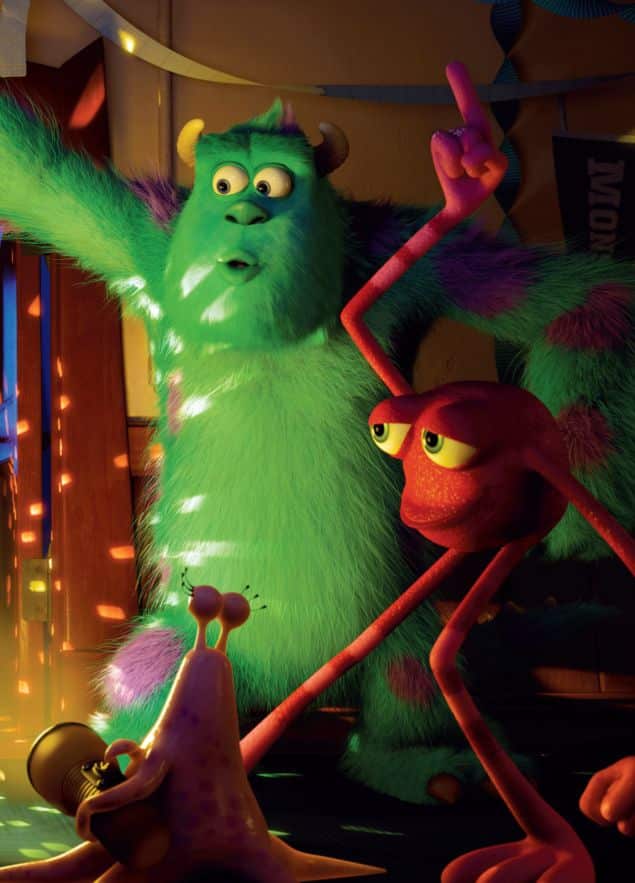
Company history
In 2006, Pixar was taken over by Walt Disney and integrated into the company structure and Circle 7 Animation was closed again in this context. Rumours that a sequel to “Monsters Inc.” was in the offing did not resurface until the end of 2010. In the original English version of “Monster Uni”, the voices have not changed and, as in the first instalment, the two main characters Mike and Sulley are voiced by Billy Crystal and John Goodman. The film’s screenplay also features familiar names and was written by Andrew Stanton and Pete Docter. Andrew Stanton is responsible for one of the biggest successes of the Disney/Pixar connection and was the director of “Finding Nemo”, which was released in cinemas as the sequel to “Monster AG” in 2003. Pete Docter, on the other hand, is the director of the first part of “Monster AG” and made the film “Upstairs” as his last directorial work.

The story
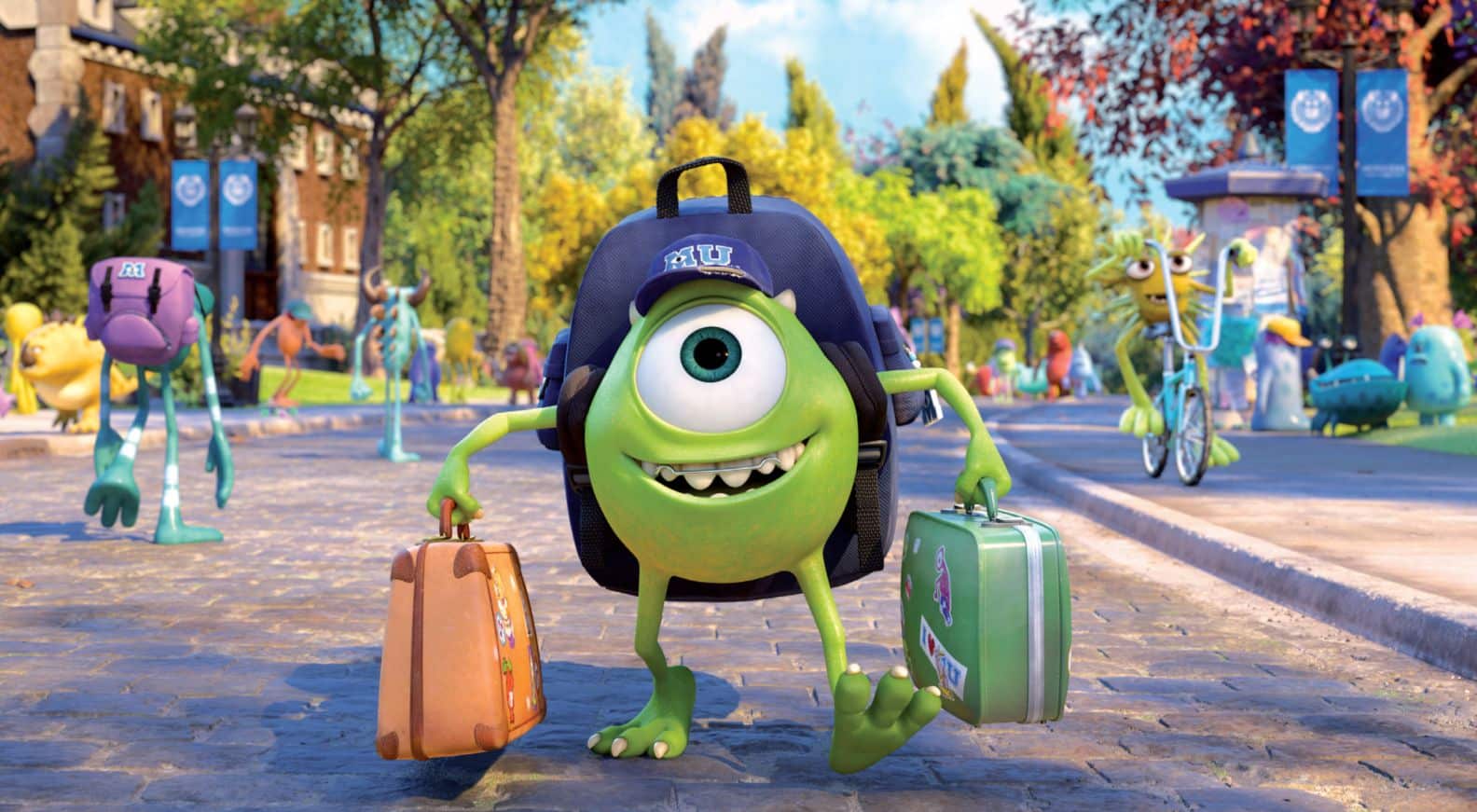
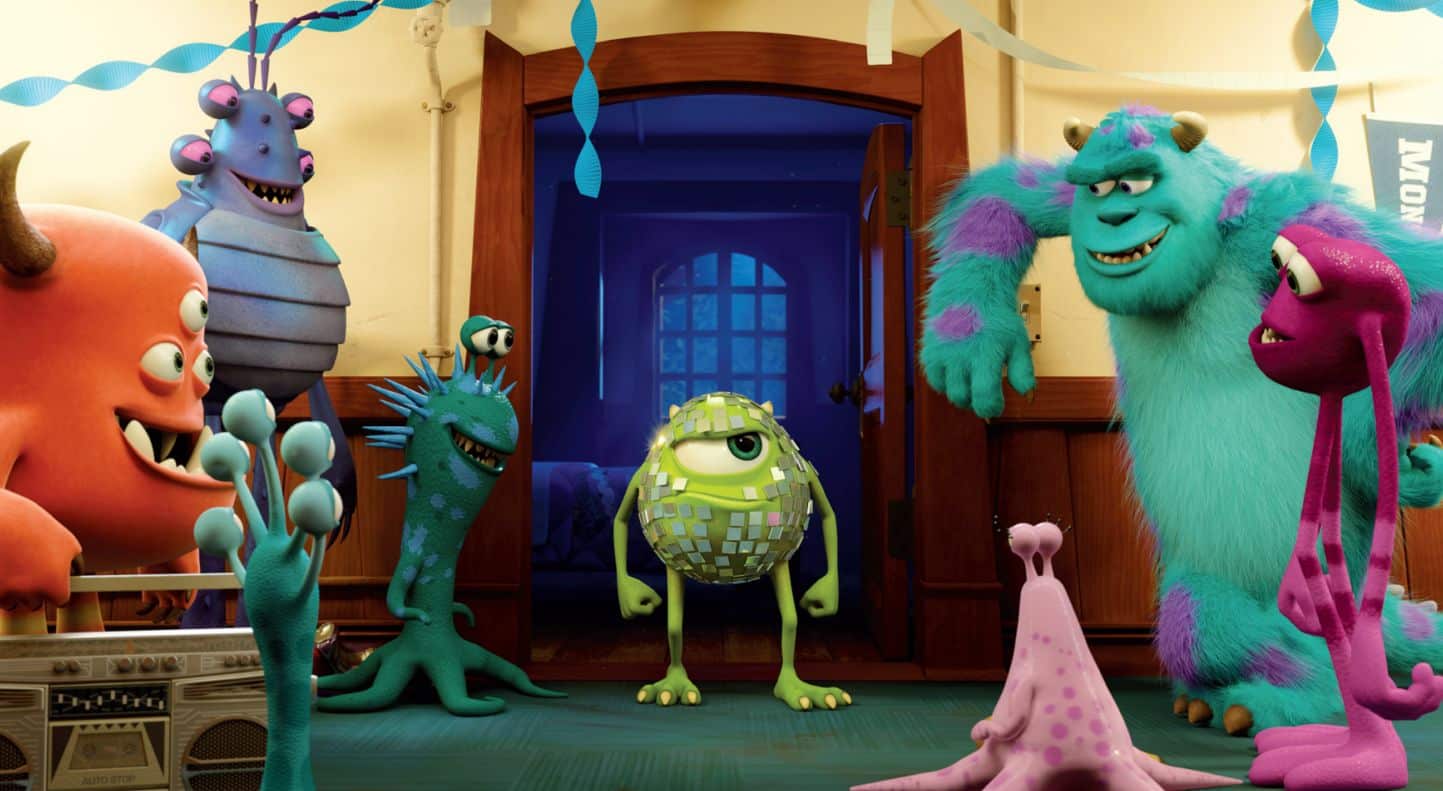
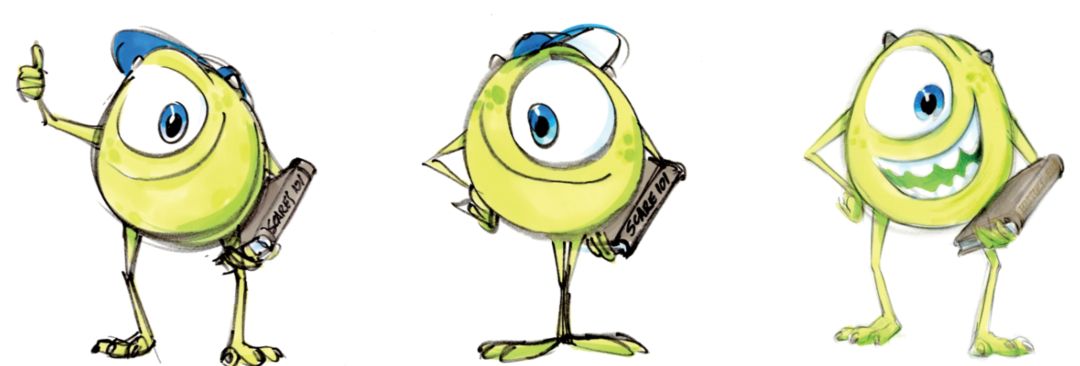
While the friendship between Mike Glotzkowski and James P. Sullivan played a major role in the first part, they can’t stand each other at the beginning of this prequel. Mike is a very insecure monster who would later like to work on the screaming floor. James P. Sullivan, on the other hand, is aware of his descent from a family of great screaming talents and makes little effort for this reason. Even without any great demonstrable talent, he is a well-known and respected monster at university who can hardly save himself from admirers. The two main characters share a room due to unfavourable events, but can’t really stand each other. Anyone who has seen the first part will have a rough idea of how the plot will develop.
Characters
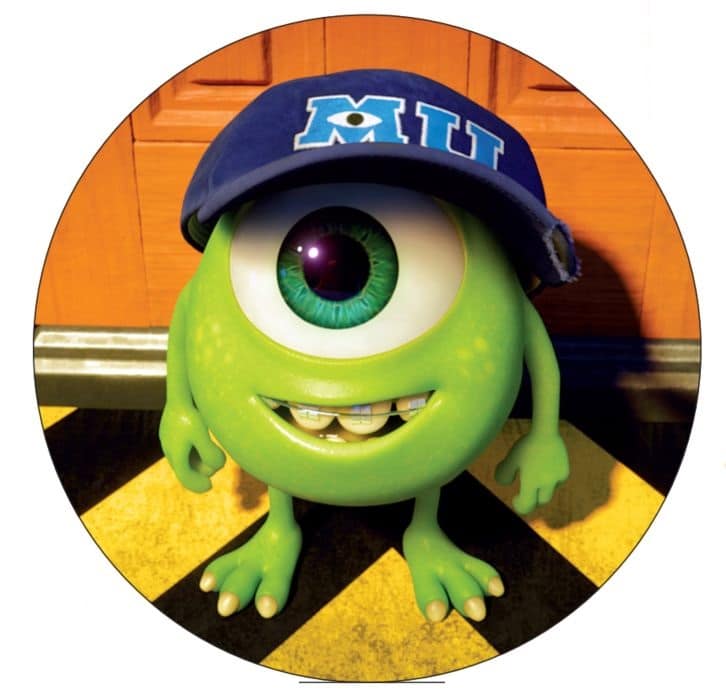
While there were around 40 characters in the first instalment that brought the monster world to life, this time there are over 400 monsters, most of which are also hairy or wear clothes. Of course, it is not only the number of characters that has changed, but also the rest of the technology. The software is fundamentally changed for each production and is usually tested during the production of short films. For example, the lighting was fundamentally redesigned for the film “Cars” so that the individual shots could be lit more quickly. Previously, an image had to be rendered each time to display the shadows accurately, which was very cumbersome and took a lot of time. For the production of “Cars”, the software was modified so that different images with different lighting settings are automatically rendered in the background and saved in the software. This allows the software to access these images more quickly and enables more interactive lighting and faster visualisation of light sources and shadows. Such a variant was also implemented in Maya and Viewport 2.0 was developed. A new lighting function called Global Illumination was also used at Pixar for “Monster Uni”.
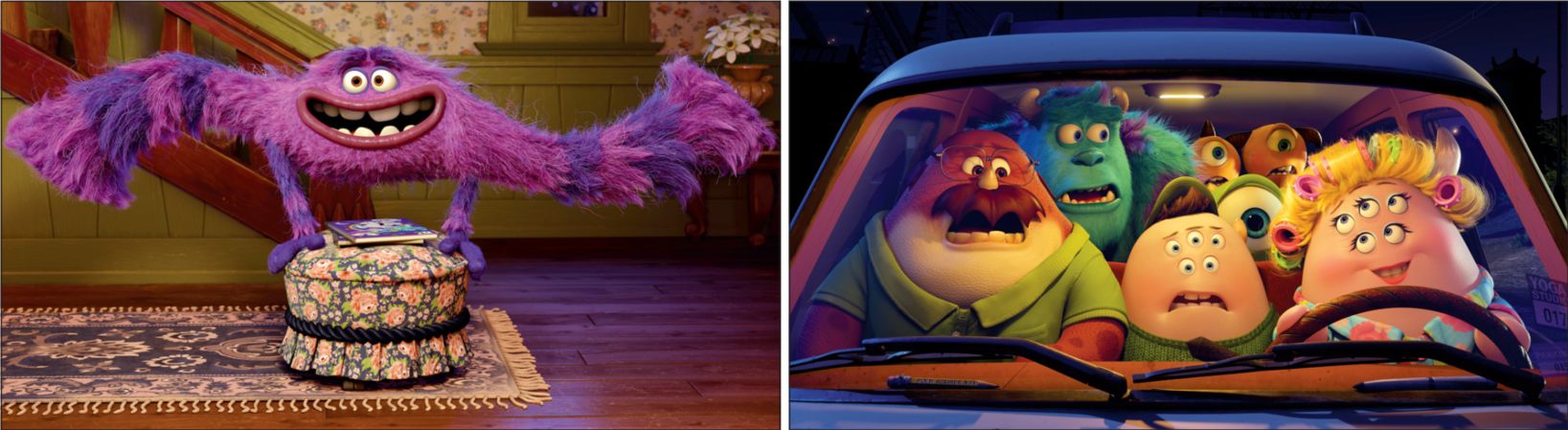
Renderman
The use of Global Illumination significantly increased the render times of the images, making it impossible to render the film completely in the specified time. It was only by changing and adapting the properties of Renderman to the new lighting tool by the Renderman technical team that the producers were able to render the film in the specified time. Renderman is part of Pixar’s own 3D software and can also be licensed and used by other companies. In Germany, the software can be purchased from the specialised software dealer Weltenbauer(www. weltenbauer.com/software/pixar-s-renderman).
Hairy crowd monsters
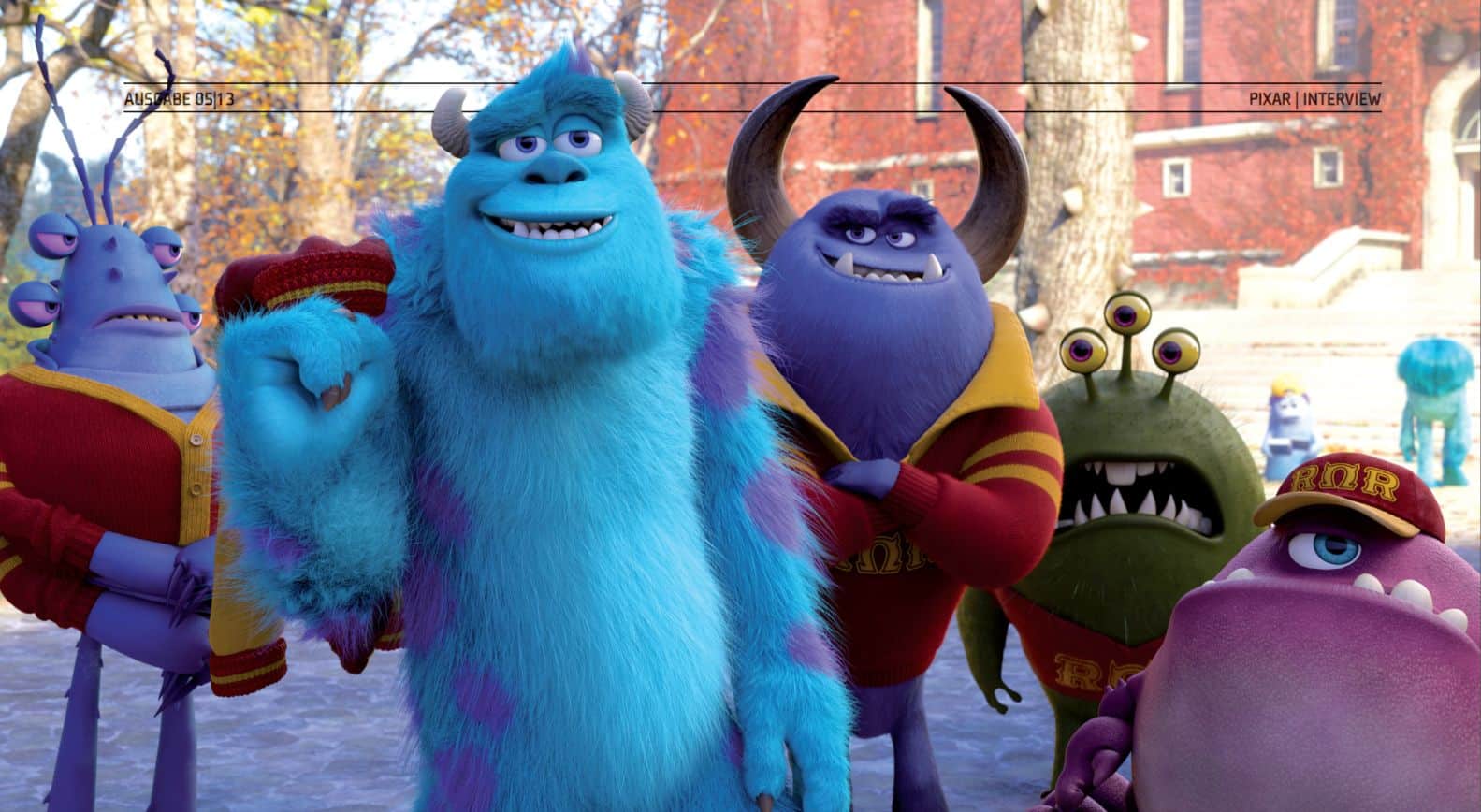
A lot has been done in “Monster Uni” with regard to the simulation of crowd scenes. For any animator or renderer, such crowd scenes are sheer horror and the cameras are adjusted so that you can see as little of the crowd as possible. For the first part, “Monster AG”, the cloth and hair simulator was developed and written for the first time. For this film, the functionality of these simulators was massively changed for the first time in order to simplify and refine the calculation of the simulations, which made it possible to bring almost permanently hairy monsters in all possible variations and colours to the screen. The last major change to the hair simulation was made for the film “Ratatouille”. At that time, there was the problem that the rats, which are all hairy, were constantly reflected in the many reflective objects in the kitchen and therefore required too much rendering time. To avoid having to calculate every single hair in the reflection and because the reflective objects usually only depicted the characters in a distorted and very inaccurate way, the software was optimised so that the rats in the reflections had no hair, but only consisted of grey areas, which is not noticeable to the viewers. At a distance, it is not necessary to show every single blade of grass or leaf, but only a green area is needed to give the impression of a tree. This reduction made it possible to render the masses of hairiness.
In this film, for the first time in an animated film, there is almost no shot in which at least 25 monsters cannot be seen on the screen at the same time. Only at the beginning are there a few shots with just one character.
The film is about the protagonists’ college years and, as is usual at US colleges, the fraternity parties and events get out of hand. The campus is also constantly bustling with monsters performing a wide variety of movements.
The animation cycle and identical movements in the crowds are hardly noticeable, only the repetitive types of monsters are a little noticeable, but not in a negative way. Due to the mass of characters, it became necessary to simulate 127 types of clothing, whereas in the first part it was already difficult to simulate and render the one T-shirt worn by Boo. The changes in the hair simulation also made it possible to control and calculate more hair. For example, Sulley still had around 2.3 million hairs in 2001 and up to 5.5 million could be simulated for this film – which sounds realistic, as the number of hairs in humans also decreases with age.
The Pixar Animation Studios attach great importance to the fact that their developments are not used exclusively in the studio, but are also used as a standard by other studios in the industry. To ensure that other studios also have the possibilities and access to the developments, Pixar not only works with its own in-house software, but also uses many off-the-shelf software packages that are accessible to everyone. The artists at Pixar Animation Studios work very closely with Autodesk on the further development of modelling and develop new solutions for the Maya software package. For example, all models from all films were created using Maya.
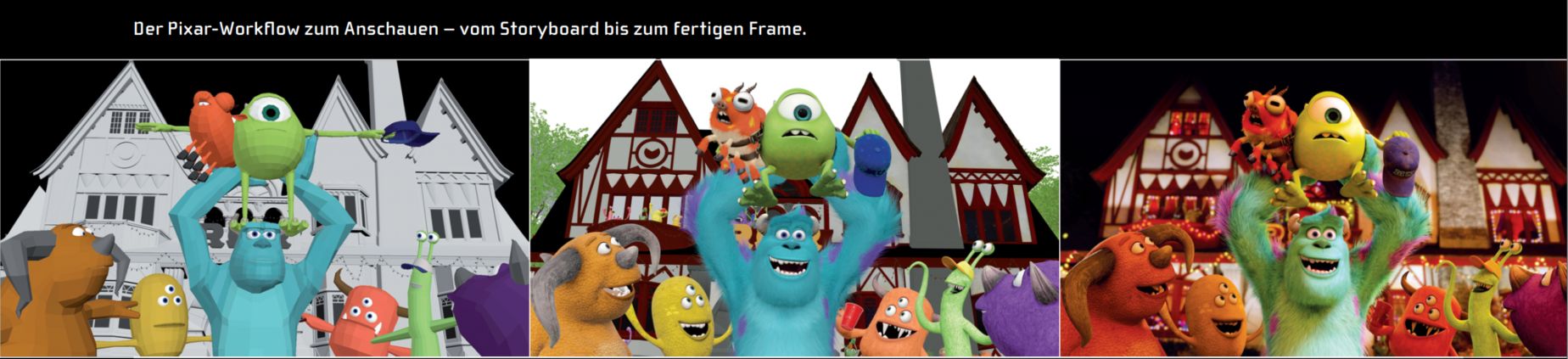

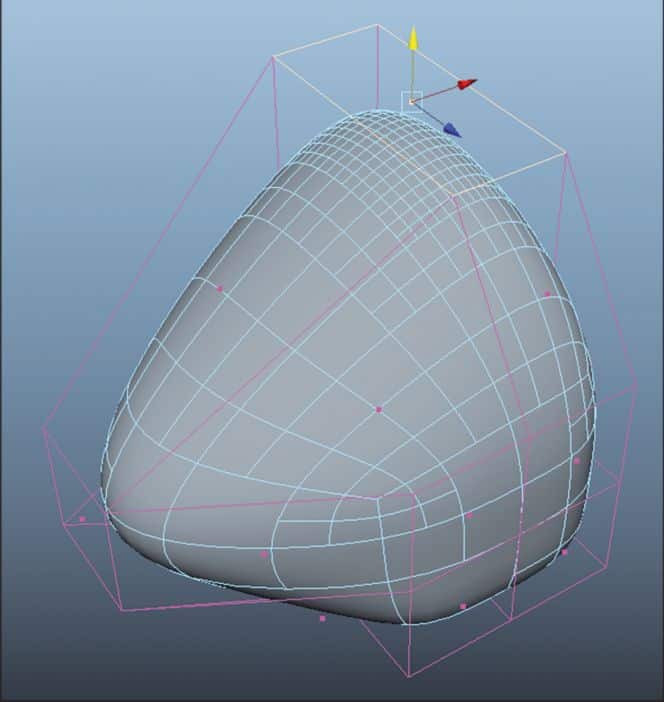
Pixar uses Open Subdiv Surfaces (open source subdivision surfaces) for modelling, where the artist does not have to constantly worry about the number of polygons and the design of the UVs when modelling. The so-called open subdivs are a further development of the subdivision surfaces. Unlike polygon objects, subdivision surfaces (or subdiv surfaces) can be displayed in different resolutions and therefore in regions where more detail is required, with a higher subdivision of the surfaces. Similar to Nurbs surfaces, the individual surfaces of subdivs are not moved directly, but are influenced by a wireframe that is displayed around the object. This outer wireframe behaves like a polygon model and can be edited with the poly tools, which are located in Maya in “Mesh and Edit”> Mesh.
Editing the outer wireframe affects the underlying subdiv model, which behaves like a nurbs model but also has the properties of a polygon model, such as the possibility of self-contained surfaces and UVs. Although subdivision surfaces require less geometry memory than polygons, the high-resolution models are still so heavy that the computer becomes too slow to work with them properly. The Open Subdivs are also referred to as “Feature Adaptive Subdivision” at Pixar, as when creating these surfaces an algorithm looks for ways to best connect the patches so that the resolution is sufficient and the computer still remains fast.
The model retains the same appearance as a subdivision model, but the surfaces are connected by so-called B-splines, transition patches, which also allow triangles, and irregular surfaces. This means that the models do not necessarily only consist of quads, but triangular surfaces can also occur. As the irregular surfaces are difficult to texture and can also have errors or distortions, the algorithms are programmed in such a way that the irregular surfaces become smaller and smaller as the number of subdivs increases and the newly created surfaces are filled with B-splines and transition patches.
Open subdiv
Artists do not have to worry about details with the Open Subdiv Surfaces. With polygons, you always have to consider where you need the details and that the polygons are roughly evenly distributed so that the model can be textured properly. With the open subdivs, the details can be inserted where they are needed. You don’t have to worry about the textures either, as they can be created later by laying out global UVs.
To speed up the calculation and display of the open subdivs, the GPU is also used to calculate the CPU. This made it possible to display a model with 300,000 subdivisions at the next level and thus 500,000 subdivisions. The display time was reduced from 100 milliseconds to 3 milliseconds by using the CPU and GPU.
The Open Subdiv technology can be licenced at graphics.pixar.com/opensubdiv/index.html. By using open subdivs, it was also possible to provide the animators with a higher-resolution model with a more accurate representation of the textures and displacement maps during production. This gave the animators the opportunity to see during the animation where the textures of the models were distorted or where the facial expressions used no longer worked. In previous productions, animation was done with proxy textures, where distortions in the textures only became apparent after rendering.
This resulted in a back and forth between animation and rendering, which can be avoided with the new technology and the accurate representation of textures and displacement maps.
The use of open subdivs also gave the riggers an advantage, as many details such as thorns were no longer modelled individually, but were only generated in the rendering by the so-called displacement maps, in which the geometry is changed by the property of the shader. This meant that there was less geometry that had to be rigged, but only became visible through the shaders. The interactivity between the high-resolution character and the animators allowed them to adjust the strength of the bump maps and displacement maps in the animation. The use of this new technology made it possible to realise “Monsters University” and bring the images to the screen in a manageable amount of time. As with the other Pixar films, it is worth seeing the film in the cinema and it is worth considering integrating the technologies developed by Pixar into your own pipeline.
