



The Weltenbauer RK50 midi tower case was delivered well packed in a shipping box and was ready for use immediately after unpacking. The scope of delivery includes the classic standard keyboard from Cherry, a Microsoft mouse and a small accessory set containing the screws installed in the case and a set of small cable ties.
Case
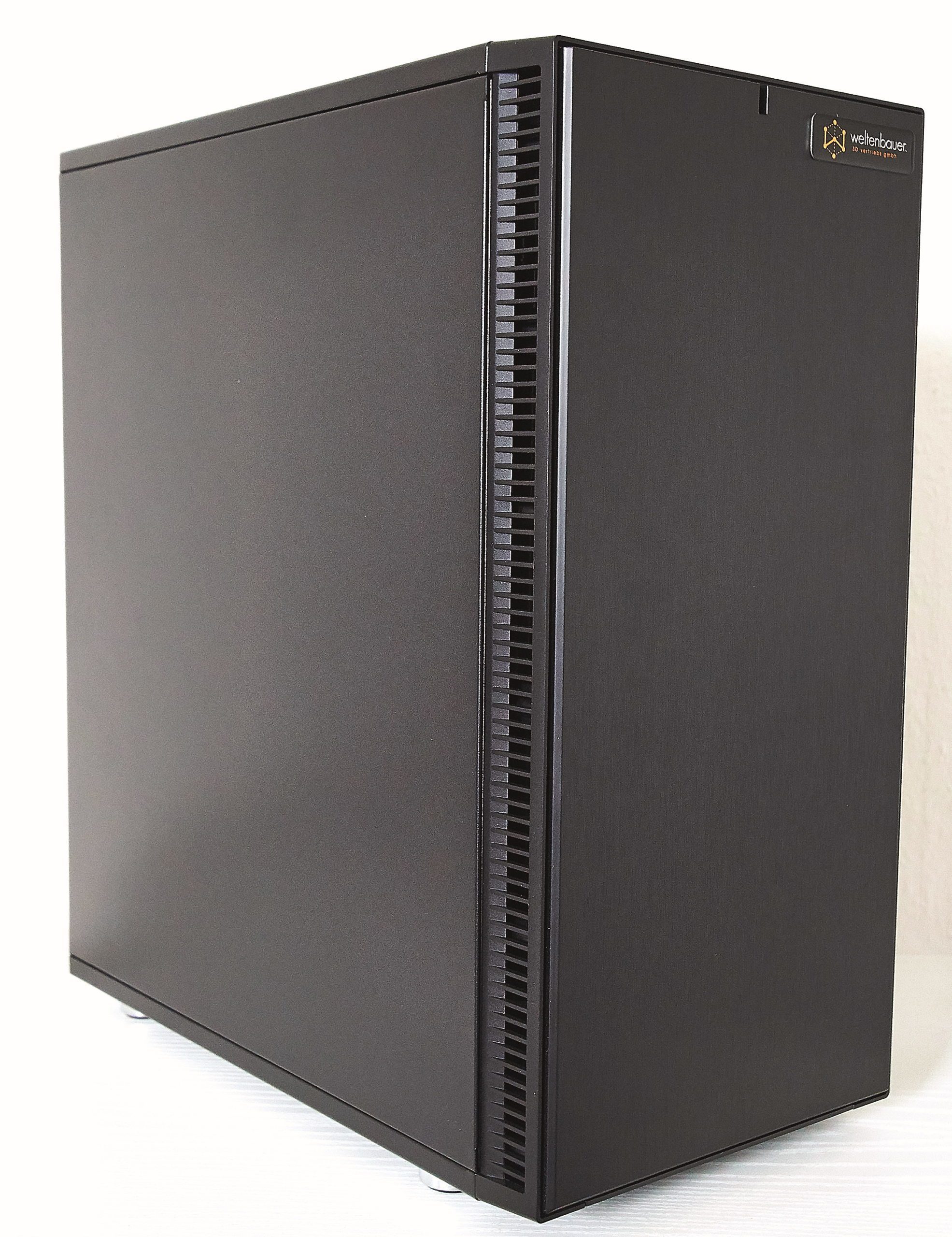
The mid-tower case comes in black brushed aluminium with an additional cooling opening on the top of the case, but without 5¼ slots at the front. Instead, there are two USB 3.0 ports, power and reset buttons and two sockets for headphones and a microphone at the top front of the case.
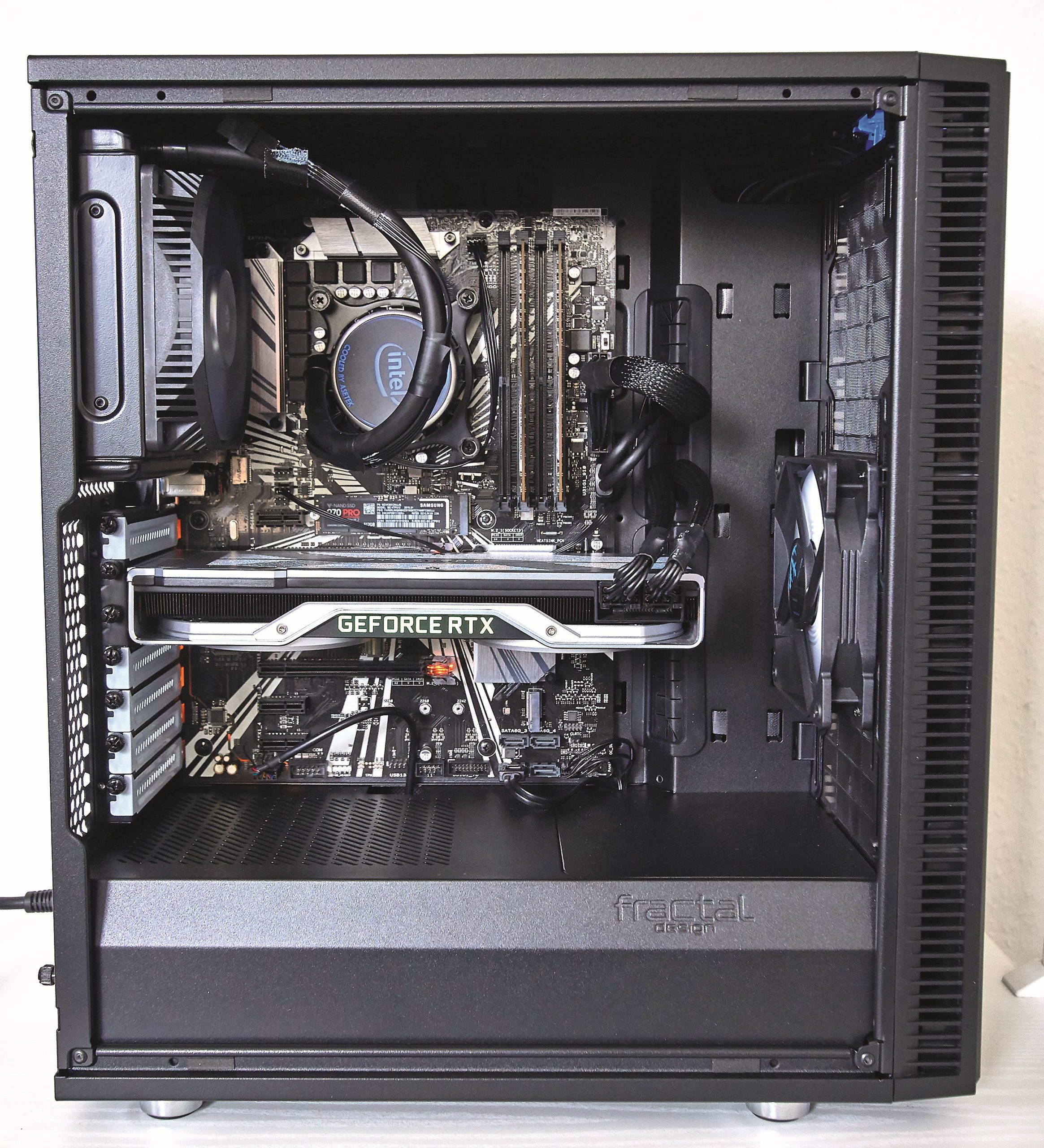
Inside, the first thing you notice is the compact CPU water cooler from Intel, whose relatively small heat sink uses a fan to dissipate the heat from the rear of the case. There is still space on the top of the case to mount a cooler twice the size – good to know if you want to overclock the CPU or replace it with a more powerful model with higher cooling requirements at a later date. With the CPU and the two RAM modules, the graphics card is the only visible component in the tidy and neatly wired RK50 case apart from the case fan at the front.
Features
When it comes to hardware equipment, Weltenbauer relies on tried-and-tested components that should achieve good performance values in the intended 2D and 3D application area. On the one hand, there is the famously fast Nvidia Geforce RTX 2080 Ti with 11 Gbytes of RAM, an
M.2 SSD with 512 Gbyte capacity as a system and application disc, supplemented by an HDD with 2 Tbyte capacity for project data and 32 Gbyte RAM memory.


Only the choice of the Intel i7-9700K CPU seems a little questionable due to the lack of hyperthreading and the relatively small price difference to the much more powerful Intel i9-9900K CPU. For the current configuration, the power supply unit is sufficiently dimensioned at 550 watts, but a few watts more for potential hardware expansion in the future would certainly not be a bad thing.
Performance
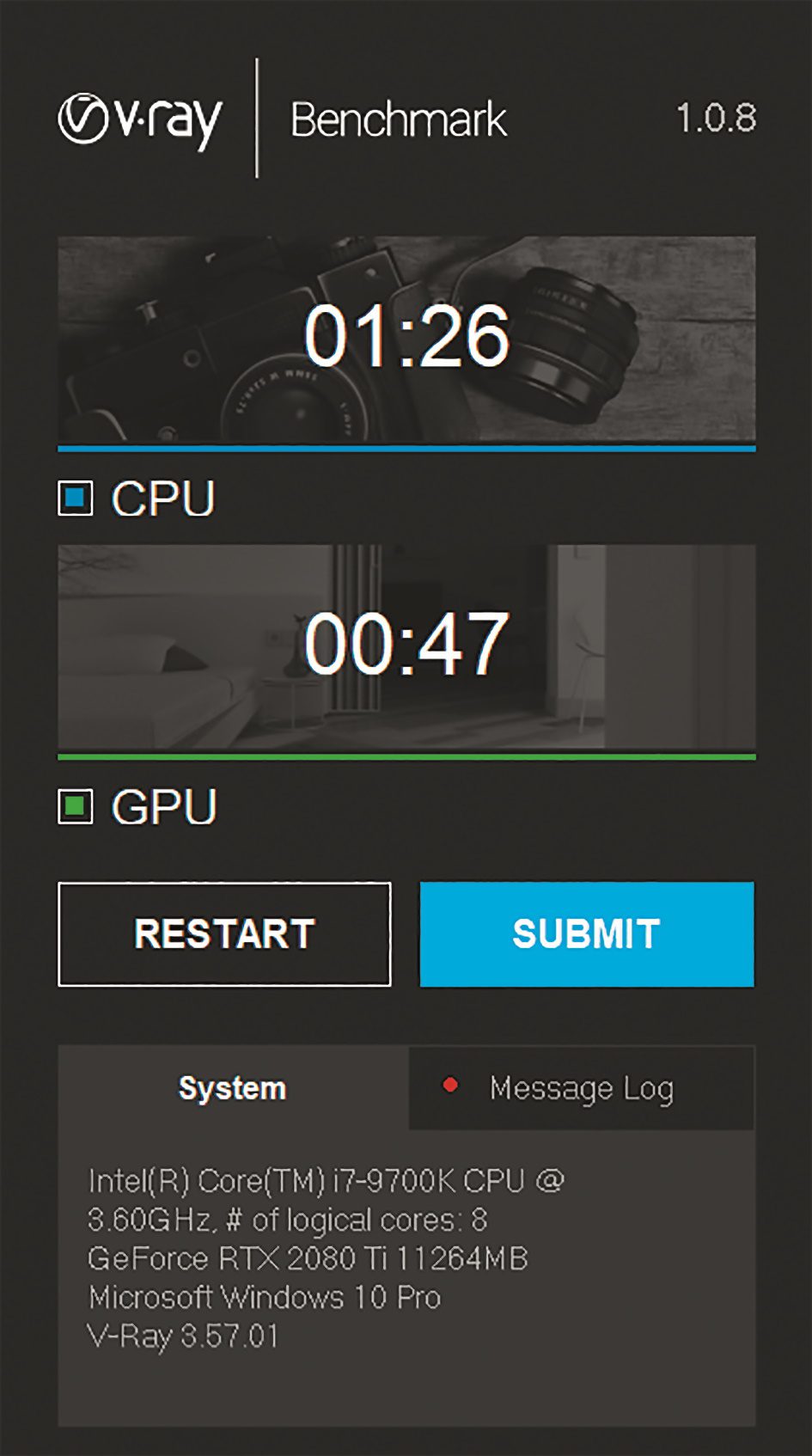
The Intel i7-9700K CPU achieved 3,548 points in the Cinebench 20 multicore CPU test, 1,533 points in the old Cinebench 15 CPU test and 148 frames per second in the OpenGL test of the graphics card. These values were confirmed by the measurements with the V-Ray render test: The CPU took 1 minute and 26 seconds to render the test scene, while the Nvidia Geforce RTX 2080 Ti took just 47 seconds, putting it just one second behind the Xi-Machines Animate X2 Advanced, which is around three times as expensive. The classroom scene was calculated in Blender 2.7 in 18 minutes and 45 seconds. In Blender 2.8, the CPU then only needed 15 minutes for the same task – the GPU of the 2080 Ti needed just 2 minutes and 58 seconds. The graphics card also achieved the second-highest values after the Xi-Machines Animate X2 Advanced in the unofficial Octane-Bench beta test run with 298 without RTX and 825 with RTX.
As long as only the water-cooled i7-9700K CPU was loaded, the fan noises were absolutely fine and the temperatures were also in the green range of 55 to 60°C. When the Nvidia Geforce RTX 2080 Ti was added to the Aida 64 stress test of all components, it became about 15-20° warmer for everyone inside the case and also significantly louder after a few minutes. The 2080 Ti is therefore responsible for the main thermal and acoustic load.
Due to the reserves in the cooling of the i7-9700K CPU in solo mode, it is possible to achieve around 10% more performance for tasks without GPU involvement by increasing the clock frequency without having to accept losses in stability. The corresponding presetting is already available in the BIOS.
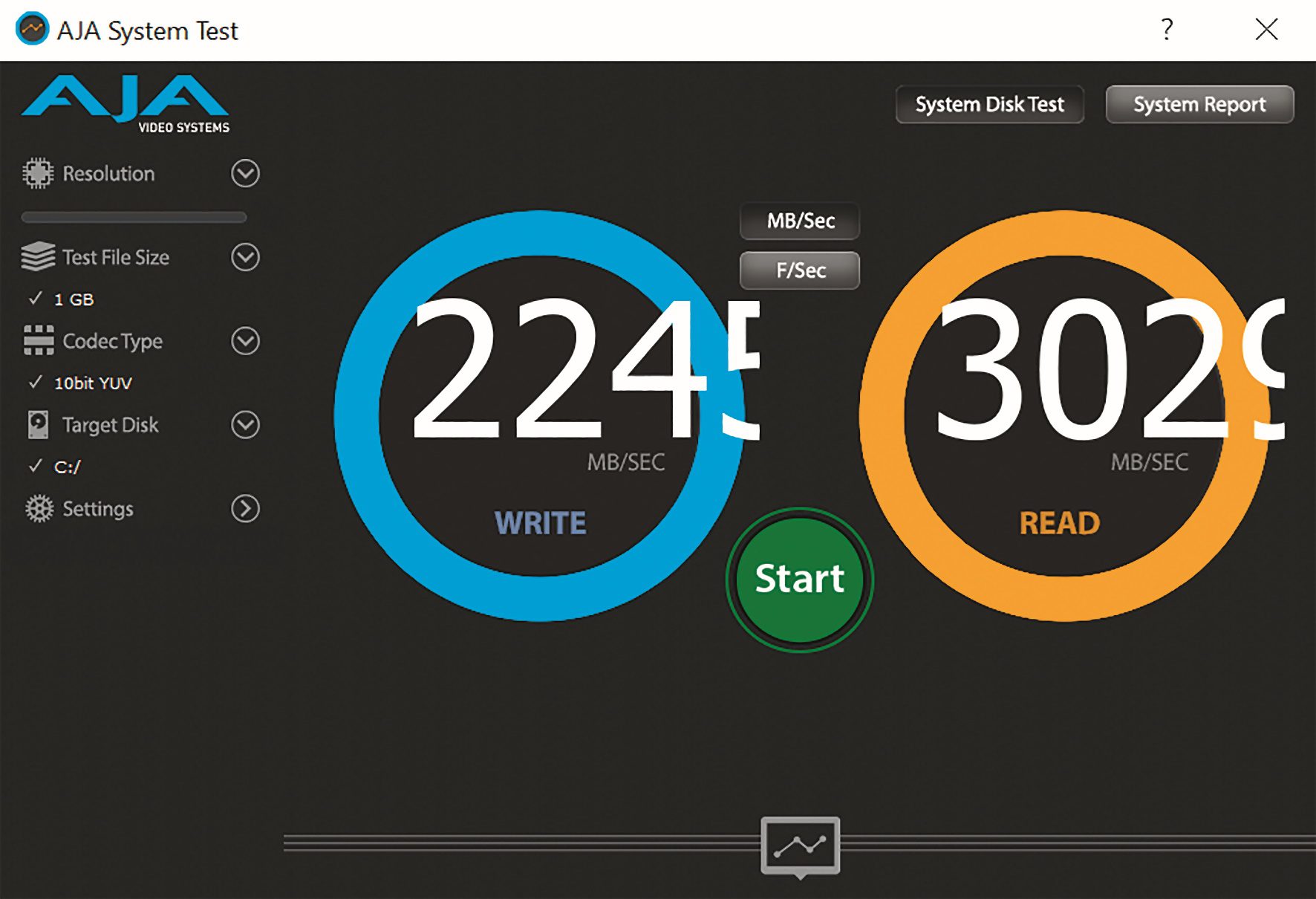
The 512 Gbyte M.2 SSD achieved a maximum write rate of 2,245 Mbytes and a read rate of 3,029 Mbytes per second in the Aja system test and a continuous transfer rate of 2,323 Mbytes per second in the HD Tune test.
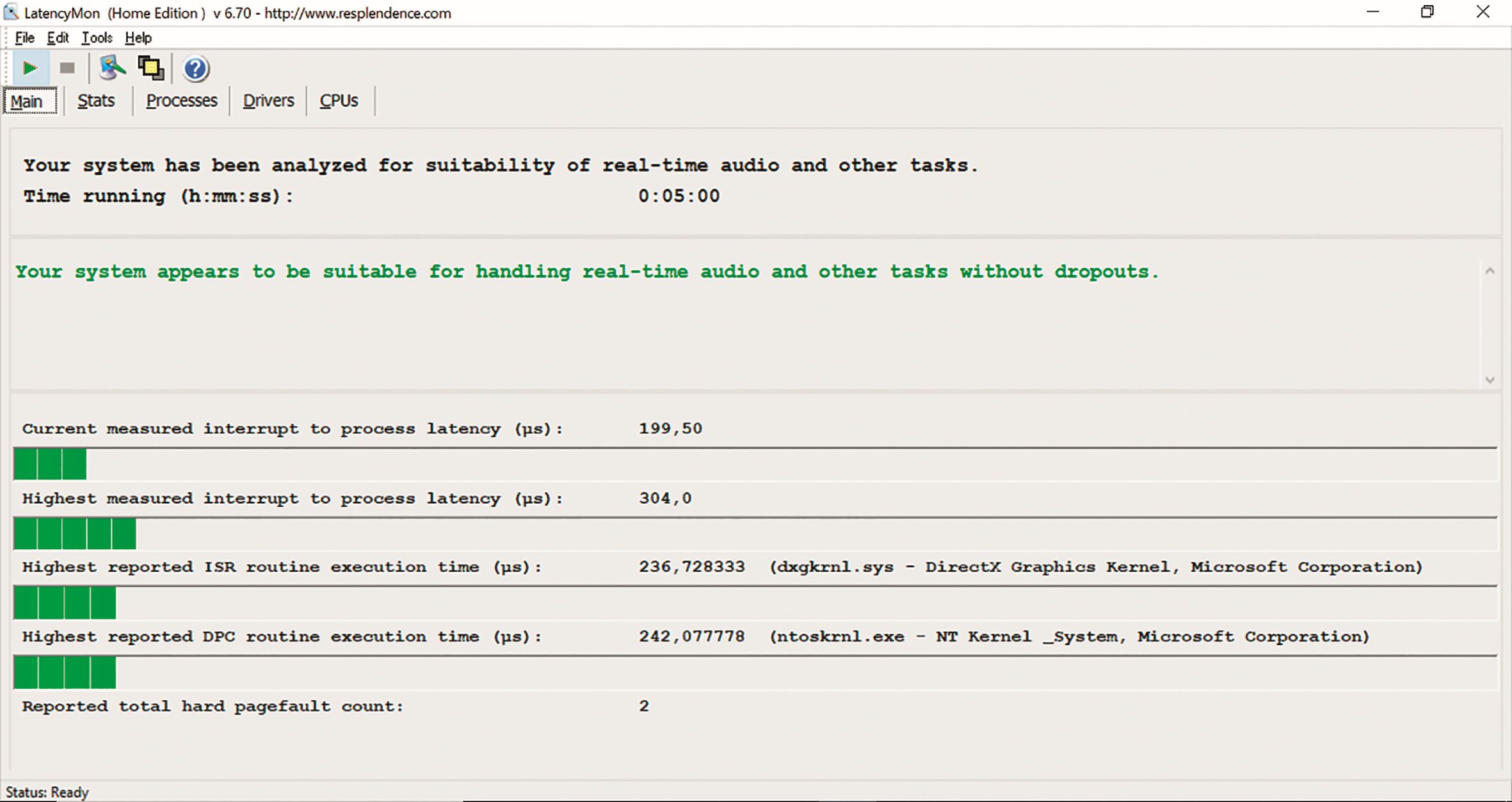
The data HDD intended for project data achieved a maximum transfer rate of 195 Mbytes per second when reading out data, an average value of 160 Mbytes and a minimum value of 100 Mbytes per second. Although this is sufficient for typical 2D and 3D use, the transfer rates of the HDD are not sufficient for HD/4K video editing. In terms of latency, the Weltenbauer RK50 took the top spot with 242 microseconds, which indicates an undisturbed Windows 10 Pro with reservedly activated services.

Conclusion
The Weltenbauer RK50 is well equipped for 2D and 3D applications and has plenty of GPU power thanks to the Nvidia Geforce RTX 2080 Ti. The Intel i7-9700K is certainly powerful enough for 2D and 3D, but for more CPU-intensive tasks such as HD video, the i9-9900K CPU with hyperthreading, which is only around 60 euros more expensive, would be significantly faster.
But the RK50 was designed by Weltenbauer primarily for 2D and 3D applications, and it is usually the more sensible option to invest more budget in maximum GPU power
power.
The noise development of the RK50 under partial load is okay, but under full load the competition is significantly quieter – despite water cooling of the CPU – and the fan noise is in a more pleasant frequency range.
The relatively low latency of the RK50 is a positive feature, which indicates that Windows 10 Pro runs smoothly. For the 3,300 euros, the RK50 is a cleanly finished workstation with a high-performance graphics card and a contemporary CPU, RAM and mass storage basic configuration on which to build.


There is still enough space in the case for future expansion, but with the 550-watt power supply unit for a second graphics card, the power supply is likely to be tight.
