



New software alternative in the world of motion design: With Cavalry, Scene Group wants to launch a new, procedural motion design tool on the market. Since the first announcement almost a year ago, the software is now available free of charge in open beta. On the new website you will find online documentation, work samples, tutorials and more. Below we give you a concise overview of the current functions and ask ourselves to what extent the tool could make the top dog After Effects sweat.
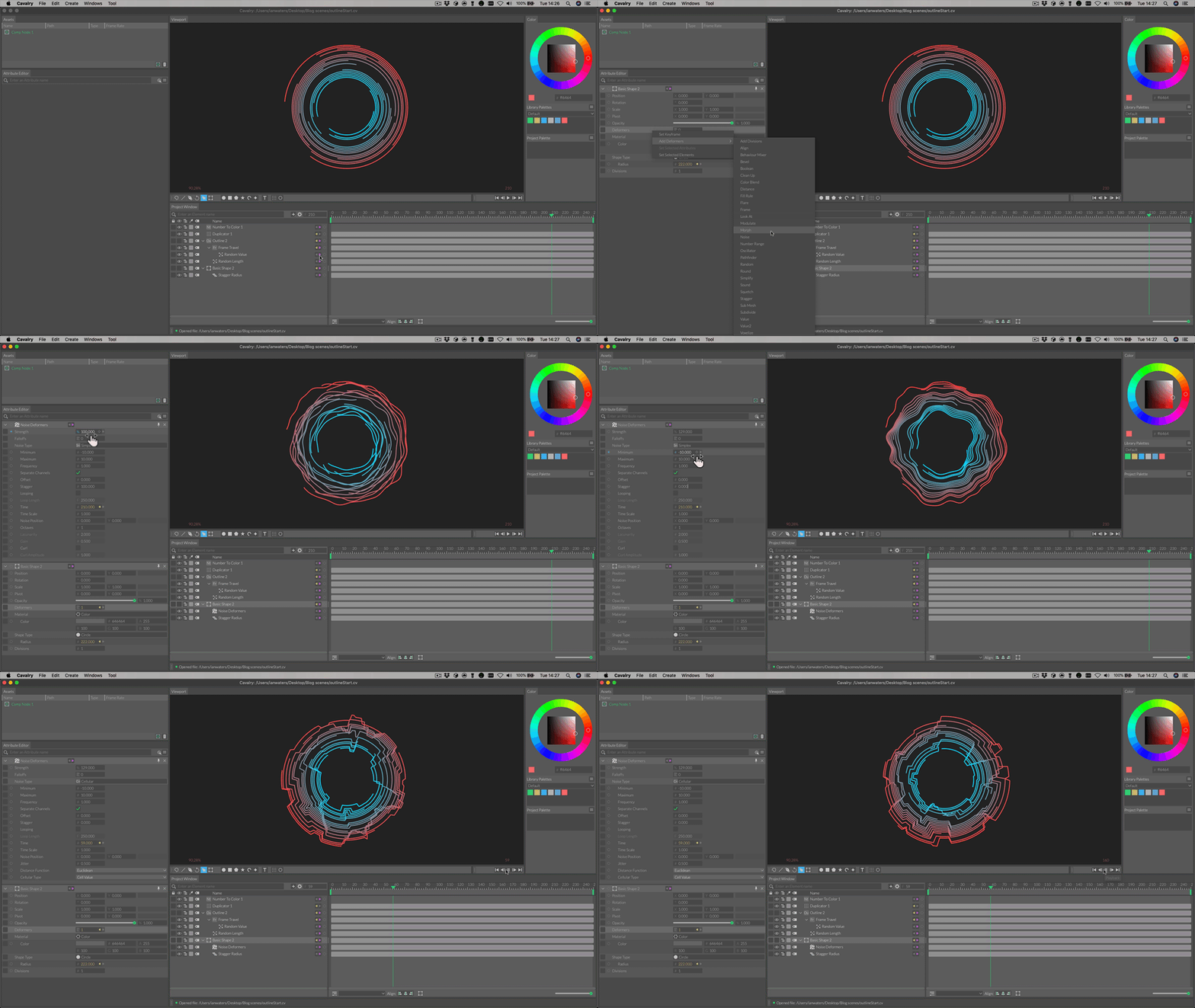
Cavalry feature overview
The four main building blocks in Cavalry are called “Elements” – consisting of Shapes, Beheaviours, Atoms and Effects . Using “Connections”, individual elements can be linked together to create complex dependencies.
- Shapes are objects that can be drawn in the viewport and animated using attributes. These include shapes, text, SVG files, charts, footage and more.
- Behaviours are used as animation “drivers” for values or attributes. There are currently over 40 of these elements available – such as Noise, Boolean, 3d Matrix, Bend, Modulate, Morph, Random and many more.
- Effects are nodes in the classic sense, with which image-based filters and shaders can be created, such as Blur, Fill, Levels, Masks Blur, Invert and more.
- Atoms can be used for highly customised setups – for example with an Array Manipulator, Falloff or Gradient Builder. In addition, features such as If Else, Index to Colour, JS Math and others can also be used.
Further feature highlights
- Graph editor with loop function, oscillation, keyframe alignment, curve ghosting, cycling, stepped keyframes and much more.
- Duplicator for the creation and subsequent animation of multiple instances.
- Keyframe layer for editing complex and fine animations
- Data import options and visualisation (e.g. with Google Sheet)
- Falloffs for a restriction and transitions of various effects
- GPU acceleration for real-time preview in the viewport
- and many other exciting features
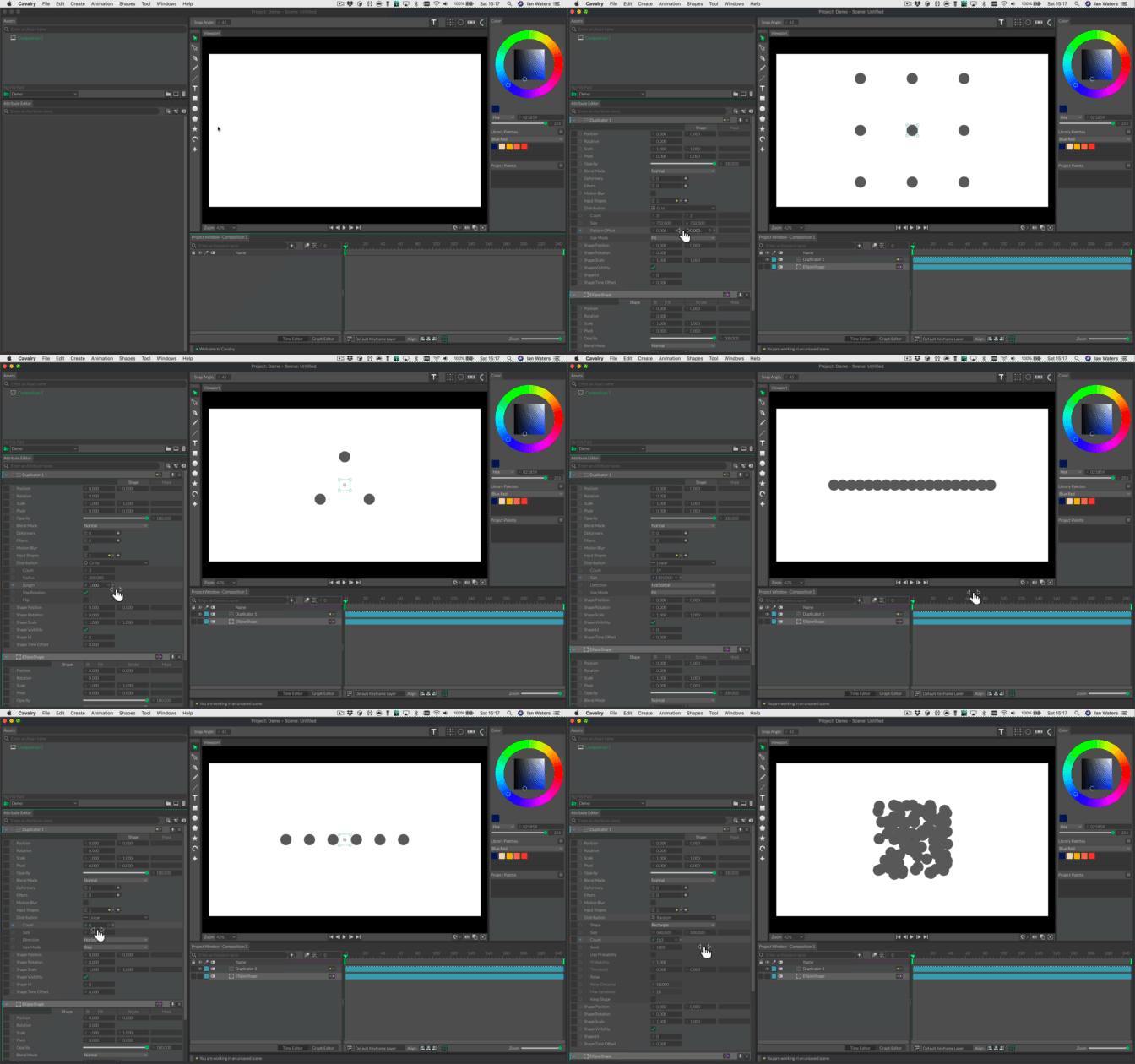
Cavalry: The big After Effects competitor?
As you can see from the many artwork examples, you can create quite a few interesting visuals in Cavalry. Especially for animations, the tool has useful elements for quickly creating a variety of dependencies and procedural results. This makes it possible to produce complex 2D motion graphics assets that cannot be created so easily in After Effects or often only with the help of the large AE plug-in world. Real competition would of course do Adobe a lot of good – the developers are already doing a lot of things right here (keyword: folder structures for the layers!!!!!). However, it has to be said that this will probably take a long time, if ever. Apart from the crashes (beta), as well as the lack of connections to other tools, format support, basic compositing functions and more, the tool currently seems to serve more of a niche in the motion design segment: The creation of vector-based animations. Some people also find the learning curve a little more difficult. However, artists who feel comfortable with procedural workflows such as those in Houdini, for example, should be able to make friends with Cavalry very quickly.
Availability and price
Cavalry is available in open beta for Windows (10) and MacOS here. The developers have not yet published a final release date or information on pricing. We have written to Scene Group about this – we will provide updates here if we receive further information.
Further information: To the new Cavalry website
