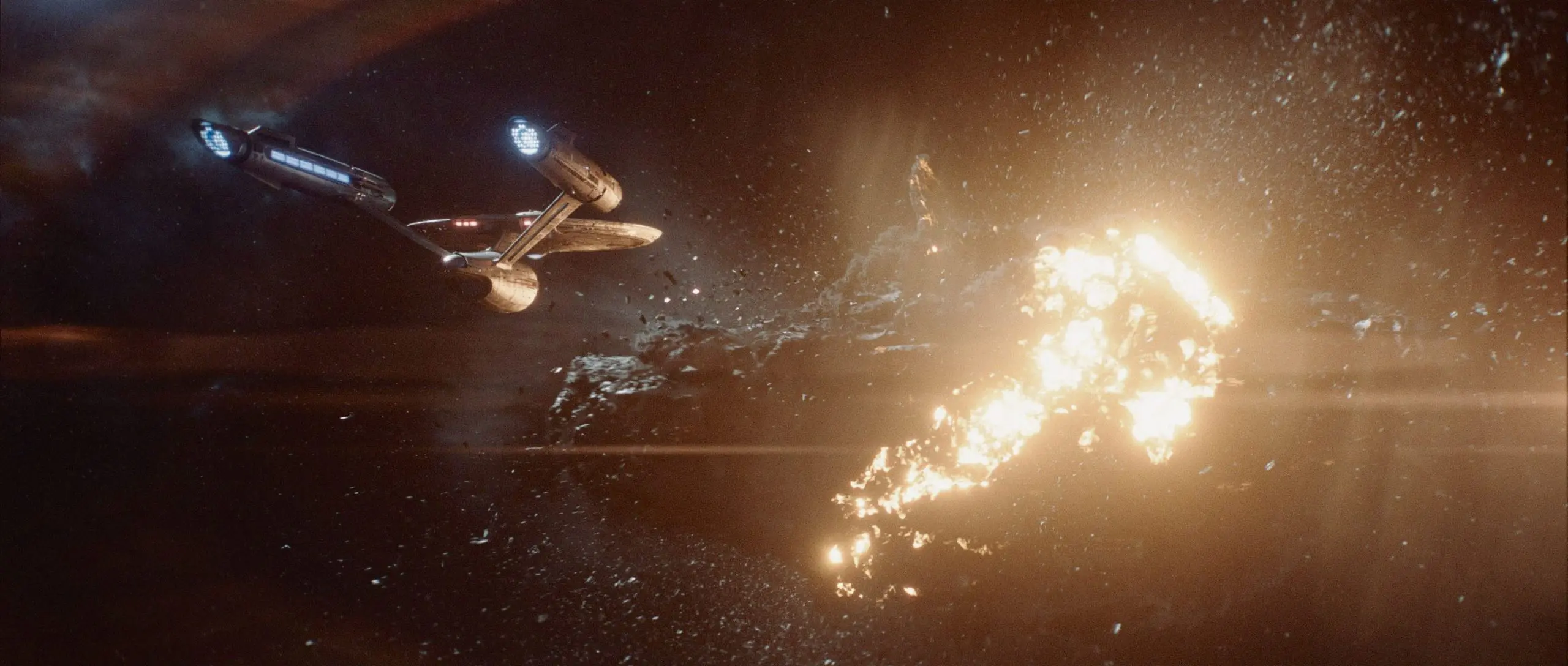
As it turns out, some space ships and space stations these days come from Norway. Oslo, to be precise – which is where Storm Studios (stormstudios.no) has been creating shots for SNW. Besides that, Storm is working on Picard, Last of Us, Wakanda Forever and many, many, more.
So we asked Espen Nordahl, the VFX Supervisor, how they get the ships from Oslo to outer space, and how they create the kind of space shots NASA is envious of. Before SNW, Espen worked on a bunch of movies with Storm Studios, for example Watchmen, Men of Steel (with Weta), Iron Man, John Carter (with MPC) and one of our Favourites, Troll Hunter from 2010. You can see his showreels here: espennordahl.com.
DP: Storm Studios worked on Star Trek Discovery, Picard and Strange New Worlds – how did you get involved in that universe?
Espen Nordahl: I can’t remember who reached out to who originally, but as is often the case in this small industry: we have a few friends in common from working on various productions over the years. Once we did a few shots on one season we found a working relationship we both liked, and since then we’ve been involved in some capacity on pretty much all the Star Trek shows.

DP: What was the briefing from the production company for SWN, and how big a team did you assemble?
Espen Nordahl: Our brief came in the form of the script, previs done by Ghost, and artwork from the production team. The Storm team was about 15 artists.
DP: Could you walk us through your software and hardware pipeline?
Espen Nordahl: Our primary tools are Maya for modelling, rig, animation, look-dev and lighting, Houdini for Fx and Nuke for comp. For more specialized tools we have Arnold for rendering, Substance and Mari for texturing and ZBrush for sculpting.

We use a small set of inhouse tools for asset management, dailies, deliveries and so on, and write some every day utility tools for each of the major packages, but for the most part the software is off the shelf.
I’m afraid I’m not too involved on the hardware side, but we do have our own local render farm. Being in Norway one would think we could just open the door in winter and cooling would take care of itself, but unfortunately, we need an equally extensive cooling system as everyone else, given how much CPU power it takes to simulate and render these big shows.
DP: Were there any new tools you added for SNW?
Espen Nordahl: In general, what the Star Trek shows have done is push us to use Houdini for more than just Fx sims, given how much of the work is Fx driven. Tasks like layout, lighting and rendering are things we have historically done only in Maya, but we have now opened up the pipeline more to allow for fewer round trips to Maya if Houdini is a better place for it, whether it be because the task is more procedural in nature or if the artist/team is more comfortable in Houdini. We have also bought a whole lot more anamorphic lense flare plates.
DP: How did you approach the massive space environments?
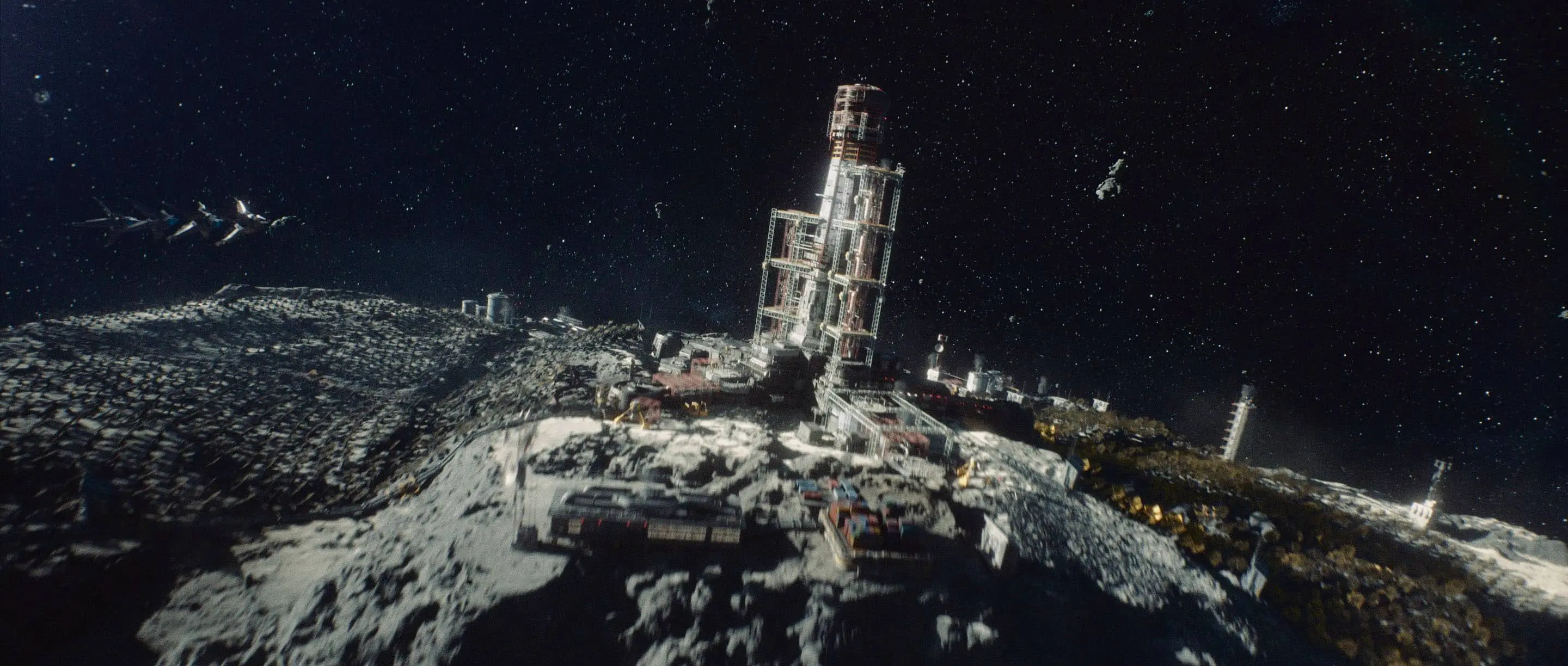
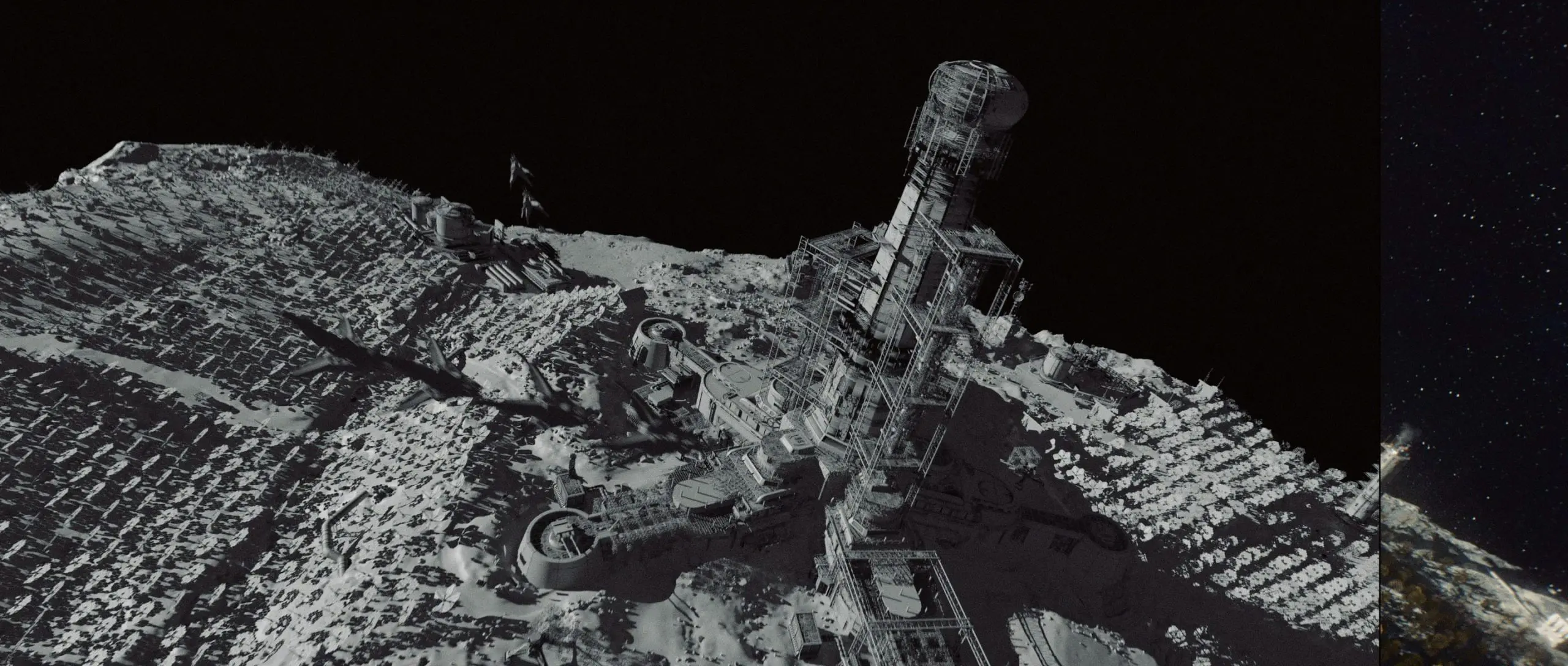
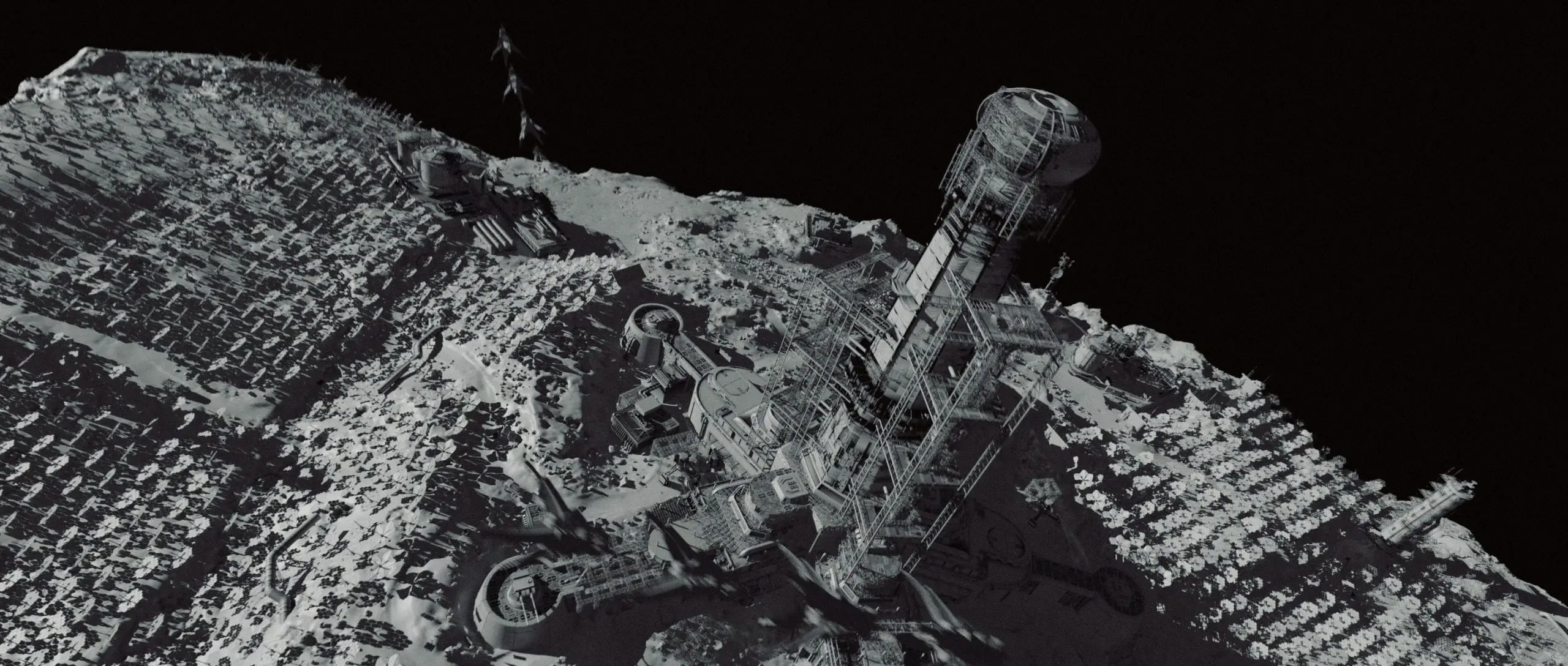
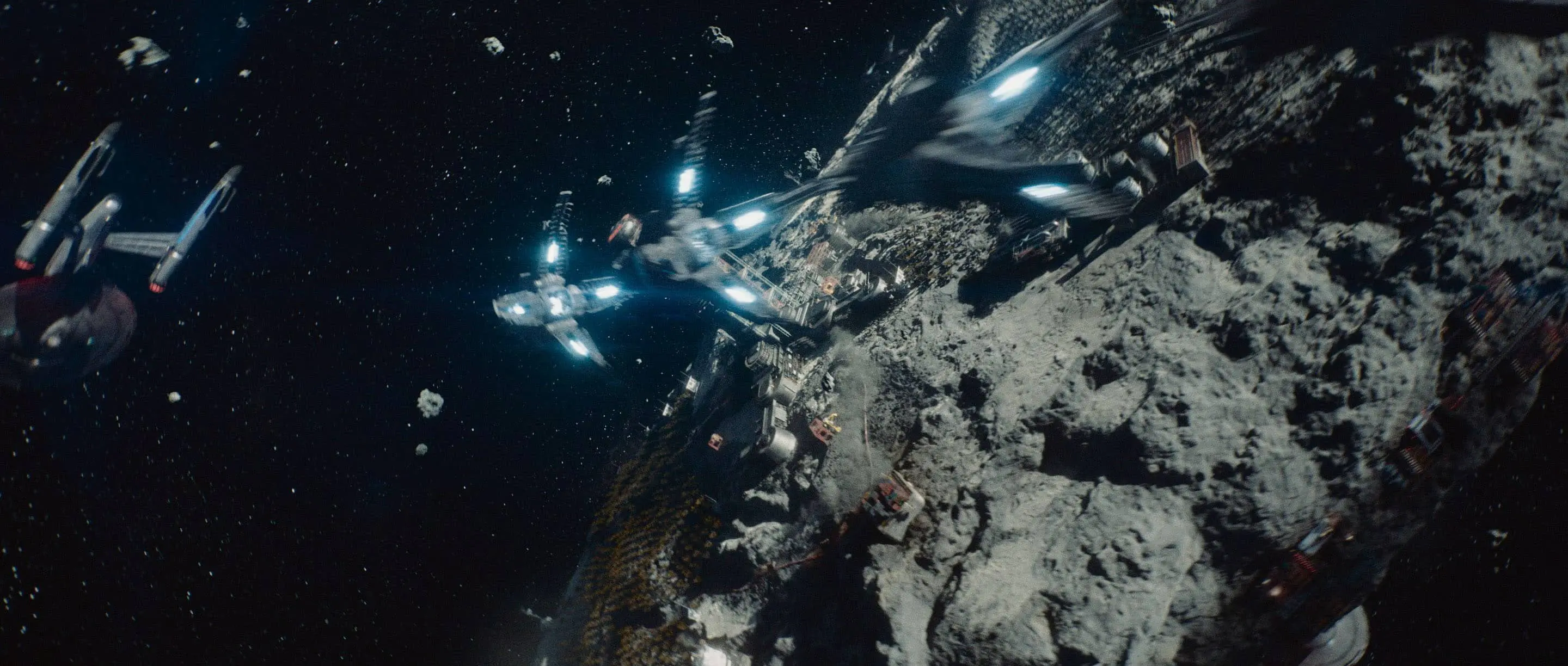
Espen Nordahl: For scenes like this with very few shots using the same assets, we prefer to start iterating on the shots themselves immediately, as opposed to doing turntables of individual assets etc. So we started blocking in the animation, the lighting and the layout in parallel, using very simple geometry to start, as they all affect each other so much.
The brief for the outpost itself was relatively loose. The general shape with concentric circles of solar panels around a tall tower with red lights were key features in the storyboards, but outside of that, we had pretty free reign to flesh out the details of the outpost ourselves. Early on Ghost had started some of the asset work, but once it became clear they were only featured in our shots it made more sense to do them at Storm.
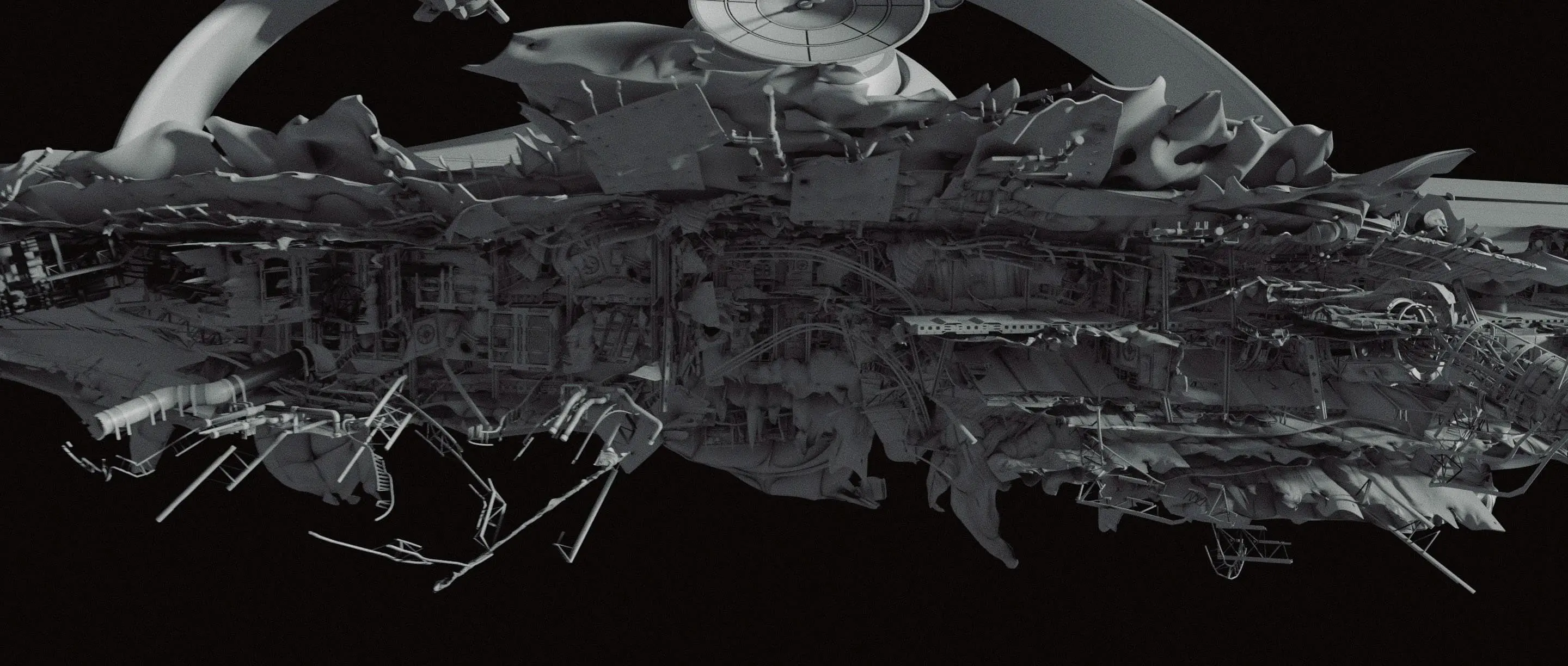

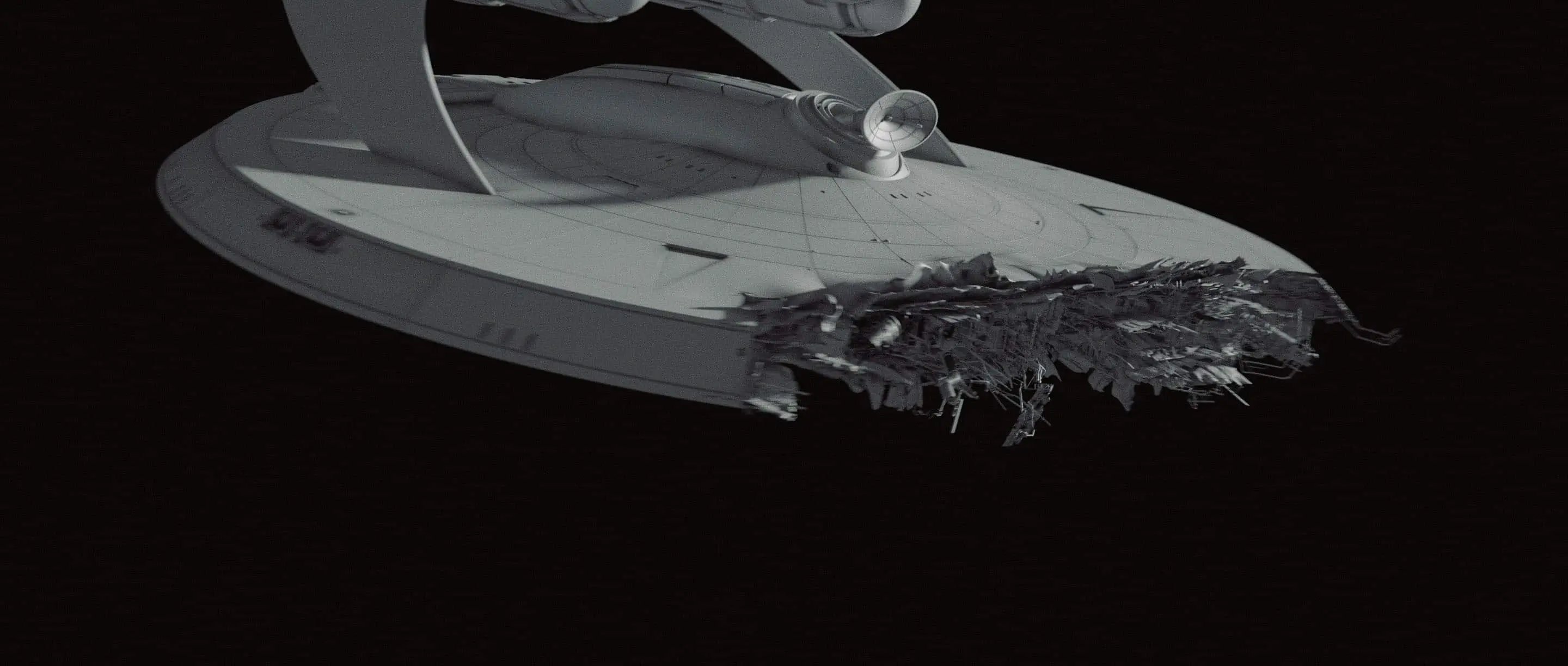
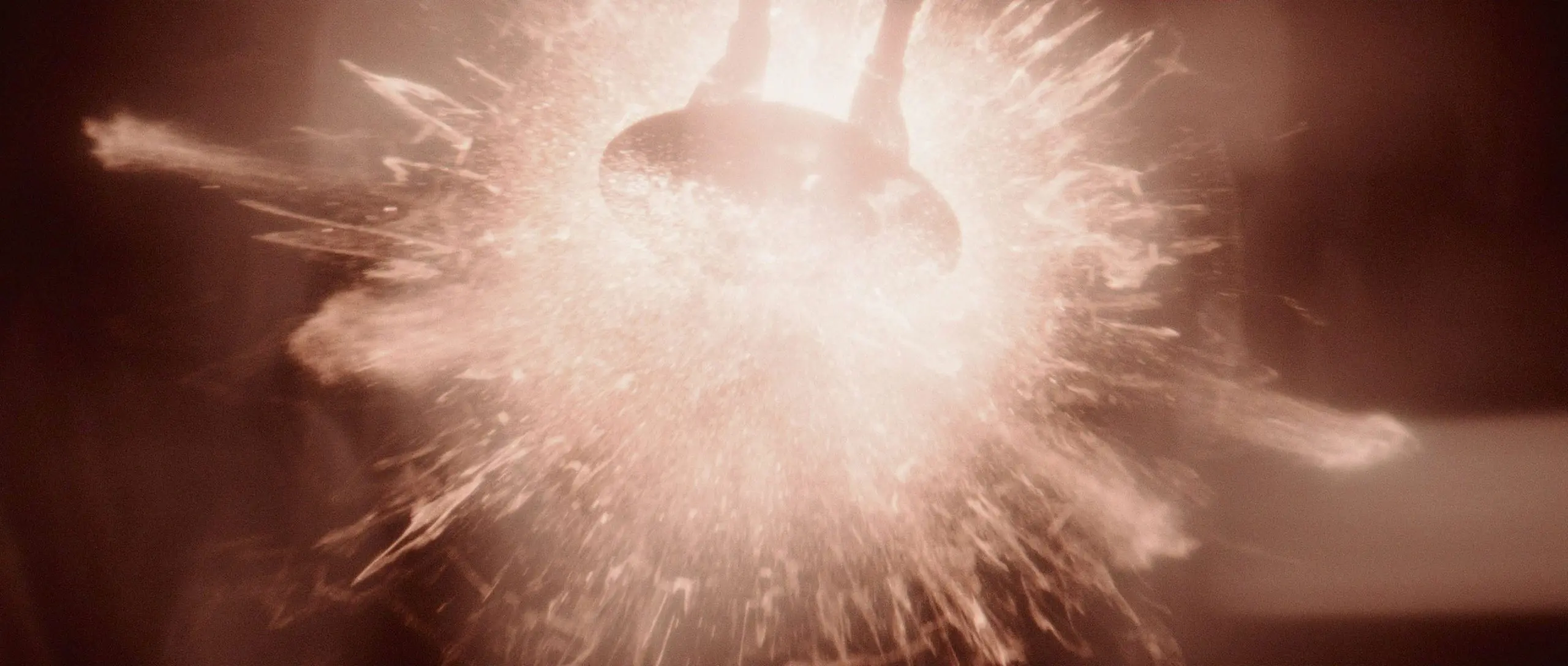
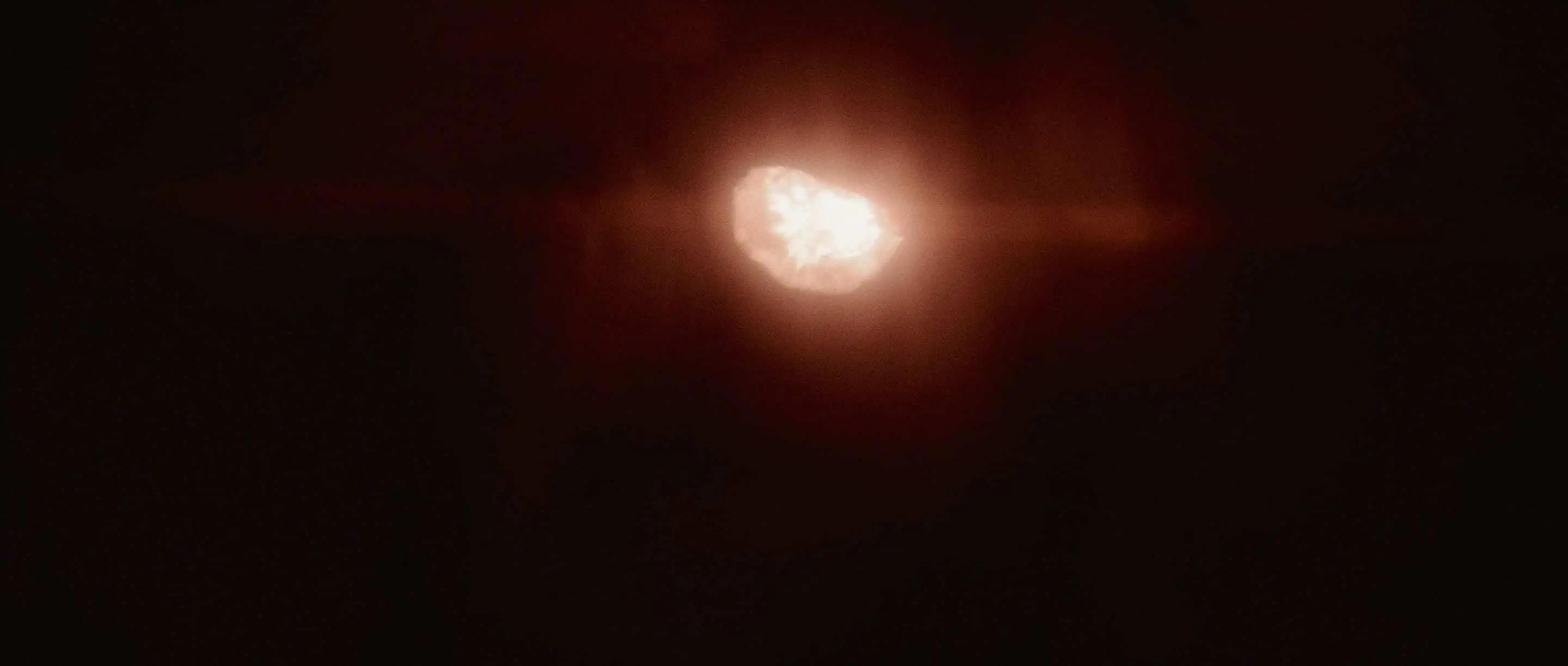
One of the main advantages to having all departments work in parallel is, that we’re able to make animation and layout decisions based on lighting tests and vice versa, and everyone in the team is able to come up with solutions and designs as a group, as opposed to working one department after another.
DP: How did you create the exploding comets and rocks and asteroids?
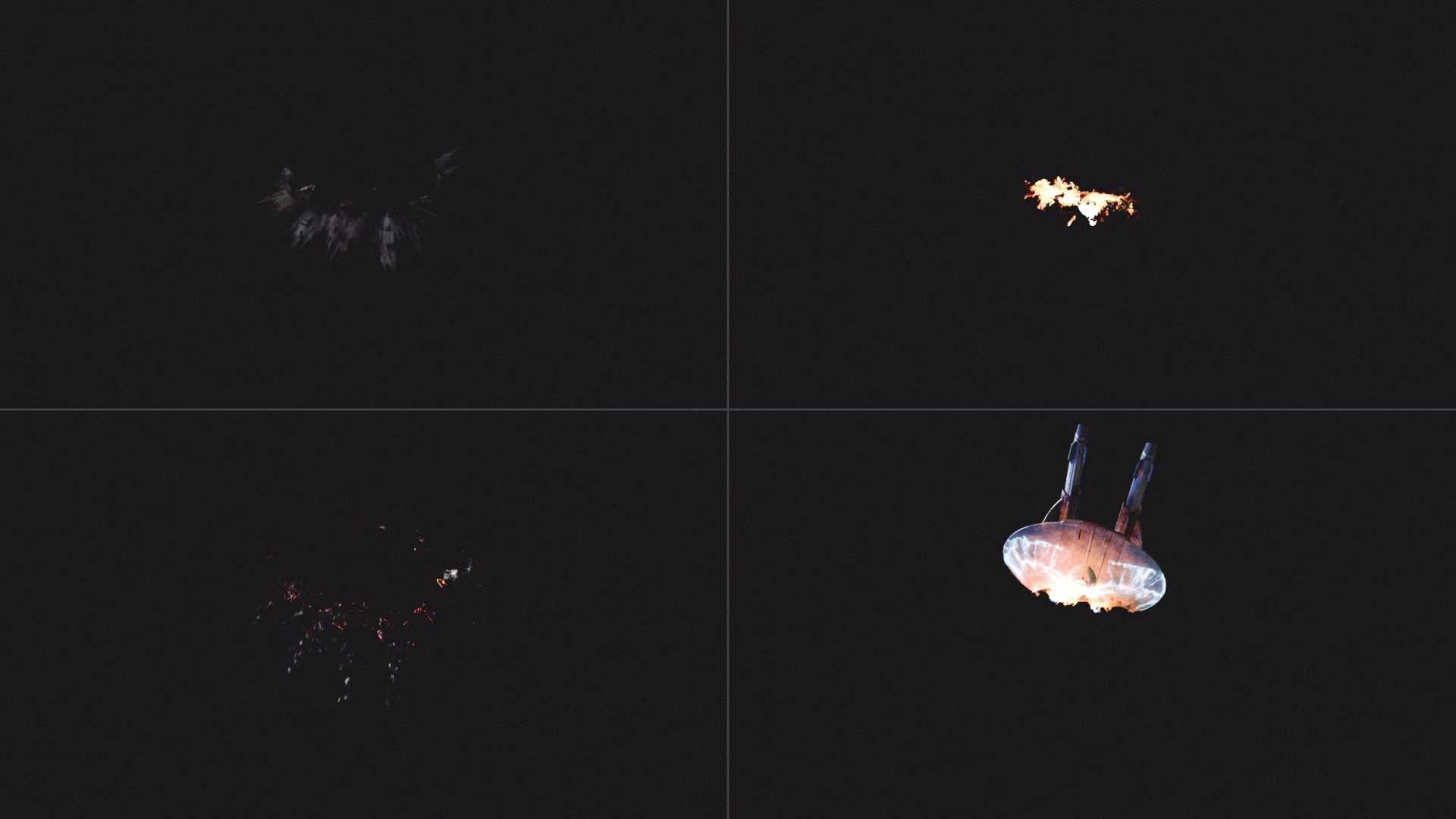
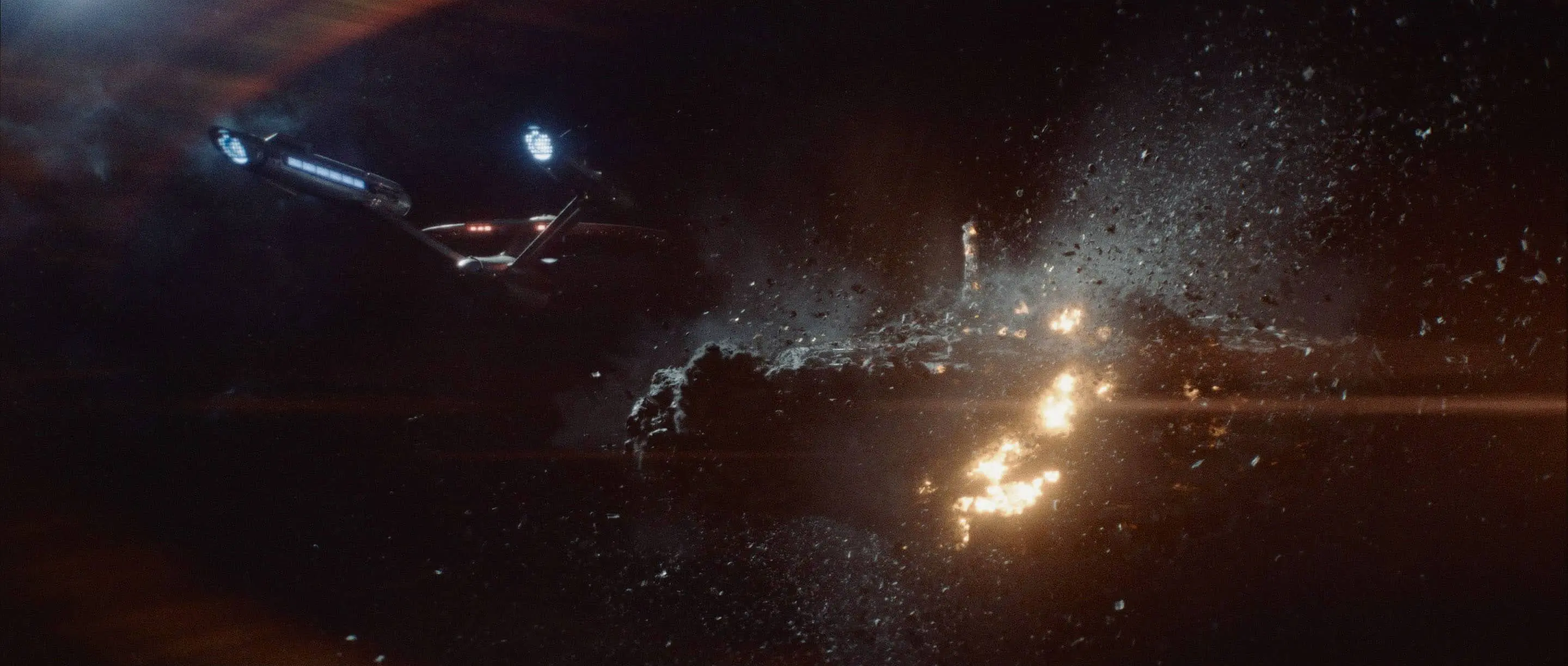
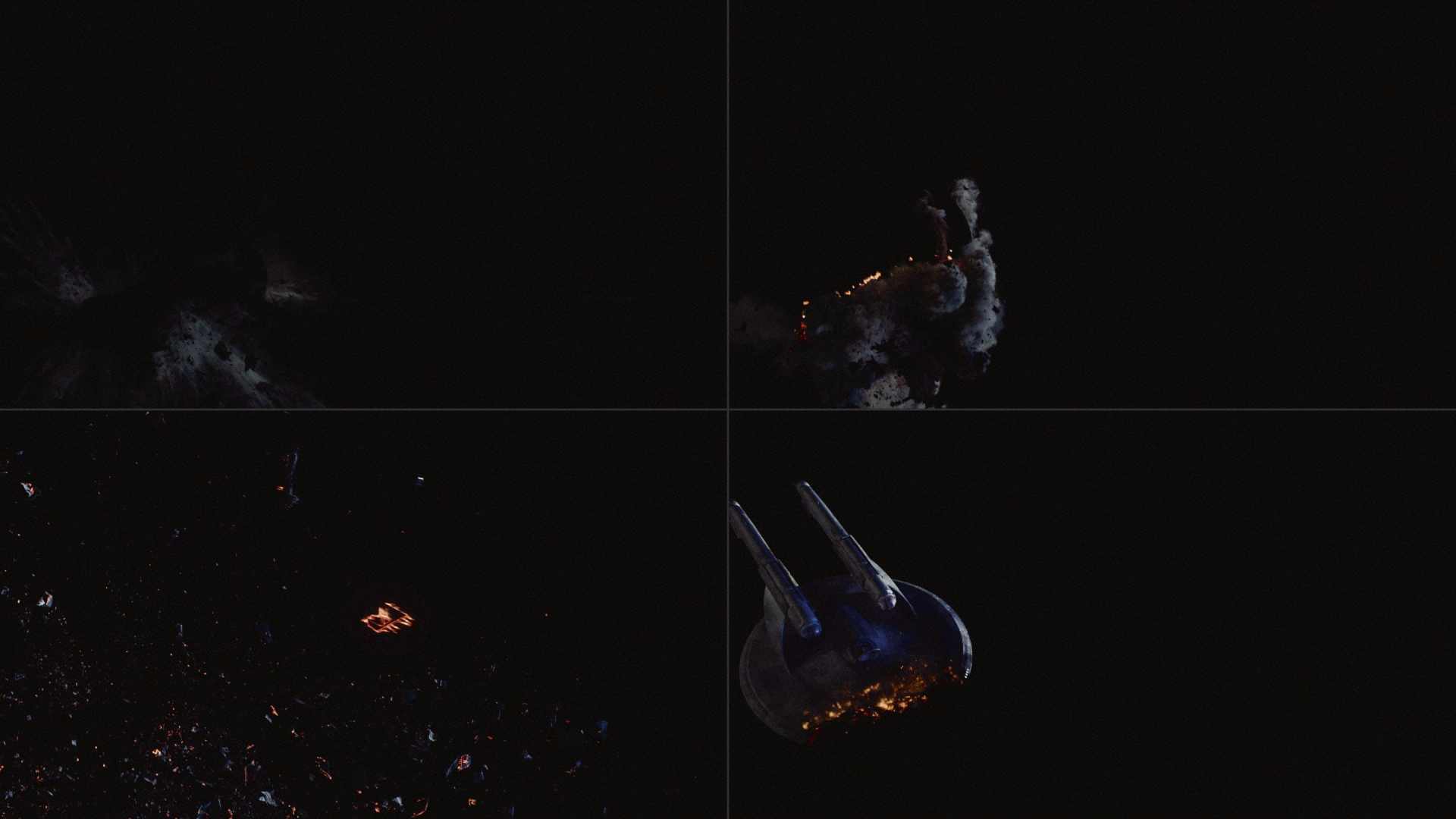
Espen Nordahl: We often find that for huge scale events like this that we get more interesting result – and a lot more control – if a lot the setup is done/controlled “by hand”, and the simulations themselves are self-contained elements that are either driven by other set-ups or simply distributed as a layout. If done right, this also allows for a much faster iteration cycle, allowing us to try more things in less time, and turn around notes faster.
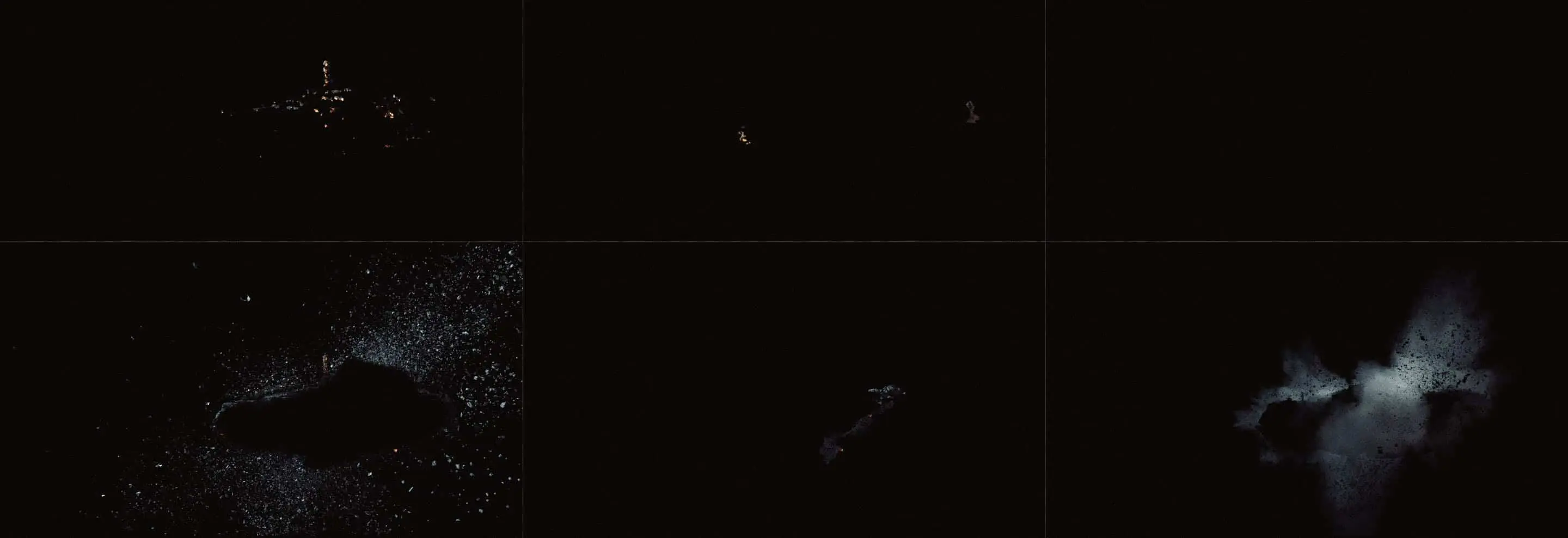

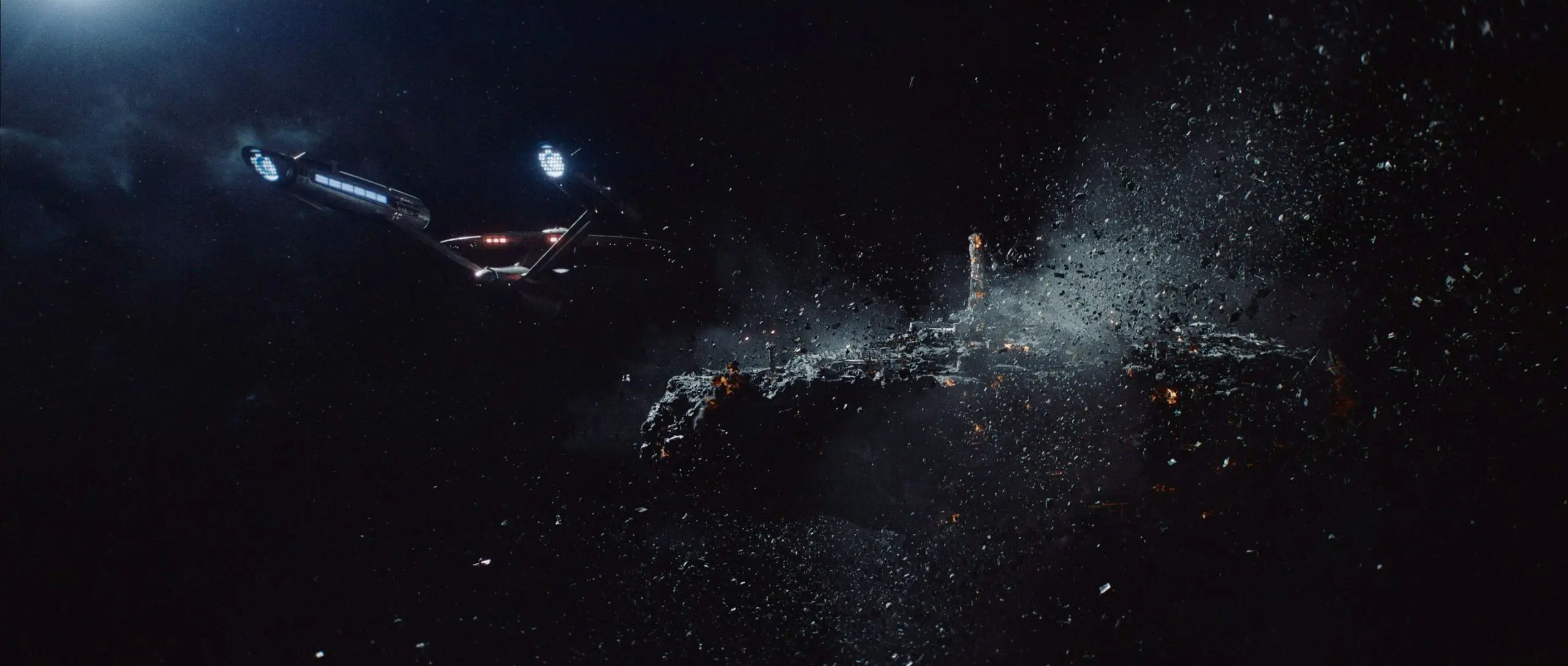
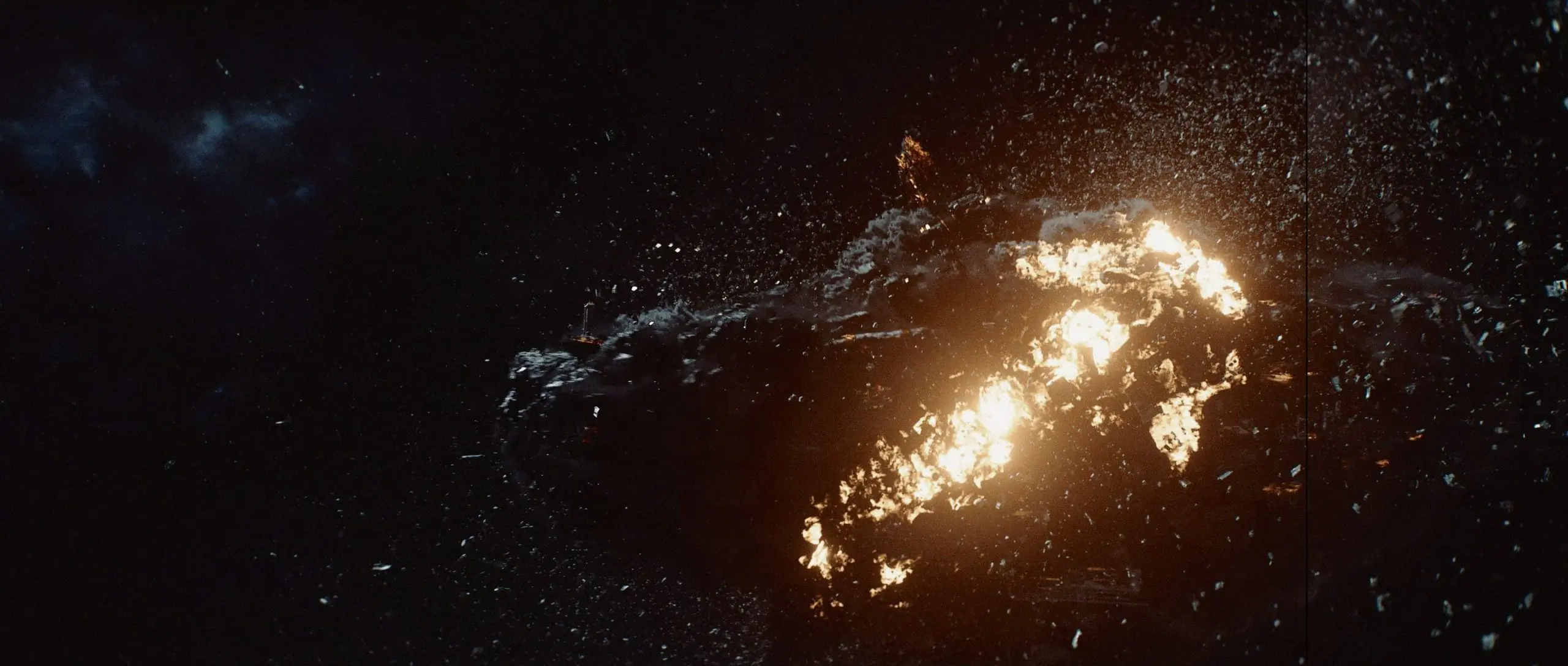
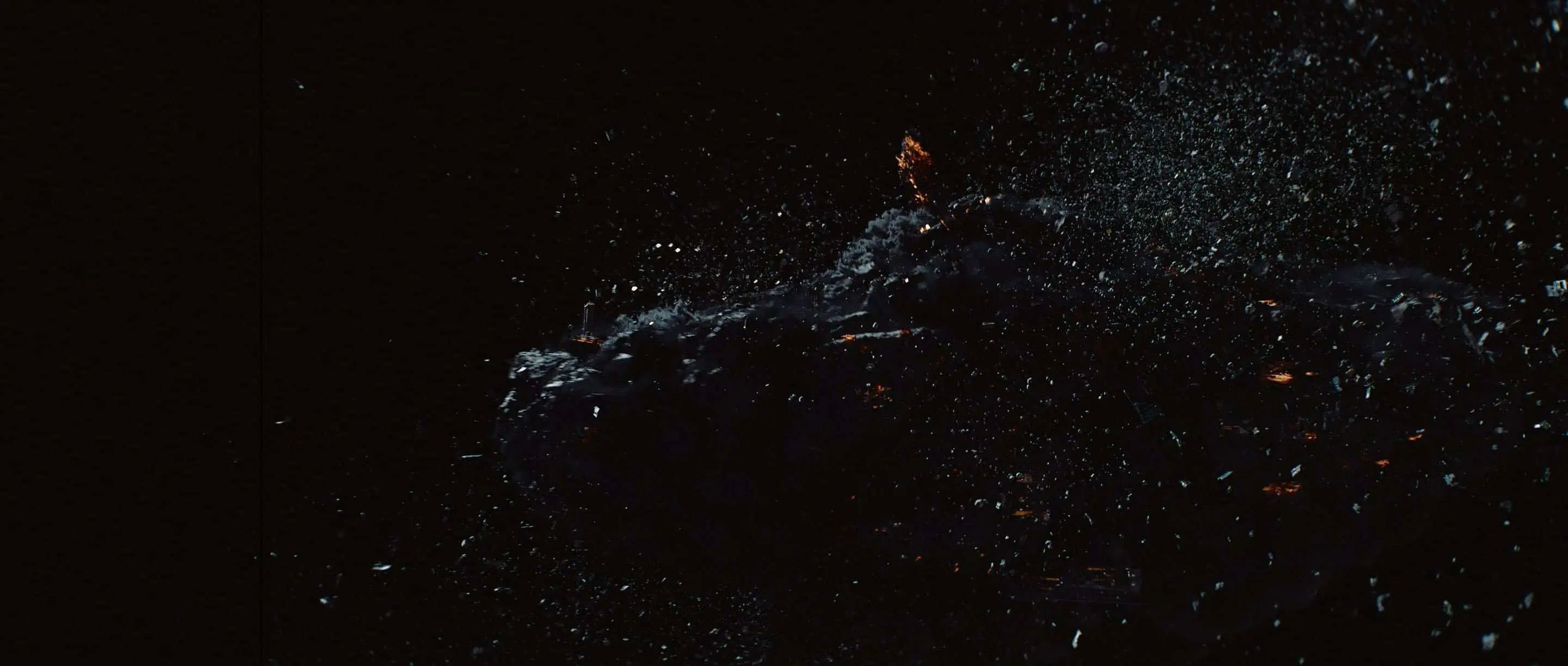

The major motion of the rocks coming apart are all hand animated. Then there’s a chain reaction of explosion simulations that triggers everything blowing to bits. The layout of these explosions and what triggers them is all hand placed, so it’s only really local events that are simmed.
DP: And then someone adds lens flares?
Espen Nordahl: Anamorphic lens artifacts and flares are definitely a key part of the look in these epic space shows, and one of my many obsessions. I believe one of the most important factors in a full CG shot is to match the aesthetics of the cinematography of the rest of the show, so we spend a lot of time comparing our shots to non-VFX shots. Flares are definitely a big part of what makes Star Trek look and feel like Star Trek.

DP: With the amount of work you put into Season 1 of SNW, have you prepared models/environments or Alembic Caches for the next seasons?
Espen Nordahl: When doing multiple seasons within the same universe, there’s definitely a lot recurring assets, set-ups, etc. It’s hard to know exactly what will be re-used later, so we always archive all our shows after completion, and dig models, 2d elements, textures, houdini set-ups etc. back up for future seasons when needed.
DP: With the Star Trek Universe growing as it is right now: Is there a shared reference library for the studios working on it?
Espen Nordahl: One of the key tasks for the production team on shows like this with several vendors working with the same assets and universe is to make sure everyone’s working within the same visual language, and where possible share the same assets.
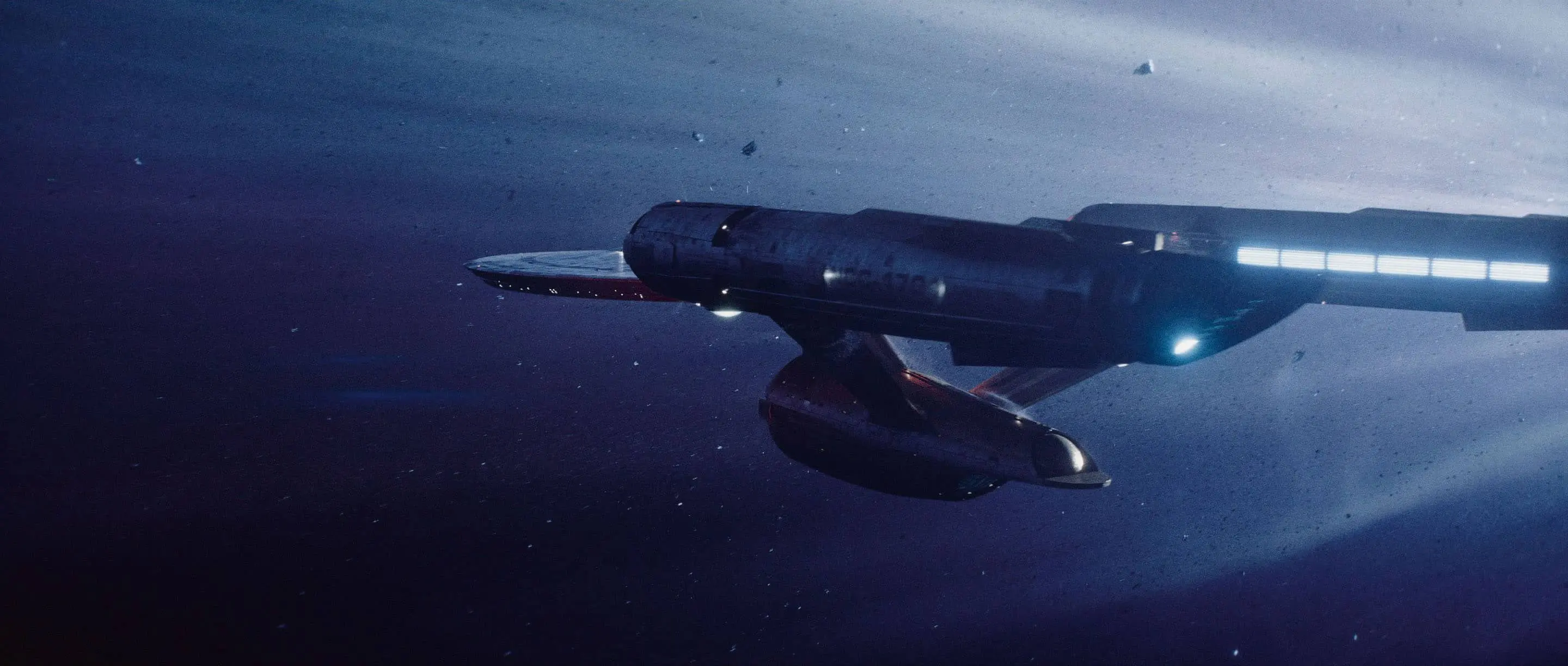
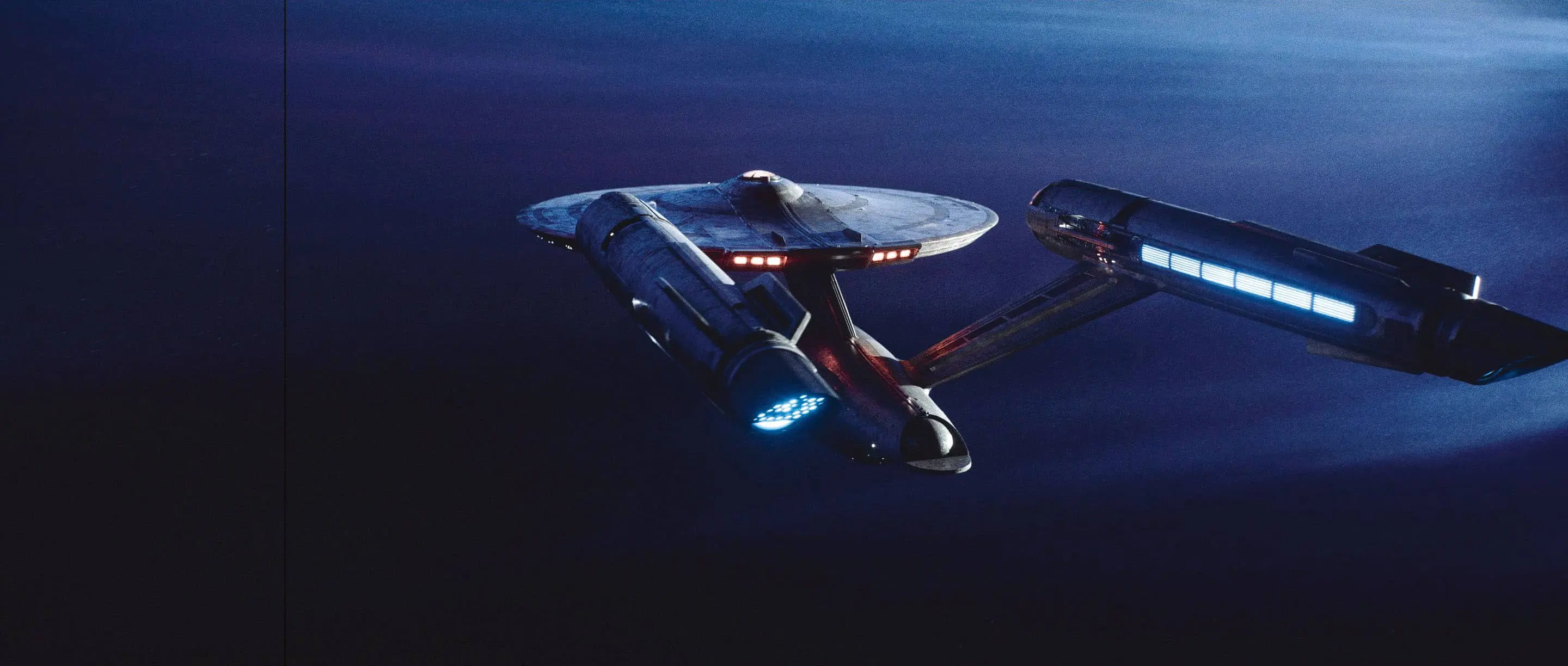
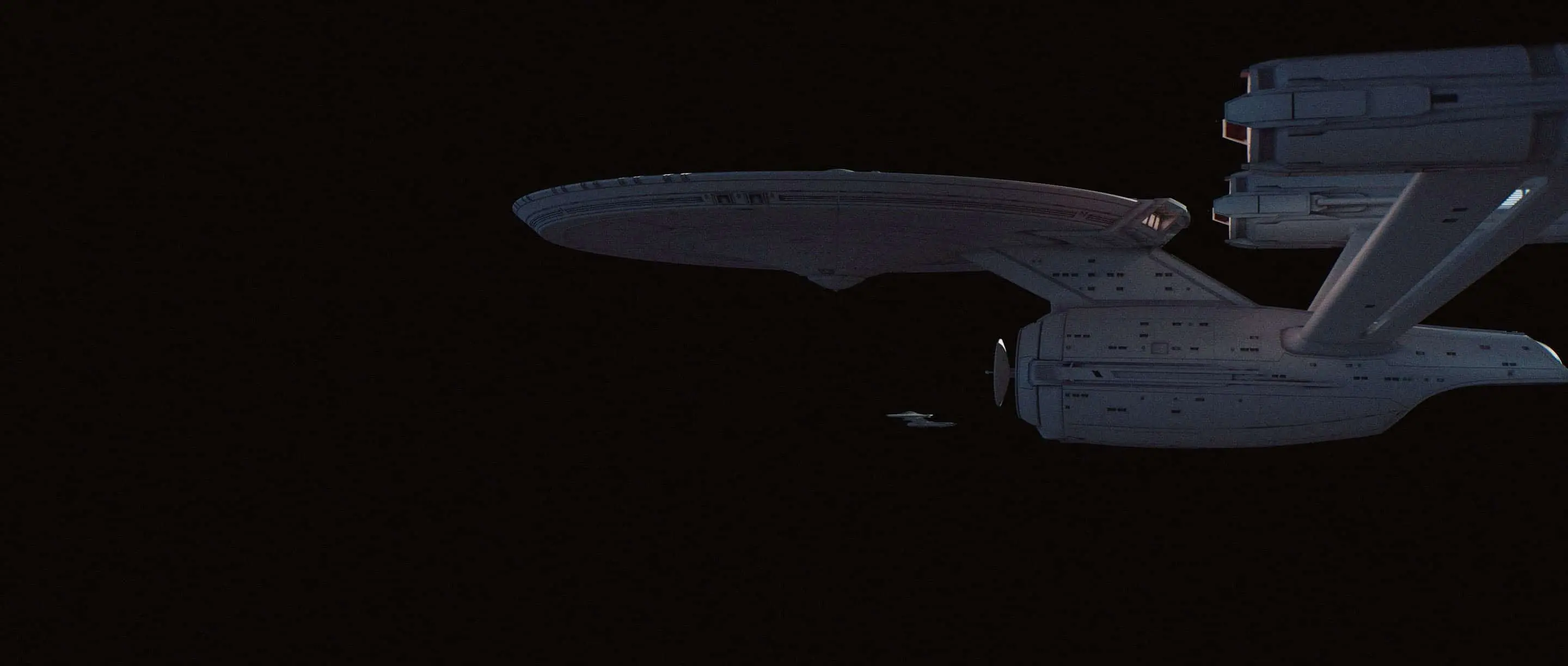
For hero assets like the Discovery, Enterprise etc. there’s one vendor that is awarded the asset development, and the others gets sent the model, textures and turntables to match to. For references we all get sent the same art package from the production design team, and whenever we do shots of an effect that has been seen before, quicktimes of those shots are also sent along for reference.
DP: What was your personal favourite shot?
Espen Nordahl: Even though I love all the huge shots with 1000+ frames, my personal favourites on this one would actually be some of the quicker dog fight shots. I’m a big lighting nerd, and a ton of love and care went into each individual frame of those laser beams as they go past the ships, lighting up metal panels, glare and flare up the lens, have the appropriate amount of breakup along their length etc.
DP: If you’d start Season 1 of SWN again, what would you do differently?
Espen Nordahl: Watch more Star Trek! I had only watched a few episodes here and there before working on SNW season 1, so definitely made a few wrong calls along the way based on not knowing the universe well enough. Being more familiar with the lore would have saved us a couple of feedback rounds on this one.
I have watched a whole lot more now though :)