



Chris Smallfield has been part of Trixter for over six years now, starting the collaboration as a freelancing CG Supervisor for Spider-man: Homecoming, after that becoming a CG Supervisor for movies like Jim Knopf, Captain Marvel, Brightburn, Sonic the Hedgehog, or The Kangaroo Chronicles. As a next career step, he shouldered the responsibility of an Associate VFX Supervisor for superhero-extravaganzas like The Suicide Squad, Shang-Chi and the Legend of the Ten Rings, or the first season of Loki.

Most recently, Chris has put on the hat of a Visual Effects Supervisor for Trixter, collaborating with Marvel on the streaming series Ms. Marvel and She-Hulk: Attorney at Law. Before his long-lasting stint at Trixter, Chris was a 3D VFX Lead Artist for Method Studios, a Senior 3D Artist for Rise Visual Effects Studios, was Head of 3D for the Chimney Group – but also has experience as a teacher for The Animation Workshop at VIA University College. Chris is a graduated with a Bachelors degree in Computer Art, having studied at Savannah College of Art and Design.
DP: Were you a fan prior to working on the Marvel property?
Chris Smallfield: I’ve been a comic and specifically Marvel Comics fan since I was about eight years old. An obsession that waned and waxed over the years. It’s been a boon though in my position as VFX supe, because I have a relationship with the source material from the start, which makes it that much easier to get going and coming up with interesting approaches to challenges.
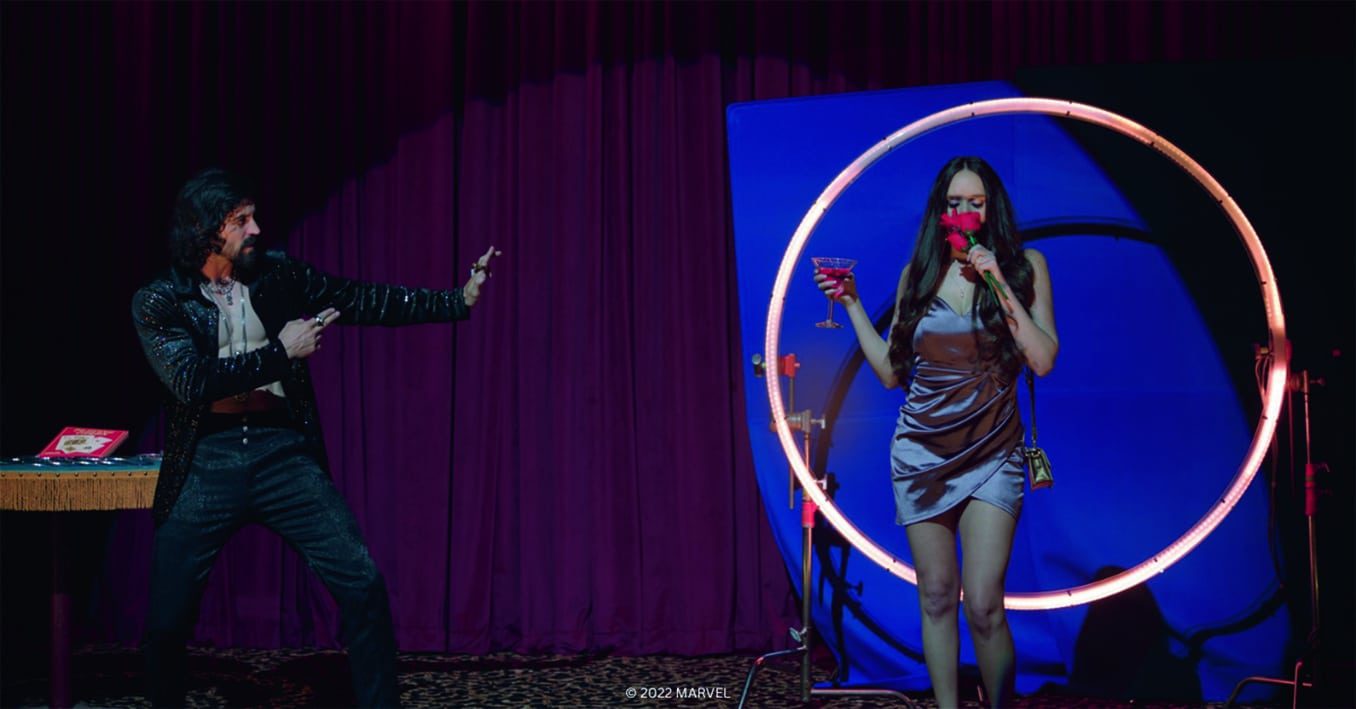
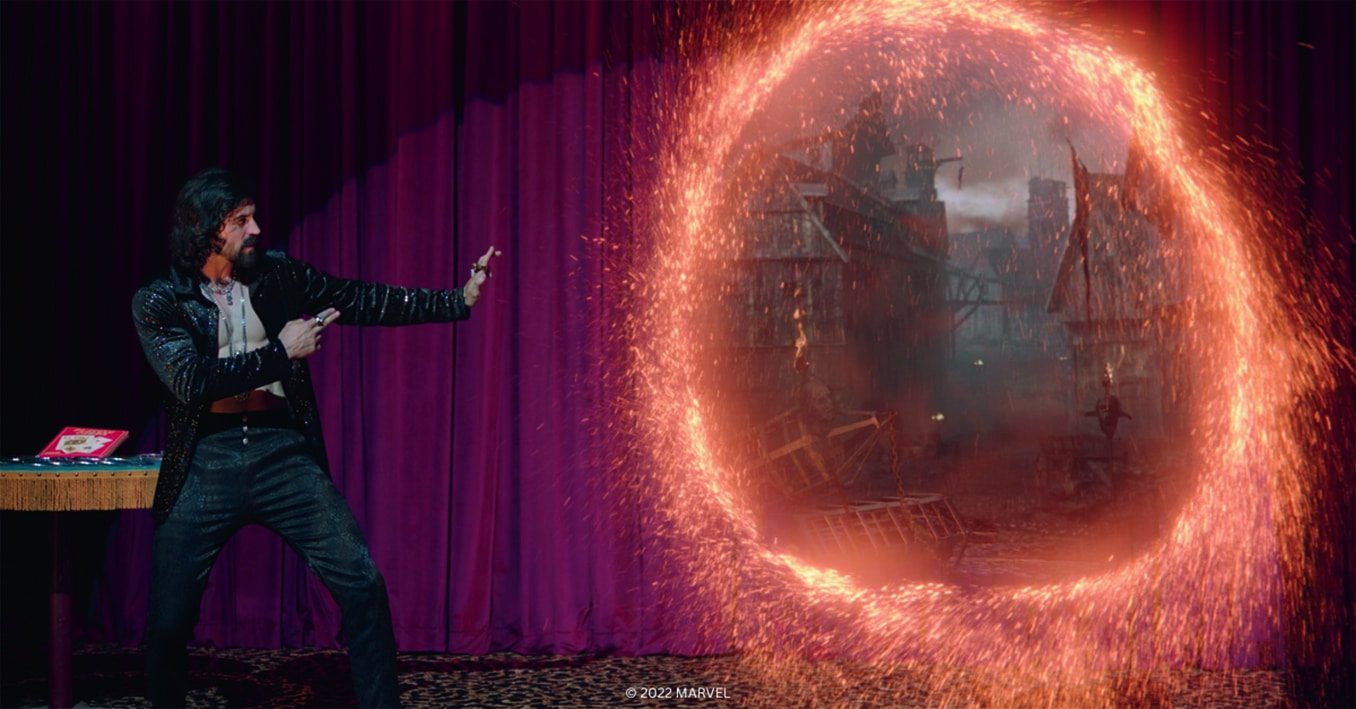

DP: Which shots did Trixter work on?
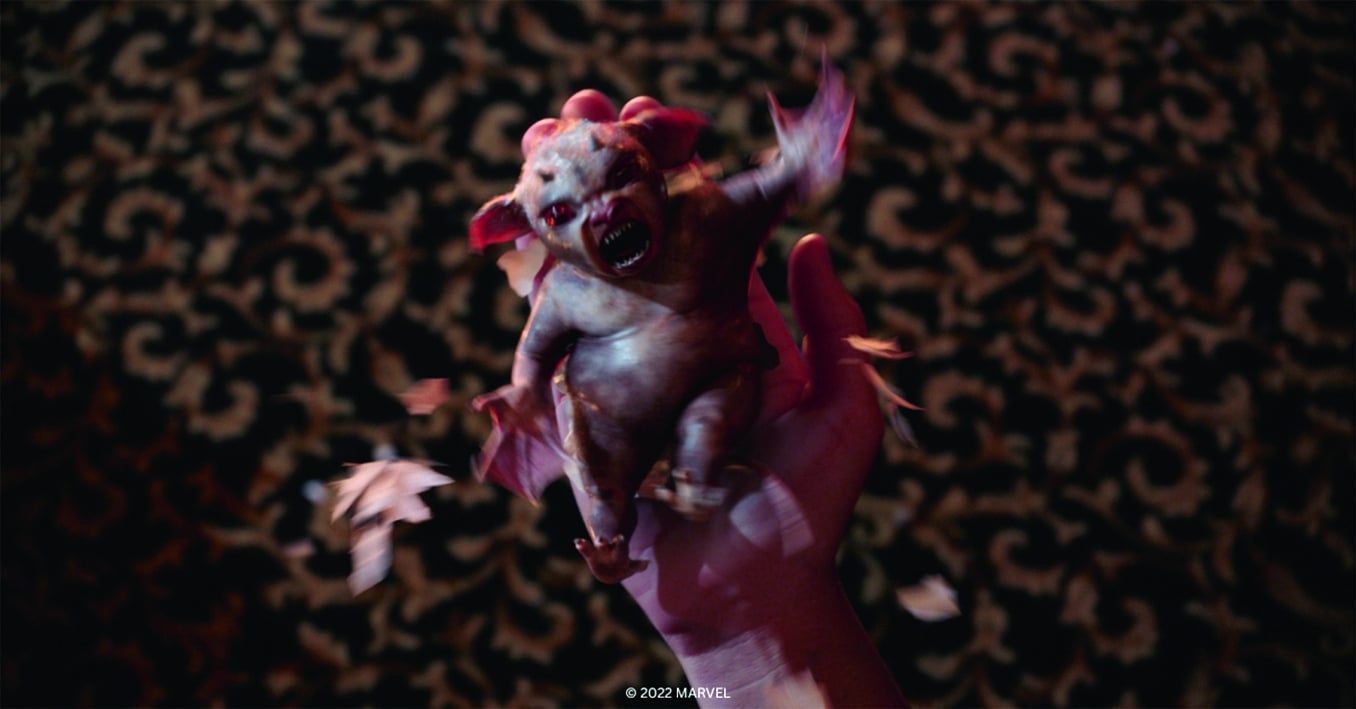
Chris Smallfield: We worked on a lot of different sequences, both a challenge and a lot of fun to have such variety. Notable ones were the Theatre Demon attack sequence, the Supermax Prison, Abomination’s parole hearing and the Wedding Fight between Titania and She-Hulk! We had several smaller ones as well, all with their unique challenges.
DP: At which point did you first get in contact with the She-Hulk project?
Chris Smallfield: We joined the project as Digital Domain was finishing the She-Hulk asset. That was our initial task as well, to ingest their She-Hulk into our pipeline and develop our own methods of translating
facial capture onto our version. We had to work closely with Digital Domain and Weta to make sure our characters were coming across the same despite very different scenarios, outfits, and hairstyles. The different outfits were a surprisingly challenging aspect. Most CG characters have one outfit and that’s all you need to plan for, She-Hulk has several, which requires a lot of special set-ups for each.
DP: Could you guide us through your VFX pipeline for She-Hulk?
Chris Smallfield: A lot of the steps are the same as any show: we receive plates, we matchmove them, do comp prep and clean-up, setup an initial layout, etcetera. After that, however, we did a first pass of the full animation because we had great mo-cap to start with. And with an AI-powered face tracking setup, we were able to get a 75 percent quality facial performance transferred directly to our asset in several hours rather than days. Our blocking stage of animation was quite sophisticated already. Additionally we made some initial lighting set-ups for sequences and then eventually for each shot – and did fast renders of that blocking. Light makes such an important difference in a detailed facial performance, so the goal was always to get to the best approximation of the final image as fast as possible. This made approvals a bit easier and reduced the number of surprises as we moved through the pipeline. It also made it easier for each department to work towards the final image in parallel and earlier than usual.
Even though the work was primarily character work, there was a lot of support FX work, such as demon goo, spit, sweat, fire, portals, sparks … all to add to the realism and integration, led by our FX lead Daniel Llusa-Ribes and our head of FX Martin Lapp. Another thing we did to make these processes a bit more efficient was relying heavily on our concept art department, many shots passed through their hands before we touched the FX giving us a much better target to hit. Max Behrens and Daniel Matthews were our heroes in that area.
DP: Creating Hulk-characters (giant, green) acting opposite humans (pink, regular-sized) must have been
super-challenging?
Chris Smallfield: As a start, on set, they very cleverly hired Malia Arrayah, a woman more or less matching She-Hulk’s height, to run through every shot as Tatiana Maslany did. This helped tremendously as a lighting and position reference for us, and great for the actors to check their supporting performances. The use of prosthetic shoulders and various stands to get Tatiana to be at the right height was also important. Even with that though, the anatomy of She-Hulk and her proportions are still unique; there was no special trick other than a lot of great work from our animation team, led by Animation Supervisor Sebastian Badea and Animation Lead Zsombor Balogh.
Beyond animation, getting all the details right makes a huge difference when integrating our CG She-Hulk into real situations. The close work between our asset lead, Holger Wenzl and our head of rigging Ruth Wiegand, and our Character FX lead Nico Kahmann allowed us to make a character that had full body muscle simulation that then drove the cloth of a big multi-layered bridesmaid’s dress. Both those things then interacted with a long wavy hair simulation, in a full-on fight scene! Wrangling all of that and getting the different departments in sync was the task of Sebastian Zilius and our head of CG Radu Arsith – and they rose to the challenge.


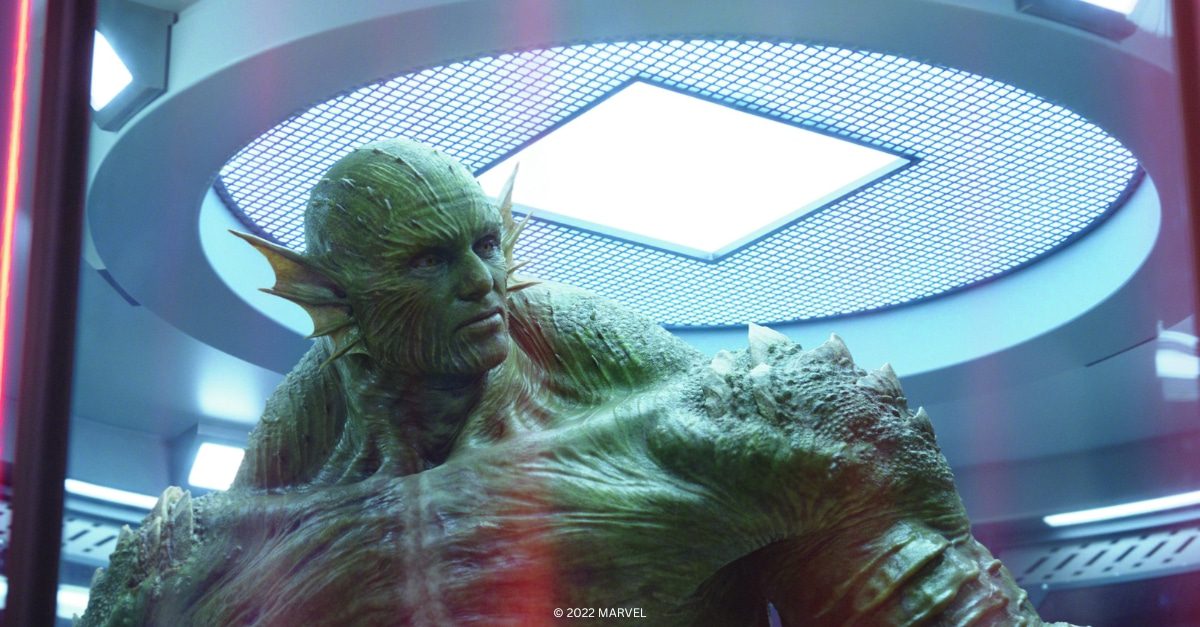
DP: Did you contribute to the Hulk-ifications of the different actors (Tatiana Maslany, Tim Roth, Mark Ruffalo)?
Chris Smallfield: We were very involved with Tim Roth’s Abomination, as we had redesigned the character for Shang-Chi a year earlier and made the hero asset with Chris Townsend from Marvel. We were able to reuse it with only minor enhancements for use in She-Hulk. Since we were already quite knowledgeable about the Abomination and how he worked, we were able to move pretty smoothly through that sequence and even delivered ahead of schedule.
DP: She-Hulk is a comedic series, after all. How did you balance comedic portrayals with realistic looking VFX?
Chris Smallfield: That was a challenge, especially since the disparity in heights and proportions of Tatiana Maslany and She-Hulk is so large. Small movements are multiplied, which is fairly obvious, but also facial performances, that worked well on Tatiana, sometimes looked unusual when scaled up. There was a lot of tuning of these aspects in animation.
DP: What were some of the challenges of having a full CG-lead for the show?
Chris Smallfield: Firstly, actress Tatiana Maslany is brilliant. Perfectly cast, and very funny. The biggest challenge is related to her facial performance. Tatiana has incredible control over every aspect of her face and her performance; she can blink her eyes independently, and contort her face into any expression. Despite She-Hulk having one of the most flexible and complex facial rigs up to this point, it was sometimes still difficult to match the spirit of her performance. It was a fun challenge and really rewarding to see the results, but a significant effort.


DP: How would you differentiate your work on Ms. Marvel versus She-Hulk?
Chris Smallfield: The characters are quite different from the VFX standpoint. Ms. Marvel’s powers were deeply FX driven while She-Hulk was more animation and Character FX driven (hair, cloth, muscle simulations). Both characters required complex cooperation between all departments, even once the initial assets were in good shape. Many hands need to touch each shot to get a good result. It’s like an assembly line, but one in which each step requires highly creative and technical work from our talented team.
DP: What did the communication between Trixter and Marvel look like?
Chris Smallfield: It was great from the start, initially with Janelle Croshaw as the VFX supe during shooting and then with Dadi Einarsson and Shannon Justison as VFX supes in post. Dadi became the primary point of contact for our sequences, and it was a real pleasure working with him. He was calm, gave great feedback, and was very understanding and supportive with regard to the many challenges we were solving together. As one of the three vendors doing She-Hulk in the show, the others being Digital Domain and Weta, Marvel served as the hub for us all. They facilitated the sharing of assets, both technically and creatively; they helped with the big-picture topics, like exactly the right shade of green She-Hulk should be. That was a surprisingly difficult thing to nail down!
DP: You worked on both, Marvel- (Shang- Chi, Loki, Ms. Marvel, Loki, Spider-man: Homecoming) and DC-/James-Gunn- properties (The Suicide Squad, Brightburn). How do they vary?
Chris Smallfield: Not terribly different regarding the material or the studios involved. One’s experience on a show is much more driven by the creative team you are working with, both on the client side and internally. We’d worked with James Gunn on Guardians of the Galaxy 2, as well as the horror film Brightburn. Continuing that relationship was pretty straightforward, even though the material and scope was dramatically different for each project. I’ve been lucky in that I’ve had a great experience working with each client-side VFX supervisor and producer so far. A big part of that is that everyone on a film, ultimately, cares most about making a great film. Budgets and schedules are of course important, but those are not the fundamental reasons people are generally involved. Movies are cool, and we want to make great ones!
DP: How does your teaching experience at the Animation Workshop translate to your current role as Visual Effects Supervisor at Trixter?
Chris Smallfield: They are very complimentary and utilize very similar skill sets. One must look at work, either created by a student or a senior artist, assess where it is, where it could go and tailor the feedback in a way for it to be useful for the student or artist to act upon. The nuance of giving feedback that will lead to an artist or student’s success is the same. Of course, having experienced artists with deep knowledge and history in the industry changes the type of feedback I give, and requires less specific mentor ship.
DP: What was the most fun you had on She-Hulk?
Chris Smallfield: I had an excellent team. An inventive animation supervisor in Sebastian Badea, a creative and detail oriented comp supervisor, Igor Majdandzic, an excellent problem-solving CG supervisor, Sebastian Zilius and a calm collected production team, Cat Thelia VFX producer, Eva Peschkes Associate VFX Producer and Valentina Sgro our lead coordinator.
That’s not to mention the hundreds of other team members that contributed so much to this project. This is true for any show, not just She-Hulk, but when you have people that are motivated to do good work, yet are on the same page about work-life balance, it’s a real pleasure and the challenges are fun rather than burdens. Overwork yields mistakes more than productivity, so when people are in agreement on that, things tend to run smoother overall. I am so proud of the work we did and so thankful to the many, many artists that put their heart into their work to make it a reality.

Erika Feijoo-Spena is part of Trixter for a little more than one and a half years now. As VFX Production Coordinator, she stemmed the mammoth-project Dr. Strange in the Multiverse of Madness – and, most recently, the first season of She-Hulk: Attorney at Law. Before joining forces with Trixter, she made herself an irreparable member at the Spanish VFX company El Ranchito, being a Junior VFX Production Coordinator on the Apple-TV-Series See Season Two (see Digital Production for more information about the series: is.gd/ReichDerBlinden).
Prior to that, Erika was a 2D Animation Production Assistant for The SPA Studios (Sergio Pablos Animation), where she contributed to the animated Christmas film Klaus. Erika’s skills include but are not limited to: Communication, Animation, Post-Production, Visual Effects, Organization, and Team Coordination. She earned her degree in Audiovisual Communication from Camilo Jose Cela University. Additionally, Erika graduated with a Master degree in Animation from Lightbox Academy.

DP: What does your usual workday as VFX Production Coordinator for Trixter look like?
Erika Feijoo-Spena: I work in partnership with my department Lead and Supervisor organizing the work according to dates and priorities. We keep the communication flowing between the different departments, teaming up with the other coordinators to know what they need, what we are expecting, when we need things, etcetera. We report to management and the producer any issues or delays in our departments, that may affect the general production. We also give support to the artists in our department, so they can work comfortably, have what they need when they need it, and keep them in the loop of things that can affect their work or priorities.
We are also the point of contact for our departments. We have to keep track of everything that’s going on, keep our tracking program Ftrack up-to-date – and also help the VFX supervisor, so he’s aware in reviews of what we are doing; we also inform him about when, why and how what we are doing affects the overall project schedule. We also set up meetings and reviews to ensure that everything keeps moving forward, and to discuss important topics to find solutions when needed.
Our usual workdays are full of organizing, prioritizing and communicating. We gather information from vendors, the client, the production team and the supervisors to our departments. We organize that information in the morning with our department supervisors and leads according to the schedule. In the course of that, we even take into consideration the strengths of our individual team members, thereby splitting the work in the most efficient way. Also, we keep track of what happens during the day – and adjust and report accordingly.
DP: You worked on She-Hulk and on Dr. Strange in the Multiverse of Madness. What was it like working on those different Marvel properties?
Erika Feijoo-Spena: Both projects were exciting, but very different to one another. For She-Hulk, we had sixteen very different VFX sequences. We did She-Hulk herself, but also portals, transformations, lasers, demons, a dove and a wedding fight. I was involved early in the project, so I saw all the development; I saw the team grow. We worked together for around a year. I had the opportunity to coordinate different departments through the whole process; working with departments like rigging, CFX and animation in the beginning – and moving on to compositing, which was the department I mainly took care of. For Doctor Strange in the Multiverse of Madness, I focused on two sequences for less than two months, while coordinating a large animation team.

DP: What was your major challenge during production – either technical or from a organizational point of view?
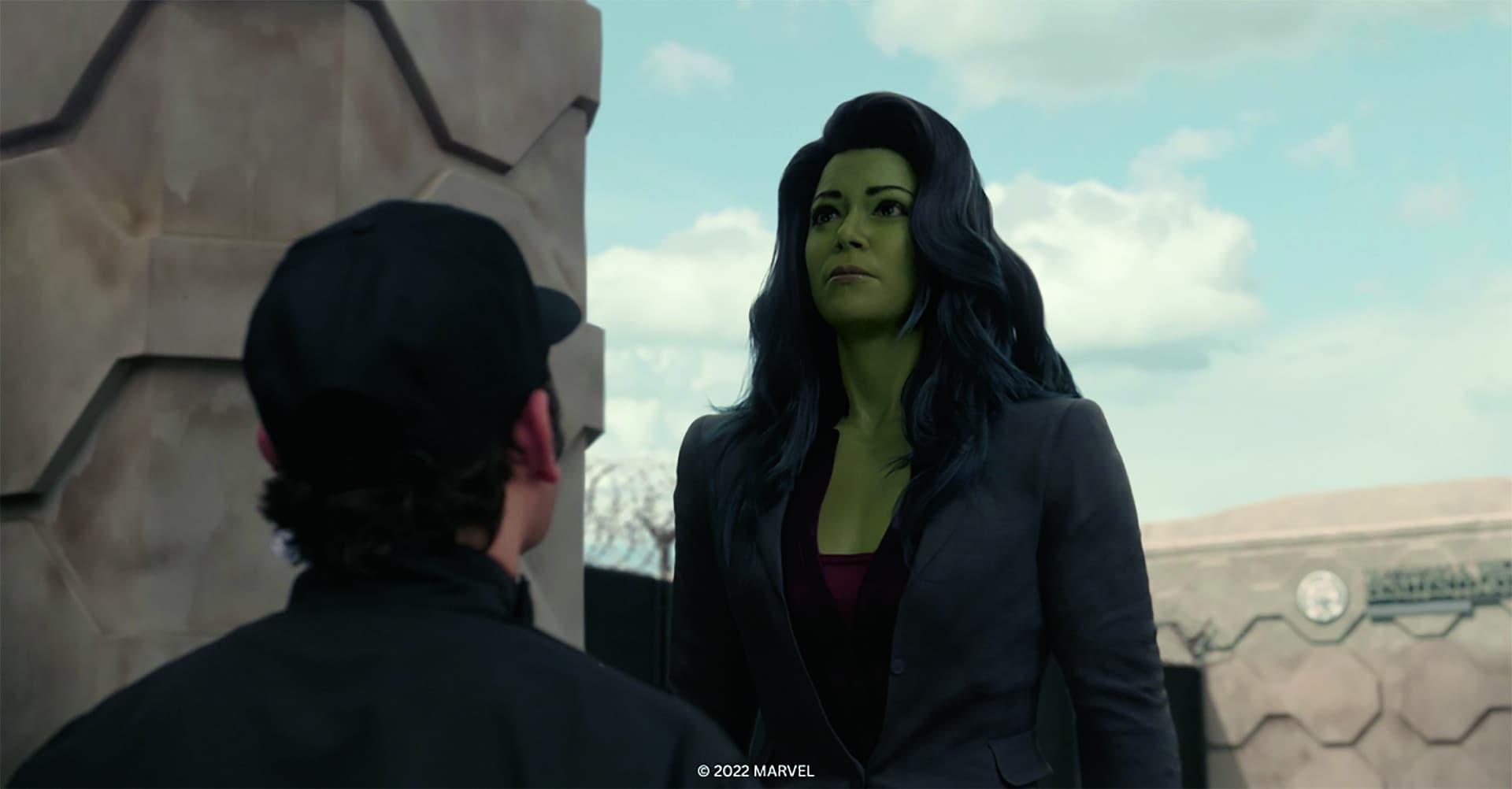
Erika Feijoo-Spena: The wedding fight sequence was the biggest challenge, both technical and organizational (featured in episode six, titled “Just Jen”. Editor’s note). That sequence was long, complex and with very different types of shots. There were various types of VFX work needed to achieve the sequence, which went from bluescreens and cable paints, to more technically challenging shots with face deformations. That sequence also has a transformation – and a fight between a plate character and She-Hulk, wearing a fluffy pink dress together with enviable hair.
It was also challenging organizationally, because it was our last sequence. In order to achieve the best look possible, we had to add certain steps in between, rearrange the tasks and artists.
DP: With how many contributors did you communicate during your time on She-Hulk?
Erika Feijoo-Spena: It’s difficult to give an exact number. We have vendors for tasks like roto and prep, three different VFX supervisors on the client side; we spoke and shared work with at least three to five other studios while working along with us on She-Hulk. We were communicating with the creative and production teams of those studios.
DP: What is your experience with production tracking software?
Erika Feijoo-Spena: I’ve had the opportunity to work on different types of production, from TV and News, to 2D and 3D animation, and VFX. Adding to that, each studio works differently. I think it’s important that the software adapts to the needs of each studio or production. Mainly, I’ve worked with Shotgrid/Shotgun and Ftrack in my career. Both are very versatile. Shotgrid has a lot of features that are customizable. It has its own tools; it’s full of possibilities. You can create numerous views with different gadgets, always providing you with the information you want – and how you want it displayed.
Ftrack, on the other hand, keeps it simple, so everyone can easily customize what they see very quickly. It has tons of possibilities for filtering information. The best part is that the filtering is fast. You can also jump between different places within the same filters applied, without having to create another view. But you also have the possibility to save the filters applied as a view. On top of that, the main difference I see is: Ftrack works more with splitscreens, so the detailed information of the shot/task/version you are checking will pop up in a splitscreen on top of the view, without you having to leave the filter or view you were using. You can also navigate all the information related to such a task, version or shot.

DP: Could you guide us through your media reviewing pipeline for She-Hulk?
Erika Feijoo-Spena: Everything created during the show’s production goes into Ftrack. We, the coordinators, will distribute, organize and prepare all the material from there. Once an artist publishes a version in Ftrack, each coordinator will make sure the department lead and/or sup checks it. Once this is done, they will change the status of the version to Sup or Lead approved accordingly. From there, the coordinator will take these versions and add them to an Ftrack playlist – and also make sure all the material that needs reviewing from their team is ready.
Once we have the playlist ready with all the versions from the different departments, the VFX supervisor will launch the tool RV (from the Ftrack playlist), where he can play the media, load whichever versions of a shot should be compared, add annotations, etcetera. Also, the coordination team can write notes – or save annotations added automatically to the different shots within Ftrack.
DP: How did you use Ftrack during production?
Erika Feijoo-Spena: Ftrack was used for almost everything production-wise. For us coordinators, it is our main tool to work, but also artists and supervisors use it. It is the place where we will gather all the material produced, track all the tasks and versions created. In coordination, it’s also a communication tool between departments, as through the notes, we will pass on the material through the pipeline with transparency and clarity for us and the rest of the team. We also use it to check the media, create playlists for reviews or version we want to send, ingest references, add notes, track status of tasks in each department, track each version produced and its notes (internal and client ones), to import the schedule dates and priorities – so the team is clear on their targets and work order. Tracking the work hours per task, so we have a clear picture of the work we are putting into each task and where we are according to the plan, is another function of the software for us.
DP: Can you give us concrete examples where Ftrack offered unique advantages?
Erika Feijoo-Spena: Two things come to my mind. Firstly, Ftrack works with splitscreens; when you click a version, a task or a shot, it will open up a window on the side with all the information. That window is also navigable, so you can find the information you are looking for, without losing the view you were using previously, as it stays in the background. That’s really cool, and is also faster, since you don’t have to wait for the pages to load when navigating the information. Secondly, Ftrack views are based more on filters. It feels comfortable jumping between different assets, sequences or shots, with the same filters applied; that makes searching for versions more efficient. Also, as you have information filtered out, the pages have low loading times.
DP: What additional features could Ftrack benefit from?
Erika Feijoo-Spena: Firstly, a feature allowing you to take notes on multiple shots, without having to publish the note until the review of the individual shot is done. In VFX, we often do multiple versions of shots with different options/proposals; we review them all together. The supervisor normally jumps from one to another, so that feature could be very, very handy. Secondly, it would be great to have an option for adding versions to the Ftrack playlists from the versions tab in the splitscreen pop up – and not only in the general versions view.
DP: What’s the most amusing thing that happened to you during production?
Erika Feijoo-Spena: That’s a hard question! We had an amazingly funny team and a lot of funny things happened during the production. If I have to pick one, I would say the creation of an internal meme library out of failed renders takes the prize. It was hilarious, as all the team was involved. We continuously will share images of funny viewport bugs, failed renders, or a funny facial expression from our characters with each other while working. People will save them and create memes to use as internal jokes.
