



Table of Contents Show
After years of pursuing my second passion, music, in the seclusion of home recording, it was time to bring one of these guitar songs to the stage. I also wanted to change genres after several animated productions, especially as my colleagues Sofie Kienzle and Rüdiger Lensing have always had a strong affinity for puppet animation.
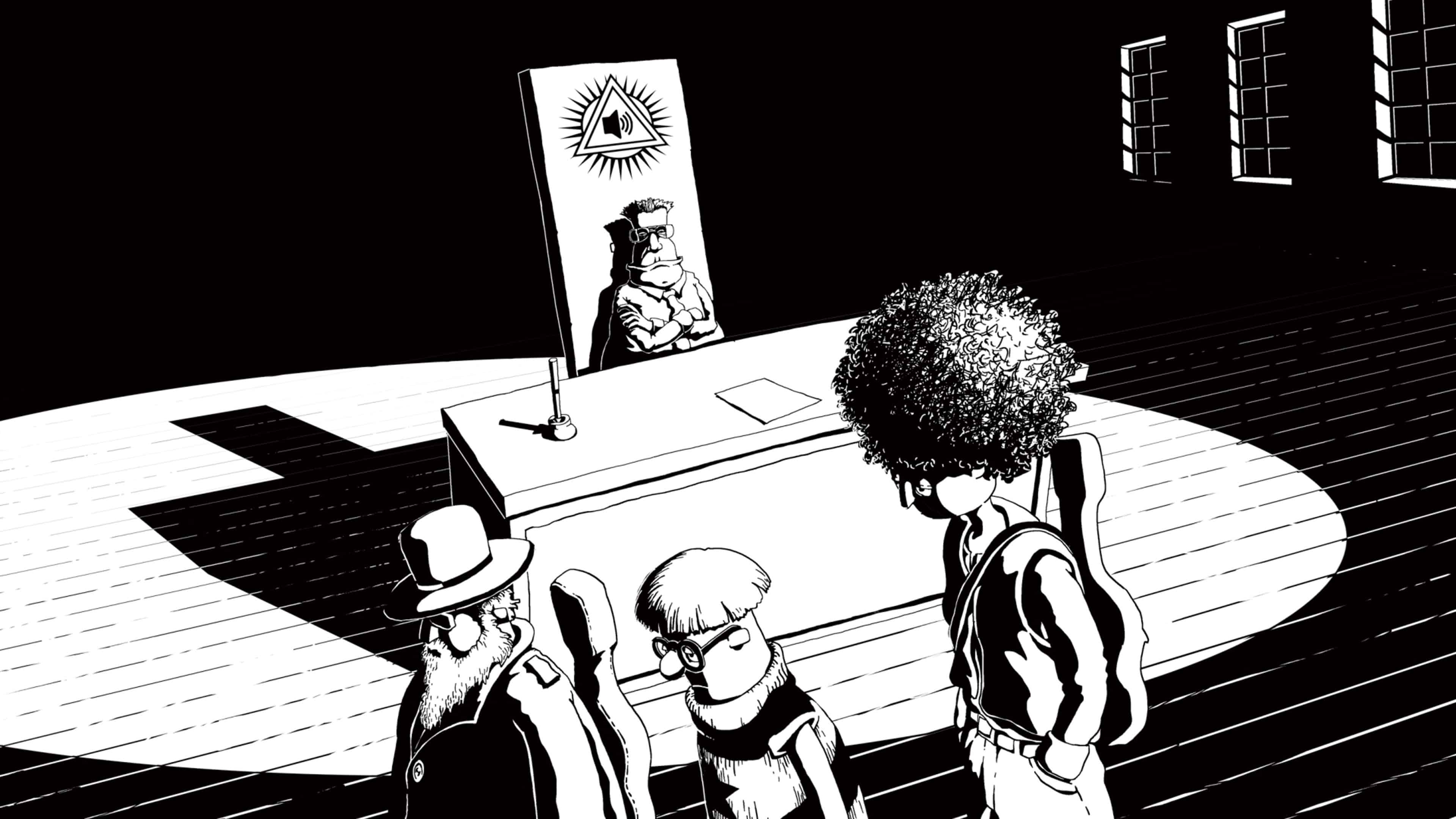
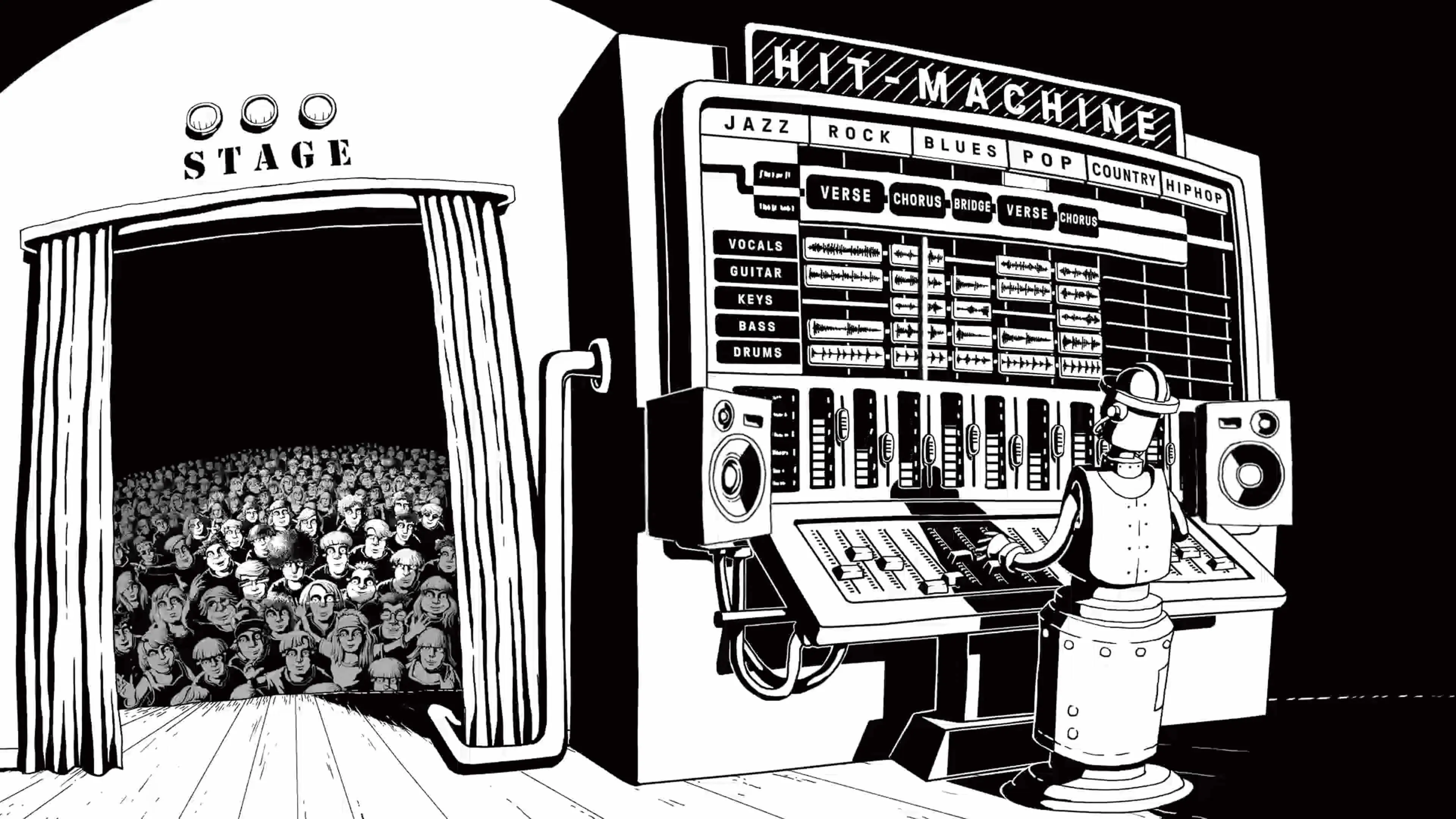
The song-length film should not only show a band playing “live”, but also tell a story. That’s why we decided on a second film level in which the piece tells the story of the band. As a musician, you have to think about the problems of publishing your compositions, a market full of tempting streaming services and adapting to the mainstream, etc. … The story could therefore be about the band’s history. … The story could therefore be about the band’s first encounters with a music manager in his concert office, where their works are manipulated according to his rules. The constellation of the band is rearranged or replaced by machines and the singer finally undergoes a complete transformation. The film sequences to be inserted show the same protagonists as on stage, but as a background video they should be clearly differentiated from the puppet trick shots and therefore drawn in black and white cartoon style. At three points in the guitar song, an additionally recorded gibberish song would give the impression that the singer is telling the story.


Let’s get started ..
With the basic idea, the direction was set. Because of the two film levels, two storyboards or stories were developed. One was the editing sequence to simulate the band musicians’ movements recorded live on stage and the other was the partially animated cartoon-style flashback story. Two different character designs for the same protagonists were therefore considered. The puppets were to be made of classic materials such as metal, silicone and sewn or crocheted fabrics, while their “colleagues” in the second video level were to be drawn in a clear, black and white comic style, emphasising light and shadow.
The first step was to find a suitable groove with a rocking guitar theme from my home recording collection. The tracks were reworked so that the song had a clear structure consisting of four improvised passages for the stage action and three interspersed verses for the singer’s narration of the cartoon story. These vocal parts would later be recorded as additional tracks. The timing of the film was thus already set as the basis for the storyboards. At the end, the film was to have a return sequence, which once again shows an astonishing twist in the story.

Character design
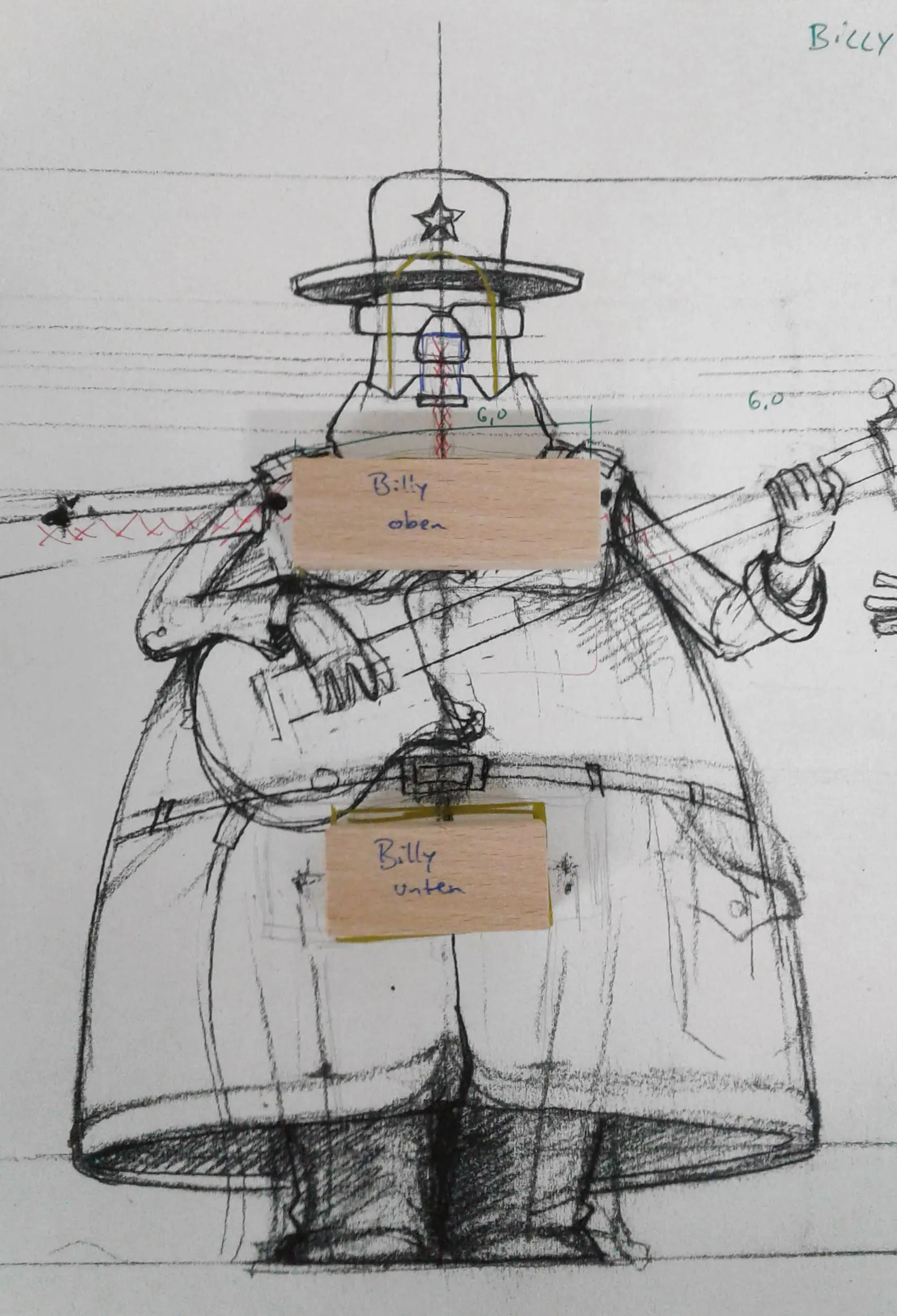
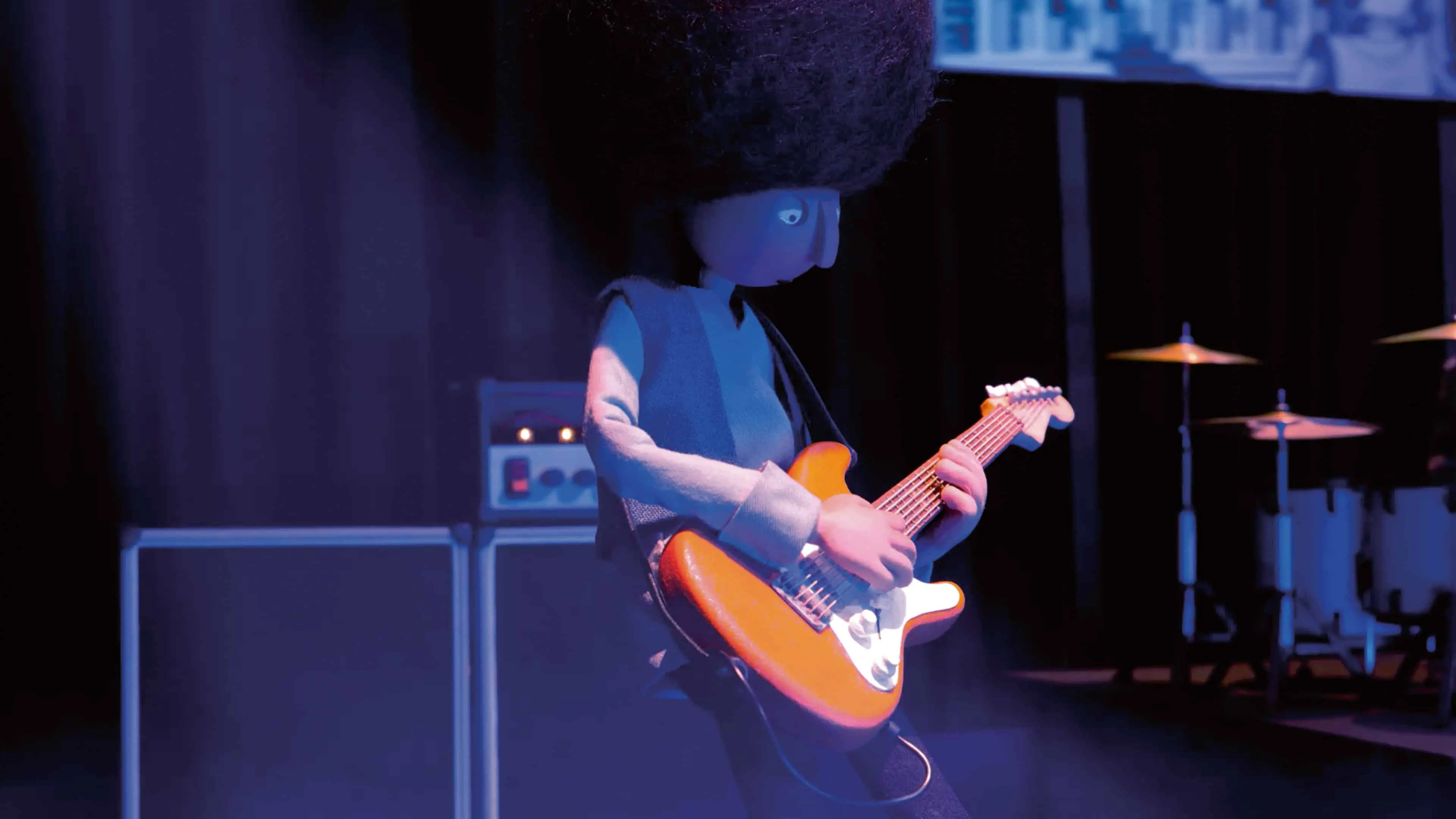
You can’t deny your musical roots, so the band should be a star ensemble made up of the corresponding protagonists: “Jimi” (Hendrix) on guitar, “Ronnie” (James Dio/Rainbow) as singer, “Billy” (Gibbons/ZZ Top) here as bassist instead of guitarist and “Stewart” (Copeland/Police) on drums. But apart from Jimi’s hair, we didn’t want to stick so closely to the real role models, but rather create funny characters with different proportions. The “turnarounds” were created for all four band members – drawings of the frontal and side views with the defined proportions and initial details of clothing and other accessories. The size of the puppets had to be kept in mind, as space was needed for the inner workings of parts such as joints, wires, wooden blocks or screws etc., which were important for the later animation. On the other hand, they must not exceed a certain size, otherwise the dimensions of the entire stage will be “out of joint”.
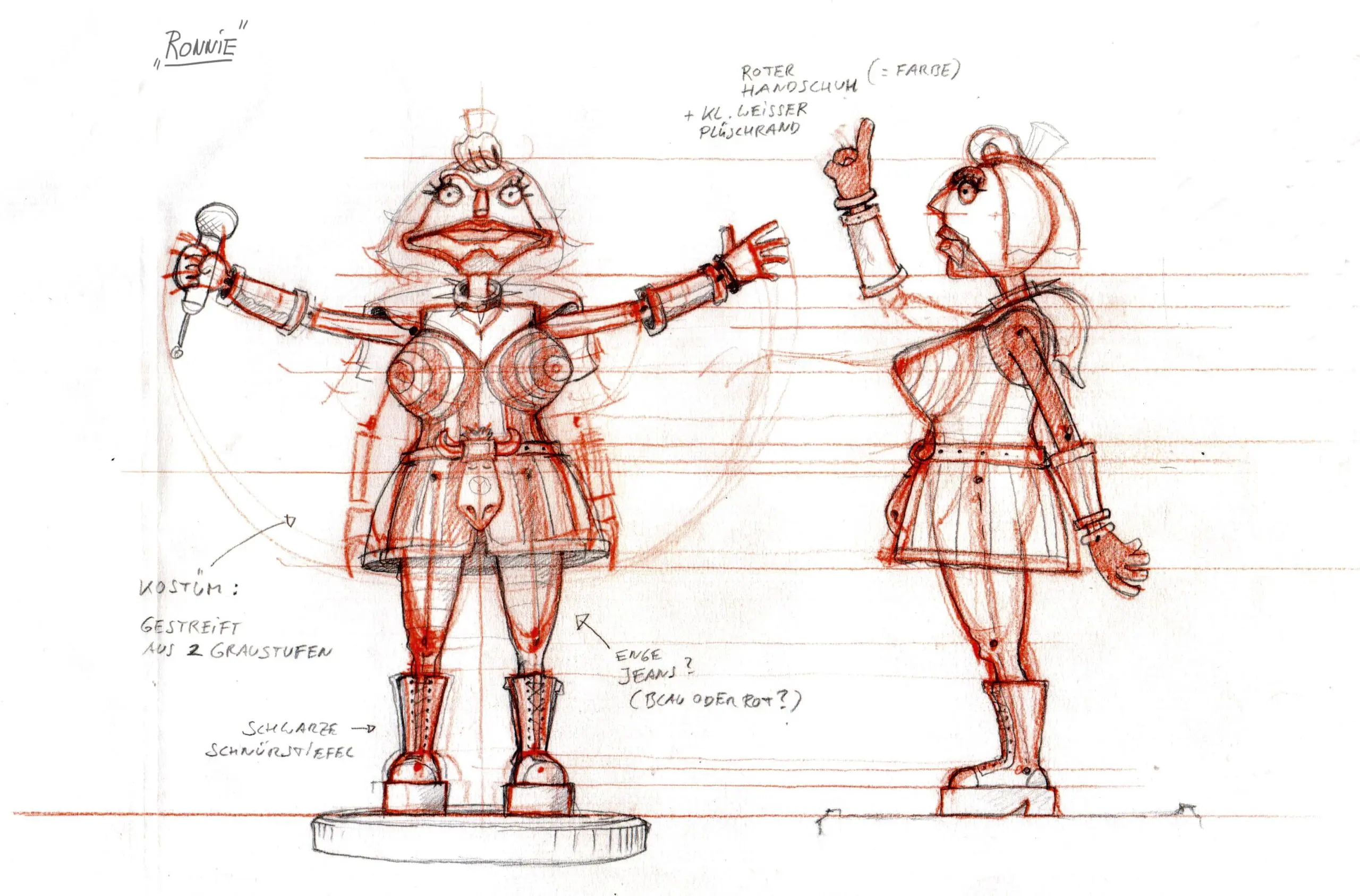

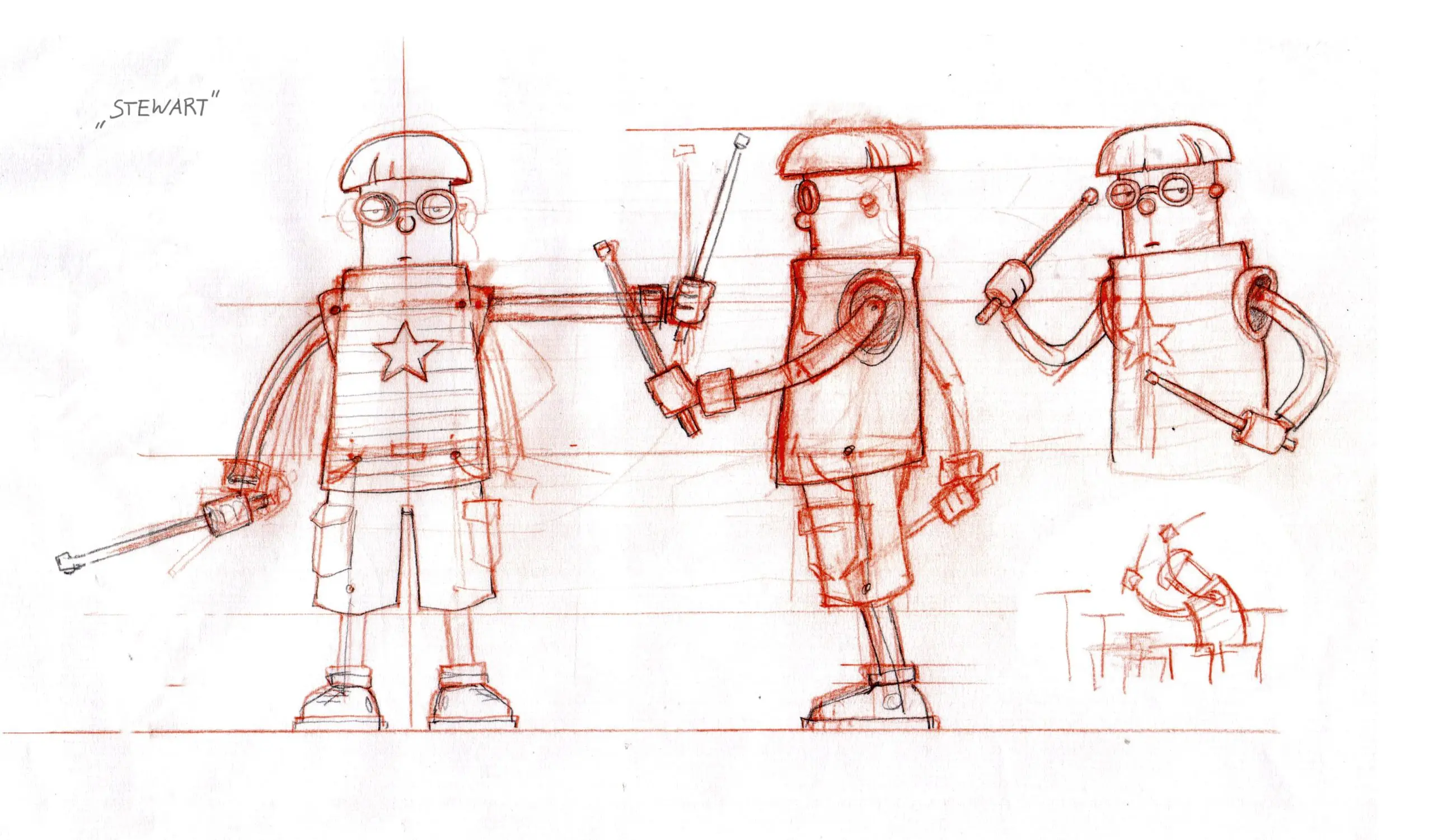

We left the character design to pencil drawings, as the colours and look of the puppets were to be created spontaneously later during production through the selection of materials. Front and side views were also created for the so-called props, i.e. things that the musicians need for their performance on stage, such as guitars, amplifiers and drums. For the character drawings for the black and white comic sequences, particular attention was paid to the arrangement of the light and shadow areas of the figures. Further designs for the music manager and his assistant robots were added here, as well as the preliminary drawings for the “music publishing house” and “office” environment.
Two storyboards
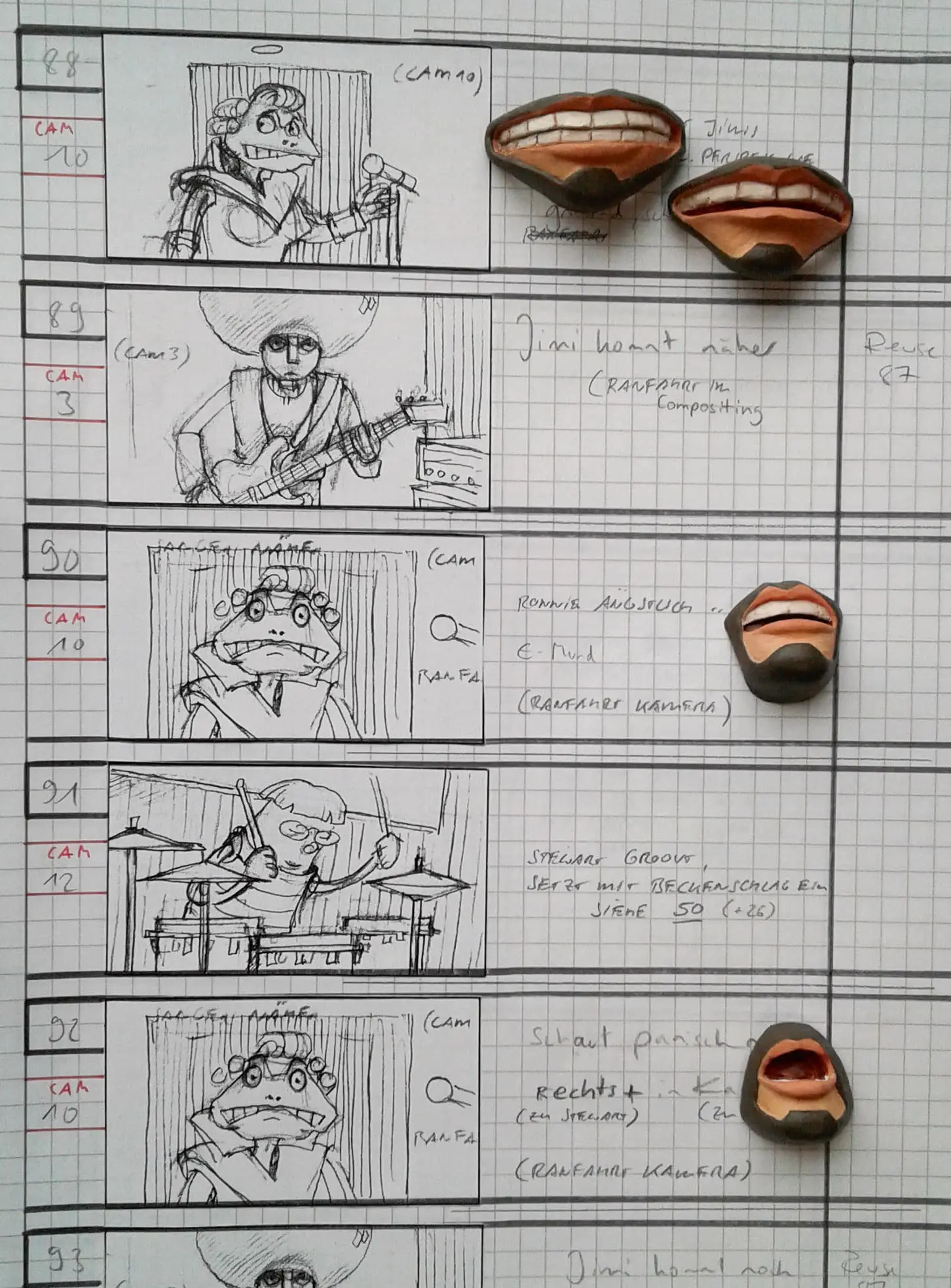
Next, work began on the storyboards. The time frames for the two storylines, the action on stage and the narrated cartoon story, had already been set. However, they differed in their approach to the storyboard. While the puppet animation sequences were about creating a recurring action, the playing of instruments, with quick cuts of different camera angles to create the impression of a live recording in time with the music, the drawn cartoon picture story focussed on a compressed and coherent presentation of action sequences as a quickly edited narrative film.
We first drew the storyboard for the puppet animation sequences so that we could soon start making the puppets. Although some of this can be done in parallel, it is good to know which movements the puppets should actually perform. For example, it was important that the movements of Jimi and Billy’s fingers were recognisable, while the drummer didn’t even need a fully modelled lower body as long as he could only be seen behind his drum set and there was no view from above.
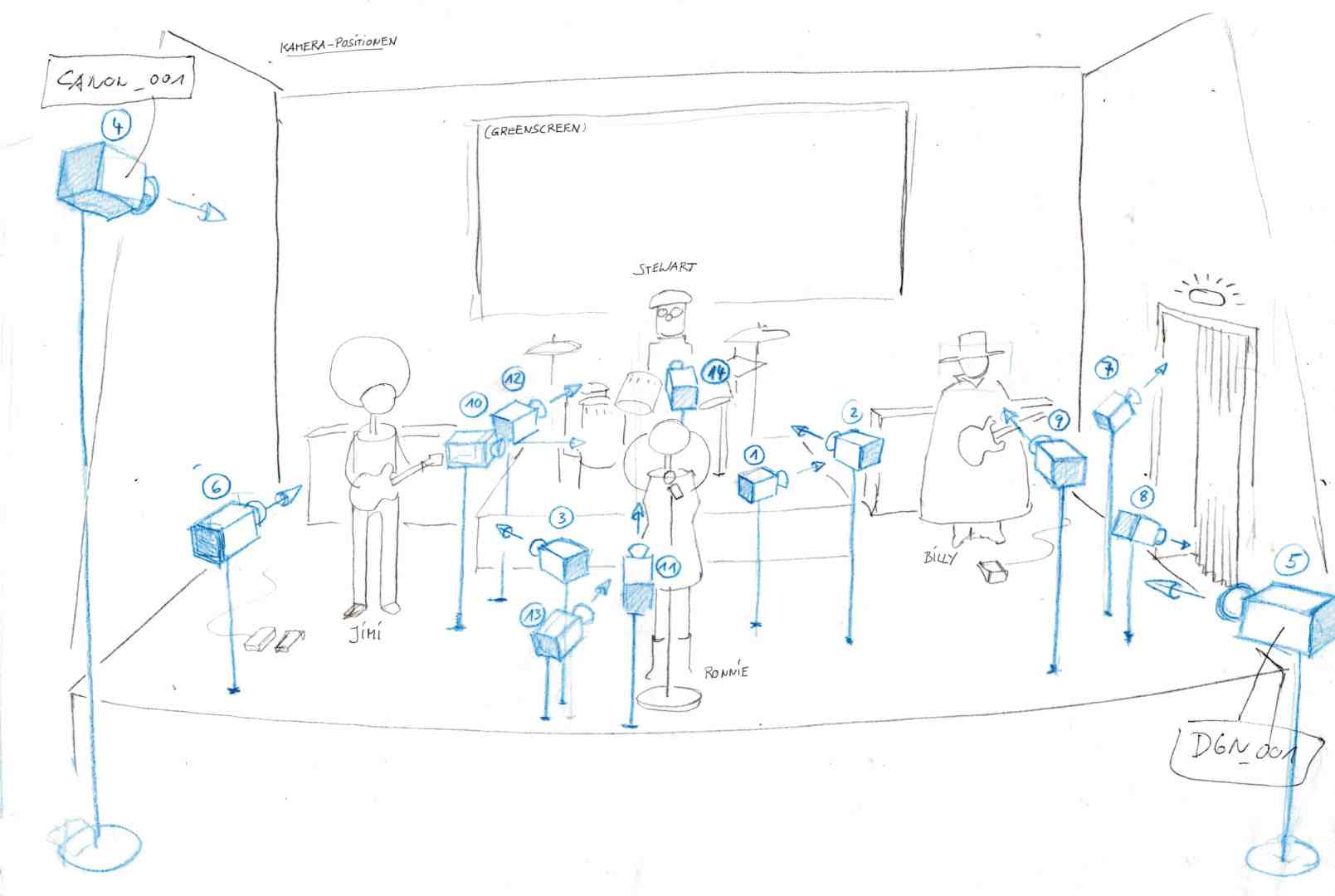
In contrast to the real live recording, we didn’t want to have to animate all the puppet musicians throughout the entire song. That’s why we first made a stage drawing with all the desired camera positions and corresponding numbers as a reference for the storyboard and therefore also for the viewing angles during the later shoot at the puppet animation table. For the scene changes in the storyboard, the song track was counted in time and attention was paid, for example, to when a recurring basic groove “runs through” or when conspicuous accents or breaks occur on certain instruments. For the former, the elaborate long shots with all the figures in the picture at the same time and therefore to be animated in parallel could be recorded for 8 bars – preferably with 2 cameras from different angles – in order to repeat them elsewhere.

On the other hand, close-ups would be suitable for the accents, which would also be used as a reuse at the appropriate point. An animatic for the first film level was created from these storyboard drawings of the actions on stage. The animatic for the second level of the comic narrative was also created to match the music track with very rough pencil drawings to see whether the respective action would come across coherently in the short time frame given.


Doll construction
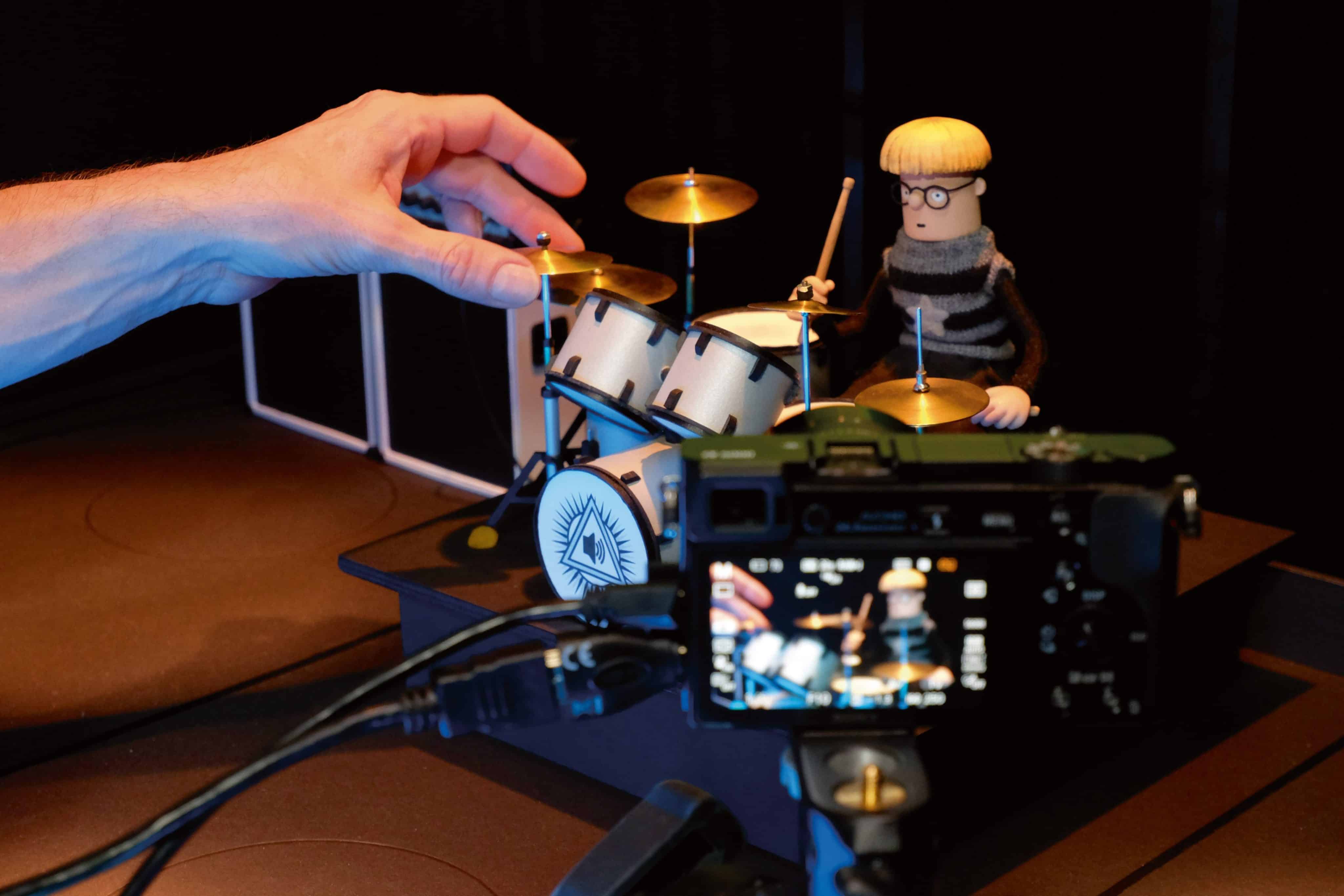
The dolls were to have a very classic doll trick look, i.e. wear sewn, crocheted or (artificial) leather clothing. Their inner life should not have a high-tech skeleton, but should be stable and flexible in the necessary places and resilient during animation. Hardwood blocks were therefore used for the shoulders and hips. The bases of the arms and legs were inserted into these blocks using a metal connection and canted with small screws to prevent rotation. For the playing hands, prototypes were modelled as casting moulds for silicone hands with twisted wires embedded in the fingers to ensure that the finger positions were maintained during the stop trick animation. The feet – and in the case of Drummer Stewart also the bum – were provided with threads on the underside so that they could later be fixed to the base. The heads were made from painted, light air-drying modelling clay with a metal core. Any facial expressions were later animated by gluing on mouths and eyes. Only Ronnie was given eight interchangeable versions of his mouth for his “half” head for lipsyncing during the performance of his “song”. Embedded magnets ensured the right stance and the transition to the head was concealed by the skilful use of a beard border.
We made sure that the band’s instruments looked reasonably authentic. For example, despite their small size, the guitars would have pickguards and “real” strings made from sewn rubber threads, the speakers would have the typical carrying handles and protective corners, and the amplifiers would have “real” guitar tubes simulated by a miniature light chain. Manual labour was required here.
Set construction
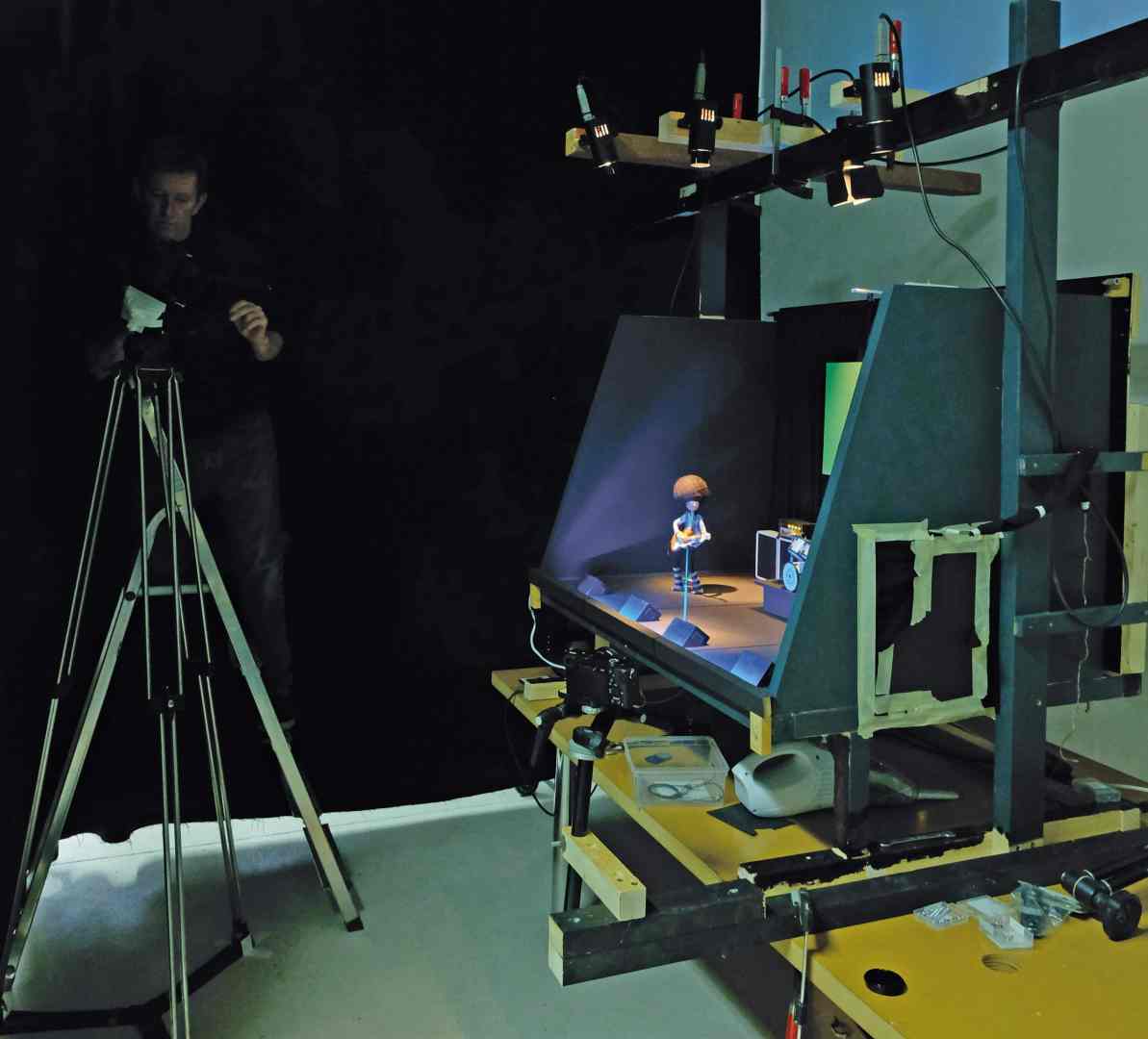
As a normal animation studio, we were of course not really prepared for a puppet animation premiere. So we started by placing the largest and most stable table by far as a crime scene for the production in a corner of the studio that was as far away from the light as possible but easily accessible … and framed it on two sides with two floor-length molleton curtains. A large perforated steel plate was used as the stage floor so that the puppets could be fixed from below with screws at any point. A large grey Bristol board was used as the floor covering, into which the holes for the fixings could be pierced as required. A black curtain was attached to the back wall of the stage, the tight folds of which were fixed as far as possible to prevent unwanted changes in the image from scene to scene.

The two sides also consisted of bevelled wooden panels with “Bristol board veneer”. The entire “stage box” was suspended for handling from below when attaching and detaching the puppets or objects on stage. A stable scaffolding construction made of wooden beams and screw clamps was used to attach several spotlights and optionally for cameras. It was good that we had a craftsman and experienced animation film colleague like Udo Steinmetz at our side. A green laminated wooden panel was hung in front of the back wall of the stage as a green screen on which the drawn film video was to be shown during the concert. The corresponding scenes would later be masked there during compositing, depending on the camera angle.
The shoot
We had a Canon 5D Mark II and a Sony Alpha 6000 at our disposal for the shoot. We used Dragonframe as the recording software, which could at least be connected to the Sony and controlled remotely. Conveniently, the frames were saved directly to the hard drive of the Mac computer via a cable connection. However, the inconvenience was that it was no longer possible to charge the camera’s battery via an additional cable. To ensure that replacing the battery and the associated detachment of the camera from the base did not inevitably lead to a shift in the image position within a scene, it had to be turned off within the battery life if possible.

A basic tip here would of course be a camera with two connections or at least a battery adapter, so that you can easily access the battery even without detaching the camera from the base. With the second (Canon) camera, the shutter was always released in parallel with the Sony and the images were saved on the integrated SD card. Here we listed exactly when images taken by the Sony via Dragonframe were deleted or re-recorded. These corrections had to be precisely tracked later with the Canon image stacks.

One thing at a time!
Before shooting, it is very important to decide on the sequence of the shots and scenes to be recorded. We started with the long shots, in which all the musicians and objects are visible. Firstly with the scene without the singer Ronnie. Because his fixation would also leave a screw hole as a “trace”, which would be visible in further shots of the long shots. It was precisely with this in mind that we worked our way closer and closer to the musicians from shoot to shoot, as the work gradually left its mark on the stage and objects had to be completely or partially dismantled to make room for the cameras and the corresponding handling. The puppets were also partially dismantled again for the final close-ups.



Animation
As I had recorded the soundtrack myself at some point, it made sense to record self-recorded playalongs on all three instruments in advance, which were cut into the animatic as an additional video track. This gave us reasonably realistic and accurate movement sequences as a template for the shooting schedule notes (X-sheets) that we wrote down for the most important parts of the musicians’ bodies before shooting each scene.
This sometimes led to Jimi and Billy even “travelling” in the right guitar frets in sync with the music during filming. Stewart also usually catches the “right” drum tom or cymbal. The video templates with timecode overlay could be shown in parallel in Dragonframe, so that we only had to animate a few images before and after the intended scene length as a game for the final cut.

To achieve the transition between the two film levels mentioned above, Ronnie was to start singing in a close-up and the cartoon sequence on the stage screen was to start in the background. The camera should move past Ronnie’s head until it fades in to fill the frame.
For the lip sync, a classic X-sheet was also created based on the text of the original singer Bernd Budden and then the mouth section was replaced with the camera fixed. The approach was later simulated by scaling the film sequence and shifting the focus from the foreground to the background.
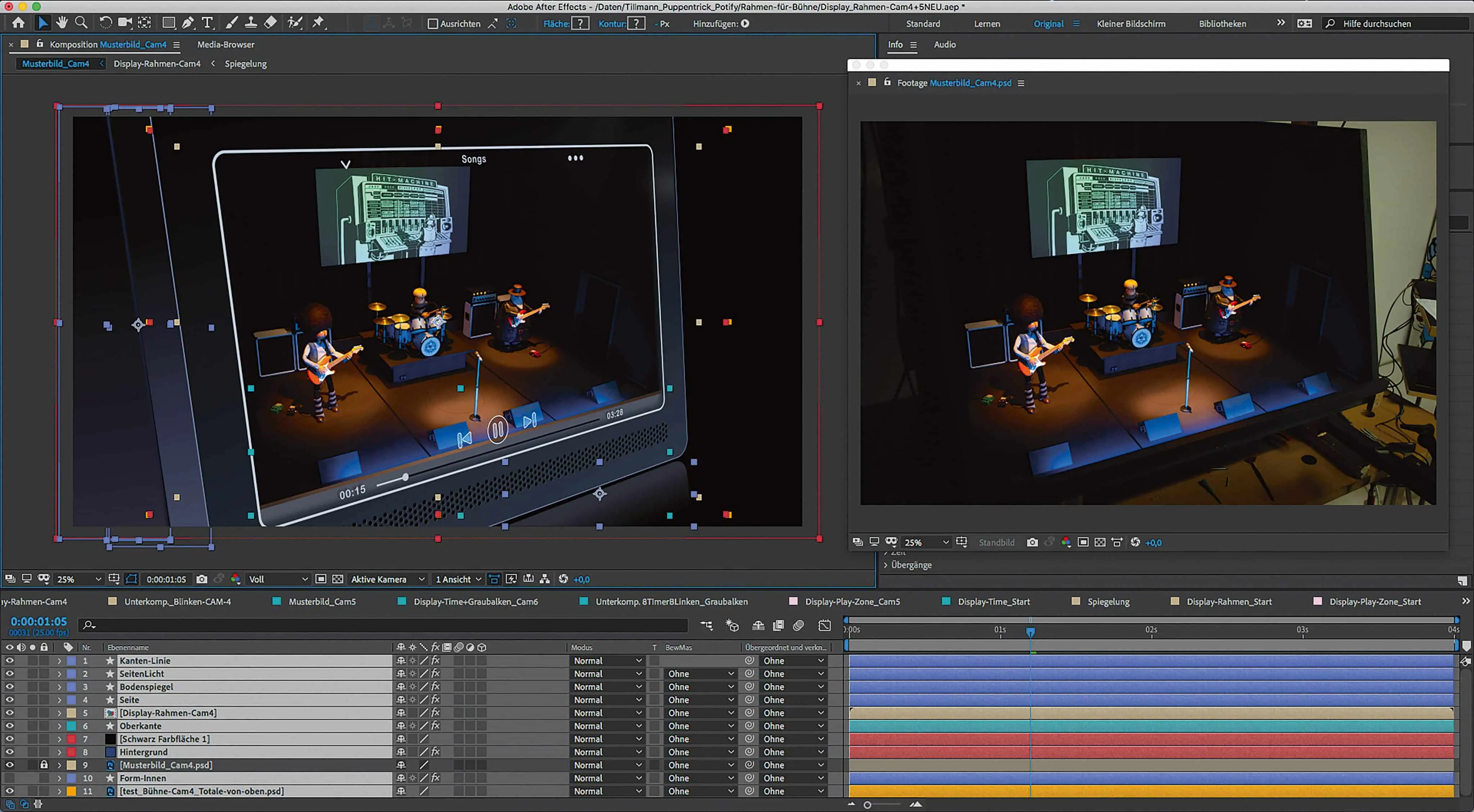
things got “tricky” when it came to masking, for example, with the shots of the final scene when the figures were moved back evenly. To do this, Jimi and Billy were mounted on thin platforms and pushed back one frame at a time on a ruler rail fixed to the floor. These objects were later retouched out again in compositing using masks and cleanplate sequences. Basically, all image sequences were created as After Effects scenes for fine-tuning or mask work, edited and output as PNG sequences for the final cut in Premiere.
For the animation of the second cartoon film level, all important image situations and key positions of the characters were first created on paper and scanned. The final artwork in the classic look of a black and white line drawing was then created in Photoshop using a tablet. The cartoon story was not to be fully animated, but was to be told through quick transitions of important key positions or situations due to the rapid changes of location or image sequences. Each scene was processed into film sequences as a PSD document with the necessary layers in After Effects and adapted to the corresponding soundtrack as a test. These scenes were also passed on to Premiere as PNG stacks.

At the end of the film, it should become clear that the musicians, who in parts of their song sing about the mechanisation of their music, are themselves already part of a music machine at the end. The final return journey should therefore reveal the stage as part of a display on a digital end device that has played this film as a 3D video. We initially wanted to solve this by modelling with 3D software and using tracking. In the end, we managed it by skilful 2.5D compositing in After Effects. The intro sequence of the film with the “loading of the song” was also created in After Effects. During the final cut in Premiere, only the finishing touches were added, such as slight rhythmic colour changes and subtle smoke effects to enhance the “stage experience”.
Looking back, the experiment of combining puppet animation and animation was an exciting experience. We realised once again how much preparatory work had to be done before we could even start filming. And a great deal of patience and precision was also required when shooting the scenes. A wide range of different crafts and software work was used. It was a lot of fun. And now we wish Ronnie, Jimi, Billy and Stewart the best of luck! May they soon be rocking from festival to festival ..
Team
“The Puppet Groove” was created with an extremely lean staff as a freely financed project that was made possible thanks to the passion and perseverance of those involved. The animated film artist and illustrator Sofie Kienzle and the animated film maker and model maker Rüdiger Lensing played a major role in building the puppets and the stage, the models and the elaborate animation of the puppets. For the set construction and lighting technology, we were able to recruit the experienced Cologne animator Udo Steinmetz. Improv pianist and cabaret artist Bernd Budden and sound expert Michael “Freio” Haas helped with the soundtrack.
Director, screenplay and drawings: Stefan Eling
Animation, puppet and set construction: Sofie Kienzle, Rüdiger Lensing, Stefan Eling
Set construction and lighting: Udo Steinmetz
Music: Stefan Eling, Bernd Budden
Sound: Michael “Freio” Haas
Production: Stefan Eling – Groovin’ Pictures
Stefan Eling, who until two years ago ran a permanent animation and illustration studio in Cologne, currently lives and works alternately in New York and Cologne and has been working with his team for around 30 years on all aspects of the production of professional animated films and the creation of sophisticated illustrations. In addition to commissioned 2D and 3D animated films, he also regularly creates his own “free” film projects. These short films are regularly screened in the international competitions of world-renowned festivals, have received numerous awards and have been shown in museums such as the MoMA New York and the Museum of Fine Arts in Boston. This recently completed film “The Puppet Groove” is now to go on a festival tour.

