



Blackmagic Design announced the public beta of DaVinci Resolve 20 during the currently running NAB Show 2025 in Las Vegas. BMD tells that the update brings over 100 new features across editing, grading, VFX, and audio—but as a beta version, it comes with the usual caveats. No new license tiers have been announced , and existing Resolve Studio users can test the beta at no additional cost. But, as always, production artists should run their own QA gauntlet before adopting bleeding-edge tools into real-world pipelines.

IntelliTrack AI: Tracking with Fewer Regrets
Resolve 20 introduces IntelliTrack AI, which automatically tracks people, limbs, faces, and objects across shots without manual keyframes. This engine powers tools like Magic Mask, audio ducking, Smart Reframe, and even auto-pan and zoom behavior. It’s fast, contextual, and usable across the Color, Fairlight, Edit, and Cut pages.
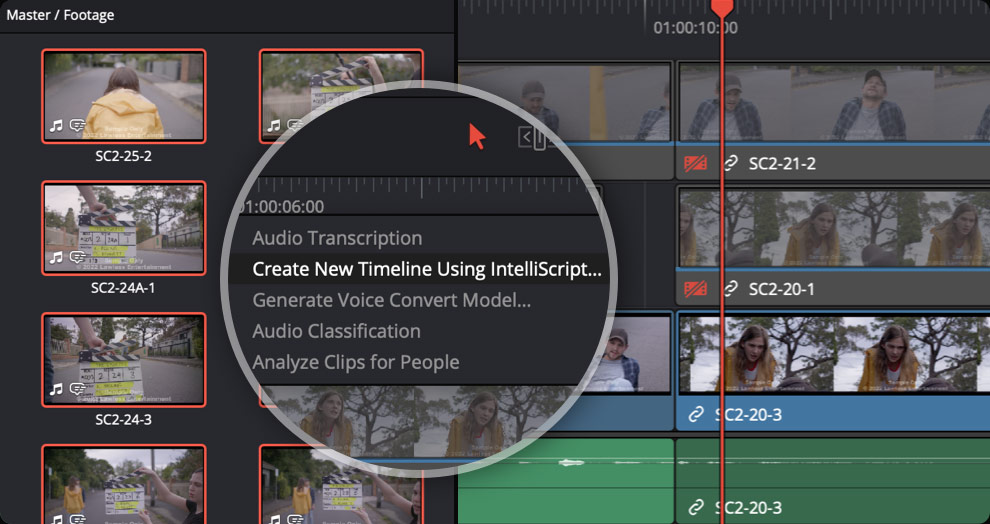
Magic Mask Grows Limbs
Magic Mask can now distinguish between facial features, arms, and legs, making object isolation far more usable for quick roto work. A new preview mode enhances visual feedback when drawing or refining the mask.
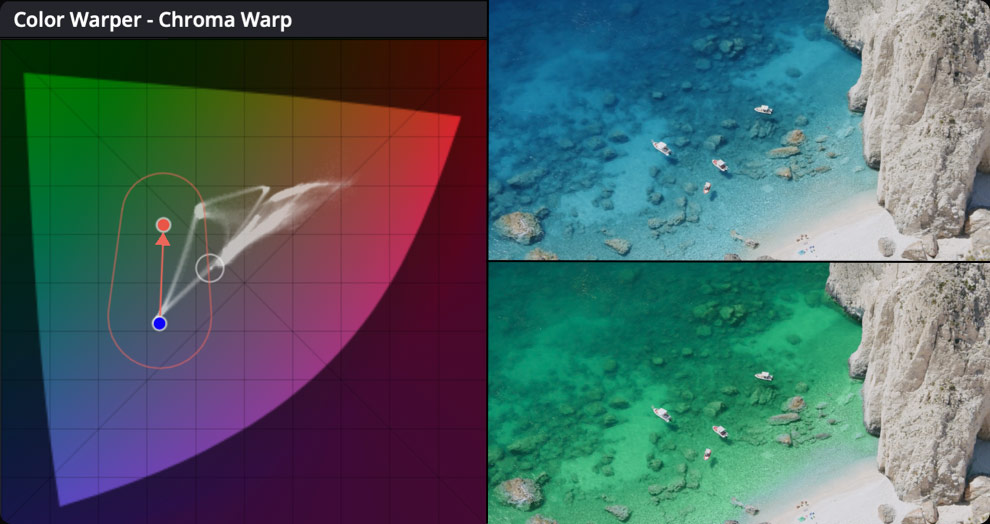
Chroma Warp: Perceptual Hue Sculpting
A new Chroma Warp tool allows colorists to push and pull hue and saturation with far more granularity than HSL curves, offering nonlinear control for advanced color shifts. Unlike traditional grading tools, Chroma Warp operates in a perceptual color space, unlocking new territory for beauty, fashion, and product grading.
Audio Ducking and Voice Isolation: AI Mixes for You
IntelliTrack Audio Ducking automatically detects when dialogue occurs and ducks background audio accordingly, removing the need for manual automation. Voice Isolation has also been enhanced, cleaning up spoken word in complex acoustic environments—all directly in the Fairlight page. On the Cut Page, a new voiceover recording palette is now available. Editors can lay down narration without leaving the timeline. Minor, but helpful, interface tweaks improve snapping, trimming, and navigation during fast editing sessions.
Smart Reframe 2.0: Edits That Hear You
Multicam workflows benefit from speaker-aware Smart Reframe, which detects the active speaker in a scene and reframes accordingly. Instead of centering based on face detection alone, the tool responds to actual speech, making it particularly useful for interviews and dialogue-driven content.
Animated Subtitles: Speech-Aligned, Motion-Ready
Resolve 20 can now generate animated subtitles with synced graphic transitions that follow the cadence of speech. This feature pulls from Resolve’s speech-to-text engine, allowing for better subtitle pacing and readability in fast-cut formats.
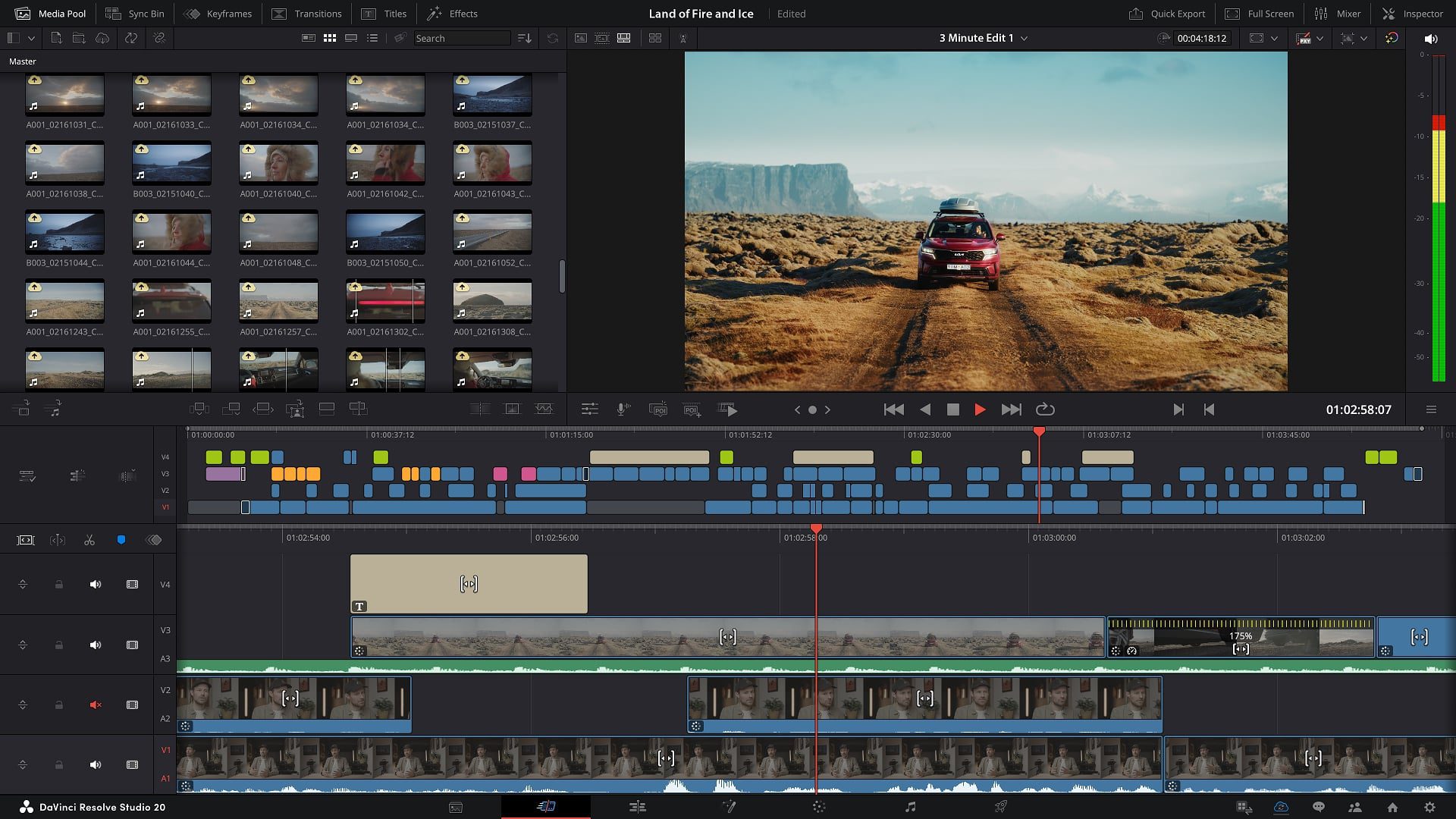
Fusion
The Enhanced Neural Engine now delivers increased precision in both Fusion and Colour workflows by leveraging deep learning for accurate object tracking and intelligent mask generation.
The Advanced HDR Colour Grading Suite offers refined tone mapping and dynamic range controls, empowering colourists to manipulate highlights and shadows with unprecedented precision in high dynamic range projects.
Fusion’s Multi-Layer Compositing Enhancements provide context-aware node controls and improved GPU acceleration, enabling VFX artists to assemble complex visual effects with smoother performance and greater flexibility.
The Upgraded 3D Particle Simulation in Fusion delivers realistic particle behavior with enhanced control over environmental interactions, pushing the limits of digital compositing and immersive effects.
Context-Aware Multi-Layer Compositing
Fusion gets smarter multi-layer compositing features, including expanded controls for context-aware masking, better multi-input management, and more granular layer stacking—useful for UI-style graphics and complex 3D composites.

Beta Now then Later
DaVinci Resolve 20 is available now as a public beta. No pricing changes or licensing updates were announced at the NAB reveal. While the feature set clearly targets speed, automation, and streamlined creative control, production teams should treat it like any beta: promising, but not yet fully baked. Stability in everyday work remains the final benchmark—especially in collaborative and deadline-driven environments.
