



When Red One dropped last this year, audiences got get a holiday cocktail of Jumanji-style action (The director was the same – Jake Kasdan), Christmas mythology, and CG hellhounds. Behind the visual spectacle: RISE FX, tasked with bringing a gooey portal system, guard monsters, and an actual magic chicken to life. We caught up with VFX Supervisor Michael Wortmann at FMX2025, to talk creature design, feather grooming in Houdini, and what happens when Krampus goes full-screen. From Atlanta to EmberGen simulations—here’s how RISE tackled 280 shots for Amazon MGM’s festive actioner.

Wortmann studied animation at Ludwigsburg’s renowned Filmakademie before jumping into VFX production across Sydney, London and Wellington. His career spans everything from Game of Thrones and Star Trek Into Darkness to Black Panther, Eternals and Atomic Blonde. Most recently, he wrapped supervision on Momo, a feature film adaptation of Michael Ende’s classic novel.
DP: What was RISE FX‘s scope on Red One, and when did you get involved in the project?
Michael Wortmann: RISE came aboard the production during the shoot in Atlanta, Georgia in March 2023. We were tasked with some sequences for the new, secret Amazon christmas movie alongside Sony Imageworks and Rodeo FX. We had already worked with VFX Producer Cari Thomas on Shazam but we never worked with Jerome Cheng, the overall VFX Supervisor of the show. We ended up delivering 280 vfx shots for Red One over the course of twelve months requiring a mix of CG creatures, digital set extensions and a lot of hardcore 2D augmentations.

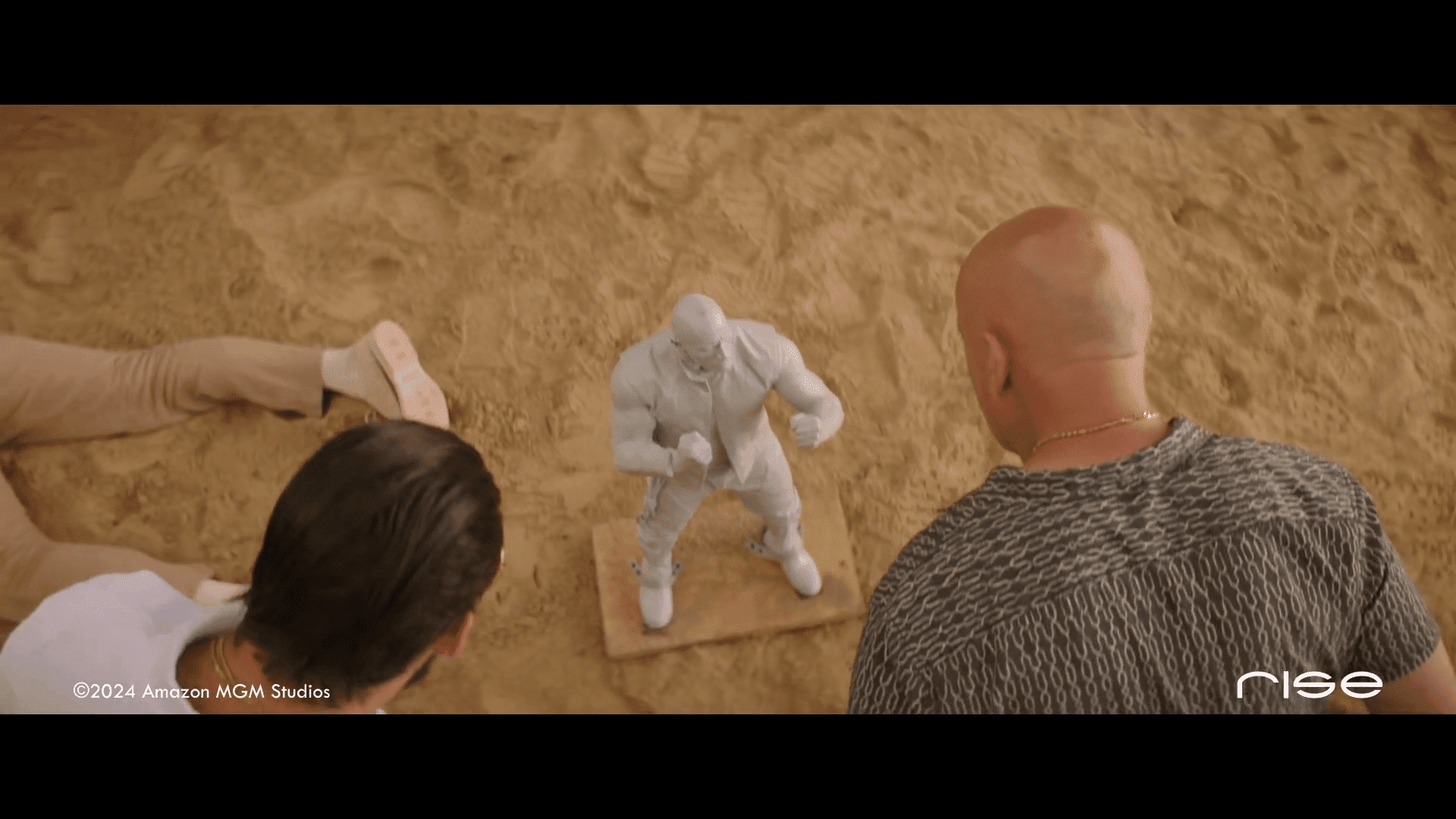


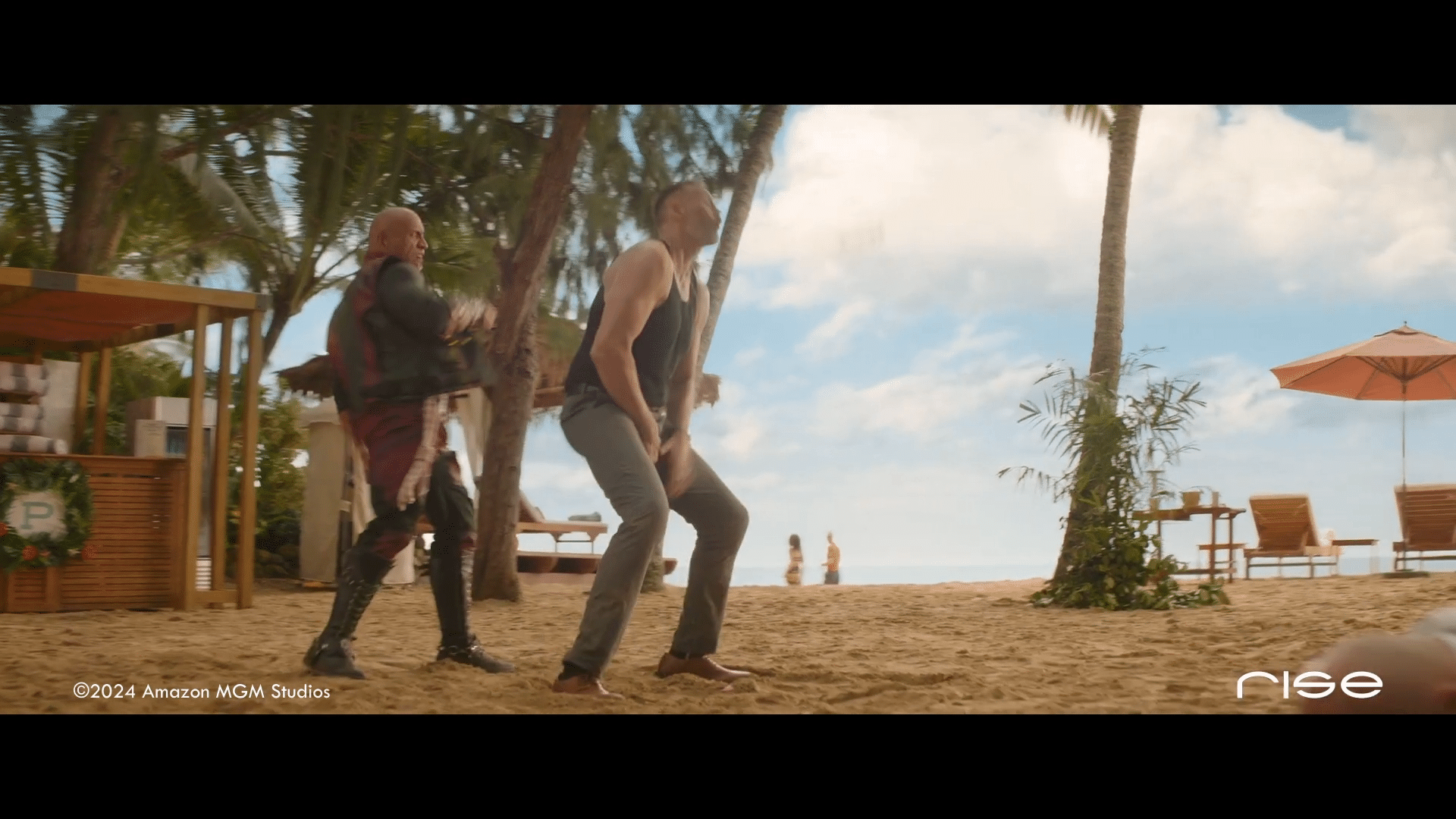


DP: Red One walks a fine line between Christmas fairy tale and action film. How did that tone influence the visual style and your VFX approach?
Michael Wortmann: We knew that production vfx supervisor Jerome Cheng and director Jake Kasdan had already worked together on Jumanji: Welcome to the jungle so it was clear that they would expect topnotch photoreal vfx work and a colorful phantastical design at the same time. But overall this movie would be a comedy so everything needed to help that and action would not be considered the most important thing.
DP: So, how duo you get that “fairyle” style in a story like this?
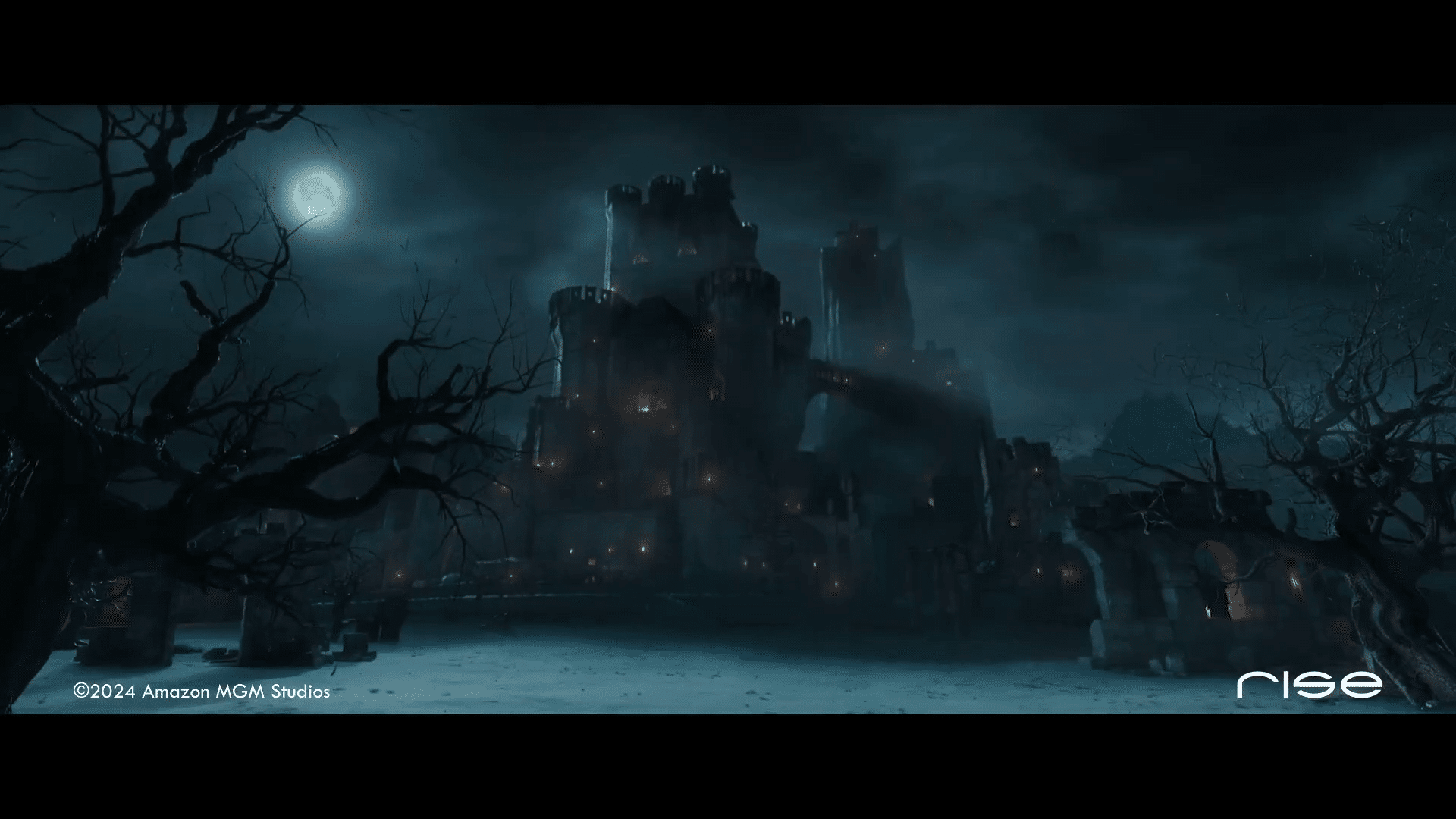
Michael Wortmann: For example: the Krampus castle was conceived as a matte painting for the shot when Cal and Jack enter the realm of Krampus. When the second wide shot was added later, we did another matte painting because we never built the whole asset. Iterating the matte painting was straightforward and didn’t require so many rounds, in contrast to the design of the portals. Portals are not a new idea, so we needed to come up with something that would be funny and cool looking at the same time.
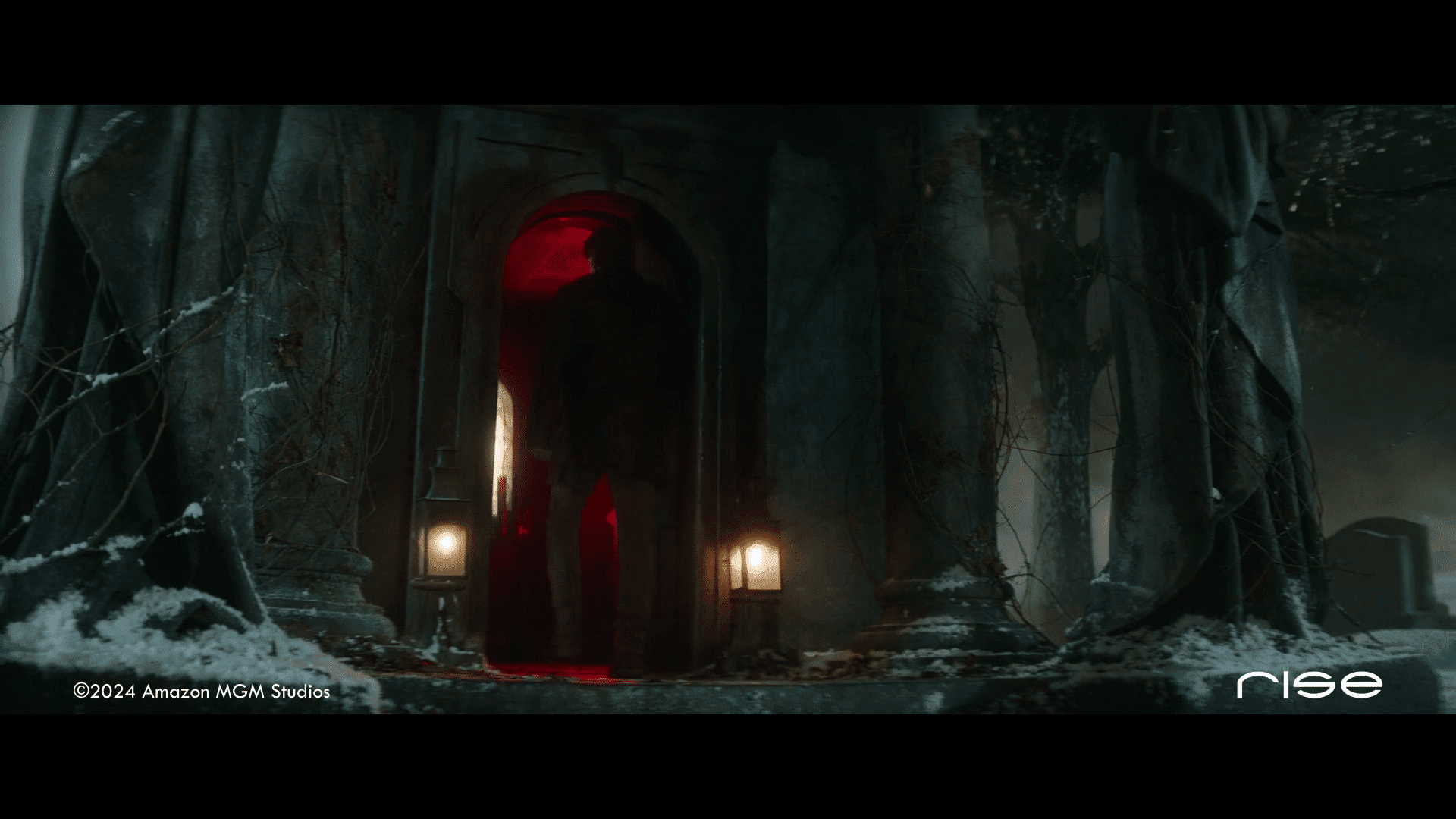
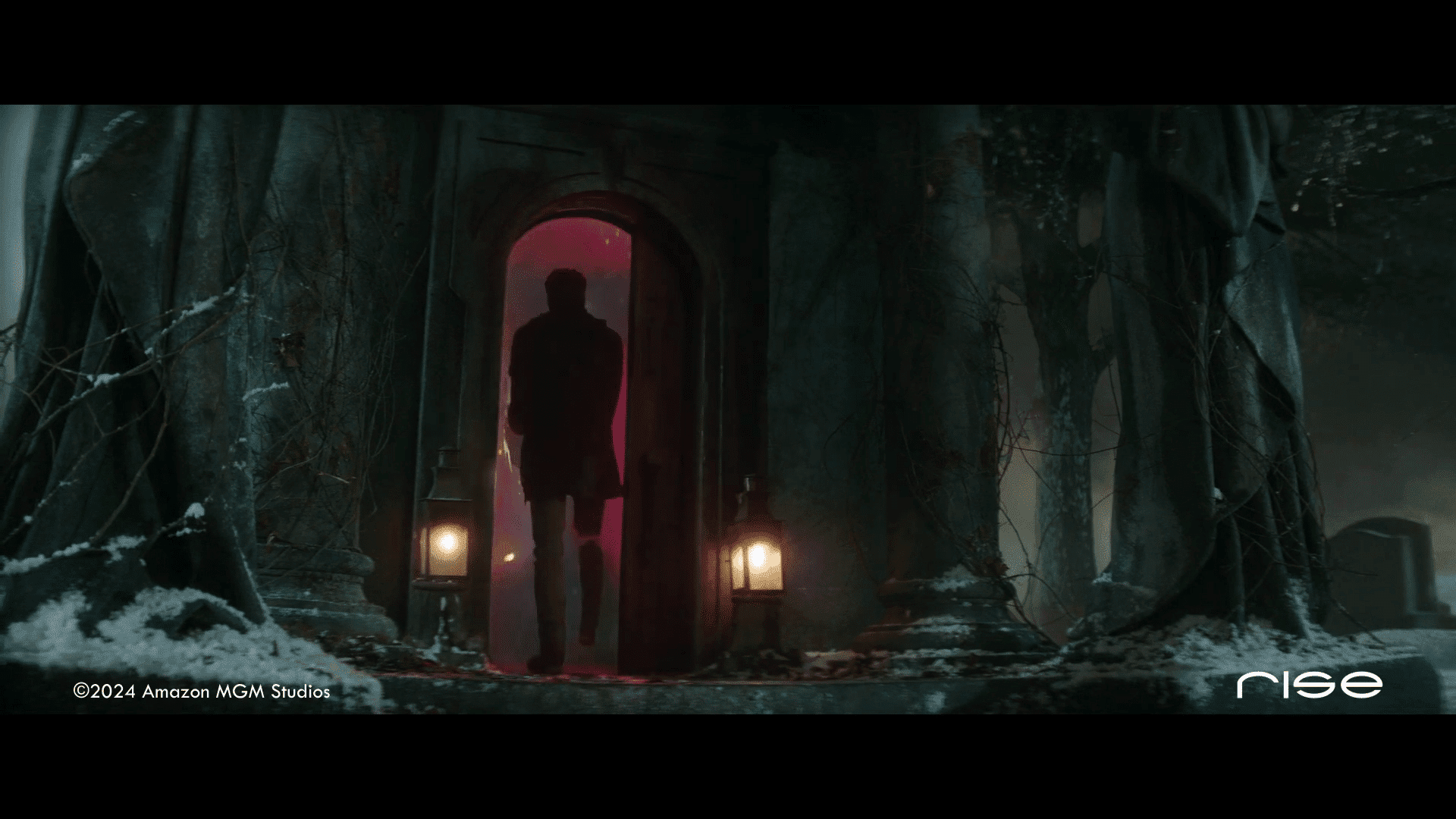
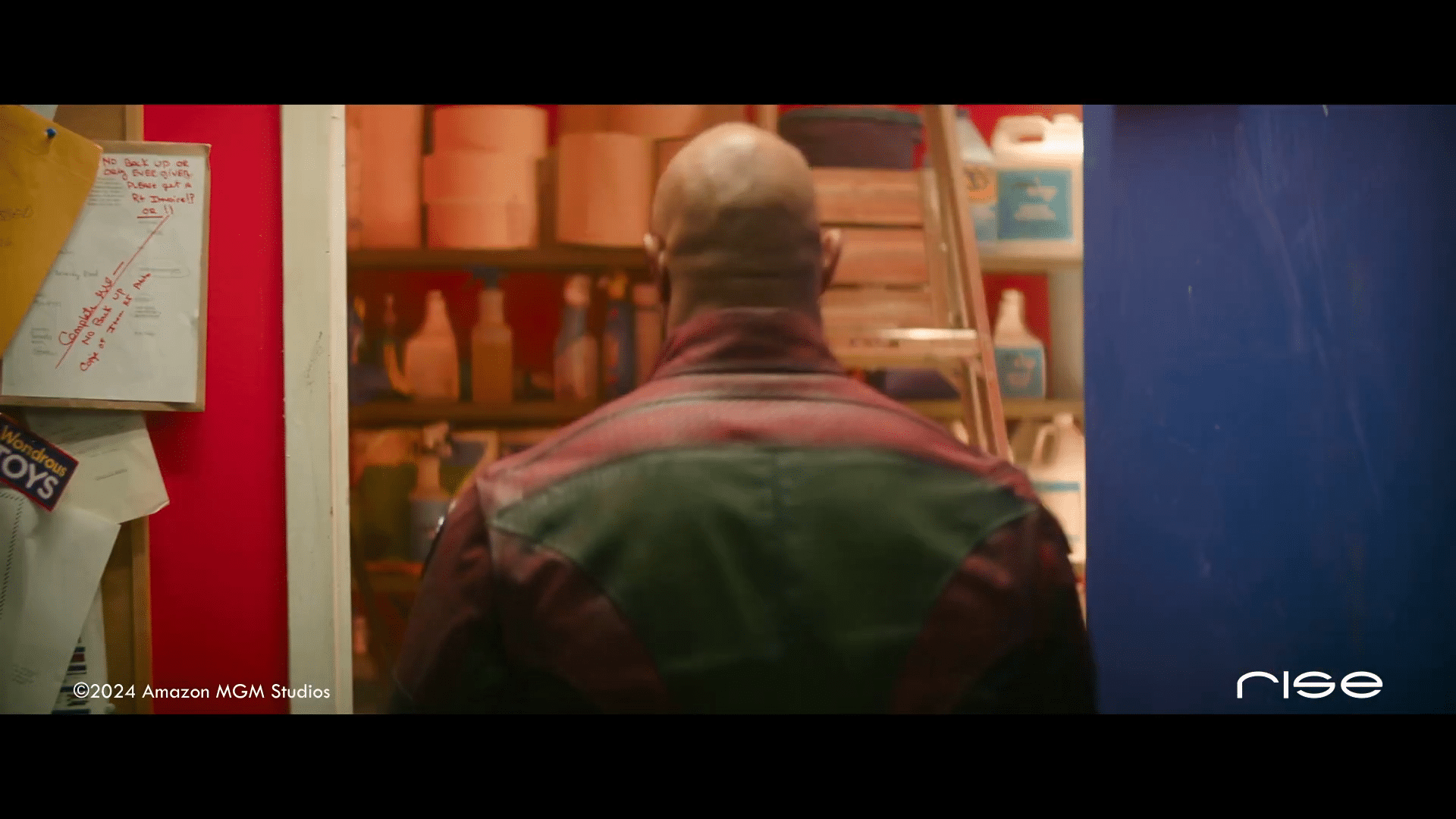
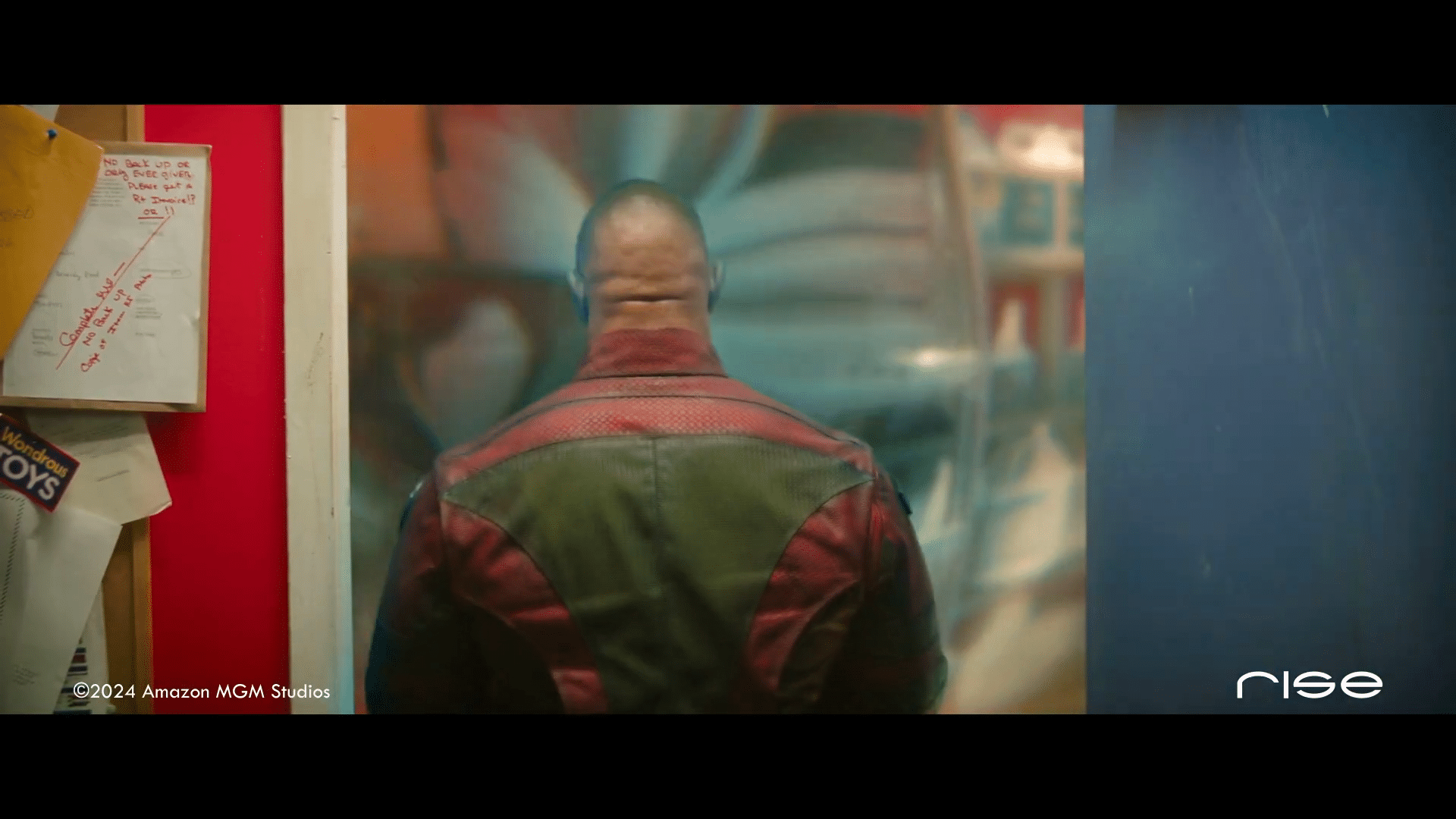
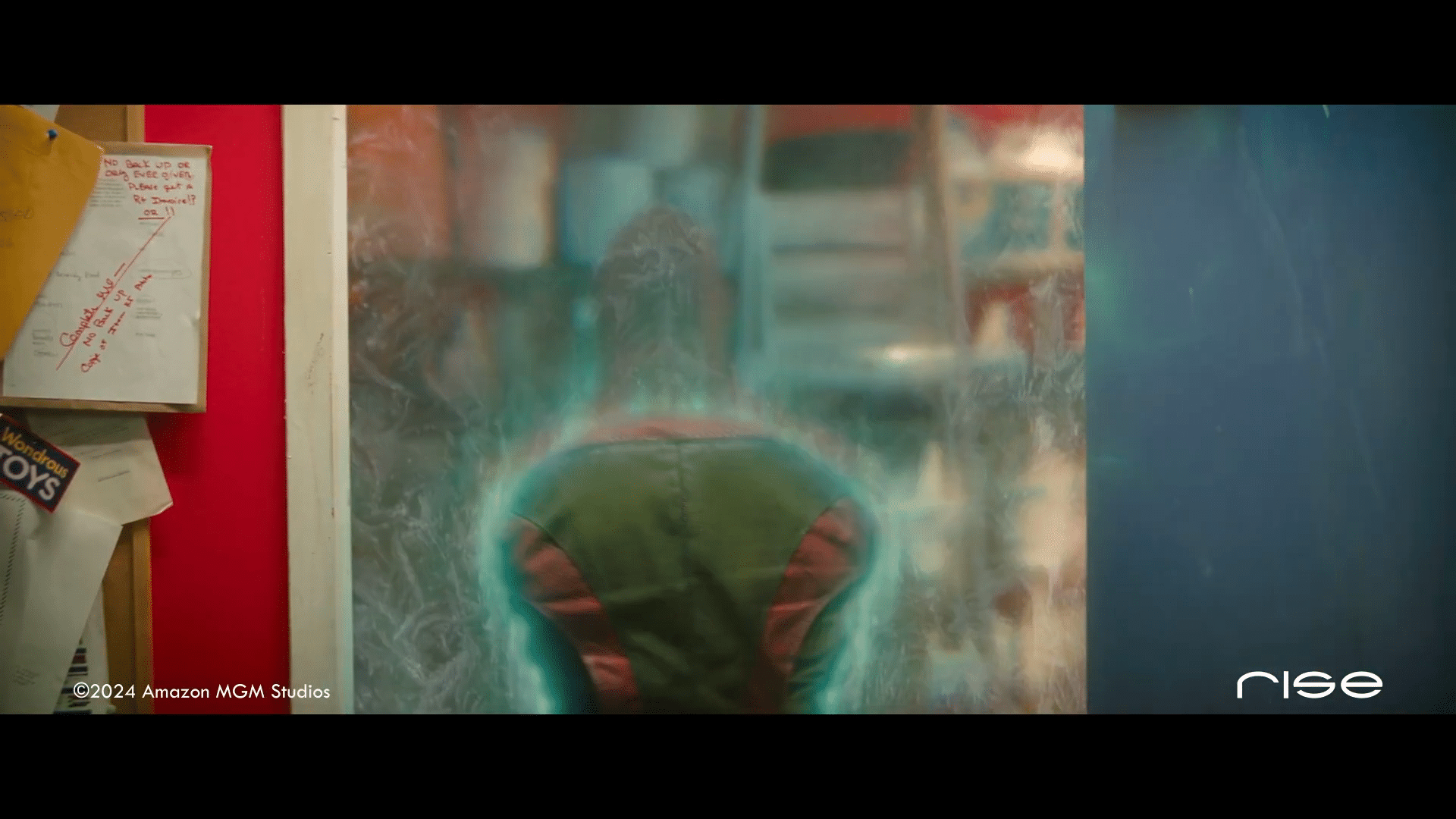
The key requirement was to create something that happens fast because if something is overly complex or too long-lasting it is a) NOT funny and b) hard to read and understand by the audience. We started with the membrane simulation and made it feel gooey, later we refined it by adding ice crystal structures and depth blur. The last step was to foreshadow a bit of what is behind the portal. Our compositor Cintia Coll went through all the steps and then distributed the setup to other artists.



DP: How do you plan and prepare when a sequence might end up being full-CG—even if that’s not the original plan?
Michael Wortmann: Creating a full set or shot in CG is very expensive and time-consuming. As soon as directors or producers know that something is fully digital, they suddenly feel different about it. So we always try to shoot anything and keep it in there, so we might just end up with a 99% digital shot – just out of pure psychology.
The big difference is when something is planned as digital from scratch it’s a long but more controlled process because it will be designed and relevant data will be acquired. However, if a shot turns from footage to full digital, it’s more likely to not have all the reference we would need. If we are lucky, we can reference a lot from the shot that cannot be used but still might help us get it right. All this factors into the bidding, planning and execution of a given shot. However, I have to admit that this can happen, but it is very rare that a shot is going overboard, and we need to rescue it.

DP: What were the most iteration-heavy sequences in Red One, and how did you manage creative feedback?
Michael Wortmann: The most iterations on Red One happened in character animation, especially the hellhounds and the chicken were a big challenge. When you do character animation the pressure is up because the director will ask for a certain performance and that means your shot is suddenly focussed on in a very different way as if you are doing a wire removal. So both, internal and external review iterations are really high in comparison to other vfx shots because it really needs to be perfect because one shot of bad character animation and the illusion is ruined.
DP: Can you walk us through the guard monsters? What went into designing and animating them?
Michael Wortmann: We received a ZBrush sculpt from the production with a design that was relatively close to the final design. So the first thing was to retopologize the model to make it suitable for rigging.

Our modeller Marius Pörsel took care of that and also refined muscles, facial details and the porcupine spikes that are growing from the neck like a lion’s mane. After that texture artist Timo Scheu started to build shaders and paint textures based on the hires displacement maps generated from the ZBrush model.
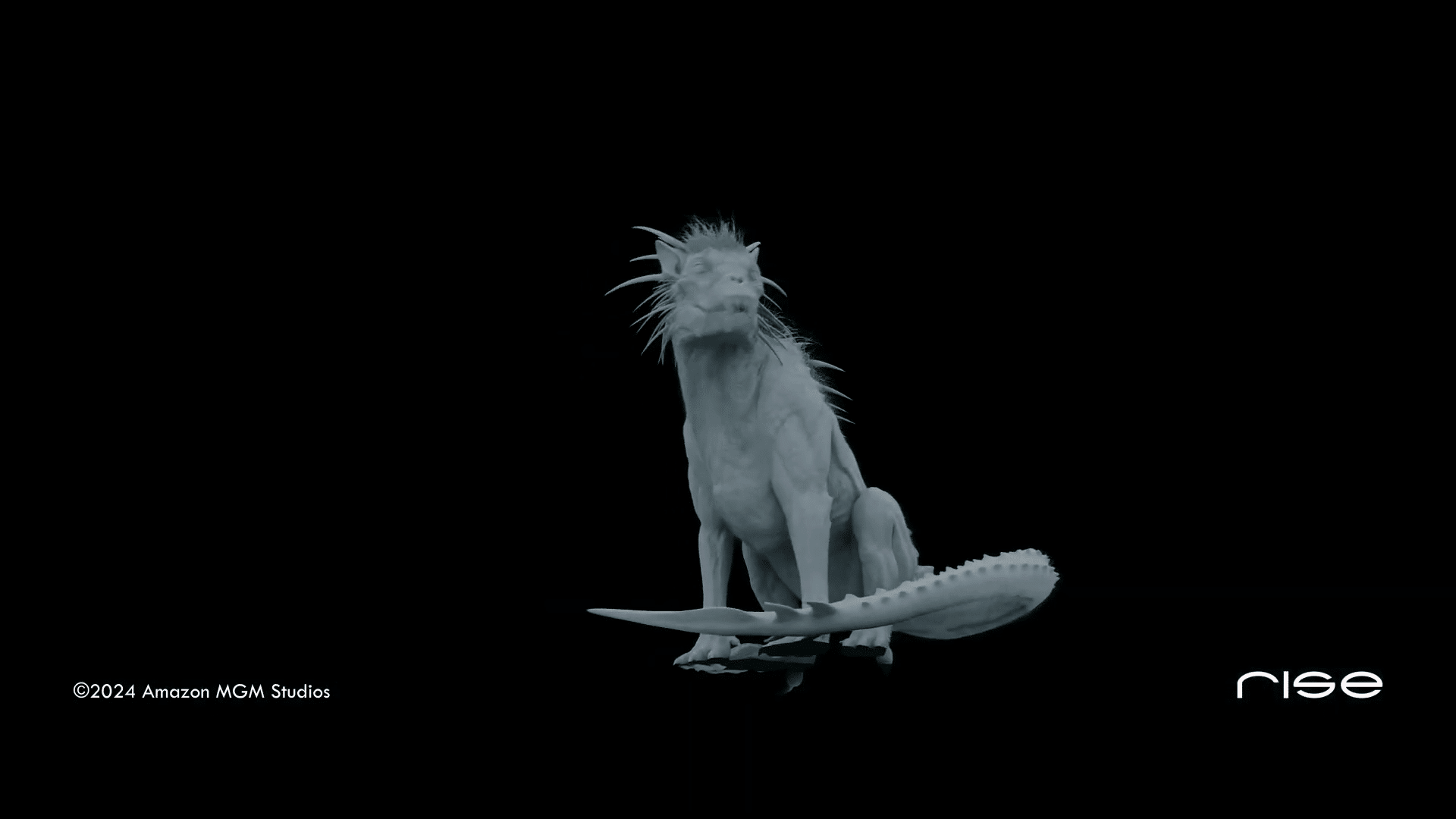
The tricky bit was to combine subsurface shading for the skin with rhinoceros-like armoured skin parts. As we knew that the hellhounds would only be visible in night scenes we developed shaders for the eyes that would give us nice reflections and even catlike yellow reflections also called Tapetum Lucidum.
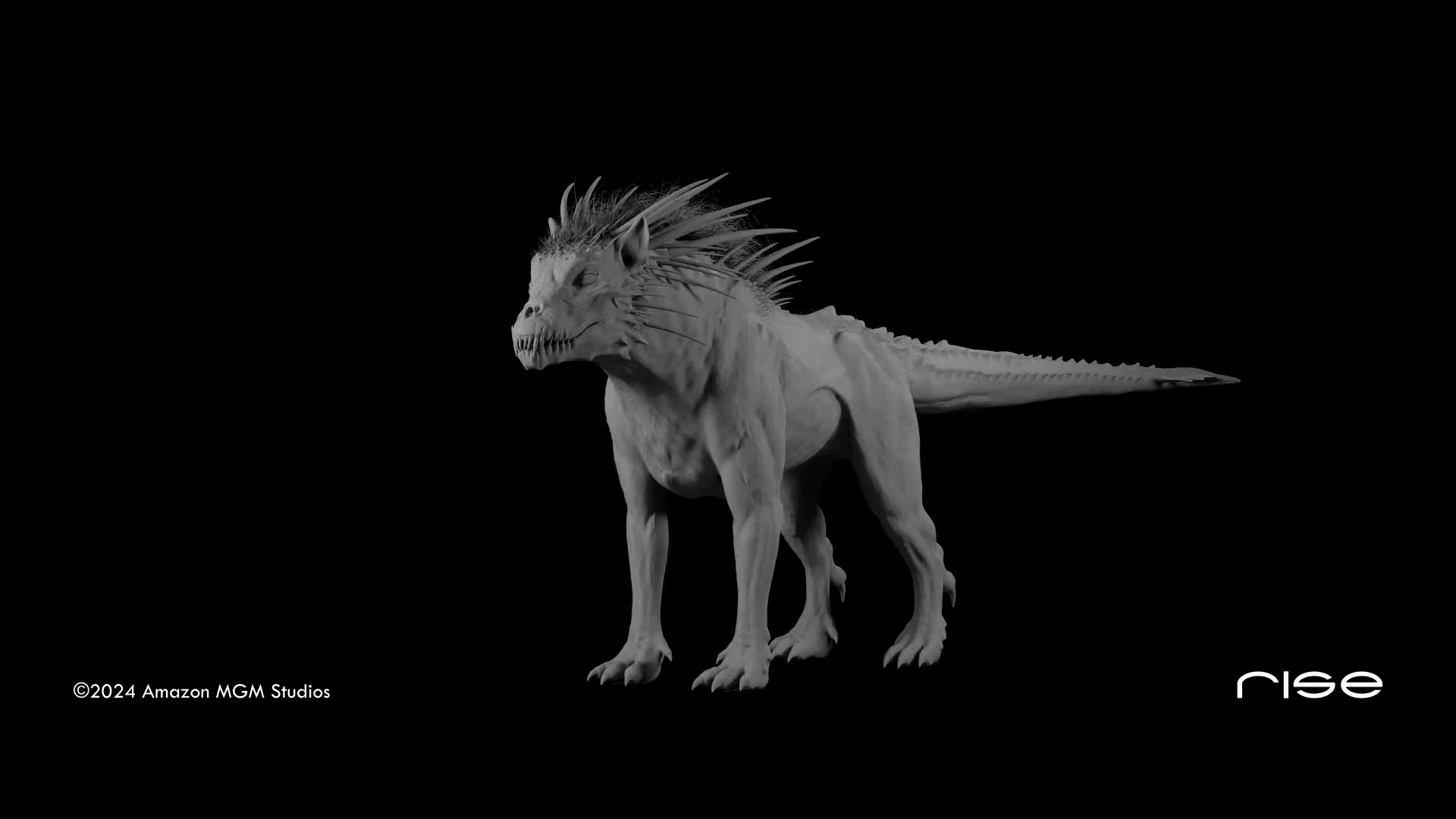
Rigging was rather traditional, we tested Houdini’s skin simulation tools but eventually found that we would not see much at night and the camera distance to the hellhounds. So our rigger Thorsten Schulz took care of this and adjusted the rig based on feedback from our animation supervisor Thorsten Kesse.
DP: We’ve heard tales of “The Chicken”. You must explain.
Michael Wortmann: The chicken in Red One is one of the funniest characters. In the story, the chicken is a bewitched agent of the E.L.F. agency and can be turned from a rubber chicken key ring to an actual live chicken by Callum’s actualizer.


Because of the interaction with the CG hellhounds, it was clear we needed a digital chicken. The director Jake Kasdan even owns chickens himself and sent us video footage of his favourite chicken, which is called Ellen.
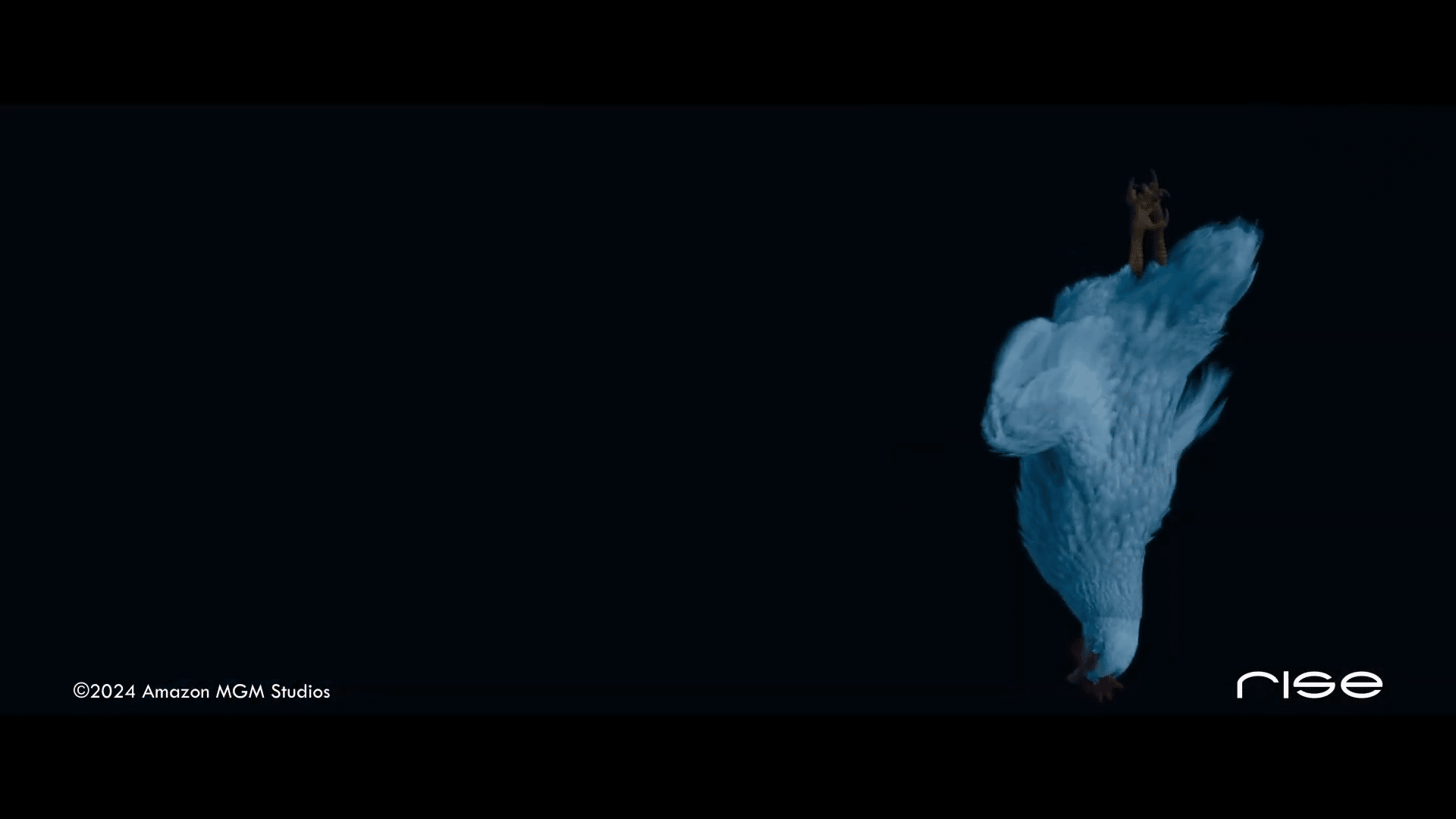
We used Ellen as reference but, as Ellen is of brown colour, we had to make her white eventually because the brown colour was cancelled out by the blue night colours. Our FX artist Luca Schippmann used Houdini’s new set of feather tools to groom Ellen. This required a lot of development time as the tools were new. Ultimately, we could simulate all feathers and render Ellen with feathers made from curves, which allowed for the closeup shots we needed.


DP: What was the most unexpected challenge during the show—something you couldn’t have planned for?
Michael Wortmann: I think the biggest challenge was Krampus. When we were confronted with the Krampus sequence and briefed on the work, everybody was a bit concerned if we could pull this off. The approach was to rotoscope the Krampus character including fur and hair from the plates, scale him up and digitally recreate the areas that were missing in the plates now.

We decided that we could do this, and after we completed the first couple of shots we became more confident. The shots turned out beautiful because we had nearly no chroma keying going on and everything looked great from the beginning as in the provided plates. There were a lot of test screenings, but for the biggest part this didn’t affect our part of the work.
DP: What kind of tools or workflows did you use to prepare for test screenings?
Michael Wortmann: For the first test screening, we worked completely on Quicktime proxies. We made sure to set everything up in a way that we could refine match moves and roto we created for this. However, this doesn’t always work – so we had to redo some work later on the high-res plates.

DP: Any clever uses of real-time tools or GPU-based solutions—like EmberGen?
Michael Wortmann: We used GPUs for simulating the storm clouds in Embergen. It seemed like a good test case as we never used it before in production, and because our clouds needed a lot of detail but not a very complicated behaviour or interaction we gave it a shot.
When we had our voxel cache VDB files we found it was nearly impossible to render in Karma, our standard renderer in Houdini, so we tested rendering on GPUs as well using Karma GPU. This gave us the power we needed, but there were still some limitations at that time when it comes to AOVs, deep output and image resolution constraints of which I believe most are fixed by now.


DP: What’s your approach to making sure “annoying shots” don’t end up in the final cut?
Michael Wortmann: This is not really an option. If we face a shot or briefing that seems not doable, we start a discussion about it and offer options to satisfy our client’s needs. “No” is not really an option…
DP: How do you adapt when today’s final delivery deadline is also… for Netflix?
Michael Wortmann: This has hardly changed, we still deliver ACES Linear EXRs that contain enough range for HDR grades. It’s more likely to work in 4k now than some years ago, but this is not really a problem.

DP: What good resources or tools were essential in your workflow—and which would you recommend to others?
Michael Wortmann: We have a lot of custom tools for our pipeline which starts with our own database Risebase and continues through all departments with customizations for Nuke, Houdini and OpenRV. These help us get through these big shows and are tailored for our needs more than any software we could buy.
DP: Can you tell us what’s next for you or RISE FX—if it’s not under NDA?
Michael Wortmann: I recently wrapped work on Michael Ende’s Momo, a really cool project that I supervised completely including the shoot, coming to theatres later this year.
