



Maxon has released Cinema 4D 2025.3 on June 18 2025. It introduces a GPU-accelerated liquid simulation system, UDIM support in the UV editor, texel-density tools, AI-driven searches in the Asset Browser, and native integration of Laubwerk plant assets. All updates reflect real production needs—though as always, they should be tested before rolling out in client work.

Liquid simulation lands
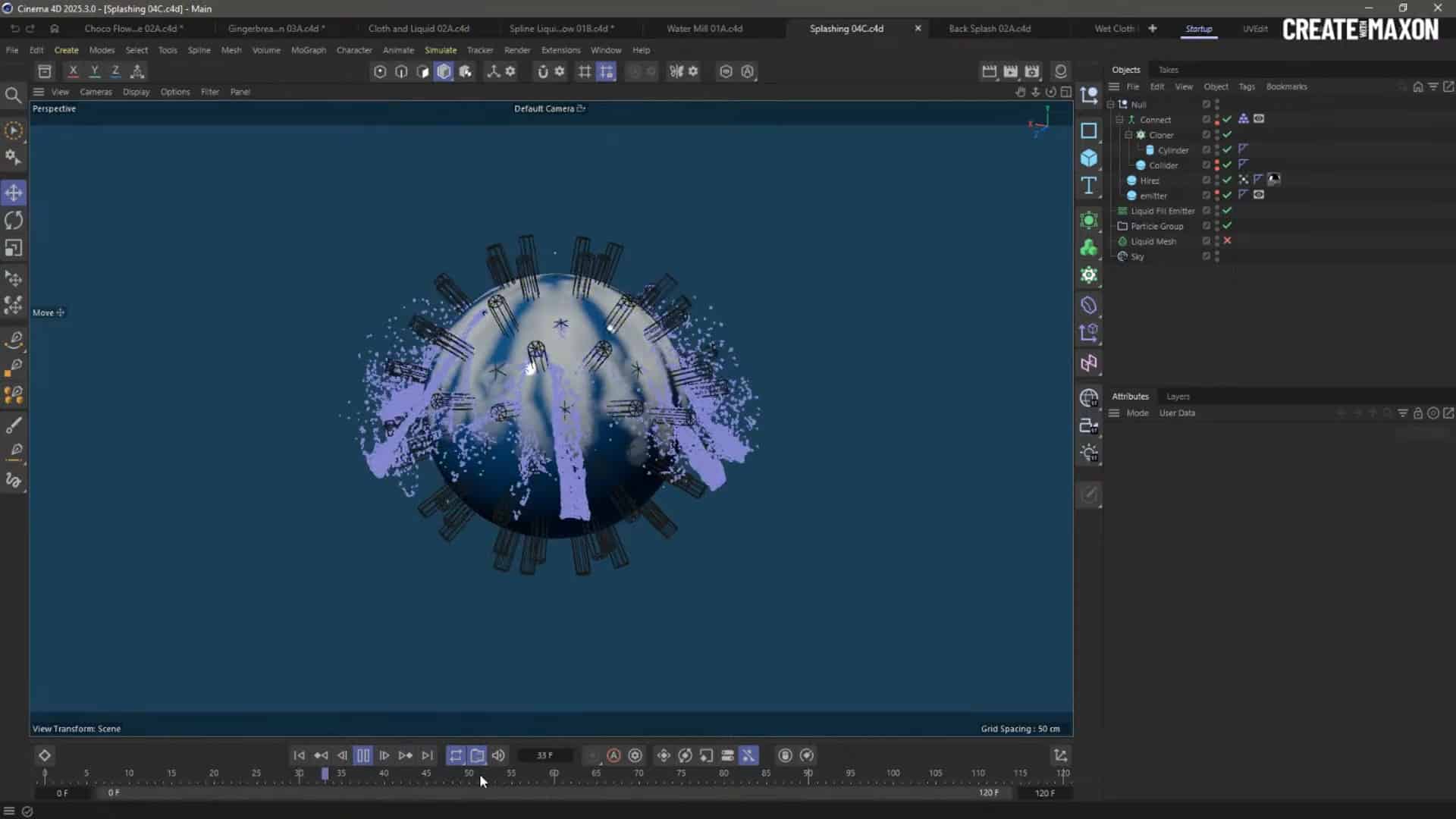
The update expands the existing particle system into liquid territory using GPU-accelerated Position Based Dynamics (PBD). Users can create fluids via the Liquid Fill emitter or convert existing particles using the Liquify modifier. Liquids expose parameters such as surface tension and viscosity, can be meshed to geometry using the new Liquid Mesh, and can interact with other particle systems, cloth, and rigid bodies under the Unified Simulation System. The solution is optimized for small-scale effects—beer pours or sauce drips—not large-scale FLIP-type simulations. Users can recreate white-water or bubbles using existing tools. That was teased at Cinema 4D 2025.2


UDIM and texel-density tools
Cinema 4D now supports UDIM and UVTILE standards directly in the UV Editor. Tile grids extend indefinitely, allowing UV elements to be moved, rotated, and packed across tiles, with new controls for tile-specific packing. Game-art workflows benefit from texel-density tools offering get/set/match functionality across UV elements, tiles, and objects, with presets tailored to first-person, third-person, and top-down perspectives.

AI searches in Asset Browser
An AI-powered search feature now complements the standard text search in Maxon’s Asset Browser. The feature is image-aware, allowing a query like “furniture” to return relevant results even when metadata lacks the keyword. The searches operate locally, preserving asset privacy.
Laubwerk plants go native
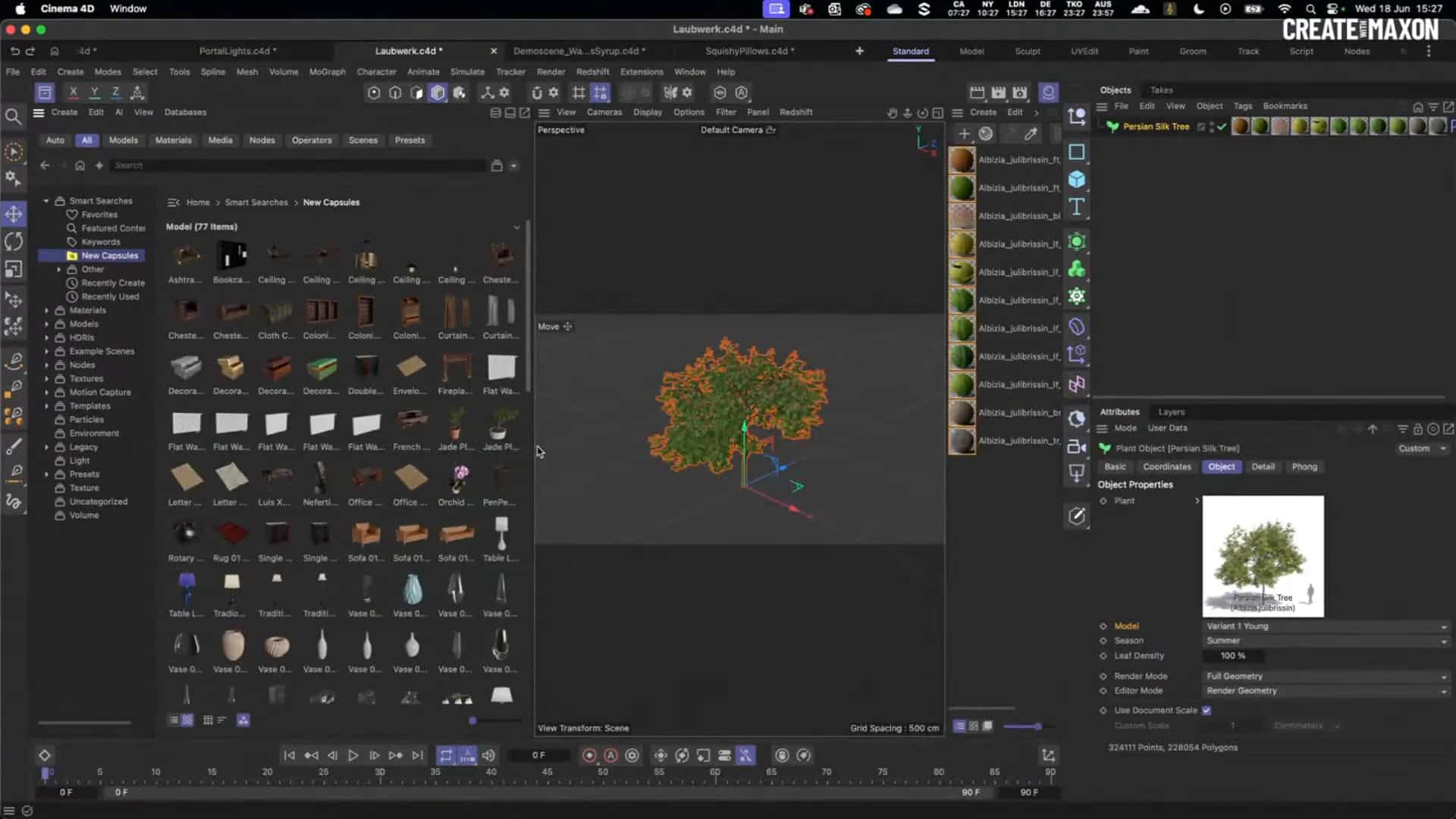
As part of Maxon’s acquisition of Laubwerk, this update adds a parametric Plant object that enables adjustment of age, seasonal variation, level of detail, and display settings directly within Cinema 4D. The complete Laubwerk library now ships as Capsules, while prior LBW assets remain compatible.
Requirements and pricing
Cinema 4D 2025.3 installs over the 2025 base, requiring Windows 10 22H2 or macOS 13.6+; AI Search is not supported on Intel based Macs. Subscription pricing remains at US $109/month or $839/year, rental-only, now bundled with Redshift GPU acceleration.
Final word
The introduction of native liquid simulation and UDIM tools brings Cinema 4D closer to a full-featured DCC solution. However, this new PBD system is aimed at small-scale effects; larger fluid dynamics will still require FLIP-style tools or external solvers. As always, users should validate stability, performance, and visual fidelity in production-standard scenarios before migrating pipelines.
