



Substance 3D Reviewer accepts a wide range of standard 3D file formats: OBJ, FBX, glTF/GLB, USD, and STEP are officially supported. It also provides experimental import for CAD and industrial formats such as DXF, JT, and CATIA files, but Adobe warns that results may vary. Models can be uploaded up to 500 MB in size, though Adobe recommends reducing assets to around 3 MB for optimal performance after automated optimisation. Textures are limited to 2048×2048 px resolution, and only static assets are supported—no skeletal animation, rigged poses, or vertex deformation can be reviewed. If animated content must be shared, Adobe advises freezing the model into a static pose.
The platform is not designed for detailed shader inspection or full DCC material fidelity. Reviewer is focused on holistic spatial assessment and real-scale design validation rather than pixel-perfect material evaluation. For artists used to complex shading graphs, advanced rendering pipelines, or heavy CAD assemblies, Reviewer’s performance and format limitations may prove restrictive.
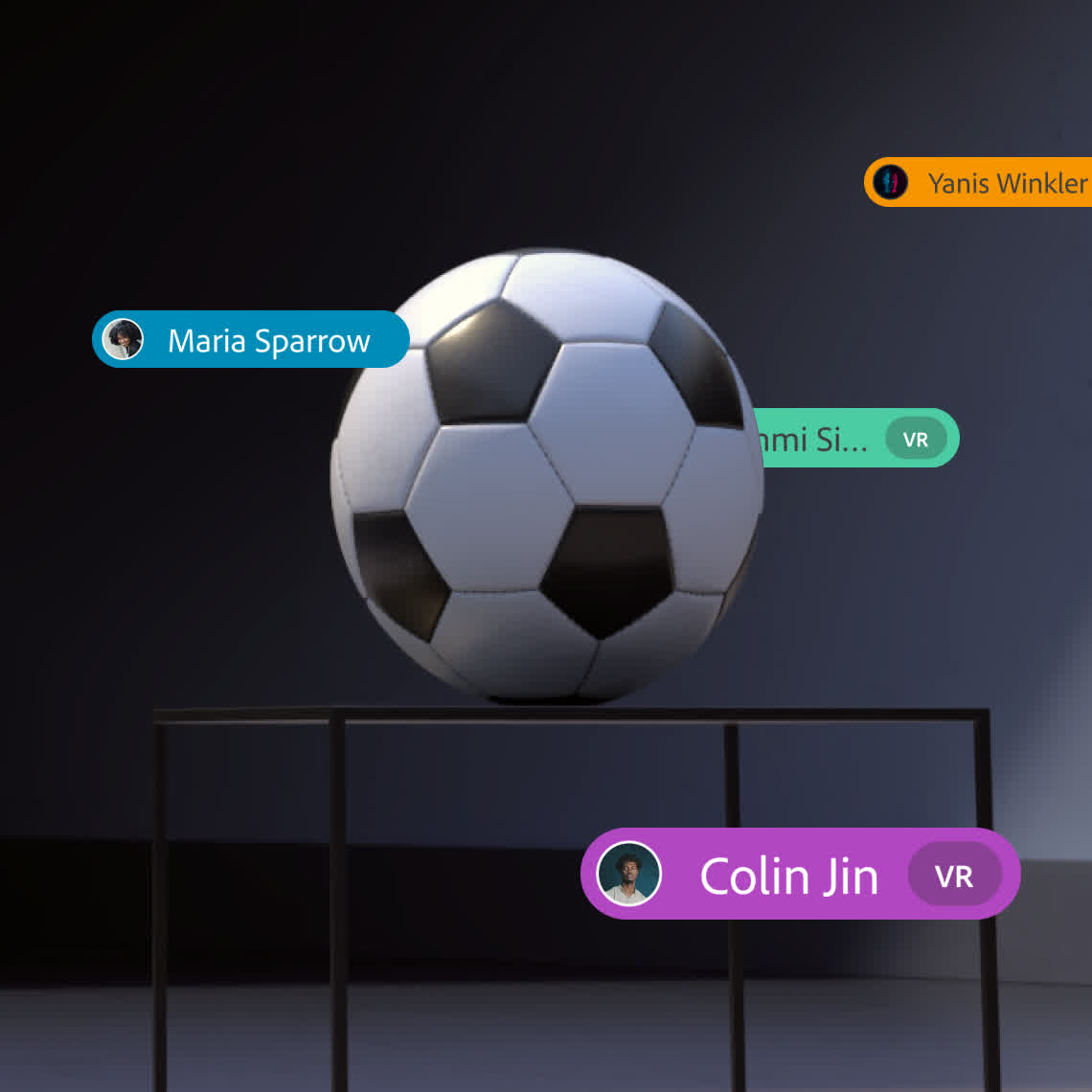
Immersive feedback at room scale
Adobe’s Substance 3D Reviewer, introduced on 14 August 2025, allows teams to review 3D models at true 1:1 scale within both VR and web environments. It was developed in partnership with Meta and optimised for Meta Quest headsets. The tool enables spatially accurate design assessment, contextual understanding of form and ergonomics, and shared experiences across distances. Feedback can be delivered via voice or text pinned directly to model locations in real time or asynchronously.
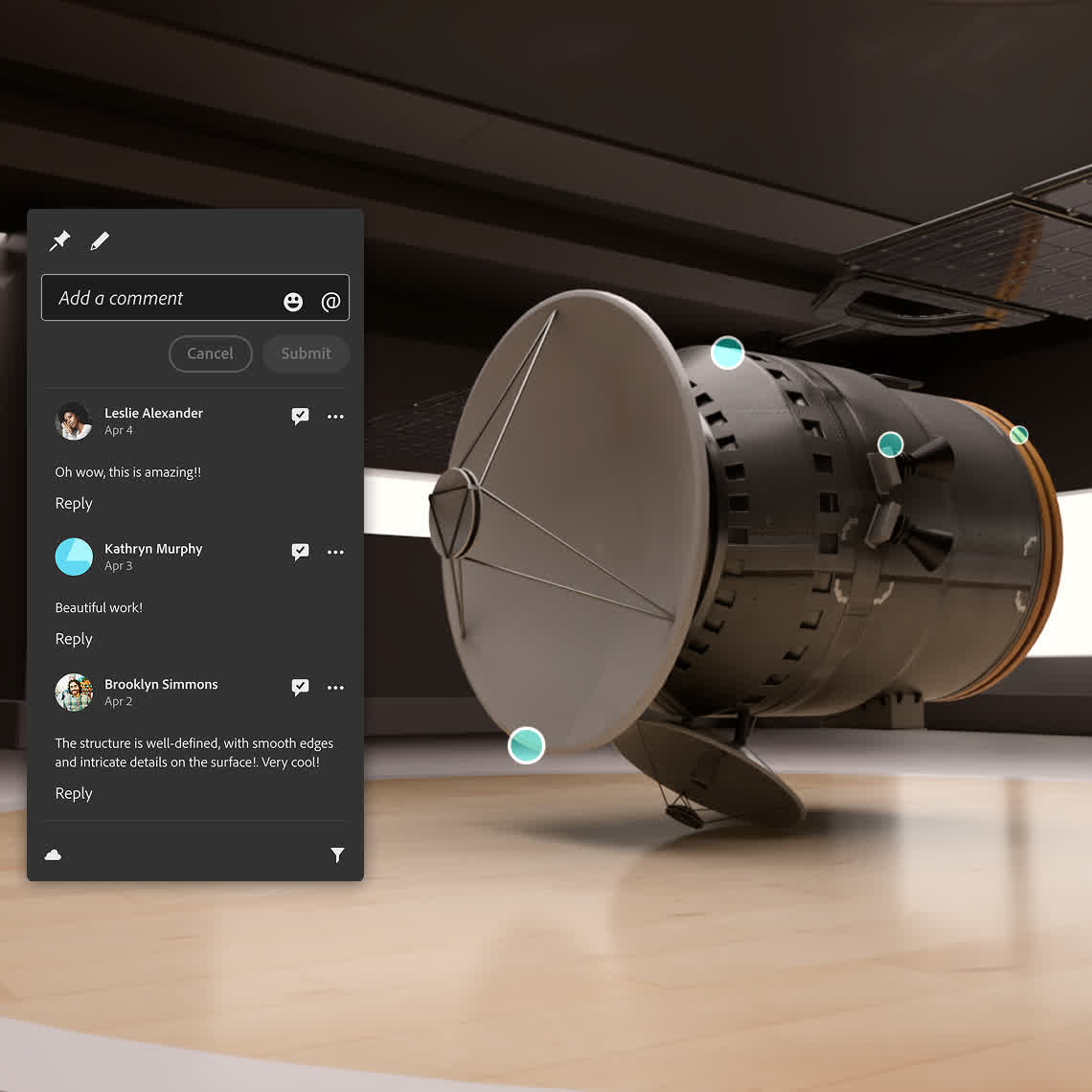
Limitations of Substance 3D Reviewer in high-end workflows
The tool appears designed for static assets, meaning animated, rigged models must be “frozen” to enable review. Precise control over material channels, shader complexity, and version control integration is not yet confirmed. These omissions may limit its use in pipelines requiring granular inspection or DCC integration such as in VFX or advanced product visualisation.
Licensing and access considerations
Substance 3D Reviewer is free to use; a complimentary Adobe ID suffices for access. Nevertheless, broader Substance 3D Collection tools—such as Sampler, Painter, or Designer—still require paid licenses or subscriptions. For studios that do not maintain a Creative Cloud plan, deployment of Reviewer may introduce divergence between tools used by reviewers and those available to asset creators.
Recommendation for production adoption
Substance 3D Reviewer offers a low-friction method for immersive design feedback in early review stages. Its strength lies in shared spatial understanding rather than pixel-perfect presentation. Teams should test whether their file formats, texture layouts, and scale expectations align with Substance Reviewer’s capabilities before integrating it into workflows. Substance 3D Reviewer should not be viewed as a complete replacement for high-end DCC tools but rather as a complementary review platform to accelerate alignment on form and spatial intent.
For users without access to Substance 3D Reviewer—or lacking an Adobe subscription—several alternatives allow model reviews directly in the browser. Autodesk Viewer is a widely used free tool that supports both 2D drawings and 3D models in formats including AutoCAD, Revit, Fusion 360, and common 3D exchange types. It offers measurement, cross-section views, edge highlighting, annotation, animation playback, orbiting, and panoramic modes. However, its mobile interface is extremly limited, and it lacks advanced immersive or environmental features.
Another web-centric option is Sibe, a cloud-based platform designed for secure sharing, review, proofing, and version control of 3D designs. It is oriented toward streamlined feedback workflows involving product managers, freelancers, or marketing teams needing quick commentary on design iterations.
