After exploring ARRI’s high-end camera technology and before looking at Samsung’s LED backbone, the step in our look at turnkey corporate studios leads us to the software layer. That’s where Realtime Department steps in.

Unlike the usual suspects from virtual production, Christoph Gockel and his team don’t come from a film or broadcast background but from live events, where reliability and “the show must go on” is the only rule that matters. We spoke with Christoph about what Realtime Department contributes to the joint ARRI–Samsung turnkey package, how UNIQVUE bridges technology and usability, and why their approach differs from classic VP workflows.
DP: For readers meeting Realtime Department for the first time, what are you bringing to the Turnkey setup?
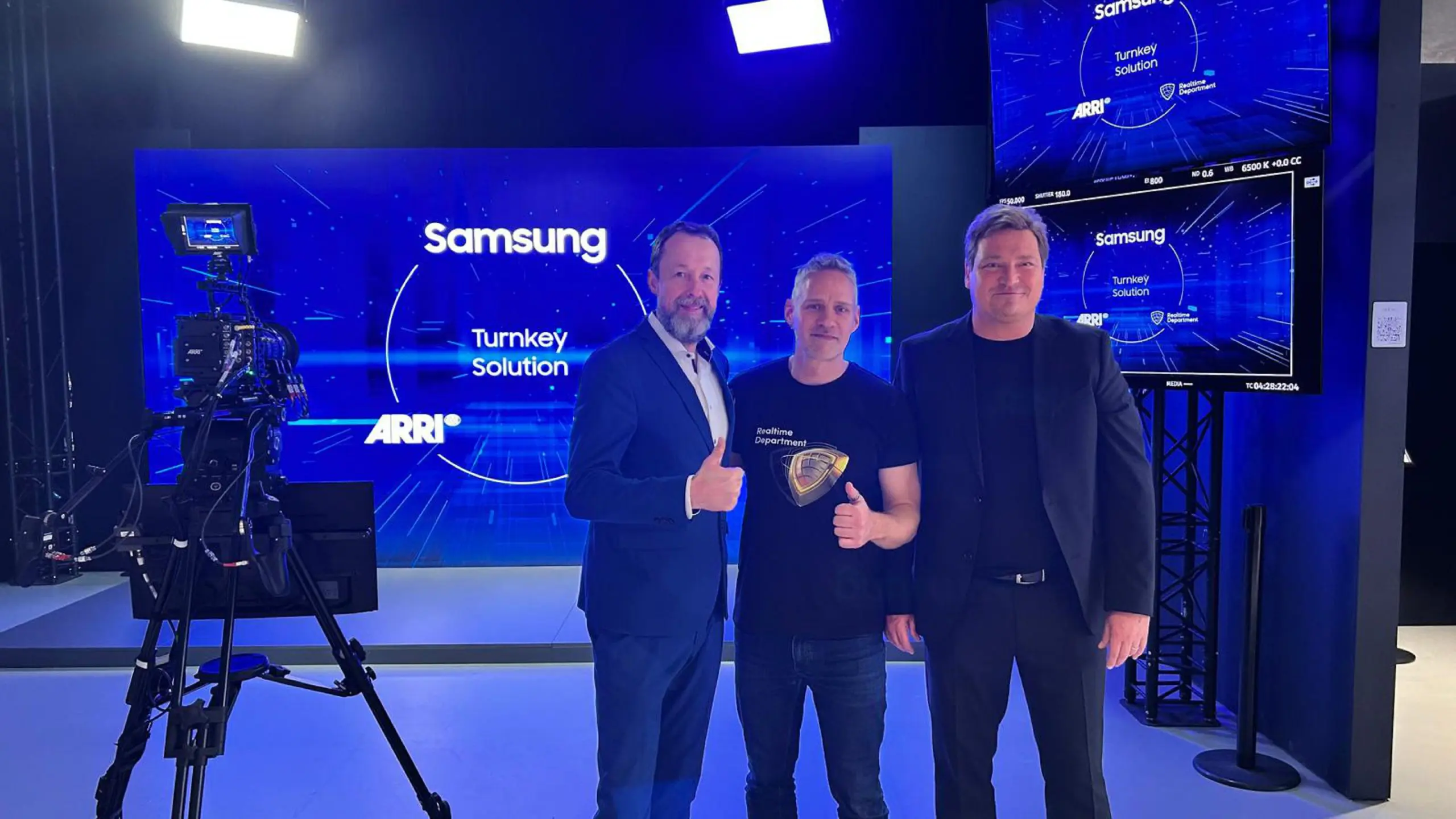
Christoph Gockel: We are the ones who turn an outstanding LED wall and world-class camera and lighting technology into a true platform for corporate communication. ARRI brings its high-end camera expertise, Samsung provides the LED backbone, and with UNIQVUE we add the layer that structures, makes content tangible, and keeps it operable. This transforms a studio into a toolset that companies can actually run on their own.
DP: When you talk about your “special sauce” for the system, where does your work begin, and where do ARRI and Samsung take over?
Christoph Gockel: ARRI and Samsung provide the technical foundation: cameras, image quality, LED technology. Our part starts where interactivity, usability, and content management come in. Our job is to bridge these systems and make them accessible so that clients can execute complex shows and productions without needing an operator behind the scenes.

DP: How much can users brand, theme, or “own” the look and feel of their studio environment?
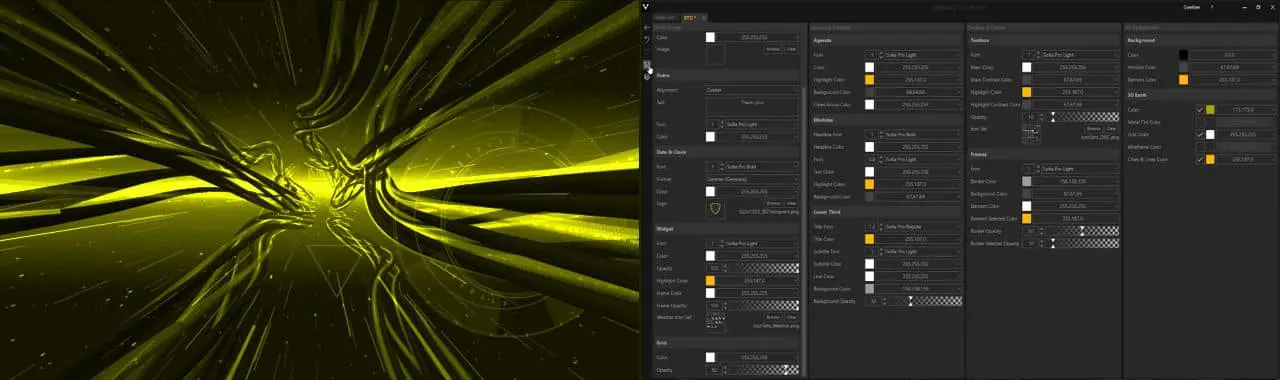
Christoph Gockel: Quite extensively. Colors, fonts, logos, and icons can be centrally customized in UNIQVUE’s style system. An entire studio operation can be switched into a client’s corporate design at the press of a button. This makes every production look individual without having to rebuild everything from scratch.
DP: If a client decided to skip your layer and just use the base ARRI & Samsung setup, what’s the most obvious feature or workflow they’d miss out on?
Christoph Gockel: They would miss the bridge between technology and application. Without UNIQVUE, the studio would be technically excellent but still cumbersome to operate. UNIQVUE acts as a content platform: it can turn a simple line of text into professional motion design, without the need for designers or operators. Otherwise, clients would have to rely on external operators instead of quickly and flexibly building scenarios themselves.
DP: You use UNIQVUE as a central element. Can you explain its role without falling into “ecosystem” jargon?
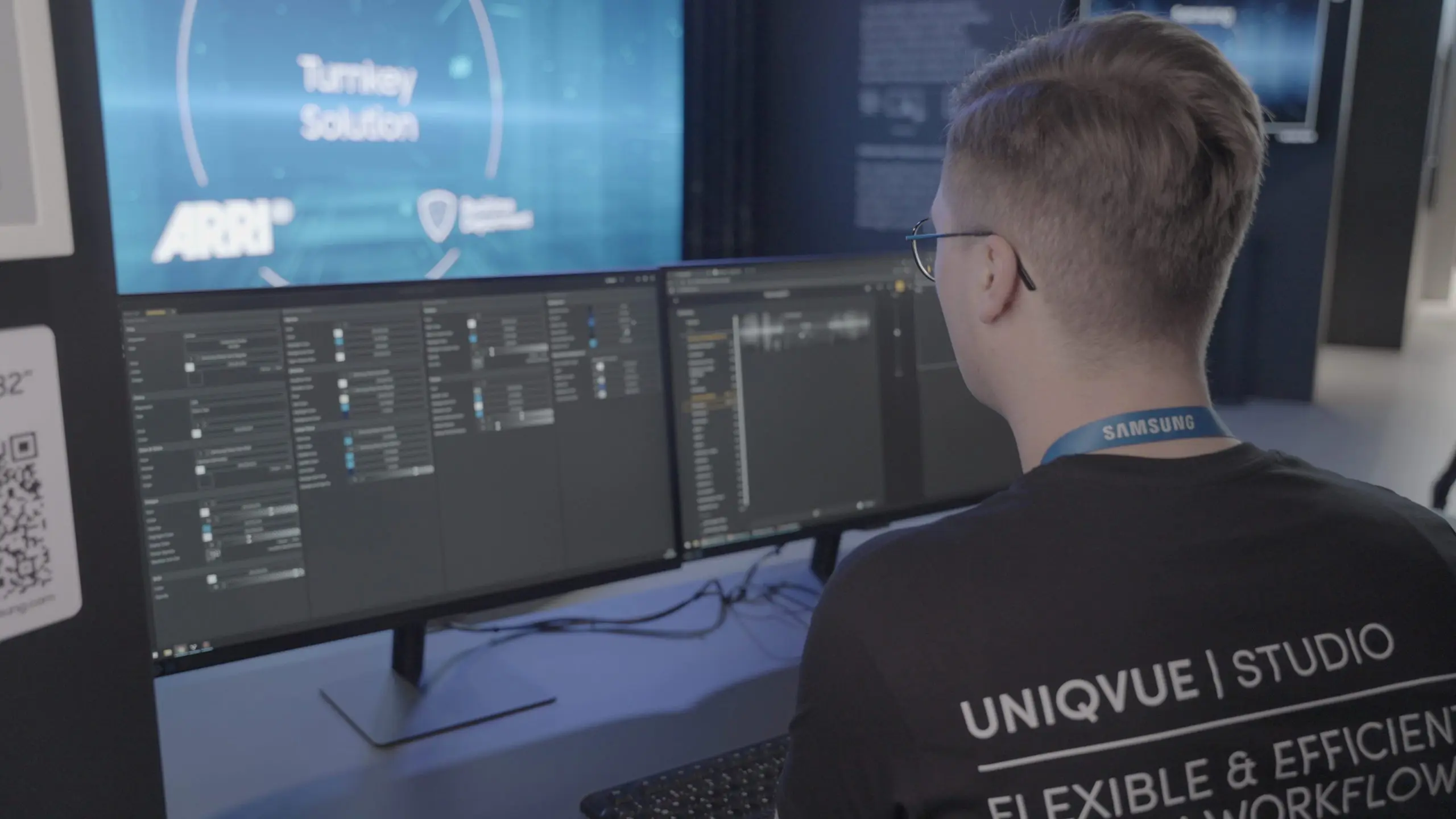
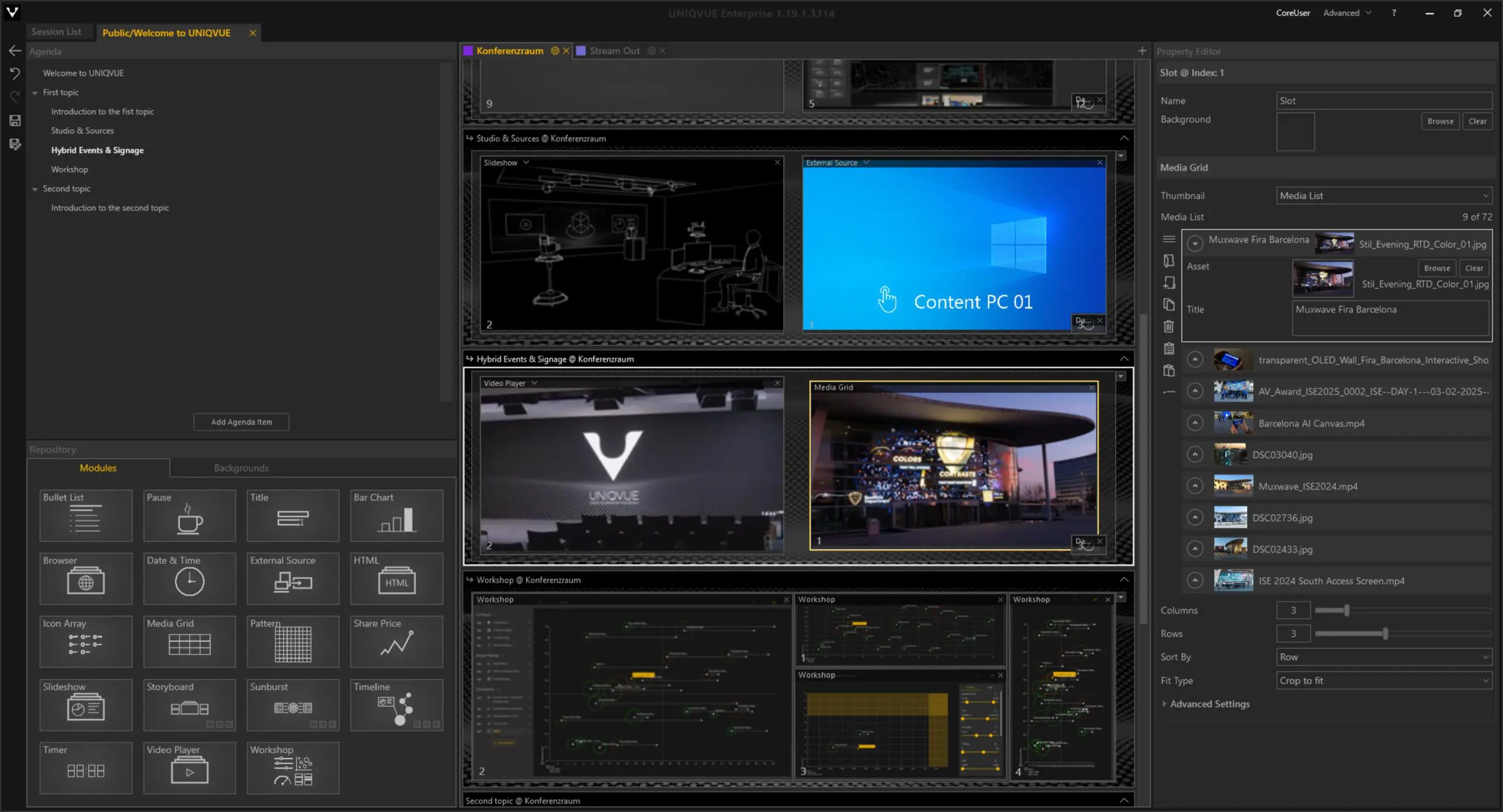
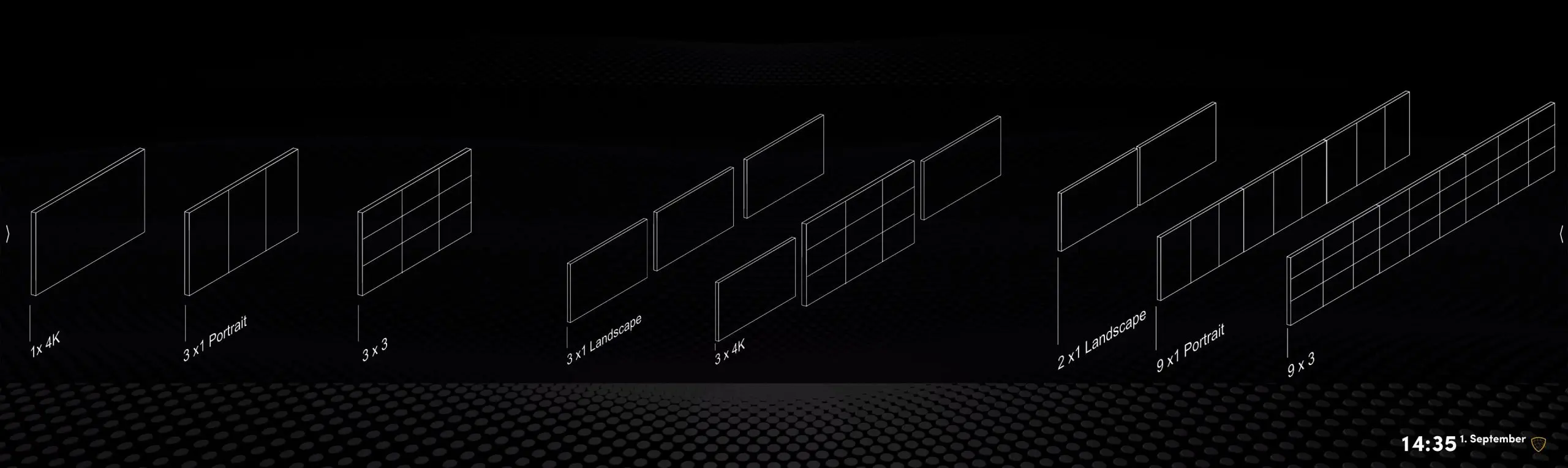
Christoph Gockel: At its core, UNIQVUE is a show and workflow manager on top of a high end real time renderer. It provides an agenda, stage layouts in the right formats, and modules for content – from videos and live feeds to browsers and interactive workshops. Everything can be combined via drag & drop. At the end of the day, users run their production through a touch or web interface.
DP: How do software updates roll out: quietly or with fireworks?
Christoph Gockel: A UNIQVUE license is perpetual – you can use it as long as you want. We offer optional maintenance packages because UNIQVUE is developed with a long-term perspective. We support integrators and clients continuously, without putting them under pressure through forced version upgrades.
DP: What level of customization and ongoing support do you offer once the system’s live?
Christoph Gockel: We never leave clients on their own. There’s onboarding, remote support, and if needed, custom extensions. Many companies start with a standard package and gradually expand – our role is to accompany them along that journey.
DP: Let’s walk through the setup process in real terms, what actually happens from the moment the crates arrive to the moment the first image lights up the wall?
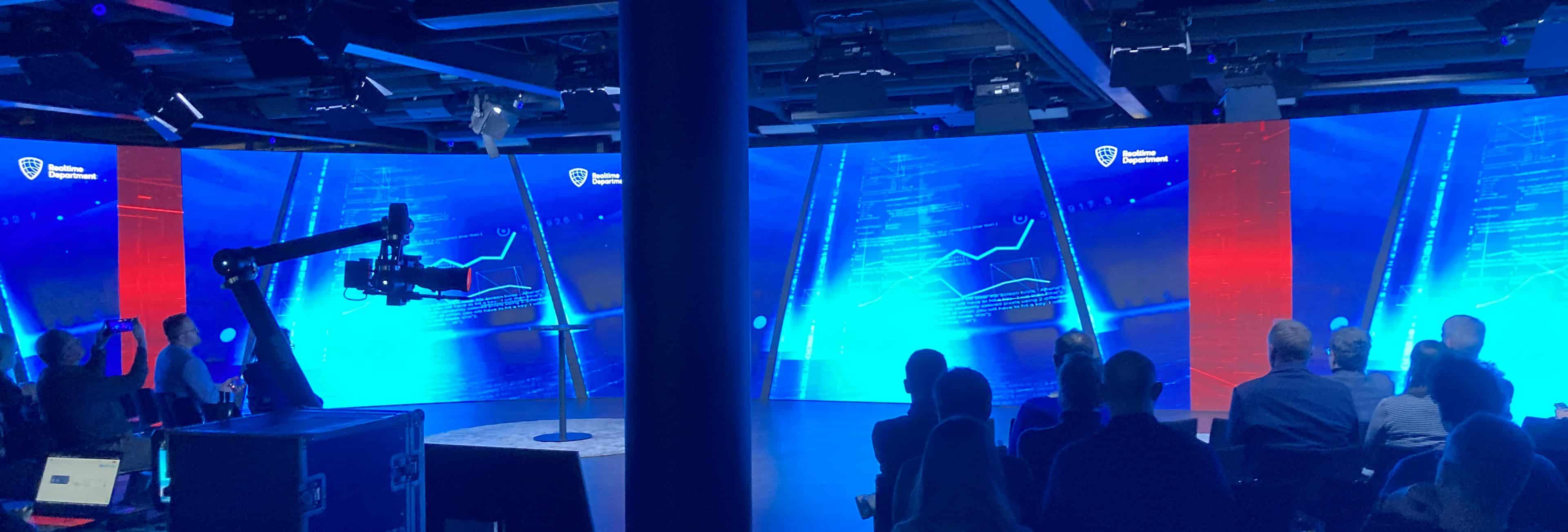
Christoph Gockel: First comes the classic studio and set construction, the hardware side. Once the interplay of lights, LED walls, and cameras is calibrated, those configuration datasets are imported into UNIQVUE. From there, you’re essentially ready to go.
DP: How much of the setup can be prepared remotely before anyone touches a cable?
Christoph Gockel: Quite a lot – from uploading corporate identity elements and content to defining agenda structures and standard layouts. By the time the hardware is physically installed, many templates are already ready to use.
DP: How does UNIQVUE talk to the LED wall and the ARRI camera? Are we working with standard protocols or custom integrations?
Christoph Gockel: Of course, all systems (LED wall, Camera and UNIQVUE) are Genlocked to be in sync. Once sync is done we provide frame alternating test patterns to get playout and camera in phase. After that the color calibration is done.

DP: How do you ensure colour accuracy, start to finish, when dealing with so many moving parts?
Christoph Gockel: ARRI’s color management in combination with a HDR linear color space supported by UNIQVUE and the Samsung LED wall is able to give us the exact adjustments we need to modify our output colors. We are not only talking about a simple LUT which may have interpolation errors but the exact calculations to be as precise as possible for every setup. This guarantees consistency across cameras, LED walls, and output.
DP: Once it’s running, how do users typically interact with the system? Through a single interface, or multiple layers depending on their role?
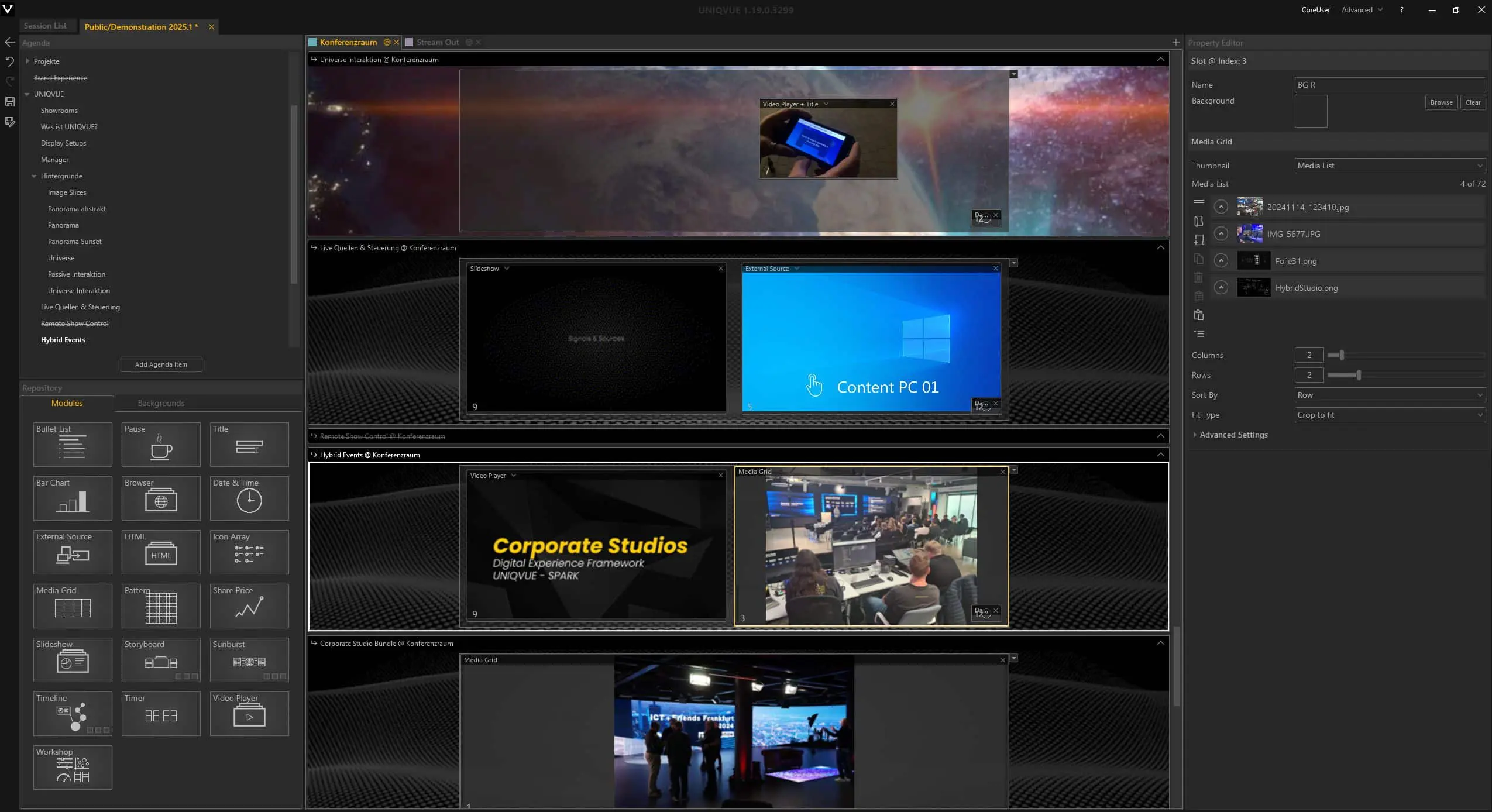
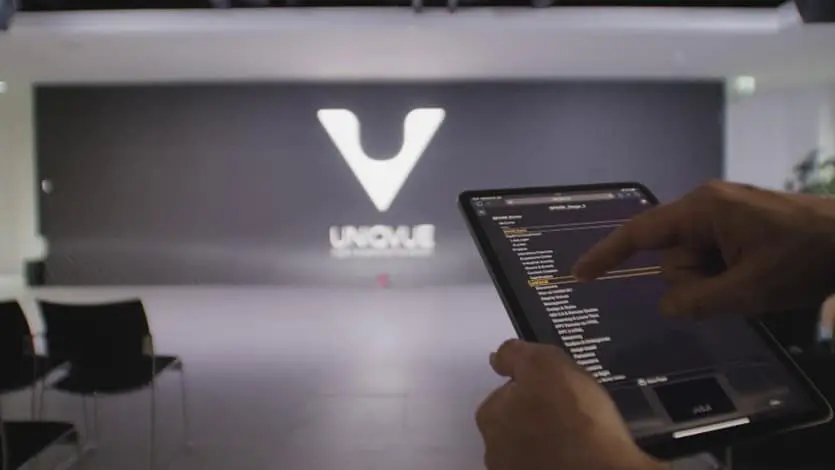
Christoph Gockel: Everything revolves around a central interface, the Manager. Depending on their role, users see a reduced or extended view. That sets clear boundaries while keeping the available tools visible. Creating a new show sequence takes just a few drag & drop steps. Templates and style definitions are handled by power users, while editors simply apply them. The system is designed so that one person can operate it during a live show. Moderators can even run shows directly from a tablet or smartphone.
DP: What’s in place for security: can anyone just stroll in and livestream the company party?
Christoph Gockel: Security measures are integrated at multiple levels. Access rights can be clearly defined, ensuring that only authorized users can operate the system or stream content. Corporate IT standards for network security and encryption are applied, so no one is casually walking in and “going live”.
DP: How long does it usually take from “power on” in the morning to “first frame ready” for a shoot or event?
Christoph Gockel: Usually just a few minutes – power it on, let the system boot and preload the session content, and the first show sequence is ready. Even if last-minute corporate design changes come in, adjustments rarely take more than 15 minutes.
DP: How do you train first-timers for those “why is it upside down?” moments?
Christoph Gockel: We provide structured onboarding with clear presets and example scenarios. Many users are capable of setting up their own shows within just a few hours. No thick manual required – though there is an online manual accessible directly from the Manager interface.
DP: What are the most common tweaks or adjustments people make once they see the live image?
Christoph Gockel: Timing cues are the classic one. Text corrections or color adjustments are also frequent. Thanks to the real-time engine, such tweaks can be made dynamically without interrupting the show.
DP: If a client wants to scale up (say, add more walls, more cameras, or something like integrating remote live performers), what’s the process?
Christoph Gockel: Very flexible. New stage presets, camera setups, or lighting configurations can be added within UNIQVUE. Thanks to the modular architecture, scaling can be done step by step without starting over.
DP: Given your background in AV and events, what’s the easiest “eventification” upgrade you can offer?
Christoph Gockel: We can quickly expand a studio into a hybrid event stage – adding tools for panel discussions, audience interaction, or embedding typical event set elements. Thanks to UNIQVUE’s modularity, this transition is straightforward.

DP: Is UNIQVUE already a hybrid event tool under the hood, or is that on the roadmap?
Christoph Gockel: It has been from the very beginning. UNIQVUE was originally developed as an operating system for Showrooms and Experience Centers. Many modules are inherently interactive and collaboration-driven. As hybrid formats became more in demand in this area, it was almost a natural transition into studio use. The opposite direction also works – turning a studio into an event platform is straightforward.

DP: What’s the “panic button” moment in setup where clients call you in a cold sweat?
Christoph Gockel: It’s usually when something worked the day before but suddenly doesn’t right before a live session – often due to last-minute changes in brand assets or network settings. With a disaster recovery plan, a solid backup strategy and remote support, we can usually solve these issues quickly.
DP: What’s the wildest client request you’ve ever entertained?
Christoph Gockel: Playing out 30 megapixels 60 times a second across 3 LED walls including one wall segmented into 28 tiles and a continuous ring all from a single workstation was a nice challenge. There have also been some extensive customization requests mostly to integrate customer workflows into UNIQVUE. Most of the time it comes with an NDA so we can’t really tell many details about it. But we have digitalized whole finance calculation workshops or integrated the frontend of a video conferencing system into UNIQVUE.
DP: How easy is it to integrate remote participants into the workflow? Are we talking “send them a link” easy, or does it require some signal-wrangling?
Christoph Gockel: In corporate environments, videoconferencing systems are standard. These can be integrated as input sources and enhanced with elements like lower thirds. From our Experience Center background, we also support deeper integrations with conferencing platforms when needed.
DP: Can power users extend the system themselves through scripting, APIs, or automation tools?
Christoph Gockel: Yes. For daily operations, power users can create new templates, styles, or input sources. On top of that, our APIs and automation interfaces allow even more customization. UNIQVUE is well suited for users who want to tailor their pipelines.

DP: What’s easier: adding new hardware, or convincing accounting to approve it?
Christoph Gockel: Honestly, convincing accounting is usually the harder part. Technically, new hardware integrates fairly easily, but budgets always demand the longer meetings.
DP: With the foundation already in place, what would it take to upgrade this into a virtual production stage with real-time camera tracking and interactive environments?
Christoph Gockel: UNIQVUE and the Corporate Studio Bundle were not initially designed for virtual production but for simplifying workflows in corporate studio settings. These are two different worlds. A VP stage cannot realistically be operated by a single person, what is the goal of UNIQVUE. That said, integrating tracking or even rendering Unreal scenes is not a technical hurdle. The foundation is there, and we can expand it if there’s a clear client demand.
DP: Which tracking systems have you tested so far, and how seamless was the integration?
Christoph Gockel: We have worked with various industry-standard tracking systems like NCAM and Trackmen in adjacent projects. Integration has been straightforward wherever clients requested it, though it depends heavily on project-specific pipelines.
DP: Does UNIQVUE support standard tracking protocols out of the box, or do clients need extra middleware?
Christoph Gockel: For Camera tracking we can support FreeD, Ncam, Mo-sys, Stype and Trackmen/Pixotope. Other systems can be integrated, though often project-specific adjustments are needed. We provide the hooks to make sure clients aren’t locked out by missing middleware. For object- or people-tracking there we support anything that arrives via OSC, Websocket, mqtt or raw tcp/upd. Most of the device APIs provide either of these connections.
DP: Is the current setup already capable of handling VP workflows under the hood, or would you need to re-architect parts of it?
Christoph Gockel: UNIQVUE and the Corporate Studio Bundle are primarily optimized for corporate studio workflows, not VP. But the rendering and integration capacities – like Unreal scene rendering – are already technically feasible. With additional tracking and resource allocation, VP workflows can be built on this foundation.
DP: If budget and partner politics disappeared tomorrow, what’s the one upgrade you’d implement immediately?
Christoph Gockel: A fully AI-driven studio where content, stage designs, and even camera movements are dynamically created in real time, steered by a voice assistant. That would blur the boundaries between live staging and virtual production once and for all. Just between us, we’re already working on parts of it ;)