



ASUS has announced the ProArt Display PA32KCX, a 32-inch professional-grade monitor, which packs 8K (7680 × 4320) resolution into a Mini-LED-backlit IPS panel with a pixel density of 275 ppi and 4,032 local dimming zones. Peak brightness reaches 1,200 nits, while full-screen brightness can sustain 1,000 nits, a number that could genuinely require sunglasses if you check your emails at night (Randomn example *cough*). The monitor supports HDR10, HLG, and Dolby Vision (via firmware), features a built-in motorised colourimeter for self-calibration, and offers a claimed colour accuracy of ΔE < 1.
Connectivity includes dual Thunderbolt 4 ports with 96 W power delivery, HDMI 2.1, DisplayPort 2.1, and a full USB hub. An integrated Auto-KVM switch allows seamless switching between systems, making it practical for complex multi-workstation environments.

Why the ASUS ProArt PA32KCX matters for post-production
For editors, VFX artists, colourists and CG professionals this display offers several real advantages. The 8K resolution provides an enormous desktop workspace, allowing full-resolution viewing of 4K footage within the full NLE-Interface, or multiple UI panels without scaling compromises. The colour gamut coverage, factory calibration, and self-calibrating hardware make it particularly attractive for colour-critical grading or print photography. Meanwhile, the Auto-KVM and comprehensive I/O design mean one monitor can serve multiple systems, for instance, a grading suite and a simulation/rendering workstation, without cable switching.
What it’s not for
At a typical viewing distance of half a metre, the human eye struggles to perceive much more detail beyond a good 4K display (For example this one: Asus ProArt). For most desktop workflows, 8K is therefore more about workspace real-estate than visual acuity. The 60 Hz refresh rate and studio-grade focus also make this unsuitable for gaming or interactive design preview. Pricing has not been officially confirmed, but reports place it around the 8,000 USD mark, clearly aimed at professional facilities, not casual users.
Our take
Based on recent ASUS ProArt monitors we’ve tested, ASUS is currently on a roll. The company has been consistently delivering stable, colour-accurate, high-brightness displays that behave predictably under real production conditions. So while this new 8K PA32KCX is undoubtedly a niche product, we’re cautiously optimistic, the ProArt line hasn’t let us down so far.
For anyone working with HDR content, editing hihres footage, or running complex 3D or simulation software that benefits from massive on-screen real-estate, this could be a compelling addition. For everyone else, 4K or 5K probably remains the sweet spot. As always, test before deployment: confirm colour drift, calibration precision, uniformity, and HDR mapping in your actual workflow before integrating such a display into production.
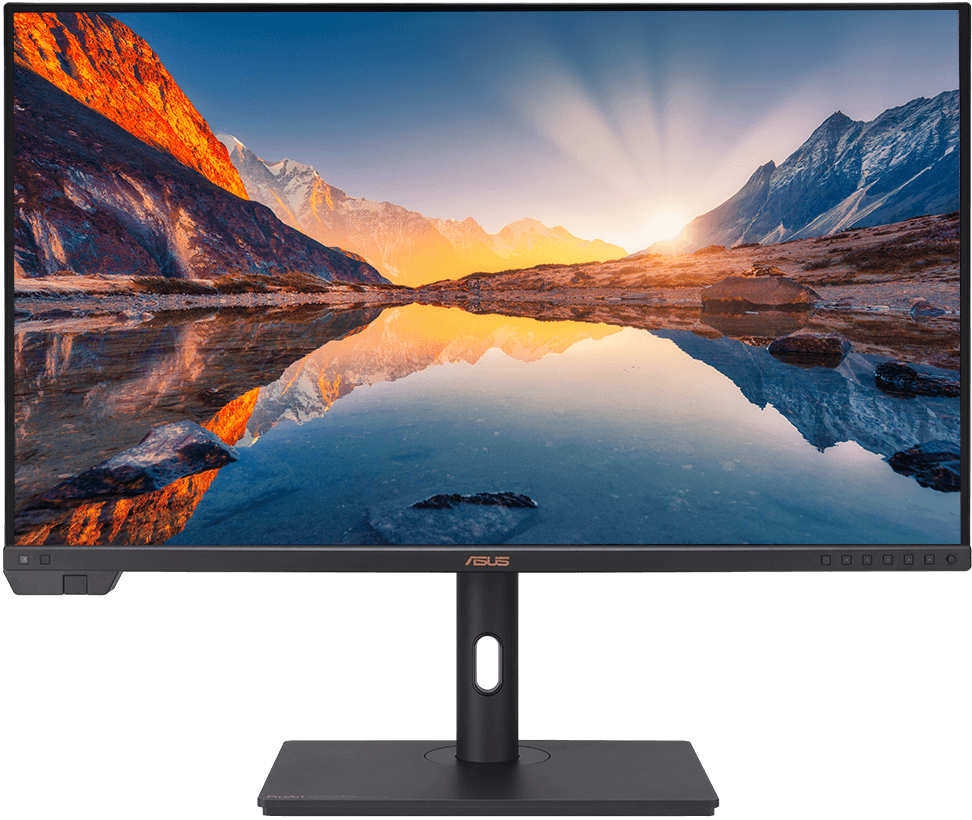
Full Specifications
Display
Panel size: 32″ (16:9 aspect ratio)
Resolution: 7680 × 4320 (8K UHD)
Pixel density: 275 ppi
Panel type: IPS, Anti-Glare Low-Reflection (AGLR)
Viewing angle: 178° horizontal / 178° vertical
Local dimming zones: 4,032
Pixel pitch: 0.092 mm
Colour and Image
Colour gamuts: sRGB 99 %, Adobe RGB 95 %, DCI-P3 97 %
True 10-bit colour depth
Colour accuracy: ΔE < 1
Brightness, Contrast and HDR
Peak brightness (HDR): 1,200 nits
Sustained full-screen brightness: 1,000 nits
Contrast ratio (HDR, max): 1,000,000 : 1
Contrast ratio (typical): 1000 : 1
Response time: 5 ms (GTG)
Refresh rate: 60 Hz
HDR support: HDR10, HLG, Dolby Vision
Features
Built-in motorised colourimeter for calibration
Auto- and self-calibration on Windows and macOS
Auto-KVM switch between systems
Picture-in-Picture and Picture-by-Picture modes
Eye Care+ with LuxPixel anti-glare and low-reflection technology
Connectivity
2 × Thunderbolt 4 (96 W PD)
2 × HDMI 2.1
1 × DisplayPort 2.1
1 × USB-C (service)
3 × USB-A 3.2 Gen 2
Power
Typical consumption: < 81.4 W
Power saving mode: < 0.5 W
Input voltage: 100 – 240 V AC, 50/60 Hz
Dimensions and Ergonomics
With stand (W × H × D): 72.7 × 60.1 × 24.5 cm
Without stand: 72.7 × 44.5 × 9.0 cm
Net weight (with stand): 14.1 kg
Tilt: –5° to +23°
Swivel: –30° to +30°
Pivot: –90° to +90°
Height adjustment: 0–100 mm
VESA mount: 100 × 100 mm
Detachable monitor hood included
Warranty and Compatibility
3-year warranty (LCD ZBD coverage)
Supports Calman and Light Illusion ColourSpace CMS
