



EIZO is officially bringing OLED into the ColorEdge family. The company says the first ColorEdge OLED is in development, and the message is basically: OLED has finally graduated from “interesting, but not trustworthy for a ColorEdge” to “good enough for the people who argue about a low one-digit Delta-E and actually know what that means”. The target use cases are projects mastered in HLG, PQ, or SDR, meaning the usual HDR and broadcast suspects, plus the everyday reality of SDR deliveries.
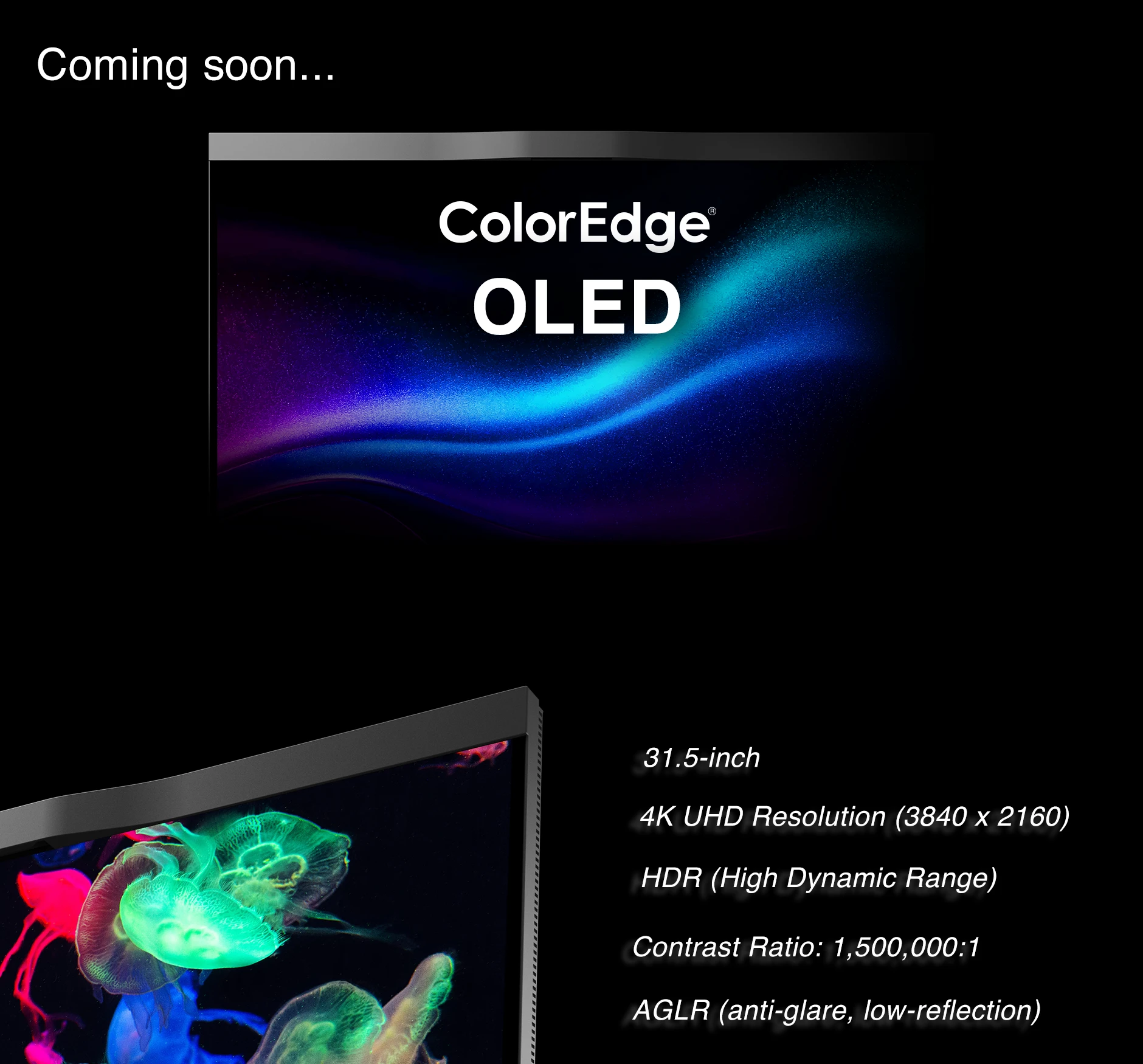
The key OLED problem: ABL that does not quietly rewrite your image
OLED’s long-running party trick is contrast. Its long-running problem is ABL (Auto Brightness Limiter), the panel protection system that keeps OLED from cooking itself when the image gets bright. In practice, ABL can also keep your grade from staying put: overall brightness drops, tonal balance shifts, and suddenly the monitor is “helping” in exactly the way colour-critical workflows do not want to be helped.
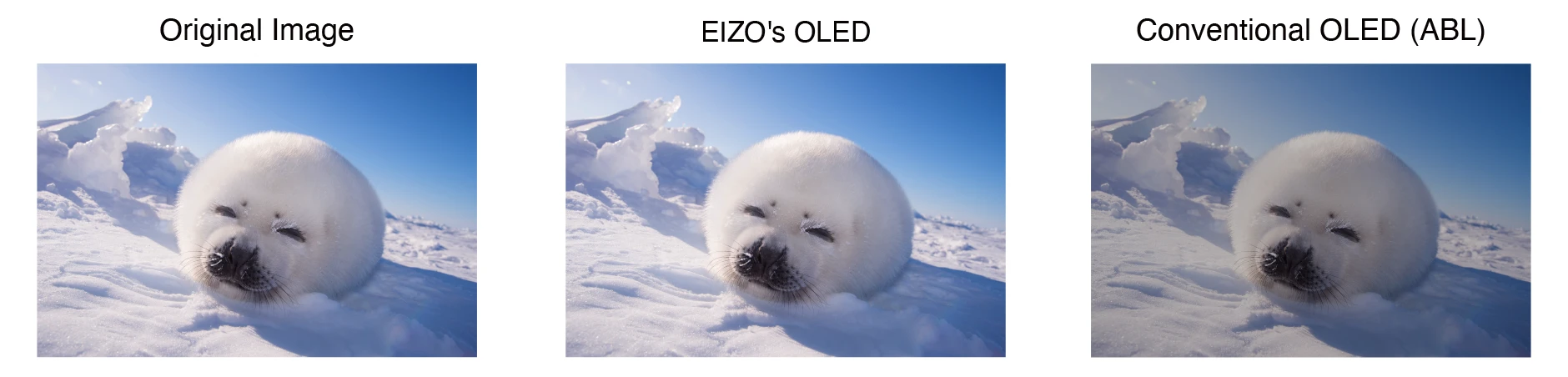
The ABL comparison images shown are illustrative. So: conceptually useful, not a lab report.

EIZO says it has built a more refined luminance control approach that aims to keep tonality and colour stable, with higher luminance thresholds, so, in Translation, less hair-trigger dimming. Bright scenes should be less likely to trigger aggressive ABL behaviour, so more of the image stays at the brightness you expect.
Mid-tones are preserved. If luminance control kicks in, EIZO claims the mid-tones keep their structure, instead of getting squashed until gradients look like they went through a badly set codec. Ad you got the indicator, but more on that below.
Flexible dimming modes
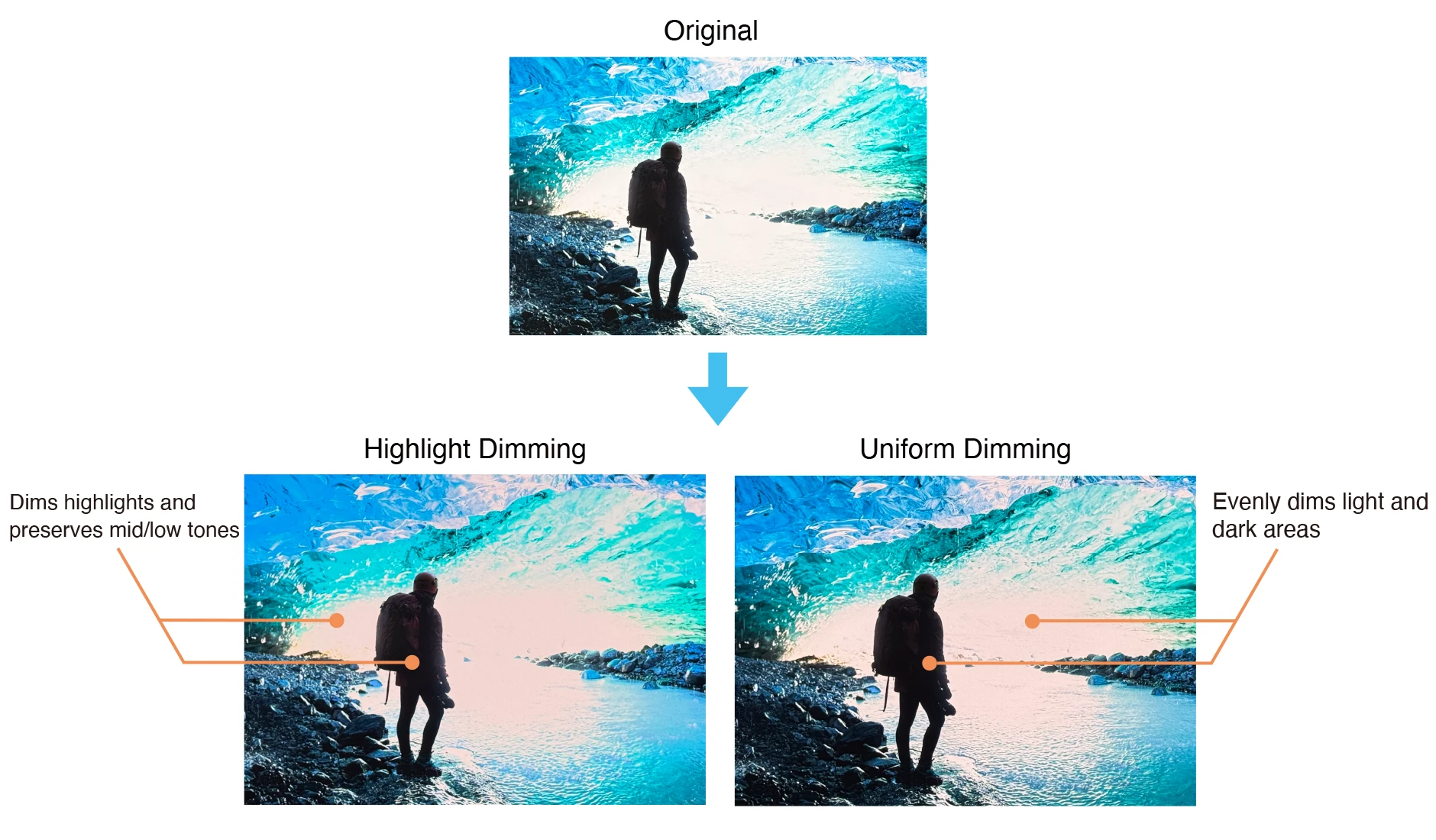
You can choose how the monitor behaves based on content. Highlight dimming pushes dimming mostly into highlights while keeping mid- and low tones steadier. And there is Uniform dimming, which reduces brightness evenly across the screen, aiming for a consistent overall balance.
Reducing colour fringing on fine edges
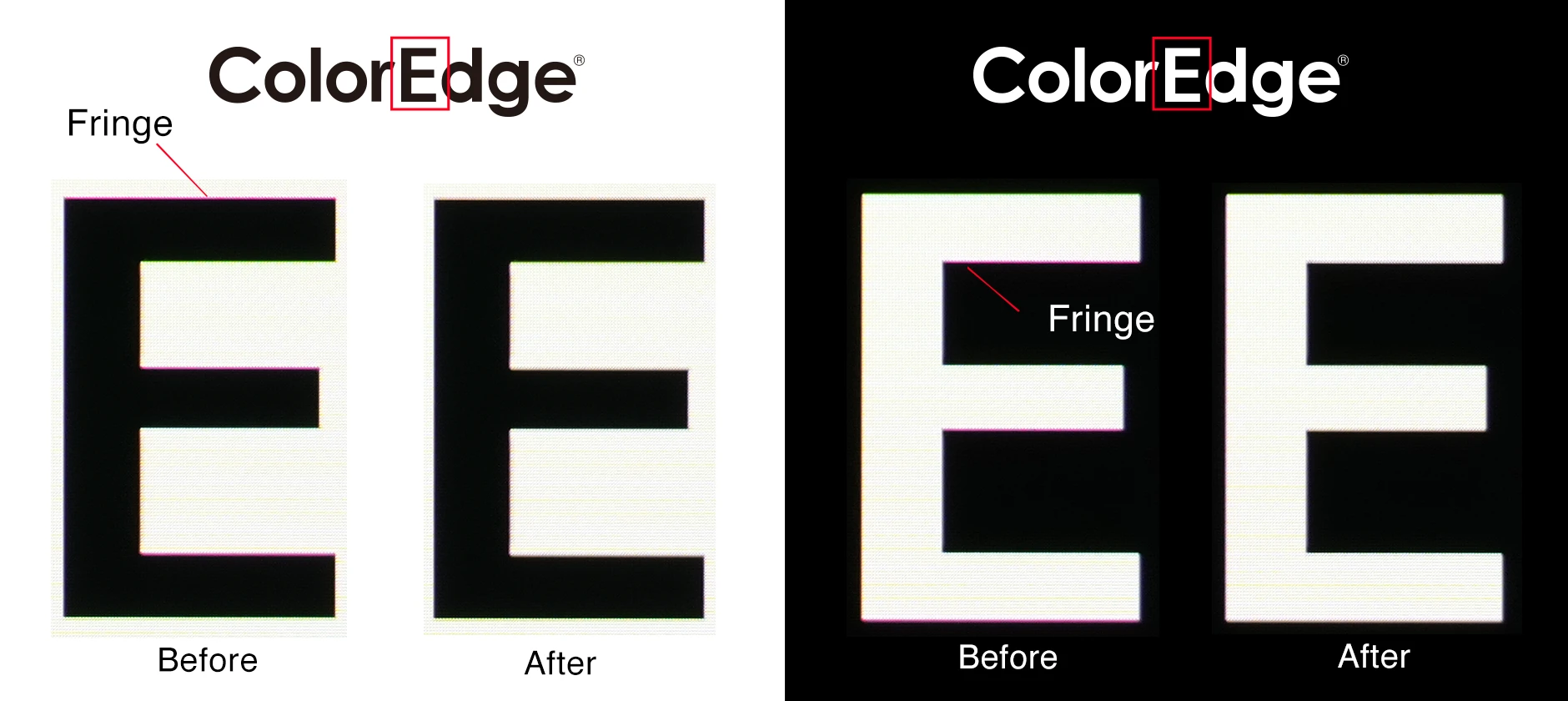
Another classic OLED annoyance is colour fringing on high-contrast edges, especially visible on text and fine UI details. EIZO says it integrates a dedicated circuit to reduce these artefacts, aiming for cleaner edges that look less like the pixels are arguing with each other.
Instant feedback: a status indicator for luminance control

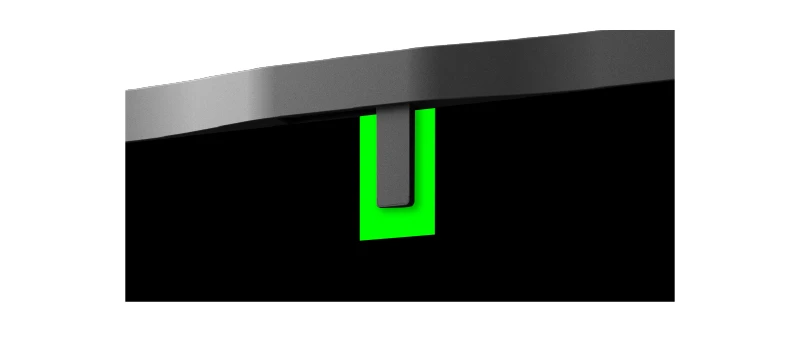
Because OLED control logic is only fun until it is invisible, EIZO includes a blue status indicator that lights up whenever luminance control is active. The idea is blunt and practical: you can see when the display is doing something extra, without stopping to guess why the image feels different.
Built-in calibration sensor and software demos
EIZO says the monitor features its built-in calibration sensor technology to maintain colour accuracy. That is consistent with how ColorEdge devices typically prevent calibration from becoming a calendar reminder you keep ignoring until delivery day.
On the software side, EIZO plans hands-on demos of ColorNavigator 7, ColorNavigator Network, and the ColorNavigator API for integration into third-party applications. So the pitch is not “trust our magic”, but “here are the tools and the hooks to keep colour management boring and repeatable”.

What the announcement does not specify
This is still a preview, so the missing list is long and very on-brand: no pricing, no final model name, no shipping timing. Also not specified are hard targets for peak luminance, colour gamut coverage, signal formats, and I/O. In short, we know EIZO wants you to look at it at NAB and MPTS, but you cannot yet plan a procurement spreadsheet around it without doing some guessing. But, when looking at all the other Eizo tests we did over the years, It will be worth the wait, and your procurement team will appreciate the breather.
Finally, for anyone who enjoys reliable tools more than buzzwords: the announcement is about panel type and behaviour, calibration, and workflow integration. AI-based processing features are not mentioned. No “it learns your look”, no “neural colour”, no new opportunities for the monitor to improvise. A rare case where the absence of a feature is the feature.
Where to see it: NAB Show 2026 and MPTS 2026
Beyond the OLED preview, EIZO says its booth will feature the full lineup of ColorEdge monitors designed to support post-production stages from filming and editing to colour grading. They are planning live demonstrations at two industry events; you can book appointments here.
NAB Show 2026
Date: April 19 to 22, 2026
Venue: Las Vegas Convention Center, Las Vegas, USA
Stand: N1123
NAB Show 2026 dates and venue details: https://www.nabshow.com/las-vegas/
MPTS 2026
Date: May 13 to 14, 2026
Venue: The Grand Hall, Olympia, London, UK
Stand: M60
MPTS exhibitor listing showing EIZO at stand M60: https://www.mpts.london/exhibitors/eizo
