



The guy who made your industry’s favorite moon face
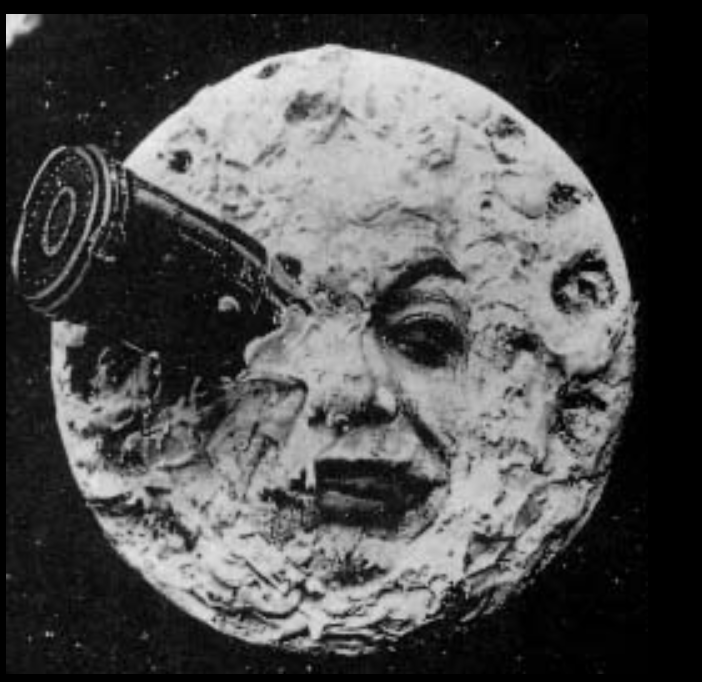
Georges Méliès was a French filmmaker and stage magician whose name still lands like a practical effects mic drop. He is best known for “A trip to the moon“, where we get the shot of the rocket in the moon’s eye – and yes, you propably know that this is the logo of the Visual Effects Society And that Méliès made another “short” around 1897, missing from public view for more than a century, which has resurfaced online.

Forty five seconds, zero chill
Gugusse et l’Automate runs for 45 seconds. It is silent, fast, and built like a vaudeville punchline that refuses to stop for breath. On screen, a magician shares the stage with a robot dressed like Pierrot. They fight. The robot commits to the bit with the kind of confidence usually reserved for final delivery. Until last month, the film had not been publicly viewable for more than a century. There is also a big historical brag floating around it, including the claim that it is the first “robot in science fiction”-film ever made. You watch it and decide if it is that or Lang’s Metropolis.
A family reel stash walks into a conservation lab
The comeback starts with a road trip and a family archive: Bill McFarland traveled from Grand Rapids, Michigan to the Library of Congress National Audio-Visual Conservation Center in Culpeper, Virginia, bringing reels that once belonged to his great-grandfather, William Delisle Frisbee. Frisbee used them in a traveling showbusiness in western Pennsylvania, moving between nearby towns to screen early moving pictures with music accompaniment.
If you have ever hauled a hard drive across town because someone, somewhere, needed to see the cut on a different screen, congratulations. You are spiritually aligned with a nineteenth century touring projection workflow.
What was actually done to the film
McFarland’s copy of Gugusse et l’Automate is described as a duplicate at least three times removed from the original. The conservation work took more than a week to scan and stabilise the film for digital preservation. The resulting presentation is described as viewable online in 4K.
If you want a clean, non-mystical reason to care, it is this: seeing early screen illusion work in motion is a direct line to the instincts VFX still leans on today, just the raw DNA of spectacle doing its job.
And we found the story here:
https://www.thisiscolossal.com/2026/03/gugusse-et-lautomate-georges-melies/
