



Mateusz Tokarz, Lead VFX Supervisor at Platige Image, sheds some light on Platige Image’s self-set demand: “We wanted the effects to have a cinematic quality.” Overall, Platige issued around 170 visual effects shots for the second season. The following is a deep dive with art director Michał Niewiara and VFX supervisor Mateusz Tokarz.
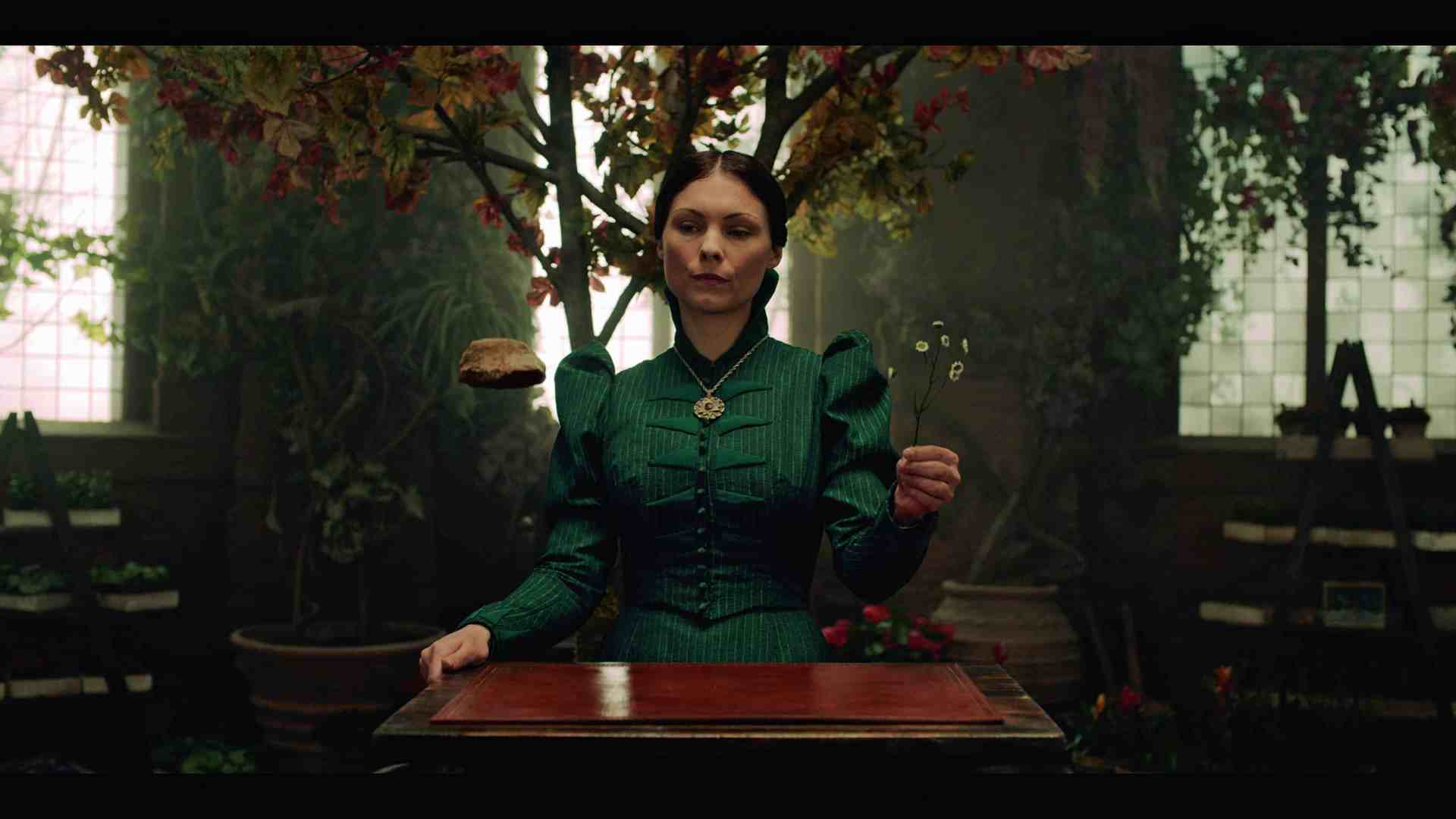
Someone in the editorial team of Digital Production has a nag for The Witcher: In DP 03:20, Bela enjoyed a conversation with Platige Image about the The Witcher Season one and the cinematics for the video game of the same IP (“The Witcher by Platige”, page 78). Only two issues before this one, in DP 05:22, Patrick, a Witcher-newbie, had an insightful conversation with Brad Blackbourn, Virtual Production Manager at The Third Floor, about how AR visualization helped during the production of Season two (“The Witcher: Adventures in AR” on page 71); and now, it’s time to converse with Platige Image about visual trickery inside the Andrzej Sapkowski universe.
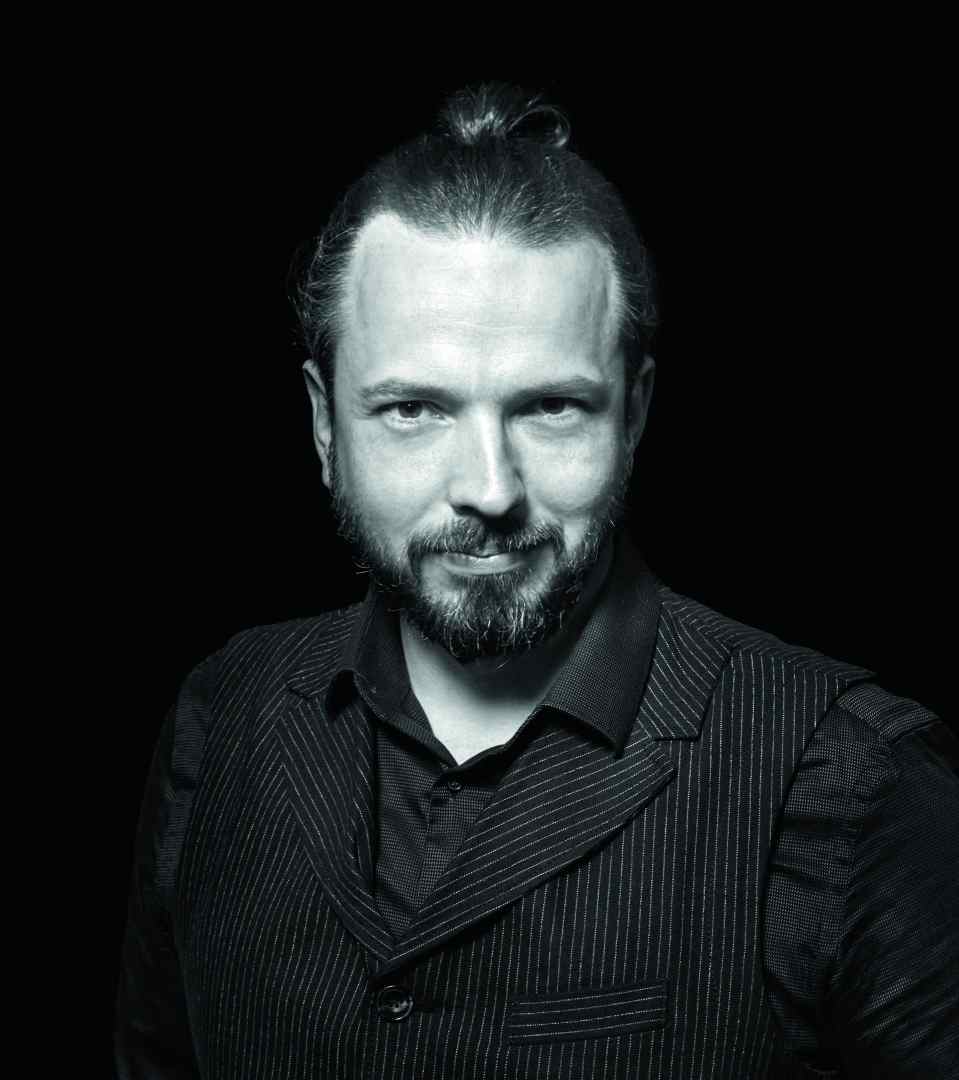
Michal Niewiara is an art director and concept artist at Platige Image. Michal has been part of Platige Image for 11 years, starting in January of 2012. The opening of each episode of The Witcher is fronted with a unique opening, delicately alluding to each episode’s main theme; those were designed by Michal.
His skills as an artist include digital matte painting, computer animation, traditional animation, and state-of-the-art animation. He holds a Master of Arts degree with focus on Graphic Design and Computer Graphic from the Eugeniusz Geppert Academy of Fine Arts, located in Wroclaw. To marvel at his artwork, visit Michal on artstation.com: is.gd/NiewiaraArtstation
DP: Michal, could you please explain to us how you created the unique openings for each episode, together with production designer Andrew Laws?
Michal Niewiara: While working on the first season, I got a sketch of the logo from Andrew. I developed my design based on his idea. The biggest contribution to the creation, however, came from producer Lauren Schmidt Hissrich. We owe its final shape to her. At the end of the first season, Steve Gaub joined the producers’ team, and from then on, we developed the intros and symbols together.

I must add that the graphic work was not the only thing I did in the movie. Having acted as a lore consultant much earlier than the others, I already had an insight into what would be on the screen, and that gave me some time to think about how to illustrate the episodes. I would choose something that I felt was the most essential element of a particular episode – it could be an event, a character or a theme – and after the initial selection, we would choose one of them and start working on the design.
As a curiosity, I might add that sometimes a symbol was ready by the first attempt. But sometimes the episode changed character so much of the course of the editing, that it had to be created anew. I learned from this experience. During the second season, I always tried to set time aside to sculpt each symbol in ZBrush, so that it would suit the atmosphere of the series. The models prepared in this way were then passed on to the lighting and shader artists, and the animation and FX. Creating even the seemingly tiniest elements of a film is a time-consuming and complicated process.
DP: Could you explain your role as the “The Witcher professor” within the Platige crew?
Michal Niewiara: I owe the nickname “professor” to my expertise in Andrzej Sapkowski’s novels. I’ve been a loyal fan of his Witcher saga since I was a kid, and can boast quite a wide knowledge on the subject. As a result, I supported the screenwriters and artists on more than one occasion in understanding a particular plot point better or to help with the creation of the characters and creatures.
DP: How did you ensure the scripts were consistent with the source material by Andrzej Sapkowski?
Michal Niewiara: A movie adaptation is a completely different thing to a book, which is treated as a set of building blocks which, when taken apart and then reassembled, can create a new quality. Sometimes new elements are added. Good examples of this are the expansion of Stregobor’s role (in the books, he appeared in only one story) or the link between Voleth Meir and the Wild Hunt. I also had a hand in creating things that didn’t affect the storyline itself, but were still important, such as the creation of the currencies that occur in the various kingdoms.

DP: The descriptions in the books were the main source of inspiration for many effects in season two, right?
Michal Niewiara: Yes. Sapkowski is known for limiting the descriptions and pushing the plot forward quickly. I think it’s more about feeling the sense of the scene and its dynamics. However, whenever it was necessary, it was down to me to point out where we could find even the briefest description of a particular spell, scene, or situation in the books.
DP: Could you give us a glimpse into what the abandoned movie project for The Witcher was like, before Netflix showed up and handed everything over to the talented production designer Andrew Laws and his team?
Michal Niewiara: It was totally different. It really couldn’t have been more different, as it had a completely different team working on it. They had their own vision and ideas about how to transfer the book to the screen. To use the comparison to building blocks – the same type and number of blocks can give many different combinations.

DP: Michal, how does it feel to have co-designed the medallion worn in the series by Henry Cavill?
Michal Niewiara: Great! I’m really happy about it because, thanks to Netflix, I was able to cross off a few things that I wanted to do in my life. And the medallion was one of them. I am excited to have had the opportunity to work on this project and co-create something that has always shaped – and is still shaping – my imagination.
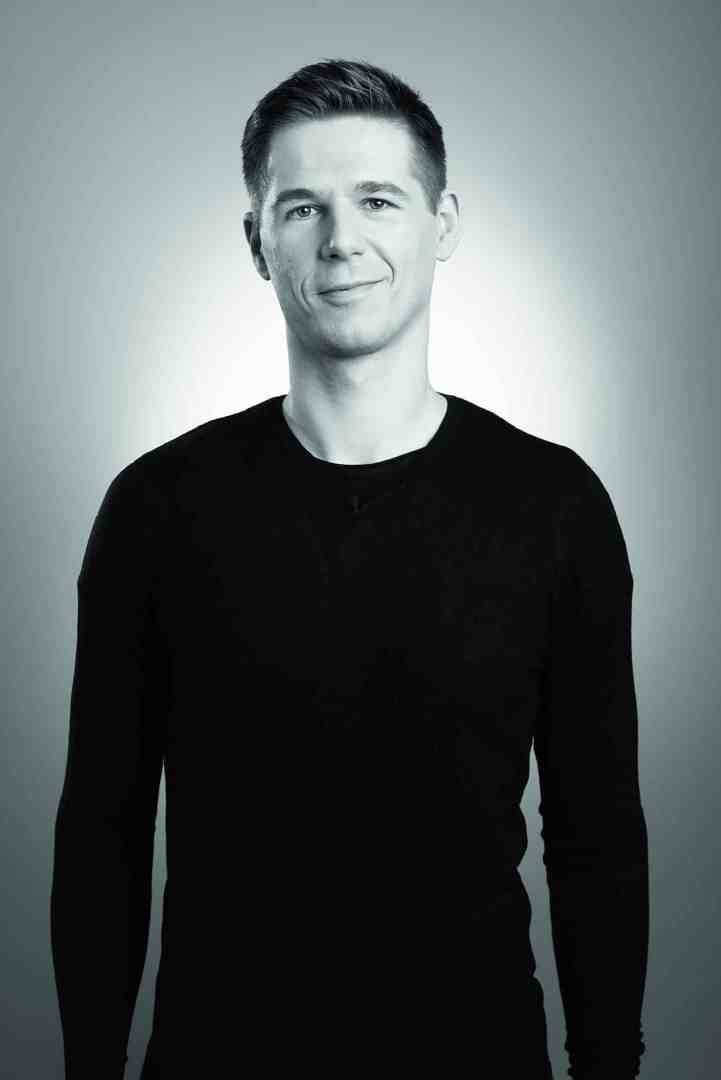
Mateusz Tokarz is a VFX supervisor, manager and Pipeline TD. He fell in love with art during his days at high school, all the while making his first steps into the world of programming. He graduated with a Master of Science degree in Computer Engineering in Electrical Systems from the AGH University of Science and Technology, based in Kraków. He wrote his Master Thesis about video-based camera-tracking.
After graduating Mateusz went to the Jan Matejko Academy of Fine Arts, also in Kraków, in order to further push his artistic skills. After that, he was hired by Alvernia Studio, one of the most important film studios in Poland. Some of Mateusz’s favorite software tools are Maya, Nuke, and Unreal Engine. He has been a part of Platige Image for almost eight years, starting out as a CG Supervisor in 2015, he has been a VRX supervisor on many projects since – including the first and second season of The Witcher, and the mini series The Witcher: Blood Origin.
DP: Mateusz, at what point in the process did you start working on The Witcher season two?
Mateusz Tokarz: When we finished work on the first season, we heard a mysterious “See you later” from Netflix. So we assumed that we would be working on the second season. That’s precisely what happened. We started quite early, even before shooting began. We had to prepare some effects using fire, and although it wasn’t a big thing, this helped us to guess what kind of shots to expect.
DP: When did you start speaking with showrunner Lauren Schmidt Hissrich?
Mateusz Tokarz: We didn’t consult Lauren so frequently during the work on the second season, mainly due to the fact that we already had a lot of experience and knew very well what she liked, and also what we should avoid. An interesting point is the fact that our team had only changed slightly, and the core team had remained the same. The production supervisor Dadi Einarsson was particularly important as he was a great liaison between Lauren and all the vendors.
DP: You said it was agreed early on for season two that you wanted to create visual effects inspired by physical phenomena – lightning discharges, clouds or the appearance of galaxies. What led to that decision?
Mateusz Tokarz: It wasn’t actually our decision – Lauren gave us that recommendation at the very beginning of our adventure, even before we started working on the episodes of the first season, and it suited us. Our studio uses a variety of techniques and technologies, and we also place an emphasis on creativity.
That’s why we were so keen to get involved in something completely new – it was a mind-boggling task that allowed us to spread our wings. We started with variants that were very elaborate and complex, strongly inspired by physical phenomena, and then we simplified them, adapting them according to Lauren’s preferences.
DP: What were some of the things you took over from season one, and what were some of the things you had to revise completely?
Mateusz Tokarz: Actually, everything we created for the first season could also be used in the second. Sometimes our effects evolved, but it was never the case that what we had developed in the first eight episodes of the saga ended up in the bin and we had to start from scratch for the next series.
The first season also allowed us to develop a number of tools to facilitate our collaboration with Netflix. Our pipeline department prepared various tools with very common applications, such as different types of automations responsible for receiving and sending materials, tech checks, or preparing sources in various departments. These tools were developed while we were working on the first season, and then rewritten and cleaned up before we started the next chapter of our work on the VFX for the Netflix saga.
In addition, a myriad of tools was also developed to streamline the work of individual teams, and these are still used today, not only in CG projects but also in cinematics and advertising.

DP: How many people did you have in your team for season two, and who was responsible for what?
Mateusz Tokarz: The core of the production team was made up of four people, consisting of Krzysiek Krok (producer), Maciek Jackiewicz (art director), Magda Rudnicka (production assistant), and me, as supervisor.
The artists in Platige’s animation and VFX departments form functional teams, so, for example, we have modelling, rigging, set dressing, look-dev, and compositing teams. Each of these teams has its own lead, producer and coordinator. The first season was made just after the restructuring implemented by Krzysiek Krok and myself. Many things were still being finalized at that stage.
In the second season, everything ran smoothly. Not only did we get everything done on time, as before, but we often created shots before their deadlines. That wouldn’t have been possible without the wonderful work of our artists and their incredible commitment. And I don’t mean that it involved a huge amount of overtime, because that’s something we avoid like hell! (laughs)
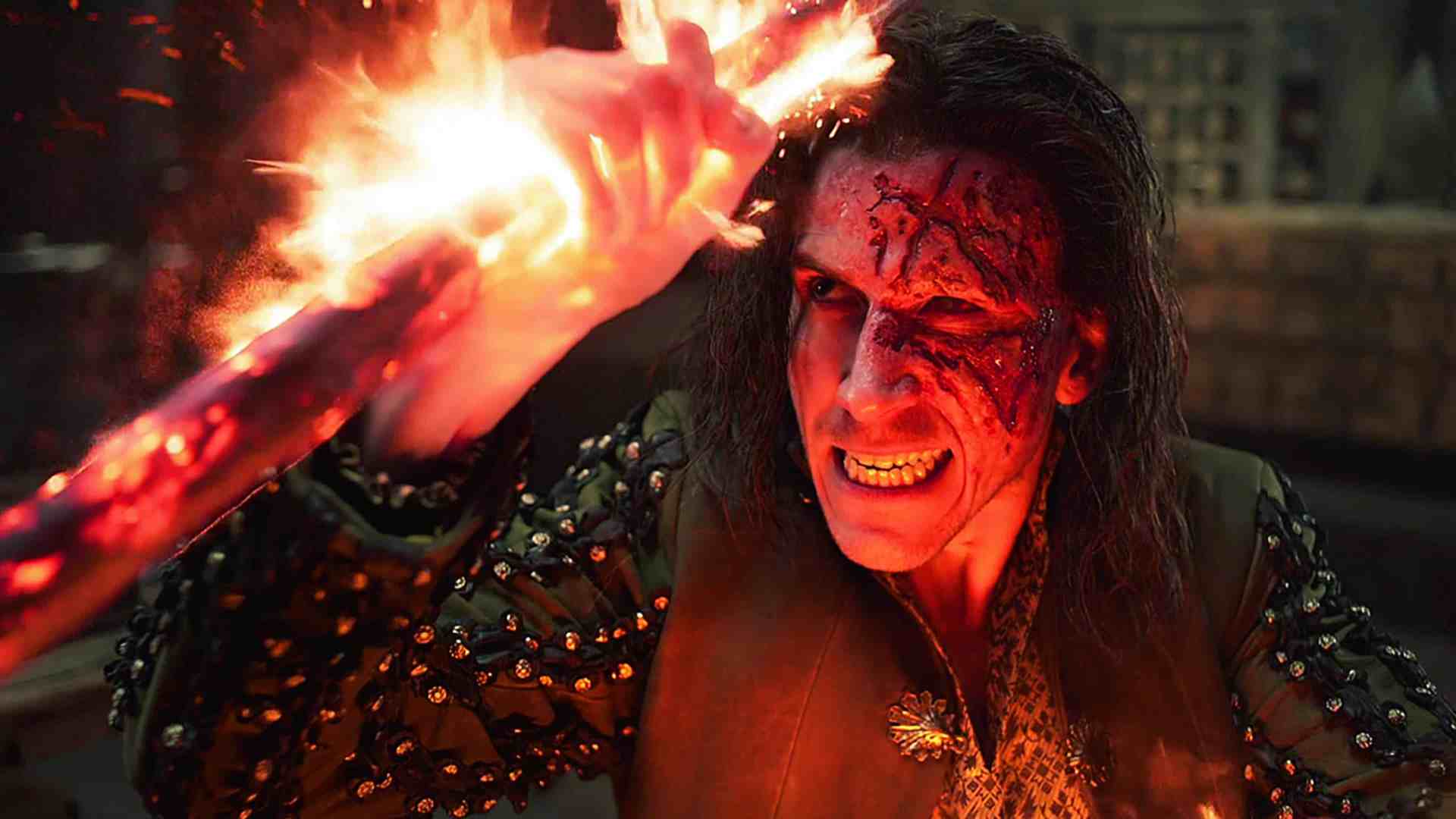
DP: In our interview for DP 03:22 about the first season, Mateusz told us how Platige Image was mostly responsible for the magic effects (e.g., portals, spells, signs) and environments.
Mateusz Tokarz: For the effects that had been developed earlier, we relied on the existing set-ups. But of course, they had to be adapted to the new conditions – in the first season, the magic was much more peaceful, while in the second season it strongly supported the battles.
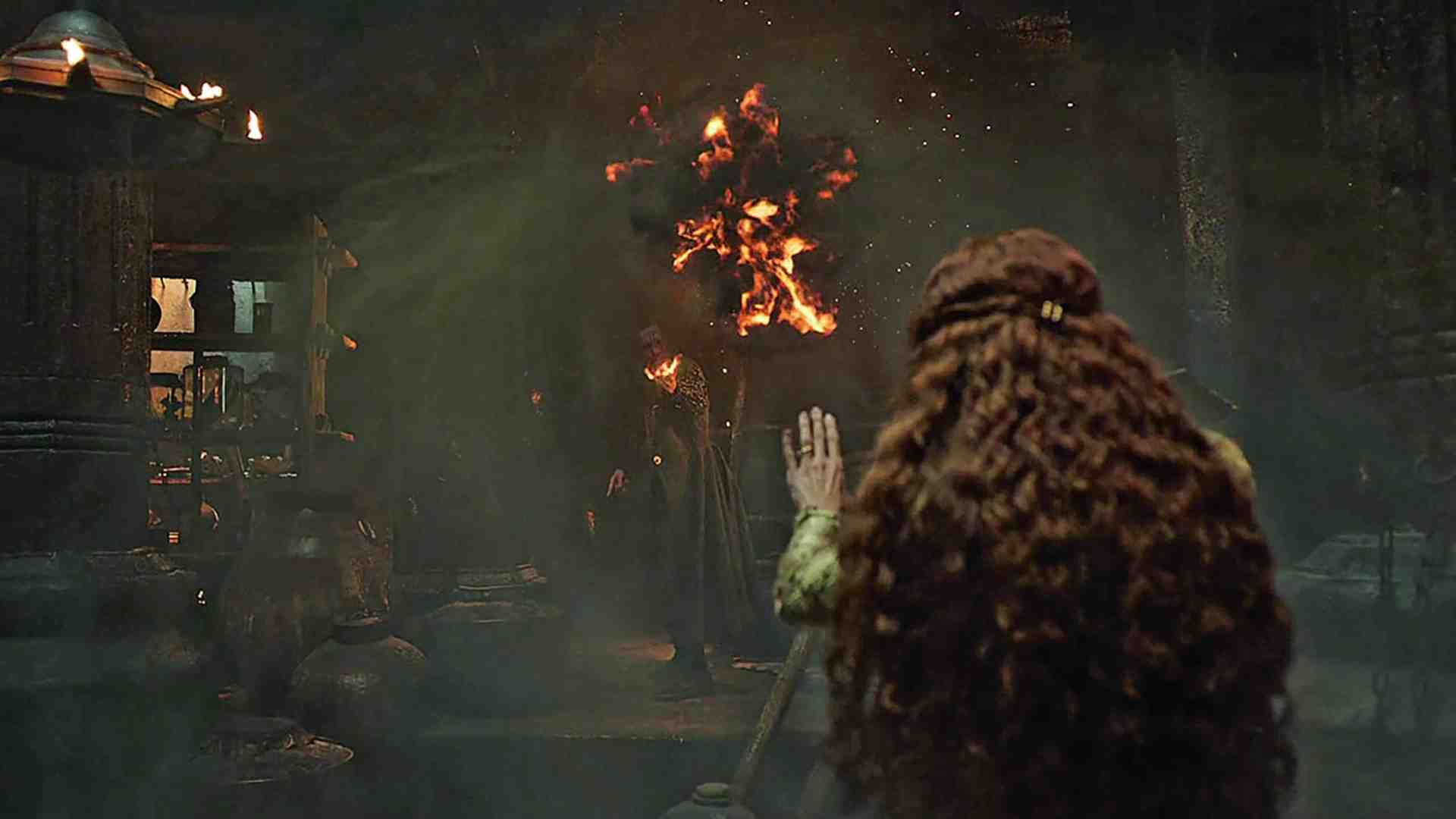
DP: Could you walk us through your pipeline for season 2?
Mateusz Tokarz: From a labor-management standpoint, little changed with the second season from how we ended season one. Over the course of season one, our methods were still evolving, but in season two, we could work pretty systematically from start to finish, in line with our preconceived notions.
The only change was the elimination of the dailies with all the artists. In the first season, we used to do that, but when we worked on many shots simultaneously, these sessions would often take over two hours. Not everyone was able to attend those online meetings and work at the same time, so in the second season, we reduced them and divided them into sections (e.g., models, rigs, and asset shading together, rendering and compositing together, etc.). The artists would then join the talks only when they were really needed.
DP: How did Platige Image collect the references from nature to create the realistic-looking effects like fire, water, tornados, atmospheric discharges, or mirages?
Mateusz Tokarz: Just like everyone else – we googled them! Sometimes, of course, we also record references on our own. But nowadays, you can find almost anything on the web. Why not take advantage of that?
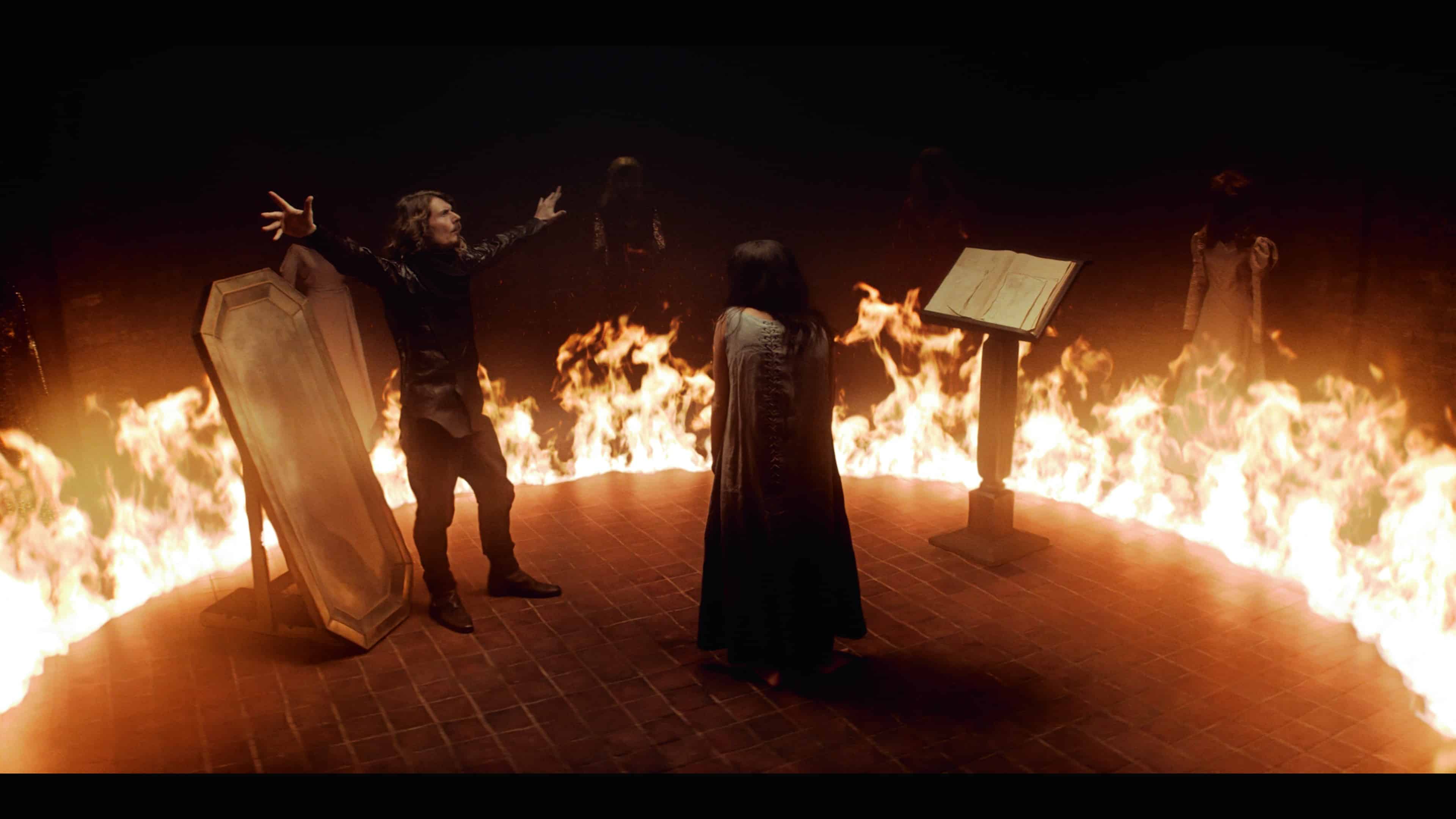
DP: How did you develop The Witcher’s magic portals – and why were satellite images inspirational for them?
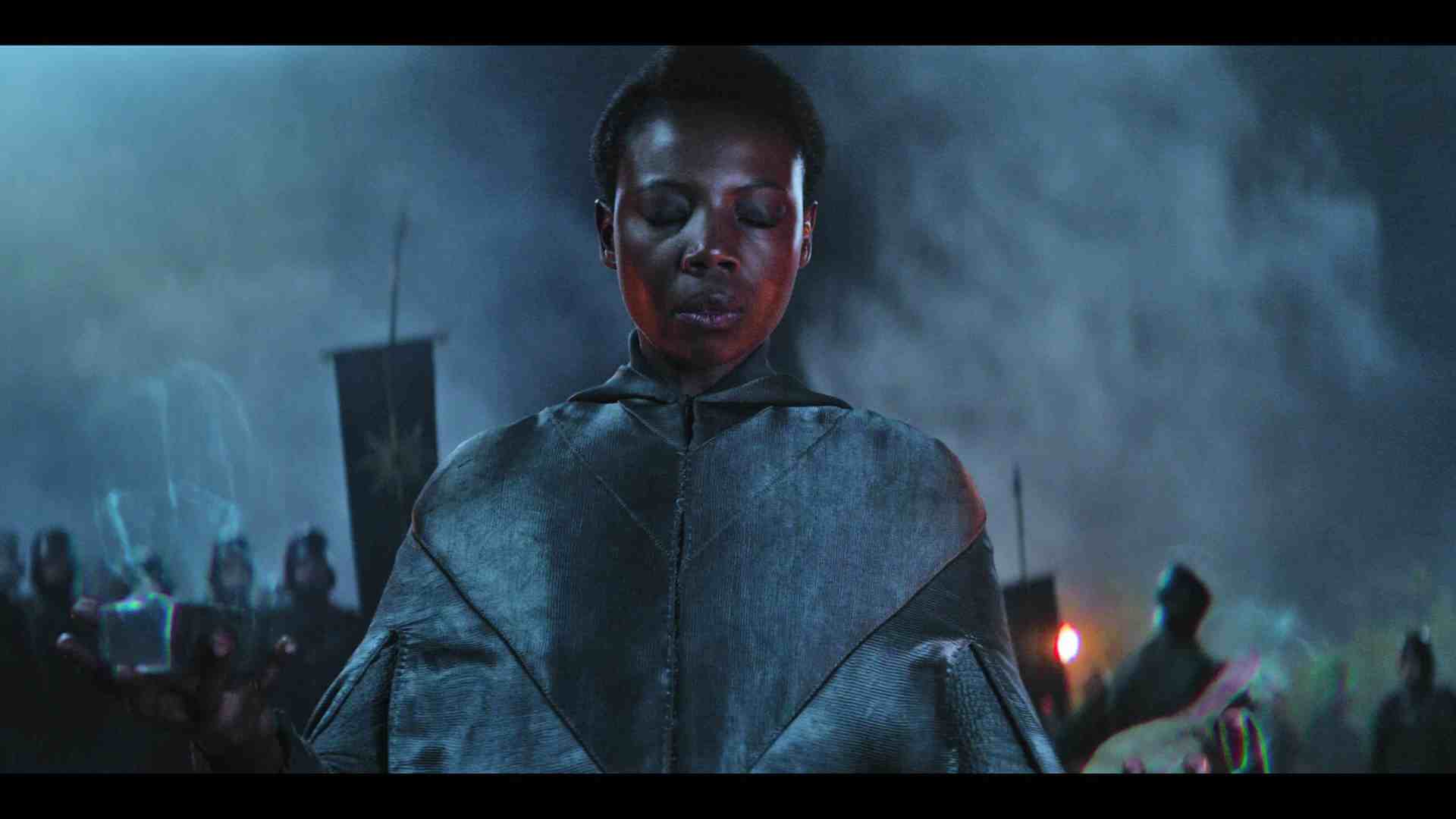
Mateusz Tokarz: When creating the portals, we were inspired by how galaxies look, and how the stars and colours are arranged. There is a characteristic way of arranging matter which we reproduced on a much smaller scale. When we observe galaxies, however, we don’t see any movement and our portals had to live, so we had to develop the concept further and explore the transition effect in various ways, until we finally arrived at the end result seen on screen.
Titles
DP: We understand that you’re particularly proud of two stand-out sequences – the fire effects in episode six (“Dear Friend”) and the disintegration scene from episode eight (“Family”)?
Mateusz Tokarz: Technically, those two sequences required a lot of work. To get the final result, it was necessary to synchronize the activities of many teams. Ultimately, what we create must have technical compatibility, but it must also work visually. In the case of those two sequences, this succeeded brilliantly.
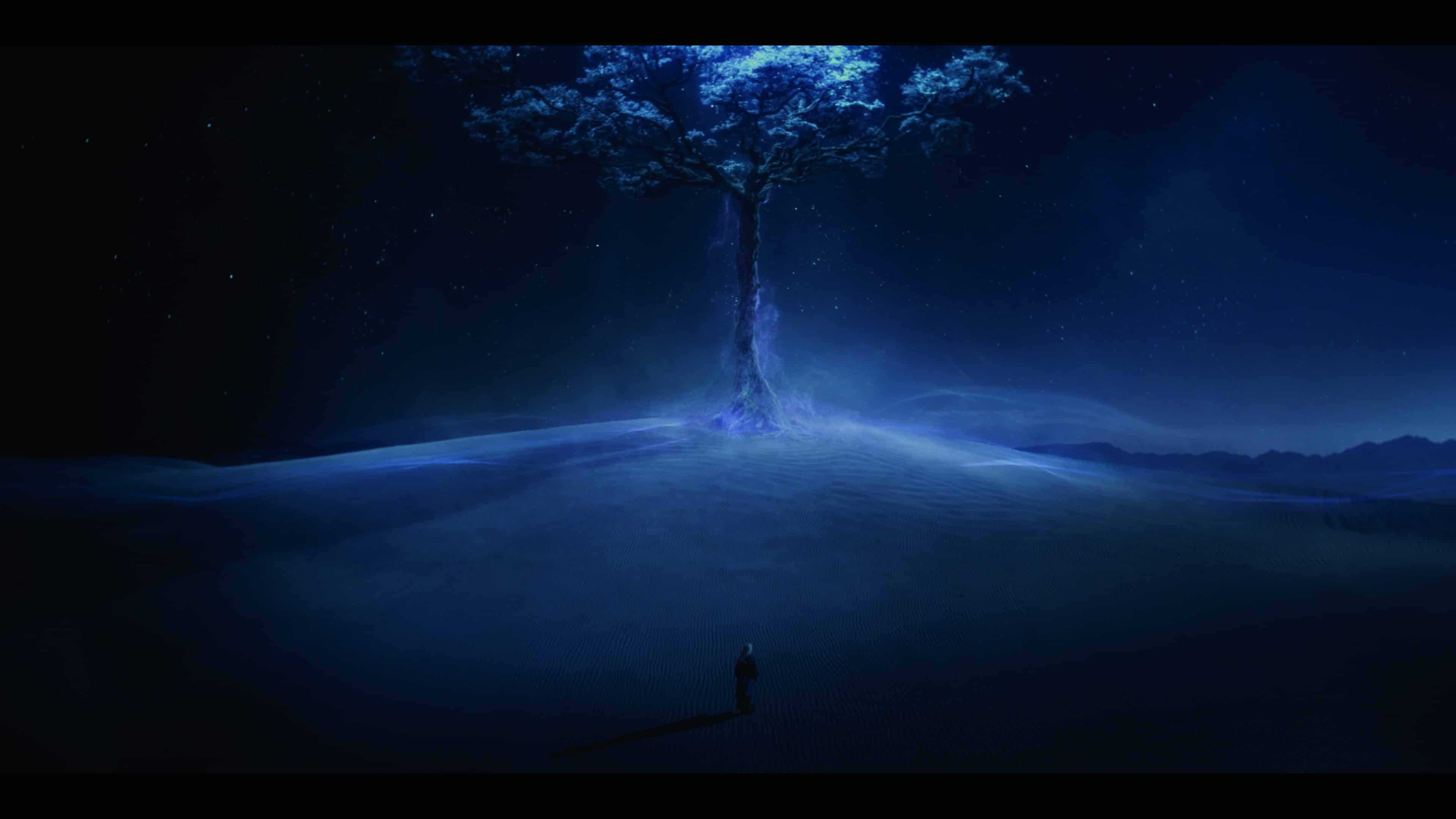
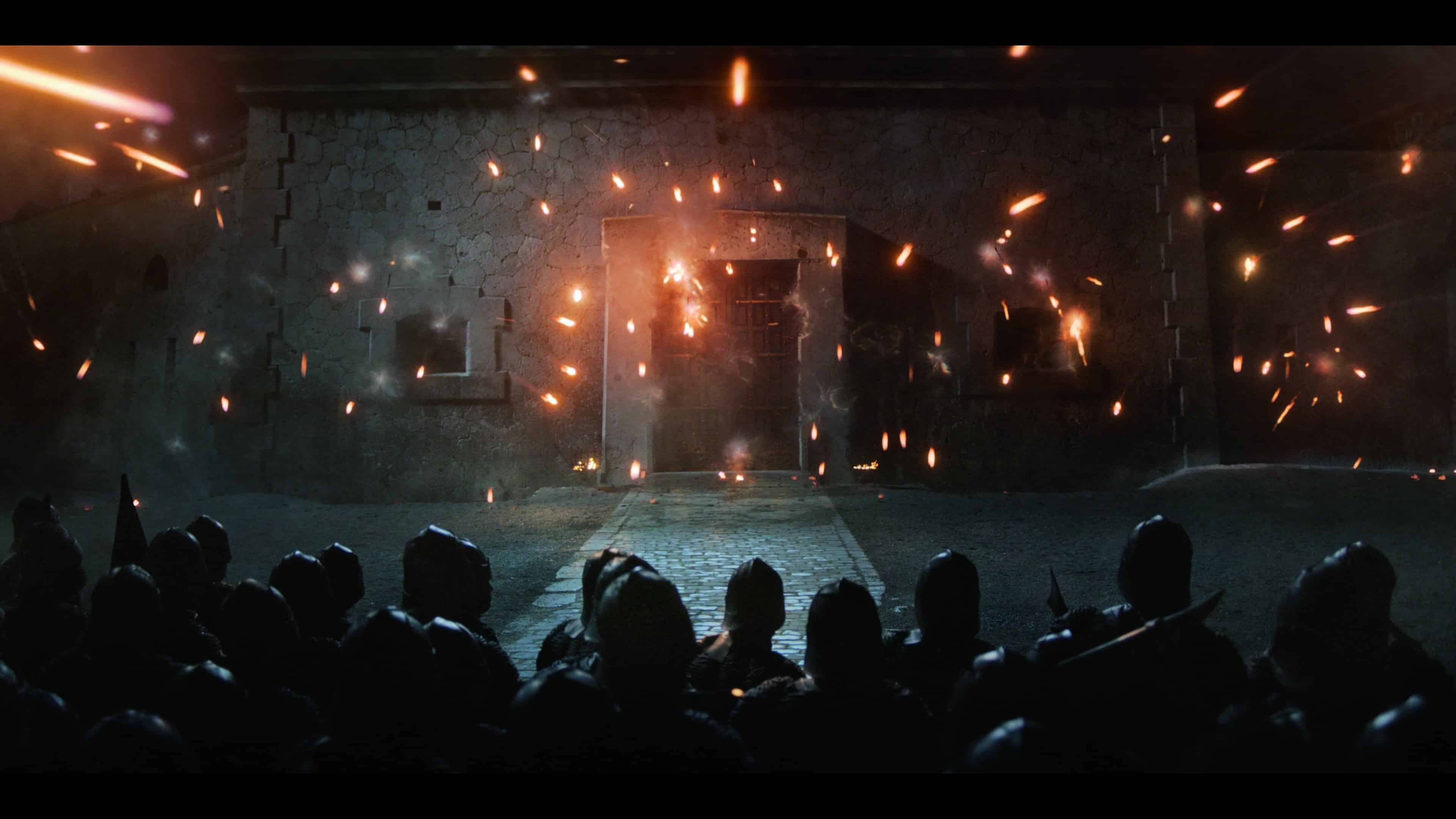
DP: You highlighted the fire effects during Rience’s fights in episode six as being the centrepiece of the effects Platige Image created for season two. What makes those fire effects so outstanding?
Mateusz Tokarz: It’s true that there were many shots of Rience’s battles and his fire magic had a very strong effect on everything we see in the frame. Fire is a strong source of light, and its light that draws the picture. In many cases, we literally had to sketch light directions on the characters and set pieces so that, for example, a flaming fireball hurling at Geralt would give a realistic impression of crashing into a wall.

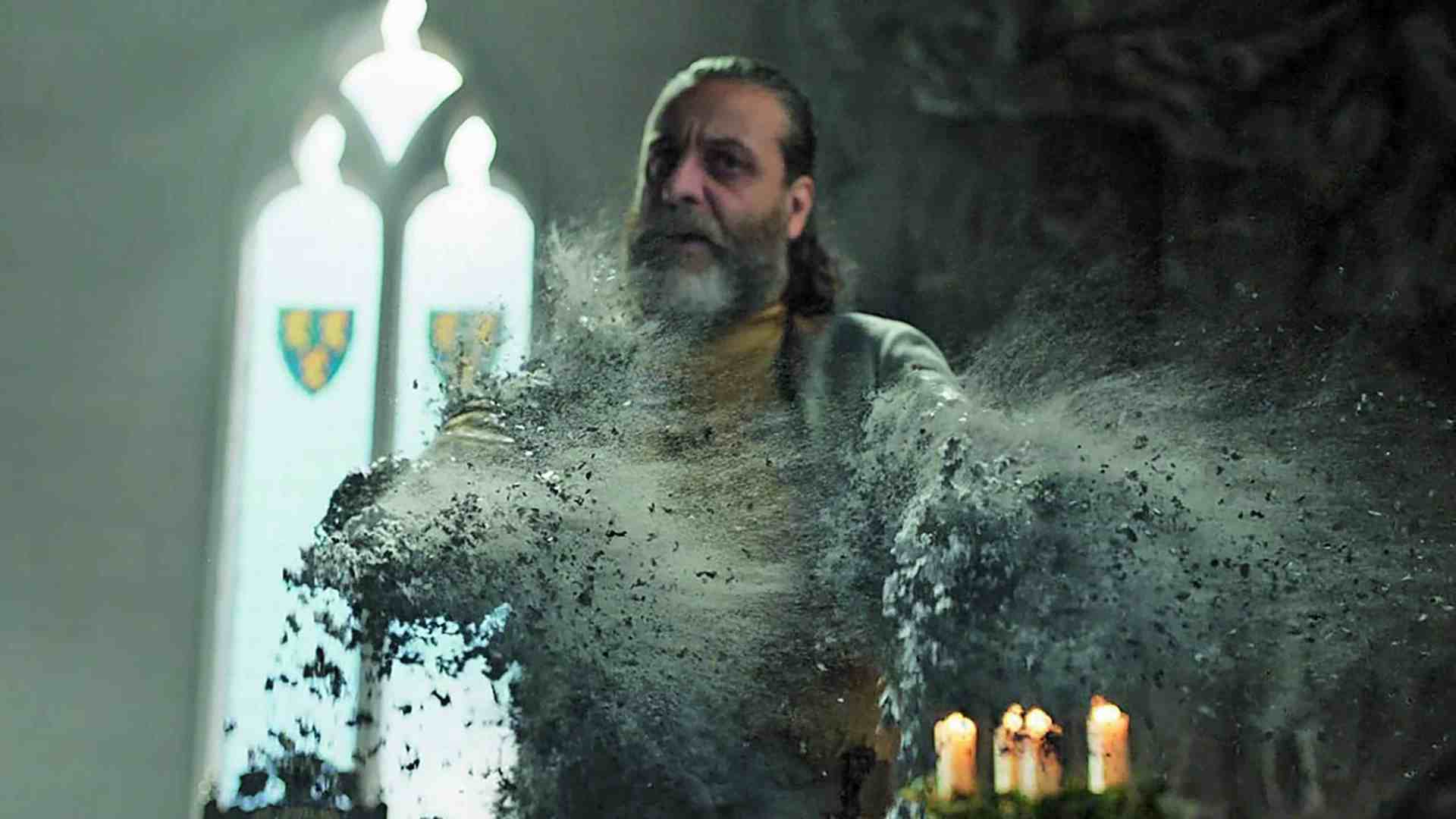
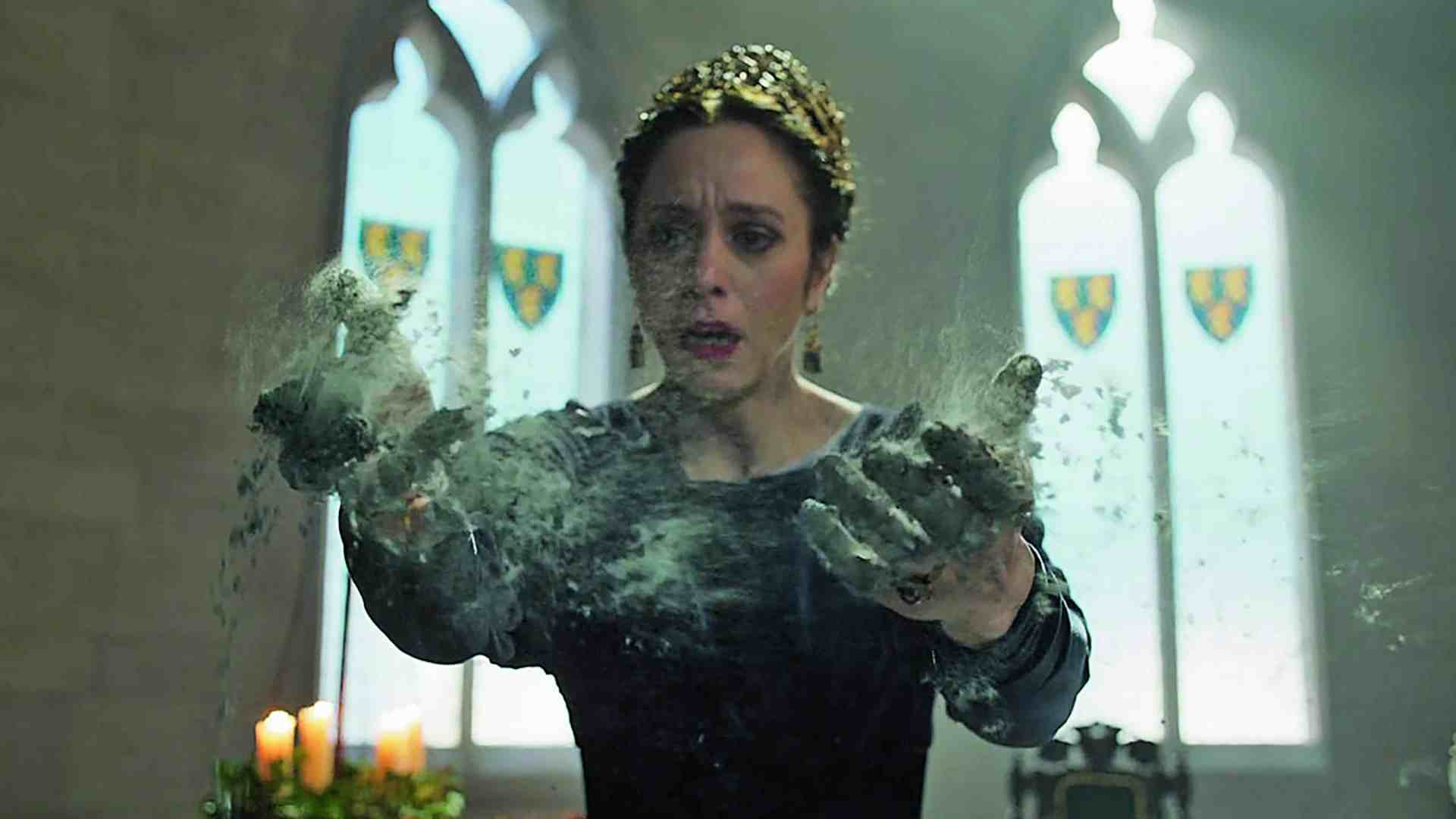
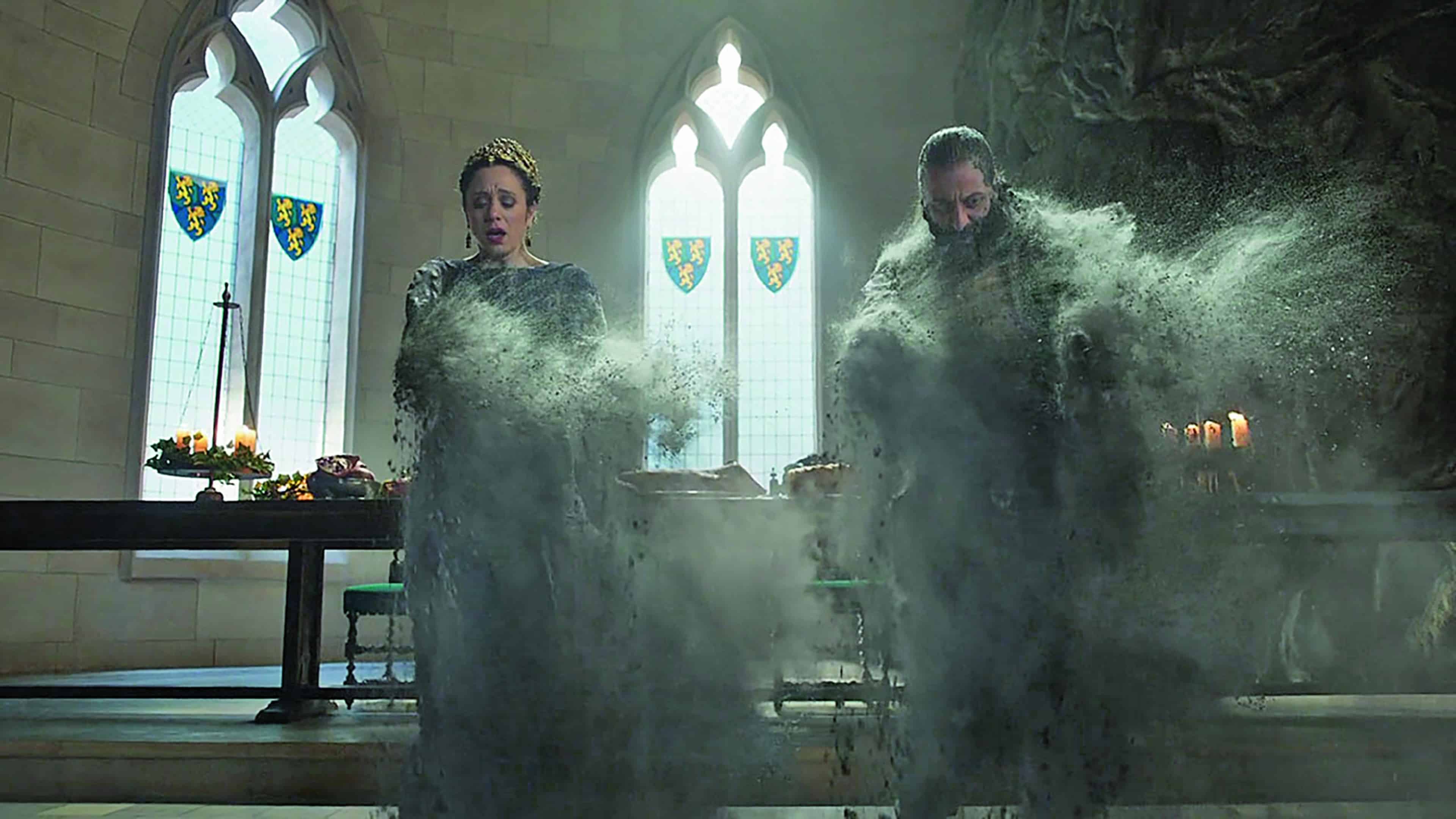
DP: In the final episode (episode eight – “Family”), Ciri sees several characters disintegrating. How was that effect created?
Mateusz Tokarz: For that sequence, as for most of our FX, we used Houdini. And it was our FX lead, Lukasz Sobisz, who was responsible for its execution. But although the sequence was based on a simulation, its success was not only down to him.
All the characters, based on photos, scans and footage from the shoot, were recreated in 3D, posed and animated to match what the camera captured. Then the body parts of the real actors – which were meant to disintegrate – were removed from the frame and replaced with their digital counterparts. After all, we could subject these digital characters to all sorts of simulations. As the body disintegrated in layers, it would crumble and generate ash and dust that floated and settled – and that was a source of huge fun for our simulation specs.
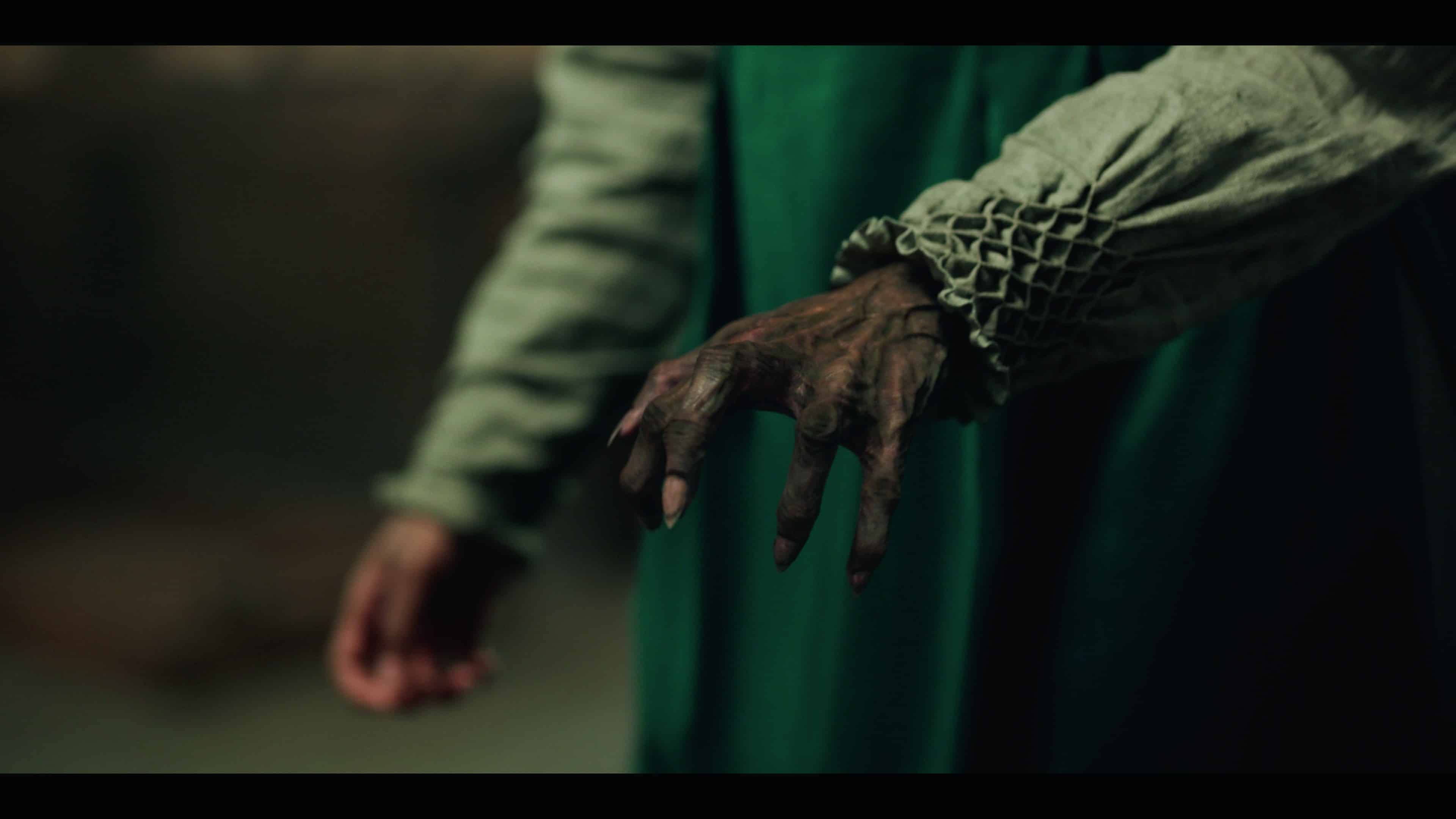
DP: At the beginning of episode six, when The Witcher and Ciri are battling the Chernobog, our (anti)hero changes in appearance after drinking a magic potion. What can you tell us about that effect?
Mateusz Tokarz: In the second season, we were also responsible for the effects of transformations after magic potions had been consumed. This is one such shot where, after the potion has been drunk, the skin turns corpse-like pale, dark veins appear, and the eyes turn completely black. In a technical sense, depending on the shot, this requires very accurate tracking of the face. This is done to redesign the material received from the camera into a 3D model so that the necessary modifications can be made.


DP: Which one was your favourite shot to work on for season two, Mateusz?
Mateusz Tokarz: In Poland, we have a saying that a good father loves all his children equally. I can’t – and won’t even try – to pick a favourite one. There are a lot of shots that I really like, and which give me satisfaction and even pride. I’m very happy that while working on The Witcher we were able to use the experience we had gained from previous projects. I’m not just talking about our work on the first season, but also feature films, 3D animation and commercials.
As a studio, we have more than 25 years of experience, and we know how to deliver everything on time and with top quality. I am also extremely pleased that our work was recognized by the Emmy committee with a nomination for Best Special Effects.

The Abandoned “The Witcher” project
Prior to Director of International Originals at Netflix, Kelly Luegenbiehl (now Vice President Global Franchises at Netflix) and her team stepping in, a group of producers were working on a standalone film of The Witcher. Finally, a number of conversations lead to the decision to drop the standalone film and opt for a longer-running series instead (see the news item titled “The Netflix Literary Connection” at Publishers Weekly by Jason Boog: is.gd/NetflixLiteraryConnection). For an insightful conversation with Kelly Luegenbiehl, watch this quarter-hour talk from the Frankfurt Book Fair: is.gd/KellyLuegenbiehl)
