


![A group of people in various poses, with a focus on a woman in white attire, overlayed with the text 'SWITCHX' and the tagline 'SWITCH [ANYTHING]. KEEP WHAT MATTERS.' The scene is set against a beach background at dusk.](https://i0.wp.com/digitalproduction.com/wp-content/uploads/2026/02/beeble-switchx-hero.png?resize=110%2C110&quality=72&ssl=1 "a group of people in various poses with a focus on a woman in white attire overlayed with the text switchx and the tagline switch anything keep what matters the scene is set against a beach background at dusk digital production")


The newly released Howler 2025 brings a range of features targeted at professional users working in digital content creation. Developed by the Project Dogwaffle team, Howler is a digital painting software known for its versatility in animation, FX generation, and natural media simulations. The 2025 edition extends the software’s functionality by integrating AI-powered tools aimed at speeding up workflows, especially in animation and VFX tasks. Artists can now take advantage of machine learning to automate certain processes, though it is advised to verify results before using them in production.
The software introduces AI-driven Rotoscoping and Animation Prediction, allowing users to automate keyframing and frame interpolation for smoother transitions between frames. This feature leverages deep learning to predict motion paths based on existing frames. You can now skip the tedious manual interpolation of in-between frames, but as always, it’s a good idea to review the automated results for any corrections.
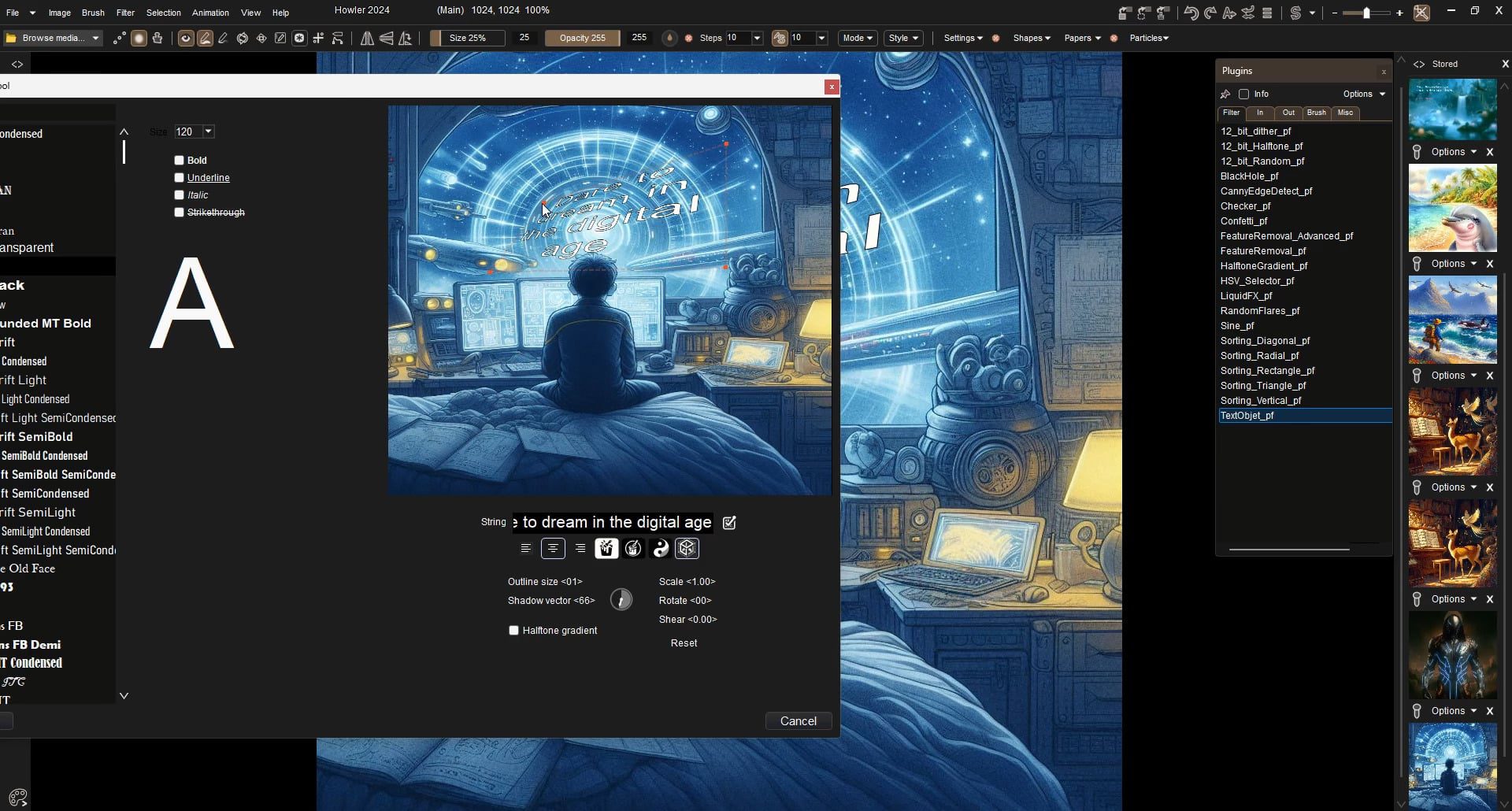
Howler 2025 also comes with GPU-accelerated FX rendering, improving the speed of rendering tasks significantly. This is particularly useful for users working with high-resolution media, as GPU acceleration helps to reduce bottlenecks during rendering, especially when generating complex effects like particle simulations, weather effects, and motion blur. GPU support extends to the Particle Modeler and Cloud Generators, offering real-time previews of these FX.
One of the new tools is the Image Stabilizer, which aids in reducing shakiness in animation sequences, making it a go-to feature for post-production professionals handling footage with camera shake. This stabilizer is particularly helpful for those dealing with live-action elements combined with CGI. You can apply these stabilizations globally or locally, depending on the sequence.
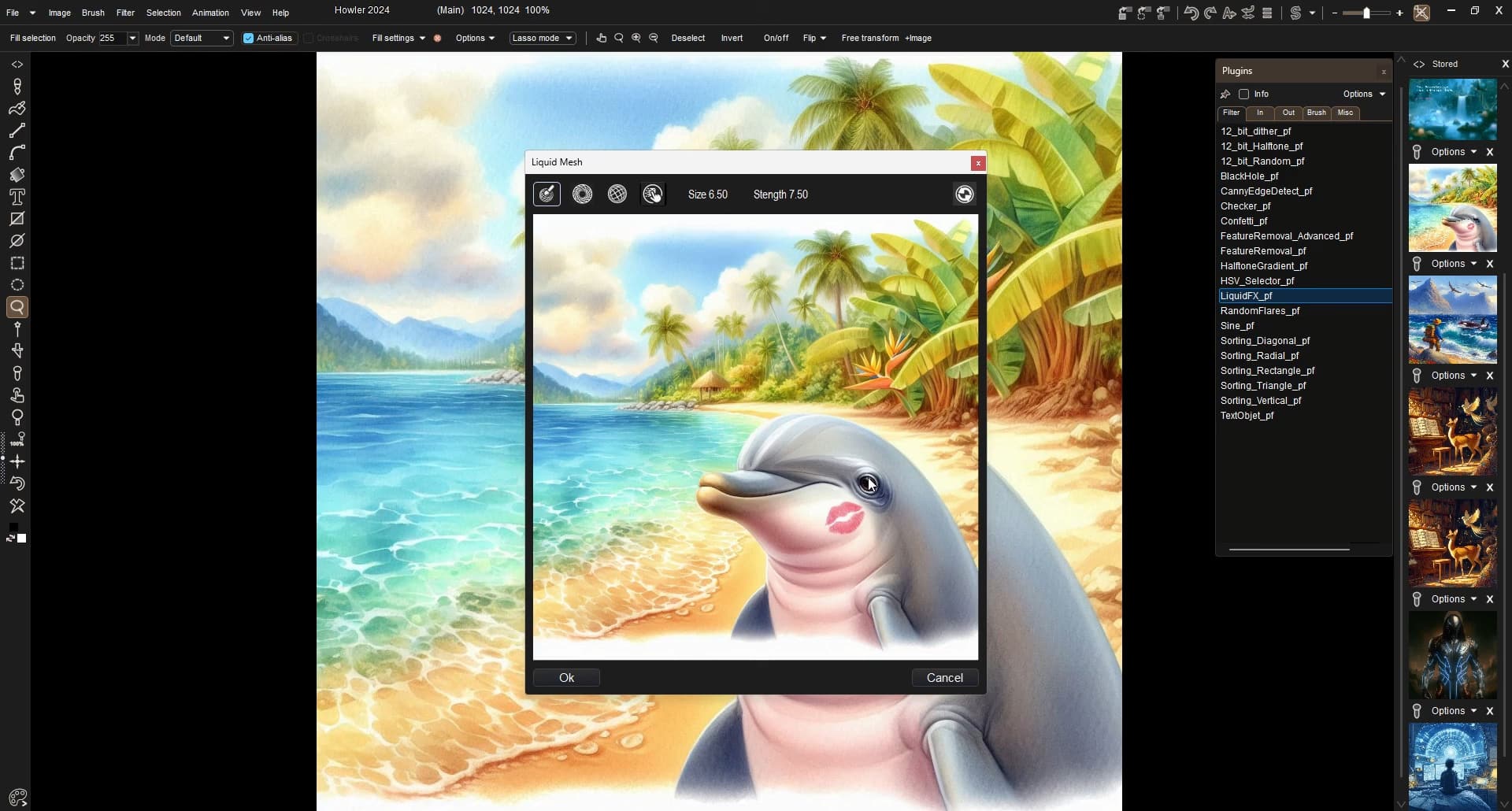
There’s also an expansion of the Brush Engine, which now includes dynamic brushes powered by AI that adjust to the user’s workflow. These brushes simulate various natural media effects in real-time, enhancing the user’s ability to create complex textures and paint effects with minimal manual adjustment. Howler has also introduced new 3D Paint Capabilities, enabling artists to paint directly onto 3D models and surfaces, offering more versatility in asset creation for 3D pipelines.
With regard to file management, Howler 2025 introduces Python-based scripting. This gives advanced users more control over automating workflows and integrating Howler with other production tools, pipelines, or custom plugins. Python scripting opens up new possibilities for tool customization, batch processing, and repetitive task automation, which will be a welcomed feature for anyone handling complex projects.
The update also includes new Video FX Filters that enhance post-processing. These filters allow for advanced color grading, noise reduction, and stylized looks that are typically used in final renders. Integrated GPU support ensures that these effects can be rendered in real-time, making it easier to preview the final output before committing to a render.
Pricing and Licensing
Howler 2025 is available under a one-time purchase model, with the base price starting at $99. Professional users can opt for an enhanced version with additional FX tools and AI capabilities for $149. Licensing is non-subscription-based, which could appeal to users looking for a more predictable, long-term cost structure.
You can learn more about Howler 2025 by visiting Project Dogwaffle and reviewing the full product documentation.
