



They were diving headfirst into Piglin hordes, procedural destruction, and cuboid comedic timing. In this in-depth conversation, VFX Supervisor Piotr Karwas and Animation Supervisor Liz Bernard walk us through 187 shots of stylized carnage, grid-locked layouts, undead pig transformations, and pantsless monsters.
From gorilla-inspired hogs to eye-popping background gags, this is how Digital Domain balanced Minecraft’s iconic simplicity with big-screen spectacle—delivered on a 25-week timeline, no less. Spoiler warning: Yes, butt cracks were storyboarded.
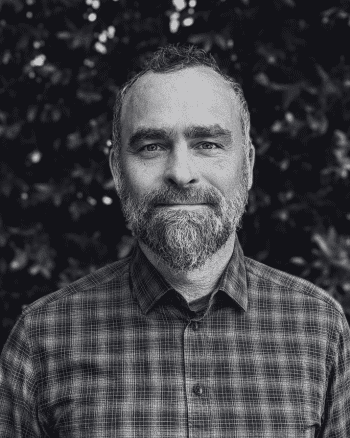
Piotr Karwas is known for his leadership in cinematic design and animation direction, with credits spanning from World War Z and Pacific Rim: Uprising to The Great Wall and The Cloverfield Paradox. His creative fingerprints are also on trailers and in-game cinematics for major franchises including World of Warcraft and League of Legends. As Cinematic Director on Minecraft: The Movie, Karwas oversees the film’s visual language, blending high-end CG storytelling with the blocky charm of the source material. His portfolio is showcased at vimeo.com/showcase/piotrkarwasreel and via Digital Domain.

Liz Bernard brings a wealth of experience in visual storytelling, with credits on tentpole productions like The Lion King (2019), Doctor Strange, Maleficent: Mistress of Evil, and Beauty and the Beast (2017). Her expertise in animation and previs has helped shape some of the most visually iconic moments in recent Disney and Marvel blockbusters. On Minecraft: The Movie, Bernard serves as Previs Supervisor, orchestrating the film’s visual planning and narrative pacing before the cameras roll.
More of Liz’s work can be found at lizbernard.com.
DP: How did Digital Domain get involved in Minecraft: The Movie, and what was the initial creative brief for your team?
Piotr Karwas: We were brought on by the Warner Bros. VFX team as they were looking for an additional vendor to help complete the final battle sequence. By the time we joined, much of the conceptual work had already been established, and we were provided with a wealth of reference material to hit the ground running.
There was still plenty to learn about Minecraft lore and how it was being interpreted in the world of this film. Fortunately, my kids turned out to be an invaluable resource. They sat me down for an hour-long crash course in all things Minecraft, and honestly, it made all the difference. Chicken Jockey is a real thing!
DP: What was the collaboration like with director Jared Hess, especially considering his very specific comedic tone?
Piotr Karwas: I’ve been a fan of Jared Hess ever since his debut feature, Napoleon Dynamite. Years later, I had the chance to work on Gentlemen Broncos, and I’ve always enjoyed his absurdist sense of humor. So I was really looking forward to seeing how his offbeat style would translate into such a visually iconic and imaginative world.
At Digital Domain, our focus was on nailing the look and timing of the story beats that had already been outlined, while also developing a wide range of humorous background character actions.
DP: What was the research / ideation phase like?
Piotr Karwas: By the time we joined the project, the previs and postvis were already complete, which helped us ramp up quickly. The schedule was so tight, I doubt there was much time for actual gameplay, but then again, you never know.
DP: The film’s finale leans heavily into comedy. How did the team design VFX gags that respected the game’s humor while delivering big-screen punch?
Piotr Karwas: The humor and charm of Minecraft lie in its simplicity and limitless creative possibilities. We set out to capture those same qualities, striking a balance between somewhat realistic design and motion, while still preserving the game’s iconic simplicity and playful spirit.
I’m a big fan of Richard Lester’s work, especially his take on The Three Musketeers. His adaptation of Dumas’ classic is packed with clever background humor. Some of the funniest moments happen far from the main action. We took inspiration from that sensibility, infusing our crowd simulation cycles with as much character and comedy as possible – not just falls, tumbles, nose-picking, and butt-scratching, but also tactical blunders, battlefield confusion, and even moments of complete disinterest in what’s going on around them.
DP: How did creative decisions evolve between departments – animation, FX, lighting, and environments – to ensure cohesion in the final look?
Piotr Karwas: The tight schedule didn’t leave much room to overthink the creative process, which in many ways helped us stay focused. I’ve always believed in trusting the director’s vision, so our main objective was to align with what Jared and Dan Lemmon, the studio VFX supervisor, had in mind for the sequence.

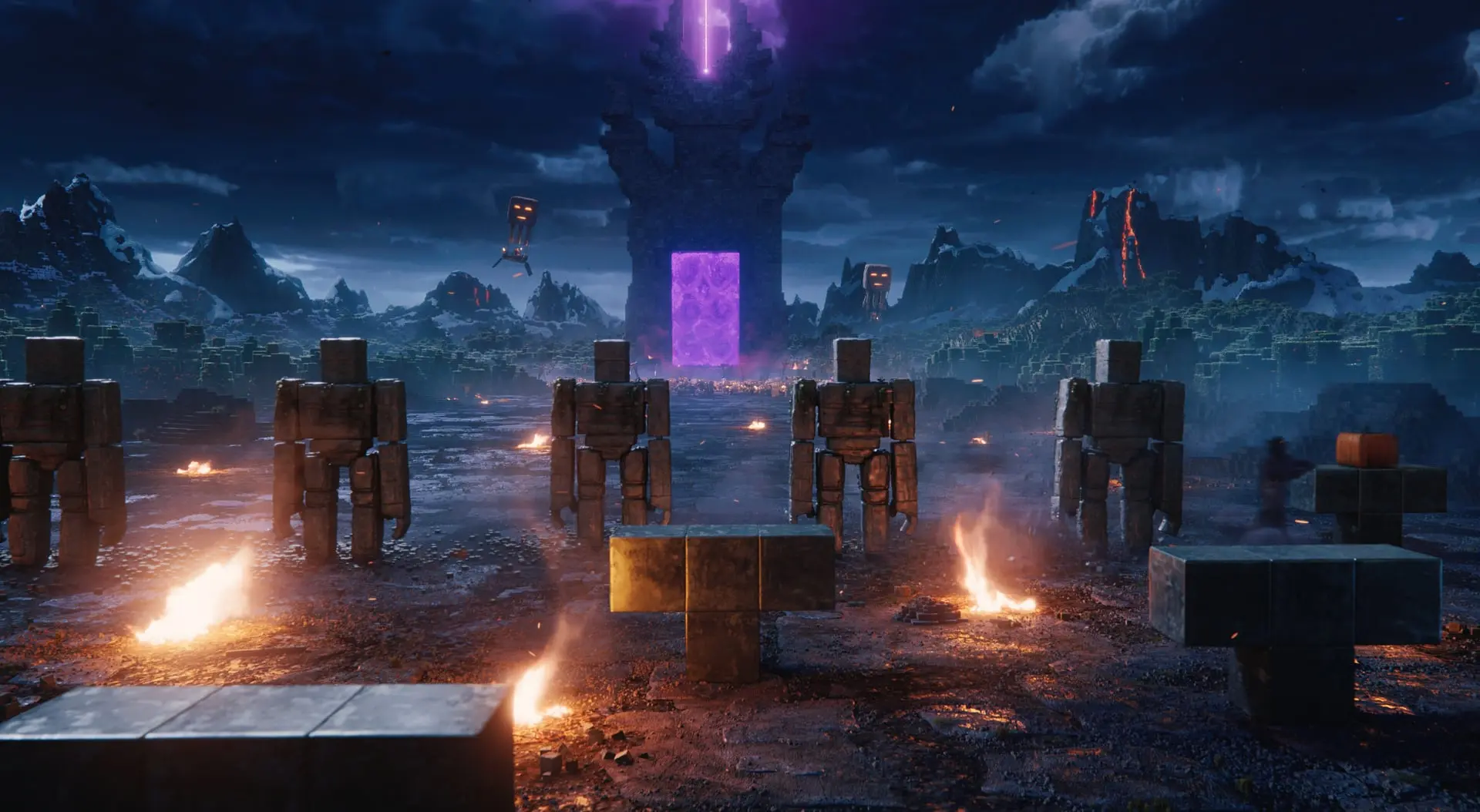
We collaborated closely with Weta on the final battle, and clear communication was essential as we developed the look and tone of this pivotal moment. Our challenge was to find the right balance between realism and the game’s stylized aesthetic, while also creating a distinct visual identity for the Overworld under siege by mobs from the Nether. Spoilers
DP: Can you describe a moment where an idea from one department reshaped the approach of another?
Piotr Karwas: On nearly every project, departments feed off each other. Animation is shaped by what the rigs can do, and rigging is influenced by the needs of animation. The look of the characters also directly impacts their performance. In the stylized world of the Minecraft movie, these interdependencies felt even more pronounced, with every creative choice amplifying the others.
DP: The comedic timing feels tightly interwoven with effects and layout. Were there shared boards, previs tools, or internal reviews that helped sync these elements across teams?
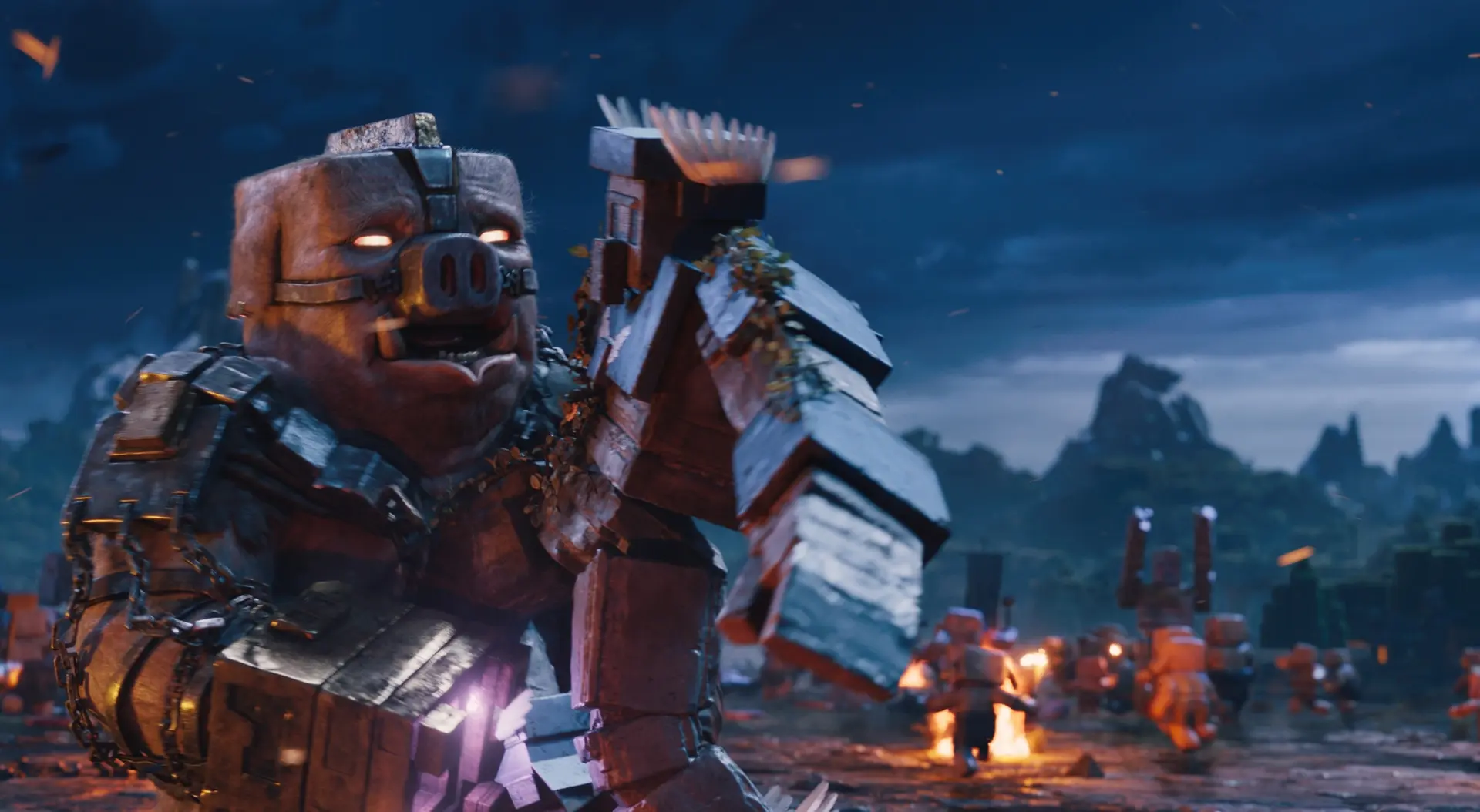
Piotr Karwas: As I mentioned earlier, we joined the project late, after much of the early development such as character design, previs, and postvis had already been completed. Our main focus was bringing the final images to the screen. That said, there were still plenty of important creative decisions to make – like deciding exactly how much of the Great Hog’s butt crack should be revealed.

DP: With 187 shots across 11 sequences, how did you manage visual consistency and creative alignment across such a sprawling final battle?
Piotr Karwas: Once we established a look for the battle that everyone was happy with, it became a bit easier to move through the shots. Collaborating with Weta presented some challenges, as we had to ensure that our shots and theirs aligned visually and maintained a consistent style.
Aside from the battle, most of our work involved tweaks to the live-action shots and set extensions. It was nice to have some variety in the tasks, but the final battle remained our primary focus throughout the show.
DP: Were there any tools or workflows in place to help teams “see the whole” while still working in parallel?
Piotr Karwas: Having fully developed postvis from Weta was really helpful to our workflow. When it came to sharing assets and methodologies, speed was the top priority. If one approach didn’t work, we quickly pivoted to another. In the end, we didn’t build any dedicated infrastructure to streamline the flow of information between vendors, perhaps we would have, given more time. Over the years, I’ve moved between feature films and advertising, and decades in commercials have made me accustomed to fast-paced work and the need to change course quickly when things don’t go as planned.

DP: You created 187 custom VFX shots in just 25 weeks. What did the pipeline look like to handle that scale under tight time pressure?
Piotr Karwas: Elevation and A Minecraft Movie had one key thing in common—Digital Domain joined both projects quite late in the process. Of course, the scale was vastly different. I genuinely enjoyed both challenges: a relatively small, high-profile creature feature, and a massive blockbuster based on the most-played game in the world.
Approaching scenes with hundreds of characters versus focusing on just one requires a completely different mindset. Huge credit goes to our production team for making it all possible.
DP: Can you walk us through the battle sequence—what were the biggest technical hurdles when simulating hundreds of Piglins and dozens of Golems in a 360° environment?
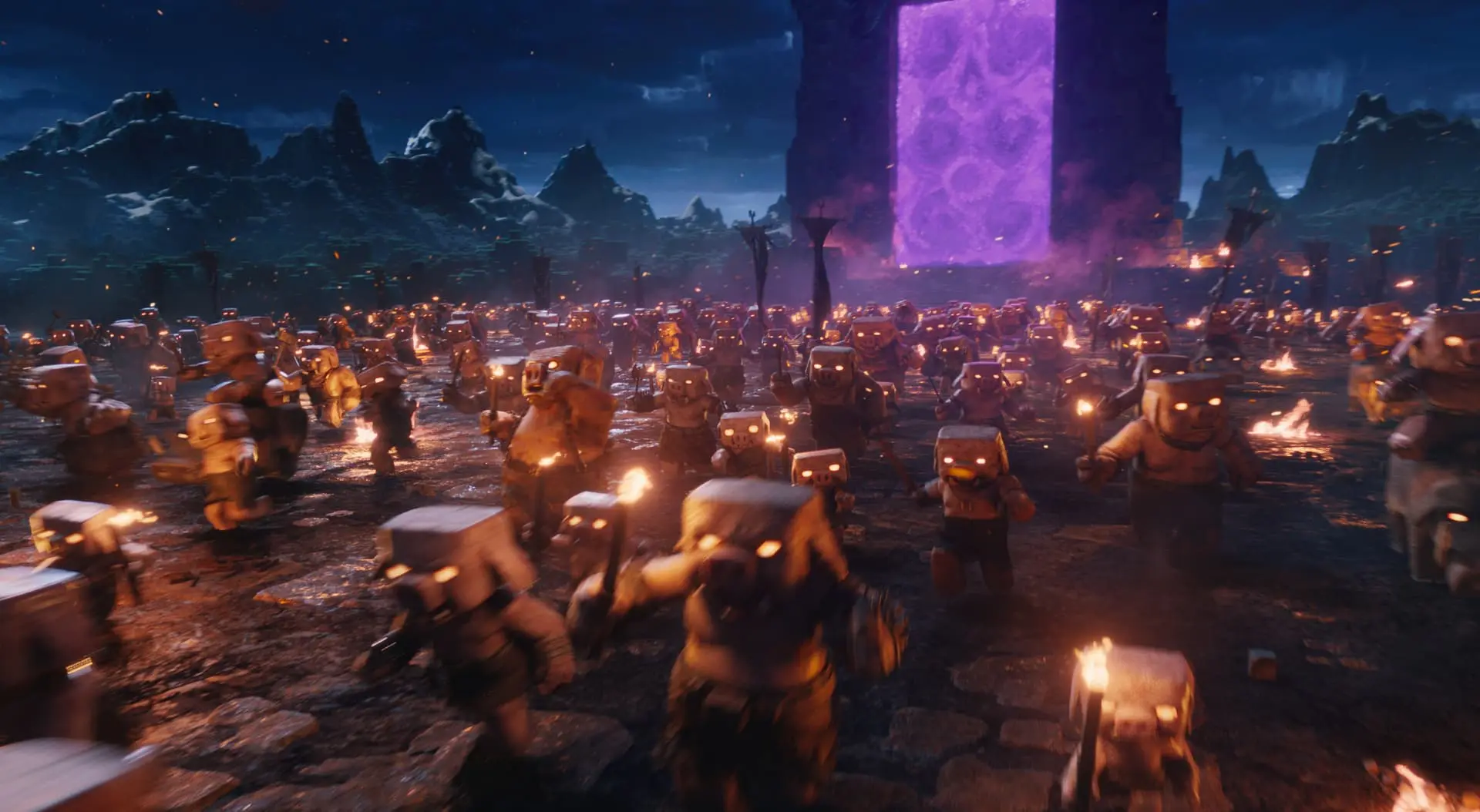
Piotr Karwas: We began by blocking out the full battlefield, but simultaneously developed a library of assets that could be scattered or carefully placed to enhance the visual appeal of each shot. One of the key challenges was adhering to the grid-like structure inspired by the game’s aesthetic, which required a thoughtful approach to layout and set dressing.
Even shots with near-360-degree views required custom layouts tailored to the needs of the story and the specific shot. While we did optimize elements that weren’t close to the camera, much of the process still relied on sheer brute force to get the work done.
I have to give a huge shout-out to our incredible team across Los Angeles, Vancouver, Montreal, and Hyderabad. This wouldn’t have been possible without their tireless, around-the-clock efforts.
DP: Tell us about your use of Houdini for procedural environment generation. Were there any specific challenges with terrain modularity or stylized destruction?
Piotr Karwas: Houdini is used extensively at Digital Domain across various departments, including effects, character effects, and environments. So it was a natural choice for us to use it in building the battlefield.
One of the key challenges was staying aligned with the underlying grid-like structure of the Minecraft world, especially while striving to give the sets a sense of realism. Balancing that stylized, blocky foundation with believable environmental detail required careful planning and execution.
In addition to the usual effects work, we had to spend some time exploring which elements would follow traditional physics and which would stay true to the more stylized, game-like logic of the Minecraft world.
DP: The Overworld Portal destruction is a highlight. What FX approaches or toolkits were central to making that moment land?
Piotr Karwas: Blowing things up is always fun especially when it involves a cube-shaped balloon with noodle-like tentacles. Once again, we turned to Houdini and our talented FX team to bring the collapsing portal to life. One of the key challenges was shaping the aftermath in a visually compelling way. The ruins left behind needed to not only look interesting but also support the staging and flow of the remaining sequence.
DP: You developed a zombification pipeline for Piglins. Was that a shader-based solution, rigging trickery, or something else?
Piotr Karwas: The visual development for the zombification effect was handled by Weta. Our role was to adapt and extend that look across large numbers of Piglins. We decided to take the transformation further by gradually eroding their flesh down to exposed skeletons. This approach also opened the door for some humorous moments—like eyes falling out or Piglins awkwardly trying to patch up their decaying skin. Here we also used Houdini to drive the rotting flesh shaders and the erosion of the Piglins’ bodies.

DP: The animation team had to walk a fine line between Minecraft stiffness and expressive motion. What was your process for developing that language?
Liz Bernard: Luckily, by the time we joined this project, we had some nice reference shots of piglins from Weta to use as reference for the style of movement. Their anatomy dictated their range of motion, too; arm raises overhead were restricted because the shoulders would easily crash into their big block heads, and they had feet with no real ankles, kind of like elephant feet, which impacted locomotion.
When we tackled their zombification at the end of the film, we had many of them fall to the ground and roll around in pain. Getting cubular pigs to roll on the ground is about as tricky as getting a square wheel going; it was fun adding all that extra clunkyness into the performances there.
For the Great Hog, we used reference of gorillas to develop his weird running style for the end battle. His long arms, extremely stumpy legs, and elephant-style feet meant that he spent a lot of time in the air on each stride, which was extra funny for a character whose pants were perpetually falling down.
The Iron Golems were probably the trickiest characters of all, in large part because they were so accurate to the game. Being made of stiff blocks of metal, with no deforming parts, and extremely simple joints meant that walking, bending arms –really any movement at all– triggered instant intersections. As a result, we had to give the animators complete control to offset every body part to achieve the necessary range of movement without visible intersections on screen or gaps in silhouette. We kept their movements as similar to the real gameplay as we could, relying heavily on the classic stiff-armed upswings for attacks on piglins. Then we layered in weight and impact during the battle to integrate them into the style of the film.


DP: Were there any “rules” you had to break for the sake of clarity, comedy, or emotional beats?
Liz Bernard: We certainly took some liberties in this film when it came to physics! One of the biggest shots in the battle features the Great Hog being attacked in 360 degrees by Dennis and a full pack of wolves egged on by Dawn. It was much more important in this shot to get fun, dynamic framing, and goofy details (such as a wolf hanging off of the Great Hog’s waistband) than it was to make sure all the action was 100% physically accurate. We had wolves leaping from incredible and impossible distances to attack the Hog, but it was done in service of making the action feel as exciting and the frames as beautiful as possible. In VFX, we’re accustomed to walking the line between “correct” and “cool;” we often push posing or physics for the sake of storytelling or beauty, depending on the style of the film and action. This film’s version of that line was just further towards cartoony than we usually get to do, and I think all the animators had a pretty fun time stretching those creative muscles on this film!

DP: What would be your advice to teams tackling stylized IPs like this one—where the visual limits are part of the appeal?
Liz Bernard: I love thinking about the creativity that comes from limitations. The anatomy of a character will make a lot of decisions for you about how that character can move, what they can do, and what decisions they will make, even before you put wacom pen to tablet to begin animating. Then, I think it’s important to put yourself in that character’s shoes, knowing what the physical boundaries would be, and figure out how to communicate, emote, etc. This is a great opportunity for puzzle solving, and a large part of character appeal comes from the audience’s understanding of how you solved the puzzle. If you do it right, the “limitations” don’t read as limitations at all; they become the charm of the character.
DP: Are there any specific tools or custom pipeline pieces you’d love to reuse in future shows?
Piotr Karwas: Our crowd pipeline required significant development for this project. I’m confident that the knowledge gained and the updates to our toolset will prove valuable for any future projects involving complex crowd work.
DP: What’s next for you (that you’re allowed to talk about)?
Piotr Karwas: I’m currently working on a few smaller projects while actively exploring how generative AI can be integrated into traditional visual effects workflows. I’m especially interested in its potential to accelerate iteration, free artists to focus on the creative aspects of their work rather than getting bogged down in repetitive minutiae, and open up new, imaginative ways of generating cool imagery.
