



Polygoniq has released botaniq 7.1, a substantial upgrade to its optimised 3D vegetation library for Blender. First launched in 2019 with just 63 tree models, botaniq now offers more than a thousand assets spanning deciduous and coniferous trees, shrubs, grasses, cacti, herbaceous plants, and rocks. All assets are optimised for animation with wind simulation and designed to render efficiently in both Cycles and Eevee. Designed for environment artists and architectural visualisers, botaniq offers wind-animateable, render-optimised plants and rocks, integrated with both Blender’s default Asset Browser and Polygoniq’s own engon browser.
First launched in 2019 with 63 tree models, the library now contains 700+ optimised 3D assets—including coniferous and deciduous trees, grasses, flowers, weeds, ferns, ivy, and tropical vegetation—plus over 50 scattering presets. Assets are linked by default for scene efficiency, with options to convert to editable or linked meshes.

Major growth in 7.1.0
Released on 21 July 2025, botaniq 7.1.0 added 405 new assets in total: 209 plant models, 90 curves for path-based placement, and 106 scatter patterns for terrain distribution. Every asset now includes geolocation metadata, enabling filtering by biome and continent via a world map in the engon browser. Additional workflow improvements include updated particle preview thumbnails, adjusted material tiling, and unique seed generation for particle randomness. Several existing assets have been corrected.

Minor patch in 7.1.1
The 7.1.1 update, released on 23 July 2025, expanded the Starter edition with two new curve assets and one maze asset. No further changes were documented.

Workflow and filtering features
Beyond content expansion, botaniq provides workflow controls tailored to large-scale scenes:
Random Transform and Random Variant settings for variation; Seasonal, Hue per Branch / Leaf, and Brightness adjustments for look development; and Snap to Ground for quick placement.
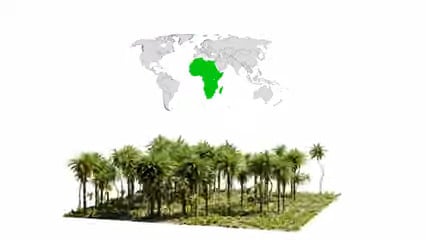
Geolocation filtering enables biome-specific asset selection, and the library is compatible with Geo-Scatter add-ons for complex ecosystem distribution.

Editions and pricing
botaniq 7.1 supports Blender 3.6+ in both Cycles and Eevee. Pricing tiers are: Starter (~4 % of assets) at US $1.99, Lite (~42 %) at US $49.99, Full (all assets) at US $129, and Studio multi-seat licences from US $249.99.
Production value
Polygoniq states that assets are intended for mid- to long-range shots, with optimisation prioritised for performance in large scenes. Artists can increase asset fidelity for close-up use via Blender’s modifiers. As with any production tool, compatibility and performance should be tested within a studio’s own pipeline before deployment.
