



For those who won’t sit through a 2.5-hour livestream
SideFX used its Vancouver keynote to preview Houdini 21, a release positioned as its most production-ready to date. The actual launch is planned for the end of the month. The presentation was packed with feature demos, technical deep-dives, and just enough dry humour to keep the audience from slipping into a procedural trance. If you’d rather not commit an afternoon to watching the full video, here’s the condensed version. And as always with software development: while this looks great, many details can still shift before release.
Finishing what they started
Rather than debuting new frameworks, SideFX’s development mandate was to complete and stabilise existing toolsets, improve robustness, and raise ease of use. This approach has resulted in the largest number of features ever shipped in a Houdini version.
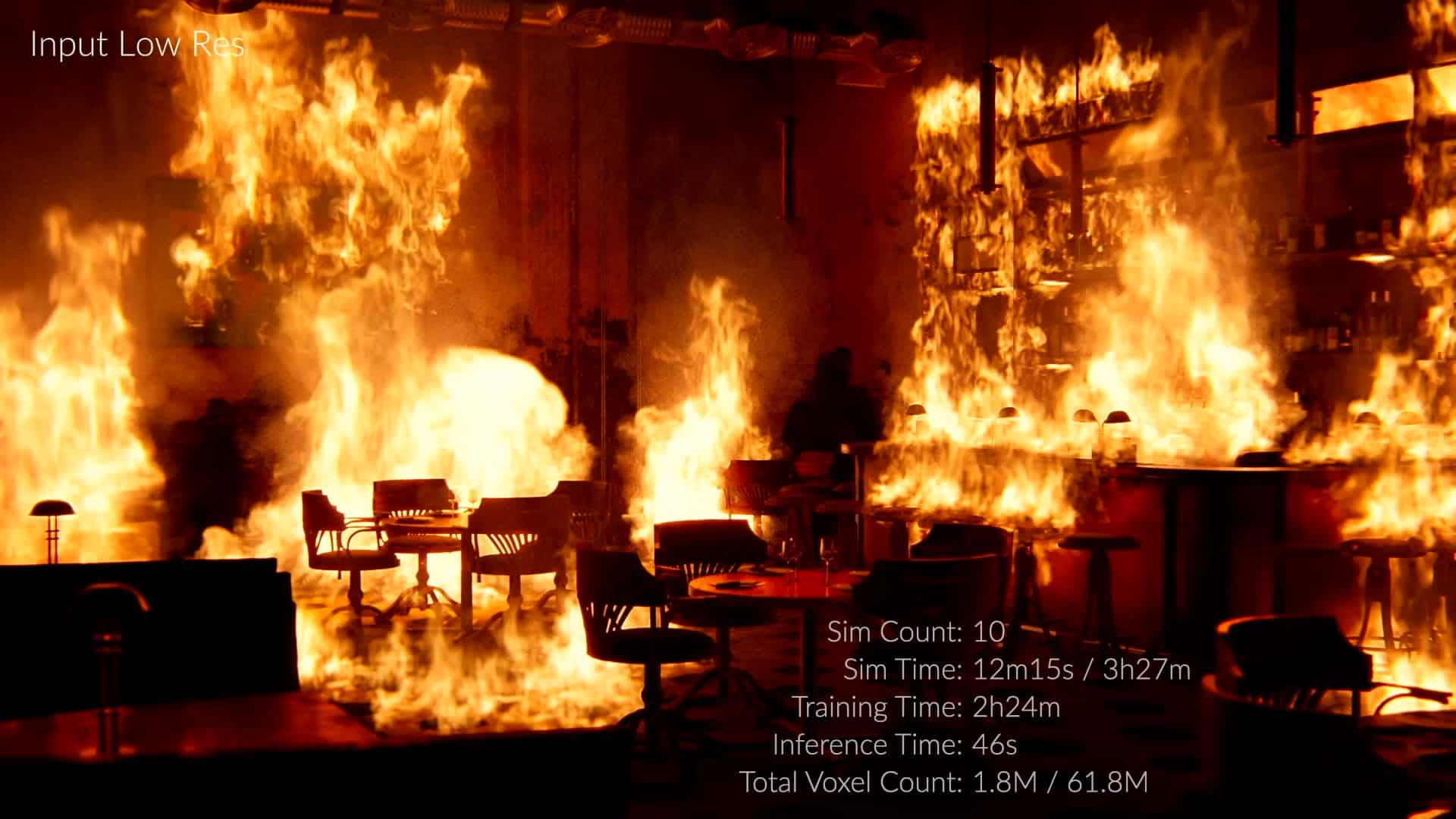
Several frameworks move from beta to production: Apex-driven rigging, animation and motion mixing in KinFX; the Copernicus framework for 2D/3D workflows; and the Vulkan-based viewport, now replacing OpenGL entirely. Established toolsets also received significant functional and usability upgrades, including Solaris, Karma XPU, and the MPM dynamics solver. Two older but widely used systems have been rebuilt: terrain erosion, and the muscle system, both delivering more physically accurate results and easier setup.
Machine learning with restraint
SideFX reiterated its measured approach to machine learning, aiming to augment procedural workflows without removing artistic control. In Houdini 21, ML features move from R&D to deployable tools, with applications such as corrective joint workflows and ML-trained deformers.
Animation and motion mixing upgrades
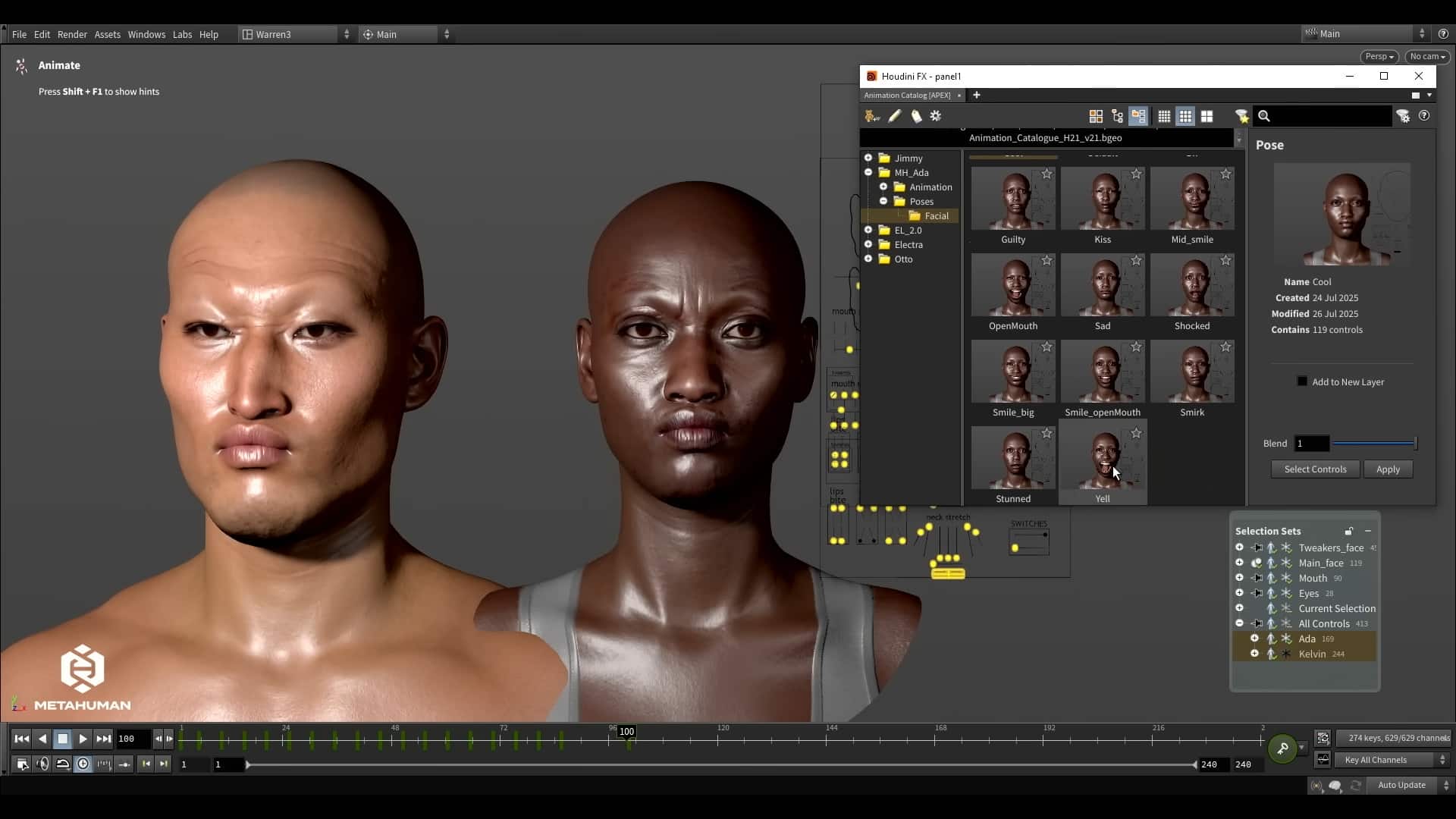
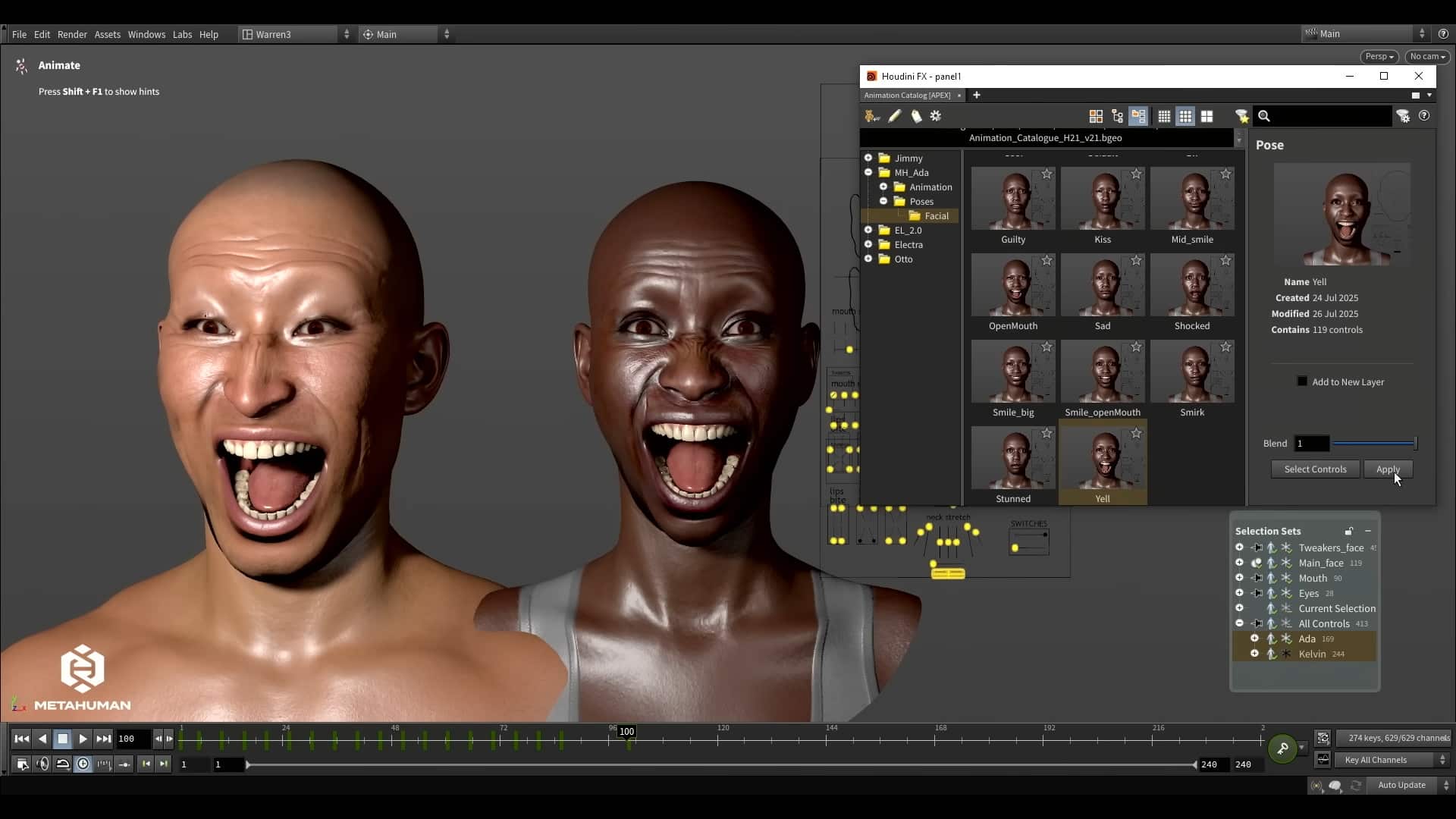
Houdini 21 introduces multiple animation updates: Ragdoll Tether constraints, Scene Animate Prop for destruction effects, Animation Catalog for reusable poses and clips, improved viewport controls, auto-offset constraint controls, and a Motion Mixer for non-linear blending without breaking IK.

KinFX rigging developments
KinFX gains an interactive drag-and-drop interface for rig components while retaining procedural depth. Hierarchy analysis supports retargeting to characters with different proportions. Houdini 21 also ships with Otto, a fully rigged biped asset with production-grade IK/FK blending and anatomical skeleton setups.
Integration with Epic Metahuman
In collaboration with Epic Games, SideFX has developed a forthcoming plugin for importing Metahuman characters into Houdini for further animation, simulation, lighting, and rendering.
CFX: Otus soft tissue solver and beyond
The GPU-accelerated Otus soft tissue solver delivers FEM-like quality at higher speed, supporting combined muscle and tissue simulation, fascia generation, robust collision handling, and built-in skin sliding. A muscle transfer toolkit allows reuse of Otto’s setup on new characters, even non-human.

ML-trained deformers and sculpt-over-time
ML-trained deformers replicate full CFX simulations in real time, significantly improving over bone deforms. Sculpt-over-time enables shot-specific fixes within the motion mixer’s non-linear system.
Modelling, UV, and baking enhancements
Quad Remesh improvements, Unsubdivide SOP, UV Flatten from Points, and rebuilt baking workflows (for Karma and COPs) now share a GPU raytracing backend for speed and consistency.
Test before deployment
SideFX states Houdini 21 tools are designed for production use, but as with any pipeline change, artists should validate new workflows in their own environments before committing to shows. And until the final build ships, some of these features may still shift — it is software, after all.
