



Masterpiece X has launched WorldEngen, a desktop AI scene editor that promises to compress weeks of 3D scene building into a handful of hours. According to the company, the software can cut the average scene creation time from around 148 hours to just 3, a claimed 50x acceleration.
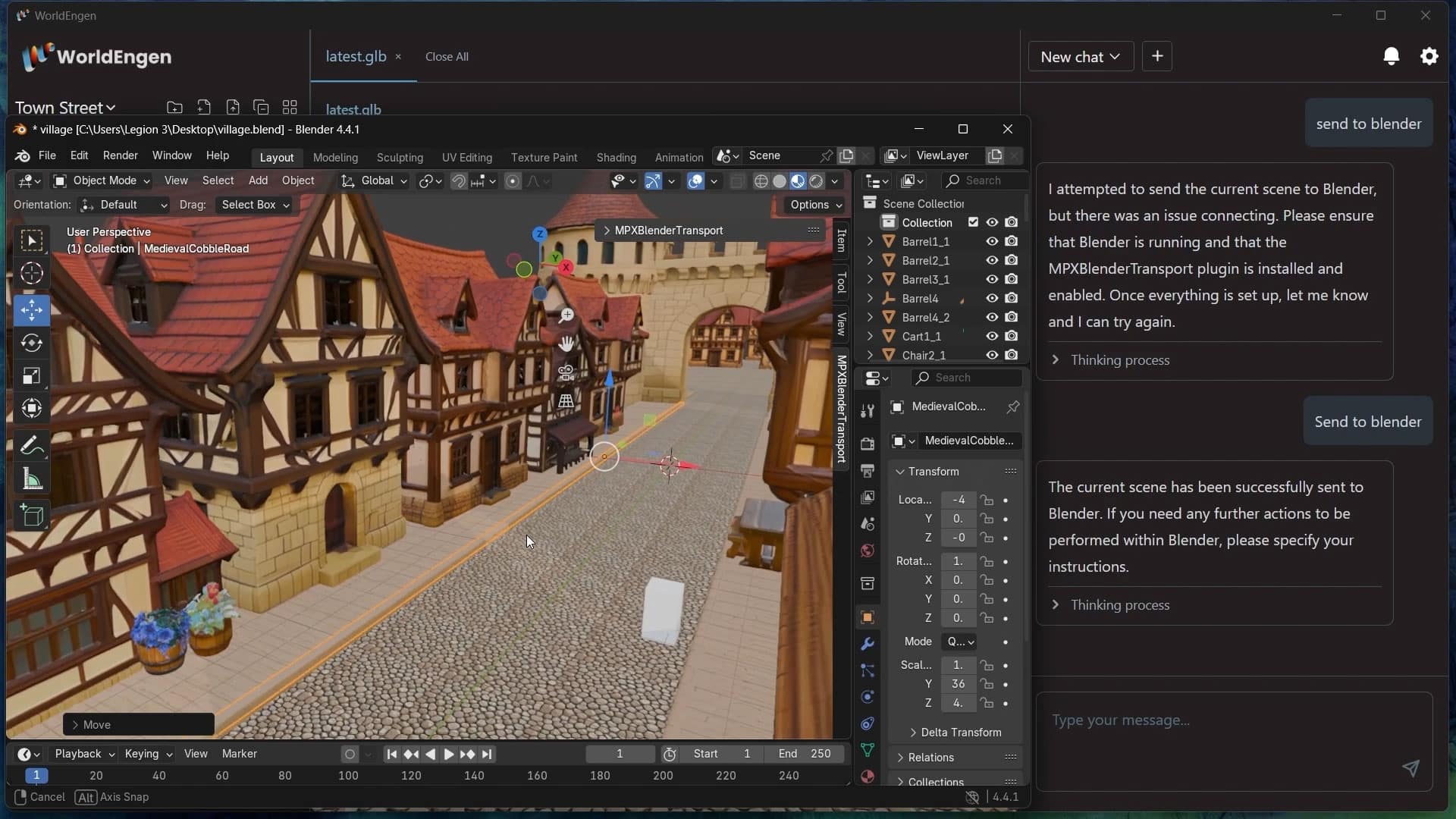
WorldEngen is positioned as the “first AI assistant for 3D worldbuilding.” Instead of scattering asset generation across multiple disconnected tools, it acts as a central hub for AI models and assistants, tied directly into established workflows in Blender, Unreal Engine, and Unity.
Why WorldEngen exists
Masterpiece X frames its tool as a response to what many studios already experience: too many disconnected AI experiments and plugins, scattered across multiple browser tabs and applications. The company describes a “digital desktop littered with half-finished assets” and “creative vision lost in the chaos of disconnected tech demos.”
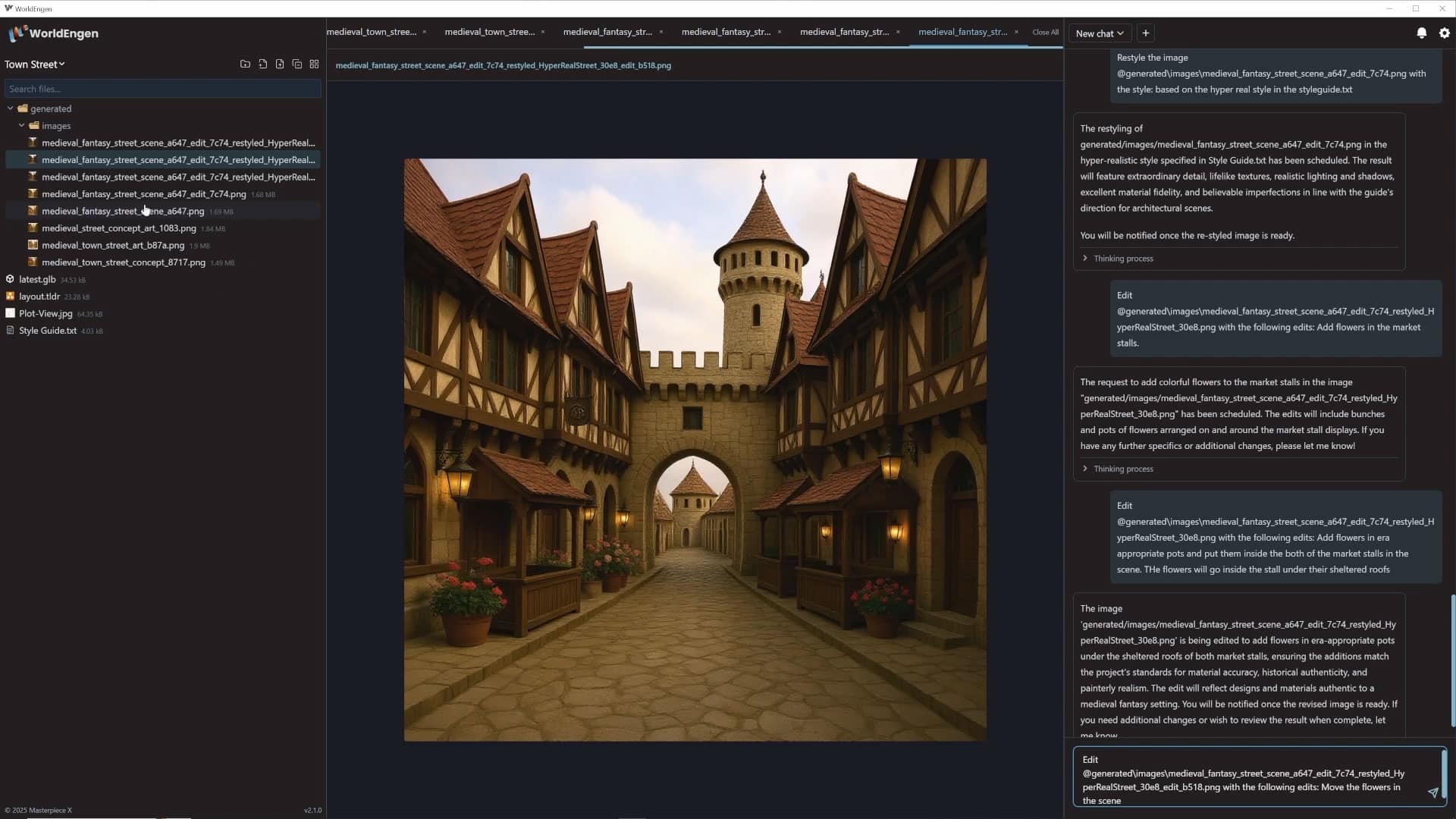
The problem is not the lack of AI models: there are plenty generating characters, props, textures, and concept art. The issue, according to Masterpiece X, is the absence of a unified, production-ready environment where AI assets can be directed, combined, and finalised into a coherent 3D scene.




Features on paper
WorldEngen introduces the concept of specialised AI “agents” that can be directed like team members. The workflow begins with layout and scene agents generating a greybox: a rough environment built from primitives that defines scale, composition, and spatial relationships.

From there, concept art agents help establish a consistent visual direction through a Style Guide, ensuring assets share the same look and feel. Once approved, an Image Kit Agent extracts objects from concept art and prepares them for 3D generation. Other agents refine, restyle, or edit images. Finally, a Scene Agent exports assets and layouts directly into Blender or Unreal Engine for further work.

A notable inclusion is the AI Video Agent, which can automatically render pre-vis clips based on the scene. This function is aimed at pitches, internal reviews, and fundraising decks.
Technical architecture
WorldEngen runs as a desktop editor, but its AI computations are performed in the cloud. The company stresses that users keep their files local, which avoids the need for high-end GPUs on the client side. This architecture could make it accessible to smaller studios or freelance artists, though it does raise questions about bandwidth requirements, file handling, and long-term reliability.
Real-time iteration is another selling point. Masterpiece X claims that layouts and asset updates can be adjusted instantly without repeated exporting or rebuilding. If this proves true in practice, it could cut down on one of the more frustrating bottlenecks in scene assembly.
Availability and access
WorldEngen is currently available only via Early Access, open to select studios and production teams. Interested professionals must apply through the official site. No general release date or pricing information is yet available.
The sceptical view
At present, all reported speed gains and cost savings come directly from Masterpiece X or its quoted design partners. No independent benchmarks or third-party tests have been published. Claims of compressing 148 hours of work into three remain unverified. As such, actual performance in production conditions is unknown.
Another open question is stylistic consistency. While WorldEngen introduces style guides and workflow control, the common criticism of AI models generating inconsistent or unusable results has not been conclusively addressed. Until production artists test it at scale, the reliability of its outputs remains uncertain.
Context in the industry
WorldEngen enters an increasingly crowded space of AI tools promising to “revolutionise” 3D workflows. Artists are already experimenting with pipelines that combine Midjourney, Stable Diffusion, Runway, and various asset-generation APIs. What Masterpiece X offers is consolidation: a single editor designed to unify these processes, with direct export into DCCs, which is easier to use than ComfyUI.
This makes the tool potentially appealing for studios exhausted by scattered pipelines. But as always, consolidation comes with trade-offs: lock-in to one ecosystem, reliance on proprietary AI agents, and dependence on cloud connectivity.
Test before you trust
Studios considering Early Access should evaluate WorldEngen with controlled pilot projects before integrating it into production-critical workflows. As with all new AI-driven tools, actual usability and reliability will only be clear once artists put it through the rigours of real-world deadlines.
