



Blackmagic Design has announced the Blackmagic Camera ProDock, a dock that transforms the iPhone 17 Pro and 17 Pro Max into a professional production camera with broadcast-standard connectivity. Introduced on 10 September 2025, the ProDock effectively closes the gap between a smartphone sensor and an on-set camera rig, by providing the missing infrastructure: power, sync, storage, monitoring, and audio.
HDMI Output: Monitoring Without Compromise
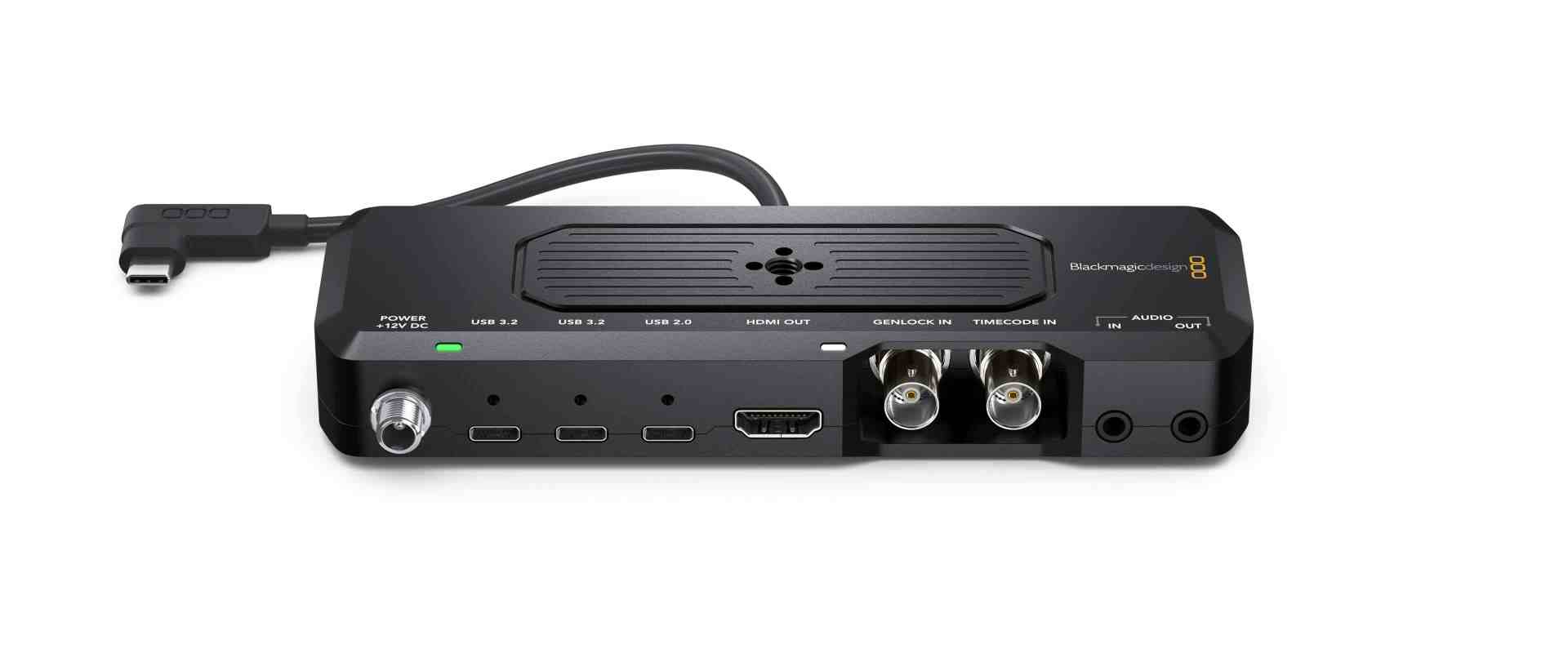
The ProDock introduces a full-size HDMI Type A port, a notable upgrade from improvised Lightning or USB-C adapters that often lack reliability in production. This allows direct connection to on-set monitors, switchers, or EVFs, with proper locking cables and without the fragile signal paths associated with consumer adapters. For camera operators, this means the iPhone can finally slot into traditional video villages or live multi-cam environments without a mess of dongles.
Timecode and Genlock: The Professional Core
Two BNC connectors provide timecode input and reference genlock. For professionals, these are not optional extras but workflow-critical features. Genlock keeps multiple cameras frame-accurate, essential for live events, multi-camera narrative work, or LED-wall virtual production. Without genlock, subtle frame misalignment causes visible flicker on volume walls. Timecode ensures every recorded file is aligned to production clocks, enabling precise post sync without guesswork.
Blackmagic confirms that genlock is supported only on iPhone 17 Pro and iPhone 17 Pro Max, leveraging new hardware capabilities in Apple’s latest devices. Earlier iPhones will support most dock features but not frame lock, limiting their usefulness in tightly synchronised multi-camera shoots.
Power Distribution: A Serious Rig Component
The dock includes a 12V–15V DC locking power input, the same style seen on compact cinema cameras. This allows the entire system (phone, dock, attached SSDs, and even accessories powered from the dock) to run from V-mount or Gold mount batteries on set. For mobile productions, it eliminates the typical bottleneck of smartphone rigs: USB-C power banks with consumer-grade cables. A rigged iPhone can now run an entire day’s shoot without swap-outs or dangling charging cables.

Storage Expansion: Beyond Internal Limits
The ProDock adds three USB-C ports. Two are USB 3.2 Gen 1 with enough bandwidth for external SSD recording. This enables high-bitrate ProRes workflows directly to external media, bypassing internal storage constraints and removing the constant need to offload mid-shoot. The third USB-C is USB 2.0, designed for accessories such as focus and zoom controllers. Blackmagic is clearly treating the iPhone not as a phone but as the imaging block of a broader system, expandable with modular components.
Audio I/O: From Consumer Mic to Professional Sound
Audio has not been overlooked. The dock integrates a 3.5 mm microphone input and 3.5 mm headphone output, standard but critical for set usability. This allows proper monitoring with latency-free analogue outputs, and direct input of powered microphones, recorders, or wireless packs. While serious productions may continue to dual-record on external mixers, the dock ensures that sync sound workflows are not compromised at the acquisition stage.
Rigging and Physical Design
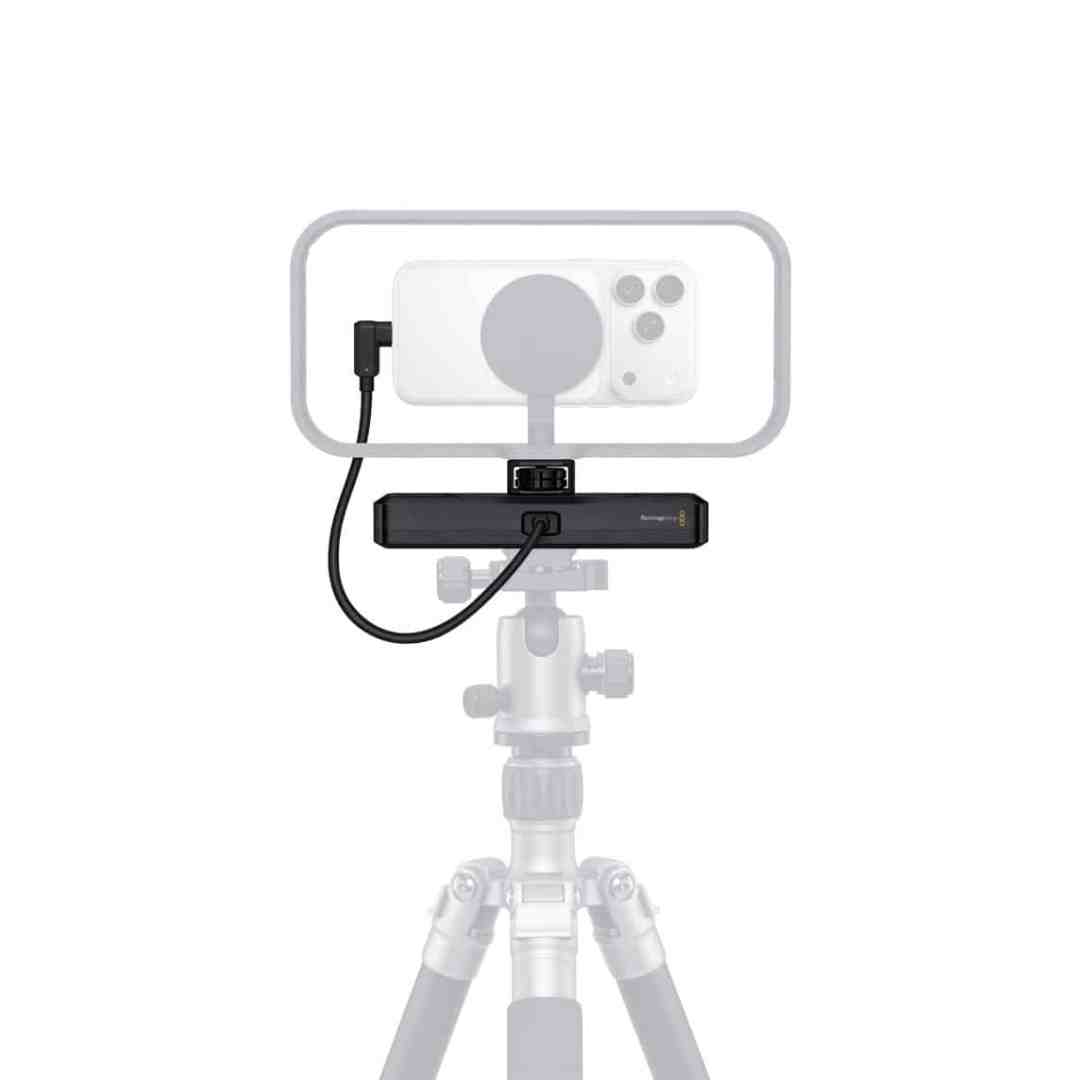
Blackmagic has clearly thought about physical rigging. The dock includes 1/4-20 mounting threads on both top and bottom, ensuring easy integration into cages, arms, and standard rigs. It is not a consumer accessory designed for handheld casual shooting, but a unit intended to live inside a larger professional build. A status LED confirms genlock synchronisation, giving immediate visual feedback that the phone is locked to reference.
Workflow Impact
With the ProDock, an iPhone becomes more than just a B-camera or emergency backup. In LED-wall production, it can serve as a synchronised unit. In live events, it can deliver frame-accurate signals directly into switchers. In mobile documentaries or guerrilla-style shoots, it provides reliable media offload and power, avoiding the constant file management associated with internal storage.
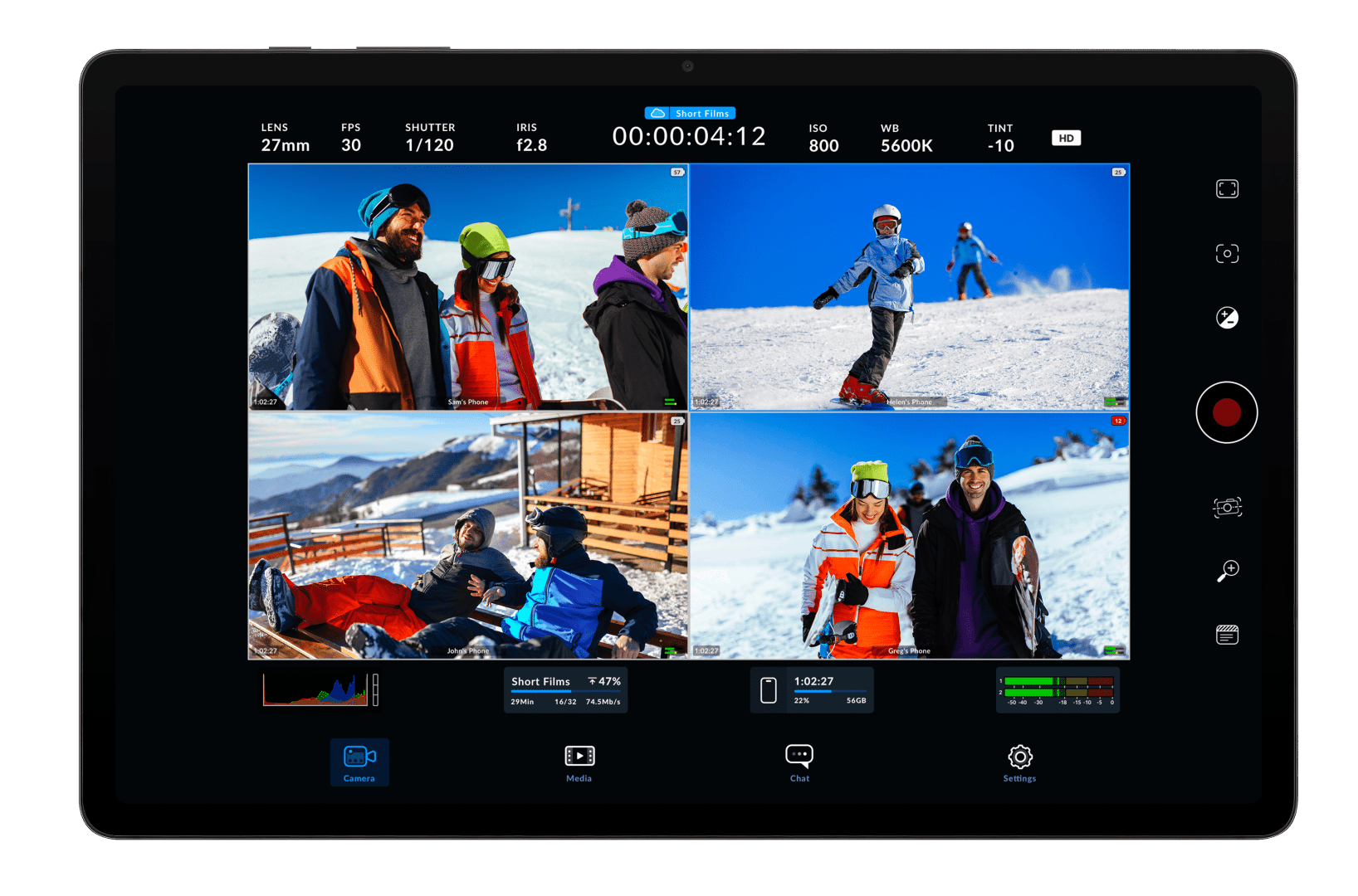
When paired with the Blackmagic Camera app, which provides the same UI and image controls as Blackmagic’s digital cinema cameras, the iPhone rig offers a continuity of operation across mobile and professional cameras. Operators can adjust shutter angle, ISO, frame rate, and white balance with the same interface used on the Pocket Cinema Camera series. The ProDock then ensures this mobile footage can be integrated with studio-level gear without bottlenecks or mismatched sync.
Pricing and Availability
Apple’s online store lists it at US$299.95. Regardless of the channel, it is positioned far below the cost of a dedicated cinema camera accessory ecosystem, making it accessible for productions willing to leverage iPhone imaging hardware. And, to find your local pricing, here is a list of all Resellers: BMD Resellers.
Professional Caveats
The dock does not fundamentally change the iPhone’s image characteristics, it remains a smartphone sensor with smartphone optical limits, but it does ensure that once captured, the footage behaves within professional standards for synchronisation, monitoring, and post-production integration. New innovations should always be tested in controlled conditions before being deployed on live productions. The Blackmagic ProDock solves several bottlenecks for smartphone-based shooting, but only production testing will reveal its reliability at scale.
