



When your morning stand-up starts with “Today we blow up The Beast” and ends with “Please aim the stone garden statue at the helicopter,” you know it’s a good week at RiseFX. In Heads of State, the Berlin-based studio delivered high-stakes action, digital doubles, and a presidential limo detonation that probably shouldn’t be emailed to the TSA.

Alex P. Twigg (IMDB| LinkedIn) is a VFX Supervisor at RISE with credits on Guardians of the Galaxy Vol. 3, Geostorm, and NBC’s Emerald City. A specialist in FX simulation — from particles and pyro to destruction — Twigg has built a career moving between feature films and high-end episodic work, delivering large-scale sequences under tight production demands.
Sebastian Lauer (IMDB | Linkedin) is a VFX Supervisor whose work spans After Earth, Fantastic Four (2015), and most recently Fantastic Four: First Steps (2025). Trained as a Digital Media Designer, he advanced through compositing and supervision roles at RISE, leading teams on complex integration and effects-heavy projects for international productions.

Let’s get Presidential
DP: What was your scope on the project ?
Alex: The show for Rise was just under 500 shots in 3 major sequences split over multiple sites with a very broad range of work required. The film is, in my eyes, a classic action film and it was great fun to dive into the tropes of the genre with bullet hits, explosions, car crashes and muzzle flashes. Beyond this, we had to handle digi-doubles, face replacements, set extensions, full environment builds, blood and, of course, statues.
The timeline for Heads of State was an interesting one, as it started before the writers’ and actors’ strikes, went on hold during the strikes, and then returned in full force. Obviously having work go on hold for a long period is challenging, because crew moves on to other shows in the hiatus and new artists have to pick up where others started. As a result the crew size grew and shrank a few times, but in total the crew was about 150 people strong over Stuttgart, Munich, Berlin and London over the course of the show.
Sebastian: Since both the Beast chase and the helicopter sequence are fast-paced action sequences, the total number of shots was quite high, so we had to edit many consecutive shots, which often posed a challenge for continuity.
It was crucial to have a proven system in place to handle the tasks involved in these shots in a multi-shot scenario with short turnaround times, so that any last-minute changes to one of the shots would not cause problems, as many things were interdependent.
DP: What did the overall pipeline look like for your work?
Alex: White Monster Energy was the vital source of caffeine that was the backbone of the production for me. One at 9am and one at 2pm ensured I had sufficient manic energy for all the dailies sessions.
Pipeline wise the most notable new feature we leaned on for Heads Of State was Riseflow. Artists and supervisors can create templated tasks in Houdini which can be triggered at designated points in the pipeline.
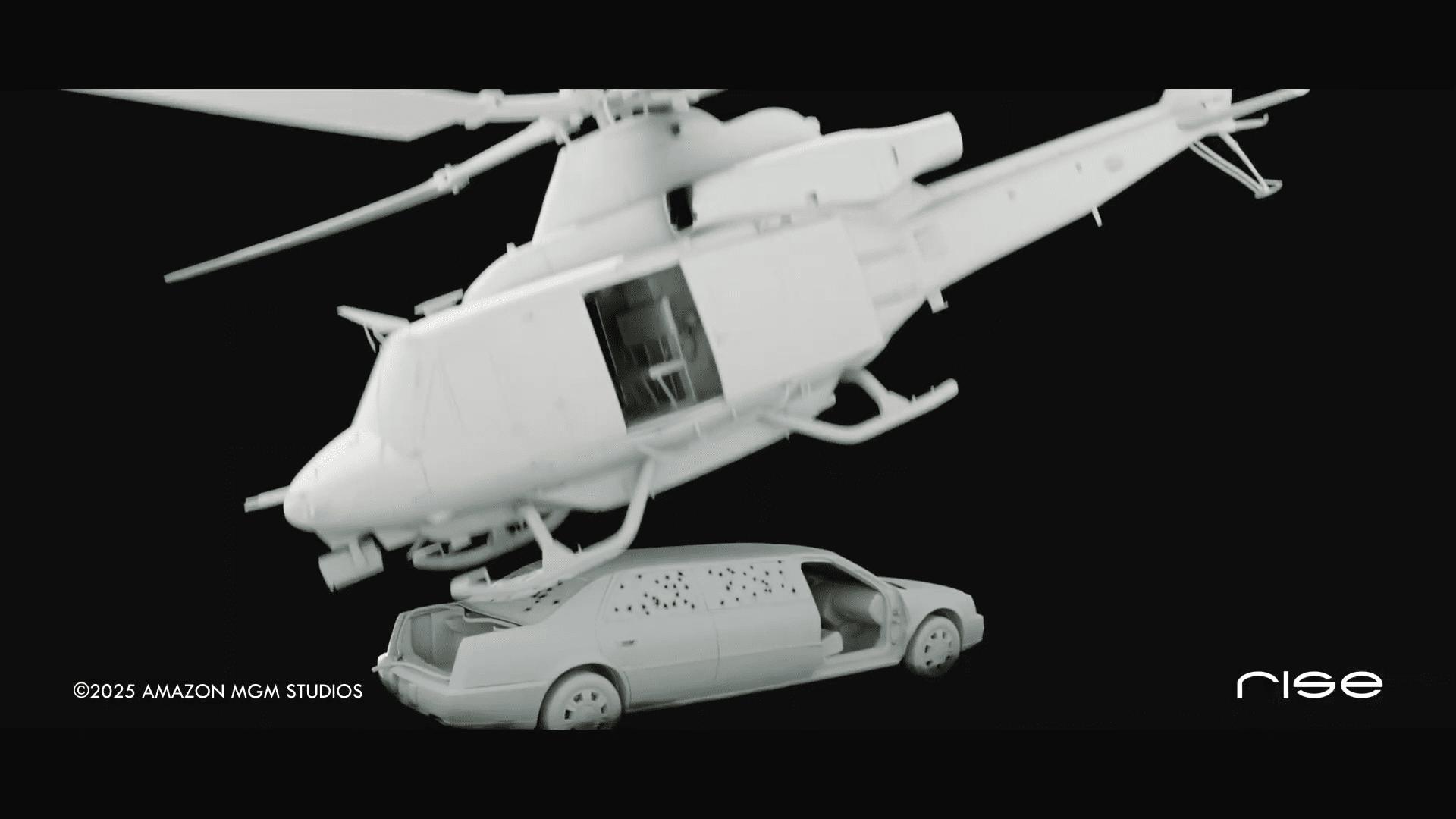
For example, in the chase sequence for The Beast, we had to cover the car in bullet hits that would grow in number over the course of the chase. Obviously we need to maintain clean continuity over all the shots, so we needed a workflow to make this quick and easy. Our solution was that a dedicated artist would dictate and manage the bullet hit locations and timing in Nuke.
The locations of these hits were mapped onto the 3D car in UV space, and then a Houdini process would run for each shot that would dent the body work or fracture the windows in the desired location. This was a huge advantage in managing notes. If a change was made to a hit location in the 3rd shot in the sequence, the update would be rapidly available in lighting for all subsequent shots as well.
Sebastian: As mentioned before, our USD multi-shot workflow, which in this case was mainly used for layout, animation, FX, and lighting, was crucial in enabling us to quickly and efficiently manage iterations across all consecutive shots. The ability to launch things directly from our RiseBase database as a chain of commands to automatically execute sequential processes one after the other, rather than manually executing each pipeline step individually, saved a lot of time and helped to significantly speed up iterations.
DP: What kind of material did you receive from the set – plates, HDRIs, LiDAR scans, on-set references?
Alex: The set data for Heads of State was generally great. We had LiDAR for all locations we were working with as well as extensive set photography and light probes. I would have personally liked scans and photography for every prop we had to model, but not every production has the time and resources on set that a Marvel show can bring to force.
Sebastian: I was quite satisfied with the material provided, and some of the LIDAR scans of the beast chase were particularly impressive, as they had to cover very large areas where the car was traveling. At first, it was a bit confusing to figure out where you were and how that related to the car’s position, especially since a lot of scenes only took place inside the car, but after a while, you got a pretty good idea of which corner you were turning.

The Beast & The Big Boom
DP: Was the presidential limo full-CG, partially practical, or a hybrid build?
Alex: We did indeed have a fully built asset for the Beast! For most of the shots we used a hybrid method of a CG chassis but retaining the wheels from the plate. Tracking the rigid body of the car was a far more streamlined process than tracking all the wheels independently, and keeping the plate wheels meant we didn’t have to worry about coming up with a workflow for tyre deformation or the joys of rotational motion blur.

The real body of work for most of these shots came in lighting. The car is mostly a reflective or refractive surface, so placement of proxy geo to project the plate or elements onto was a shot by shot process to ensure good reflections of the environment.

The other aspect of the Beast chase was the interior shots. As is pretty standard, the car used for the exterior shots is not the same as the one used for the interior. A keen eye would be able to spot differences in the shapes of some windows. Fortunately, the Beast asset was built in such a way that it was pretty easy to compensate for the difference and maintain continuity.
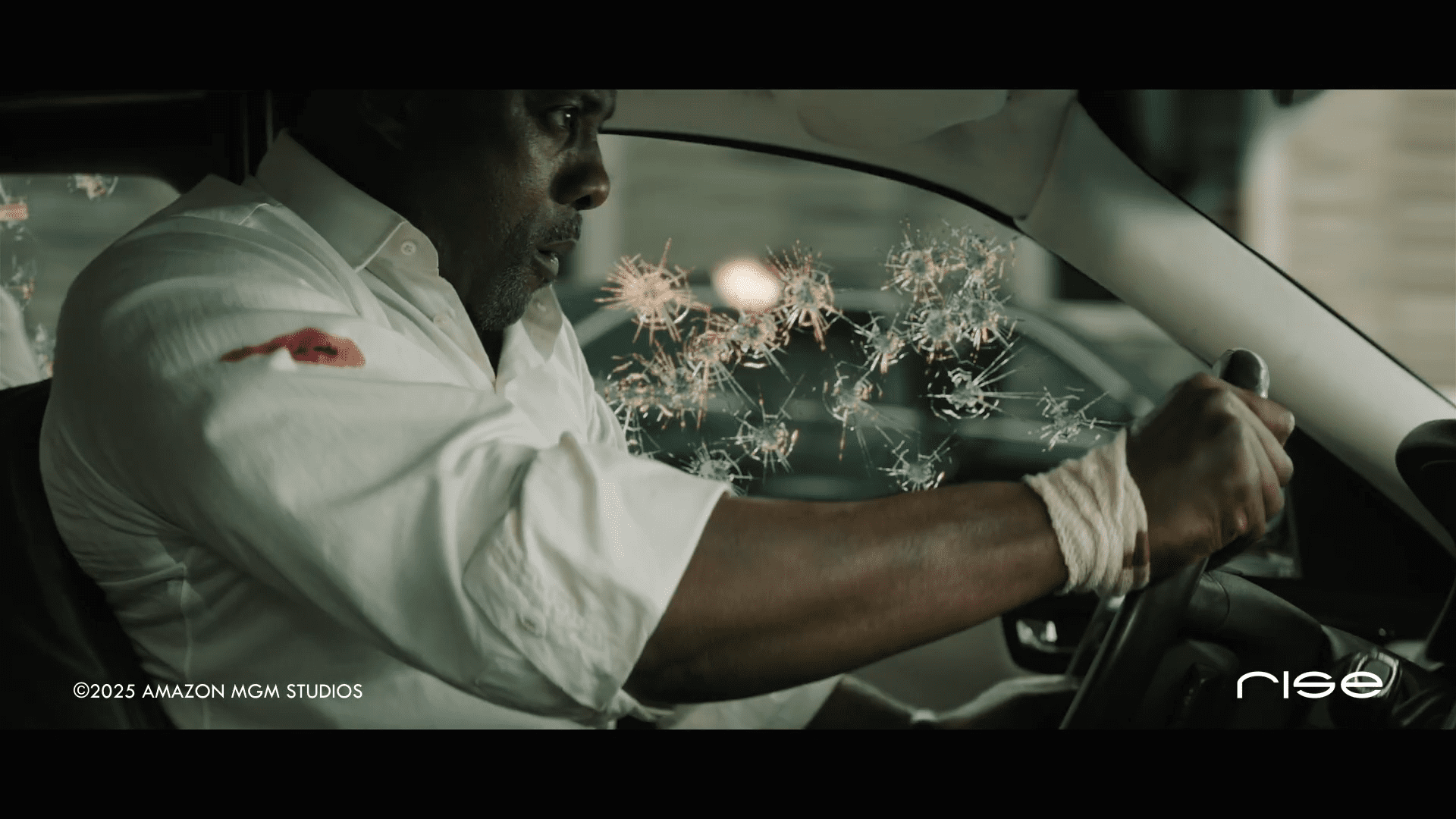
It is worth noting that a reasonable amount of time and effort went into perfecting the look of the window cracks. Ilya was passionate about being able to see the thickness of the windows in the cracks, so we generated spiderwebs of layered reflective cracks like ribbons to help sell the depth of the bullet hits.
Sebastian: What Alex said – and yes, the appearance and effect of the bullet holes were treated almost like a separate, specific design element. The goal was not necessarily to achieve realistic behavior or appearance, but rather to emphasize the thickness of the glass with the right degree of gloss and bling to show off the reflected light and broken glass as well as possible. It took a few tries before the Director was satisfied.
DP: Explosions are always a balancing act: how did you handle FX simulation, lighting, and compositing to keep it cinematic but convincing?
Alex: My background is as an FX artist and I love a good explosion. It is always fun discovering the visual language of explosions on a show, and we were fortunate in that there were some great practical explosions in the Beast chase. This gives us a great starting point, but we have lots of different explosions to handle, each with a different look.

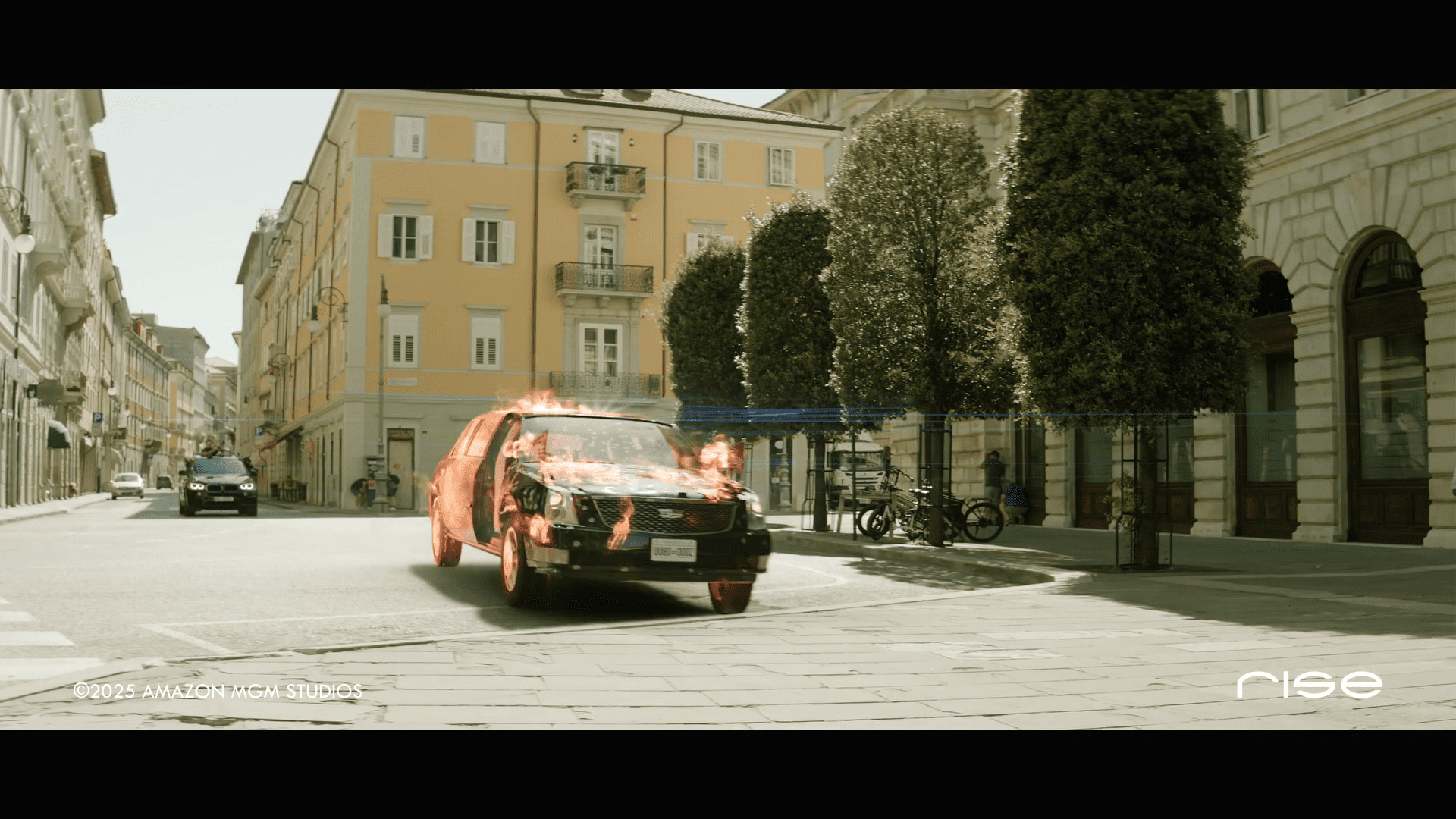
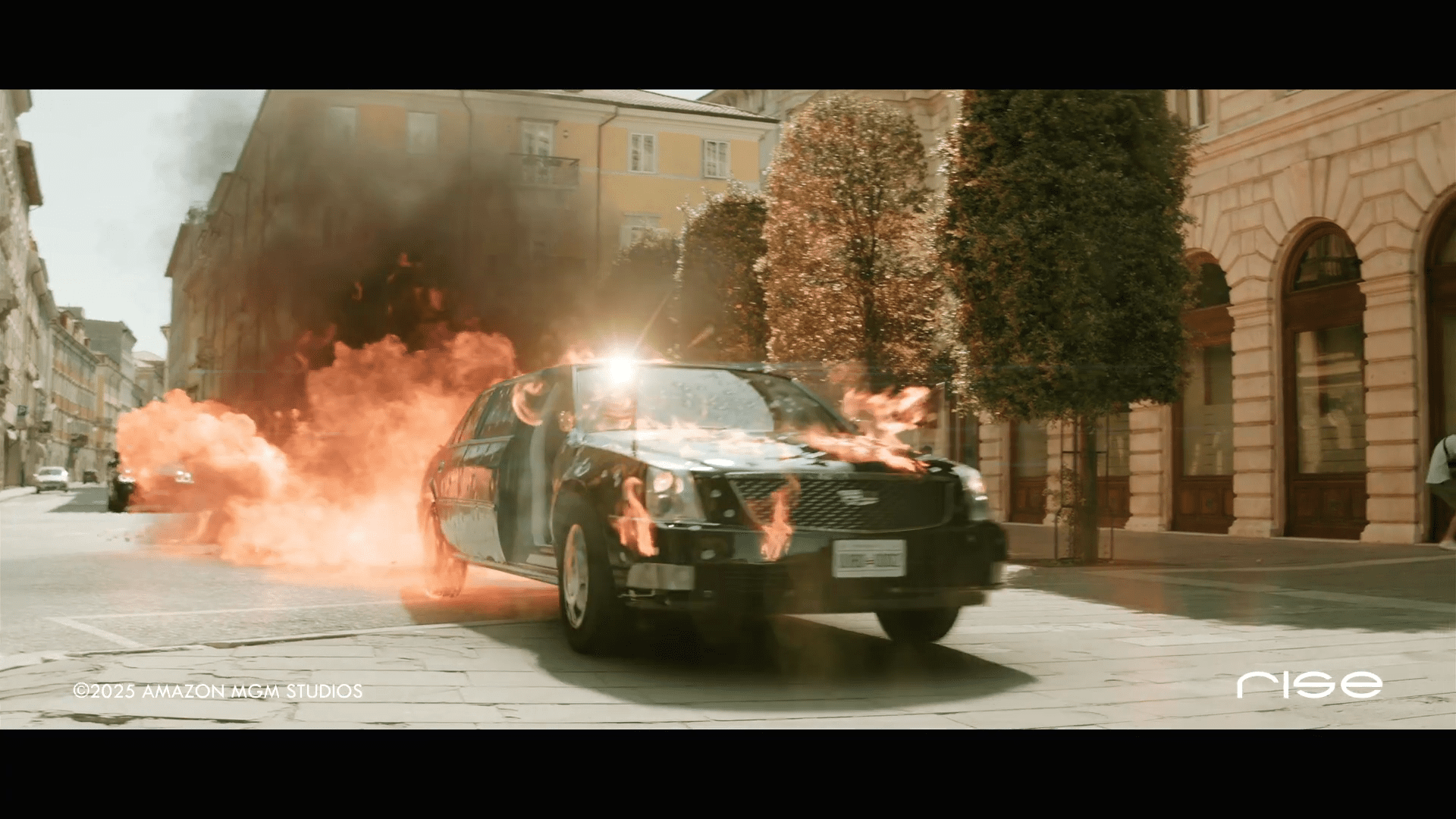
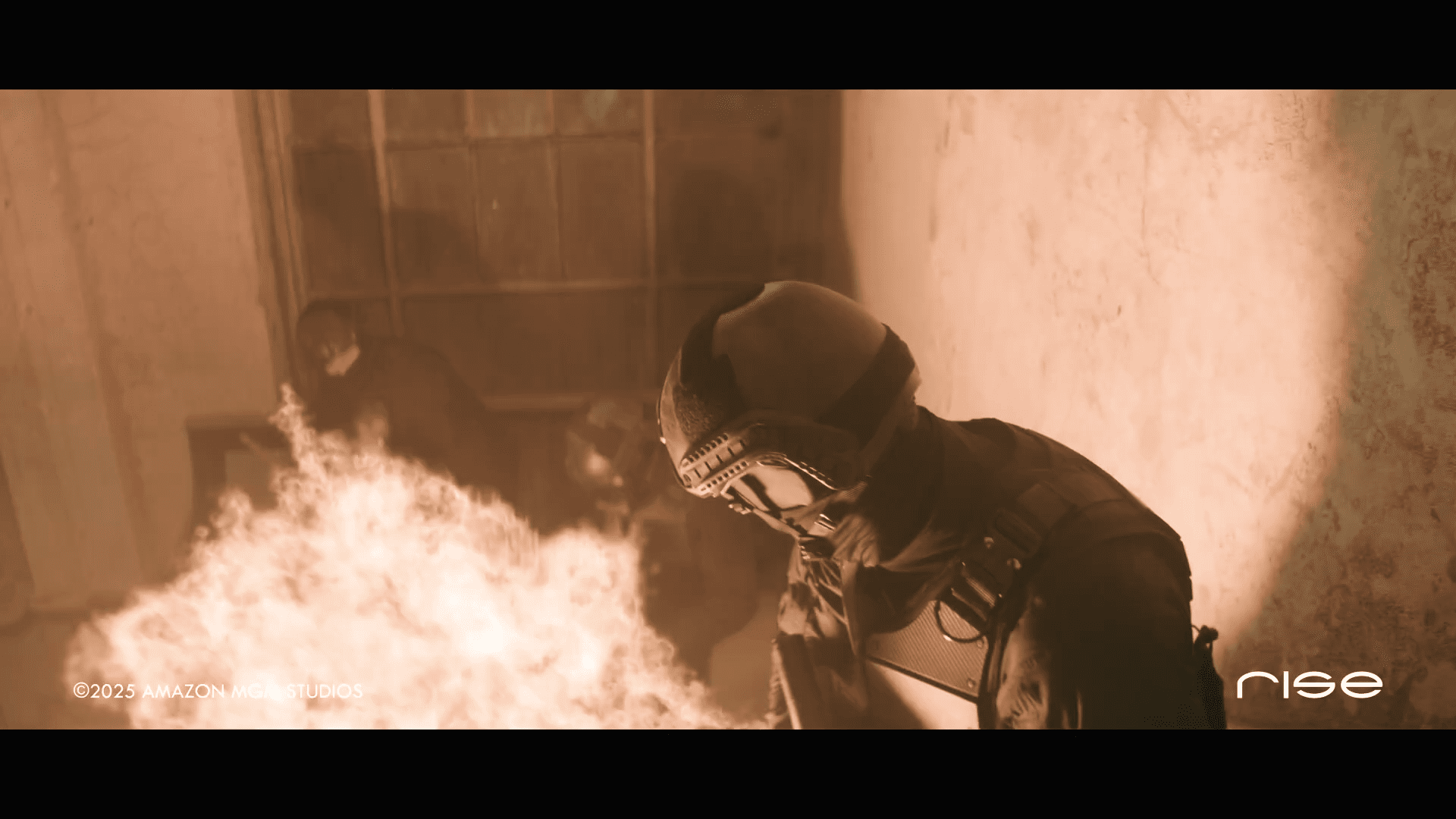
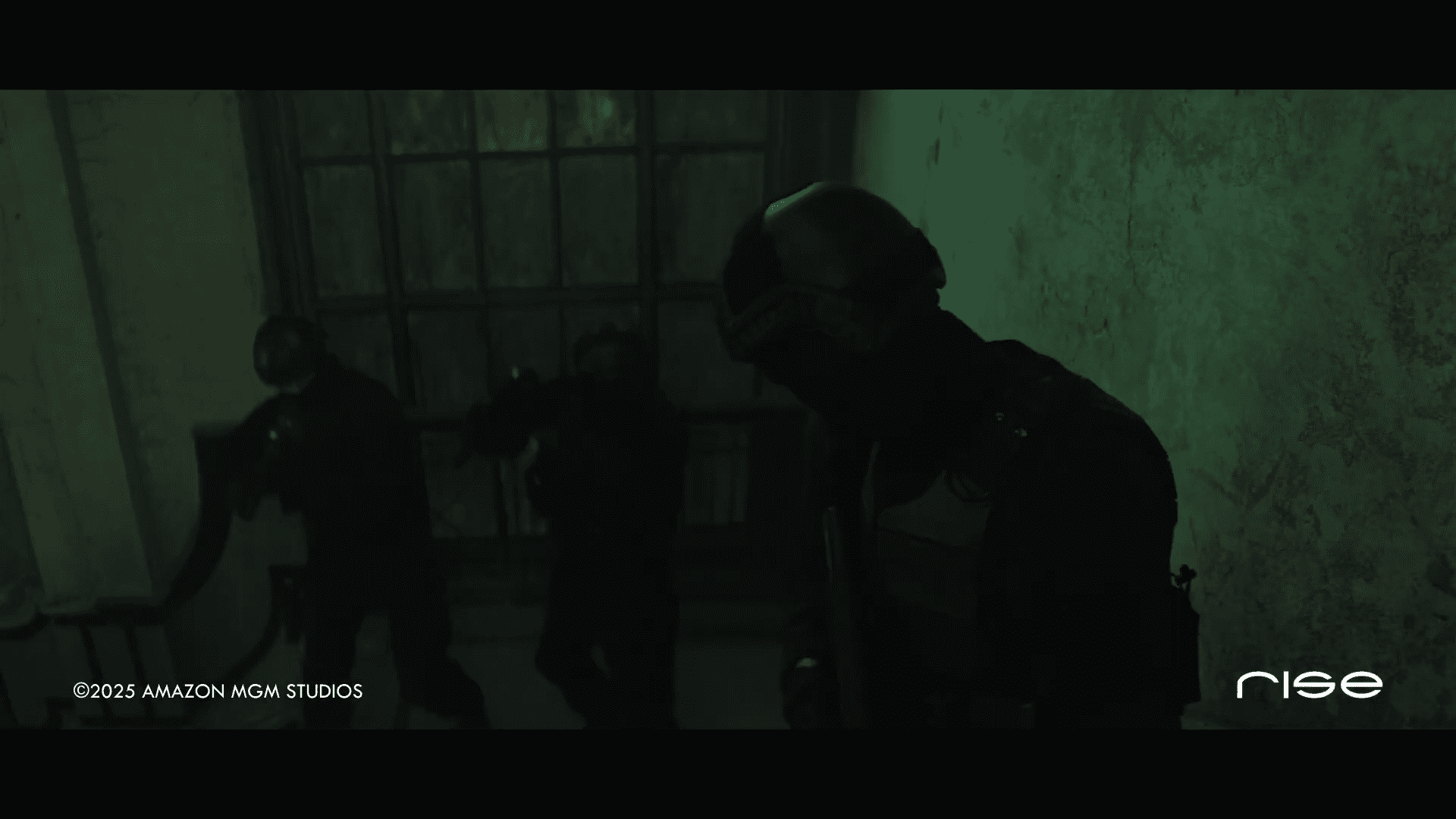
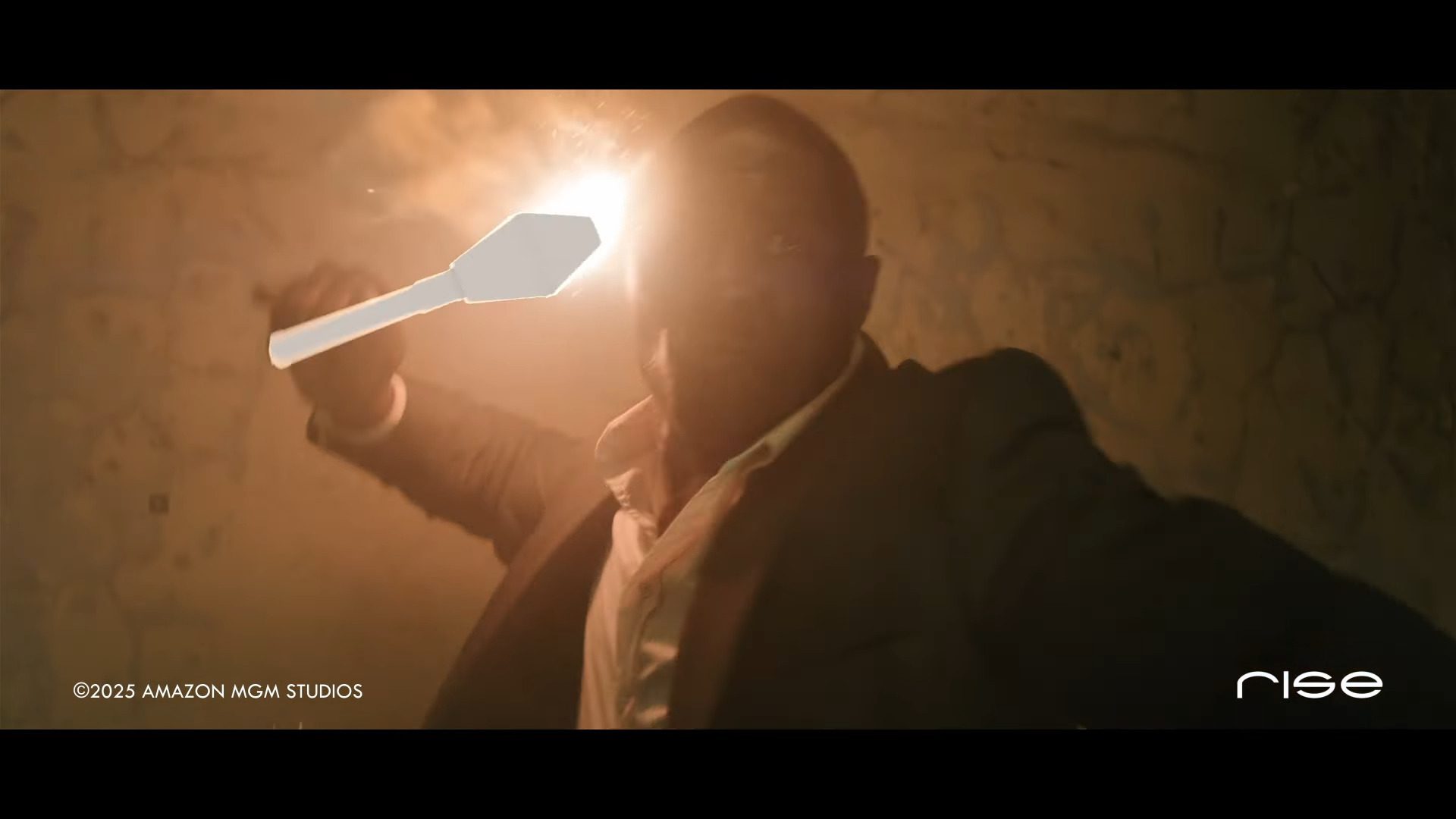
In the Beast chase, we have the classic smokey fireball style of explosions, which could indeed have Michael Bay raising an eyebrow. Earlier in the film we have a giant fireball filling up an interior staircase. For this we went with quite a clean burning fire that didn’t leave a lot of smoke, otherwise we would have had to add thick smoke for the rest of that sequence. Following this, Idris is holding a thermite grenade that he throws into a goon’s helmet. The challenge of this shot was crafting a look to make it read as themite whilst making sure it didn’t look like it should be burning Idris’ face off.

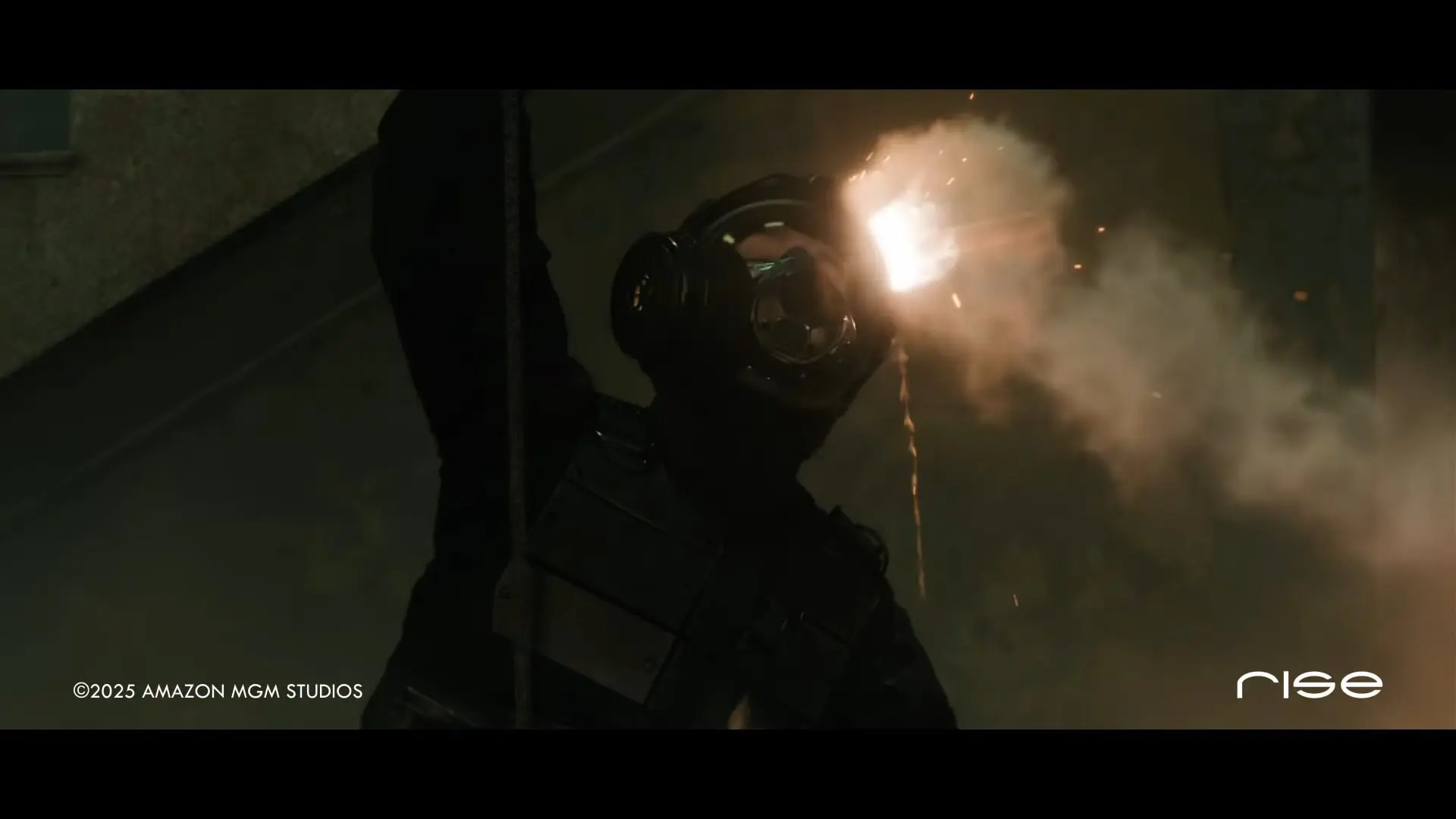
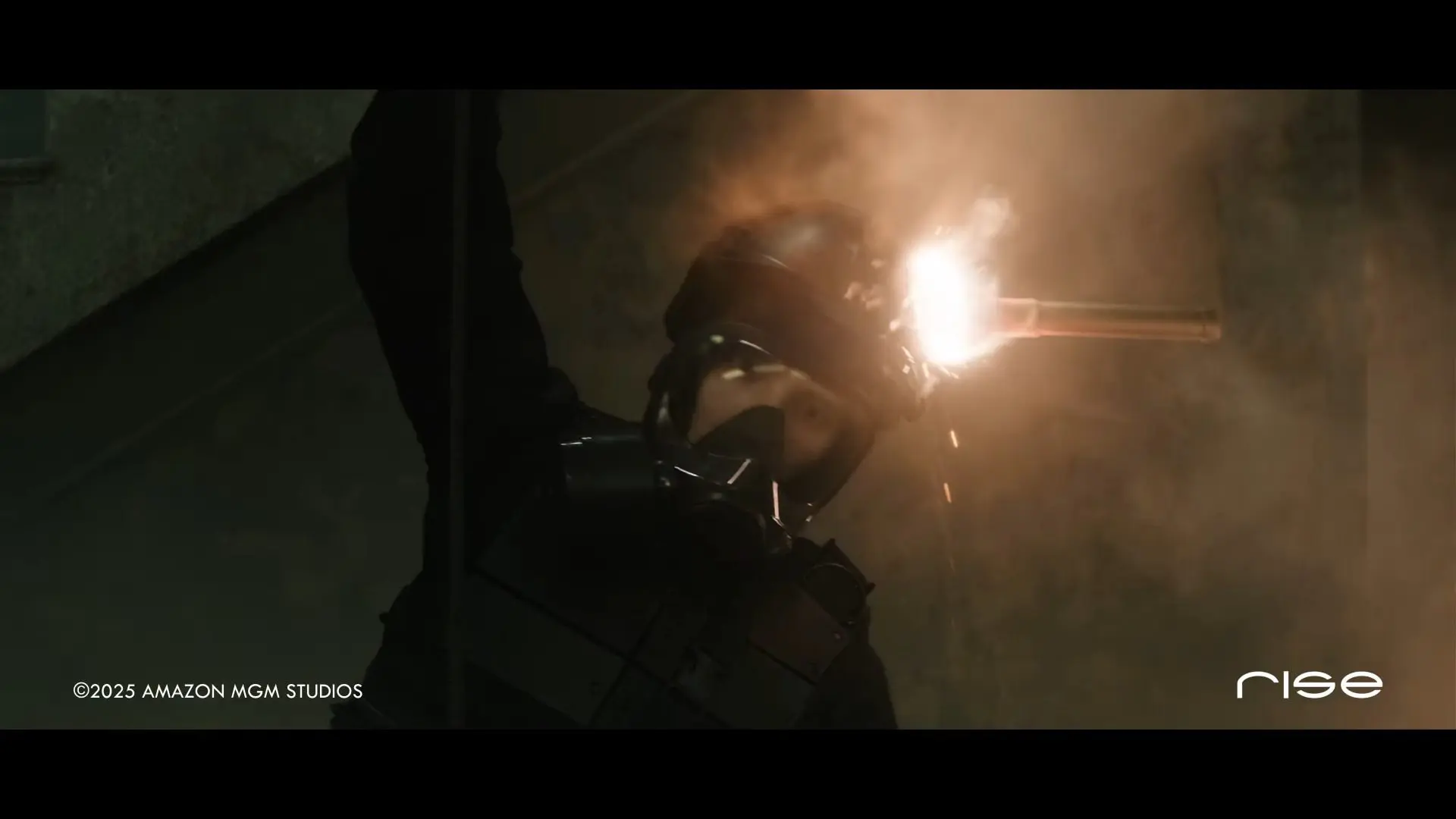


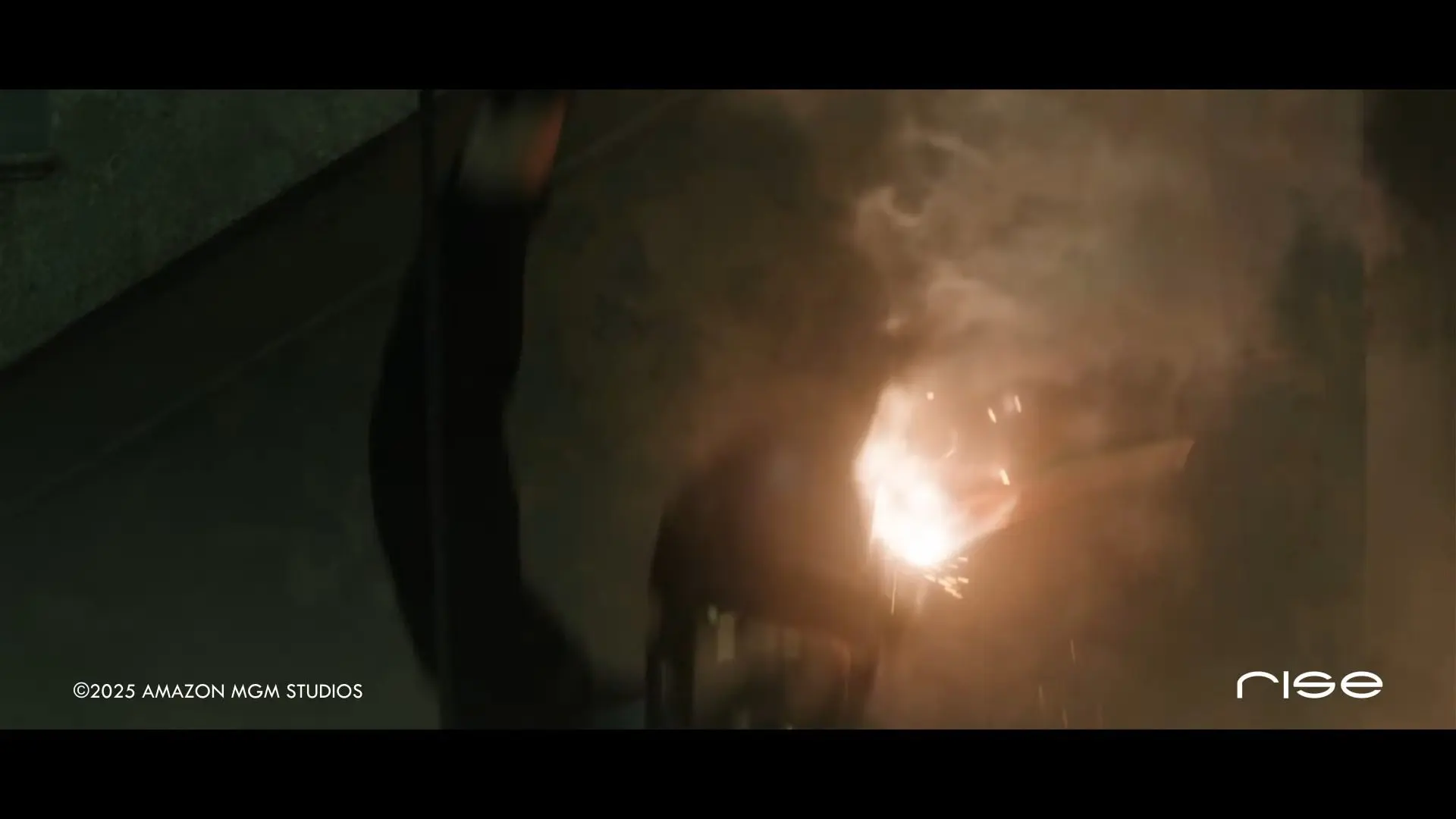
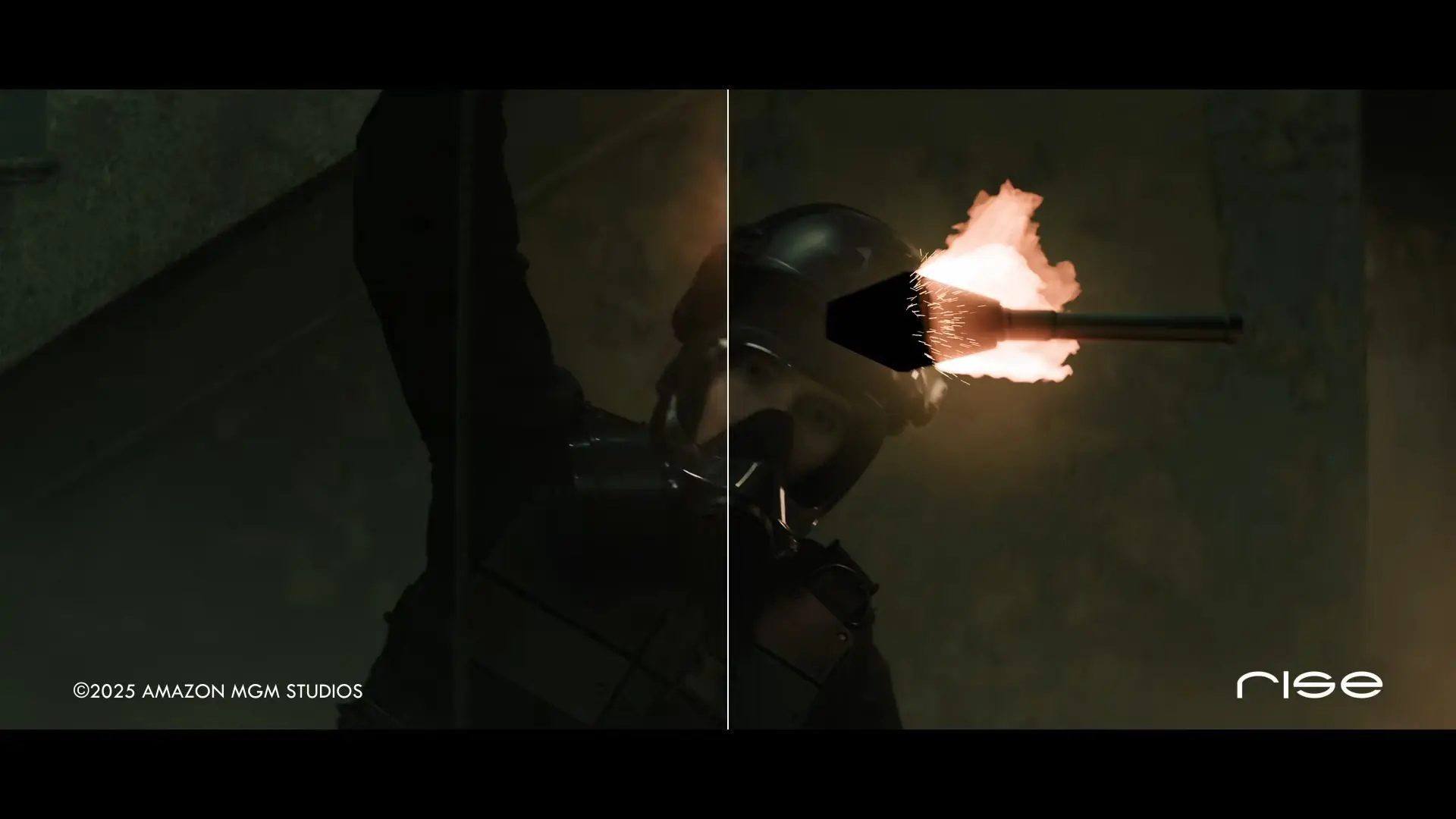
For all of our FX work we lean on Houdini. I have never worked with a software that allows for such explicit control of an output. It allows us to address client notes at speed without the fear of painting ourselves into a corner in terms of approach. Because we also do our lighting and rendering in Houdini, we don’t have to worry about translating sim data between softwares.
Sebastian: The appearance of explosions, fire, and flames was discussed extensively internally and with the client and often iterated. On the one hand, there was practical SFX fire from the set that had to be used as a reference or unchanged, as it was only supplemented in places. On the other hand, it naturally had to be done with the right degree of movie magic and kaboom.
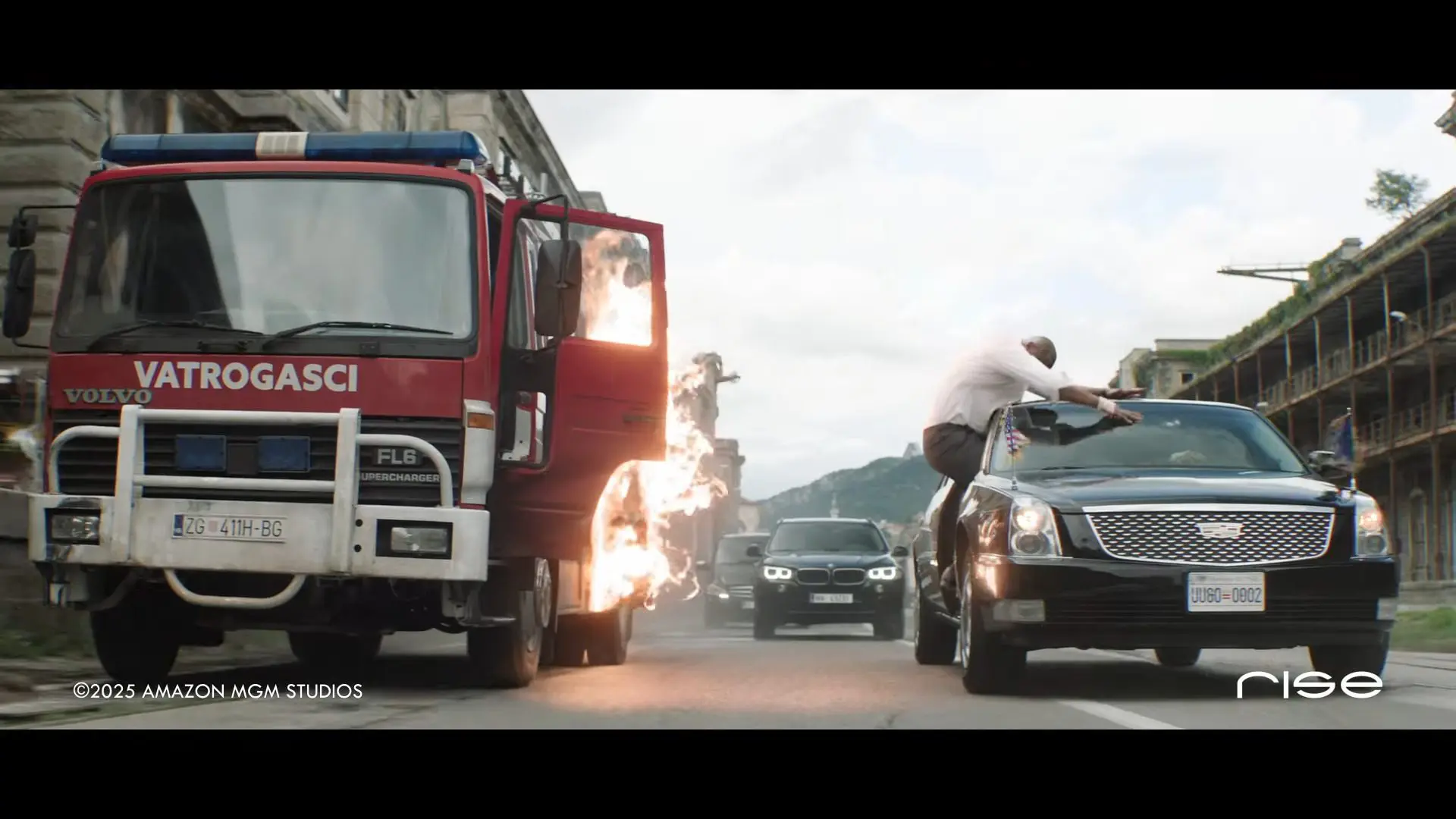
In addition to the look, the physical behavior of the flames was discussed, for example, when a flying, burning fire truck rotates around its own axis. We often started with the correct physical behavior, but almost always had to edit it, for example, to avoid covering too much of the action, to steer the flames in the desired direction, or to time the fire so that the Beast dramatically emerged from the flames at the right moment.
Favourits and More
DP: Which shot is your personal favorite – the one you’d put in your own showreel?
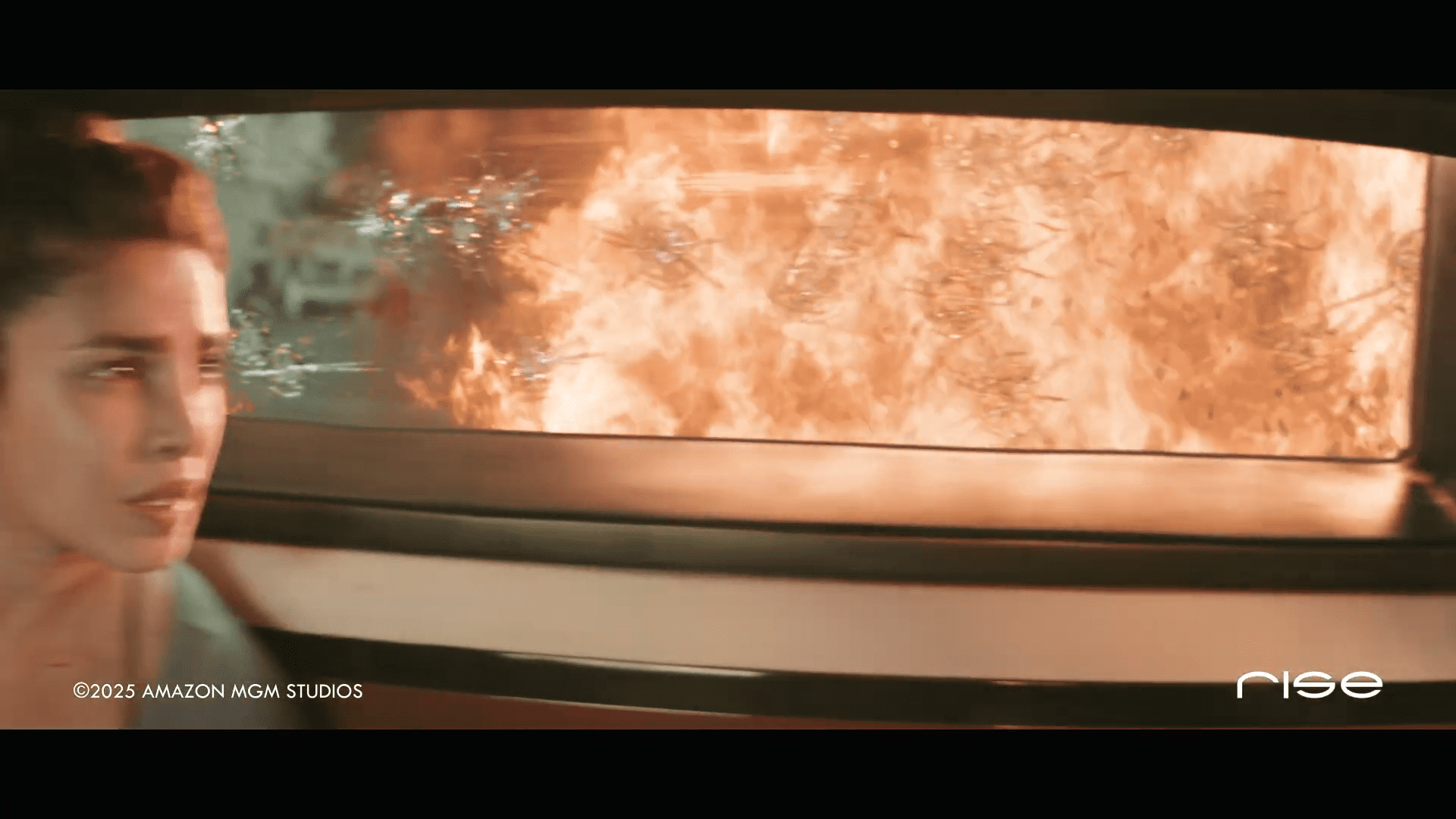
Alex: One of my favourite shots is an incredibly simple one. The Beast is reversing down a hill whilst under fire. The shot is from Idris’ POV and is framed on the wing mirror of the car. A bullet shot hits the wing mirror and blows it off.

The plate for this shot was the interior set of the car without glass in the window against a greenscreen. The exploding wing mirror was a practical gag. We replaced the greenscreen with elements of a street the Beast is driving down, cleaned up some wires and hanging bits of mirror and placed in our cracked CG window.

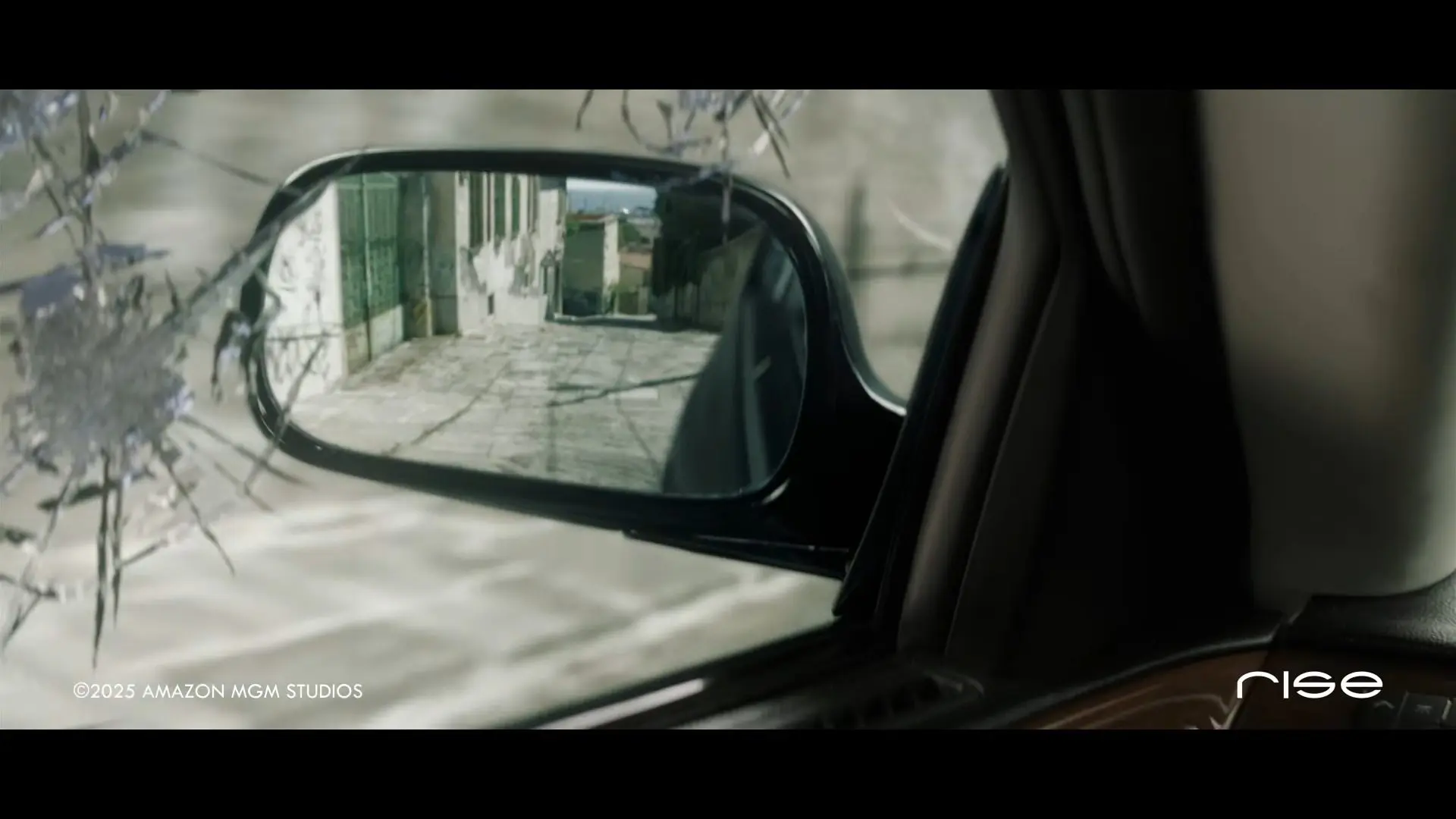
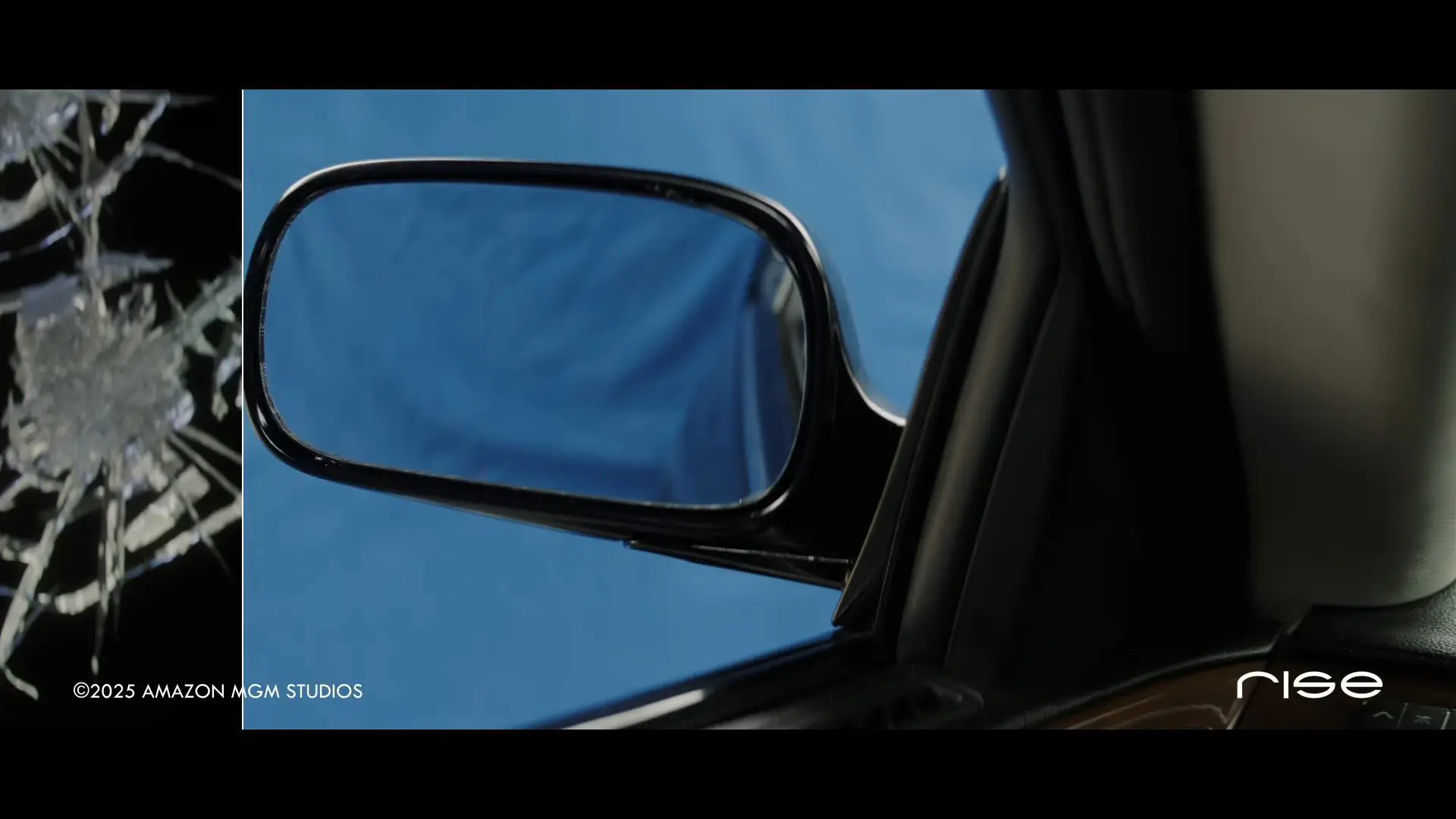


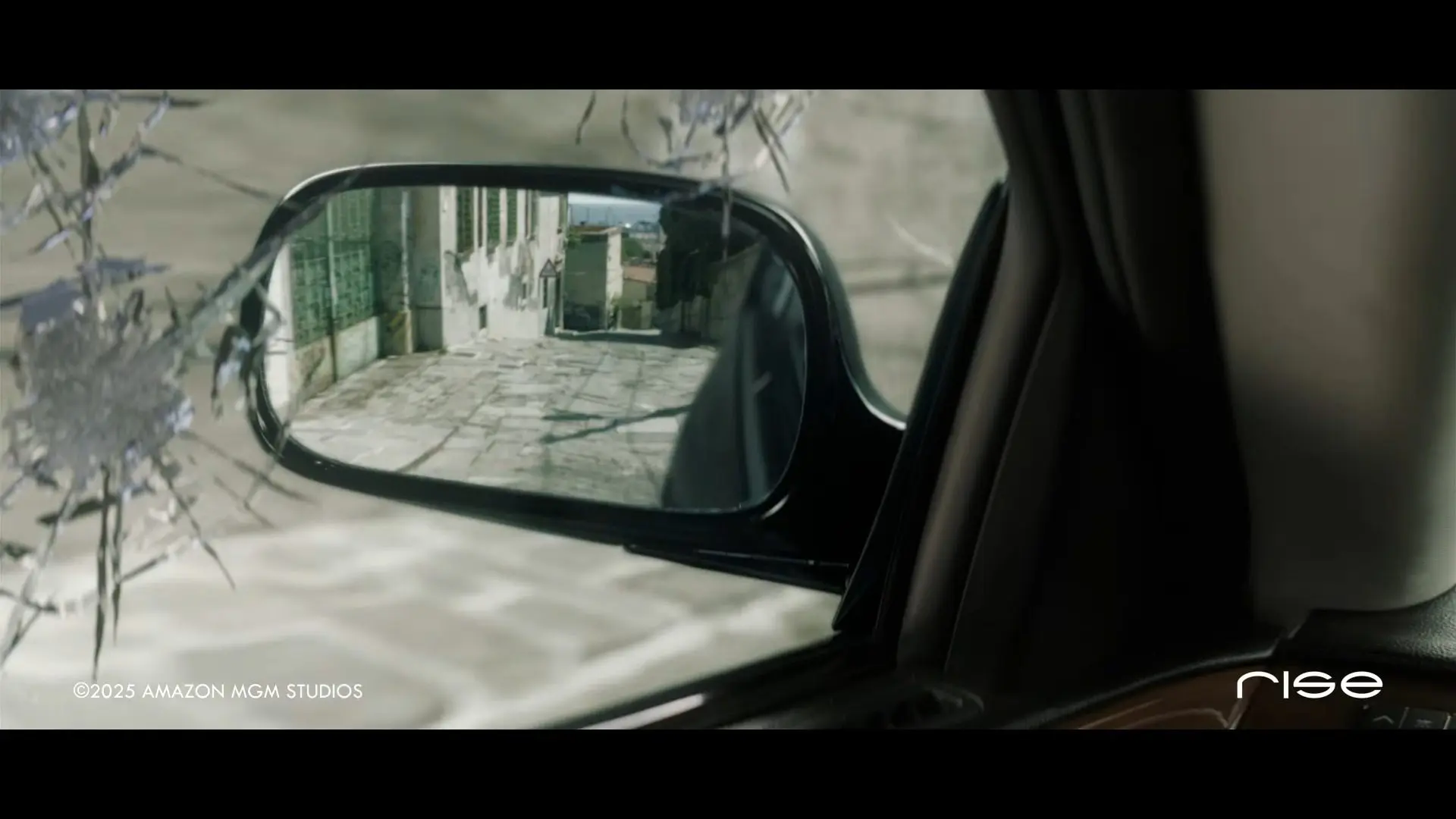
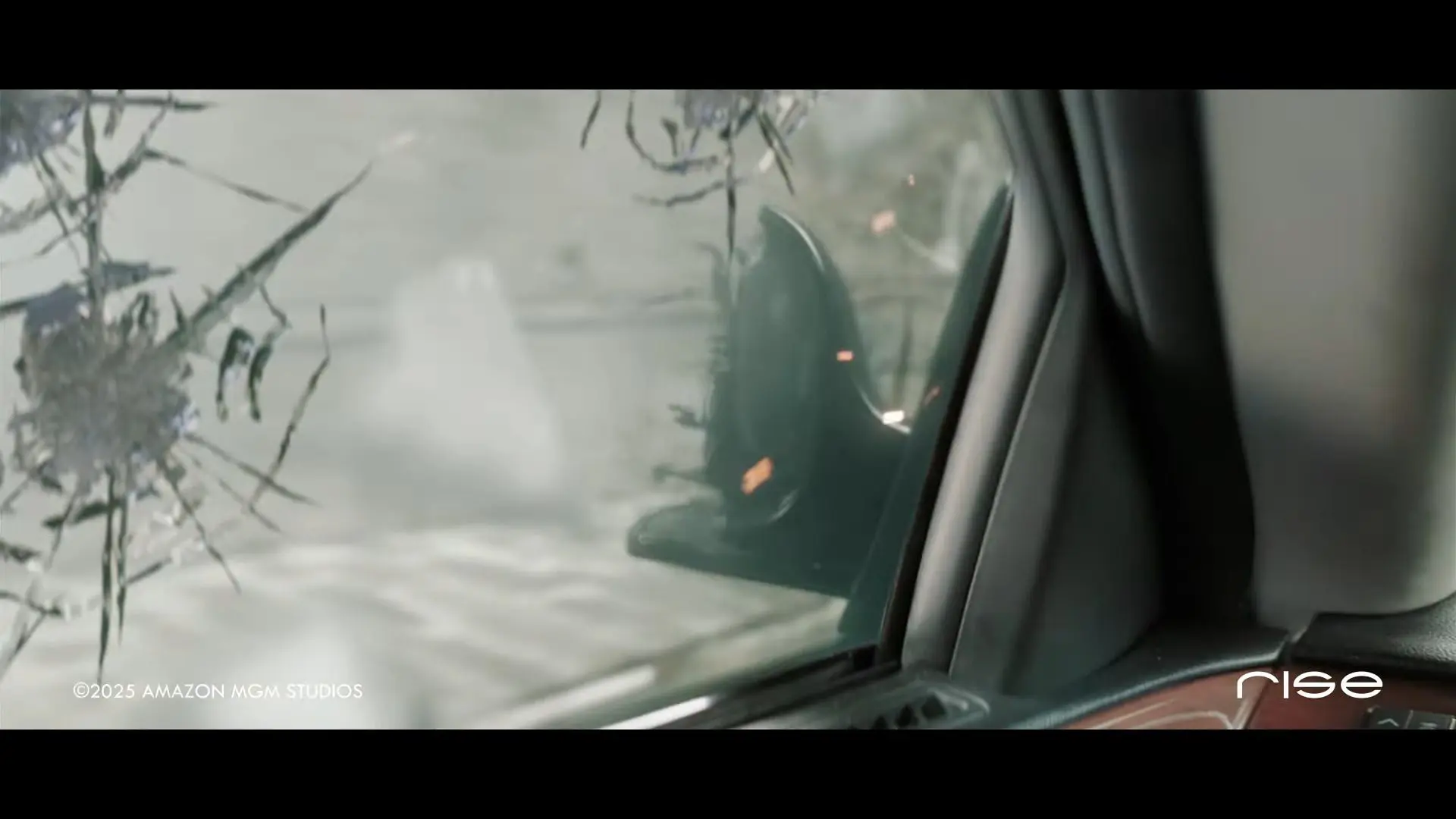
The end result is clean and demonstrates the beauty of our window cracks in a shot that isn’t super motion blurred. The shot is a great example of practical special FX blended with VFX, and was a very easy shot for us to final. It is always a pleasure when something goes according to plan!
Sebastian: My favorite shots are actually three consecutive shots in the Beast Chase Sequence, where Sasha fires the rocket launcher from the sunroof, Sam dodges the Beast while we see the reaction of all the passengers in the car in slow motion, and then the car bursts out of the flames in real time.
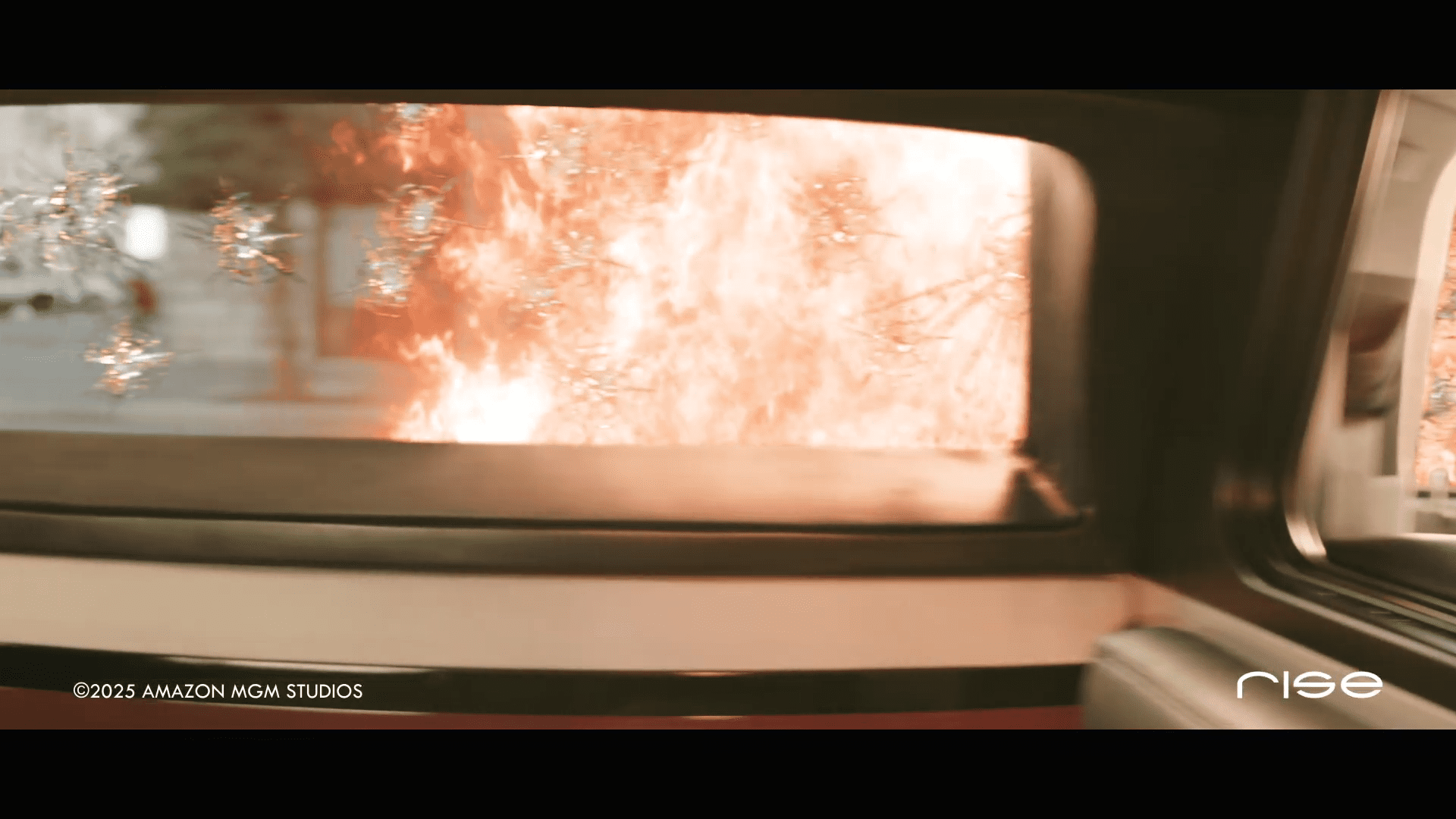
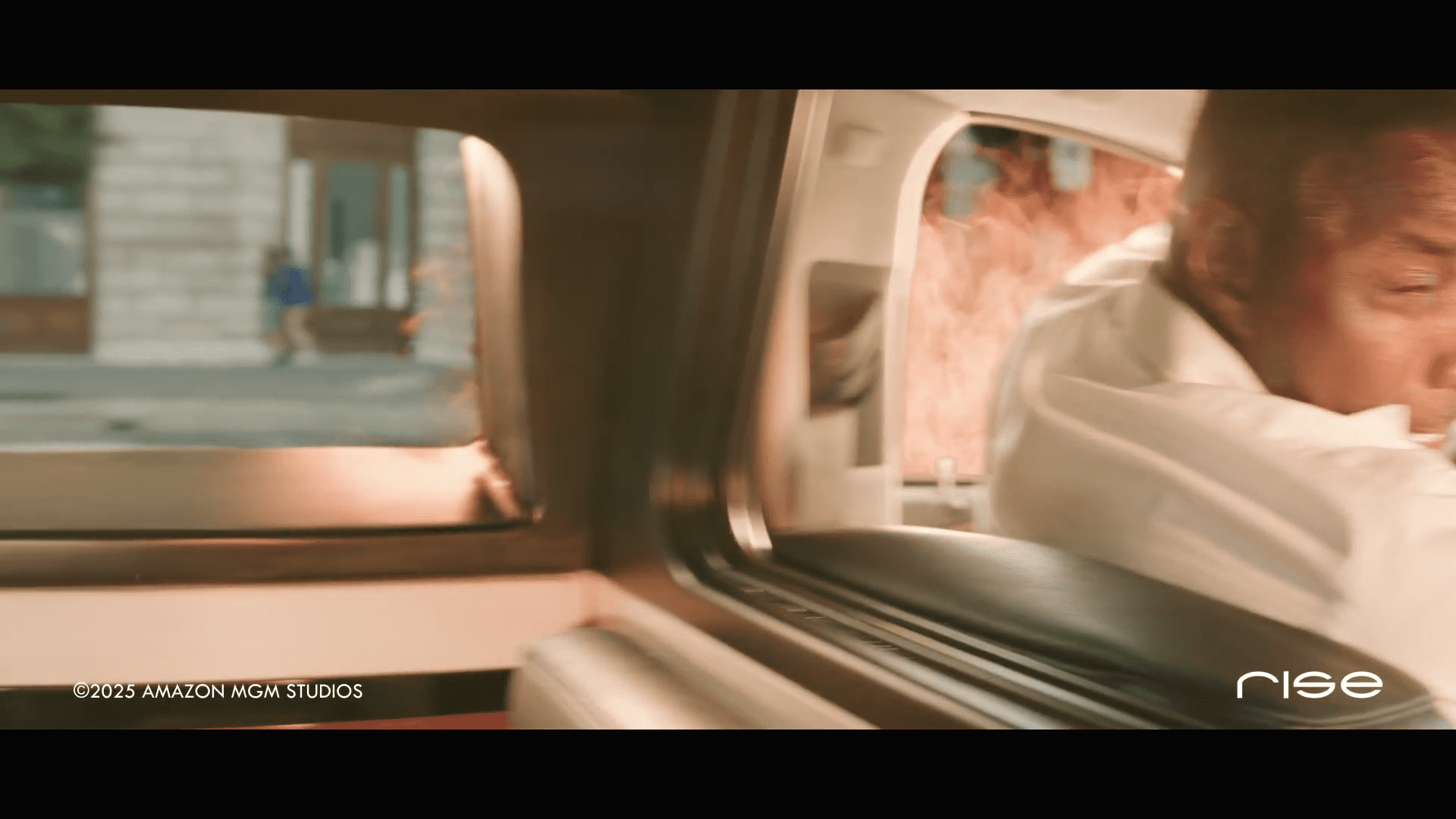

It was quite complex to adjust the position and timing of the explosion and flames to the given camera movement, the car, and the surroundings so that three credible consecutive cuts were created and it ultimately looked like a continuous sequence of events.
Although we started with fairly simple layouts to nail down the timing early on and get it approved, these shots were among the last to be finalized, which doesn’t make them my favorites from a production standpoint, but the way they work together in the end made it worth the effort.
DP: If you could give yourself one piece of advice before starting the project, what would it be?
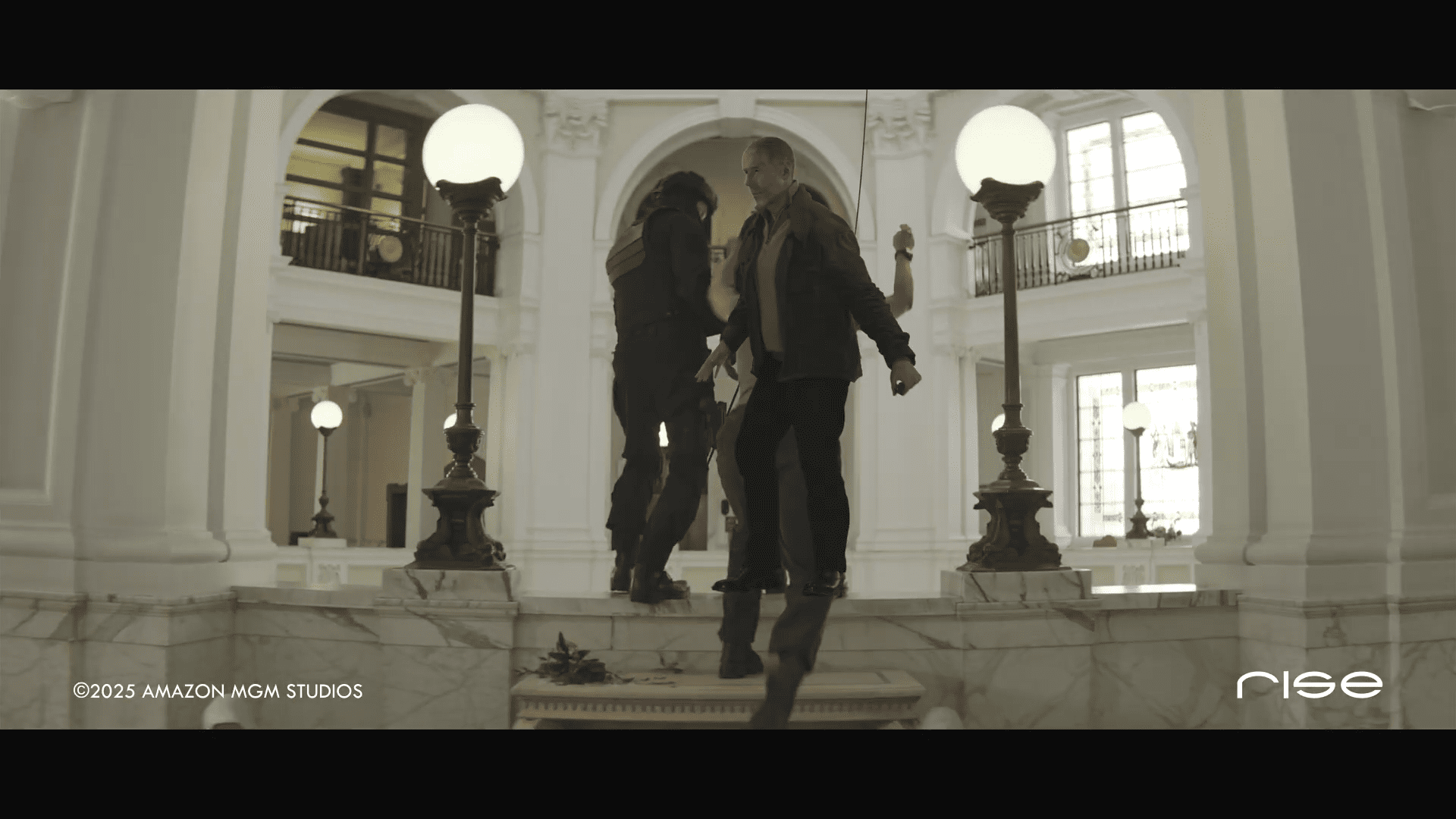
Alex: Never underestimate a face replacement. We had a few scattered around and they were mostly quite painless, but one shot where Priyanka tackles Paddy off of a balcony in Nato took quite a few versions to nail.
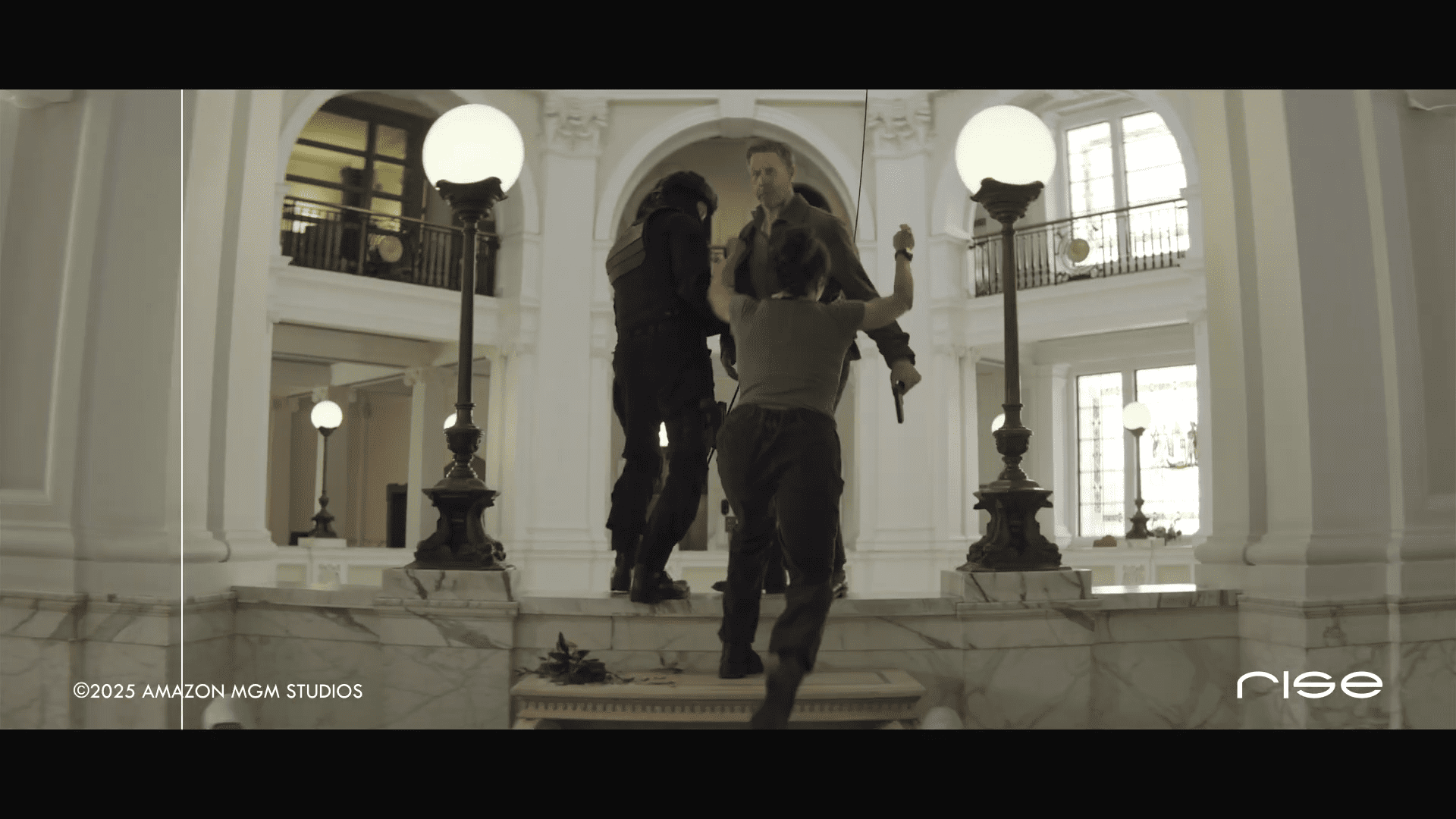
The shot features a stunt double for Paddy, who I assume didn’t want to get thrown from a balcony. The camera shows his face very clearly for the duration of the shot, so we had to ensure we had elements of performance in the work. We were given a donor plate to extract Paddy’s face to use in the action shot, and it got us about 70% of the way there very quickly. However, getting it to 100% proved a challenge.
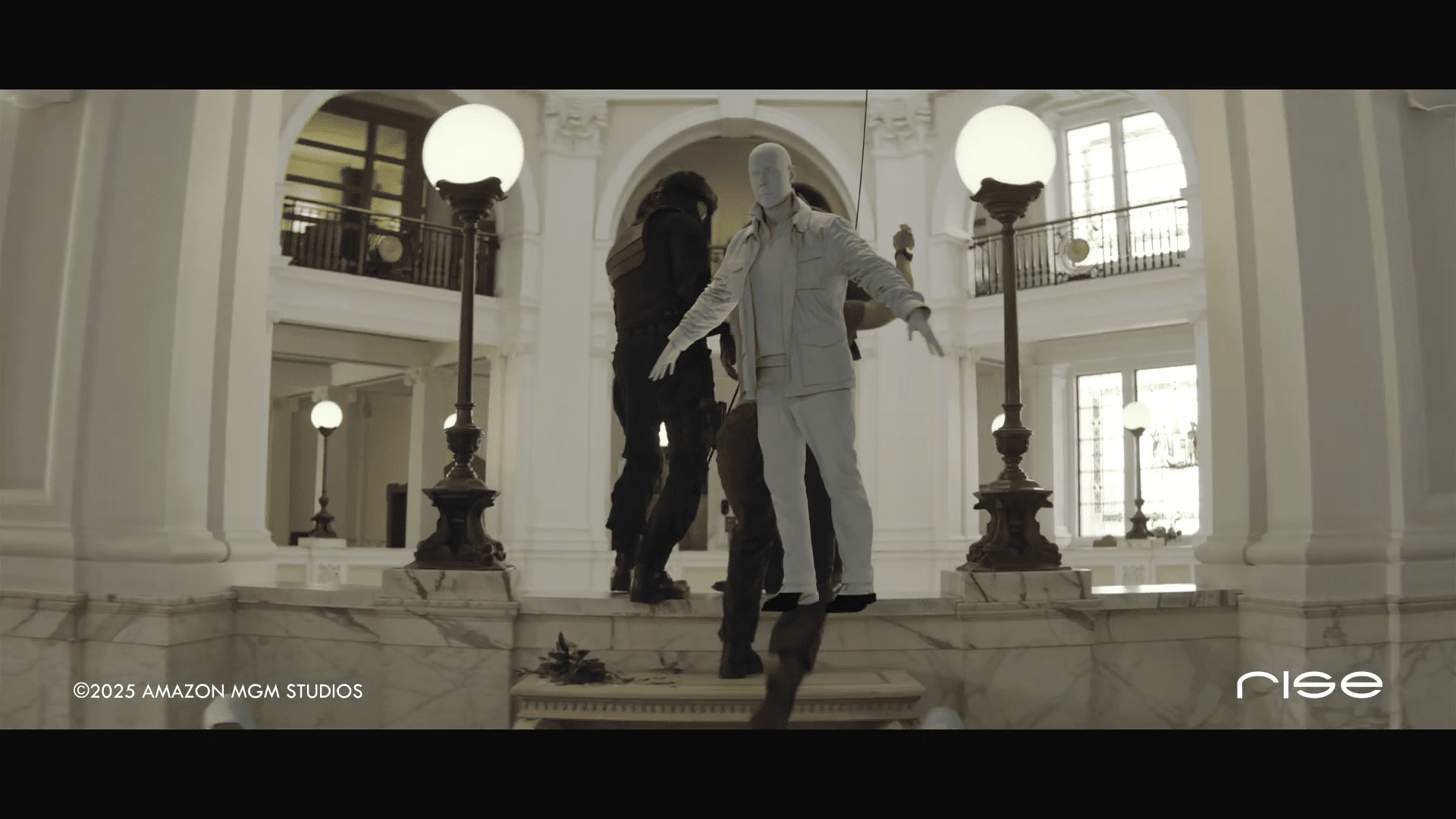
The shape of the stunt performer’s head was just too different from Paddy’s to be able to convince a viewer with a simple face replacement. It would have been great to switch to a full CG digi-double of Paddy for this, but our digi hadn’t been rigged for facial anim, and the budget of the shot would cover that process. In the end we used a 3D render of the digi head to fully replace the plate, and projected the facial performance of Paddy onto the 3D geo in Nuke.
Sebastian: Fast-paced action scenes in long sequences require early planning and must be approved by the client as soon as possible in terms of layout and timing for all tasks so that everything is ready on time.
Although we knew this from the beginning, many approvals depend on the edit, and we could probably have made final decisions earlier and with less stress if we had carried out a more comprehensive and quickly editable post-visualization here.


DP: What are you working on now – are there new technologies or workflows making their way into your pipeline?
Alex: I have been testing a volume based approach for rendering trees that is very promising. Generally speaking, trees are always a pain to render because the sub-pixel geometry results in noisy renders, and the normal solution is just more samples. The approach I am testing is giving me good results with lower samples, and has a very organic look to it.
