



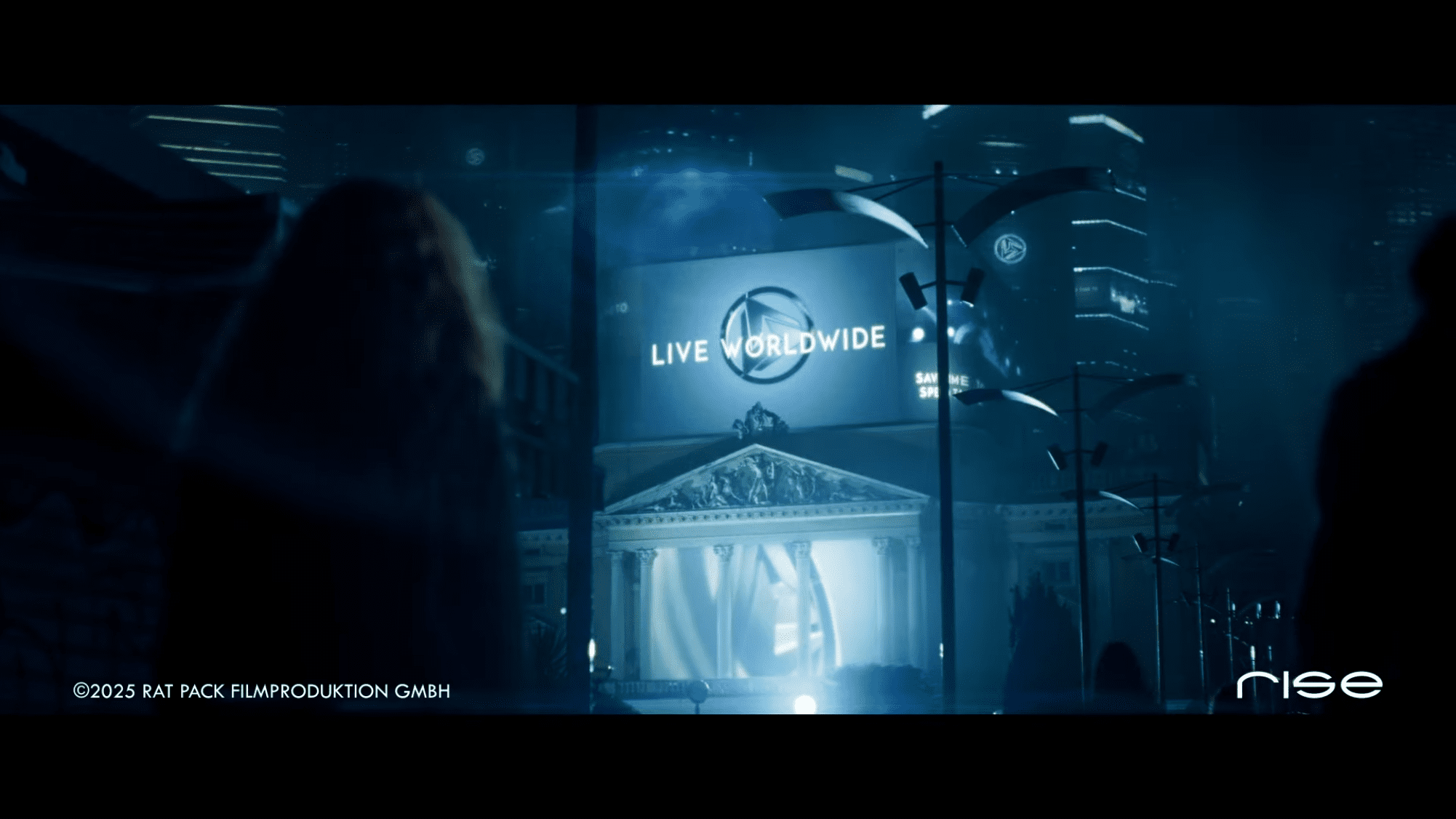
For Momo (2025), director Christian Ditter, Ratpack Film Production and RiseFX took on the challenge of reimagining Michael Ende’s timeless tale for a new generation — without losing its quiet melancholy or handmade charm. Based on the 1973 novel and following in the shadow of the 1986 adaptation, Momo centres on an orphan girl who must battle the soulless Men in Grey, who stealthily take over her city and steal time.
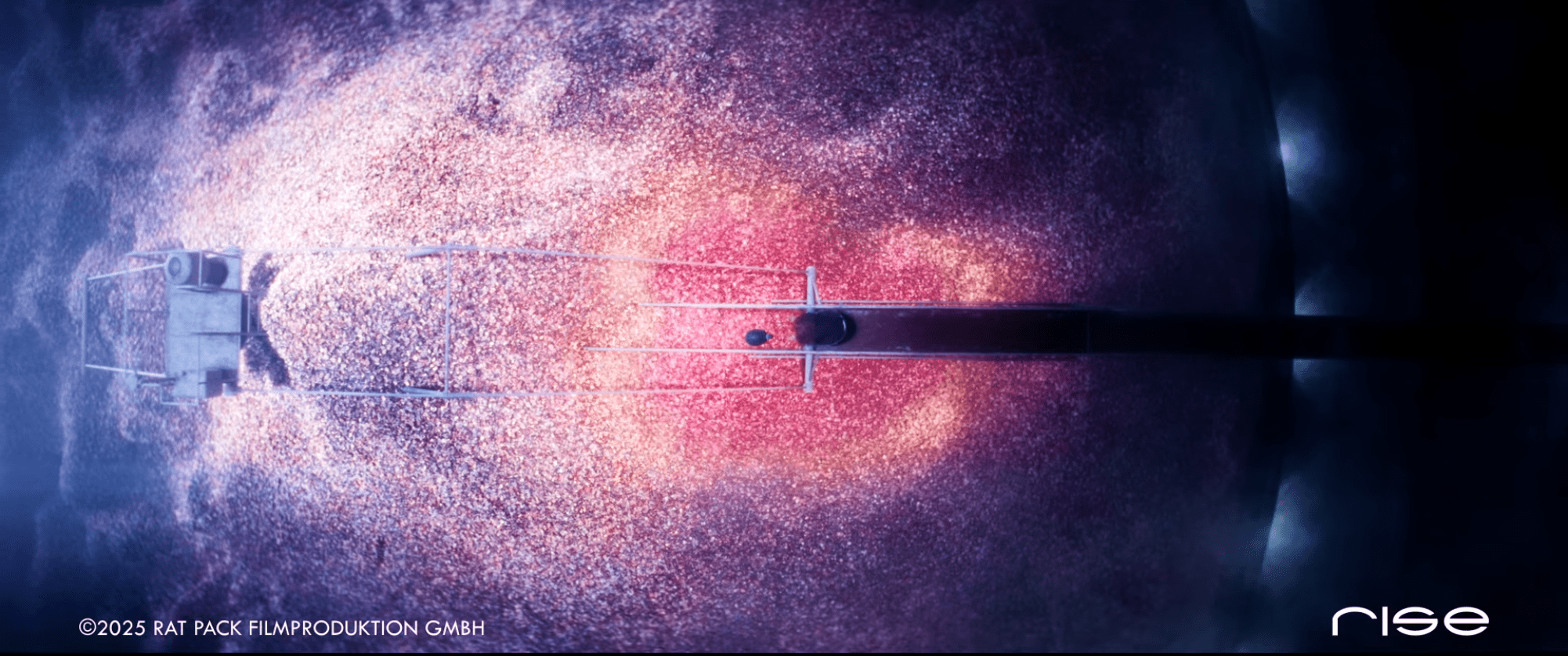

Michael Wortmann, who worked on films such as Rise of the Planet of the Apes (2011), Star Trek Into Darkness (2013), and Black Panther (2018) and Red One (2024) brings Hollywood scale experience to Momo. As VFX Supervisor at RiseFX, he led the team through a 16-month production cycle, delivering more than 280 shots with a crew of roughly 50 artists – merging blockbuster techniques with a grounded, naturalistic aesthetic in this German production.
Creative Directions
DP: How jarring was it to go from the adrenaline-soaked action comedy Red One to the timeless, melancholic world of Momo?
Michael Wortmann: Well, these two movies might not seem to be much alike on the first look but if you think about it they do have a lot in common. Both movies address a wide audience, they fall into the genre fantasy and they both deal with the timeless topic of who we spend time with. The surreal set extensions are a fantasy but keeping a lot of things grounded in the real world is key to make the story relatable to the viewer.


DP: Momo comes with serious nostalgia baggage, both from the book and the 1986 movie. How much of that legacy influenced your take? And how did you decide what to preserve, what to reinvent, and what to toss out with the Men in Grey’s cigars?
Michael Wortmann: The goal was clear from the beginning: we are not doing a remake, we really want to upgrade Momo and make a 2025 version of it. So this was not about nostalgica but really updating all the elements of the story to make them relatable to a new generation that didn’t grow up with the old movie. So dolls became Bibibots, cigars became inhalers, there’s grey women now and so on. Still, we tried not to lean into science fiction too much because essentially Momo is a tale. Director Christian Ditter had all these wonderful ideas when he wrote the script and this really translated into the design of the film.
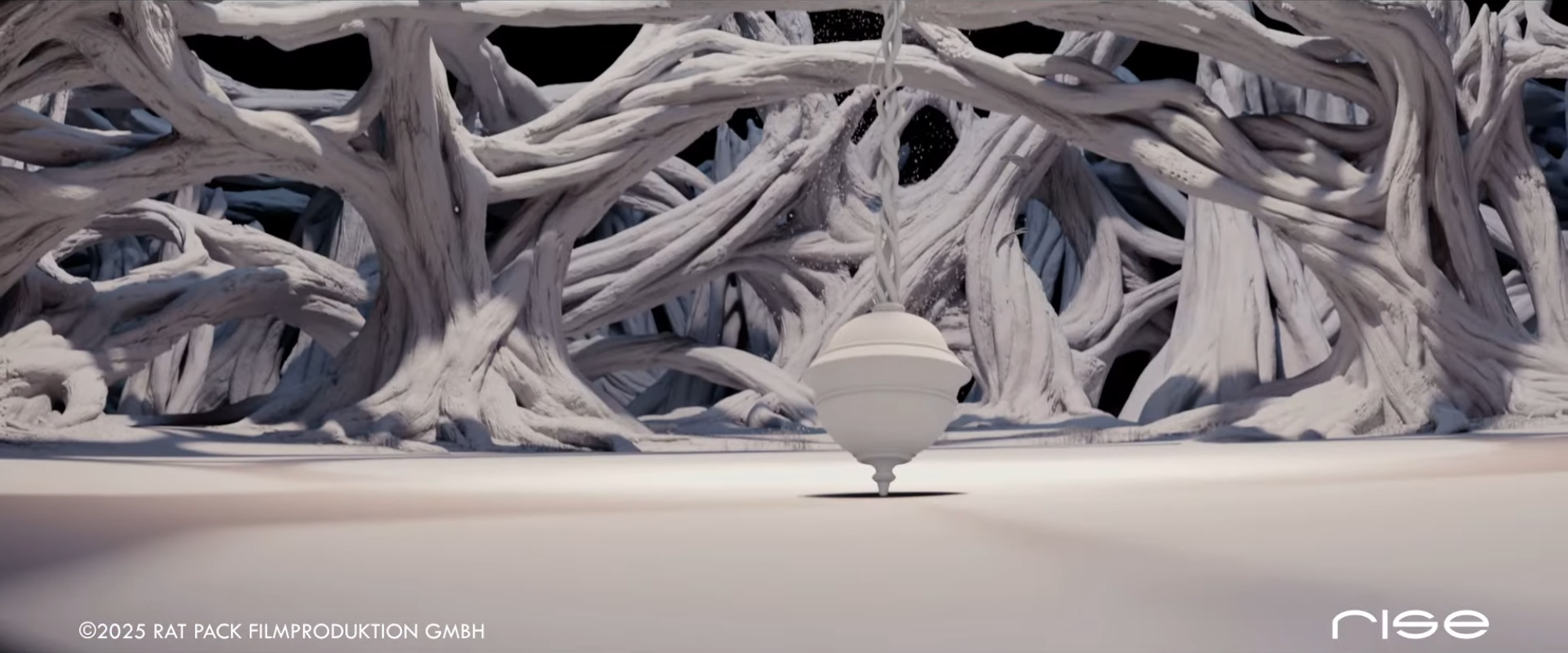
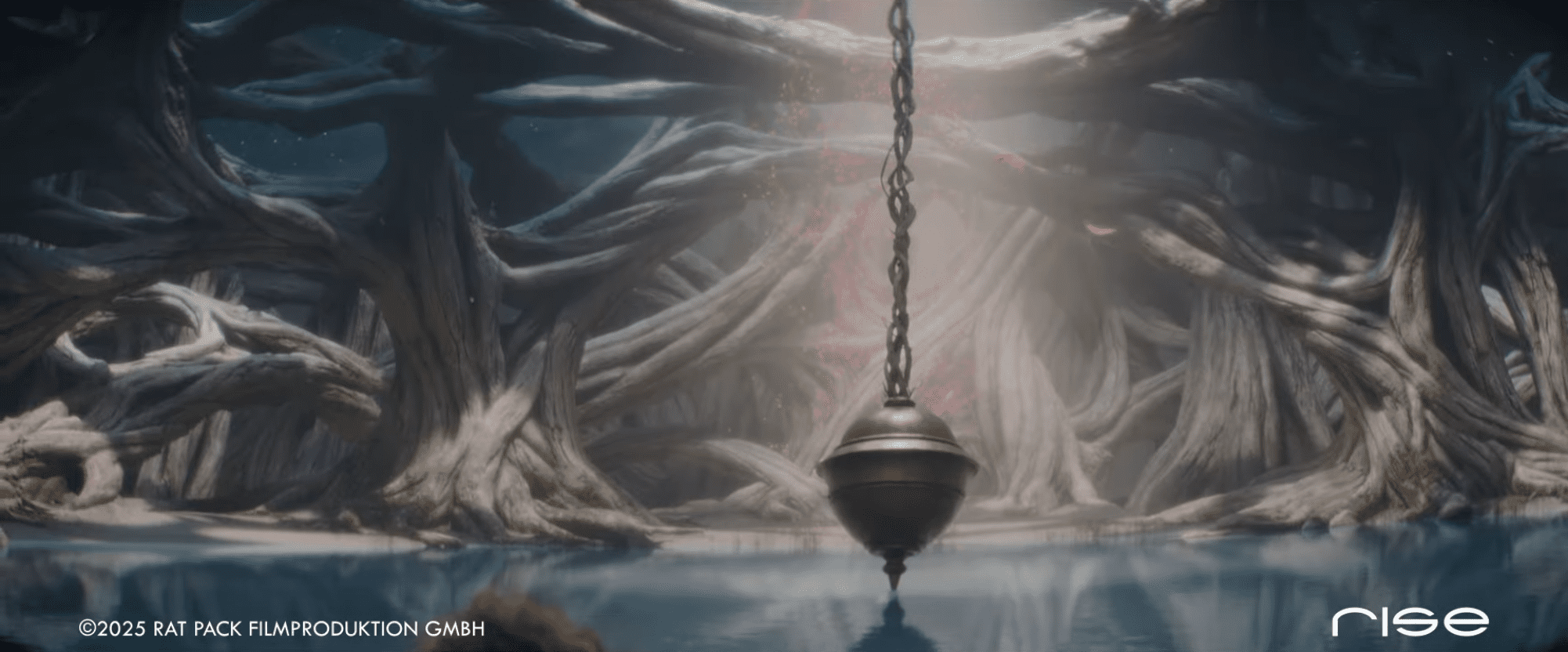
DP: The realm of the Men in Grey and the Source of Time are gorgeous, especially that giant pendulum over the water. How did those concepts evolve visually? How many iterations did they go through before locking in the final design?
Michael Wortmann: The golden dome is one of the pivotal moments in the book and the movie as well. It took a while to figure it out and there were a lot of options discussed. The description in the original book was a cave like place so we started looking into actual caves in Croatia.
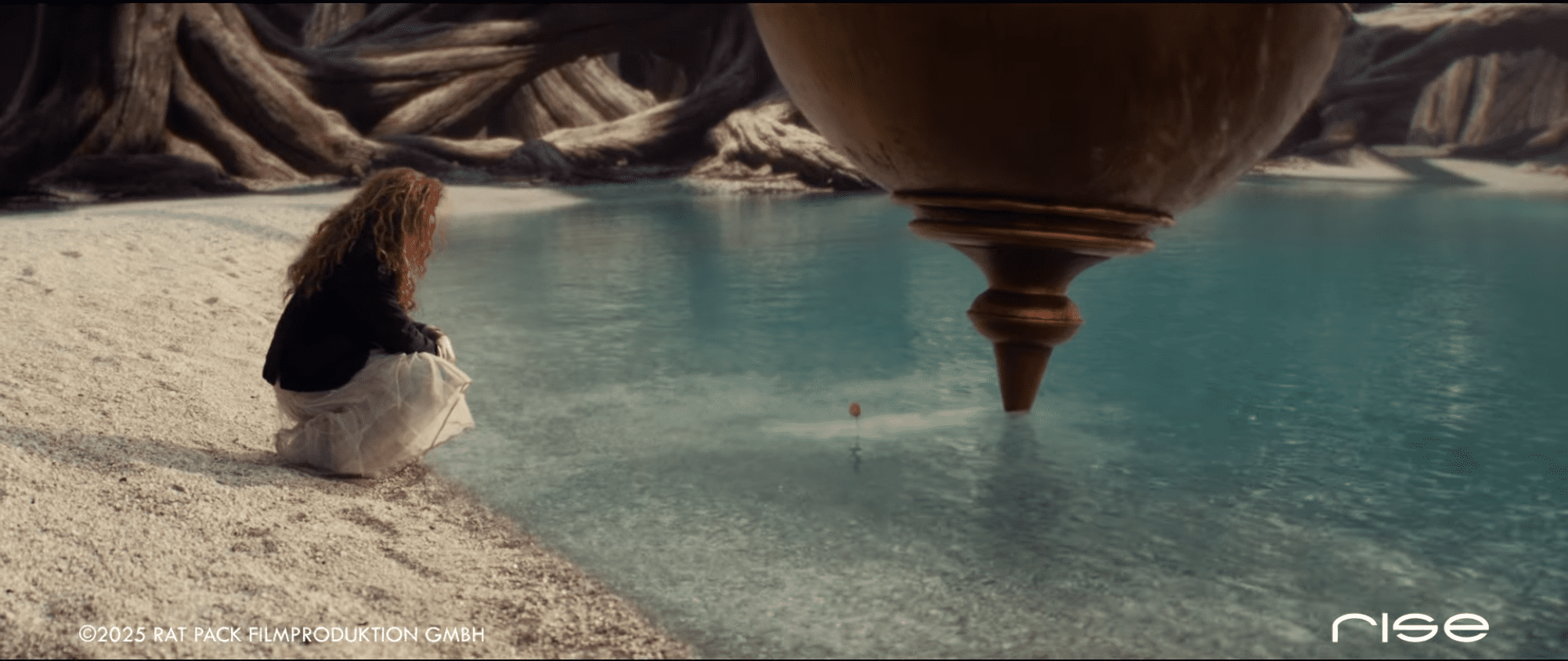
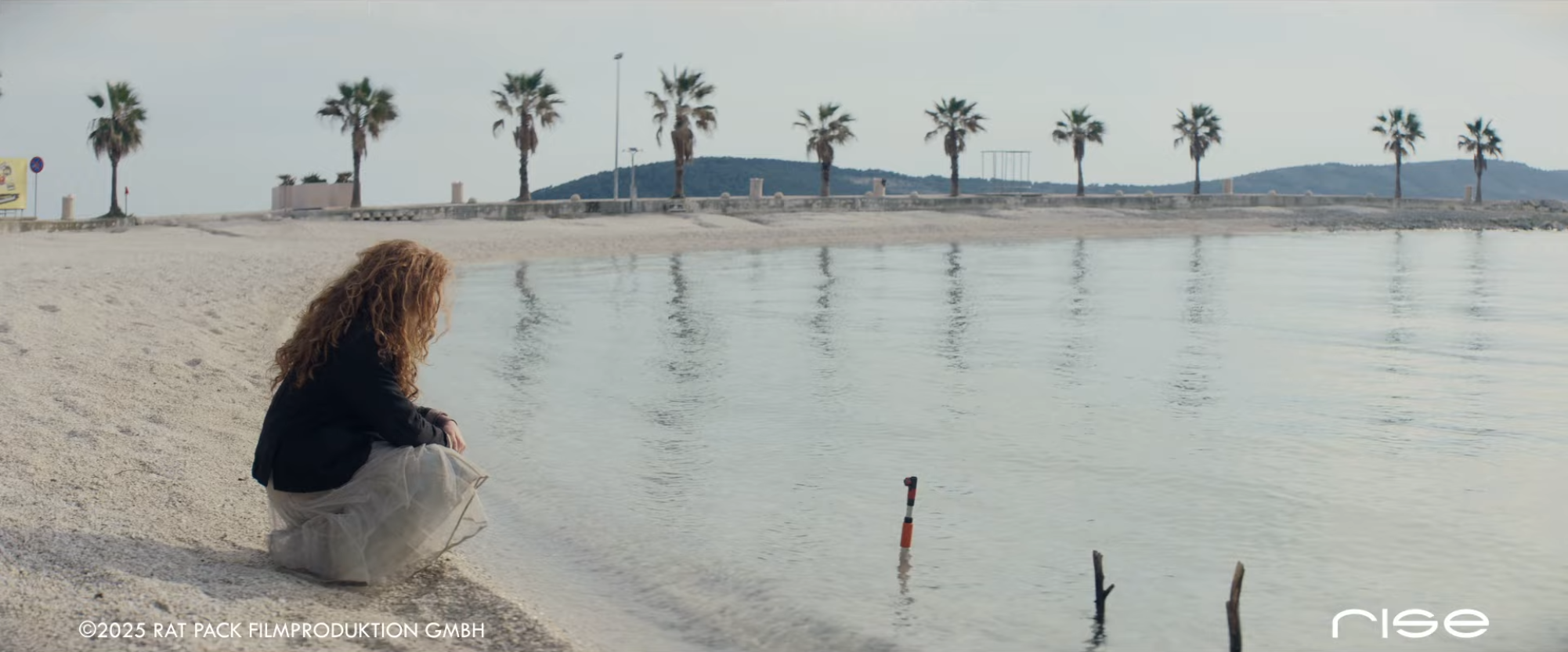
During preproduction it became obvious that we wouldn’t be able to make a cave shoot happening so we got creative about it. We discussed all kinds of ideas, minimalistic approaches like a black void just shoing a water surface with Momo and the flower of the hour. We also discussed shooting in an LED Stage but we felt this is not the right approach for our movie. Momo is essentially shot entirely on location so we were worried that LED stage shots would look unnatural.
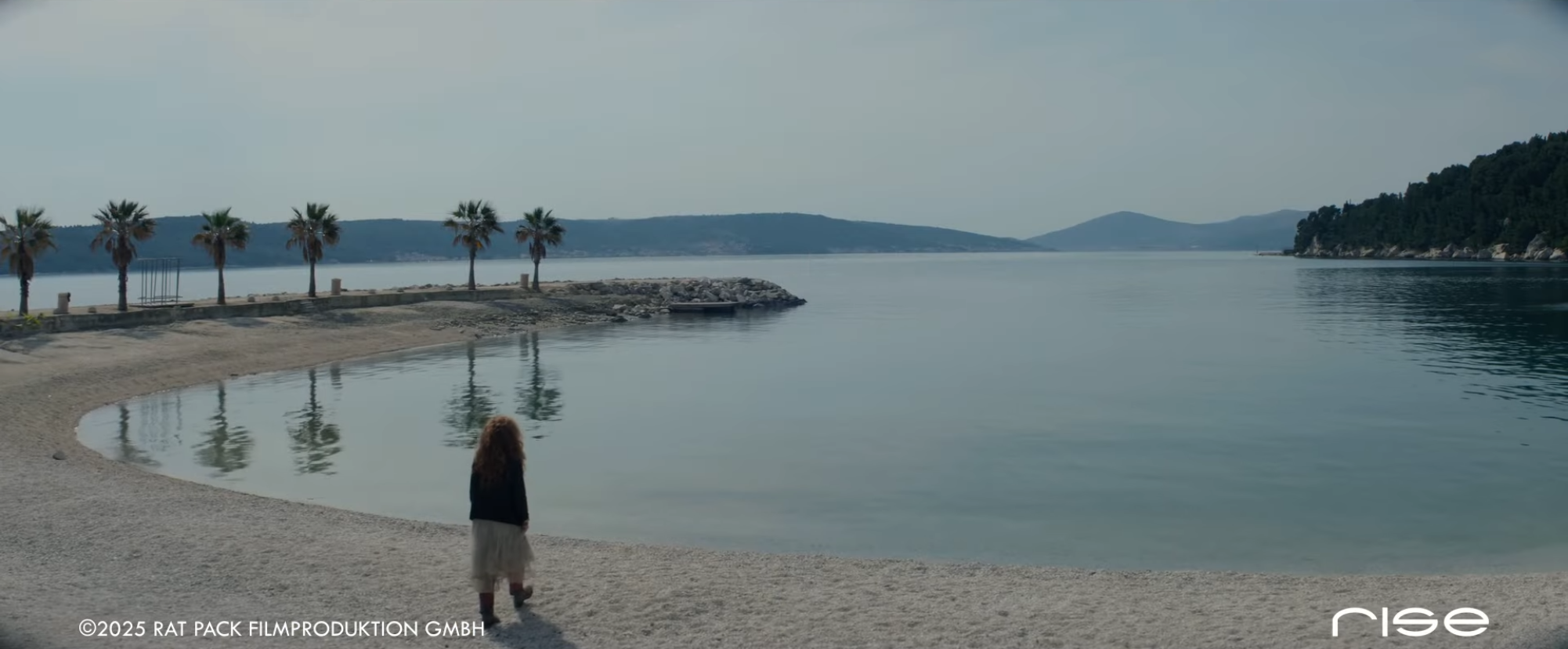
So on one weekend, while we were still shooting our director went to a beach in Split and found that little half moon shaped bay – and we all knew this is the place! So we started developing concepts which developed a bit over time. We started with antique ruins but ended up with a more naturalistic design reelected in a dome made from driftwood as our director felt that this place needed to be more organic. We worked closely with concept artist Francesco Corvino who depicted style frames for this environment.



DP: How much of the final look was premeditated versus discovered? Were there moments where someone said, “Wait, this actually looks better upside down,” and you just rolled with it?
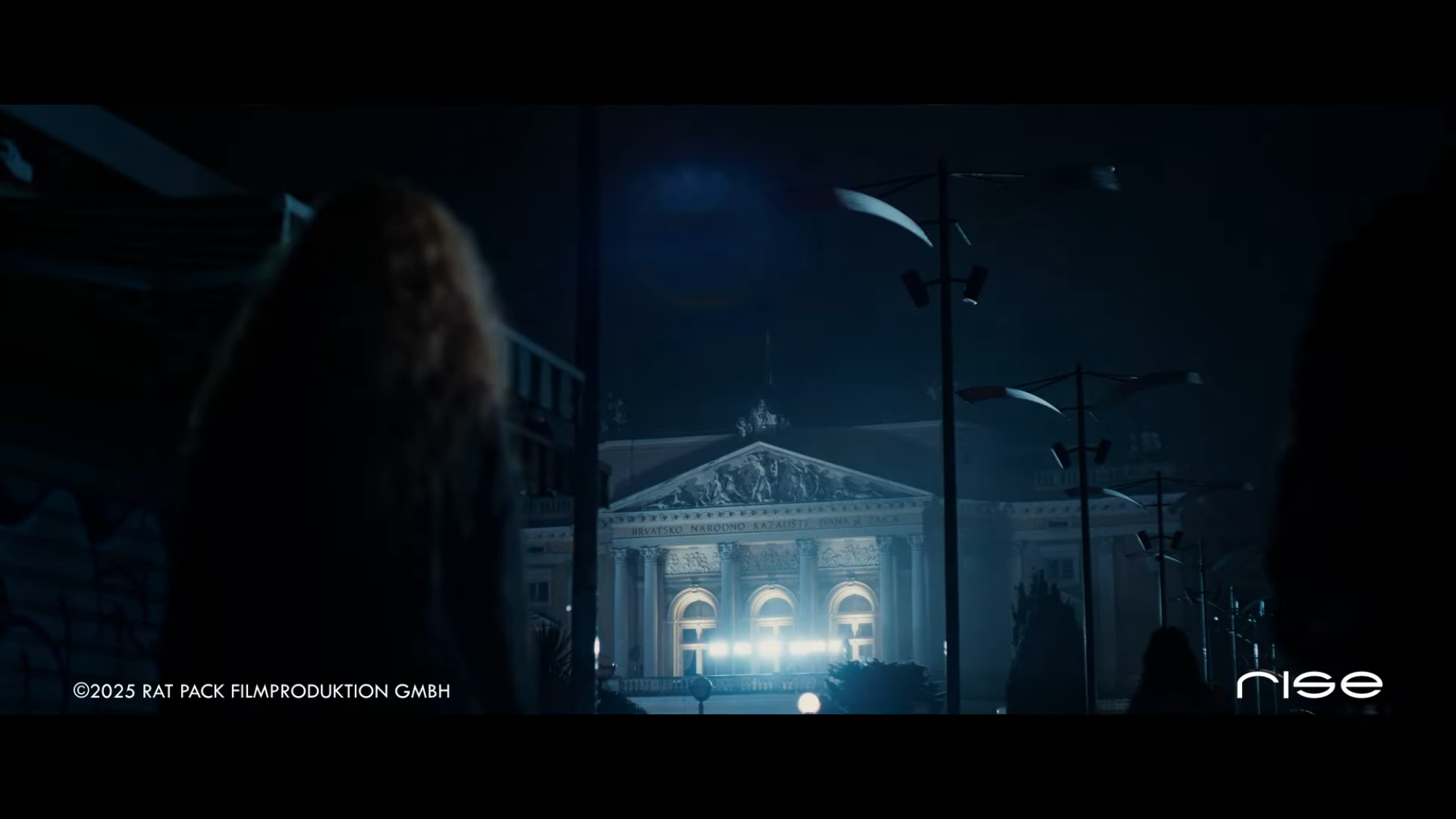
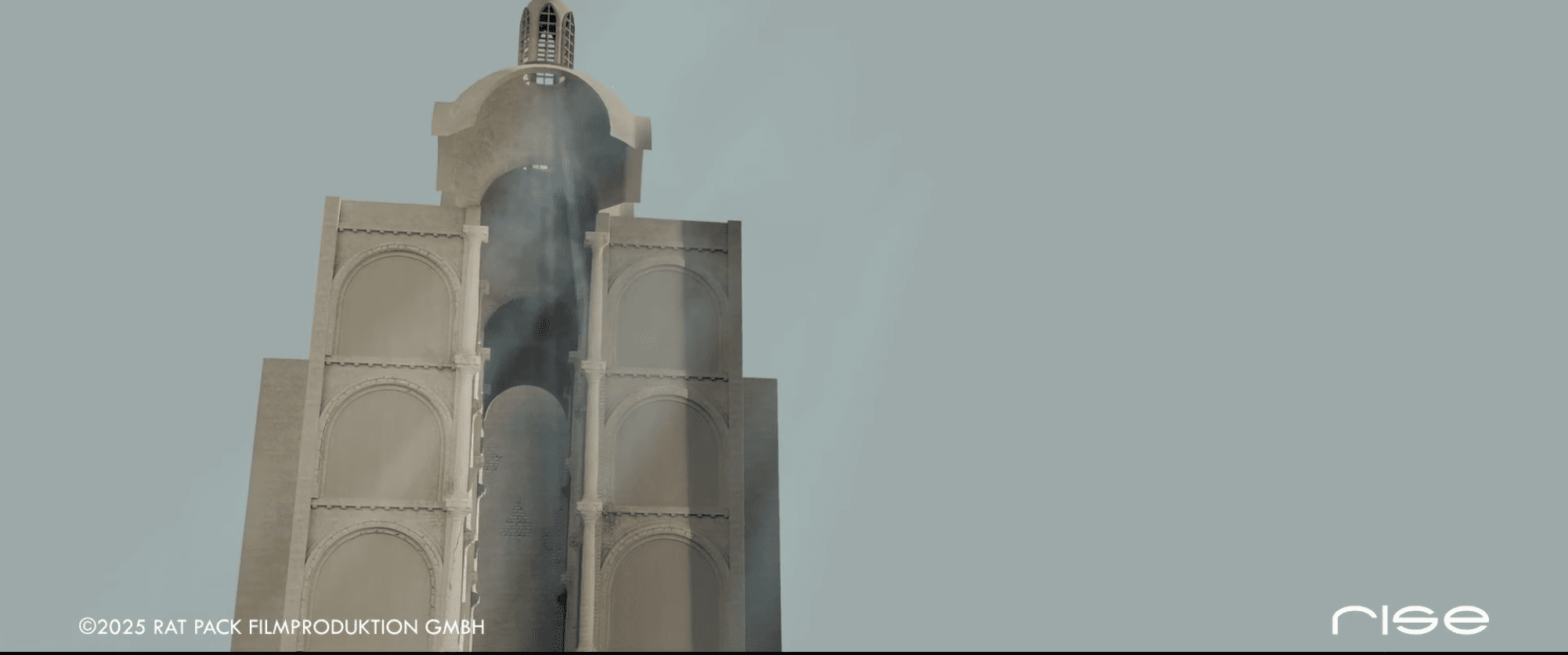
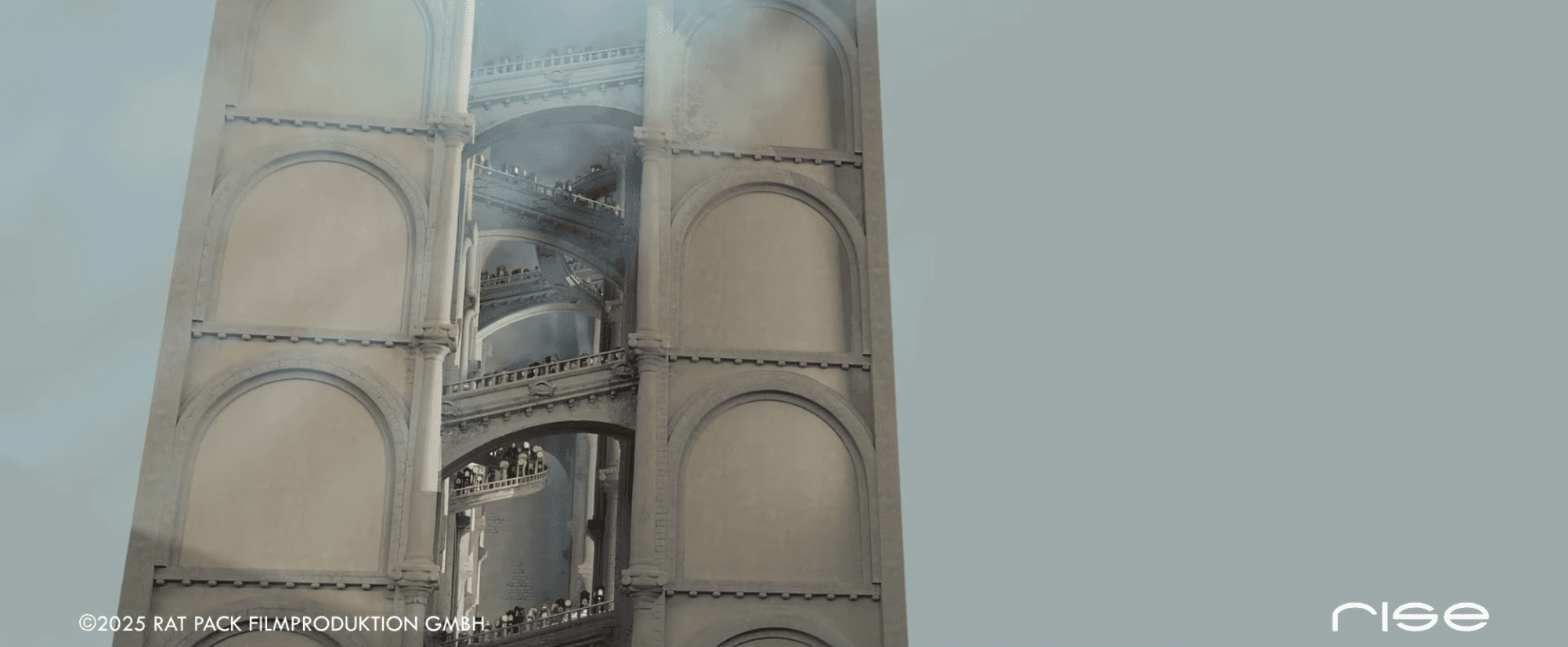
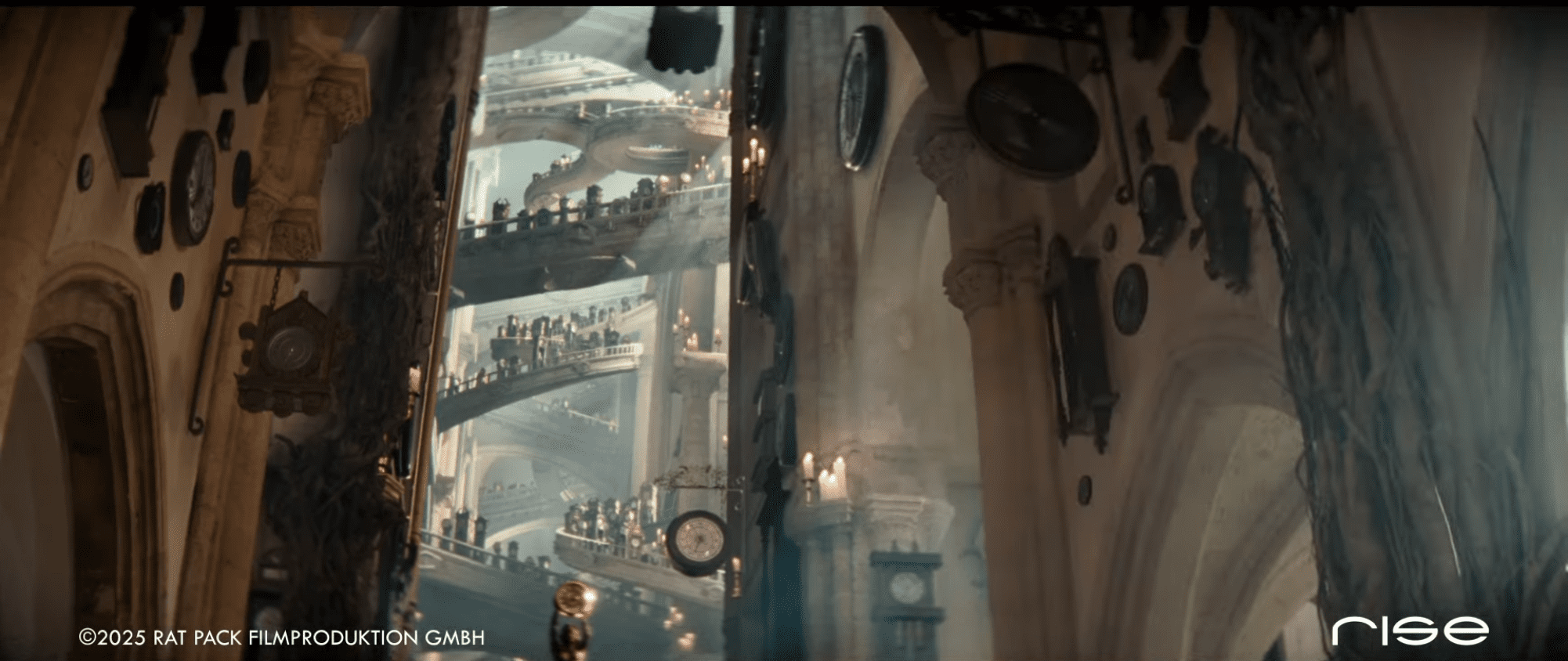
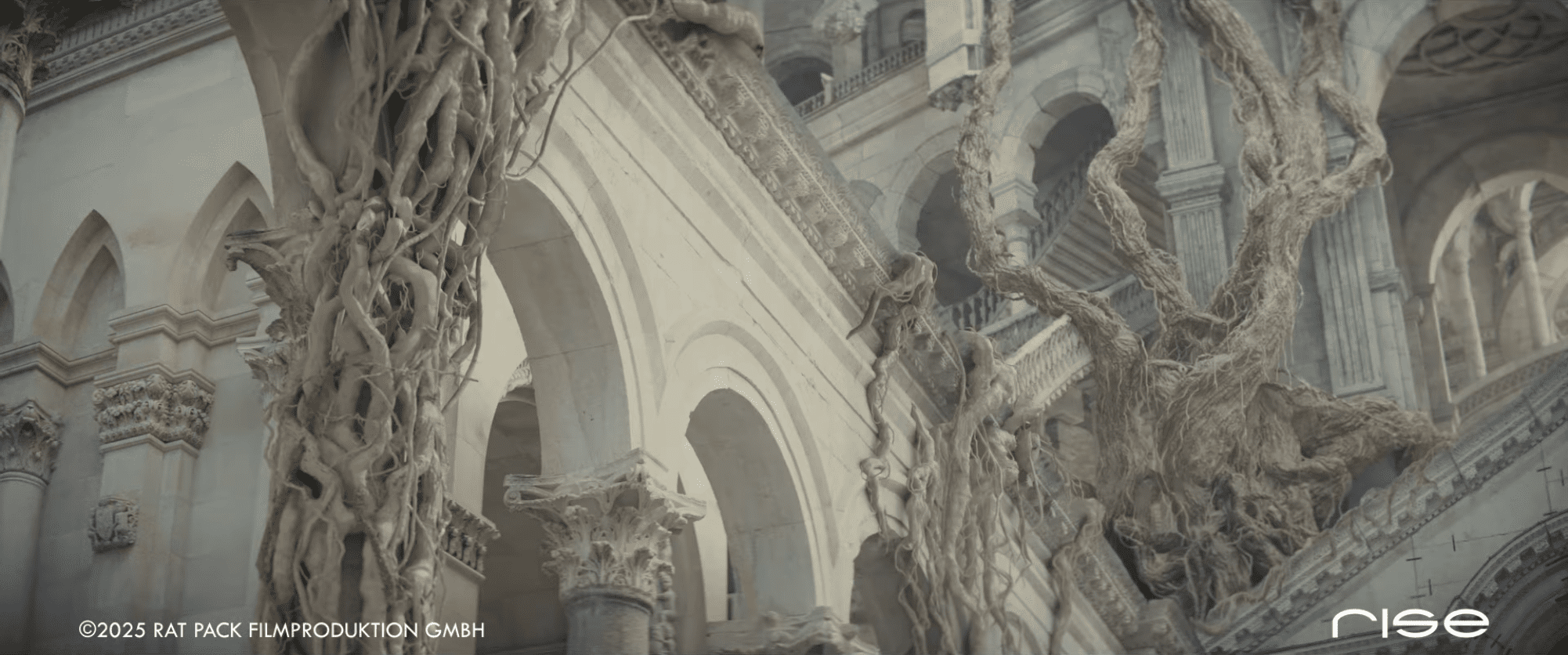
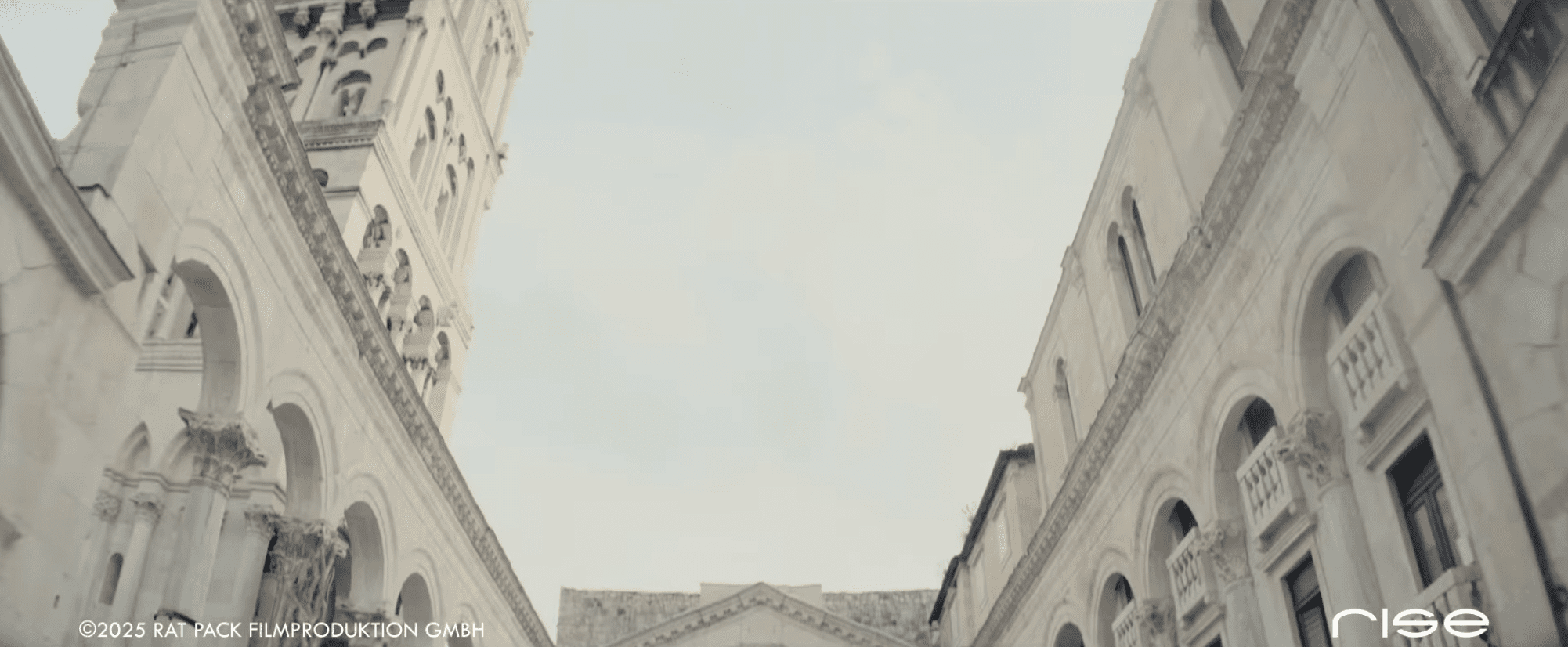
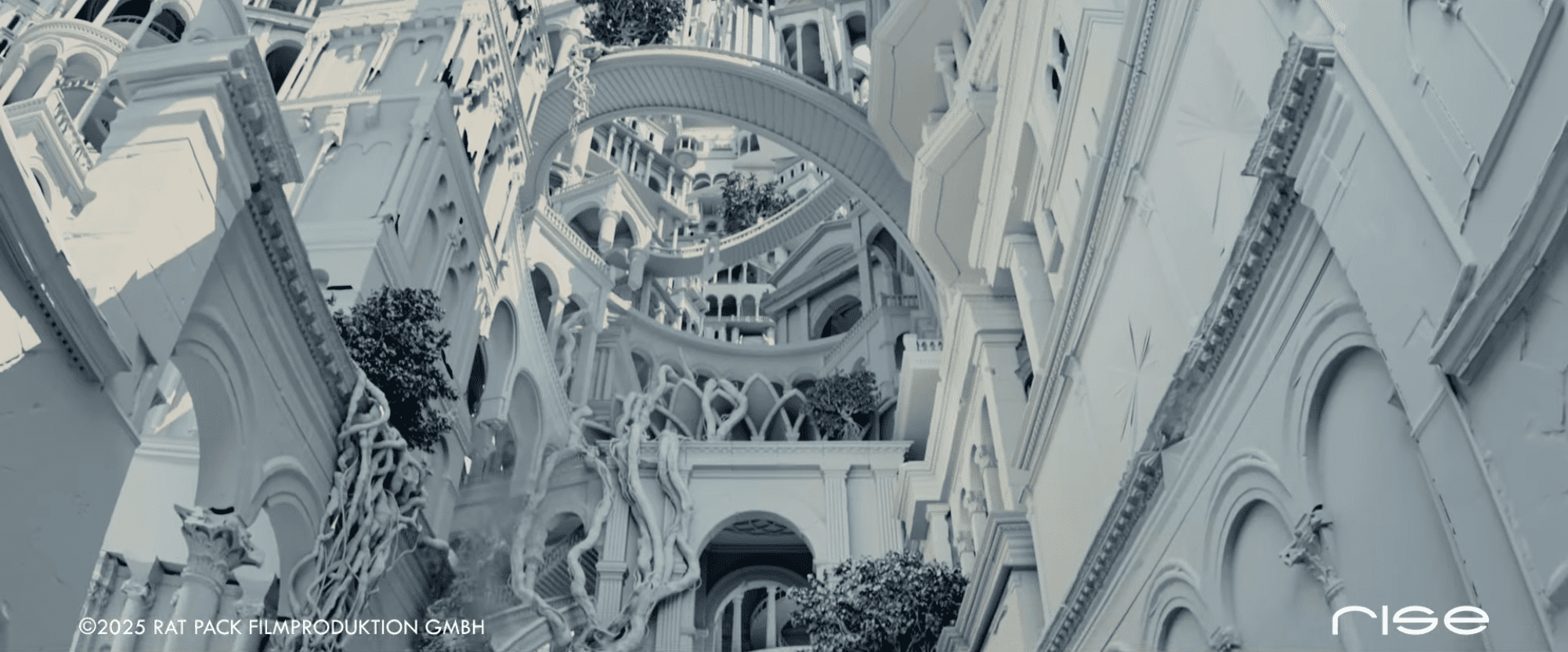
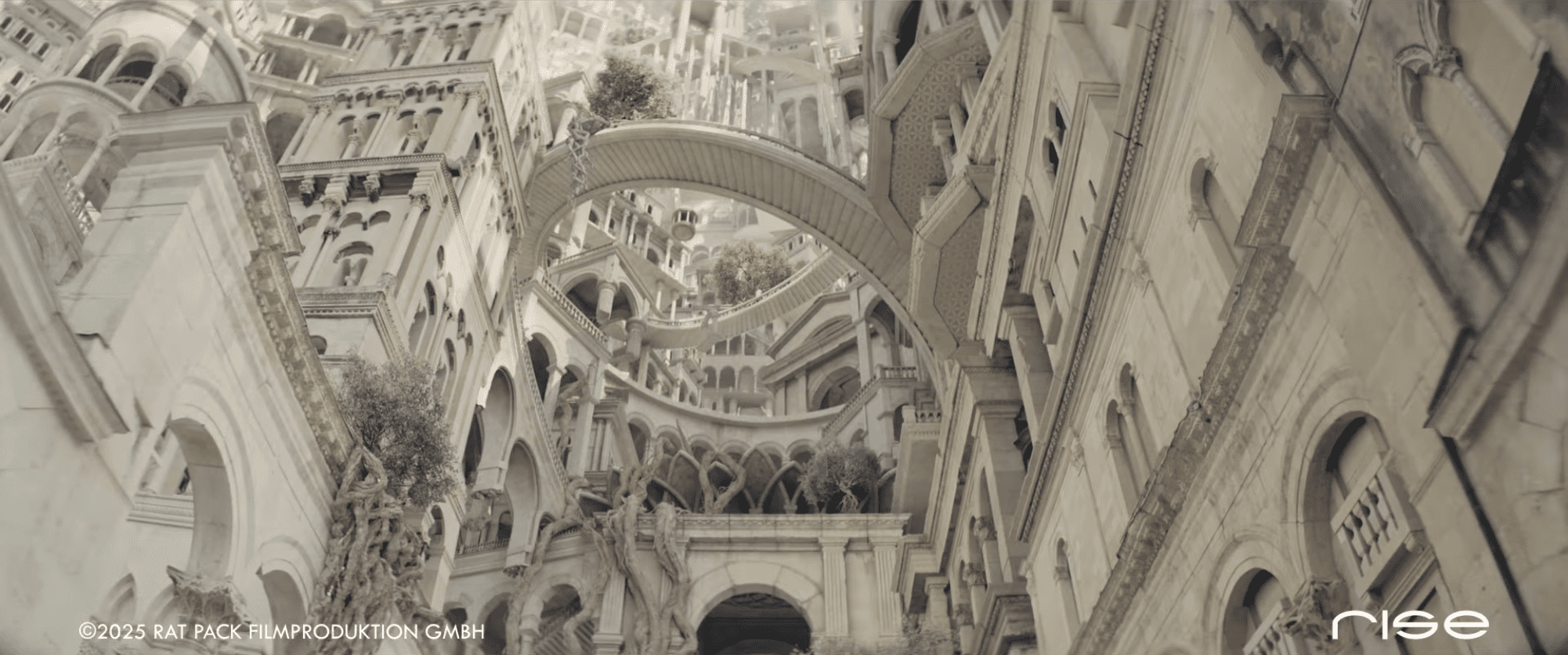
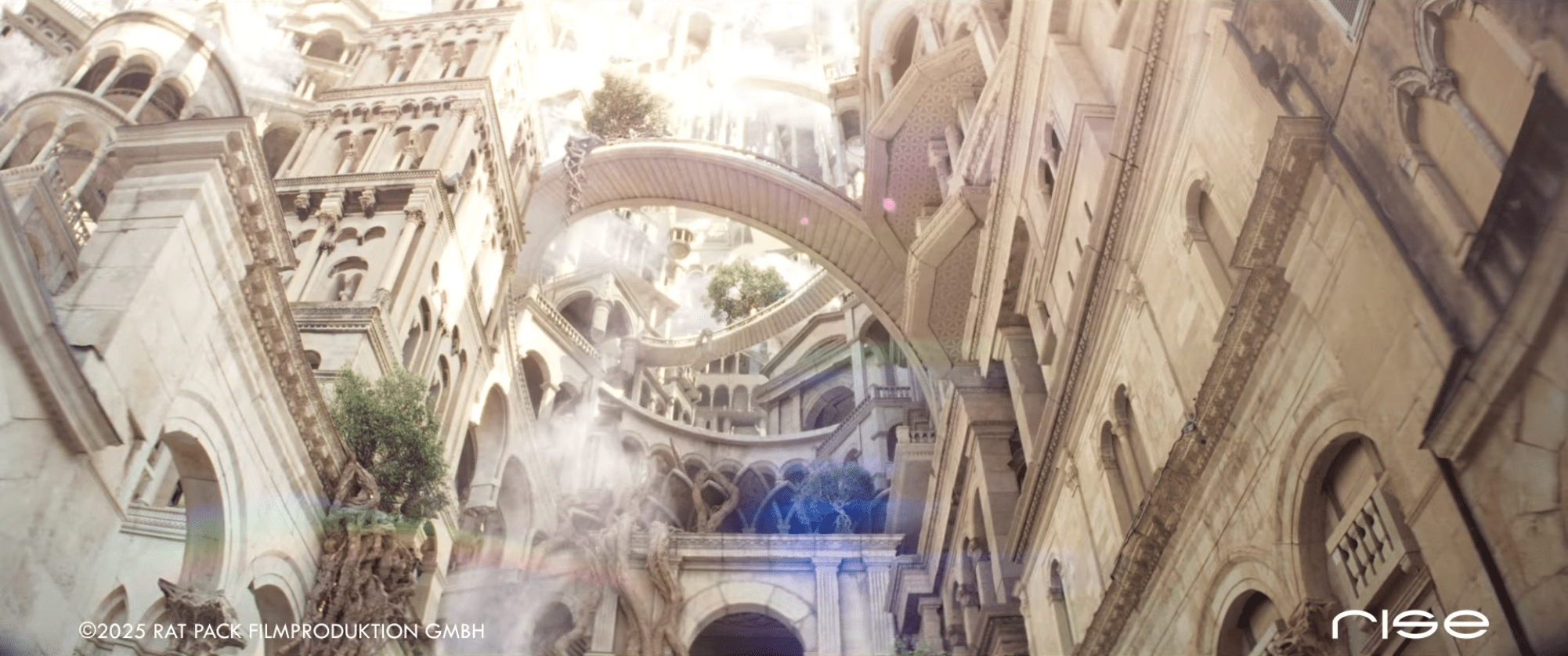
Michael Wortmann: We tried to plan as much as we could but on the visual effects side we had to develop some things to make things look really appealing. For example in the Neverlane we were facing problems because the whole set and the set extension were sandstone color. So we started introduce lensflares which were artificially rgb colored so they resemble rainbow colors. They weren’t the true look of the lenses we used but they helped a lot in making the shots not look monochromatic.


DP: Momo has this delicate balance of realism and magic and it never tips too far into fantasy. Was there a guiding visual rulebook or “Momo physics” that defined what could exist in that world?
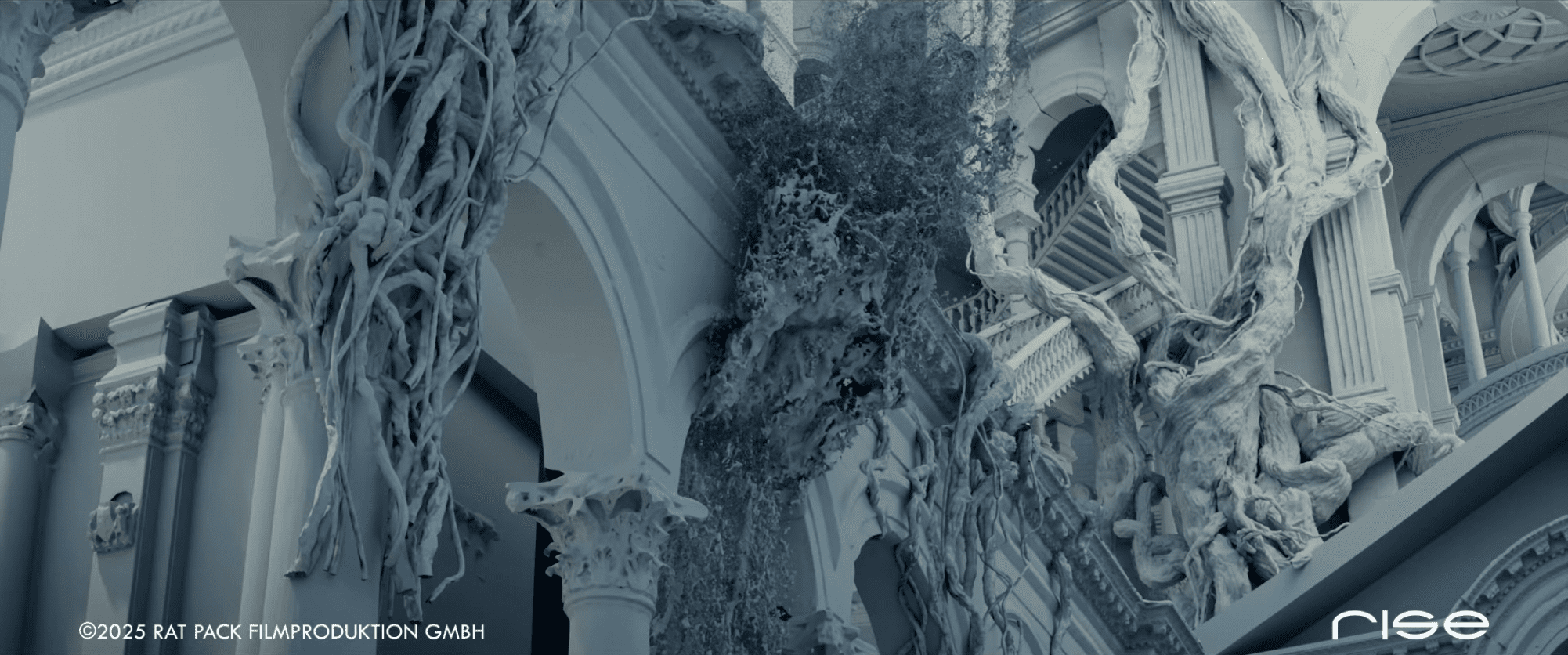
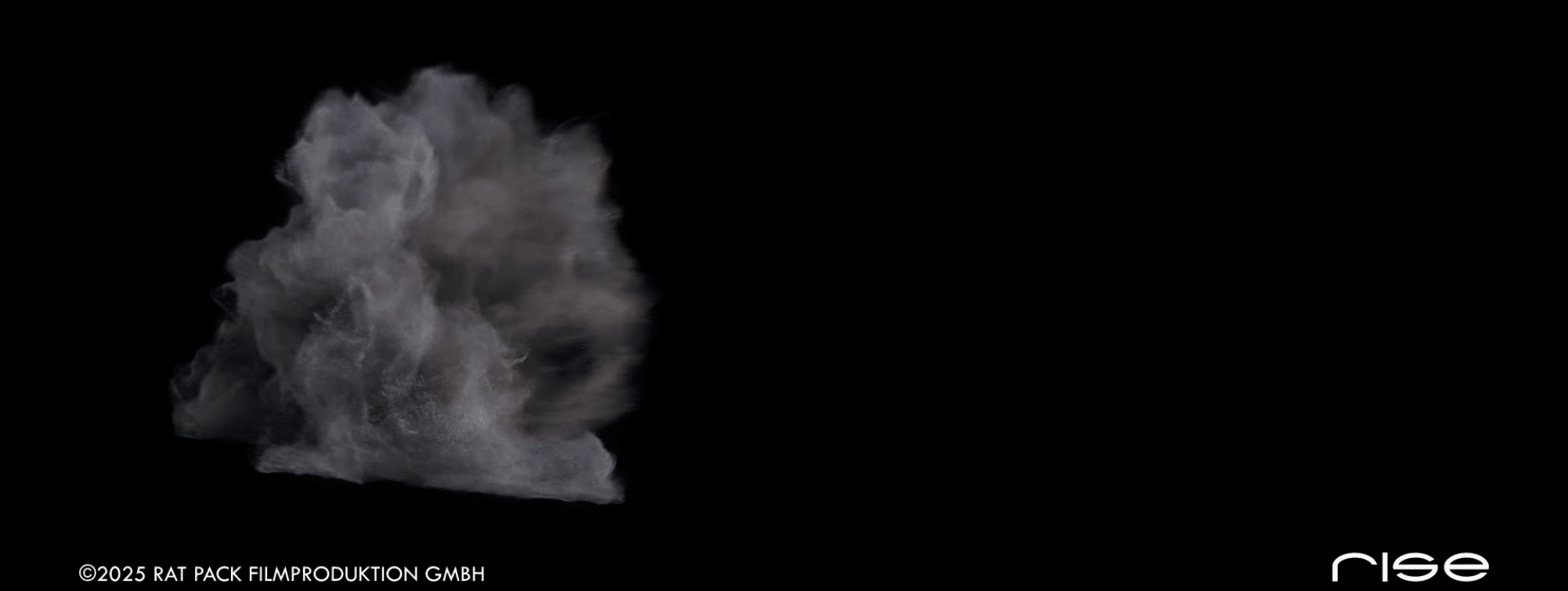
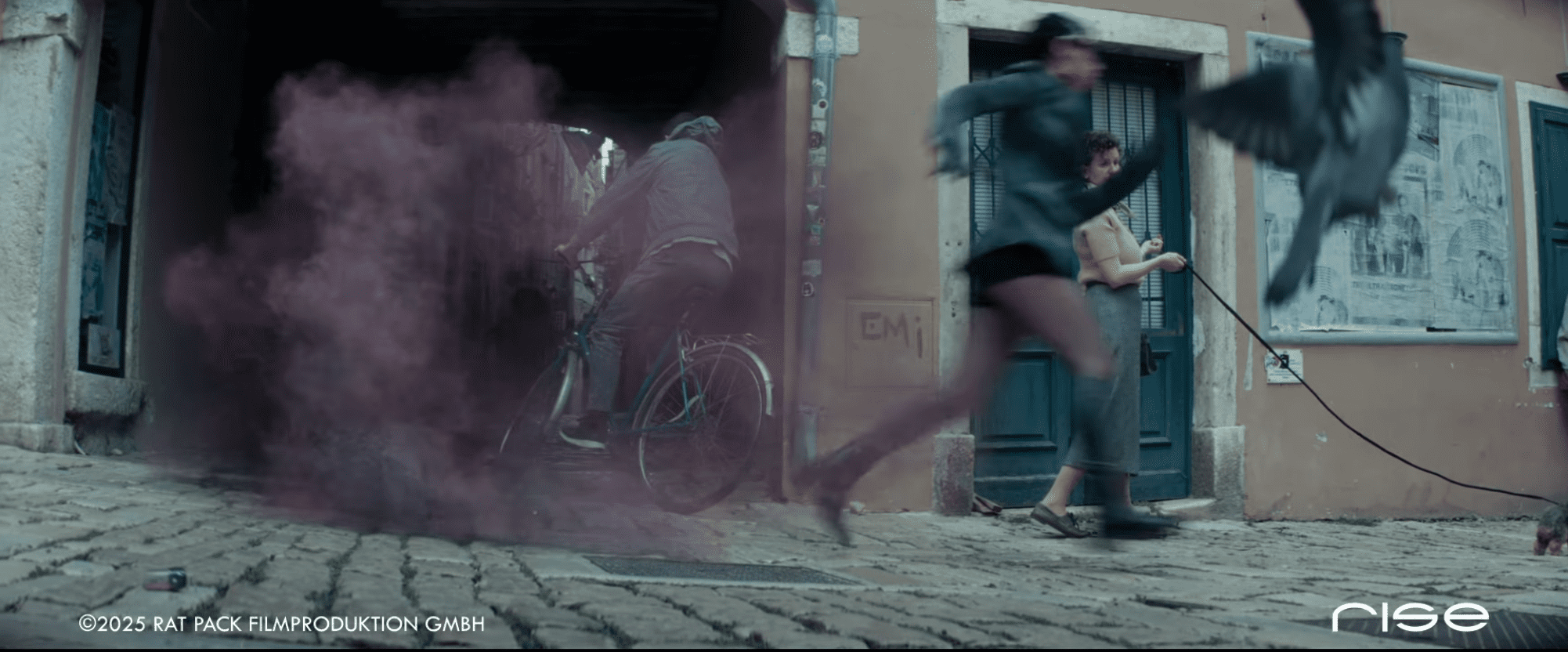
Michael Wortmann: We agreed with the director that anything in our Momo world is grounded in reality. Time being frozen is a thing, it is something we can show without being non-physical. Even the dissolves of the greys are based on their colors, non-gravity and the pink color of the flour of the hour – they come across like fairy dust but in essence they are organic and real in terms of the story.



DP: In terms of look development, what role did RiseFX play in setting the tone?
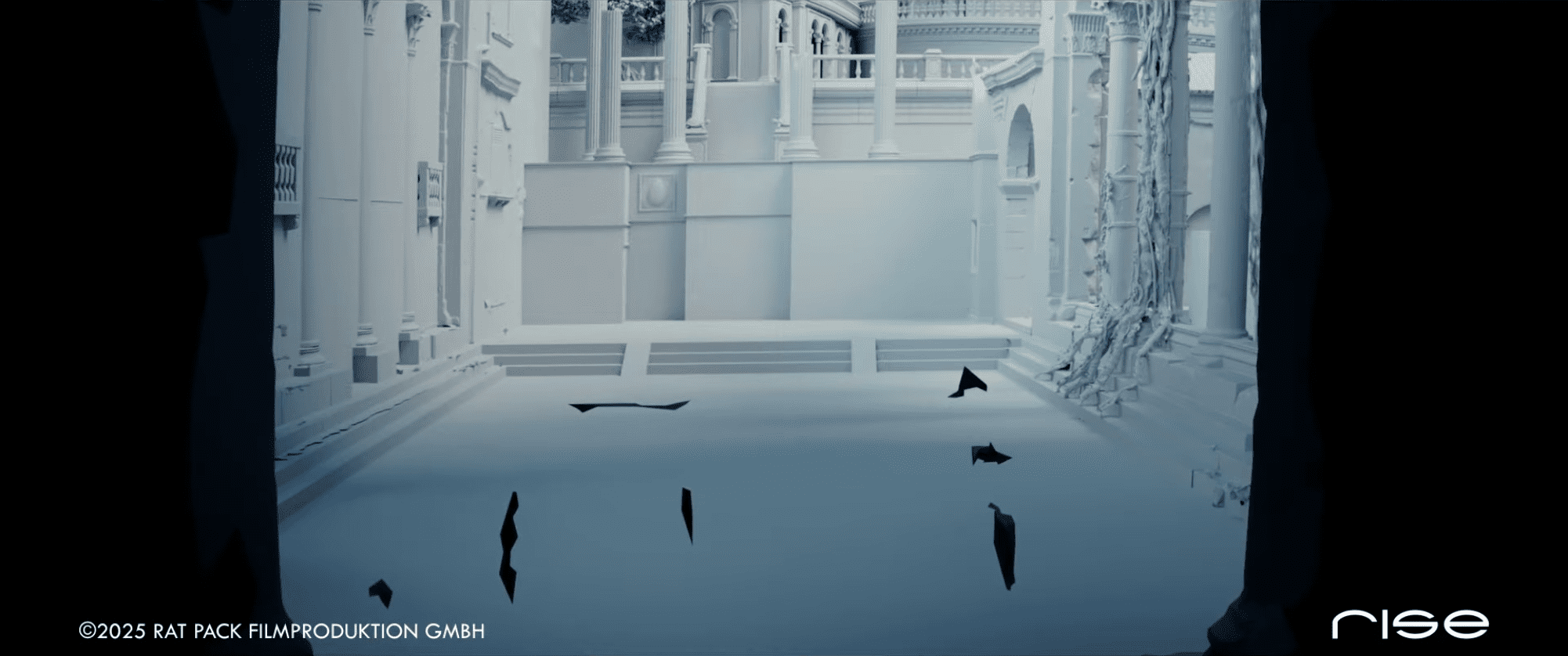
Michael Wortmann: There was a little concept art that was done before we shot the movie and then we had Francesco working on concepts together with the director after the shoot. But there were still a lot of things left for us to figure out so we did a lot of design work on this one. The look through Momo’s glasses, the design of the future city, the Neverlane set extensions, the time vault and the screen during the judgement scene, just to name a few.


Technical & Pipeline
DP: Let’s talk about scale. When did Rise actually start on Momo? How long did production run, how many artists were involved, and roughly how many shots were completed?
Michael Wortmann: We started on Momo in January 2025 and we finished in May 2026, so it was a long one. I think we had a crew of 50 artists working on our show over time and we completed 280 shots, which is the majority of work.
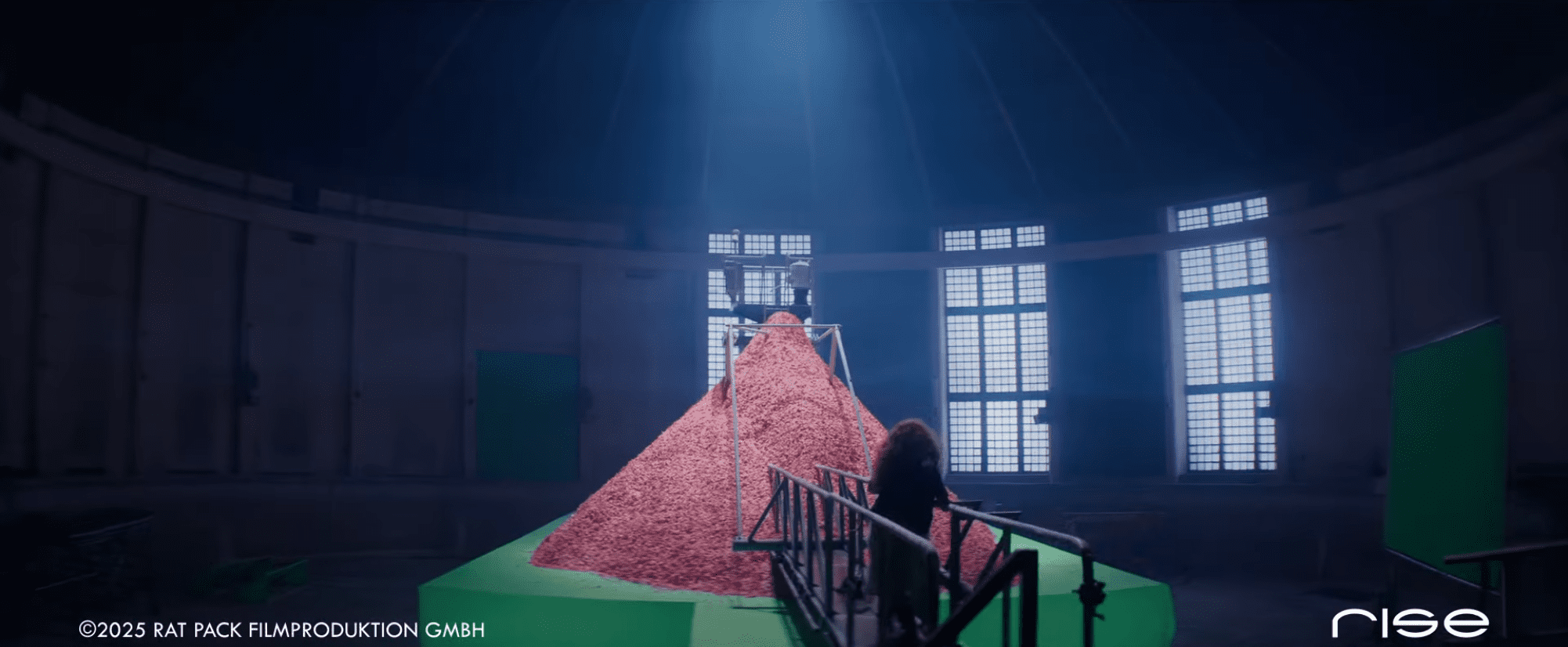

DP: The reel shows full-CG environments, set extensions both “normal” and “fantastic,” time-freeze sequences, particle sims — basically a buffet of VFX challenges. How did the team manage such variety without losing track of what’s real, what’s magic, and what’s due Tuesday?
Michael Wortmann: I am working with an experienced team that I know for years so I can completely rely on them helping me navigate through the storm. As I was on set supervising the shoot and in direct touch with the director and producer so I had a lot of background knowledge of what we needed to do.

DP: The USD-based multishot pipeline was pushed forward, I assume – how exactly did that work in practice these days? Were there multiple vendors, and how did you keep asset exchanges from turning into a Kafka novel?
Michael Wortmann: No, this was not as crazy as it sounds. Our pipeline is well established and it all worked out as planned. We pushed pretty much all shots through our pipeline: Maya, Houdini, Karma rendering and Nuke.
DP: Which shots were the biggest technical headaches, and how did Rise solve them?
Michael Wortmann: I think the golden dome shots were really challenging, both creatively and technically. We needed to match the beach including water sims, caustic renderings and all that, the asset was extremely heavy with all the wooden structures. Finally we needed this weird lighting setup where the center of the scene is in bright light but towards the end of the set we wanted night. We tried to sell the sunlight in the plates as the light coming down onto the pendulum and I think that worked beautifully.

Creature Feature: Cassiopeia the Turtle
DP: Let’s talk about Cassiopeia, everyone’s favourite turtle and possibly the calmest on-screen actor in cinema. How much research went into her design and movement?
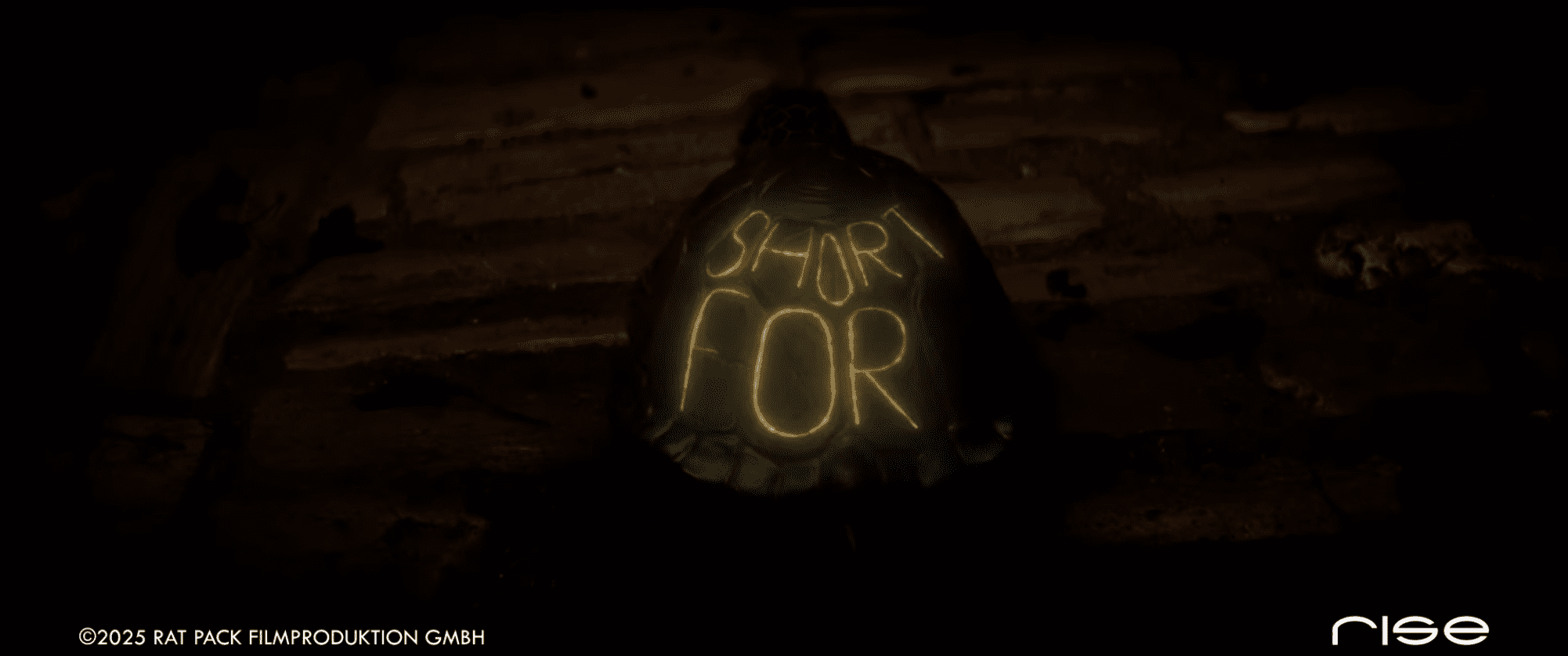
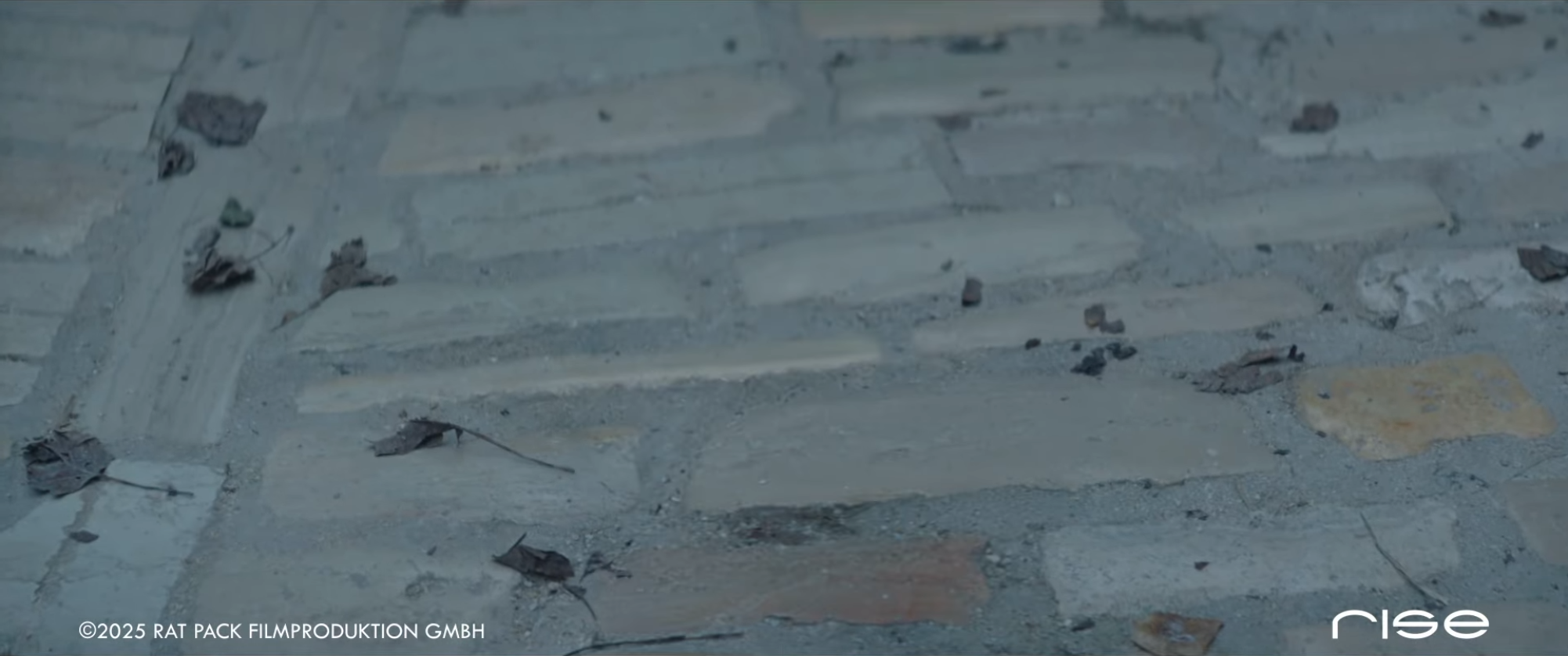
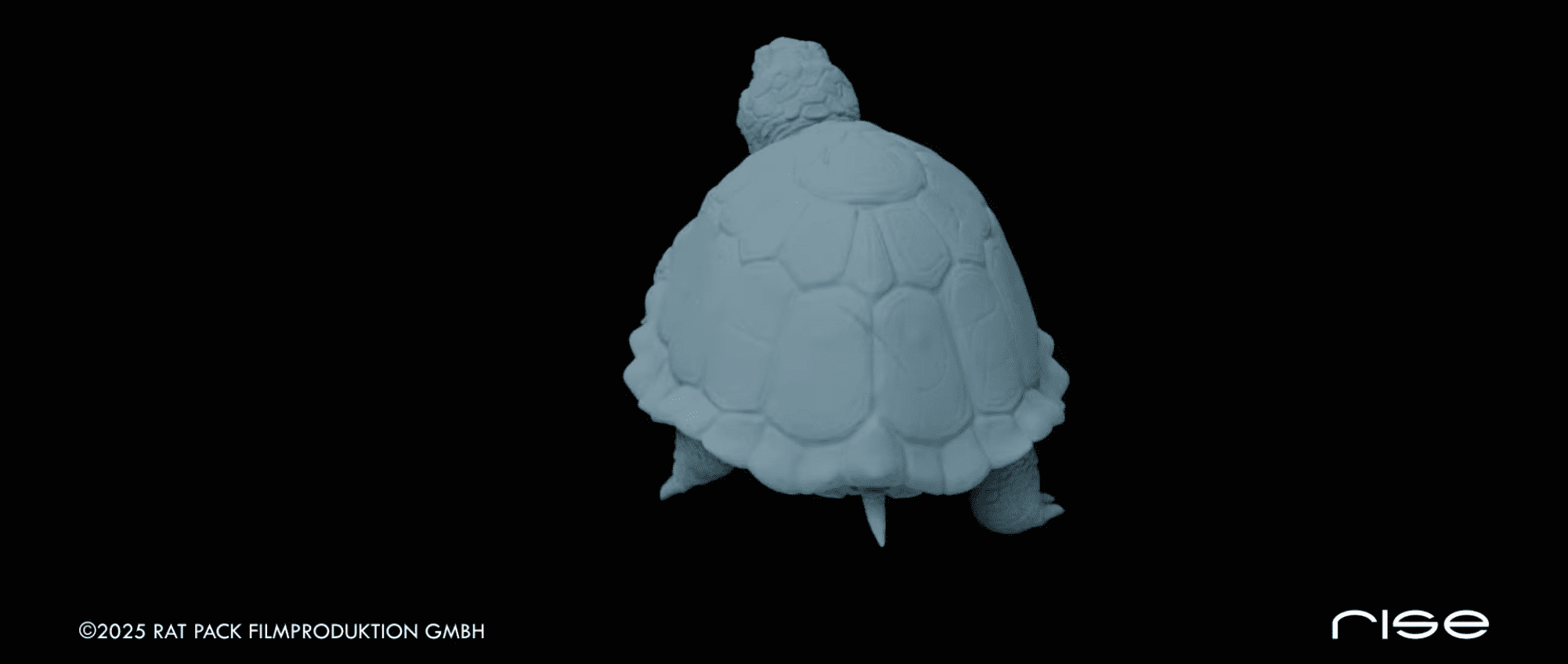
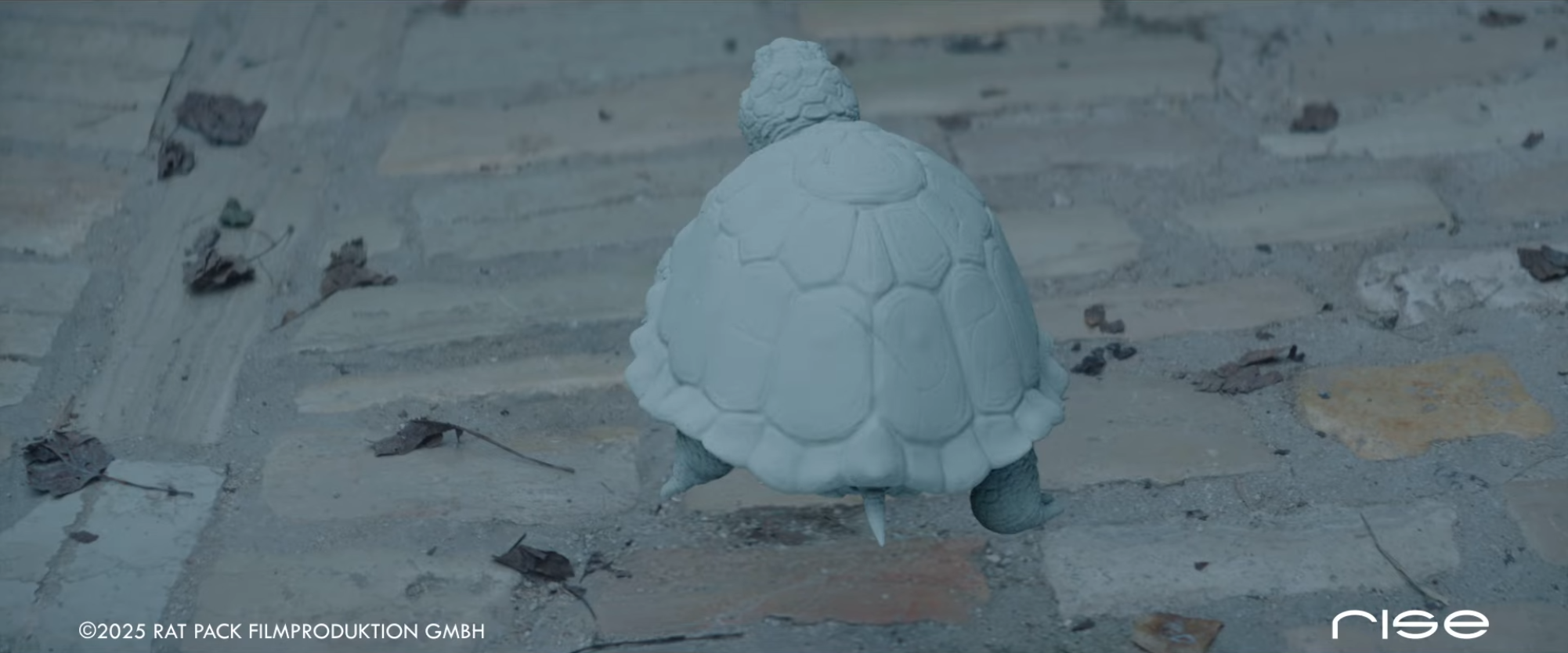
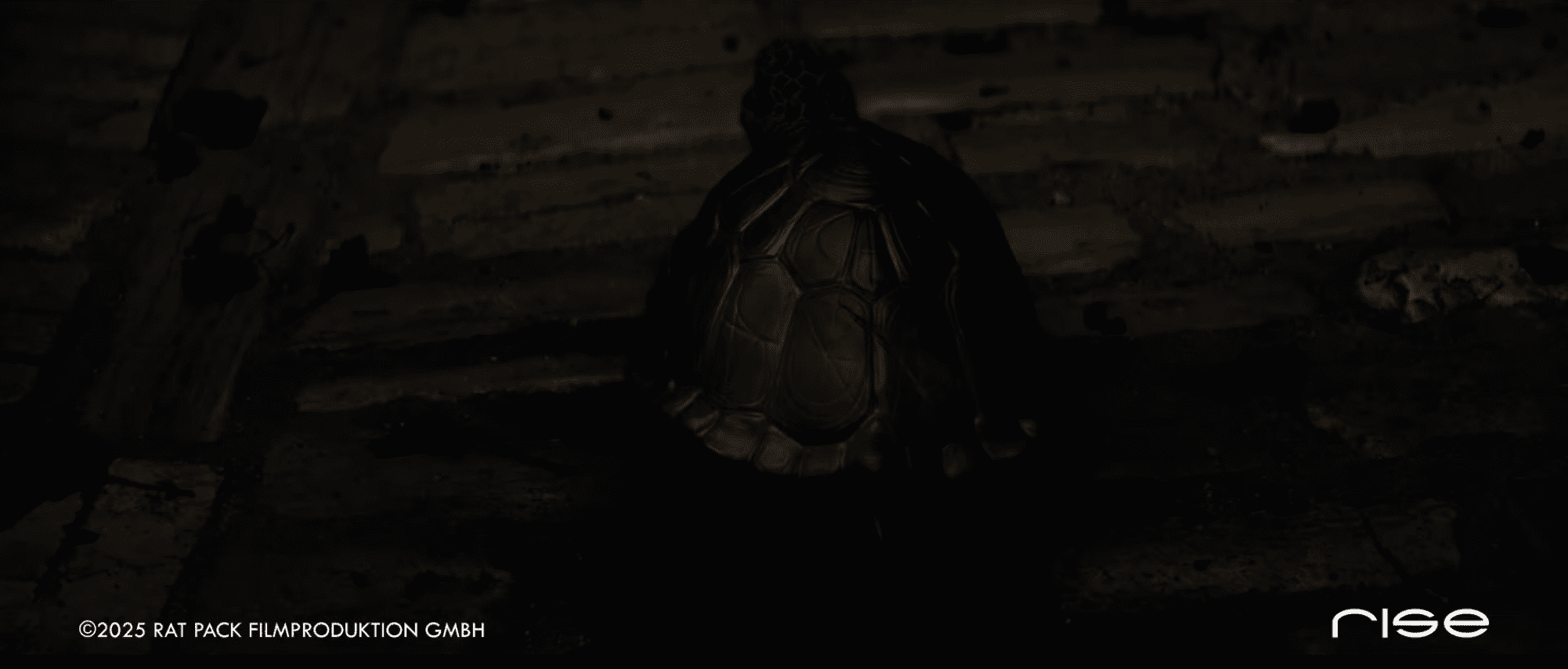
Michael Wortmann: When we started I was told Cassiopeia is an animatronic build and that we only need to take care of her letters. I was curious but when I saw the first tests I knew we would need to help so we ended up with a good combination of animatronic and cgi shots here. We had all kind of hybrid shots where we just replaced the feet or touched up the rig underneath her shell. Chris Creatures did a great job and she really looks cute. Some closeups are especially incredibly well working, the animatronic had two versions, one that could move around and one that was slightly bigger and had a full facial rig. The only thing she basically can’t do is walk like a real turtle so that’s when we had to fully replace her.

DP: Be honest: did anyone at Rise actually have a turtle at home they brought in for research? And if yes, how long did the motion capture session take? And how is RiseFX’s policy towards pets in the office?
Michael Wortmann: Haha, we do have that occasional dog coming in but like always no animals were harmed during making this movie!
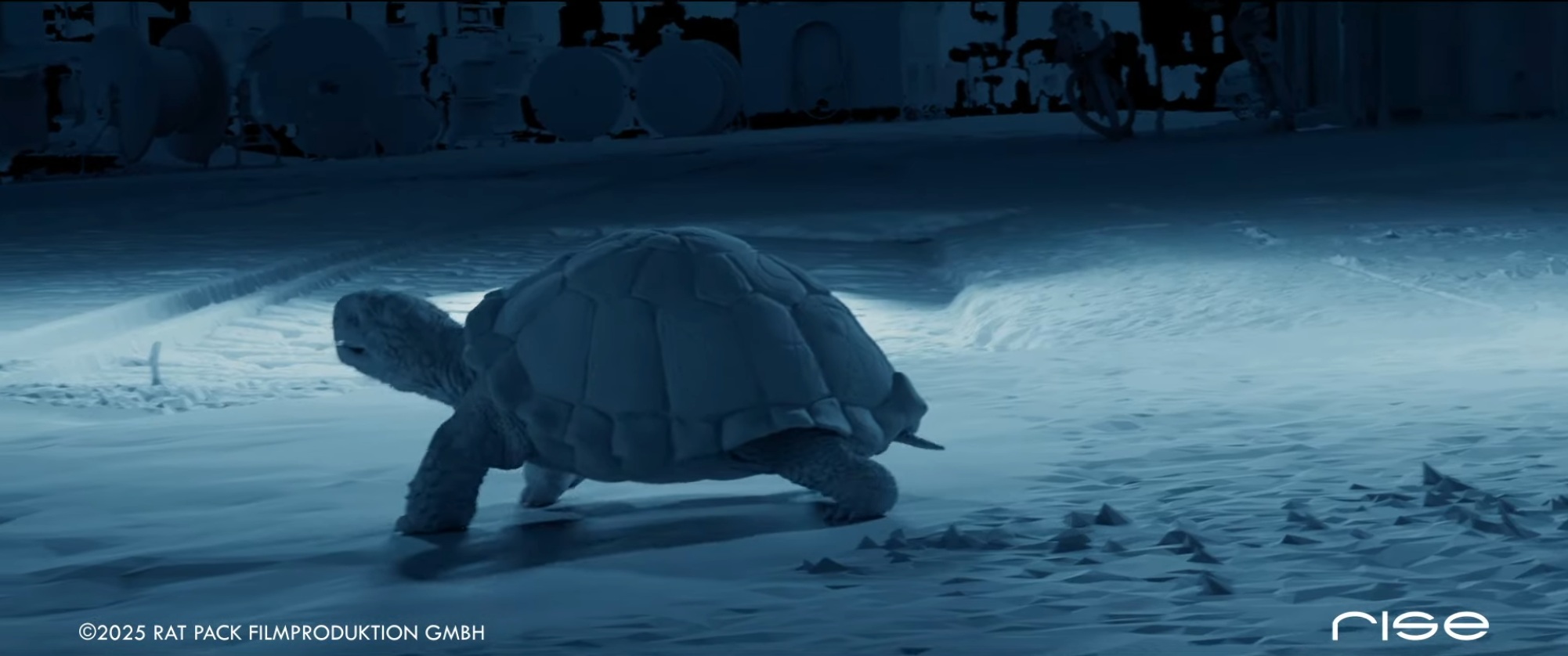
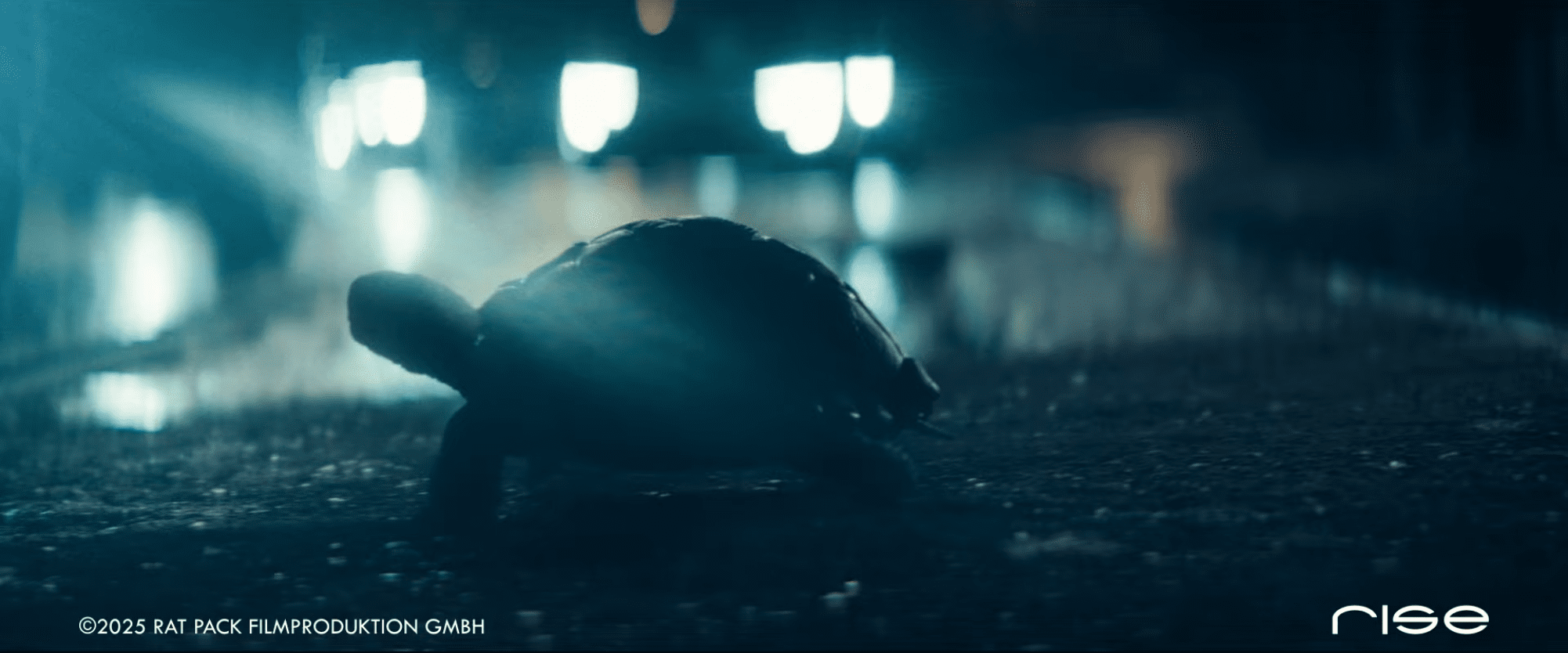
DP: The film’s Cassiopeia clearly isn’t a real turtle, not just because of the writing on her shell (D’uh). She moves with agency, emotion, even purpose. How much of that is biologically plausible, and how much is, well, pure storytelling?
Michael Wortmann: I think we went modest when it comes to unnatural behaviour, Michael Ende wrote Momo in Italy and had turtles in the garden of the place where he stayed. That’s why she is mostly natural and also why she doesn’t speak. I really like the mix of a natural turtle but then being spiced up with fantasy colors, she is way to blue for a real turtle.


DP: There’s a fine line between an anatomically accurate turtle and an expressive one. How did the animators find that sweet spot — especially when Cassiopeia smiles (something turtles, tragically, do not do)?
Michael Wortmann: Anatomically turtles cannot smile but her mouth shape really helps. Most facial expressions are not a result of one thing moving but if you open your mouth while you close your eyes a bit it makes the whole face suddenly resonate and allows to read an emotion. Animating the flower petals was much more difficult because that animation really is just about translating an object in space while still transporting a message.
DP: If you had to define Cassiopeia in one word what would it be?
Michael Wortmann: (Classic) Sidekick!
Wrap-Up
DP: If you were to start Momo again from scratch (same script, same crew, same turtle) what would you do differently, either creatively or technically?
Michael Wortmann: Well, there’s always that one shot you are not super happy with but overall we really managed to deliver a very consistent and high quality of vfx work. This was a german production and even though we had a decent budget we had to manage things efficiently in order to make this movie really look as big as it should. Everyone in Germany want to finally do these big, cinematic movies – I think we did one.

DP: What lessons or tools from Momo will Rise carry forward into future productions, apart from the obvious “saving time to spend time” mantra, which seems to apply to pipelines, not to artists?
Michael Wortmann: After this we have done another step into a direction where we can provide the full scope of VFX, not only in terms of content but also in terms of supervision and production support. Momo was always about taking all the experience and knowledge and make it possible to shoot a big looking movie on set without impacting the production as little as possible. There’s hardly greenscreens, no LED stage, everything is real and onset, thats’s why it looks so good. There’s a reason why the directior Christian Ditter and me both own a copy of “Making of The Creator”.
DP: Finally, what’s next for you and for Rise FX?
Michael Wortmann: Welcome to the Hunger Games! I’m working on the new installment, titled “Sunrise on the reaping” – stay tuned, It’s going to be good!

