DP: A story by H.P. Lovecraft serves as the basis for the final film: How did you come up with the theme?
Cem Karayakas (director): At one stage, my world seemed surreal and my problems abstract. I happened to be reading Lovecraft’s literature at the time and the story “The Colour from Space” had a very strong effect on me. It is about a sudden event that is too abstract to understand. It gradually changes the world of the protagonist and his family. Over time, it poisons the fields and subtly drives the family mad.
Maria Hartig (Editor & Sound Design): Cem had once pitched a film idea about an old man at a desk reliving old memories through objects on his desk. What particularly fascinated us about Lovecraft was the body horror and the horror that you can’t understand as a human being. Cem suggested that we base this film idea on “The Colour from Space”. I read through this story and I really liked it straight away. I had never read anything by Lovecraft before and was fascinated. As a fan of horror films, this story grabbed me more than the usual form of gore or demon-ghost stories that you see almost every day in genre cinema today.
DP: The image design is a mixture of 3D look and stop motion – how did you produce the film?
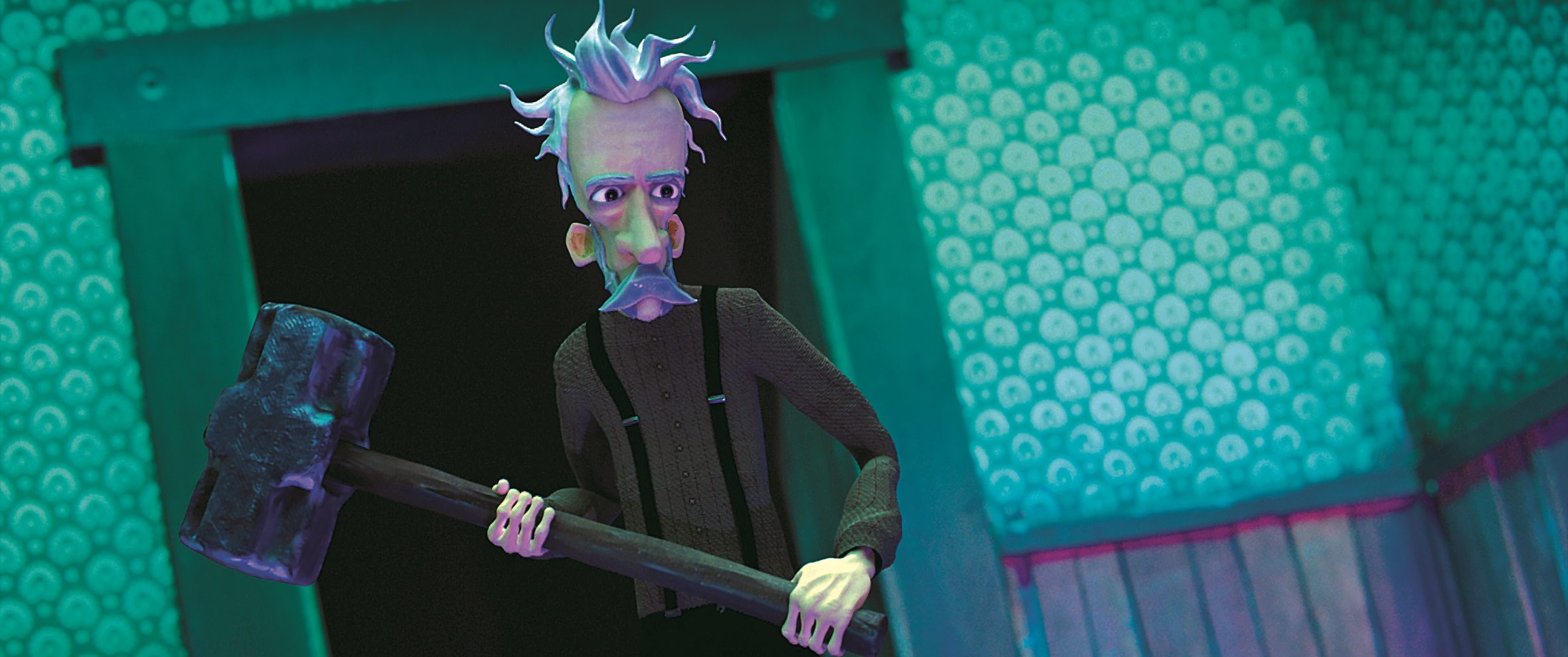
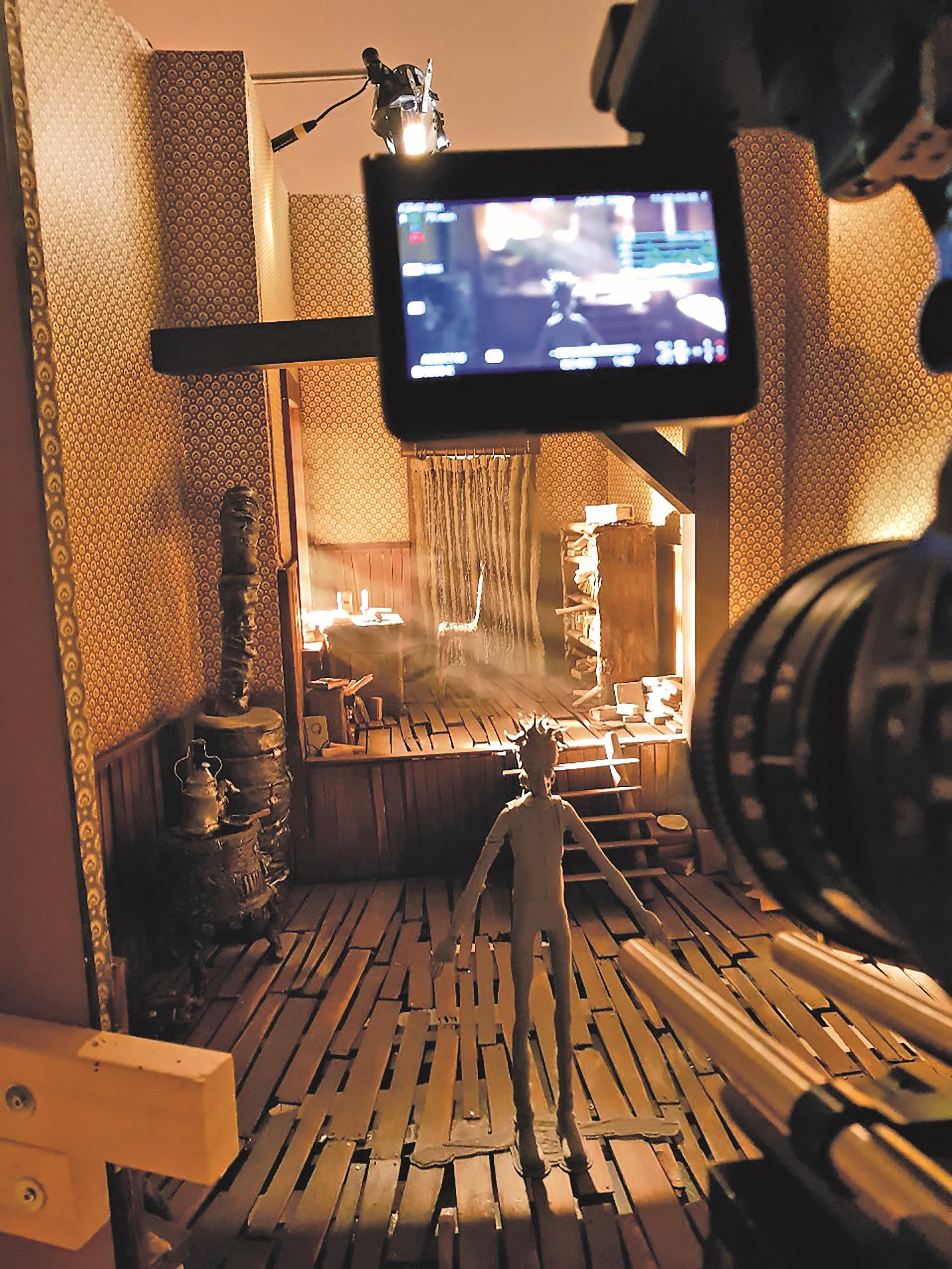
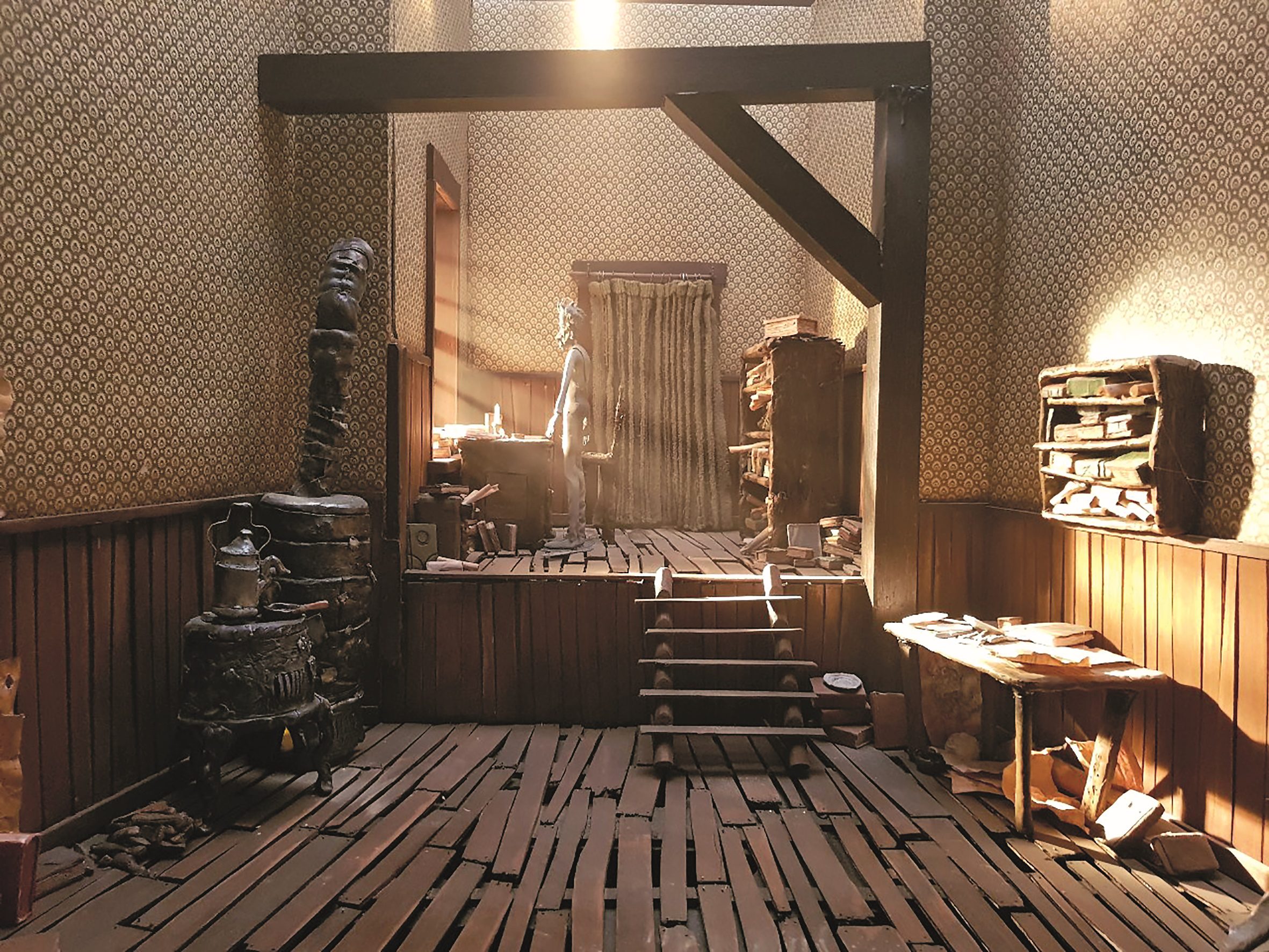
Cem Karayakas: For the interplay between the 3D, camera and production design departments, we first built the set in its original size in 3D – based on a floor plan from the production designer. We then adapted this in Maya in connection with the story and settings, created a new floor plan and built the real one. During the shoot, we created a photogrammetry of the real set. This was important and useful for every step of the 3D process – to have an orientation, to create 3D cameras that fit the footage, and of course for the 3D tracking, for the lights and to be able to orientate the HDRIs in space. The set was dismantled in the real world, but we continued to work in it digitally and never left it during production.
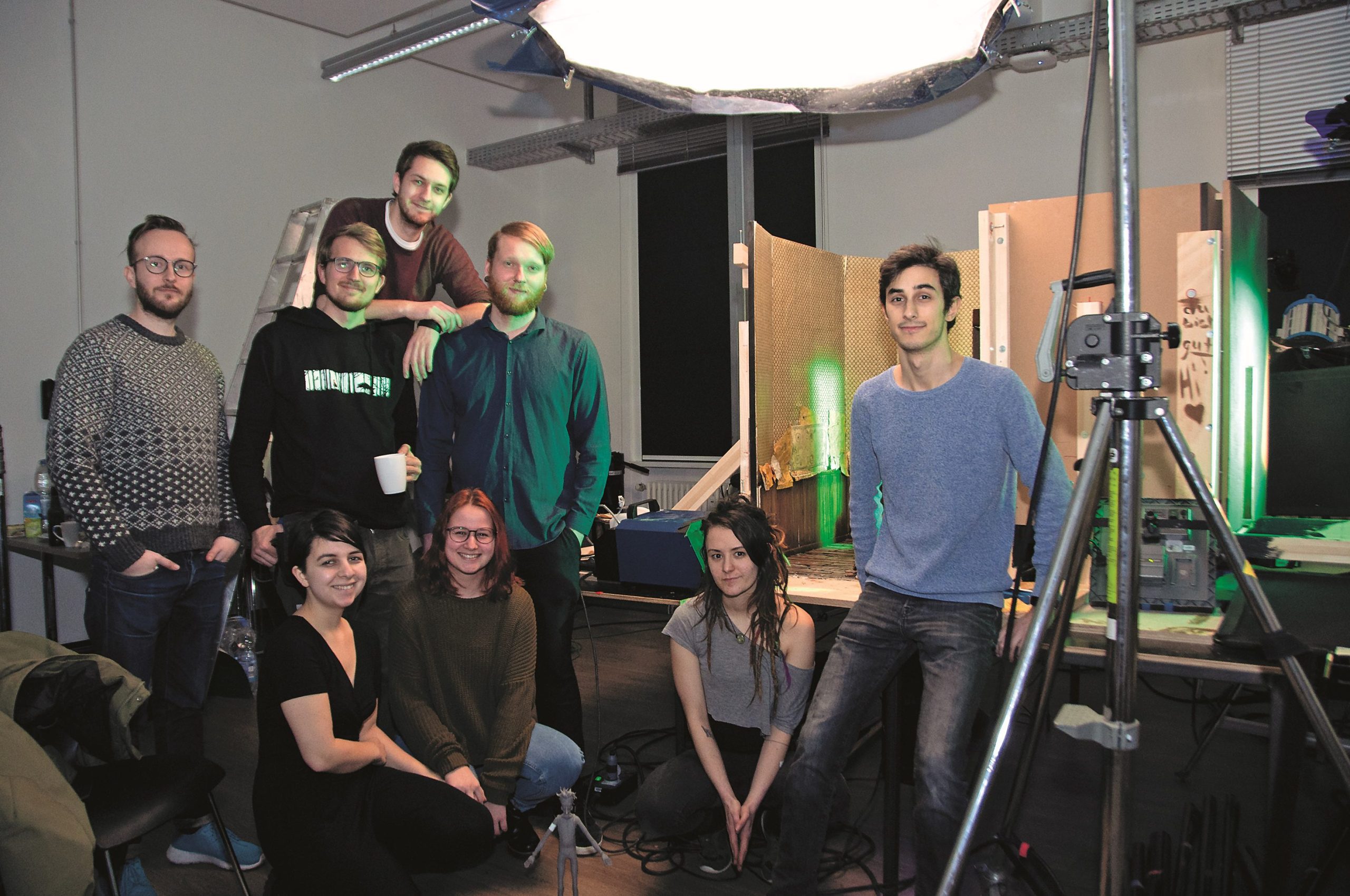
Manuel Zilleken (producer): We planned to build the set in miniature right from the start. To this end, we developed a concept with Jan Zinn from the new production design class and decided on a scale. While Jan and his team were building the set alongside their studies, we started producing the set together with friends. We also worked on the script and exchanged creative ideas with our professors, who were very supportive during this phase. During filming, we shot with a very small team; there were usually only 7 people on set, which we had set up in a darkened seminar room at the ifs.
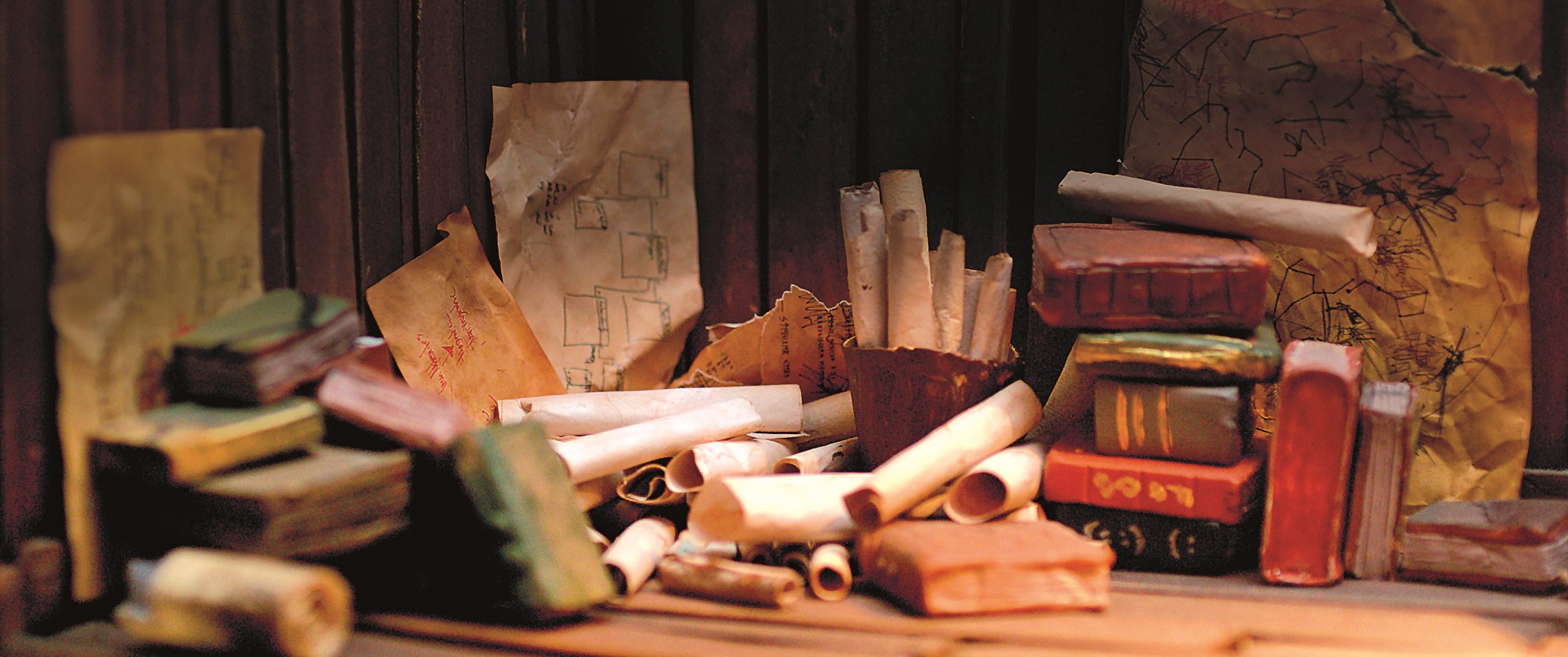
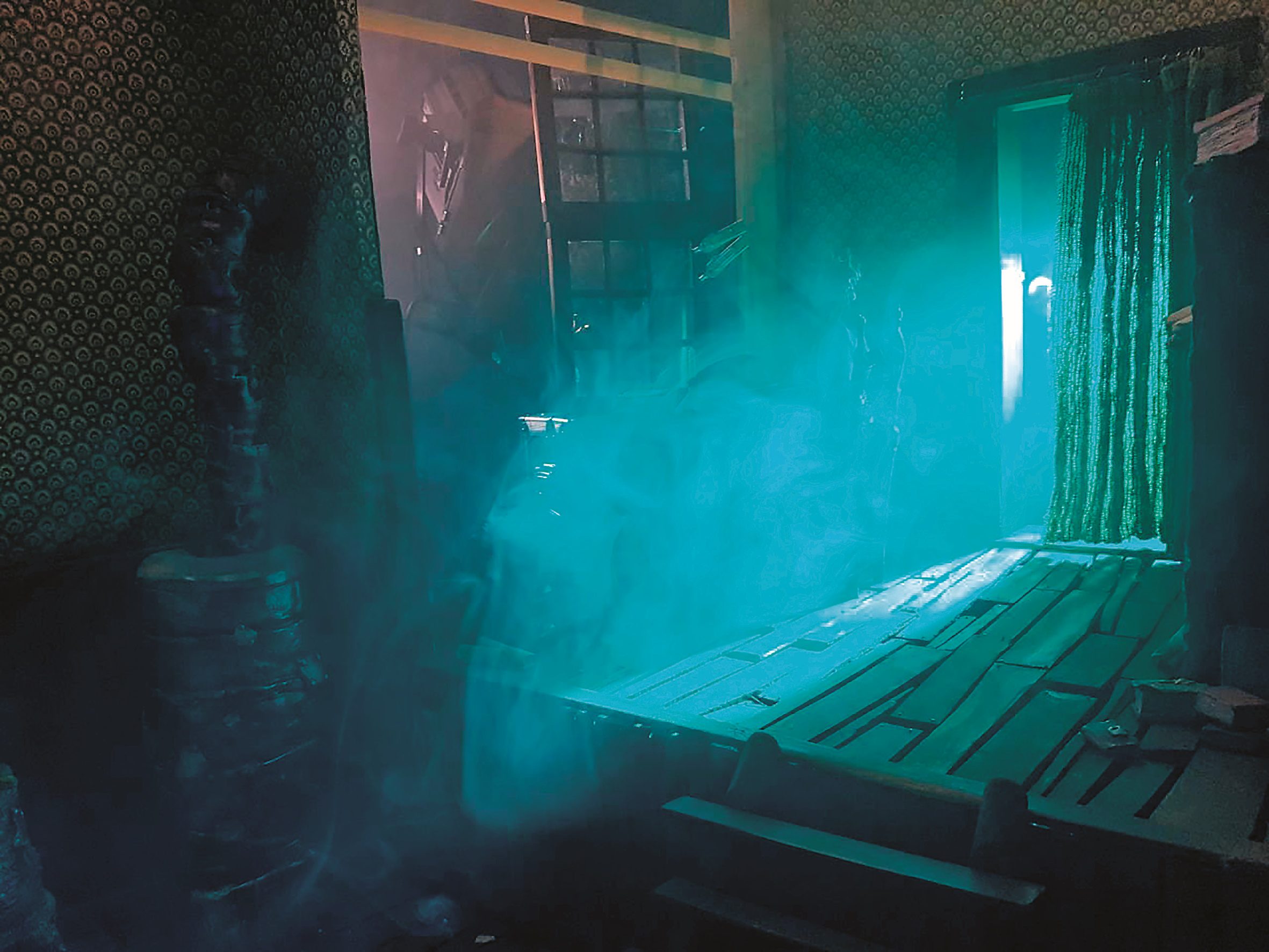
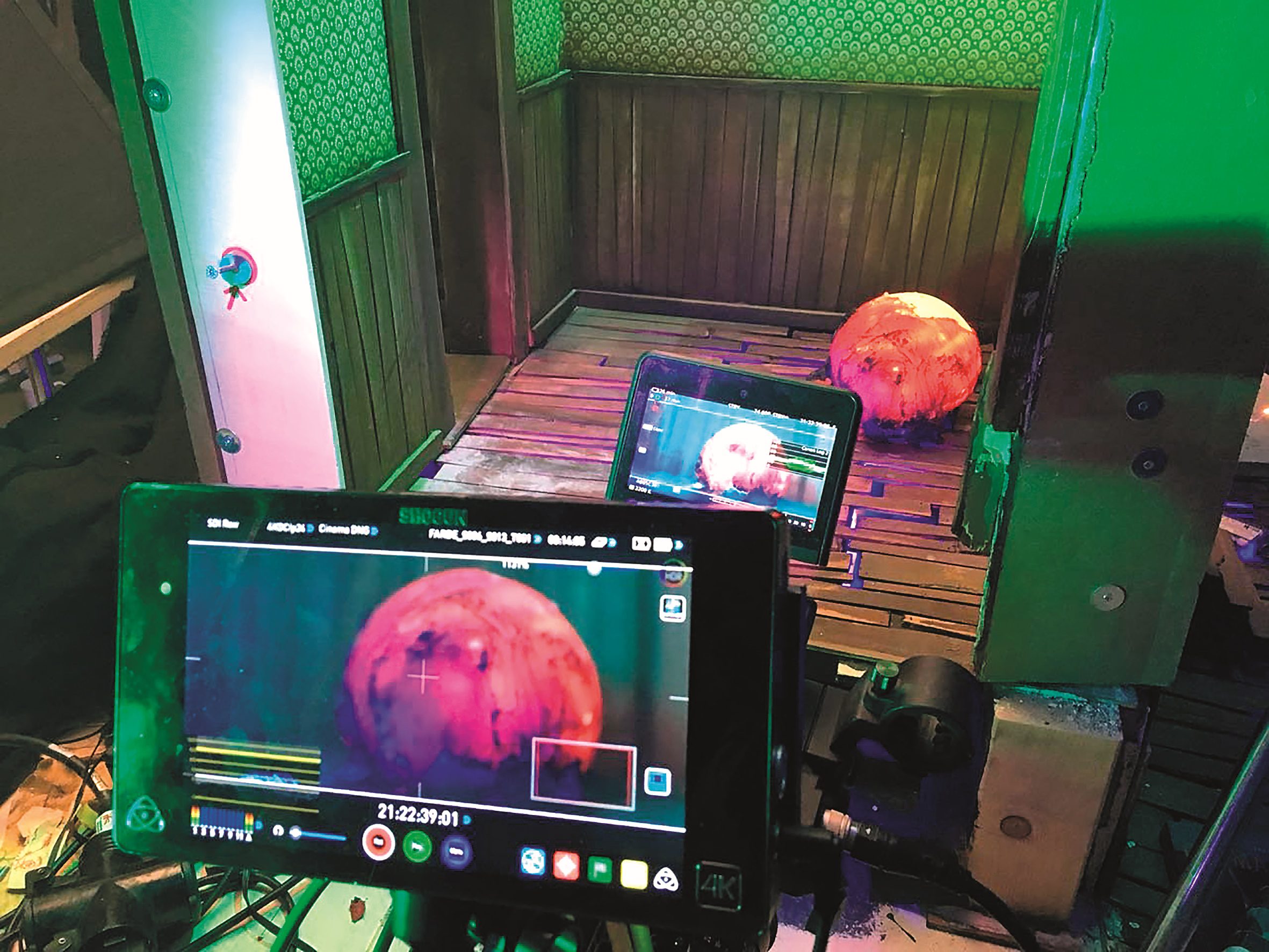
Christian Godau (camera): We shot in 4K raw with the Canon C300 Mark ii and an external recorder. We also had Zeiss Ultraprimes and macro diopters with us. The set and all the props were completely built or 3D-printed. The walls could be removed individually so that we could shoot from all directions. Our lighting equipment ranged from mini LEDs from the deco area to professional LED panels and small Arri units.
DP: And which parts were in 3D?
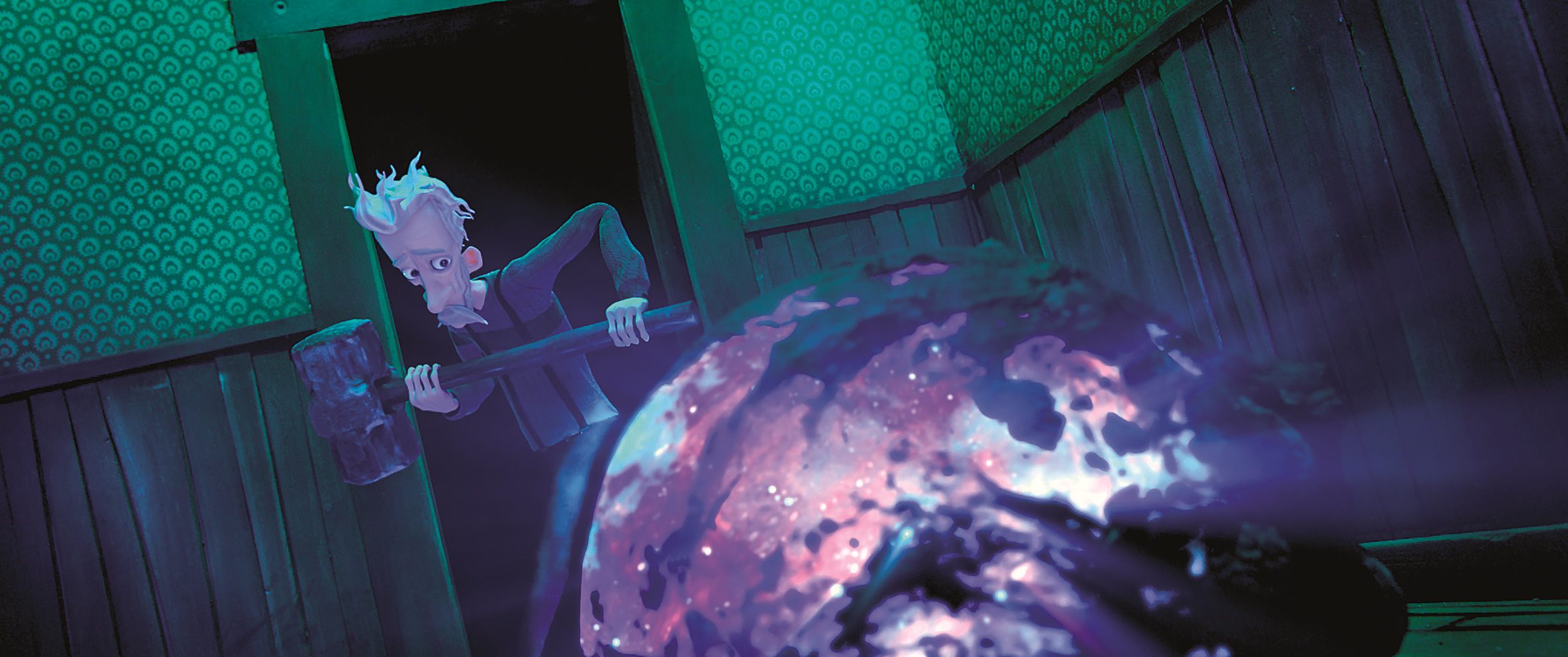
Nils Nissing (CG Supervisor): That was a hybrid mixture in itself, for example we modelled and 3D-printed models like the hammer our digi-double hits the meteorite with first, we roughly specified the textures etc. and then painted them on classically. Later, we updated the textures in 3D so that it would fit together again. The hammer was also used as a light reference. The set was photogrammetrised and then completely swapped in several shots. The view from the window is also completely CG.
DP: How long was the storyboard and development phase?
Cem Karayakas: Overall, it lasted from May 2017 to January 2018. It was important to be open to new ideas. Even though we knew very early on how our film would be structured in terms of content, it was a challenge to find out how our motifs would work and how we would implement them visually. That’s why there are several storyboard, 3D layout and test shots in which we discarded, converted and iterated ideas. We spent more than half a year on this in order to be as ready as possible for filming. I think the better you know how your film works, the better you are able to experiment while shooting and be open to fresh, new ideas that you only get at that moment.
Maria Hartig: While we were developing the script, I drew a simple storyboard to go with it. We were then able to cut this together according to the script and assess whether the story worked not only on paper, but also as a film.
Jelena Lützel (script): It took us about 6 months to write the script, if I remember correctly. I remember Cem and I sitting down to work on the first drafts in the summer of 2017. But a script like that is never really finished, so I can’t say for sure. For example, Maria and I worked on the voiceover much later, when she was already editing. So the story was still evolving, almost right up to the end.
DP: What did your software pipeline look like for “The Colour”?
Cem Karayakas: We had a long pre-production period in which we were able to find out how we had to organise the production before shooting. There were two of us in the 3D department and we knew that we would have around 40 shots. So we had to be as efficient as possible when producing the 3D renderings. The cameras were created in Nuke. Rigging, animation and lighting took place in Maya. Rendering was done in Arnold using the render farm software Royal Render. It was important for the 3D integration into the plate that we had the lights in separate render passes, because we had shot a lot of lighting effects to which certain lights then had to be animated. The easiest way to do this was in Nuke.
Nils Nissing: We had the following programmes in our pipeline: Maya, ZBrush, Mari, Nuke, After Effects, Photoshop, Reality Capture, Royal Render, Topogun.
Maria Hartig: As far as the exchange of editing and animation was concerned, it went as follows: First, I edited the film with the footage in Avid. I worked on two levels. On one level, I had the material completely raw, without the stand-in used during filming. On the other level, I edited the film using the stand-in so that I had an overview of the content and the protagonist of the film. I then passed on an AAF file of the complete timeline to the 3D department. A reference clip of the film was also played to check the conforming. I was then able to insert new blocking or animations back into Avid as MXF files and place them in their intended positions. In this way, we filled the film with animations step by step. This type of exchange remained in place until the image was finalised. Replacing the images was slightly different once we had reached the sound design stage, as I had already started adding sound to the film at the same time as the animation. At this point, we went from Nuke to the image exchange in Avid and from there to the adaptation of the sound design timeline in Pro Tools. It was important to make sure that the sounds did not become asynchronous to the image, as the length of the film and in particular the length of the individual cuts was constantly changing.
DP: Which helper tools and plug-ins were used?
Cem Karayakas: In the beginning, the Maya plug-in aTools helped me with the animation, which was then replaced by Animbot. Apart from that, we only had one character and two assets to interact with. I had written a few small scripts that relieved us of repetitive work steps.
Nils Nissing: The Mari plug-in set 4 and Super Sculpey.
DP: And what did you use as a pipeline tool?
Cem Karayakas: Shotgun, theoretically. Actually, I was our pipeline tool because I was the director, TD and animator and also did the conforming. We had close communication because we worked in the same room and the editing room was one door away. But I always orientated myself on Shotgun, but managed everything in Things 3. We had good naming and you could count the number of assets on one hand.
DP: With the real shoot, there were of course environments available. To what extent did you have to adapt them digitally?
Cem Karayakas: The aim was to digitally adapt as little of the filmed material as possible. We had three tasks where we knew that editing was important: one was to create masks so that the character could also stand behind objects. Then there’s a view out of the window, where he looks out at a landscape. The biggest task, however, was the meteorite. A universe was to be combed into its interior, which was impossible to film. Apart from that, we built and filmed everything nicely. This allowed us to concentrate on the other tasks.
Nils Nissing: There were a few more lights, so we had to resort to photogrammetry of the set in some places. Some of the projections that were previously in camera had to be re-projected.

DP: If you were starting from scratch, what would you do differently?
Manuel Zilleken: I don’t think there is a perfect project, especially in film – you always learn something new and have to adapt again and again. By working together in the 4th semester, we were able to gain a lot of experience and incorporate this into the project. I think next time it will be easier for us to estimate the time required for the individual steps and perhaps give us a little more room for manoeuvre for other aspects that are not at the top of the priority list.
Christian Godau: The camera setup was reasonably compact and worked well, but next time I would probably go for an even smaller and lighter setup in order to have even more freedom in the choice of perspectives.
Jelena Lützel: Not much from my side, to be honest. Manu, Cem, Nils and I had already worked together on an animated film before and made pretty much all the mistakes we could make. And then we actually learnt something from it. That’s why the development of the material for “The Colour” mostly went smoothly. Cem, Maria and I worked very closely together during the development phase. Of course, it took us a few attempts to find our story, but that’s just part of the process.
DP: Is cooperation between the different semesters / degree programmes encouraged and if so, how?
Cem Karayakas: In the first three semesters, there are semester films in which cooperation between all degree programmes is encouraged. But from the fourth semester onwards, the design is left to the students. There are projects in which someone just looks for an editor and designs the film with him or her, and there are projects like ours, in which we wanted to and were able to collaborate with all possible departments from the very beginning.
Manuel Zilleken: While the collaboration within the year group worked very well, it was difficult to involve the other year groups intensively, as they often had other projects or tasks for the university. But of course you always try to help out from time to time, as film productions can only work through teamwork and reliability. That’s why it was part of the degree programme from the first semester onwards to gain an insight into other trades and to develop and implement projects together. In addition to the projects, there were often seminars that we had together with other specialisations, so there was always contact with the other students.
Nils Nissing: Collaboration between the different semesters is not really encouraged. In the shooting phases of the higher semester, the younger degree programme usually has compulsory courses. Cooperation between the degree programmes, on the other hand, was supported right from the start with a wide variety of projects.
Maria Hartig: As there is a major semester project in the foreground every semester, it almost goes without saying that students from the different specialisations come together. Teamwork is very important to us at the university and is also a prerequisite for a functioning project.
Jelena Lützel: Yes and no. As an author, it was sometimes difficult to get involved, as we rarely had a common timetable or overarching projects with the other students. But the joint projects were then supported. You just have to fight for it. But it also prepares you for your professional life. After all, you don’t get anything for free.

DP: What hardware and software is theoretically available, and how complex is access to it?
Cem Karayakas: For VFX & Animation, we had our own workstations. We could make ourselves comfortable in our room, design it the way we wanted it and work on the same computer over and over again without anyone else doing anything to it. We had enough render farm capacity to produce the film, all the software we needed was there or had been purchased, and our computers were powerful enough. Every student has access to all resources, even if you sometimes have to agree on render farm priorities.
Nils Nissing: If you work on a project-oriented basis, you can quickly obtain a licence. If you want it to be for everyone, you first make an enquiry – if the price is too high, it will of course be difficult.
Maria Hartig: We editors are lucky enough to each have our own editing room at the university. Each of these editing rooms is equipped with iMacs and two additional screens. We work with Avid Media Composer, Pro Tools and DaVinci Resolve. Adobe Premiere and Adobe After Effects are also available to us. For the final 5.1 sound mix, we go to our in-house cinema.
DP: Do you have external partners?
Manuel Zilleken: We work with external partners, especially in many parts of the production. Be it insurance or legal advice. During filming, it is often up to the students to bring other partners on board for technology, catering or props. Of course, especially with low-budget projects, you always have to rely a little on the goodwill of the companies.
DP: A word about the lecturers and professors: How is the teamwork organised here?
Cem Karayakas: We were supported by four professors. We had a contact person for every question, regardless of whether it was about story, production design, animation, VFX, editing or sound design. We always had a critical eye from the professors and could always turn to them.
Manuel Zilleken: In general, each team chooses supervising professors for their project. But that doesn’t mean that other professors don’t give feedback and encourage new ideas. Our main contacts for “The Colour” were Prof. Gerd Haag (Production), Prof. André Bendocchi-Alves (Editing Image & Sound), Prof. Rolf Mütze (VFX) and Donna Hanisch (VFX). And as is the case in the creative field, opinions often differ. It is important to trust the experienced judgement of the professors and lecturers without losing your own point of view as a filmmaker. Developing this ability was a very central part of the programme for us producers.
Nils Nissing: When Donna Hanisch took over as head of the Digital Film Arts department, a lot changed. We were asked which teaching units were interesting and then the group voted on the most useful ones. This gave us the opportunity to help determine the content of the semester ourselves.
Maria Hartig: I am very grateful for how much time the professors took for our project. We often got together to discuss the script or look at edits. There were regular meetings for our final film, where there was a lot of discussion, but also helpful feedback. Each of these meetings took us a step further in our dramaturgical thinking and helped us a lot in the further development of the film.
Jelena Lützel: We didn’t realise that much about it.

DP: What were the challenges of your degree programme?
Cem Karayakas: You come to the ifs and have the opportunity to learn everything to do with VFX & animation. But the choice of options is too huge. The challenge is to find something that appeals to you. For me, it was animation and animated film. Of course, you’re also eager to learn other areas. At some point, you manage to learn the tools and expand your repertoire without losing your focus on what interests you the most.
Manuel Zilleken: As I mentioned earlier, the focus for us producers under Gerd Haag was to develop a producer’s personality. The challenge is, on the one hand, to manage the organisation and financing of a project and, at the same time, to have a creative influence on the development process and contribute your ideas and visions. Balancing the two was exhausting, especially because I decided to produce another graduation film in addition to “The Colour”. But looking back, I would say that it also strengthened my skills and helped me grow as a person.
Nils Nissing: Improving my own time management, meeting deadlines. Learning how to communicate.
Jelena Lützel: Screenwriting can be lonely, but it doesn’t have to be. Look for co-authors! No really, there are many challenges that you have to overcome: finding your own handwriting and surviving the first crisis, and then the second and the third. I think that applies to all areas. But the most important thing is to find people you can work with.

DP: How did you like student life in Cologne?
Manuel Zilleken: As a film student, I probably didn’t experience as much of the typical student life in Cologne as other students. I can still remember that we spent many evenings on the Rhine in the first semester, but unfortunately that became less and less over time. Instead, I spent many evenings with my fellow students and friends on set and drank the odd end-of-shoot beer. Overall, however, I got to know Cologne as a very open-minded and tolerant city and I will continue to live and work here after my studies.
Nils Nissing: I had my difficulties with the train journeys.
Jelena Lützel: Cologne is great. I’ve come to love Mülheim in particular, where the ifs moved with us. It’s beautiful, especially in summer with the Rhine so close by. And there’s always something going on at the ifs. You really get your money’s worth as a student.
DP: Would you do your degree programme again, or would you rather do something else from the ifs range of courses?
Cem Karayakas: Would I do the programme again? Of course I would! I learnt the profession here that I want to pursue for the next few decades: animator. I’m grateful for every encounter with students and professors.
Manuel Zilleken: I’m generally very happy with my studies. But I would be very interested in the creative side of writing and development, which is why I could imagine trying out the directing and screenwriting programmes.
Nils Nissing: No, I would study exactly the same thing.
Maria Hartig: I enjoyed studying at the ifs. I would also be interested in specialising in VFX, animation and production design out of pure technical curiosity.
Jelena Lützel: Even though I often wished I could have been on set more and learnt more about the other subject areas, screenwriting was the right decision for me and I would definitely make it again.
DP: And what are you doing next?
Cem Karayakas: We’re hoping to get our film into a festival and otherwise I’m applying for jobs as an animator. I would of course love the opportunity to direct another animated film. But first and foremost, I’m looking for the experience of working in larger teams as an animator.
Manuel Zilleken: I’m currently working with a fellow production student in his still very new company TWENTYTWO Film in Cologne-Bickendorf. Of course, I’m also in the process of sending my two graduation films out into the world and hope that we’ll be shown at one or two exciting festivals. In the best-case scenario, the next animated film will be out soon.
Maria Hartig: As far as festivals are concerned, I’m very excited to see what journey “The Colour” will take us on. Until then, it’s all about gaining a foothold in the industry. I hope that in the future there will be more companies that focus on the production of feature animation films and build on close collaboration with editors.
Jelena Lützel: I’m currently doing my Masters at the Kingston School of Art in London. I’m studying filmmaking there, so I can try my hand on set and in post-production. But I will still be a screenwriter. Next, I’ll be shooting my graduation film in the summer, which I’m mainly working on as a writer and director.