



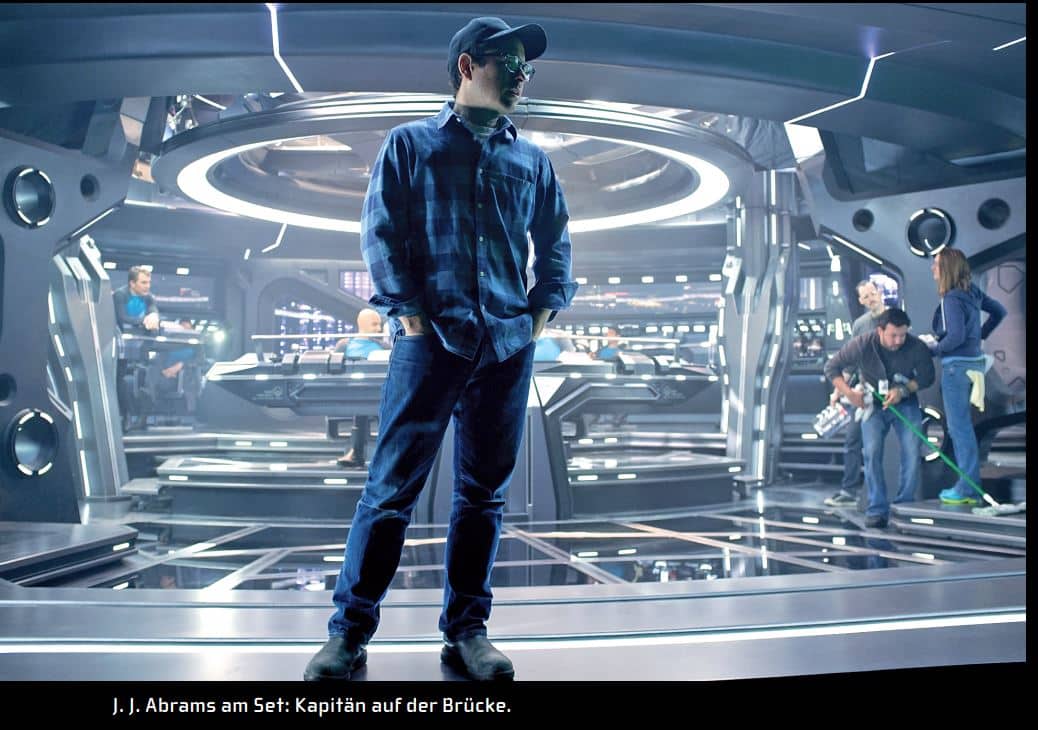
… so “edited with Avid” in Klingon. J. J. Abrams is currently in charge of “Star Trek” and “Star Wars”. This shake-up in the fan scene led to expectations for the second instalment of the Star Trek reboot that can hardly be fulfilled. Nostalgia fans, who for decades have tried to interpret every twitch and accept poodles with unicorns glued on as aliens, meet blockbuster filmgoers with an affinity for bikini scenes.
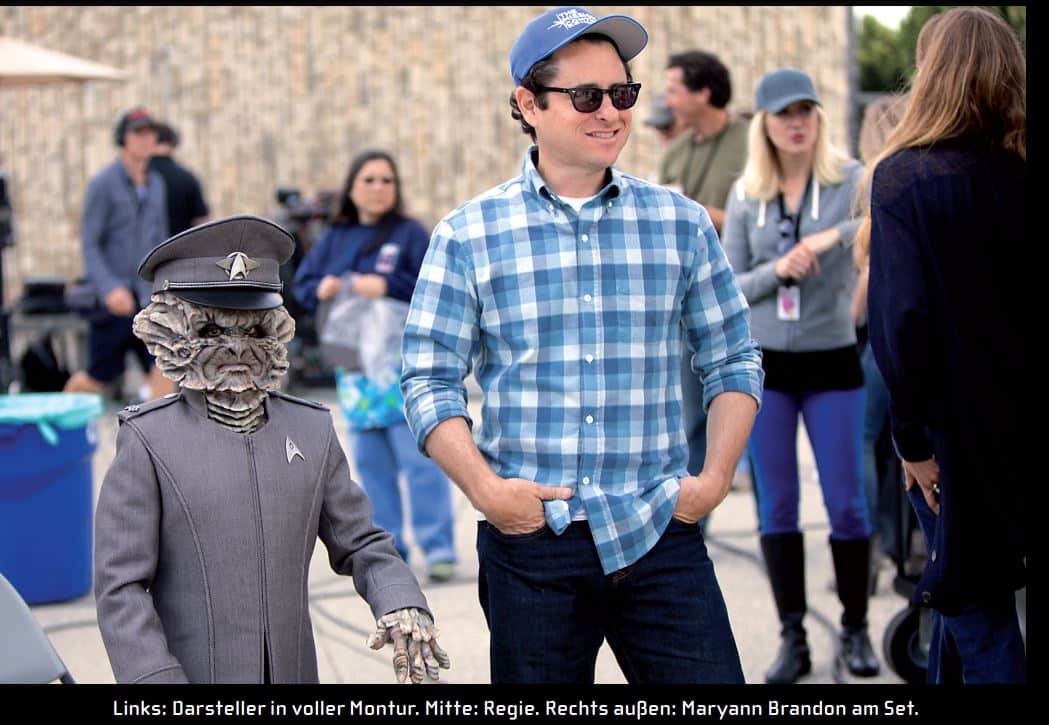
What do all J. J. Abrams films have in common? Exactly: they all have Maryann Brandon as editor. Since the acclaimed series “Alias”, the two – and Mary Jo Markey – have worked as a team in the editing room. That’s unusual, to say the least. We had a chat with the editors. Maryann Brandon and Mary Jo Markey were mainly responsible for the editing. Rita DaSilva and Julian Smirke, the two “first assistant editors”, also took part in the interview.

DP: What was your workflow like on “Star Trek Into Darkness” and what will you keep for future projects?
Rita DaSilva: Our lab prepared the dailies for us, we then got the files in a bin on a hard drive, which we then shovelled into Avid. Me and Jules (Julian Smirke) then checked the footage to make sure everything was there and took a look at syncro, metadata and so on. That usually works, but if there are any problems, it’s much easier to fix them at that stage before Maryann Brandon and Mary Jo Markey – the editors in charge – touch the data. Since Maryann and Mary Jo have very different approaches, I and Jules have already adjusted the sorting accordingly – while one of the editors has already started script syncing. During the actual cutting, the VFX editor then loaded all the comps that were needed directly into Avid and created a good view that satisfied both the editors and the director, and when the OK came, we passed it on to the respective VFX studio for the scene.
DP: And how did 3D come into play?
Rita DaSilva: Since the film was being converted to 3D, we had to give everything to the 3D conversion company as early as possible, i.e. shots with and without VFX. And once a week there were VFX and 3D “review sessions” in which the director J. J. Abrams looked at the shots. These edited shots were also cut at the same time in Avid, and the film was developed further in many places at the same time. We also edited in 5.1 surround sound and our 2nd assistant editors were an invaluable help in getting the sound right. Fortunately, we also had a sound designer and re-recording mixer from Skywalker, who has been with Bad Robot (the production company) for a long time. We learnt an awful lot from him in terms of noises, speech and sound. Me and Jules mostly used the soundtracks from the first “Star Trek” for background sounds and SFX specifically for “Star Trek Into Darkness”. But whenever we couldn’t find something, we had sound designers who developed and recorded the sounds. We also had the conforming done directly at Bad Robot by a Mistika specialist and his assistant. And even one of the VFX departments and the music editor are based directly at Bad Robot. Of course, this made work incredibly easy for Jules and me, because we could discuss everything on foot and through short official channels.
DP: What did your editing suite look like and what can you recommend for the ideal workplace?
Julian Smirke: On “Star Trek Into Darkness” we all worked with Media Composer. We started with MC 5.5.3 and ended up with MC 6.5.2 – with all the updates that came out in between, of course. During our production time, Avid released things that helped us a lot, such as 5.1 audio. We used that right away for an evolving temporary sound mix throughout the post-production span. Everything was stored on a 64 TB ISIS 5000 and each system had an Avid Nitris DX as hardware.
I always work with a standing desk. With 12-hour days, I just can’t manage to sit for 12 hours at a time, it makes my bones ache. Apart from that, I like working with Wacom tablets, but that’s a “can”, not a “must”. We always use Filemaker Pro in the team, and I recently discovered “Keyboard Maestro” from one of our assistant editors, Nate Orloff. Similar to Autohotkey on Windows, it allows you to sequence different actions on a hotkey on Mac – and it saves an incredible amount of time, which means that dailies sync faster and get to the editor quicker.
Rita DaSilva: Well, it’s important to me that there’s a comfortable sofa in the room. I also need pleasant lighting and perfectly adjusted monitors – and of course I need to be as close as possible to Mary Jo’s editing suite. And – after this project – I would like to continue editing at Bad Robot again. We’ve been working here for 14 months now, and much more important than a comfortable armchair are motivated, imaginative colleagues – of which there are plenty here.
DP: What’s on your “Swiss army knife USB stick”?
Rita DaSilva: One of the assistant editors wrote a script called “EDL to Subcap Converter” that we all used excessively on this film. Whenever we needed to export Quicktimes with VFX names in the file name, we used this script instead of exporting manually. This script uses the EDL and converts it to the Avid DS Subtitle format. This was a phenomenal time saver. You can find it at www.evanschiff.com .
Julian Smirke: Will Files helped with the temp sound design and mix, and from him came three RTAS (Real Time Audio Suite) in Avid, which were great for us. This automatically brightened up the soundtrack in the frequencies of human voices, cleaned it up and made the dialogue more audible, especially in the big action sequences. That was enormously helpful.
And some more scripts from Evan Schiff, which Rita has already mentioned. They were incredibly helpful in synchronising the two editing locations. The main editing suite is here on Bad Robot, but during the shoot we were on set with J. J. Abrams – and keeping the two in sync was absolutely essential. We had to make sure that all the files, all the bins and all the projects were up to date, on both locations. And with Evan’s scripts, we have been able to eliminate the “human error” – in the past, everything was typed by hand … Now it’s neither time-consuming nor error-prone!
DP: You edited with Media Composer – was that your first attempt with Avid?
Julian Smirke: MC7 was unfortunately not yet available when we were in the hot phase – we ended up working on 6.5.2. However, I have to say that I’m very happy with the version – and we incorporated the 3D functions and 5.1 features directly into the “sharp” production workflow. Our team has been working with Avid for a long time – Maryann and Mary Jo edited “Mission: Impossible III” (2006) on Avid Meridien in OS9.
DP: In your opinion, does an editor need to master as many tools as possible? Or is specialised knowledge always the trump card?
Maryann Brandon: I use very few tools. Of course it helps to know different options and approaches when planning your workflow, but I’ve focussed on using Avid as efficiently as possible. Even though I sometimes wish I was a bit more tech savvy, for speed reasons my main focus has to be on using the tools for editing and story.
Julian Smirke: I don’t think more tools make you more efficient. You just have a wider range of tools that may be better suited to the task. On “Star Trek Into Darkness” we edited in Avid Media Composer, sound design and music editing came from Pro Tools, our VFX artists work with Nuke, After Effects, Maya and many, many other programmes. We used Cinesync for the VFX reviews. Mistika for 2D and 3D conforms – and we’re just at the beginning of the list here. All of these programmes are exciting, cool and definitely worth the learning time. But at the end of the day, I think there’s no substitute for the security that a well-known programme package offers. Because only when the technology takes a back seat can I as an editor concentrate fully on the material.
DP: Having already worked with J. J. Abrams: Does the job get easier when you already know the director?
Julian Smirke: This mainly applies to editors, but I can also say from my own experience, having worked with J. J. Abrams on all his feature films, that it gets easier and more enjoyable to work with him every time. You know what the other person expects and you find your own tone.
Maryann Brandon: It depends on the director. If someone is open to ideas and adapts the scenes, the job becomes a lot easier. That’s the case with J.J., who is very open to ideas and suggestions, gets on well with people and is happy to accept the team’s input and integrate it into the overall picture. I think that’s a stroke of luck – but in general you can work with any director who has a vision while he’s shooting. Then you already have a shared interest in the end product and can make something out of it.
DP: You’ve also worked together as a team before – for example on the films “Star Trek” (2009) and “Super 8” (2011) – does that help when working and are teams for certain tasks something that studios absolutely have to form?
Maryann Brandon: Yes, a permanent team that knows the processes – and also understands why they are the way they are – makes it very easy to switch between films. But I believe that a studio that has chosen a director should also let that director choose the other people involved. That way, logical hierarchies develop naturally within the team and you spend your working time with people you can work with. Julian Smirke: That makes a huge difference to efficiency. If you work with each other, you can adapt to each other at the interfaces and know what the other person needs. And in some cases you can do a lot up front, which is particularly helpful for us who work with the editors – we know what they need before they say it, and “downtime” and waiting times are reduced. But I don’t think a studio should be particularly involved – our industry works with people you already know anyway, and that kind of thing forms organically.
DP: In light of the Rhythm&Hues debacle, do you see too much focus on directors and actors in blockbusters that are largely VFX?
Maryann Brandon: Well, I’ve gotten out of the habit of expecting anything in that regard. I’m just as involved in the actors and their work as I am in the VFX or the grading. The success – at least the aesthetic success – of a film is the interplay of all these aspects, as well as a good script and good acting. But in my opinion, effects and sound contribute enormously to the impression a film makes.
Julian Smirke: Definitely. Editing is the most underrated aspect of filmmaking, and yet one of the most important.
DP: You’ve been editing since the early 90s – what has changed the most for you and where will we be editing in 20 years’ time?
Maryann Brandon: The most obvious difference, of course, is that there is no more film in the editing room (laughs). But I think editing physical film was the best possible training ever. When you did a cut in the workprint, it was an actual cut. Now I can look at 40 versions of a scene and choose which of the cuts and shots I like best. And for the future, I hope that we will continue to work together as a team on location. The back and forth between colleagues is the best way to work creatively. So many great scenes and edits in “Star Trek” came from discussions between the editing, VFX and sound departments. So the role of the editor hasn’t really changed overall. I still read the script as often as I need to, and I still can’t get involved in the design of a scene until the director has given his vision. In my opinion, the main difference lies in the CGI scenes, which have to be finished much earlier. I’m always on set for these scenes so that I can say exactly what needs to be done during the rough cut.

DP: You’ve switched between TV series like “Felicity”, cinema films and TV films. What’s the difference, and can you really cut “slower” in the cinema?
Maryann Brandon: I switched between media types for a number of reasons – it depended on the script idea, among other things, and the rest of the project depends on that. Differentiating by output medium doesn’t help in my opinion. A good cut looks good on any medium if it supports the story. But I can say that editing for TV was an important lesson. You really learn to work there, with the short production times and small segments and the immovable deadline of the broadcast date. That trains your instincts on how to get a good cut quickly. DP: Is there a fundamental difference for you in cinema films, for example between “MI:3”, “Kung Fu Panda 2” and “How to Train Your Dragon”? Maryann Brandon: There is only a difference in editing between live action and animated films. In live action film you take things away, in animated film you add things, which of course completely changes the possibilities of an editor. Simply requesting shots or a few more frames – as an editor, that’s a real pleasure!

DP: You were director and producer on “Alias”, sound editor, production assistant and much more. Do you have to know the other steps of production to be a good editor? And as an aspiring editor, should you also be involved in projects outside of the editing room?
Maryann Brandon: It’s always important to gain as much experience as possible from all areas of filming – that’s the only way to understand the complexity and potential stumbling blocks of the different steps. And only when you see that – at least in my opinion – do you realise what makes a scene special or how you have to shoot the scene so that it “works”. There is no substitute for practical experience.
DP: A question of taste: what is your favourite scene in “Star Trek Into Darkness”?
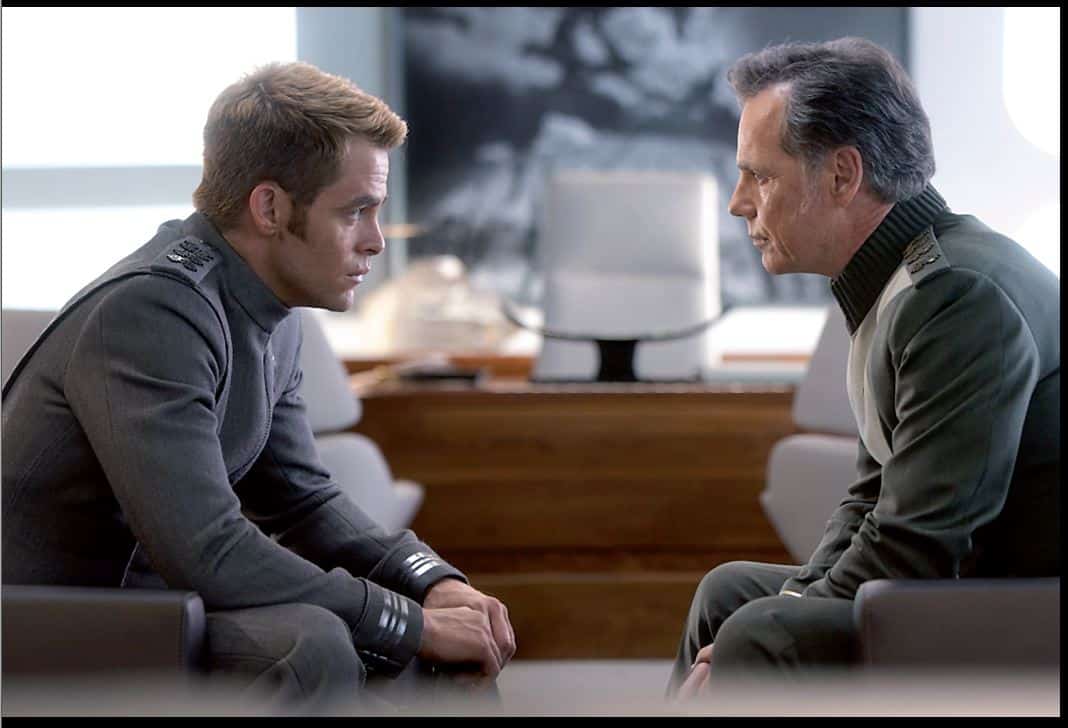
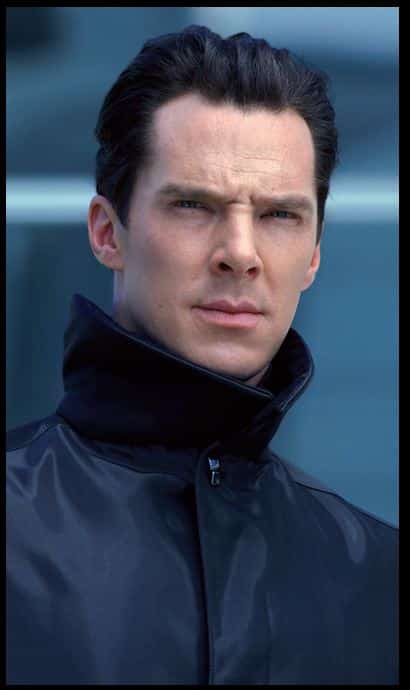
Maryann Brandon: (Spoilers!) That’s hard to say. The film is a series of cuts that are all equally good for me. I think the rhythm turned out particularly well. Good editing is best when it’s not even noticeable. But the way the scene in the conference room turned out, just before Pike dies – we arranged it so that Kirk only finds out after the fight with Harrison/Benedict Cumberbatch. That makes the shock for Kirk much clearer. And I also think the opening scene is very well done – a great introduction of all the important characters.
DP: And now the most obvious question: were you already a Trekkie before working on “Star Trek”?
Maryann Brandon: I wouldn’t call myself a hardcore aficionado, but I did watch the original series as a kid, of course – along with “Twilight Zone”, “Outer Limits”, “Lost In Space”, “Night Gallery” and “Chiller Theatre”. Still, I enjoyed working on “Star Trek” – it may not be the “Final Frontier”, but it’s still a universe you enjoy being in.
Julian Smirke: I was more of a fan of the “Next Generation”, so of course I was familiar with the world. And of course I’ve seen all the films. After such a template, it’s an honour to work on the latest iteration of the Star Trek films.

