



This article by Michael Krimmer originally appeared in DP 05 : 2010.
There are not many successful German games developers who survived the boom years of the 80s and still regularly bring titles to market today. One veteran of the German games studio sector is Blue Byte. And this studio is still successfully developing games 22 years after it was founded.
Blue Byte, founded in 1988 by former employees of the German studio Rainbow Arts in Mülheim an der Ruhr via Blue Byte GmbH, specialised in the development of strategy games and simulations from the very beginning.
The first major success was the tennis simulation “Pro Tennis Tour” from 1989, which sold a good 500,000 copies in total. This was followed by such successful titles as “Battle Isle”, which made its debut in 1991 and received a total of two sequels.
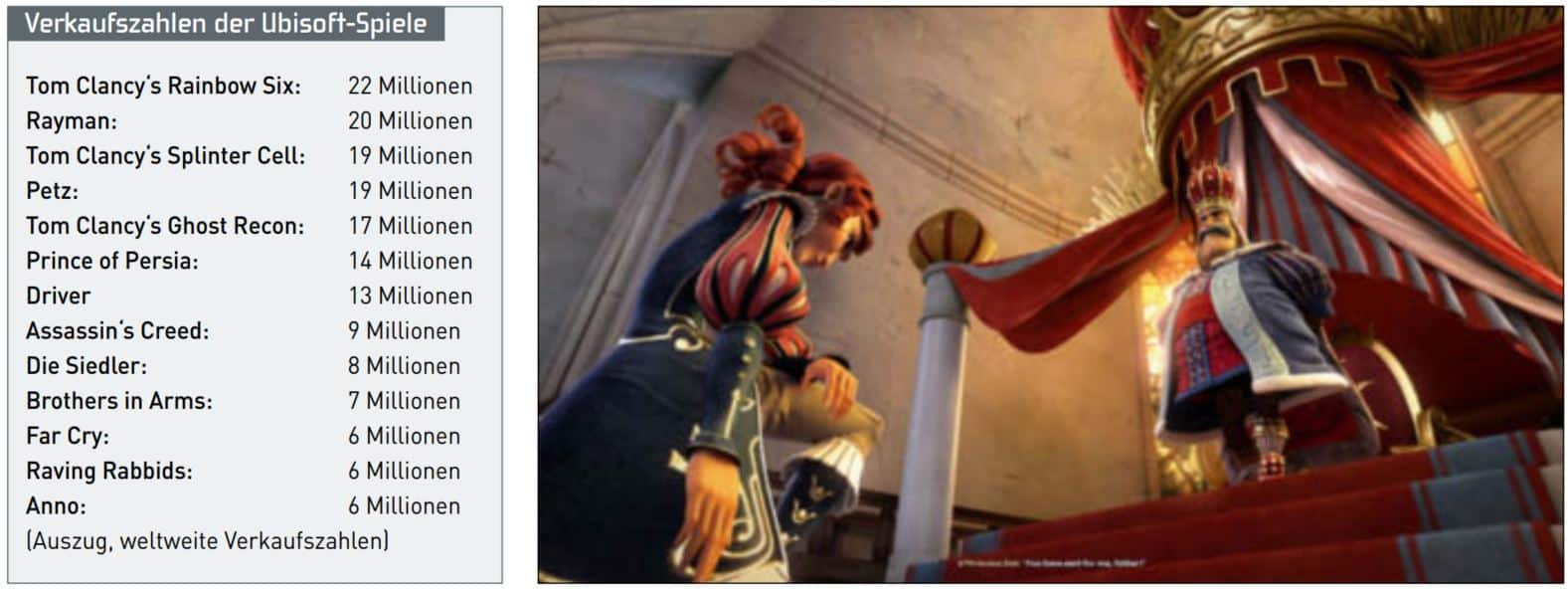
However, none of Blue Byte’s many titles were as successful as the first version of “The Settlers”, which was launched in 1993. To date, more than 8,000,000 copies of The Settlers games have been sold.
Today, 17 years after the release of the first version, Blue Byte launched version 7 of the Settlers series on the market in March 2010 and is expected to continue the success of the previous versions. One reason for this success, in addition to the steadily growing target group over the years, may also be that “The Settlers” is still not only being developed for Windows PCs, contrary to what has been announced in the meantime. A large fan base has also formed among users of Apple’s Mac OS, who have contributed to the success of The Settlers, episode after episode.
In 2001, Blue Byte was taken over by the French publisher Ubisoft. Ubisoft paid 26 million marks for the acquisition and also acquired the rights to all previous Blue Byte game titles. In retrospect, this investment was probably worth it for the rights to the Settlers series alone. As part of the integration into the Ubisoft studio group, Blue Byte moved to the Ubisoft headquarters in Düsseldorf in 2003.
Blue Byte was integrated into the worldwide network of Ubisoft studios. This network consists of 24 studios in 17 countries, making it the second largest in-house development resource in the world. Ubisoft employs around 5,300 people in the area of production. Well over 120 employees work on a project like “The Settlers 7”. In the case of “The Settlers 7”, external service providers also contributed to the game’s soundtrack, for example.
The Ubisoft studios in Montreal and Bucharest were also involved in the production process, working closely with their colleagues from Blue Byte on the internet connection for the multiplayer mode or supporting the quality assurance test area.
Ubisoft relies on a combination of organic growth and acquisitions and acquires studios and brands from time to time when the opportunity arises. In 2007, for example, the German publisher Sunflowers was acquired along with the rights to the “Anno” series. “Anno” is a popular economic simulation game that has been around since 1998, when the first instalment of the series, “Anno 1602”, was released. This was followed by “Anno 1503” in 2002, “Anno 1701” in 2006 and “Anno 1404” in 2009. The rights to “Driver”, a type of driving simulation previously owned by Atari, were also added to the Ubisoft portfolio.
The result was a heavyweight in the games industry that generated a turnover of 1.058 billion euros in the 2008/2009 financial year and was the number three independent publisher in Japan. And with further acquisitions, the Ubisoft project could slowly but surely develop just like a healthy city in “The Settlers”.
About Blue Byte GmbH
Blue Byte was founded in 1988 by former Rainbow Arts employees Thomas Hertzler and Lothar Schmitt. The company was based in Mülheim an der Ruhr. Right from the start, successful titles were developed, but the final breakthrough came with the building strategy simulation “The Settlers”.
In 1994, a subsidiary was founded in Northampton, England, so that the English-speaking market could also be served. Just one year later, a branch was opened in Schaumburg, Illinois. This additional branch was intended to help the company become active on the North American market.
This was followed by several successful years, but also some that went less well. in 1997 and 1998, Blue Byte had to cope with the departure of some veteran employees who founded their own studio: Funatics. The development studio Funatics is still in business today and has developed several titles for the French games developer and distributor Ubisoft in recent years, including some based on “The Settlers”. It was also Ubisoft that took over Blue Byte in February 2001 for around 26 million marks.
As part of the takeover, Blue Byte relocated its headquarters to Düsseldorf in 2003, where Ubisoft Germany also has its headquarters. Web: www.bluebyte.de

Interview | Benedikt Grindel
Benedikt Grindel, born on 6 March 1969, has been working as a producer at Blue Byte since April 2001 and was significantly involved in the production of “The Settlers 7”. In an interview with DIGITAL PRODUCTION, he talks about the production of the latest instalment in the Settlers series.

DP: Does Blue Byte develop exclusively in Germany or are games also created in your own studios abroad, in a kind of round-the-clock workflow?
Benedikt Grindel: The game is largely developed in our studio in Germany. However, we also use resources from other Ubisoft studios, such as the one in Montreal, as well as other outsourcing partners. The cut-scene sequences in “The Settlers 7” were created in France at the Chez Eddy studio. Dialogue sequences and in-game animations were made in Dresden by PiXABLE. We simply drew on expertise from the film industry to further emphasise the new graphic style. The fact that the soundtrack comes from service providers is nothing new. Very few studios have their own composer. However, our major studios in Montreal and Shanghai have their own sound studios.

DP: How long does the visual polish take in post-production once the game itself is finished?
Benedikt Grindel: It’s difficult to say, because the finishing touches don’t just start in post-production. In the last two months of development, we worked almost exclusively on the finishing touches, but this was also done beforehand, especially for buildings and characters.
DP: What software do you use to develop your games?
Benedikt Grindel: The programming mainly uses C and LUA, in graphics we used 3ds Max for 3D modelling, Photoshop for texturing and Softimage for creating the animations.
DP: What hardware equipment do you have at Blue Byte?
Benedikt Grindel: We use powerful PCs, mostly dual- or quad-core, which are also all equipped with fast graphics cards.
DP: How high is the proportion of a game’s post-production compared to the other development stages?
Benedikt Grindel: That is also difficult to quantify. One estimate: the visual polish takes up around 30 per cent of the time spent on creating the graphics.
DP: Does Blue Byte or Ubisoft outsource the post-production work or is everything done internally?
Benedikt Grindel: As already mentioned, this is essentially done internally, even for assets that we have created externally. In individual cases, such as animations, our partners have also been involved in post-production.
DP: How great is the pressure for developers when you continue a series like “The Settlers”, which is expected to be commercially successful with every sequel?
Benedikt Grindel: It’s pressure on the one hand, but it’s also a good starting point. I believe that the risk of commercial failure is greater with a new brand launch than it is with Ubisoft’s own CGI studio for a well-known title.
DP: Which Blue Byte production was the highlight of the past few years?
Benedikt Grindel: For me, THE highlight of the last few years is Settlers 7.
DP: What are you currently working on?
Benedikt Grindel: We’re still working on The Settlers 7, but I’m not allowed to say anything else here.

Interview | Odile Limpach
Odile Limpach, born on 9 March 1971, has been with Ubisoft since 1996 and is currently Managing Director & Product Development at Blue Byte.

DP: Founded in 1988, Blue Byte was acquired by Ubisoft in 2001. What is life like under the umbrella of one of the world’s largest publishers and what about studio freedom?
Odile Limpach: We are fully involved in the development processes at Ubisoft, but we have a lot of freedom in our decisions. That’s a great situation: with Ubisoft behind us, we have access to the expertise and technology of over 5,000 developers worldwide. We benefit from the methods, processes and experience of the Ubisoft Group and the studio network, which consists of 24 studios in 17 countries.
DP: Given the history of the Settlers series, was it foreseeable that “The Settlers 7” would also be a success or is it always a risk until the launch, as with any other game?
Odile Limpach: There is always a certain risk because markets change. But with the quality delivered and the brand loyalty of our Settlers fans, we were very confident.
DP: And how is the current seventh instalment in the Settlers series selling?
Odile Limpach: It’s still too early to make a real judgement because Settlers games traditionally sell for a very long time. We are satisfied with the initial sales.
DP: Is it more of an advantage or a disadvantage these days to develop computer games in Germany?
Odile Limpach: Germany still has some catching up to do, especially in terms of training, promotion and social recognition of our industry. But there are some initial positive developments. We like being in Germany and want to stay here.
DP: Many sectors have suffered from the economic crisis in recent months. How hard has Blue Byte/Ubisoft been hit and how are things looking at the moment?
Odile Limpach: The crisis has not left us unscathed, but it has not hit the industry and our company as hard as others.
DP: What were the strategies to avoid failure during the crisis?

Odile Limpach: We focussed on what we do best: Publishing good games and monitoring the market for new niches.
DP: Which three titles have been the commercial highlights of the past few years?
Odile Limpach: For Blue Byte, The Settlers and the Anno series. For Ubisoft worldwide, Assassin’s Creed I and II, probably the most successful new brand launches in our sector for a long time.
DP: Are there any international co-operations, mergers or acquisitions planned?
Odile Limpach: Blue Byte and Ubisoft have invested a lot in recent years, and our internal development resources have continued to grow even during the crisis. Unfortunately, I can’t give any details about future developments here.

