



He says: “I can play the guitar. But as far as the piano goes, I’ve been playing it since I was 15, but only more seriously in the last four years.” Though no matter how much Andrew practices, he barely gets better – at least “compared to Thelonious Monk or Ray Charles”, to put it in Andrew’s delicate vernacular. “I really stink. But it’s fun. It keeps my music theory and harmony percolating.”, says the man who charted on the Billboard Alternative Video chart before imprinting himself on animated culture through contributions to The Angry Beavers, Family Guy or SpongeBob SquarePants.

For Andrew, good animation oftentimes is “simple but complex, it’s multilayered but not complicated”, as he says it – at least on shows like SpongeBob or animated oldies like Rocky & Bullwinkle or George of the Jungle (both of which got turned into Brendan-Fraser-starring live-action feature films in the 90s). Back in DP 06:21, where we carved out a chair out of a pineapple for Jacques Daigle, who served as an Animation Supervisor at Mikros Animation for “The SpongeBob Movie: Sponge on the Run”, we came across Andrew’s name initially, when Jacques told us that “Andrew worked on the show for 20 years. With this expertise at our disposal, we could do almost anything as animators.”
During his industrious career, Andrew has put on many different hats from the animation wardrobe: 2D Animation Director, Timing Director, Head of Character Animation, CG Animation Director, Animator, Writer, Director, Producer and Cinematographer are the many positions, Andrew has filled out in the course of his decades-spanning career – which got its start at Nickelodeon in 1997, where he earned his spurs as Animation Timer on “Angry Beavers”.
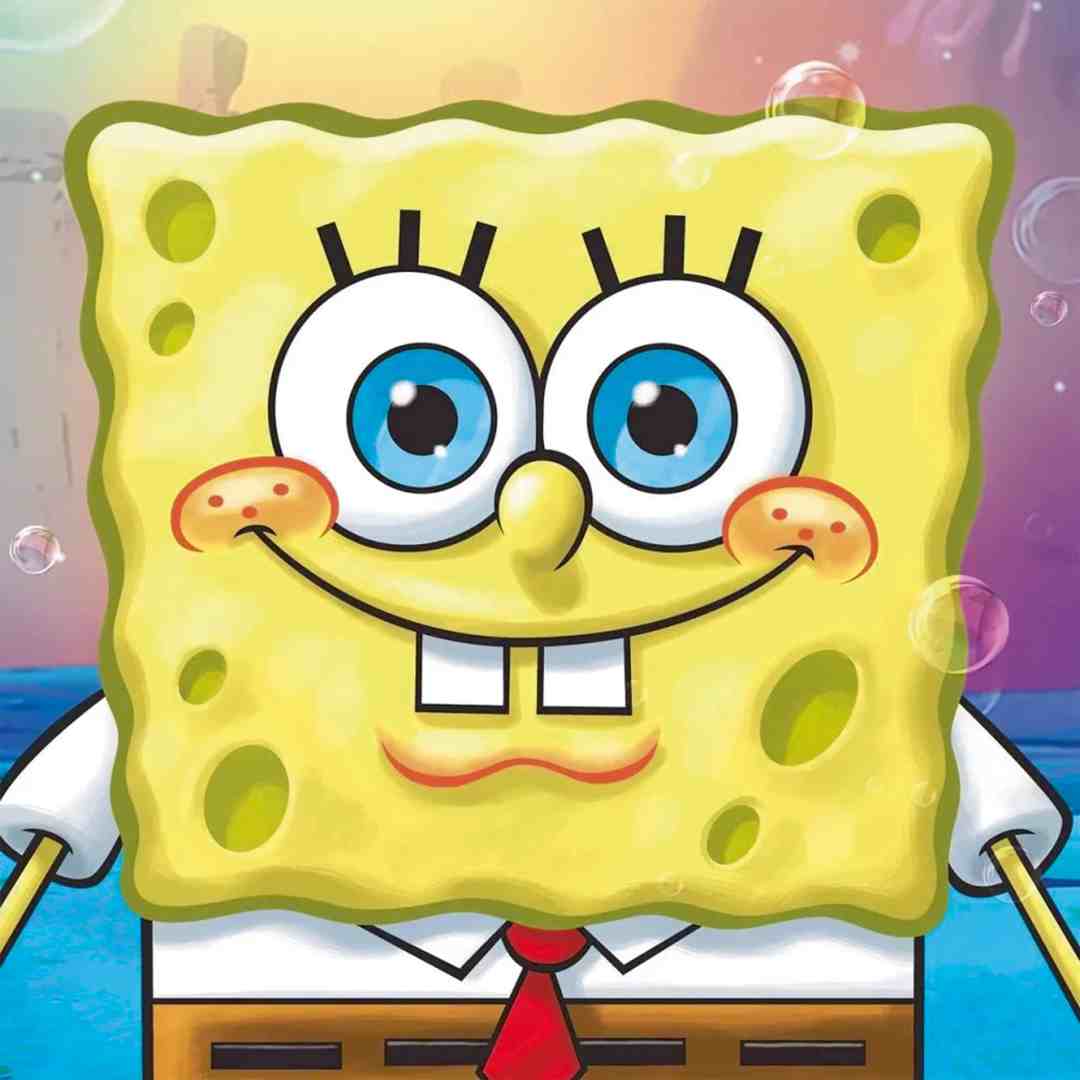
Only two years later, in 1999, Andrew dove deep into the animated ocean, plunging full time into animation directing on “SpongeBob SquarePants”. Since then, Andrew has been a long-term tourist of Bikini Bottom as Animation Director on the TV Movies “SpongeBob SquarePants: Behind the Pants”, “SpongeBob SquarePants: Spongicus”, on the video shots “SpongeBob SquarePants: Nautical Nonsense” and – most prominently – the first theatrical adventure of the world’s most beloved deep-sea dumb ass “The SpongeBob SquarePants Movie” and its most recent sequel “The SpongeBob Movie: Sponge on the Run”, the latter of which Andrew worked on as Head of Character Animation; in the same capacity Andrew helped sidekick Patrick Star to become the star of his own animated TV series: “The Patrick Star Show”.
Beyond Stephen Hillenburg’s aquatic lunatics, Andrew portfolio assembles animated gold like Family Guy (Animation Timer), The Emperor’s New School (Timing Director), Phineas and Ferb (Timing Director), Adventure Time (Sheet Timer) or Billy Dilley’s Super-Duper Subterranean Summer (Supervising Timing Director). Put together, Andrew has been part of Nickelodeon Animation for over 15 years, with career steps at Walt Disney Animation Studios, Paramount Pictures and Mikros Animation peppered in between.
He is an alumnus of the Vancouver Film School, where he graduated with a degree in Classical Animation. He also studied CG Animation with Autodesk Maya later in his career at Glendale Community College.
DP: You were an Animation Timer on one of our favourite animated TV series of all time: The Angry Beavers. What was that like?
Andrew Overtoom: It was great. That was my first professional gig after school. Towards the end of the school year, we would go in and work at International Rocketship Limited. I think they were working on Tales from the Far Side. International Rocketship Limited was Marv Newland’s studio, the guy who did Bambi meets Godzilla (see info-box – Editor’s note).
Those guys were our teachers; animators who worked there. I was working there one night on some little project they had given me, when I saw an animation magazine. Inside that magazine was a picture of Norbert and Daggett (Andrew is referring to the animated show The Angry Beavers. Editor’s note). And I was like: “Whoa! That’s the show I want to work on!” Then I went to the animation festival in Pasadena, where I met the supervising producer of The Angry Beavers: Michael Gerard.
He wanted to see anybody who went to school in Canada personally. So, I got to meet the actual producer of the show. I showed him my reel – and Michael is a very serious guy. To me, he seemed scary. He’s like a hippie with a cowboy hat, long hair, and hard eyes.

But halfway through, he started laughing. I was like: “This is great! The guy is laughing!” He said: “You would make a great animation timer. I’ll call you when the festival’s over.” It’s really hard when you’re done with animation school but don’t have a job yet. I really wanted to work with Nickelodeon – and Michael Gerard made it happen for me, so I’ll always have a soft spot for that guy.
DP: Do you remember what it was about your reel that made Michael Gerard laugh?
Andrew Overtoom: It was a three-minute film about the history of flight. The thing that made Michael laugh was a scene where there’s a Hindenburg dirigible. The pilot winds up inside the dirigible, bouncing around. In addition, there’s a bathtub hanging from it. The pilot bursts through the bottom and into the bathtub. Then, the pilot is just sitting there, and you think it’s all over. But then, the gasbag ignites. That made Michael laugh.
DP: Why did Michael ask explicitly for Canadian graduates?
Andrew Overtoom: He felt that Canadians had better programs, that they were animating better. Back then, I was still a student, so I didn’t know anything about the business. At the Vancouver Film School, we had actual animators teaching us. We were doing it all day: Flipping and drawing and flipping and drawing.
When I went to the United States and met people who had gone to these fancy schools, some of them weren’t flipping or even interested in animation; they were only interested in design. A lot of them couldn’t flip in-betweens. I was confused because I thought it was all about animation. They would just push the page up and down instead of doing the actual flip. I guess it was a different curriculum and sensibility. Anyway: The Classical Animation Program at the Vancouver Film School was superb.
But eventually, it’s like any art school: Only a small percentage of people actually work in the industry after graduation. I think it’s like five or ten percent of graduates who get industry jobs. Out of my class, it was me, Trent Noble and Yann Tremblay. So, out of 30 people, there were three to five who’d go into the industry.
A lot of people go into animation because they love drawing. But I think many of my former co-students wound up illustrating, or are working in the arts outside of animation. For me personally, I loved the filmmaking aspect. I didn’t really care about drawing. That’s a necessity for making a movie.
But I guess if you really love to draw, and that’s why you got into the Classical Animation Program, it can be a bit of a drag. Because the better at drawing you are, the worse your job possibilities are. They give you the job where you have to do the in-betweening of, for example, a horse galloping – and it’s brutal. But that’s just my personal opinion.

DP: What were some of the early influences that sparked your enthusiasm about the art form?
Andrew Overtoom: Initially, I was a musician in New York City. Beyond that, I always had an interest in film. As a kid, I used to draw. Also, I had a strong photography background. Somewhere along the line, I decided: “Hey, I should make a music video!” The music video came out great. It was pretty popular. As a consequence, we made another one. That second one charted on the Billboard Alternative Video chart. It charted at number 13 nationwide. We didn’t even have the song in the record stores.
At the New Music Seminar in New York City, there was a seminar on music videos – and some lady from Warner Brothers pointed us out, me and my bandmate, sitting in the audience. She was like: “These dummies don’t even have their record in stores!” And I was like: “How am I supposed to know how this works?” Anyway, the video was much more successful than the band itself. As a result, I was like: “Maybe I should go to film.” Later on, when I saw Wallace and Gromit, I was like: “Whoa! That’s what I want to do! I want to animate for film!”
DP: What was the title of that song?
Andrew Overtoom: The first video was “Bowl of Water” by Woodpecker. And then there were “Kim” and “Hillbilly Song”, both also by Woodpecker. Those were our three music videos. After that, I went to film school (tune in on Spotify: is.gd/WoodpeckerSpotify).

DP: What was your first experience in the industry like, being an Animation Timer for Angry Beavers?
Andrew Overtoom: The first few weeks were really hard. I had no idea what I was supposed to do. Yes, I could animate, but I didn’t know the American system where you direct the animation and then send the sheets to the animators. It took me a little while to figure it out. I had to study other people’s sheets. But finally, it clicked for me – I think right before they were about to fire me.
I remember my director Patty Shinagawa yelling out of her office: “Eureka! He’s finally got it! Thank God!” It was a little scary for a while. If I had gotten fired, it would have been not good. It was sink or swim. They didn’t really tell me anything, they just threw me in the deep end.
DP: Next to The Angry Beavers, The Emperor’s New School or Phineas and Ferb, the most prominent IP you’re associated with is SpongeBob Squarepants.
Andrew Overtoom: Yeah, I met Animator and Director Tom Yasumi on Angry Beavers. Tom is a very hardcore, no nonsense Japanese American guy. I remember, on the first day of my first job at Nickelodeon, they said: “If you have any questions about the work, ask Tom.” Tom came over to me after Patty left and said: “I’ll tell you one thing: You’re on your own.” Anyway, Tom started to like me over time, since our cubicles were right next to each other. Also, we have the same sense of humour.

are Tim Burton movies like Corpse Bride or Wes Anderson movies like Isle of Dogs.
When we moved to the new studio in Burbank, Tom and I became roommates. We shared an office. After that, Tom was hired to do SpongeBob, and left Angry Beavers. At that point, SpongeBob needed a freelance animation director to help out. And Tom said: “My roommate, Andrew Overtoom, is pretty good. I take no responsibility, but you could try him.” So, they did. Alan Smart liked my work. When season two of SpongeBob came around, I was working on Beavers and freelancing for SpongeBob. They hired me as an animation director full time for the second season of SpongeBob.
DP: At which point did you realize SpongeBob would become that cultural phenomenon that it is today?
Andrew Overtoom: It didn’t really start to get big until the end of season three. Stephen (Hillenburg, creator of SpongeBob) always wanted to do three seasons. And then, by the end of season three, SpongeBob started to be popular.
They started making toys, and doing publicity – I guess they wanted to keep it going. And Stephen said: “I’ll do a movie, but we’ll have to stop the show.” So, that’s what we did, which was fun (Andrew is referring to “The SpongeBob SquarePants Movie” from 2004). After that, SpongeBob became more and more popular. Then, Paul took over running the TV show. SpongeBob got even more popular under him (Paul Tibbitt was the showrunner of SpongeBob SquarePants from 2005 until 2015.). It just grew and grew.

titular character is very prominently having a pee. Eventually, Cartoon Network opted to not show the scene on television.
DP: What animation rules were there on SpongeBob?
Andrew Overtoom: You have to know your ones and twos really well. Yes, that’s the base for all animation – but particularly on SpongeBob, where there is a lot of slow and fast action. For once, if you do everything fast, it doesn’t work. A rule of thumb is: You must be slow to have fast. So, it’s always about juxtaposing the slow with the fast. Knowing when to use your ones and twos – or when to hold a pose and when to add a little bit of business, is also important. It’s always about adjustment. I liked this style of animation on SpongeBob.
Regarding animation, Stephen liked what he called punk rock – which means: It’s a little bit clunky. Stephen just wanted the animation to be punchy, funny and support the story. I really liked his sensibility. It was multi-layered but not complicated. Not only that, but it was a modern version of Jay Ward’s style of animation, like “Rocky and Bullwinkle”, “Dudley Do – Right” or “George of the Jungle”. Kinda dumb. But in this case, dumb is good. A sophisticated dumb.
To give you an example: Patrick Star is a dumb guy, but actually, he’s not just a dumb guy. Patrick is a dumb guy who thinks he’s smart. And there is his buddy, SpongeBob, who is just a nuance smarter than Patrick, and who also thinks Patrick is smart.
DP: In DP 06:21 we talked with Jacques Daigle from Mikros Animation, who served as the animation supervisor on Sponge on the Run. Jacques told us about this trick they would use, where character’s geometries would look good from the point of view of the audience. But if you would reposition the virtual camera in the slightest, that character’s geometry would fall apart. To put it in other words: The characters were positioned in such a way that they would look good in camera, while neglecting any physical logic at the same time.
Andrew Overtoom: Yeah, I blatantly stole that technique from the BlueSky guys (laughs). You have to know, Charlie Brown and Snoopy, they don’t turn, they don’t rotate. Because of that, if you look at the characters from the camera’s viewpoint, it looks fine. If you put the camera – to pick a random number – 22 and a half degrees around the circle, it’s a disaster. It only looks right from one view.


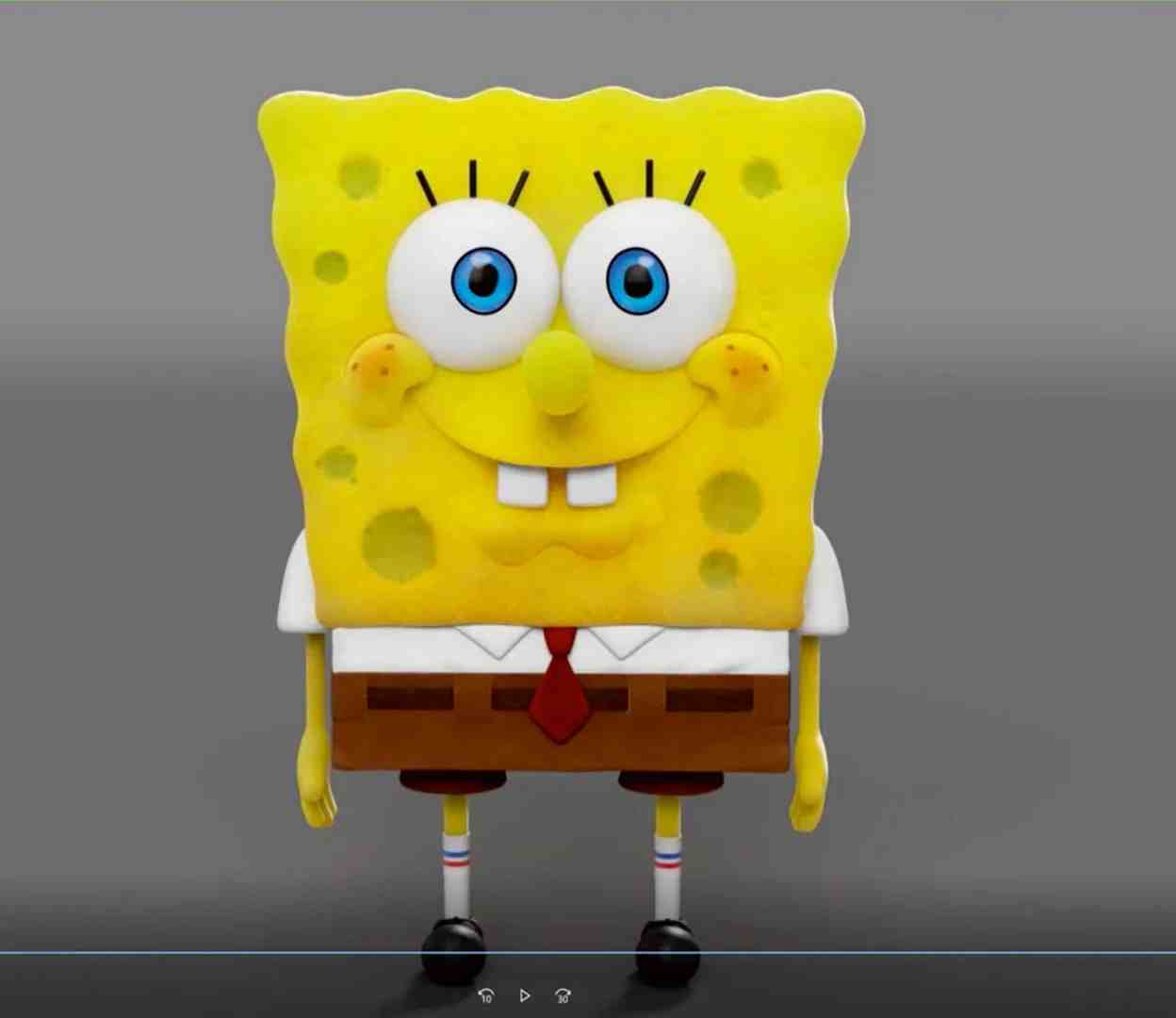
The SpongeBob movies are always separate entities. But in the SpongeBob movies, I was one of the few people left around who knew how to animate SpongeBob the original way. There’s me, Alan Smart and Tom Yasumi. On the most recent movie, The SpongeBob Movie: Sponge on the Run, they brought me in, so I could recreate the feel of the first three seasons of the TV series. I taught everybody how to use ones and twos, and how to translate those to CGI.
I did a lot of Autodesk Maya back in 2005 until 2008. So, I had a background in CGI, in addition to traditional 2D animation. With that knowledge, I translated the world of 2D animation from the SpongeBob TV-Series to 3D in Sponge on the Run. For that, I used “The Peanuts Movie” from BlueSky Studios Blue Skies as a reference.
Then I rewatched all the early episodes of SpongeBob – and just replicated that style for the movie. It’s a little bit like stop-motion, where I also have a professional background. In summing up, animating for Sponge on the Run required a marriage of three disciplines: 2D, CGI and stop-motion.
DP: Did you get in touch with people from BlueSky?
Andrew Overtoom: I was just looking at interviews and articles on the Internet about how BlueSky accomplished this look. And I studied the Peanuts Movie itself. And then, the art director Rachel Tiep-Daniels came onto the movie – and she was from BlueSky.
She said to me: “I know those guys who did that! I know what you’re trying to do. We should work together.” To which I said: “Okay, that’s good.” (Rachel worked as a Set Designer/Visual Development Artist at Blue Sky Studios from 2009 until 2011. After being 3D Set Designer for DreamWorks Animation from 2011 until 2018, she joined Paramount Pictures as an Art Director for Sponge on the Run. Editor’s note.). Rachel and I got along really well. We became partners with regard to characters, surfacing, and animation. Rachel was a very happy accident.


DP: Moving on from one show with moronic characters at the center to another one: You served as a Timing Director on Family Guy, right?
Andrew Overtoom: You got that right (laughs). For me, Family Guy came after the first SpongeBob movie was finished, when I was looking for a gig. As far as I know, they had cancelled Family Guy. But then, once they released the DVDs and sold millions and millions copies of that, Fox Entertainment was like: “Okay. Maybe cancelling it was a hasty decision. Let’s do it again.”
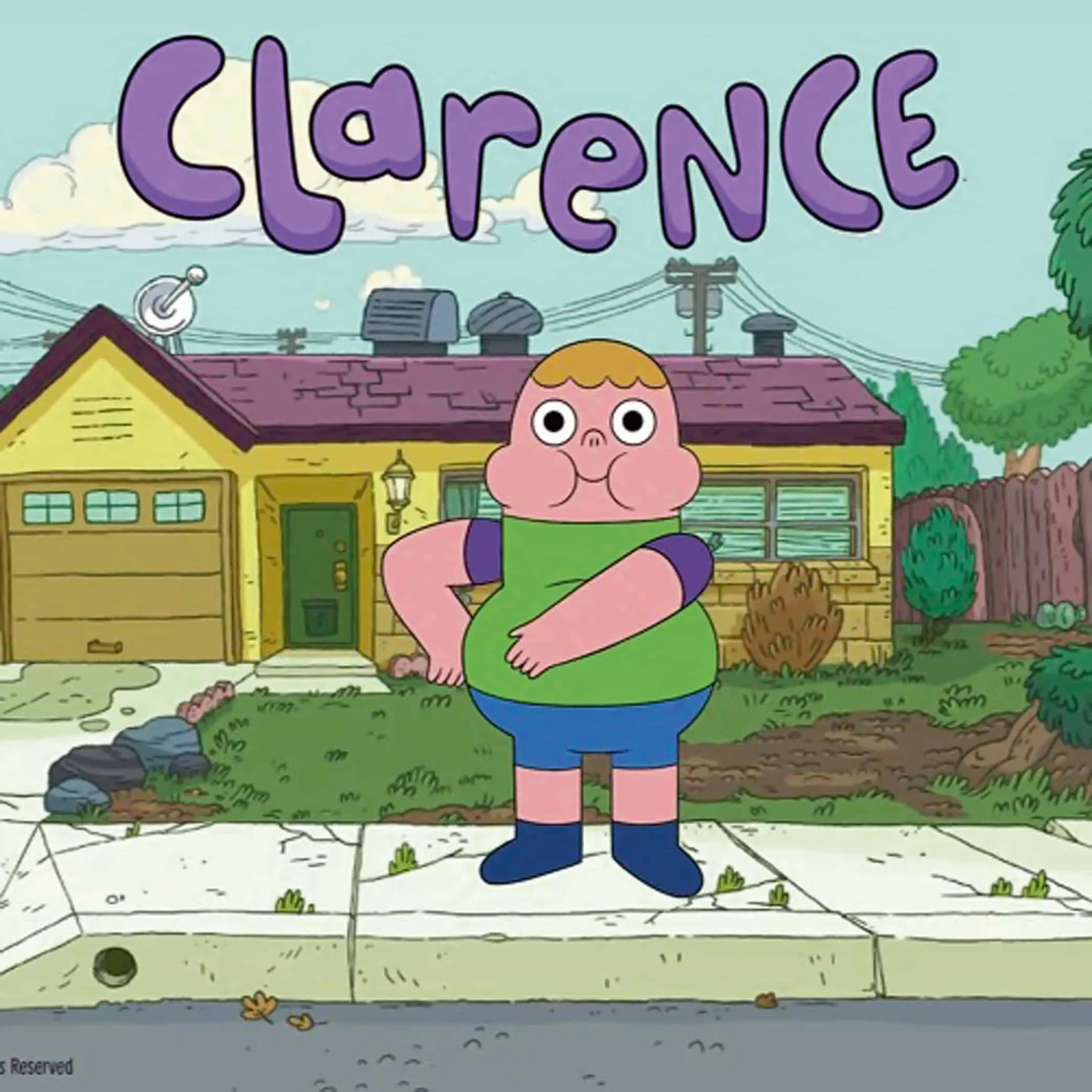
So, I started working on Family Guy for season four. With regard to animating, Family Guy was very different from SpongeBob. For Family Guy, Peter Shin was the supervising director then. Peter had a specific timing that was pretty radical. It was very fast and similar to how we do The Patrick Star Show, but Peter Shin was doing it back in 2004 (Andrew Overtoom is the animation director on the SpongeBob-spinoff-series The Patrick Star Show).
DP: Let’s say I would be an animator on Family Guy or The Patrick Star Show, how would you brief me about the most important points I must hit as an animator?
Andrew Overtoom: I would say: Follow the animatic exactly. And then: Hit all the poses. Make everything as short as possible – but don’t be too fast. Also, Family Guy rarely uses overshoots and settles, but I use them all the time for The Patrick Star Show (for a concise explanation about Overshoot & Settle, see this one-minute video on the YouTube channel “3D Animation Hub”: is.gd/OvershootAndSettle).
DP: One of your credits that stands out is a live-action feature film called “My Life with Morrissey”. Was that just a love letter to the musician?
Andrew Overtoom: No, not really (laughs). It’s a dark comedy about celebrity and obsession – and about a girl who loves Morrissey. As you may know, Morrissey fans can be really obsessive.
For the movie, I was just using Morrissey as a vehicle. It tells the story of a girl whose life falls apart after she meets Morrissey by chance. That’s a Morrissey thing. People constantly run into him in L.A. It’s like a red badge of courage for his fans. So, this actually happened to her; she was telling me about it (Andrew is referring to Jackie Buscarino, who acted as the main character in “My Life with Morrissey”.
In 2003, when the movie was released, Jackie was a Production Assistant for Nickelodeon Animation. Today, she is a Producer for Cartoon Network, who’s most recent credits include the animated television series “Steven Universe”, “Steven Universe Future” and “Victor and Valentino”). She met Morrissey at a bar and said: “Can I hug you?” To which he said: “Okay?” So, she leaned over to hug him – and knocked his drink over into his lap (laughs).
We did that movie independent and on the cheap. I shot a lot of it at Nickelodeon and at businesses in Burbank. The distributor is actually re-releasing the movie in 2023, so next year. It’s a 20th anniversary re-release in 4K for streaming. Originally, the movie was shot on 16 mm and finished on Digibeta.
