



Discussing with Digital Production, the team at Mondlicht Studios shared insights into their experience with Substrate. They covered the various applications, benefits, and challenges of using Unreal’s new material system. hey utilized it to create a two-minute showcase video featuring the BMW M8 Competition, demonstrating the advanced capabilities of Substrate materials in action. A part of the video was presented at 2023’s Game Developers Conference (GDC), highlighting the potential of Substrate and showing off Unreal Engine‘s extensive next step in real-time materials.
by Stefan Evrad (Head of UE Department),
David Schaefer (CEO),
Dmitriy Glazyrin (CEO) and
Zhanna Travkina (Creative Producer)


Always check official docs
This may sound quite boring and very obvious but that’s the first thing one has to do (and we know how many are not) to at least to get an in-depth understanding of what Substrate can do and how to handle the new system. The official documentation can be found here. In short terms, Substrate allows you to stack materials on top of each other in an accurate way, and introduces new capabilities within a material. Previously in Unreal, we had the option to use a „clear coat“ material, which contained two layers of material, the top layer mostly designed for varnishes. With Substrate however, you can stack as many layers as you want, multiple coats, multiple bases, and blend them in many different ways. One thing we particularly like is the dual specular which is in each layer, meaning you can have two slightly different roughness levels on one single layer, which helps getting closer to real life materials and offers more creative control over your materials. We used this extensively for the roads and concrete materials, in order to get a nice variation in roughness. We were very happy with how natural it looked considering everything was real-time. In the two images here you can see the really nice specular, which looks much like a crazy calculated rough reflection, but it’s real-time and just looks great.
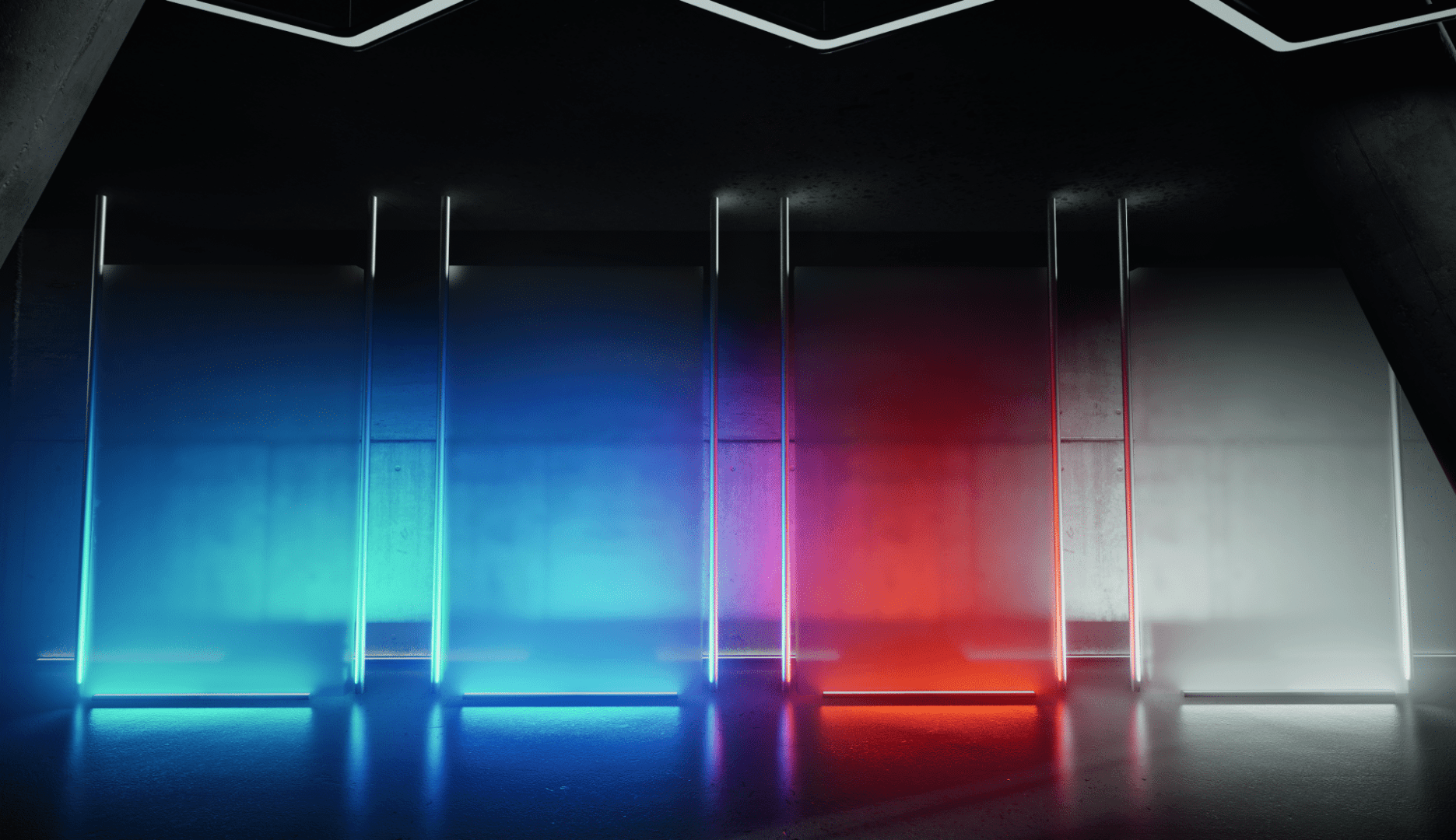

Finally frosted glass! Or: Rough translucency + tinted glass
Glass has always been a bit of a challenge in Unreal. Correct or at least good looking transparency/translucency was always tricky. This is awesome now, but even much better, we finally have frosted glass. In high demand in so many real-time productions, the impact of this is hard to understate. Changing the roughness of translucent materials now actually blurs the background and also lets you tint them very nicely. We could do this using the thin translucent shader before, but with substrate everything is possible without having to switch shader types. We created these 4 panels that ended up being triggered during the animation to light up and display the BMW M colors. To those who haven’t used Unreal in the past it may seem not as great, but it’s mind
blowing.


Thin film
Things like soap bubbles, camera lenses and for example also some automotive headlight cover plastics on cars have this slight rainbow effect that we call thin film. This was implemented into Substrate, and combining it with the tinted glass possibilities. We used it for the headlights to give them a bit more thickness and life, boosting it a tiny bit more than real life to compensate for the fast movements and camera shakes. We wanted to show what’s possible. Usually creatives try to get rid of distracting visual features. Even if they are real, they are most of the time not wanted. We wanted it.

how real car paints are created.
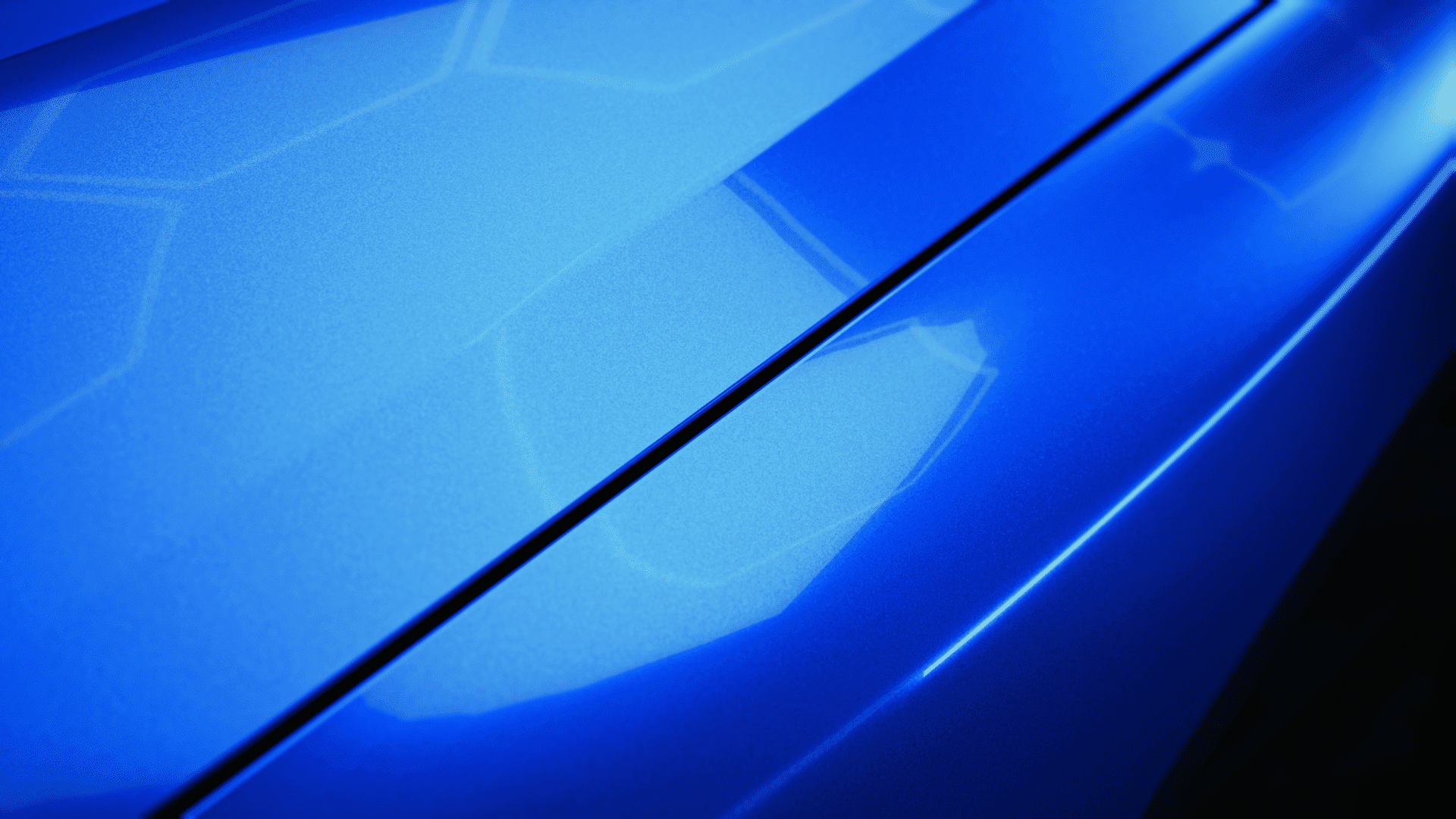

Car paint materials
Perfecting car paints was a crucial task. As subtle as they are, layers of flake, orange peel, specularity, depth, color fall-off caused by the clear coat and clear-coat itself, all should work together to bring complexity and depth within the material. All this was of course much easier to do with the new layer system. Stefan, who had developed his own car paint shader over the years, found it somewhat bittersweet to move away from it. While Substrate made his custom techniques redundant, it also enabled him to design a new shader with far more adjustable parameters. One main thing that also comes with this system is the fact that it is returning to a specular workflow; meaning that while before Unreal used a „metallic“ value, now it’s the Specular value that will determine the reflection IOR, similar to other non-real-time render engines. Tinting the specular value, once again similar to other render engines, allows you to make materials like gold or metallic paints much nicer. Don’t worry if you’re too used to the traditional method though, there are conversion nodes you can use!
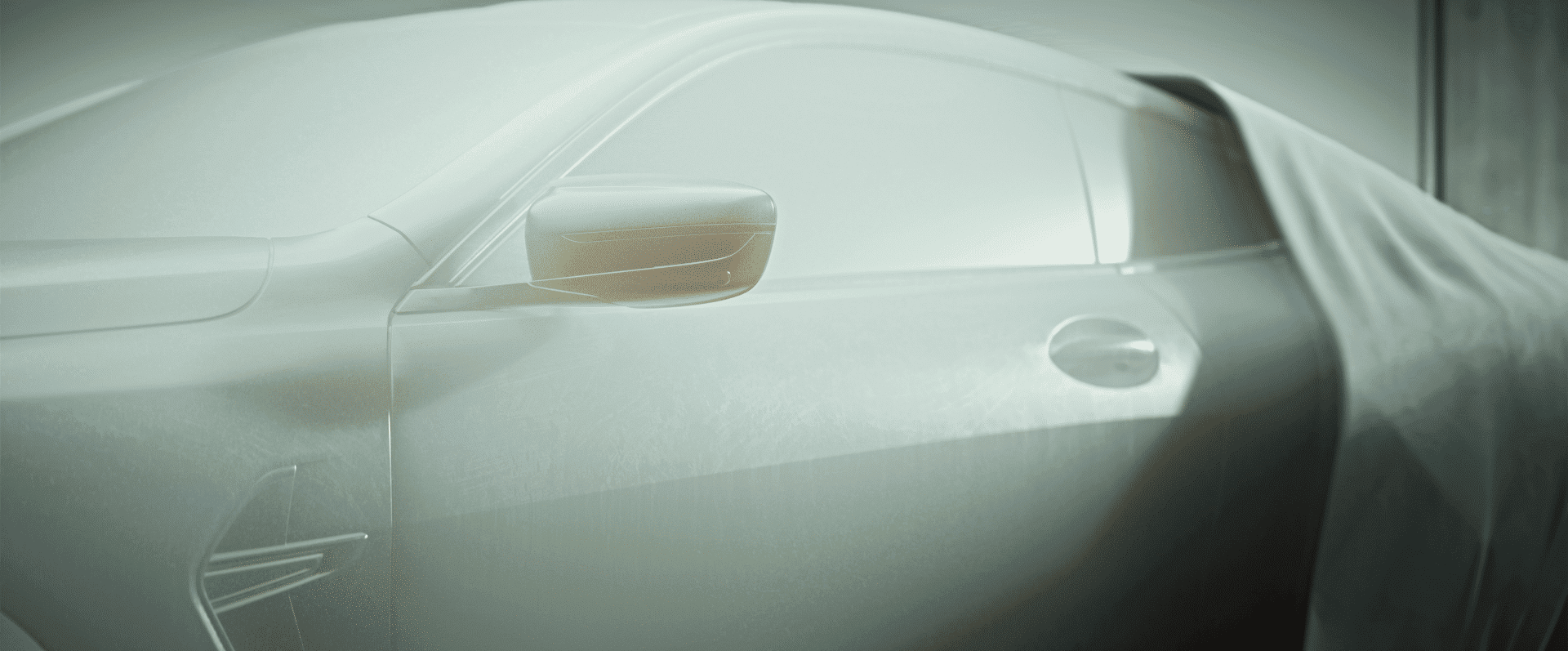

One thing Stefan and any good artist liked to do back in his VRay days was to make sure glossiness values weren’t absolute, meaning 0.95 or 0.05 looked more realistic than 1 or 0 values, as in real life we rarely have absolutely sharp reflections. In Unreal this wasn’t possible before as the roughness value would jump from pure gloss to mat, but now small values work beautifully, and while it’s a tiny change we still like knowing that we can very slightly blur reflections just like in render engines.
SSS
Sub-Surface-Scatter materials were already possible, but now have become even better! In order to showcase this, Stefan created a waxy looking version of the car which just looks smooth and very interesting. It was easy to add details and the intensity of the subsurface to create a specific look.
This new system introduces a variety of additional nodes and techniques worth exploring, marking the beginning of expanded capabilities for material creation and layering. Considering all this is real-time,
the instant feedback you get while now having extremely powerful tools really pushes Unreal one step further in terms of visual fidelity, and we’re excited to see where it will go!

Mondlicht Studios is a CGI Studio located in
the heart of Germany. Boasting a significant background in the automotive sector, their expertise is a testament to their deep roots and understanding of the nuances in this industry. The foundation of the company is built on the rich experience of their co-founders, each bringing close to 20 years of professional expertise to the table.
Surrounded by a small team of veterans and professionals the team is delivering award winning content, providing aid and helping clients to step up. Among these clients are Lucid Motors, LVMH, Nissan, Panerai, BMW, Netflix, Amazon, Netflix and many other renowned brands.
Over the years, they‘ve been honoured with numerous awards including Promax Global Excellence and Clio Entertainment Award. The team‘s dedication to excellence has also led them to be named among the top 200 digital artists in 2021, 2022, and 2023 in the Lürzer’s Archive.
Mondlicht Studios has also been celebrated multiple times at the Motion Design Awards and in 2023 became certified service partners of Epic Games. Beyond their achievements,
they believe in giving back to the community. Members of the team have had the honor of serving as judges at renowned platforms such as the NY Advertising Awards and Promax
North America.
mondlicht-studios.de


And our four Authors are:
Zhanna Travkina (Creative Producer), Stevan Evrad (Head of UE Department),
Dmitry Glazyrin (CEO), David Schaefer (CEO),
