


![A group of people in various poses, with a focus on a woman in white attire, overlayed with the text 'SWITCHX' and the tagline 'SWITCH [ANYTHING]. KEEP WHAT MATTERS.' The scene is set against a beach background at dusk.](https://i0.wp.com/digitalproduction.com/wp-content/uploads/2026/02/beeble-switchx-hero.png?resize=110%2C110&quality=72&ssl=1 "a group of people in various poses with a focus on a woman in white attire overlayed with the text switchx and the tagline switch anything keep what matters the scene is set against a beach background at dusk digital production")


They have to be big enough – but if we build displays into a classic backdrop, we might get the best of both worlds – and if we look at Samsung’s LED display “The Wall“, it already covers a huge area – and was already used in the film “Die Traumnovelle”(is.gd/traumnovelle_imdb)! That’s why we spoke to two people who did just that – Florian Frerichs and Sven Lehmann!
Florian Frerichs (is.gd/frerichs) founded the production company Warnuts Entertainment in 2008 and has since been involved as a producer in numerous short films, music videos and commercials. He was production manager on the thriller “Gefällt Mir” (2014). As a producer and director, Frerichs shot “Alex” (2013), a fake trailer for a kind of remake of Stanley Kubrick’s “A Clockwork Orange”. His dystopian science fiction short film “Phoenix” (2014) and the horror short film “In the Ruins” (2016) were screened at several international genre festivals.
Frerichs tackled a completely different subject in his feature film debut “The Last Supper” (2018), for which he also wrote the screenplay together with Stephan Warnatsch. Sven Lehmann was the VFX supervisor(is.gd/sven_lehmann) and was responsible for setting up the screens and communicating with the Unreal Engine (Summer of Unreal graduate).
DP: Hello! “Virtual production” usually means huge LED volumes and caves, doesn’t it – what did you do there?
Florian Frerichs, director: Die Traumnovelle is a modern adaptation of Arthur Schnitzler’s novel of the same name and is set in Berlin. We are a small, close-knit team of film and technology enthusiasts and have been making films together for years. We have always been interested in technical innovations and achievements. In fact, I can say that we were the first to use one of the first RED cameras in Europe beyond mere testing in 2007. We have also been working on the topic of virtual production for some time. Then, over the course of the year, we familiarised ourselves with Samsung’s solutions – which came at just the right time.
Sven Lehmann, VFX: We shot one scene of the film using three Samsung Micro LED walls called The Wall. It was a suburban railway scene in which the protagonist gets on, looks dreamily outside and meets another person. The opportunities to film in the real S-Bahn are limited. Unlimited filming licences are difficult to obtain, disruptions to ongoing passenger services are inevitable and re-shoots are very time-consuming. That’s why we came up with the idea of using virtual production to create the scene background and lighting. So we shot at the S-Bahn dummy in Babelsberg and used footage of an S-Bahn journey on the LED walls and positioned them behind the windows of the train.
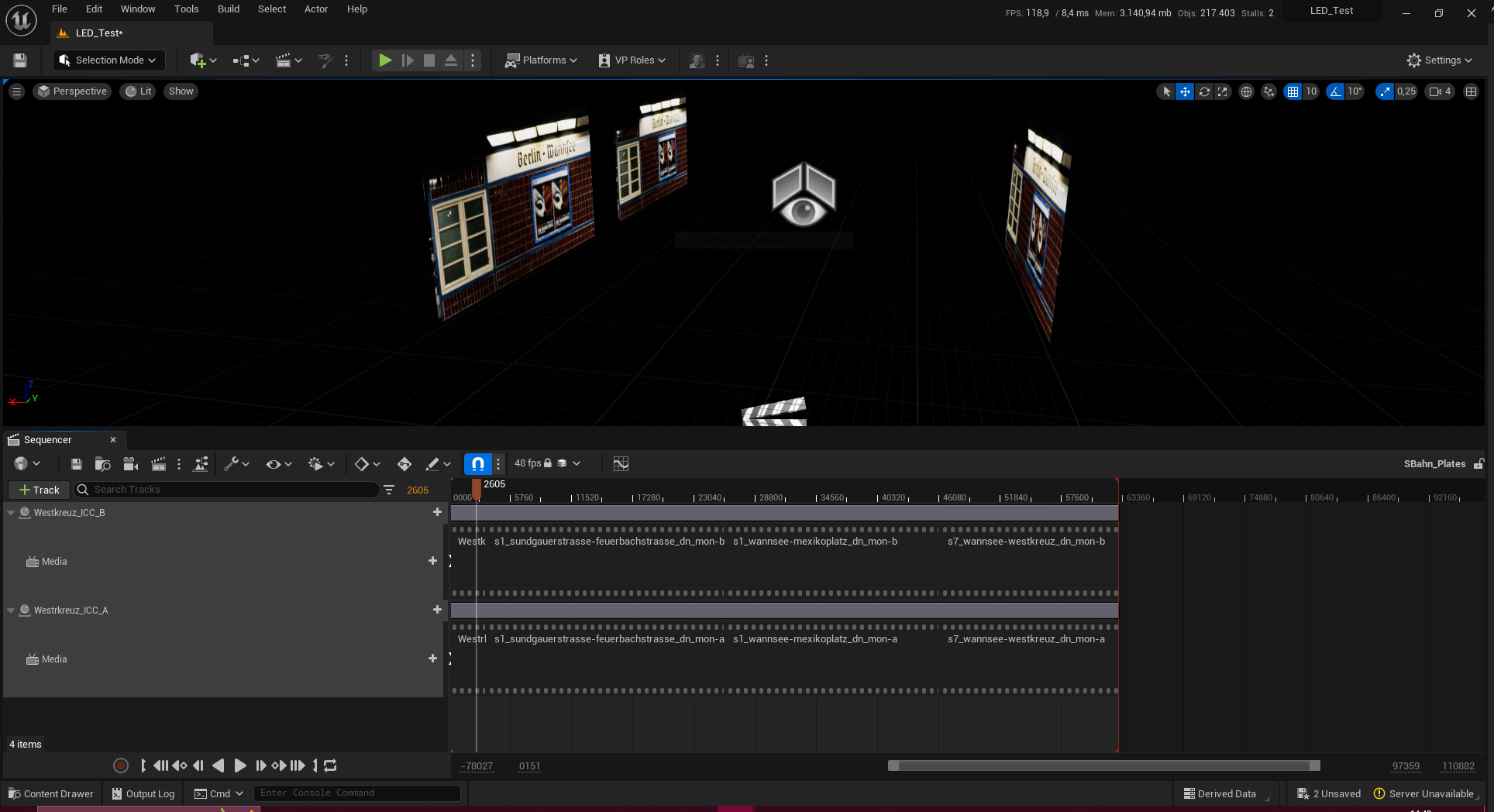
DP: And why did you use the Samsung walls for this?
Sven Lehmann: We were already in contact with Samsung beforehand, as we had already experimented with The Premiere short-throw projector. When the film project came up, we found out more about The Wall and realised that it was ideal for our plans. The decisive factor was the image quality with a low pixel pitch, which is essential for shooting details. The solution can also display special studio image rates, which is important for video synchronisation. Samsung’s LED walls are also easy to operate – basically like a normal Samsung TV. The user interface is even pretty much the same. That makes it much easier to use on set.
DP: How many “The Walls” did you use for the set?
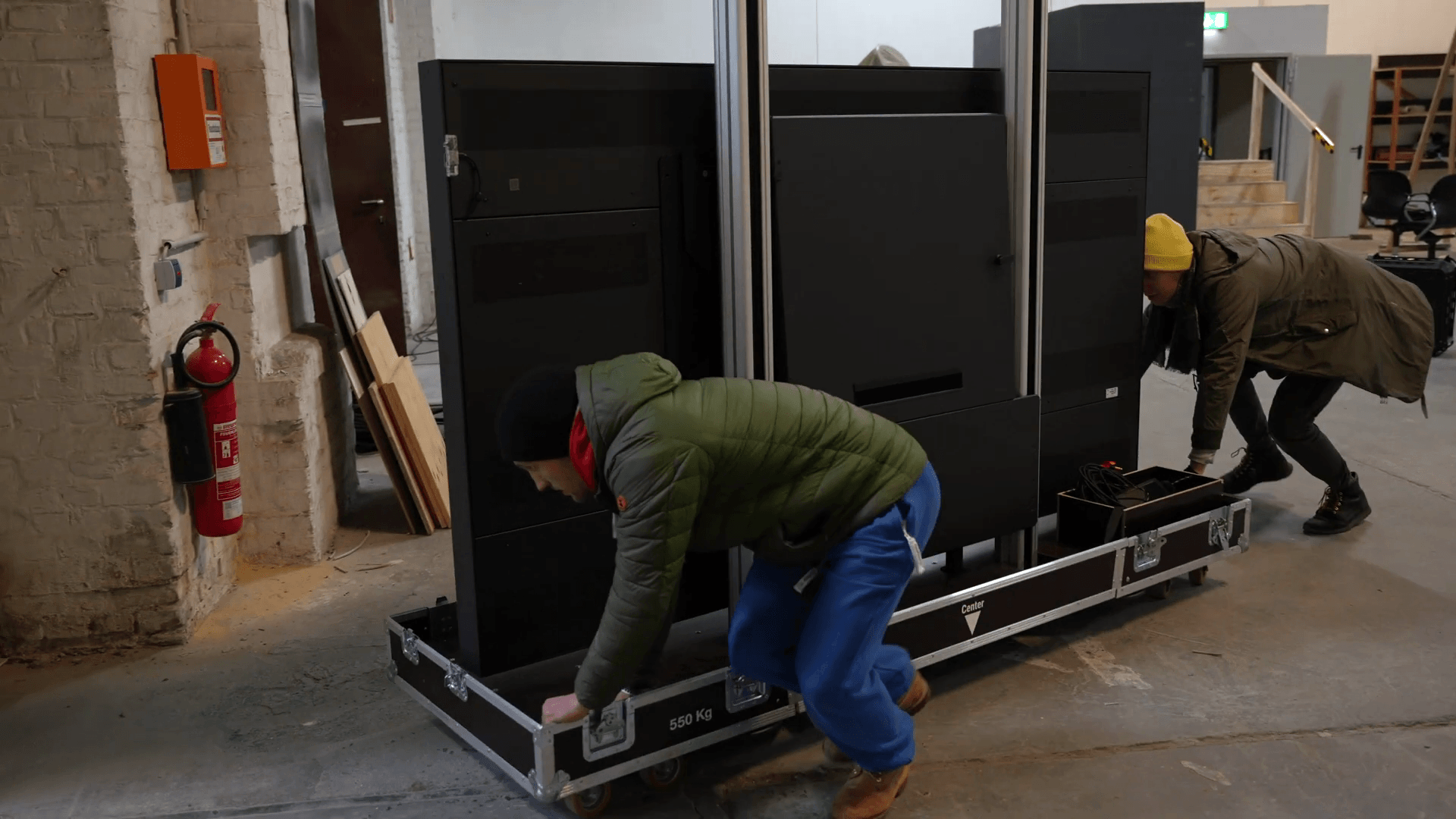
Sven Lehmann: We used three different displays. The decisive factor was that the panels work straight out of the box. That means: unpack, connect and you’re ready to go. The scope of delivery also included the corresponding frames on which the screens were installed. this allowed us to roll them and move them up and down electrically. We were therefore able to use them very flexibly and place them wherever they were needed.
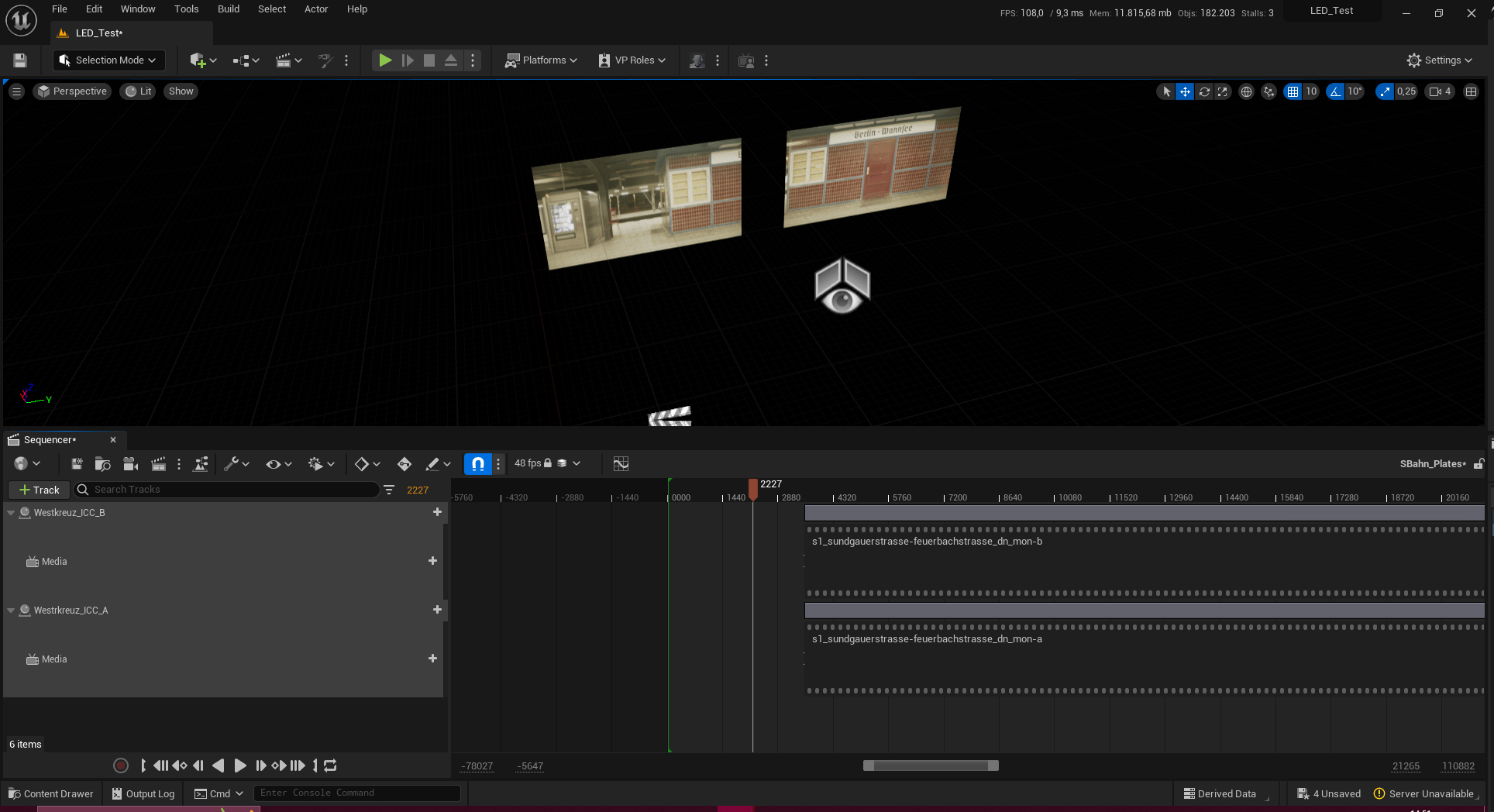
DP: How did the shoot go? How did you set up, position and control the screens?
Sven Lehmann: The challenge when setting up the screens was that we had to position two of the three displays on the platform of the S-Bahn dummy and there was very little space around it. We were then able to solve this with millimetre precision using an assembly lift. The aforementioned packaging system for the walls helped us a lot when moving them. When they were raised briefly, they could be rolled, put down again in a different position and then adjusted to the correct height. In terms of realism, the scene was very grateful as it was rather dark.
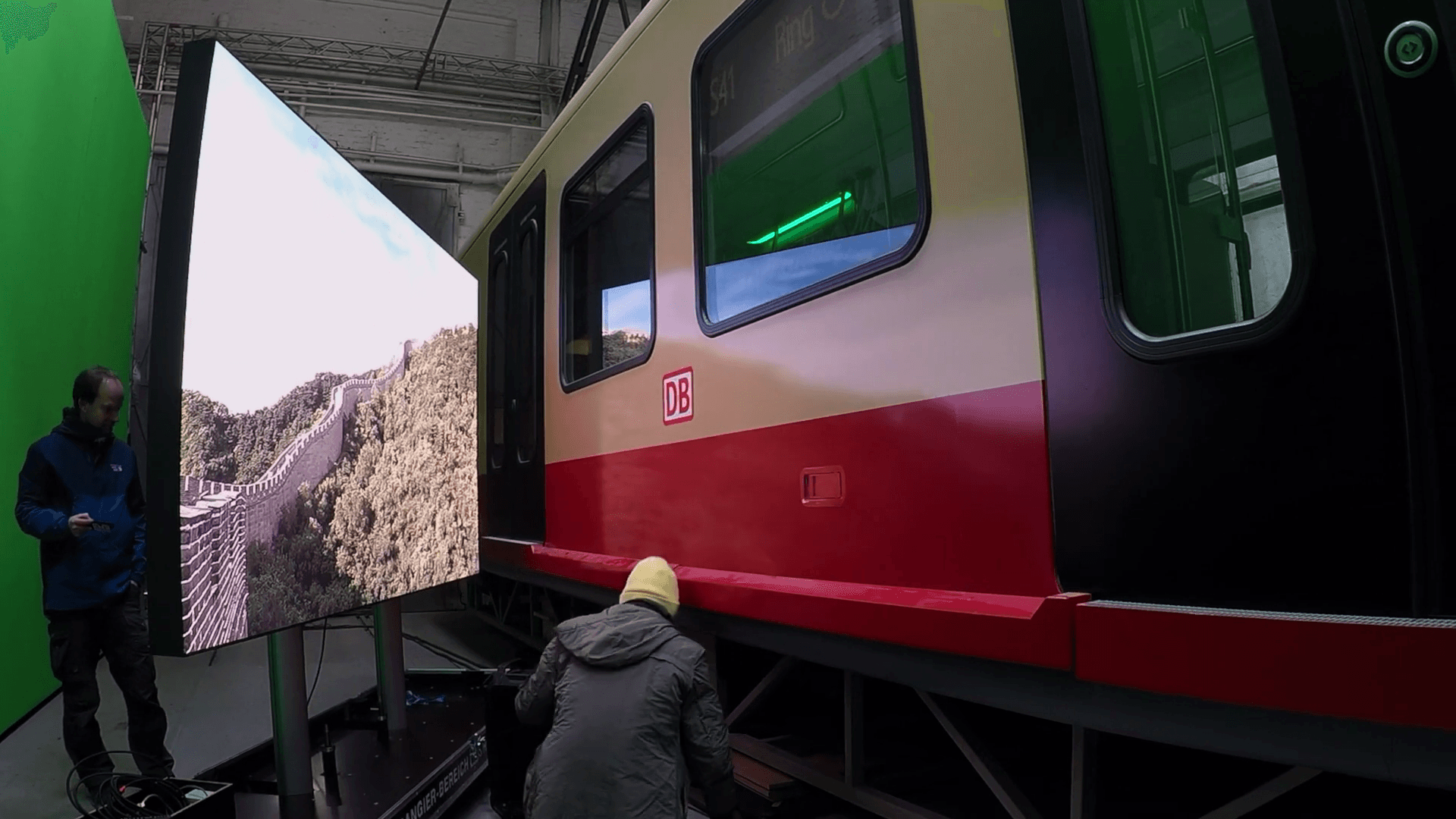
DP: The scene itself is “theoretically” simple enough – did you have to follow the camera?
Florian Frerichs: The scene is a relatively calm shot. Accordingly, the camera work was comparatively static, without major pans or fast movements.
DP: After the first take, did you make any adjustments?
Sven Lehmann: The size of the shots had to be in the right proportion to the set and the actors. You have to align it precisely so that the overall picture is harmonious and realistic. Florian Frerichs: We also readjusted the brightness. The Samsung panels are very bright, so they quickly became brighter than the real environment.
DP: And during the lunch break you turned the screens into a staff cinema? Florian Frerichs: A display like The Wall naturally invites you to experiment – in many ways. On the first day, I even had a Playstation 5 with me in the car so I could utilise its gaming power. But only four controllers. That would have been unfair to the rest of the team (laughs). In fact, I would like to continue using the screens in the future and integrate them directly into studio buildings, for example as windows. That would make us even more flexible when working in the studio.
Sven Lehmann: My personal impression of The Wall was very positive. In the size and format in which we used it, it was as easy to handle as a “giant television”. For low-budget shoots where the camera doesn’t move much, you can do a lot with it. For example, the setup makes it easier to reshoot if a set is forgotten. In principle, The Wall allows even more, as the specifications can be customised so that ceiling installations or concave designs are also possible. With a fully equipped stage, even more is possible.
DP: If you were to shoot this scene again, what would you do differently? More or fewer screens?
Sven Lehmann: If I could, I would install a huge LED wall on both sides that covers everything, similar to the film “Bullet Train”. Samsung also offers options for this with The Wall. More displays with the same features and sizes of The Wall used would of course make it easier, but the scene was too small for that. So we planned with a manageable amount of effort, and that worked really well for our case. At one point or another, we could have avoided small software problems by testing beforehand. But that was manageable.
Florian Frerichs: Our virtual production specialists Sven Lehmann and Victor Manske did a great job and were very committed to realising the scene in this style. In the end, the work paid off: you rarely get to see shots of a completely empty train. The viewers will certainly not realise this so much, but they will feel it and have the feeling at the end that they have seen something special.
DP: And when it’s all over, what’s the next project? When you can talk about it?
Florian Frerichs: I’ve been dreaming of making a science fiction film for some time now. And I think that Samsung’s virtual production technology would be perfect for this – especially as “The Wall for Virtual Production”, a model specially tailored to the requirements of the film industry, was recently introduced.
