



Adobe has introduced significant updates to After Effects, tailored for motion designers and VFX professionals, particularly those working in 3D. This 2024 release aims to improve the integration of 3D models into live-action footage and 2D compositions, providing more control over realism and creative flexibility.
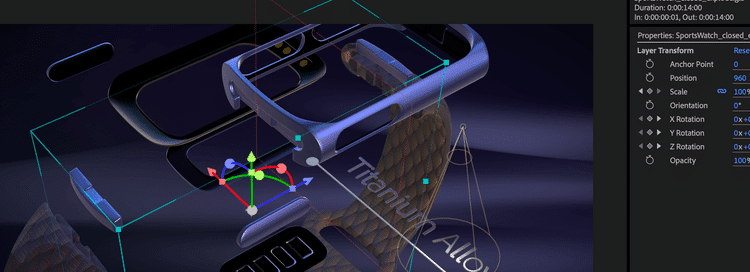
One of the standout features is the new ability to import embedded 3D animations directly into After Effects. This allows users to integrate skeletal rigs and keyframe animations from external 3D models (GLB or GLTF formats). With embedded 3D animations, motion designers can now use pre-animated assets and manipulate them without needing to recreate the animations from scratch. This update simplifies the use of animated 3D models, enabling smoother integration within the After Effects environment, while also supporting advanced deformations such as bone-based movements.

Adobe also addresses the challenge of achieving ultra-realistic shadows with virtual objects. The introduction of shadow catchers makes it possible for 3D objects to cast shadows that accurately interact with real-world footage. Additionally, new color shadow capabilities allow shadows to be rendered in more nuanced tones, reflecting the natural variation of light sources and eliminating the typical flat, grey shadow effect common in many virtual designs.

Another significant improvement is the expansion of depth mapping tools. Users can now extract depth maps from complex 3D scenes, which contain pixel-based distance information. These depth maps allow artists to apply post-processing effects such as depth-of-field or atmospheric fog, further blending 3D elements with real-world environments. This tool offers new compositing possibilities by allowing 3D objects to interact more dynamically with live-action footage, creating seamless visual effects.
To support more streamlined workflows, After Effects has also added new animation presets, including 33 all-new effects and presets for number counting in infographics. These presets reduce the time spent on keyframing animations, letting users focus on creative decisions rather than tedious manual tasks.
In the Properties panel, Adobe has introduced camera and light support. Motion designers can now control and adjust camera angles and lighting settings more easily within a single contextual panel. This refinement helps improve efficiency when setting up complex scenes involving multiple light sources and camera perspectives.
Performance has also been enhanced with hardware-accelerated UI/UX, especially for Windows users, where the performance is reportedly four times faster than before. This boost in speed is accompanied by a redesigned, modernized user interface (UI) that is more consistent across Adobe’s apps. This redesign aims to cut down on the learning curve when switching between tools, such as Adobe Substance 3D and Cinema 4D.
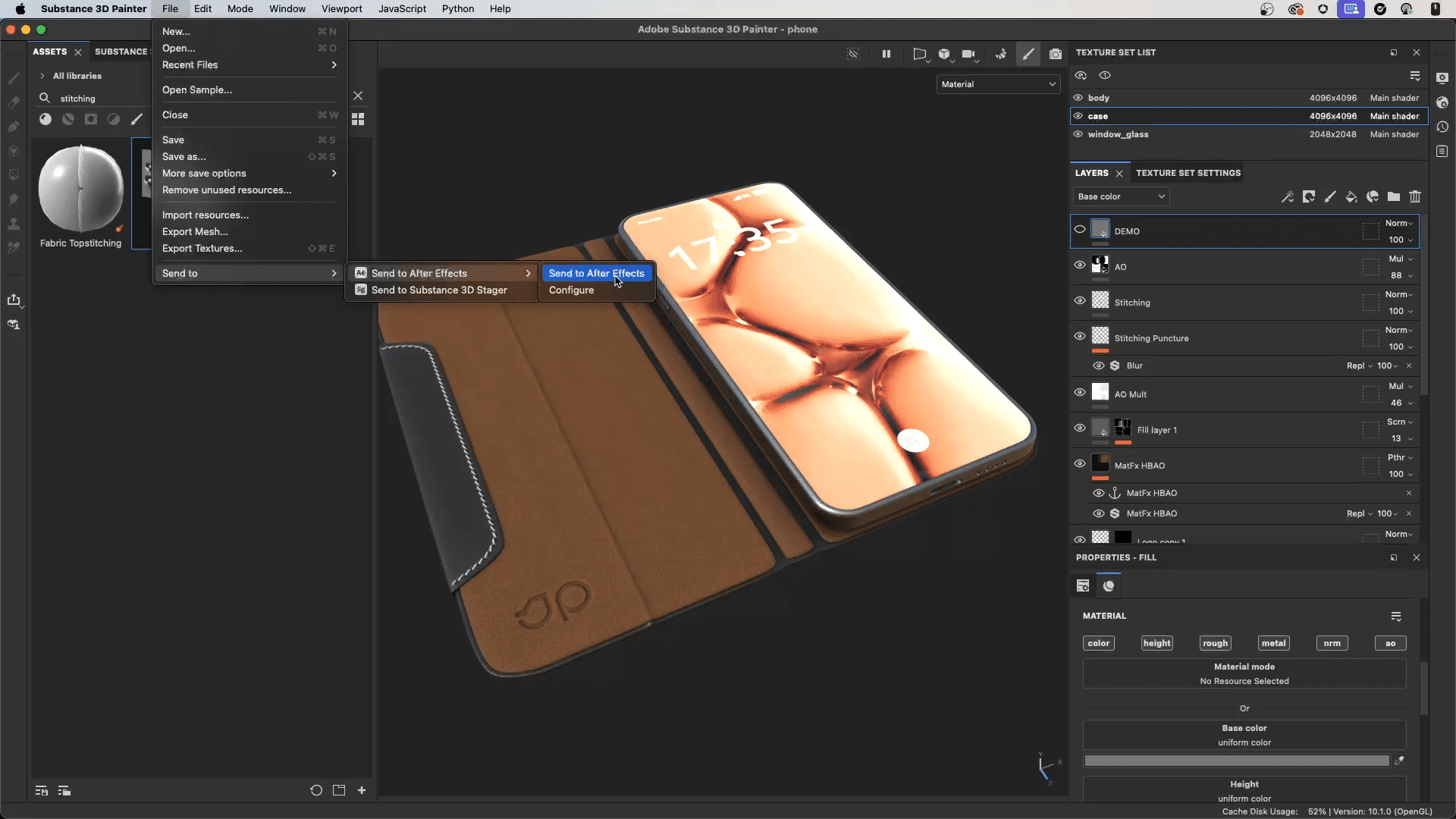
Adobe Substance 3D is now more tightly integrated into the After Effects pipeline. The new “Send to After Effects” function in Substance 3D Painter allows users to texture 3D models and immediately import them into After Effects compositions. Substance 3D Sampler is now capable of generating seamless materials and creating image-based lighting (IBL) environments from photographs. This is especially useful for blending 3D models with real-world footage by matching lighting conditions and textures. Access to the Substance 3D Asset Library gives motion designers over 20,000 ready-to-use 3D models, materials, and lights, enabling rapid prototyping and design iterations.

Adobe is also improving the workflow with external 3D applications like Maxon’s Cinema 4D. Assets created in Substance 3D will now retain their visual fidelity when transferred between After Effects and other 3D software, helping to maintain consistency across projects.
These updates will be available in the upcoming beta release, allowing users to test the new features and provide feedback. It’s advisable to evaluate these features carefully before incorporating them into your production pipeline, particularly for complex, high-stakes projects.
In terms of pricing and licensing, After Effects is available as part of Adobe’s Creative Cloud subscription. The Substance 3D suite requires a separate license, although Adobe offers bundles for users interested in multiple products. Adobe typically updates its pricing model annually, so checking their current plans and promotional offers is recommended.
For detailed documentation on After Effects and the latest 3D features, visit the official After Effects Documentation page. You can also explore the new beta version and other related tools on the Adobe Substance 3D product page.
