



Table of Contents Show
5D Cyborg was there to mix-up things before unfortunately succumbing to a premature end. So let’s timewarp back to the age of the Cyborg.
Once upon a time…2001
When you look at the high-end VFX market of the late 1990 and early 2000s, there were two very distinct paradigms facing each other. On the one side you had very expensive high end turnkey systems, such as Quantel Henry or Discreet Flame & Inferno. Those did not only have a really astronomical price tag, they were also closed off systems. Quantels Henry for example ran on proprietary hardware.
On the other side you had an emerging market of software-only packages that were designed to run on off-the shelf hardware. While still pricey by today’s standards, those packages like Combustion, After Effects and Shake were only a fraction of the cost of the high-end counterparts, but they came at a snail-pace rendering speed and sometimes prohibitive limitations on resolutions and bit depth.

Enter the Masher
But, apart from the high price tag, the high-end systems had another predicament they were in – lack of connectivity. Especially Henry suffered from that and tried to find solutions to open up the system while at the same time sticking with its proprietary approach. One of these solutions was the 5D Masher. 5D Solutions at that time was a plug-in developer, supplying plug-ins for a range of hosts – this was years before OFX and basically every new point release of software on the host application required a plugin update as well. And Quantel was a special case as its proprietary hardware didn’t allow it to run third-party plug-ins. 5D came up with a very unique solution. They got a rack-mountable PC workstation – build by Boxx Solutions – with a video I/O that interfaced with the Quantel system and could basically be remote controlled from there, sending off a clip via the video I/O to that workstation, called the 5D Masher. On the masher it would be processed in the background and then be send back to the host system, ready to be inserted into your composite or timeline.
But there was a very tight bottleneck: The whole communication between the Quantel System and the Masher had to be built around Javascript. And while the processing speed of the Masher itself was acceptable, the update speed on the Quantel system to set up a plug-in was atrociously slow. Also, the artist was forced to set up only one plug-in at a time. Furthermore, plug-in setups had to be saved separately, basically undermining the whole Quantel concept of clip history. In the end, as explained in our previous look back at the Henry, the 5D Masher was a stopgap measure that was only slowing down the inevitable fall of the proprietary solutions from Quantel.
But the Masher also started something new at 5D Solutions: The British company got a lot of client feedback on the masher and that in essence was: Give us a Masher with a monitor and a User Interface so that we can put it next to our Finishing System. Now this part of the story might be a little bit of a retroactive legend building, but what we saw next from 5D was pretty much that: The 5D Cyborg.
Unleashing the Cyborg
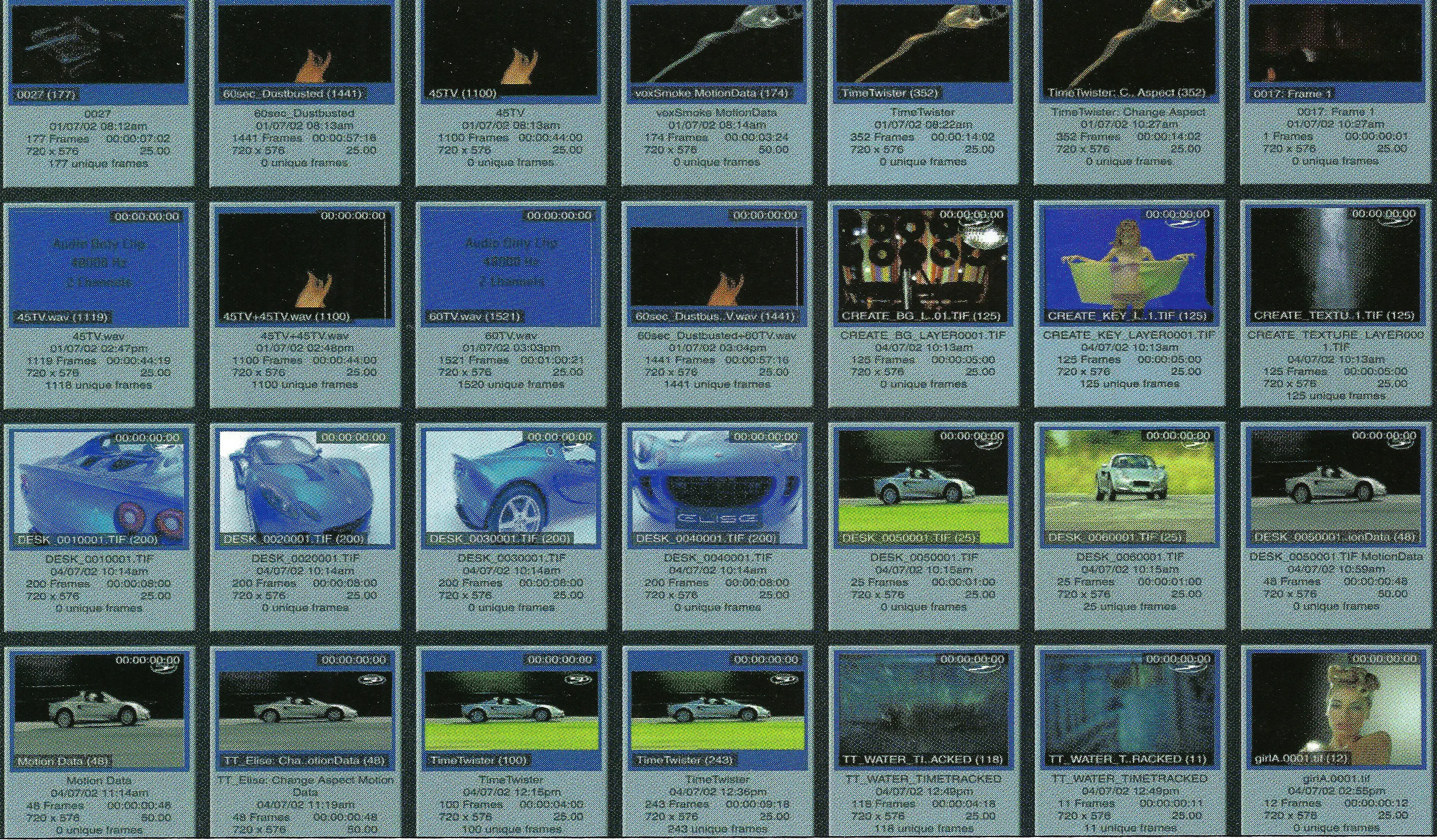
In that first version it had basic 2D compositing capabilities and most of the 5D Monsters Plugins. In that iteration it couldn’t do much more than a Henry with a Masher attached but, wow, it could do that fast. The Cyborg system came – like Henry or Flame – as a turnkey solution. For that, 5D once again partnered up with Boxx Solutions and shipped it on a certified Windows NT Workstation with a Wildcat 3 Graphics Card by 3D Labs. Even the Sony 24” Monitor and the Wacom Tablet and Pen were part of that turnkey solution.
I started my very first employment as a junior Henry Artist at “Das Werk” in Frankfurt in the Summer of 2001. At that time “Das Werk” was a beta site for 5D Cyborg and Thomas Maier, now a respected colorist, was taking care of the beta as a student intern. Seeing how he was able to very quickly put something together that took me ages to run through the Masher really got me hooked. When he ended his internship I spent every free minute of my time in that beta suite. But unlike Thomas I was a full employee, expected to do my share of jobs. Trying to fit in my ever growing fascination with Cyborg into my daily work schedule was easier than expected. I just started to offload more and more effects work to that Cyborg system. Also, it was a gap I could jump into. I wanted to grow beyond the Quantel systems, but at that time, the only alternative would have been Discreet Inferno. Now those machines were not only expensive, but also fully booked. Also, there was a more-than-healthy rivalry between the Discreet Artists and the Quantel Artists. Back then you were either one or the other: The Quantel Artists were considered grunt workers that took brute-force approaches by the Discreet Artists. In turn the Discreet Artists were thought of as overthinking divas by the Quantel Artists. But in the end it was far easier for me to dig into the machine that nobody else cared about rather than fighting to get some precious screen time on a fully booked Inferno Workstation. Easing me into this was the fact that Cyborg was Windows-based. I knew my way around that OS as opposed to UNIX, which was back then the Infernos OS.
My interest in Cyborg didn’t go unnoticed. As a Junior Artist, I often sat in the passenger seat of client-attended Henry sessions. With my knowledge of Cyborg I could apply myself much more. It started with really simple conversion tasks. Load a file sequence into Cyborg and let it play in loop so that we can capture it into Henry. By today’s standards it is unfathomable that a seven-figure workstation was not able to do that on its own in the early 2000s. From there it continued with Rotos, Tracking and of course Plug-Ins. And the senior Henry artists saw the added value. “Das Werk” had four Henry Infinity suites at that time and it was decided to equip two of these suites with a Cyborg System.
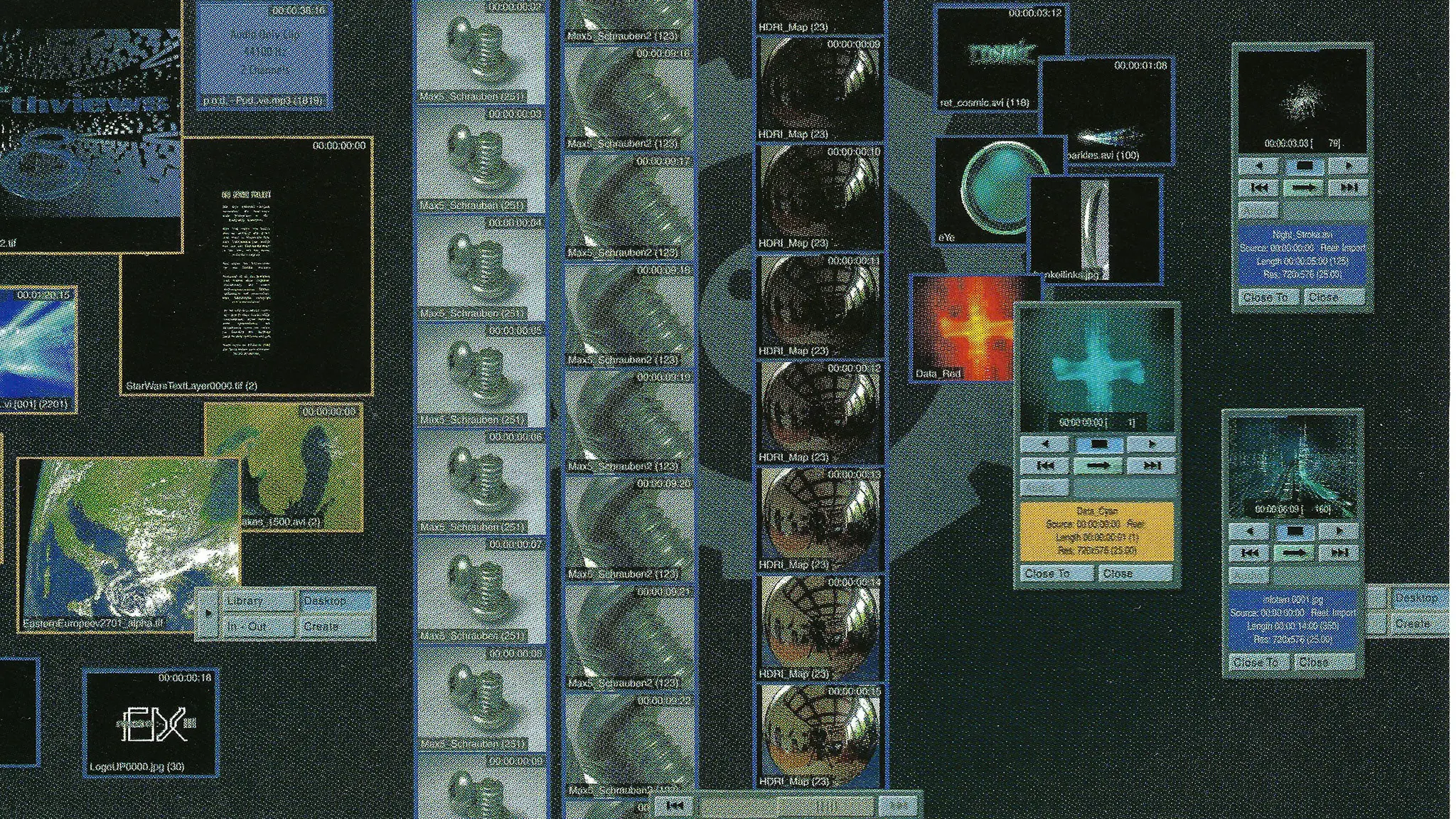
The delivery of those two machines coincided with the release of version 2 of the Cyborg software – and this was the time where one could see that 5Ds ambitions were much higher than a simple assist workstation. EDL Conform, 3D Compositing environment and Timeline Editing truly unleashed the Cyborg. It was also at that time that 5D further defined the product line-up: There was a Cyborg S with Standard Definition I/O and just 2D compositing capabilities for roughly € 120.000 and a High Definition version called Cyborg M with all the bells and whistles for € 210.000 – an astronomical sum by today’s standard, but, as Alex Gabrysh wrote in his Cyborg v2 review in Digital Production 2002:04 “No matter which configuration of Cyborg you wish for, the price is a battle cry to competing systems and will definitely shake things up.”
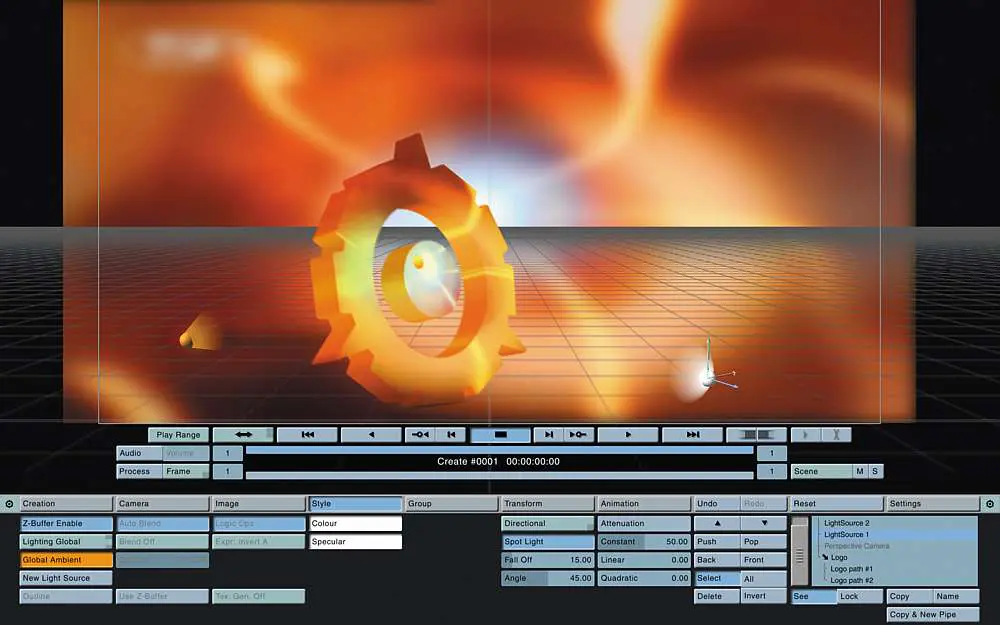
The 3D environment was blistering fast compared to all the competition out there. It really took advantage of the Wildcat 3 Graphics Card and the software utilizing OpenGL. In that regard 5D was unique – while the hardware was not custom-built like Henry nor the operating system customized like with Discreet, it was not written for generic off-the-shelf hardware either. When you ran Cyborg without that specific card, the 3D environment was much more unresponsive and more on par with the performance of Shake and Combustion at that time.

What makes a Cyborg?
The user interface took its lessons much more from the high end workstations than from the software-only solutions. The interface was clean, had no floating windows and was very clip-centric. Clips could be organized on reels and also edited there. But the real timeline, which was introduced in Version 2, didn’t live on that desktop. Rather, it was sitting right inside the compositing module – called “Create” – and it lived there as a node. This was a revelation. Neither Henry nor Flame/Inferno possessed a multi-layer timeline. Those were only privy to editorial systems at that time which in turn couldn’t deliver broadcast quality. But with a timeline as a node, artists were able to insert effects up and downstream of the edit, host multiple edits in the same compositing set up and change timings of layers while working inside their composite.
Another feature that made Cyborg unique between the two giants of Henry and Flame/Inferno was the native implementation of Primatte. At that time Primatte was so far ahead of its competition and having that right inside of your finishing system was just awesome. But Cyborg also broke new ground in other areas. Already in version 1 it had optical flow functionality quite ahead of its competition. Not only were the results pretty good, it also had a very clever approach to rendering. With Cyborg being clip-centric, the Motion estimation was rendered as a separate clip just once, giving the artist the ability to process multiple versions of a timewarp without going through constant re-Renders. Once again, this is expected behavior today, but at that time, almost all software packages were either rgb or rgba-based. Nuke was the first software to really embrace the concept of multi-channel and really utilize AOVs, and that was made available to the industry only in 2002.
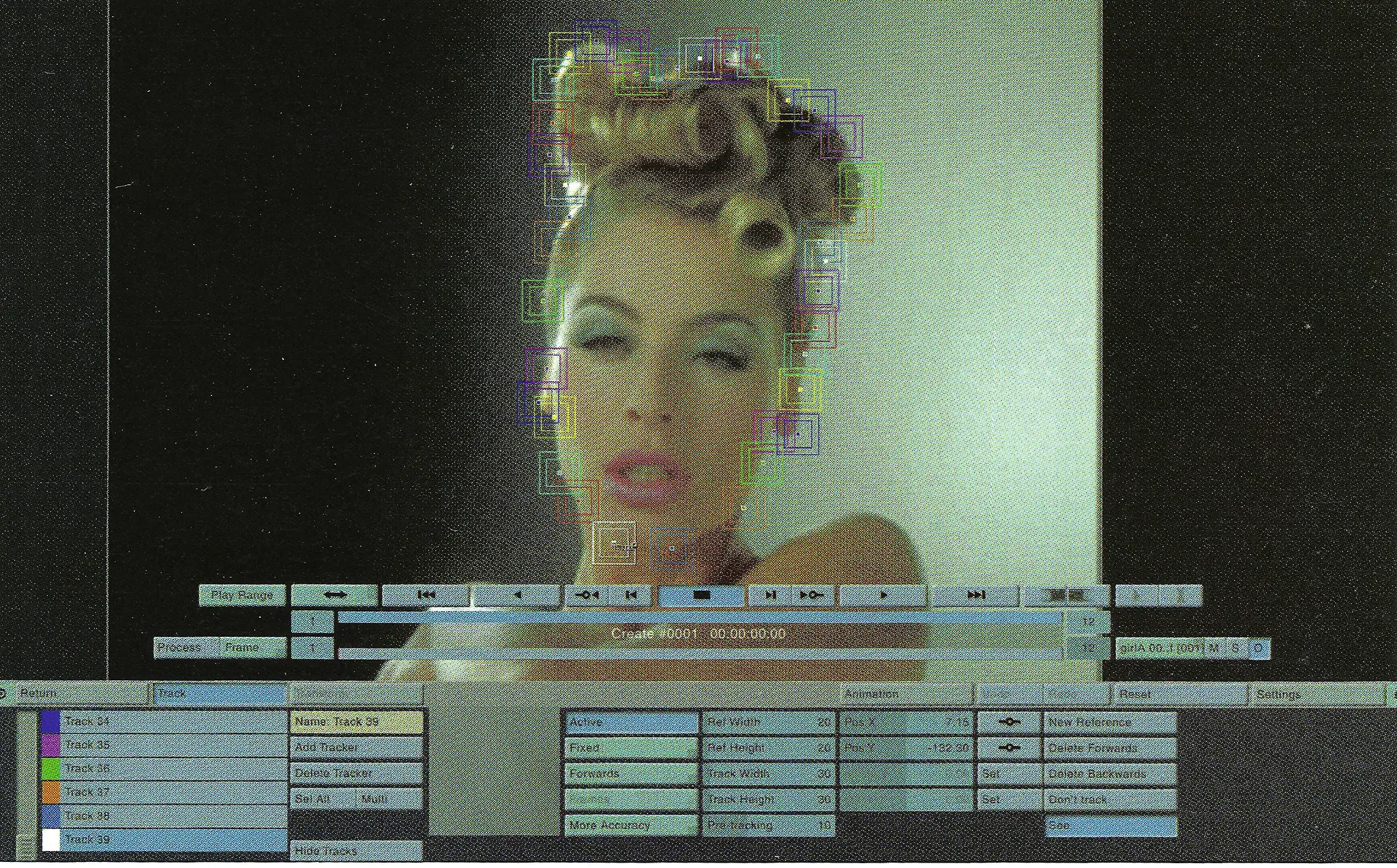
The point tracker inside of Cyborg was far superior to the one in Henry and also the first one that could give the famous discreet tracker a run for its money. Also it came along with the very nice pre-tracking feature, where you could already see a HUD preview of your track while placing the tracker. And the paint module, while not being vector-based and hence destructive, introduced the ability to rotate the canvas either by shortcut or the 4D mouse that shipped with a Wacom tablet at that time. If you think that some of these features sound somewhat familiar, just keep on reading, we will get to that part of the story.
Making an impression
To describe the impact Cyborg had onto our industry at that time one simply had to walk Hall 7 of the IBC in Amsterdam in 2001. Discreet had a huge booth with multiple workstations and Quantel’s booth doubled the discreet one in size, sporting a stage with seats for up to fifty attendees. Quantel presented its new flagship product, the iQ. While the hardware was impressive, the software was really not there yet, especially in regards to compositing. There were rumors that discreet was working on a new architecture, but it would take until NAB 2002 for Mezzo and Strata to be revealed. And then, near the south wall of Hall 7, was the 5D booth – and that one was crowded. Not for the plugins, not for the swag, but for Cyborg. Cyborg was the buzzword of that show and people talked about this machine being a potential Flame-killer.

The two Cyborg systems were set up at Das Werk right alongside two of the Henrys. That really kickstarted my involvement in productions. What happened was that a symbiosis formed between the Senior Artist and me as a Junior Artist. While I would introduce them to the capabilities of the Cyborg and a file-based workflow, they would teach me about compositing itself and – even more important back then – the fine art of working with clients. To this day I am still grateful for all things I learned back then and for having such great teachers.
The Cyborg also broadened the spectrum of jobs I could participate in: Unlike Henry, Cyborg was resolution-independent. So when a Barilla Commercial directed by Wim Wenders came in and it was clear that the two Infernos would not be enough compositing power to finish this project in time, the Cyborgs were a welcome addition and I got my very first taste of high-resolution work. And while the crashy Paint module gave me headaches, the crowd replication work we did on that was really something for the twenty-two year old me.
However, not everything was great. With 5D still being a plug-in manufacturer, support for third party plugins was not exactly exuberant. There were no Gen-Arts Sapphire Plugins, neither was there a Cyborg version of the Tinder Tools by The Foundry – Yes, back than The Foundry was still a plug-in company. Versions of Knoll Lens Flare Pack and Digital Arnachy’s Text Arnachy were announced, but…
Stock market disasters, legal battles and new adventures
Out of the blue customers were hit by the news that the 5D closed offices on October 11th, 2002. That was only one month after IBC, where 5D announced a cheaper solution based on Cyborg called Eclypse and previewed the 2.5 version of the Cyborg software. So what has happened? A couple of years before, 5D Solutions sold a totally different part of their business, the printing division, to a company called Global Graphics for 24.7 Million Euro. Most of this amount however, was paid in stocks. During the dot com crisis, these stocks plummeted, but 5D was still liable for taxes on the original price of the stock at the time of the purchase. One could basically call this second degree murder by the stock market. The offices in London, L.A. and Miami were closed and all the assets went into litigation.
At the time I thought my time with Cyborg would now come to a very abrupt end – I was heartbroken. Little did I know that it would take another five years for me to finally part ways with that little monster of a machine. What took much less time was the liquidation of 5D itself. The people responsible for the plug-in division bought the division out of the liquidation mass themselves and founded Speedsix software. For seven years they maintained the Monster plug-in set until they eventually got bought by rival GenArts, known for their set of Sapphire plug-ins, in 2009. It should be another seven years before GenArts, in turn, is bought by Boris FX. While the monsters themselves are no longer around, some of them found their way into the Sapphire’s Suite of plug-ins.
And Cyborg itself? For two months, the user base held its collective breath.There were rumors that Quantel, Thomson, Avid, even Apple might be interested in picking up the reins on Cyborg. In the end, Discreet, by then already part of Autodesk, bought the intellectual property on Cyborg. Naturally, I hoped of course that Quantel would win the bid – but the “best of both worlds” scenario that I envisioned back then might have been a little bit biased.
Now suddenly Discreet owned the property that was once labelled as a potential Flame-killer. They did what you would expect – kill the product. But, eventually, over the years, some of my more beloved Cyborg features found their way into Autodesk products. It would just take a couple of more years for me to find them there.
Some of the developers and management divided however that this was not the end and founded Assimilate Inc. and build Scratch – a color grading and digital intermediate solution that is still on the market today. While many of us tried to see in Scratch the spiritual successor to Cyborg, it was clearly a very different product aimed at a different task in our industry. The only ones that begged to differ in this matter was Autodesk, who sued Assimilate Inc. in 2008 on the grounds that they allegedly infringed on the Cyborg intellectual property that they purchased back in 2002. The example Autodesk gave was the functionality of a Confirm/Escape button and the concept of a pop-up calculator window. It seemed as petty back then as it does now, as these concepts even back then were not unique to neither Cyborg nor Flame. However, in 2010 Assimilate settled with Autodesk, acknowledging that Cyborg code was actually used in Scratch.
Not quite dead yet
But the effects of companies getting into rough water and new companies emerging were not limited to software companies. In spring of 2003, while “Das Werk” itself was in chapter 11, a new company emerged, with me being one of their first employees. The company was called “Acht Frankfurt”, and started off with two Henrys, one brand-new Quantel eQ and four Cyborgs. Three of them were actually previously owned by CIS Hollywood and used on the first Season of “Star Trek – Enterprise”. This fact thrilled me – being a huge Trekkie my whole life – to no end.
So why would a freshly founded company invest in a defunct product? Well, the answer is quite simple: By then all the Artists joining Acht were quite skilled in using Cyborg – we were able to work on these machines from day one. We couldn’t anticipate that these actually held up until October 2007. That was when Acht switched to Autodesk Flame. Up until that point we threw so much work at those machines they were not necessarily designed to do. For Lexus we did a 10:1 master, 5760×576 pixel. In 2005 we actually increased this to almost 8K for a installation for Mercedes Benz. This was something no other workstation could do at the time, most of them being limited by 4k width at the max. We also did a music promo with a runtime of three and a half minutes, containing up to nine layers of bluescreen. Comped by a single artist in nine days. This would not have been possible without the native primatte keyer.

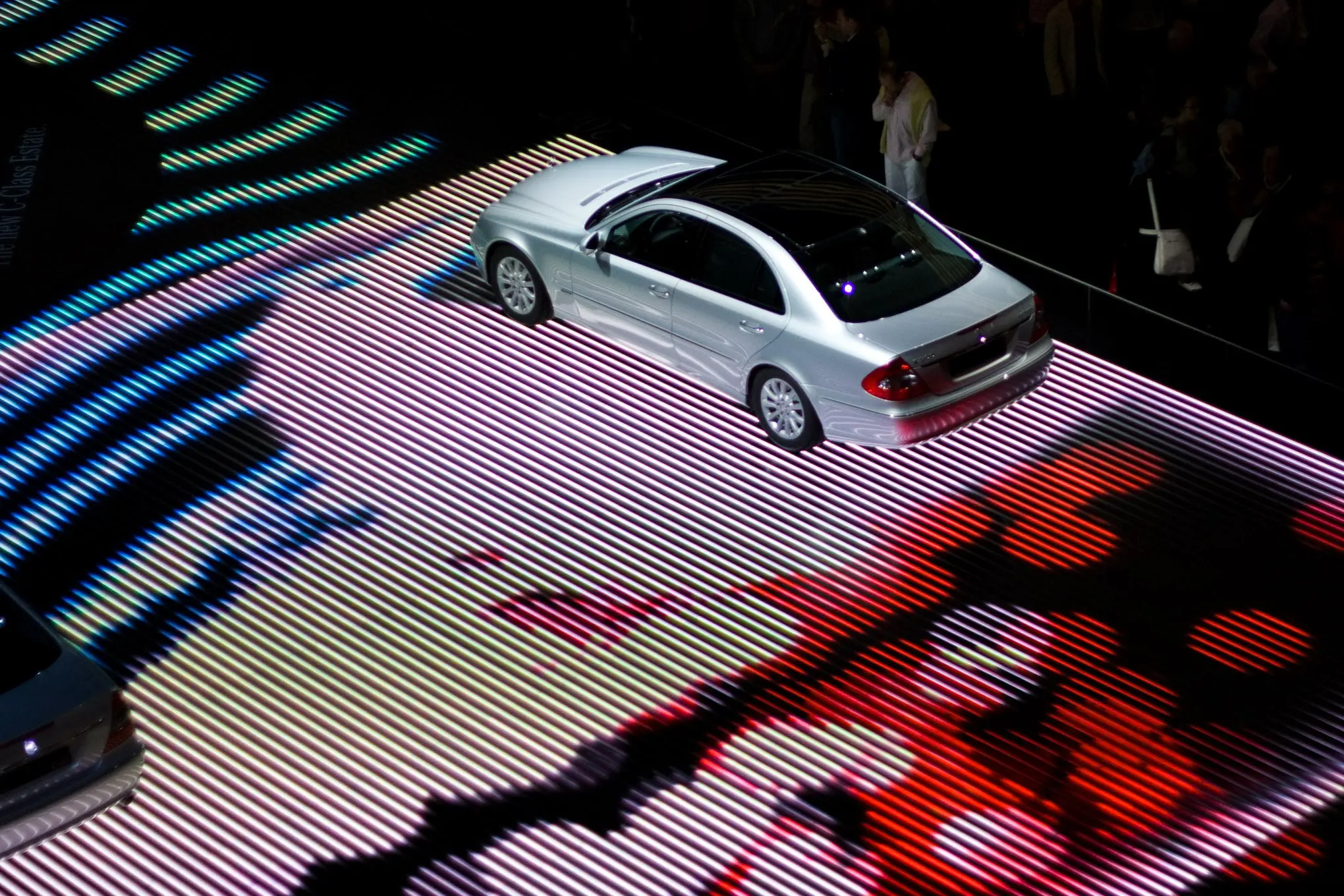


But there were also drawbacks. Cyborg stopped being developed before it reached a critical mass in the industry – hence we had no freelancer base to scale up our workforce. And while we were able to squeeze an impressive number of years out of the system, with it being centered around the Wildcat III, we had no option to increase the performance of those workstations. As long as the jobs were predominantly SD, this was not an issue, but by 2007 it was clear that Acht needed workstations for the HD age.
For me, there was a certain irony that Acht took delivery of the Flame systems that were going to replace the Cyborgs on the very last day I worked for that company. But at my next location, Deli Pictures in Hamburg, i was finally able to get my hands on a Flame and boy, did i find some old friends. A number of features have actually made it into Flame. The concept of a timeline residing inside of the compositing environment, the rotatable canvas in paint and of course the optical flow for slow motions and many more little features showed up.
So what is the legacy of cyborg? In my opinion, it cannot be underestimated how cyborg bridged the gap between the proprietary world of the nineties and the open, networked and connected world we do find ourselves in today. Cyborg entered the scene at just the right time and dared to do things differently. In a relatively short timespan, 5D was able to put together a system that gave the two market leaders a run for their money. Also bear in mind that around that time a lot of companies tried to enter the compositing market. There was Sony’s ill-fated Soccrato, there was Tremor by Nothing real and some more tried. Even the established companies Quantel and Discreet tried to reinvent themselves with new products, and both of them failed as well. Developing a compositing, let alone a finishing application is very hard work. There is a reason why all the major compositing applications out there today reach back for at least thirty years. And for a very brief moment, there was a Cyborg out there who was about to shake all that up. One can only dream what would have been…
