



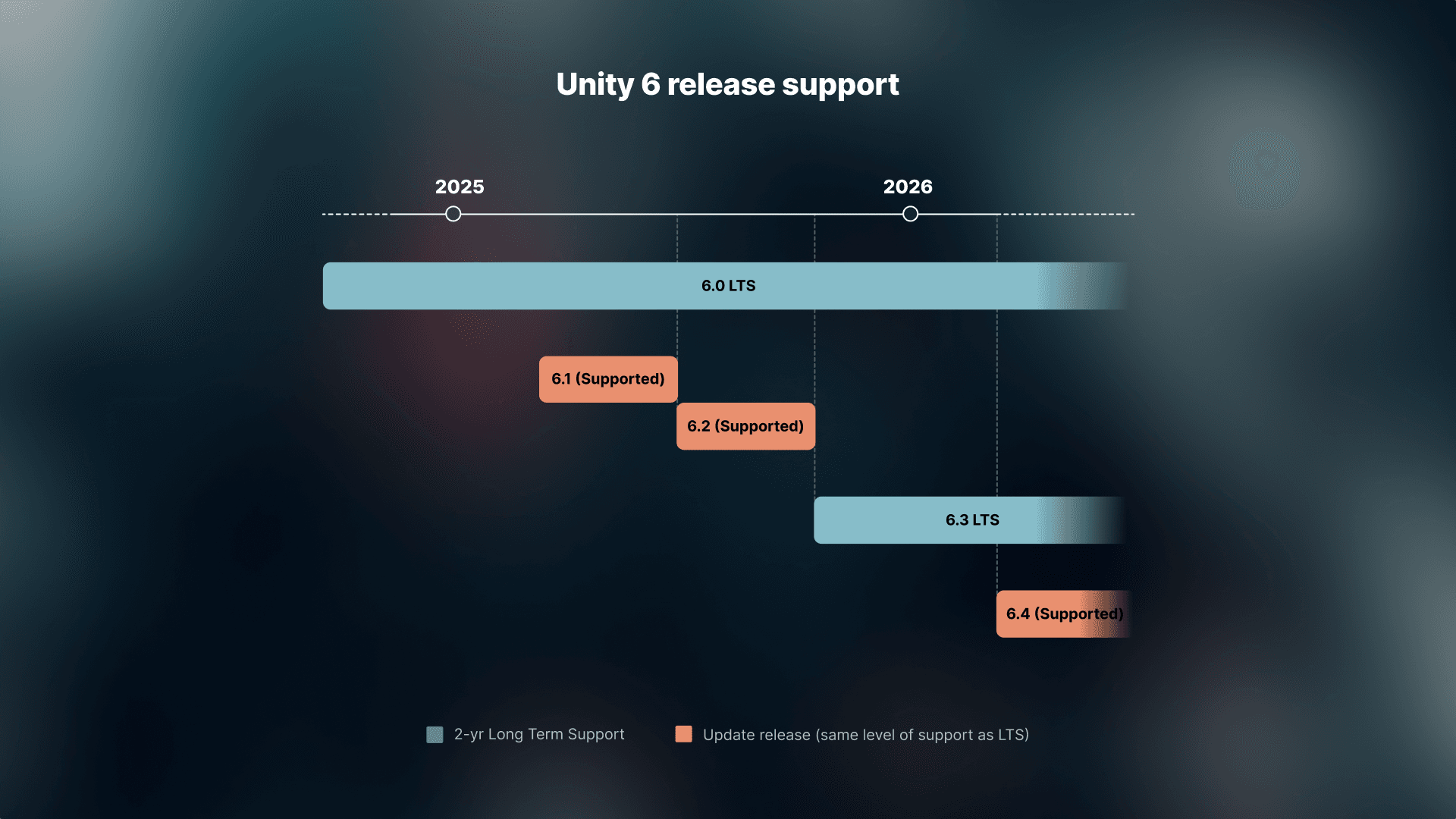
Unity has released Unity 6.1, the latest version of its game engine and real-time renderer. This update is the first in Unity’s new release schedule and will receive support equivalent to a Long-Term Support (LTS) release until Unity 6.2 arrives later this year.
HDRP: 3D Water Deformation
The High Definition Render Pipeline (HDRP) now supports 3D deformation in its Water System. Previously limited to vertical modifications, the Water Decal system can now handle horizontal deformations, enabling effects like rolling waves. A new sample scene featuring an underground cave showcases these deformation effects alongside existing caustics effects.
URP: Deferred+ Rendering
The Universal Render Pipeline (URP) introduces Deferred+ rendering, a new rendering path designed to handle scenes with numerous lights more efficiently. While standard deferred rendering offers benefits for such scenes, it comes with high memory overhead. Deferred+ rendering mitigates this by supporting cluster-based light culling and integrating the GPU Resident Drawer introduced in Unity 6.
Bicubic Sampling for Lightmaps
Both HDRP and URP now support bicubic sampling for lightmaps, enhancing visual fidelity by smoothing sharp or jagged edges, particularly at shadow boundaries. This improvement is especially beneficial for low-resolution lightmaps but requires additional padding on lightmap UV charts to prevent texture bleeding.
Variable Rate Shading (VRS)
Unity 6.1 incorporates Variable Rate Shading (VRS) to optimize rendering performance. VRS allows dynamic adjustment of shading resolution in specific screen areas, reducing GPU workload without compromising visual quality. It’s supported via Vulkan on Android and PC, DirectX 12 on Xbox and PC, and on the PlayStation 5 Pro. Additionally, URP users can now reduce the number of shader variants for fog and Level of Detail (LOD) meshes, decreasing shader loading times and runtime memory usage. (Variable Rate Shading in Unity 6.1 …)
Experimental WebGPU Support
For browser-based 3D games, Unity 6.1 introduces experimental support for the WebGPU API, intended as a successor to WebGL. Unlike WebGL, WebGPU supports modern GPU computing frameworks like DirectX 12, Vulkan, and Metal, enabling access to more processing power. In Unity, this means features previously unsupported on WebGL 2—such as compute shaders, indirect rendering, GPU skinning, and the VFX Graph—can now be utilized via WebGPU. However, given its current partial support in major web browsers and existing limitations within Unity, WebGPU is not yet recommended for production use.
Additional Tools and Features
Unity 6.1 also introduces the Project Auditor, a new static analysis tool that scans a game’s codebase and files to identify potential issues related to assets, scripts, and project settings, aiding in early detection of quality and performance problems. Furthermore, Build Automation for creating project builds in the cloud is now integrated directly into the Unity editor. For more detailed information on Unity 6.1’s features and updates, visit the official Unity 6.1 release page.
