



Leica Geosystems, the Hexagon division better known for laser-precise measurement hardware, has opened its LiDAR toolbox to the entertainment crowd with the launch of the Cyclone 3DR platform. Announced on 5 June 2025 in Los Angeles, the release targets filmmakers, animators, VR creators, VFX supervisors, game developers—anyone whose idea of a good time involves a tripod, a laser and several billion points of data. The promise: upload a LiDAR capture of that ornate concert hall or rugged canyon, then let Cyclone 3DR’s proprietary AI models do the grunt work of spotting individual objects, classifying them and—if you so choose—whisking them into your personal asset library for future reuse. A concert hall seat today, a dystopian throne tomorrow.
AI Classification: Sorting the Point-Soup
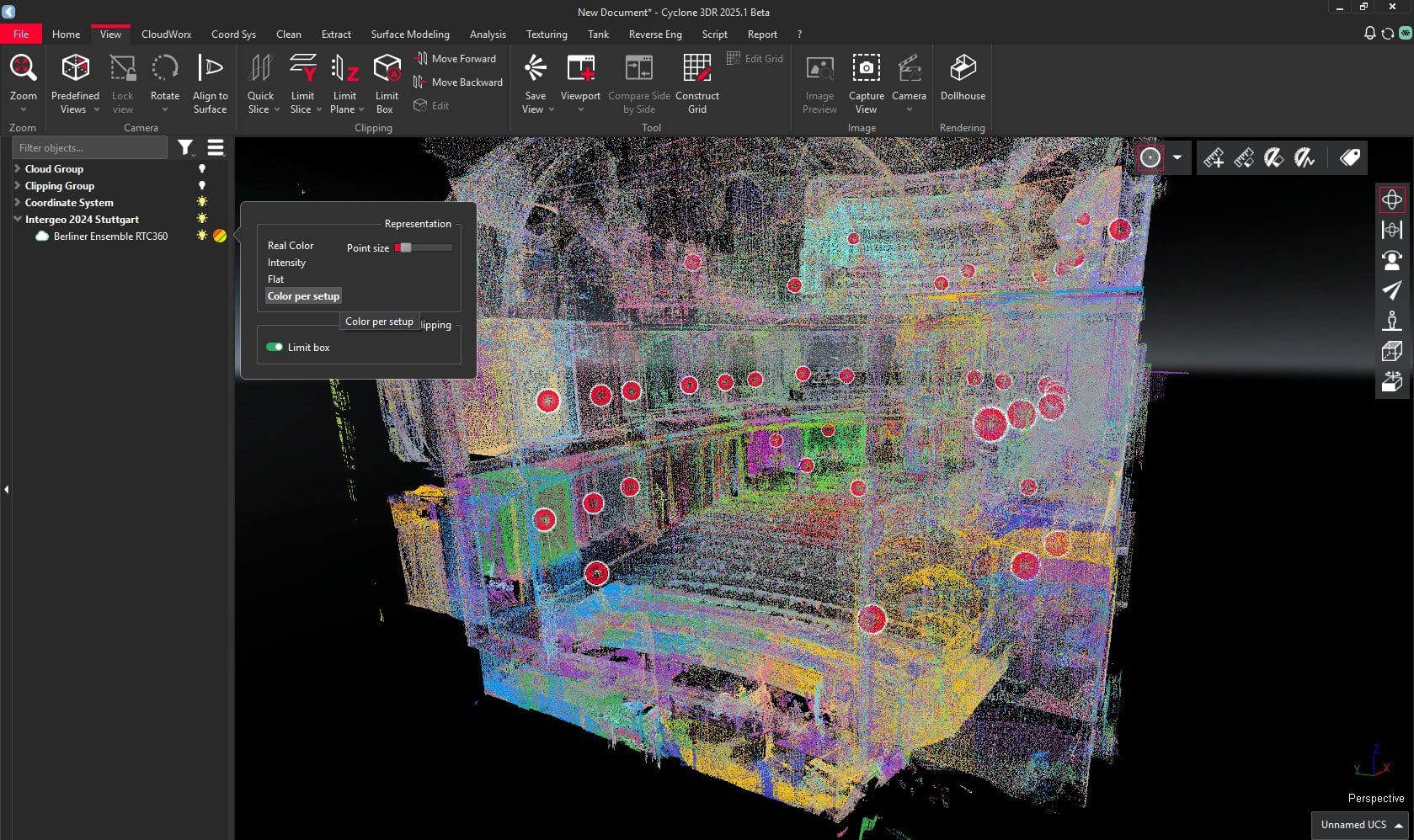
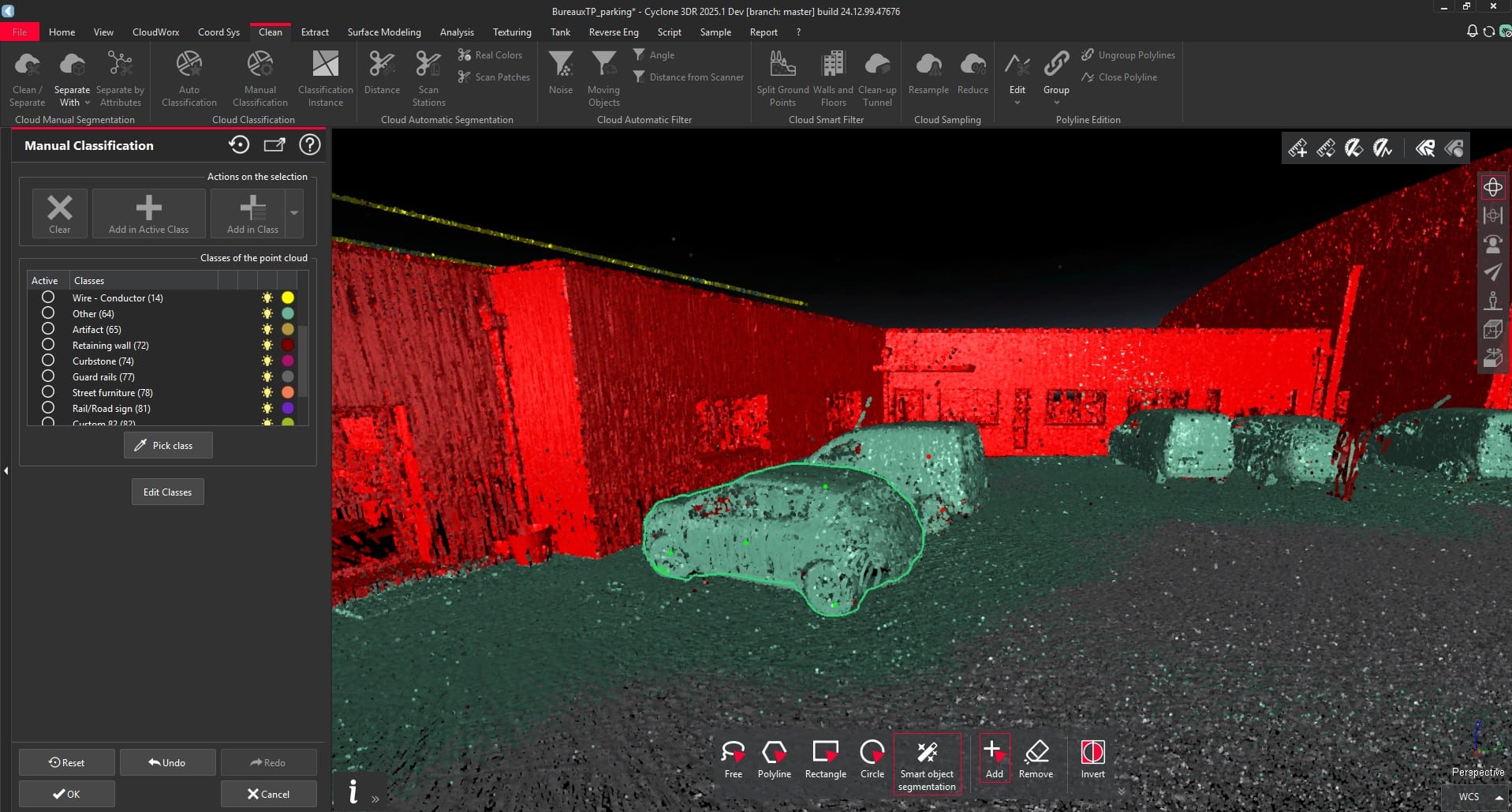
LiDAR captures are notoriously dense. Each scan can contain millions—sometimes billions—of points, each a tiny splash of spatial data. Cyclone 3DR’s AI Classification model, built inside Hexagon’s Artificial Intelligence Hub—the outfit that has been “assisting, not replacing” users since 2012—identifies logical clusters in that soup. A tree becomes a tree, a forklift becomes a forklift, and that stubbornly unidentifiable blob finally earns a name. Creators pair the software with an NVIDIA RTX PRO GPU to unlock these features, allowing point-cloud editing without the customary eye-watering time sink.
Segmentation Station: Snip, Tuck, Re-Stage
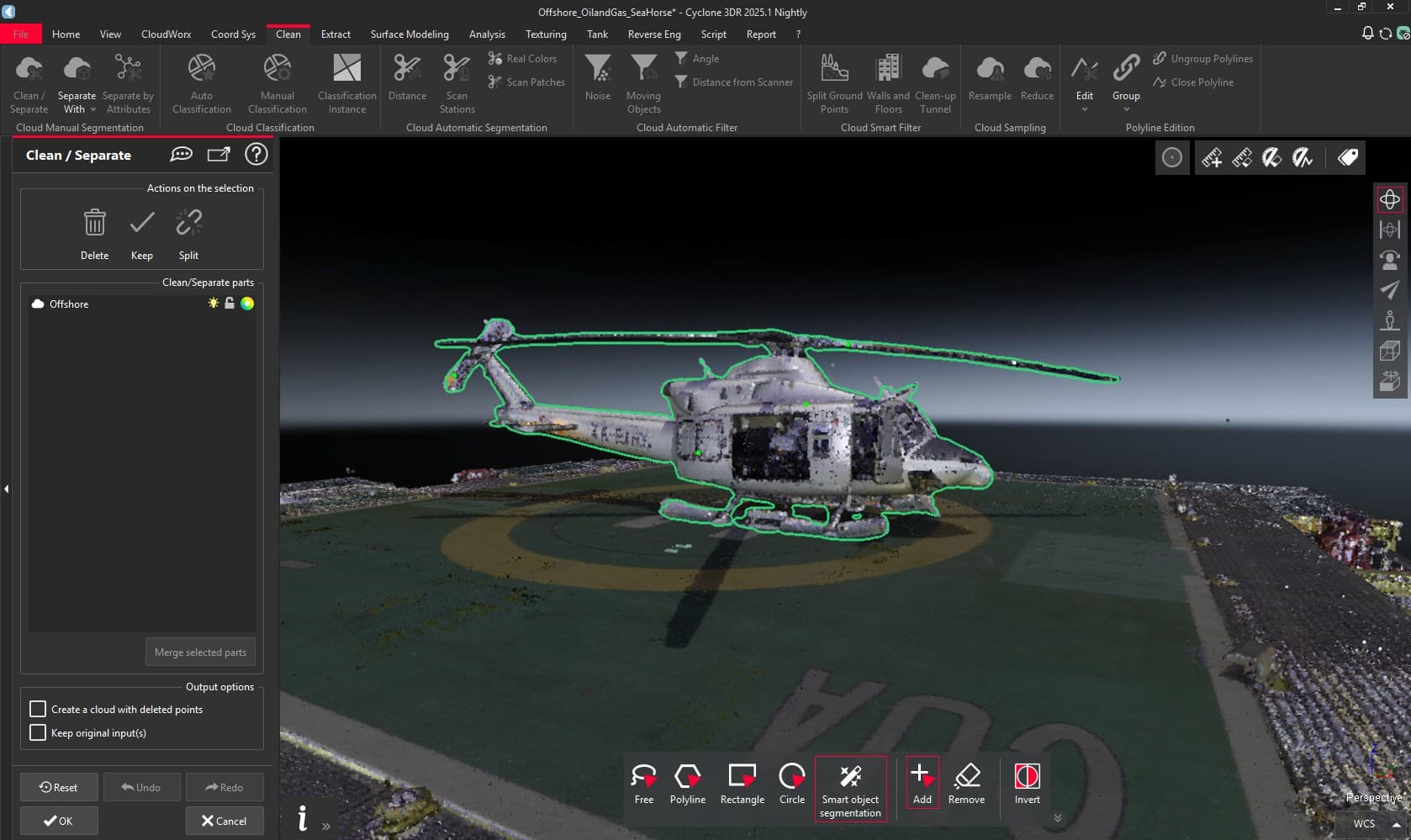
Once an object is recognised, the new AI Segmenter tool takes the surgical scalpel: tidy it, remodel it or banish it entirely. Dead shrub in your pristine Martian outpost? Gone. Freight container hogging screen real estate? Poof. Each ejected element can be exported in any file format Cyclone 3DR supports, then archived as a photorealistic, scalable asset ready to cameo in future scenes. For speed demons, an automated internal process rips through whole scans unattended. Scripting types can cook up custom filters that bolt seamlessly into existing pipelines, because laser data may be static, but production schedules never are.
Six Pre-Trained Brains—Pick Your Poison
Cyclone 3DR ships with six AI models. Four cater to heavy construction, indoor construction sites, industrial plants and road environments. Two handle general indoor and outdoor scenarios, making the tool equally at home in a cathedral nave or a clifftop meadow. Each model learned its manners from thousands of ethically sourced datasets encompassing point clouds, 2D images and 3D models. The result is an algorithm that knows which side of the mesh is up before you even sip your coffee.
Mesh or Point Cloud? Have Both, Thanks
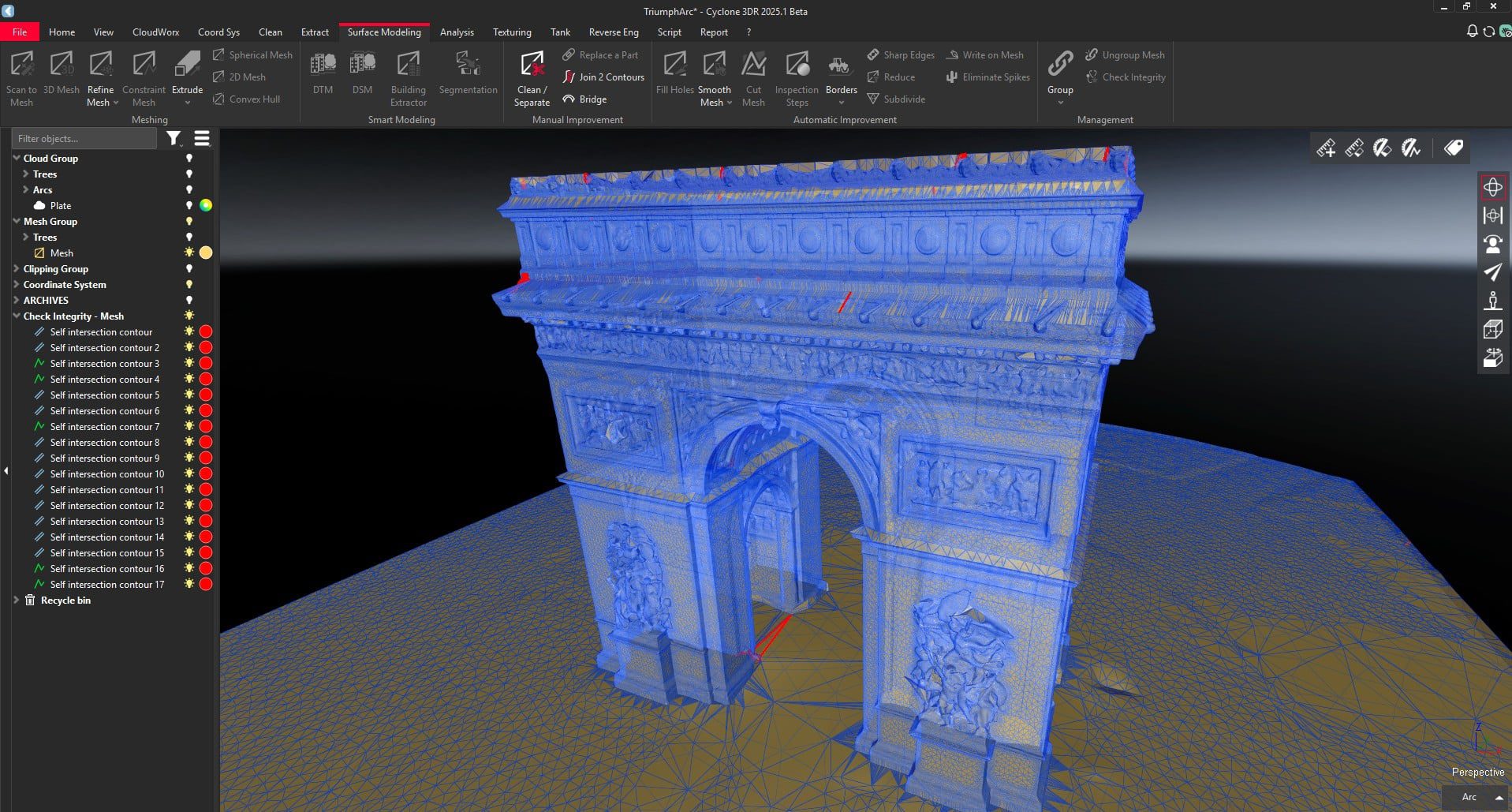
Purists can stay in raw point territory, but Cyclone 3DR doesn’t insist. Its advanced meshing algorithms transform those dots into watertight geometry, adding analytical extras such as volume calculations and deviation analysis. Whether you’re blocking augmented-reality set extensions, calculating demolition waste or prepping virtual-production backplates, the software lets you choose the representation that fits the day’s headache.
Production-Ready—But Test First
Major streaming studios and LED-wall stages already have Cyclone 3DR on the tool shelf, though Leica promises detailed case studies “later.” Early adopters report smoother pre-visualisation passes and faster environment clean-ups, yet any fresh AI workflow should face a sandbox trial before sneaking into mission-critical shots. Scan sizes, GPU drivers and your pipeline’s caffeine tolerance still matter.
Hardware Agnostic, Portfolio Friendly
Leica built Cyclone 3DR around its own scanners—BLK2GO, BLK360 and RTC360—but the software plays nicely with third-party LiDAR, making it a fit whether you travel with a backpack laser or rent a tripod-mounted monster. The tool arrives as a standalone license or bundled with a Leica scanner. Rentals are likewise on the menu. Pricing is on a “call us” basis, so budget hawks should ping the sales desk or serenade their local reseller.
Hexagon’s AI Hub: Twelve Years of Machine Manners
Cyclone 3DR’s brain stems from Hexagon’s AI Hub, formalised in 2021 after nearly a decade of machine-learning tinkering. The mantra—help humans, don’t elbow them aside—guides everything from construction survey algorithms to scene segmentation for virtual sets. With 24,000 employees across 50 countries and annual revenue hovering around €5.2 billion, Hexagon has both the data and the accountants to keep the experiments rolling.
Reality Capture, Meet Reality Check
LiDAR remains the gold standard for capturing real-world fidelity, but anyone who has wrestled a multi-gigabyte point cloud knows the pain of unusable density. Cyclone 3DR’s AI shortcuts are built to keep artists inside the scan rather than exporting, optimising and re-importing a dozen times. Still, every studio’s pipeline is a special snowflake: GPU firmware, DCC import quirks and render-farm plug-ins can turn even the prettiest demo into a late-night support ticket. Vet the workflow on a safe-harbour project before you bet tomorrow’s dailies on it.
Practical Example: From Quarry to Quarry-Level Boss
Imagine scanning a rocky quarry for an open-world game. The AI Classification tags each boulder, conveyor and pickup truck. Segmenter plucks the trucks into a clean asset library; the boulders get meshed, then exported with deviation analysis to ensure collisions feel real at runtime. Later, animation uses the same quarry mesh for pre-vis, while VFX drops individual rocks into a digital avalanche. One scan, six AI brains, endless re-use. Your hard drive sighs with relief.
The Long View: Laser Dreams, Stable Means
By lowering the barrier to LiDAR, Leica hopes to lure more storytellers into photogrammetric workflows without forcing them to study a PhD-length manual. Simplicity may not sell conference swag, but it does keep shots on schedule. Cyclone 3DR’s hardware agnosticism, scripting hooks and GPU acceleration tick the stability box—provided teams do the dull but vital tests first.
Conclusion: Tidy Up, Move On
Cyclone 3DR doesn’t reinvent LiDAR; it just tidies the room. With AI spotting what’s what, Segmenter taking out the trash and meshing ready when your art director yells “polygons,” the tool turns daunting point clouds into structured playgrounds. The library system sweetens the deal: scan once, harvest forever. For artists juggling tight deadlines and tighter budgets, that’s less a revolution than a welcome sign of basic house-keeping.
Visit Leica Geosystems for Entertainment for licensing details, hardware bundles and rental options. And remember: nothing beats a pre-production tech test—unless it’s the panic you feel when you skip one.
