



KeyShot developer Luxion has released KeyShot Studio 2025.2, targeting production artists who want cutting-edge rendering features—minus the marketing jargon and forced cloud connections. This update is all about putting practical tools in the hands of 3D artists, and keeping them on your own hardware.
AI Goes Offline: Studio AI Arrives
The headline addition is KeyShot Studio AI, a built-in, offline generative AI toolset offering three clear modes: Restyle modifies materials and shaders in finished renders, Background swaps out scene backgrounds using prompt-based generation while respecting camera framing, and Imagine produces full concept images for ideation. All modes run locally after model download—no cloud processing, no uploads, no “please wait for our servers” screen.
Before anyone gets too excited: the output may occasionally contain content with copyright concerns, and Luxion requires users to confirm legal compliance before using the tool. In other words, AI is local, but still needs a legal reality check. For all production deployments, thorough in-house testing is mandatory. And i REAAALLY hope that this isn’t news or a shock to you.
But, on the Plus side, the model only needs an internet connection once (to download it to your machine), and then it stays offline – it does not change, and does not train on your data.
Light Layers: Because Lighting Is Never Finished
KeyShot Studio 2025.2 now offers Light Layers, letting artists group lights for independent control of highlights and specularity without reworking a full lighting setup. Need to adjust only the rim or key light? No need to rerender the entire scene. It’s the kind of granular control usually found in high-end compositing or dedicated render engines.


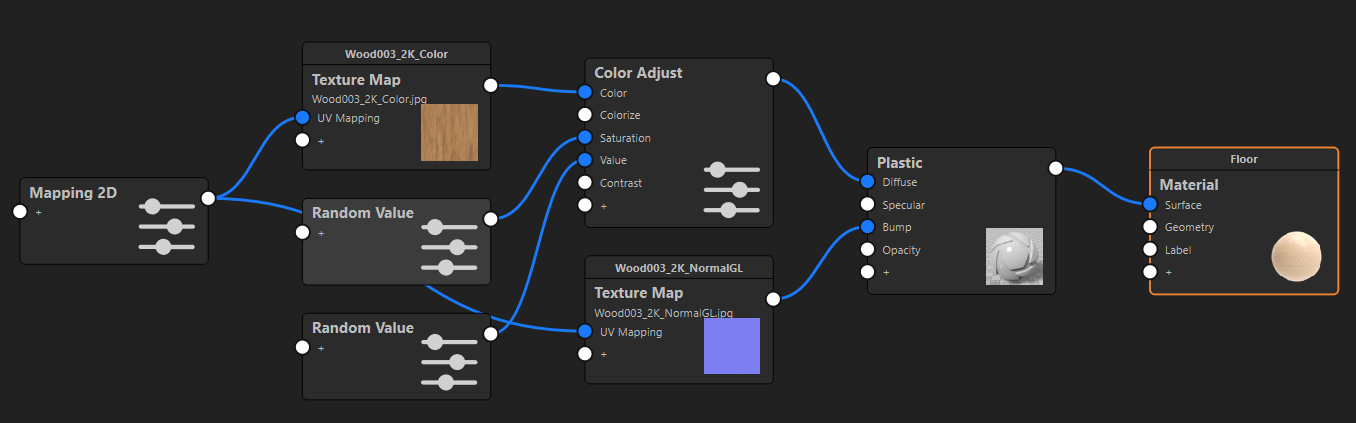
More Chaos, Less Tiling: Randomization Gets Real
The material graph now features three new nodes—Random float, Random shader, and Random UV shift. These bring true per-instance randomness to your renders: shuffle UVs, tweak brightness, and vary geometry just enough to break those obvious repeating patterns. Artists working on anything from bathroom tiles to procedurally-grown city blocks, rejoice.
AMD GPU Rendering: Public Beta, Tread Carefully
NVIDIA has long been the default for KeyShot GPU rendering, but Studio 2025.2 launches public beta support for select AMD GPUs, including Radeon Pro W7000, Radeon AI Pro R9700, and Ryzen AI Max Pro / Max+ Pro series. As with all things beta, the usual disclaimers apply: test before production, especially if you rely on stability for daily deliveries.
Asset Library Gets a Tune-Up
The KeyShot Cloud Library is rebuilt for faster performance and improved security, with asset browsing now directly in-app. While older versions can still access assets, new downloads and direct integration are only in Studio 2025.2.
Extras: Color Picker, Pantone, and Plugins
Rounding out the update are a new color picker (now with better color management and linking), 175 additional Pantone Dualities colours for accurate textile and plastic visualization, and a refreshed SolidWorks plugin that ensures proper import of decals and labels. The software supports Windows 10/Server 2019 and macOS 11.7 or higher, with plugins available for 3ds Max, Blender, Cinema 4D, Maya, SketchUp, and more. AI features demand at least 16 GB VRAM (or 16 GB RAM for M1 Macs); a CPU fallback is available, but performance will suffer.
Pricing and Availability
KeyShot Studio 2025.2 is subscription-only at $1,188/year. Full hardware and platform requirements are listed here{:target=”_blank”}.
Production Caution
Innovations like local generative AI and new GPU paths can change workflows—sometimes in ways the marketing copy forgets to mention. Test all new features in controlled settings before trusting them in critical delivery pipelines. Yes, even the local AI.
