



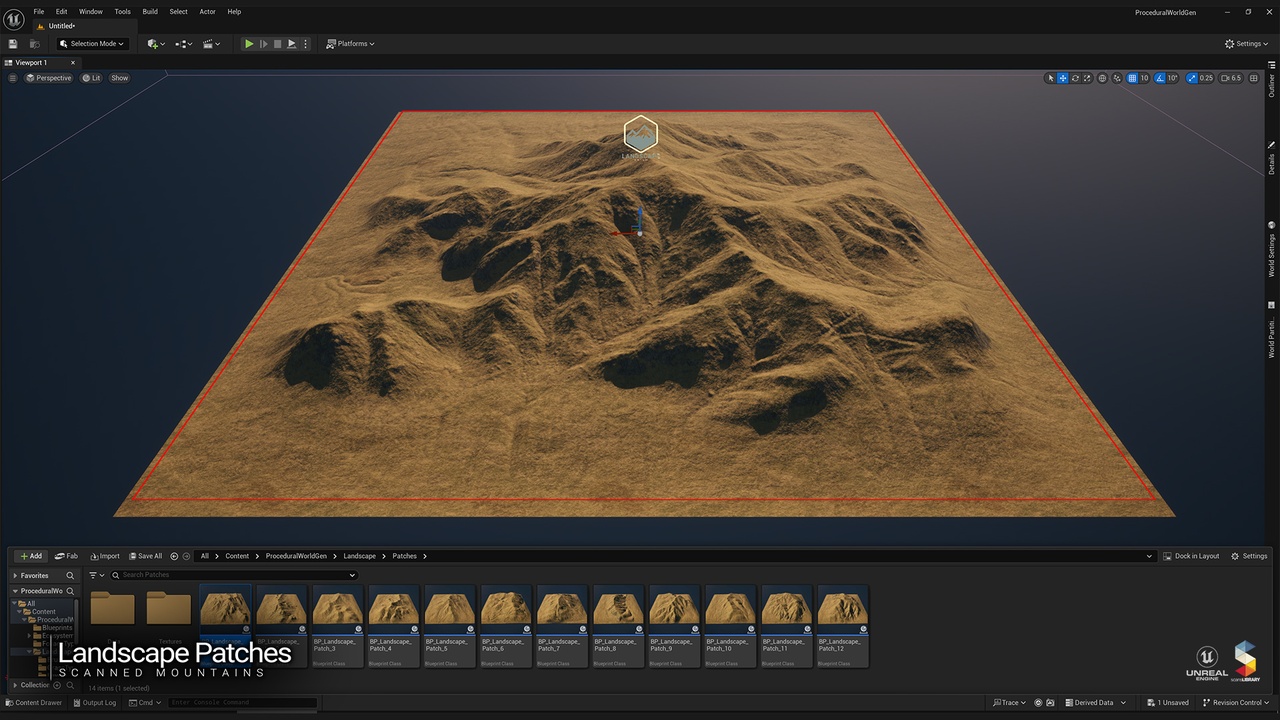
Gökhan Karadayı, known for Unreal Engine landscape asset packs, has released Procedural World Generator (PWG) for UE5, a landscape-driven environment creation toolkit. Unlike standalone procedural placement tools, PWG works entirely inside UE5’s Landscape Layer system, allowing artists to “paint” terrain while automatically spawning roads, railways, traffic signs, electricity poles, barriers, and houses. This keeps the workflow inside the native terrain editor without requiring separate procedural graph setups.
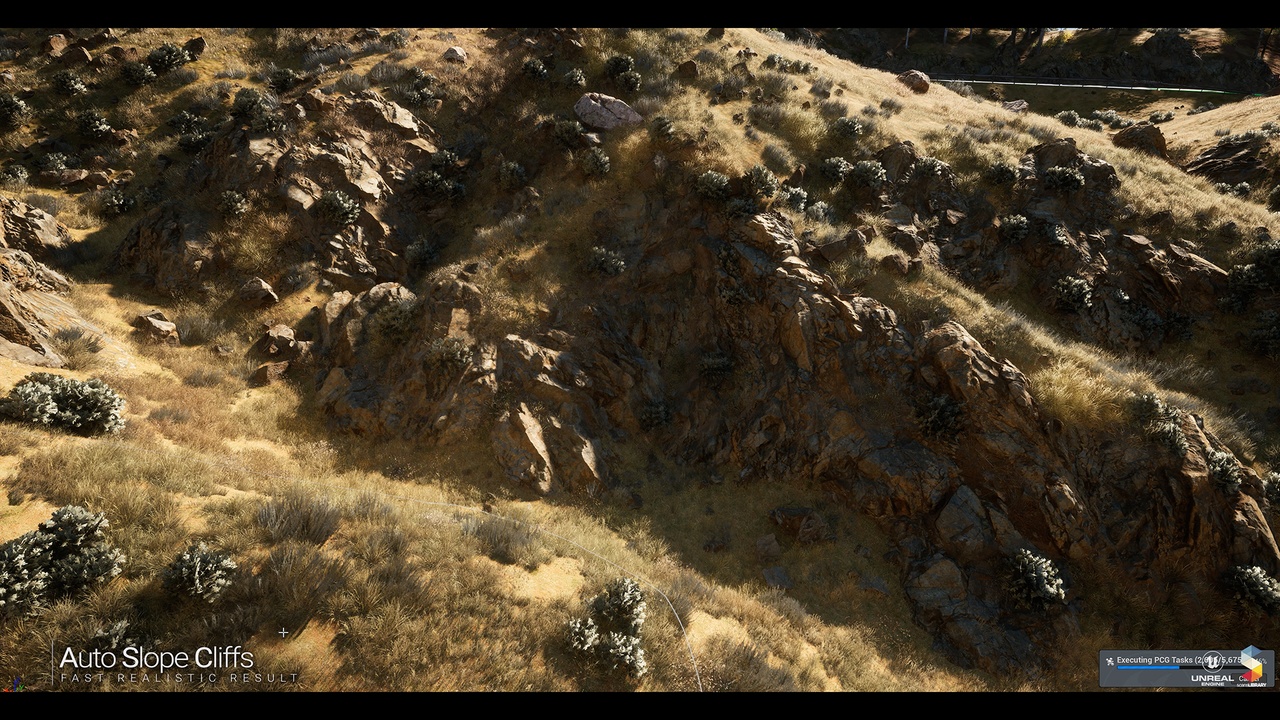
The official documentation claims that PWG is built around 100% scanned assets, all Nanite-enabled, with textures up to 8K resolution. It ships with 406 static meshes, 362 textures, 16 master materials, 116 instanced materials, 33 Blueprints, and 12 scanned landscape patches. The package also includes cable systems, spline-based Blueprints for barriers, fences and rope bridges, procedural slope rock placement, dynamic moss and dirt shaders, and a library of scanned plants, rocks and trees. Five ready-to-use landscape templates and a playable demo are provided, along with tutorials covering every major feature.
Roadmap and planned features
Future updates listed in the documentation include tropical island, desert, oak, beech and broadleaf forest ecosystems, seasonal variations such as spring and winter, new props for level design, additional landscape patches and pre-built maps. All roadmap points are vendor statements and not independently verified at press time.
Comparison with Unreal’s native PCG framework
While Unreal Engine’s Procedural Content Generation (PCG) framework allows highly granular, node-based procedural placement, it requires building graphs and rules for each type of asset and landscape interaction. PWG instead pre-packages these rules into a fixed, layer-driven system that operates directly through UE5’s landscape painting tools. This means less procedural flexibility than UE’s PCG for complex custom logic, but faster results for common environment types without extensive graph creation. In short, PCG offers maximum control for technical artists, whereas PWG prioritises speed and accessibility for environment art tasks.
Pricing and licensing
PWG is sold in two licence tiers: a Personal licence at €256 (for users or studios with under €100,000 revenue in the previous year) and a Professional licence at €1,024. Pricing is stated on the official Fab listing.
Production caution
Although PWG appears technically well-stocked, stability under production loads, real-time performance in large scenes, and compatibility with pipelines remain to be verified. As with any procedural system, artists should test it on non-critical projects before committing it to full production use.
