



SideFX has officially released Houdini 21. After weeks of teasers, previews, and keynote showcases, the update is finally here. The marketing fire has long since burned out, but the actual release matters for production artists: new rigging tools, animation workflows, simulation updates, and the much-teased Copernicus renderer.
For context: earlier this month, we covered SideFX’s keynote promises of production readiness across the CG pipeline (Digital Production, 13 August{. Even before that, SideFX teased “Otto, Otis, Copernicus, and 300 new features” (Digital Production, 5 August). Now we finally know what actually shipped. Spoiler: yes, the features exist. No, they are not as flashy as the build-up suggested. But they are tangible, technical, and worth testing.
Rigging: Procedural, Modular, and Actually Usable
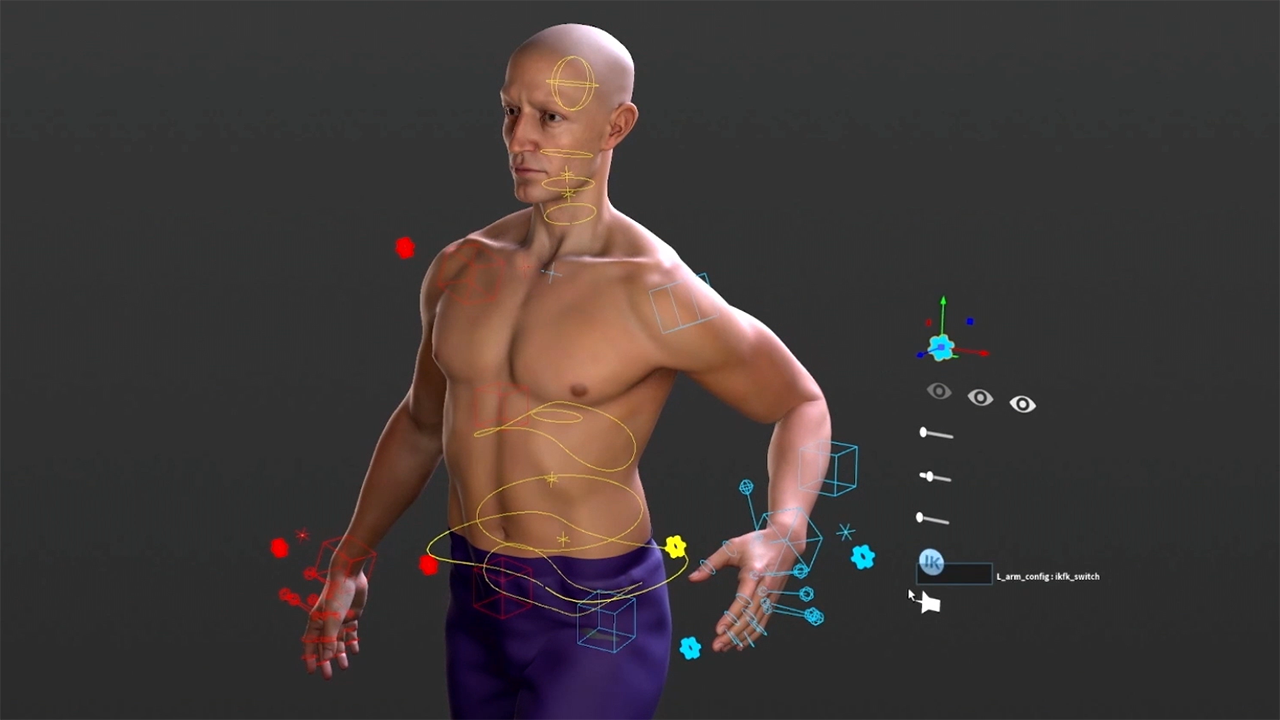
The Houdini 21 rigging updates aim to make character setup less of a masochistic experience. SideFX has introduced a Rig Tree view that organises hierarchies and constraints visually, making it easier to manage large rigs. The component-based rigging system lets artists assemble rigs from modular building blocks, reducing repetitive setup. This also allows for versioning and swapping rig parts without rebuilding entire structures.

Constraints have been improved, particularly with better parent/child handling and interactive feedback. Deformation tools now support GPU acceleration in some cases, promising faster skin weighting. Houdini’s auto-rigging templates have been updated with more flexible biped and quadruped presets. SideFX also stresses that procedural rig editing should make late-stage changes less painful.
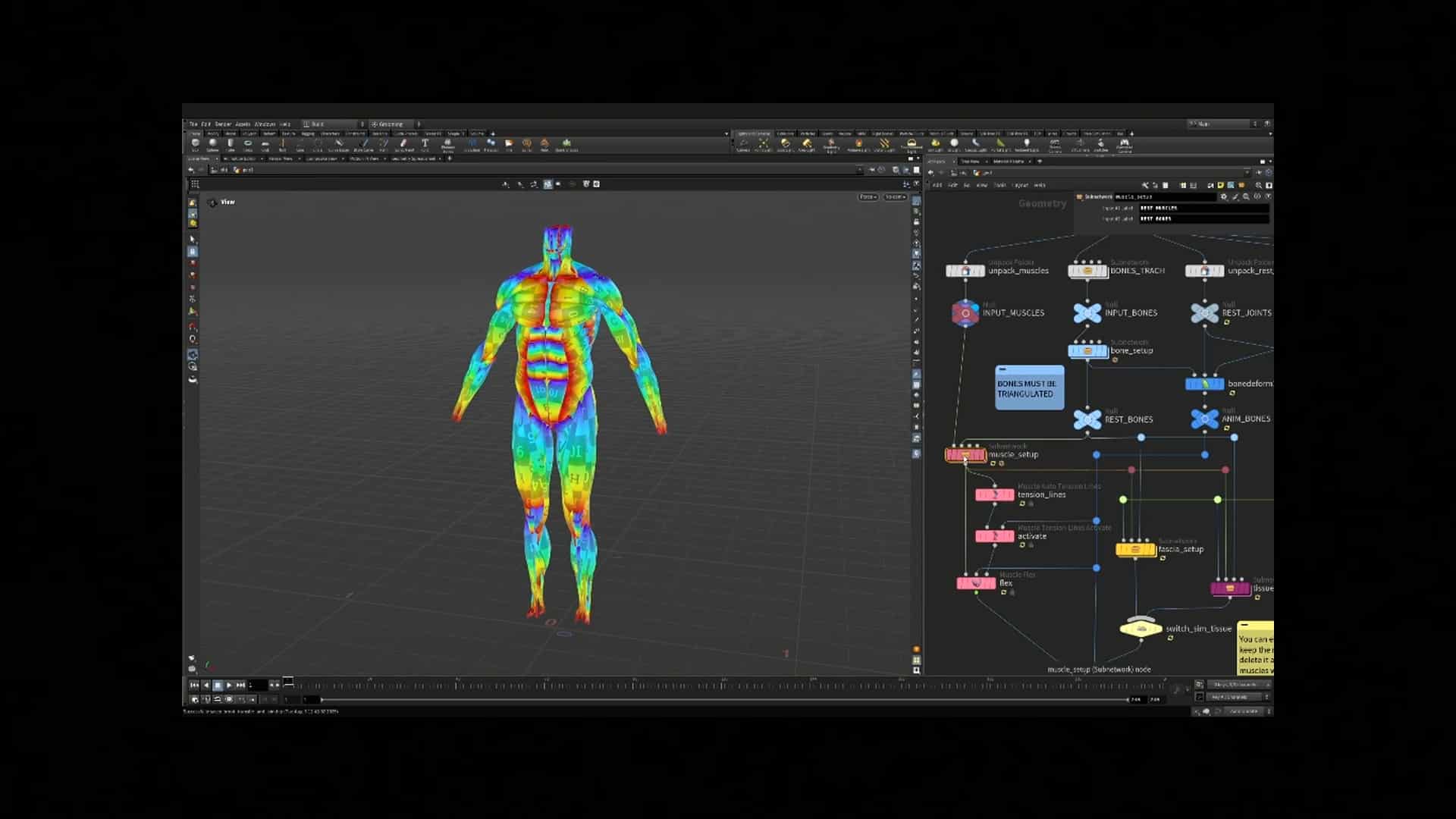
A notable change is the Muscle & Tissue system refresh. Houdini 21 offers a more physically accurate muscle simulation setup, integrating with Vellum solvers for flesh-like behaviour. While marketed as “production ready,” this system will clearly require careful tuning for large-scale use.
Animation: Layers, Retiming, and a Cleaner Editor
Animation tools have received updates targeting everyday usability. The Animation Editor has been overhauled with a modernised curve view, clearer keyframe management, and new interpolation modes. Retiming is more flexible, with improved time-warping and ghosting features for previewing motion adjustments.
Animation layers, long a pain point in Houdini, are now non-destructive and stackable. Artists can apply additive, override, or weighted layers with live feedback, allowing multiple iterations without duplicating animation tracks. Onion skinning has been improved for clearer pose visualisation. There are also updated tools for motion capture clean-up and constraint-driven animation, which should ease integrating mocap with procedural rigs.
The Pose Library has been expanded, offering better thumbnail previews and organisational tools. SideFX markets it as a faster way to store and recall key poses. While the feature is not unique compared to Maya or Blender, it is a welcome addition for animators sticking with Houdini.
Character FX (CFX): Cloth, Fur, and Flesh
The CFX section is where SideFX flexes simulation power. Houdini 21 updates the Vellum solver with more stability under dense collisions and faster convergence in complex setups. For cloth, adaptive remeshing reduces simulation overhead on stretched areas, and new bend models create more realistic folds.
Hair and fur pipelines have been integrated more tightly with dynamics. Artists can simulate hair with better self-collision and guide-hair workflows, and Houdini now includes GPU-assisted grooming brushes. Fur shading also benefits from lookdev updates, integrating with Karma and Copernicus for consistent previewing.
Skin sliding simulations have been updated, making secondary motion more believable. The Muscle system connects directly with skin solvers, reducing double setups for rigging and CFX teams.
VFX: Pyro, Water, and Procedural Destruction
SideFX’s VFX updates cover pyro, fluid, and destruction workflows. The Pyro solver now supports adaptive containers, which dynamically resize to focus compute power on active regions. This reduces wasted cycles on empty grid areas in large-scale explosions.
Fluids have new foam and spray systems, with procedural control over particle birth and lifetime. Water rendering has been enhanced with improved meshing filters and tighter integration with Solaris. Large-scale simulations benefit from distributed processing optimisations, although SideFX does not provide exact performance figures.
Rigid body dynamics (RBD) see incremental improvements. Constraint networks can be visualised more clearly, and destruction setups gain new fracture patterns. Artists can now assign procedural “damage maps” to geometry, enabling more art-directable breaking effects.

Lookdev: Shaders, Materials, and Library Updates
The lookdev tools in Houdini 21 focus on consistency and layering. Shader nodes have been simplified, with clearer naming conventions and documentation. Materials now support hierarchical layering, so multiple materials can be stacked and blended procedurally. The standard library has been expanded with presets for common surfaces, including fabrics, metals, and translucent materials.

SideFX also highlights better interoperability with Solaris and USD workflows, aiming to make lookdev work less fragmented across different DCCs.
Copernicus: The New Renderer
Copernicus, the most hyped feature, finally lands as a GPU/CPU renderer. Positioned as a competitor to Karma XPU, Copernicus is marketed as tightly integrated with Houdini’s procedural workflows. Features include interactive viewport rendering, out-of-core texture handling, and adaptive sampling.
SideFX promises faster iteration compared to existing renderers, though no independent performance benchmarks are available. Copernicus supports USD and MaterialX shading, keeping it aligned with industry standards. Whether it becomes a production mainstay or just another renderer option remains to be seen.
Terrain Modeling: Erosion, Noise, and Scattering
Houdini 21’s terrain tools{:target=”_blank”} expand procedural worldbuilding. Heightfields now include new noise operators with advanced control over frequency and masking. Erosion filters simulate sediment deposition more realistically, with options for layering multiple erosion passes.
Scatter tools integrate with Solaris for direct population of USD scenes. Large datasets reportedly benefit from memory optimisations, but SideFX provides no benchmarks. Artists will need to test scale performance themselves.
The Release vs. the Tease
Comparing SideFX’s teasers, keynote previews, and final release: the features line up, but the marketing language has been dialled down. The 300 new features headline has given way to a more sober breakdown of rigging, CFX, VFX, lookdev, terrain, and rendering updates. Otto and Otis, SideFX’s demo characters, still exist—but they were mostly marketing mascots for showcasing workflows. The biggest difference: the keynote leaned on promises of “production readiness.” The release notes remain cautious, focusing instead on tool improvements without broad guarantees. As always: do not update mid-project unless you enjoy debugging pipelines at 3 a.m. Install, test, and judge whether SideFX’s promises hold up in your own environment.
