



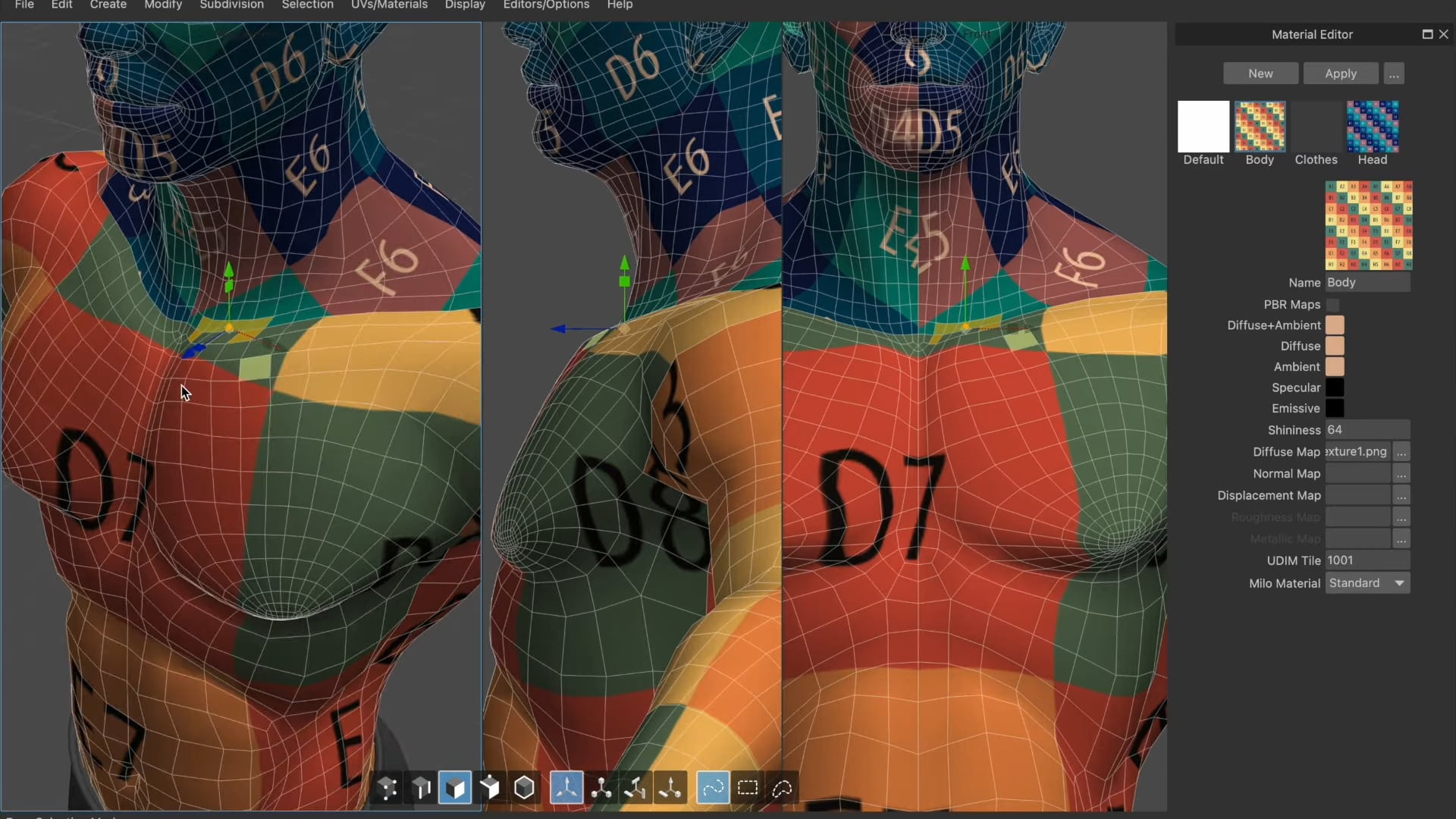
Nevercenter has released Silo 2025.2, and the changelog is refreshingly pipeline-friendly. The big headline is that Silo can now import and export Pixar’s USD files, meaning it can finally hold a proper conversation with the rest of a modern production pipeline. Alongside that comes UDIM UV mapping, the tile-based approach to texturing that makes character artists and texture painters breathe a little easier. No more cramming 8K detail into a single UV island.
The update also touches the modelling workflow itself. Viewports can now be synced so that rotations, pans, and zooms line up across multiple views, which is handy if you like your orthos behaving like obedient soldiers. A new three-view vertical split layout joins the mix, offering another way to clutter your screen with geometry. Numeric inputs have learned some manners too: centimetres, millimetres, and inches are all accepted, with automatic conversion. In short, you can finally model a chair that actually fits through a door.
Several annoying bugs have been squashed along the way, including problems with multi-monitor setups and orthographic rotations. Long-time users will recognise these as the little paper cuts of Silo, so this is a welcome clean-up.
Pricing and Availability
If you bought Silo from Nevercenter within the past year, the update won’t cost you a cent. For everyone else, the current Silo plus Milo bundle is listed at 159 US dollars. As before, the package runs on Windows 10 (64-bit) and newer and macOS 12 or newer.
Caveats
Nevercenter calls the USD support “full,” but the fine print is missing. Which parts of the spec are truly covered — materials, shading networks, subdivision surfaces, animation — is not detailed. Similarly, UDIM performance with very large tile sets has not been documented. As always: test in your own pipeline before committing production work.
Conclusion
Silo 2025.2 is not trying to be Houdini, Maya, or Blender. But with USD, UDIMs, synced viewports, and proper unit handling, it has stopped being an island. For anyone who liked Silo’s speed but cursed its isolation, this is a significant step. The real test will be whether it plays nicely with the rest of your studio’s toolchain. Try it, break it, and decide for yourself.
