



Hair shading improvements
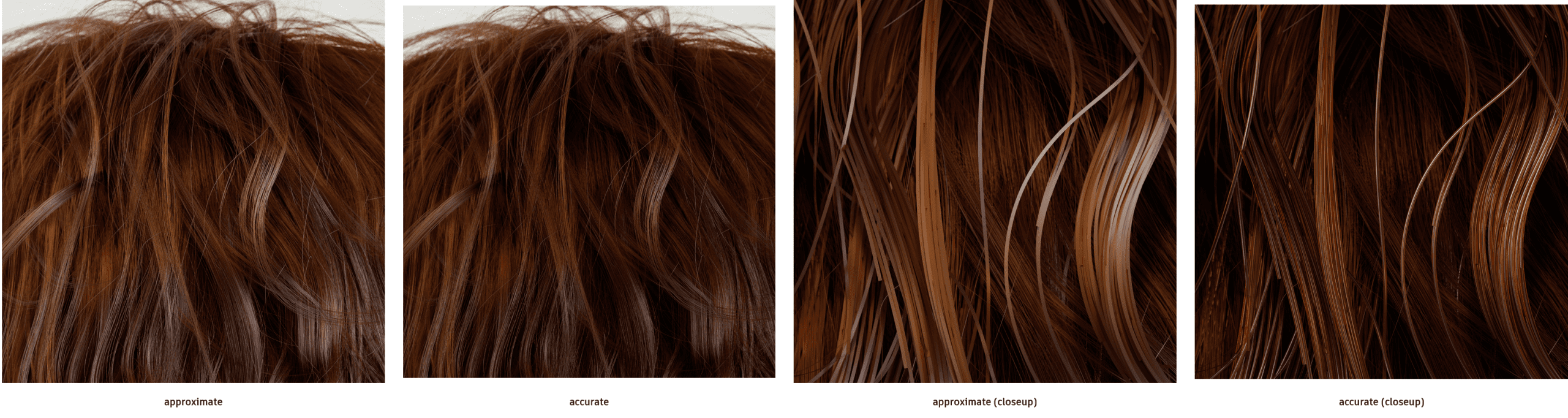
The Standard Hair shader now supports a new accurate mode which simulates each hair strand as a cylinder rather than a flat surface. This produces better close-up renders but increases render times by around 10 to 30 percent. A further adaptive mode has been added, switching automatically to the accurate mode for close-ups and reverting to the approximate mode for distant hairs. The result is a more efficient balance between image quality and performance.
New bloom modes in Lens Effects
Arnold 7.4.4 expands the Lens Effects imager with new bloom-generation modes. A notable addition is the aperture bloom mode, which emulates physical-camera bloom by allowing control over aperture-blade count and curvature. This provides more natural-looking highlights and camera-style glare for cinematic imagery.
Material & lighting enhancements
The thin-film component of the OpenPBR material now observes better energy conservation for iridescent surfaces. Lighting receives additional flexibility: mesh lights can now optionally cast shadows, while light-blocker geometry can include ramp or negative density values, offering more nuanced lighting control for compositors and look-development artists.
Performance gains
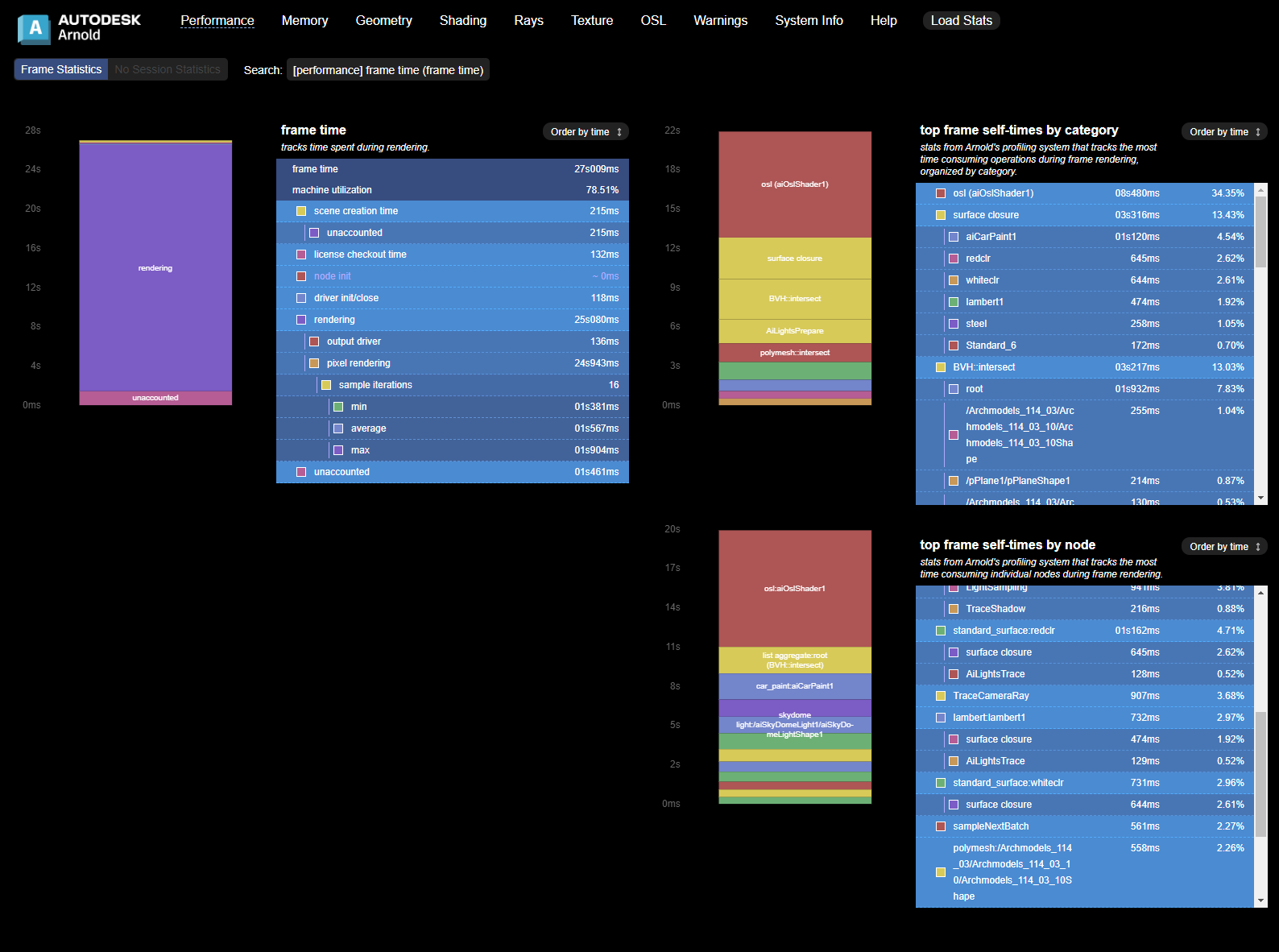
Global Light Sampling (GLS) has been refined. The algorithm now factors in the spread parameter of quad and disk lights, which helps reduce noise in low-spread scenes. Autodesk reports performance improvements of up to six times faster in specific lighting scenarios, though more typical gains appear to average around 1.4 times. Texture handling has also been improved. Arnold now auto-generates missing TX files more efficiently, significantly reducing time to first pixel, especially on Windows systems with many CPU cores.
GPU rendering & denoising updates
On the GPU side, Arnold adds support for the Motion Vector shader and improves consistency between CPU and GPU parameter overrides. GPU memory usage has been reduced when rendering instances. The OIDN denoiser now supports NVIDIA Blackwell GPUs and AMD RDNA 4 GPUs, expanding compatibility for new hardware.
Integration plugin support & system requirements
The release is supported by updated host-application plugins, including MAXtoA 5.8.4 for 3ds Max, C4DtoA 4.8.5 for Cinema 4D, HtoA 6.4.5 for Houdini, KtoA 4.4.4 for Katana, and MtoA 5.5.5 for Maya. Arnold 7.4.4 runs on Windows 10 and later, Linux with glibc 2.28 or higher, and macOS 11.0 or later. GPU rendering remains available only on Windows and Linux, requiring a compatible NVIDIA GPU. A single-user subscription is priced at 55 USD per month or 430 USD per year.
Caveats & things to test
While the update looks solid, a few points warrant testing before adoption. Autodesk’s claimed sixfold speed improvement in light sampling likely represents an optimal case; most users can expect more modest gains. The accurate hair mode, while visually impressive, carries a measurable render-time penalty. GPU rendering remains unavailable on macOS in this release. As always, studios should test all new features in their own pipeline before committing to production use. Users of previous Arnold 7.4.x builds will find the 7.4.4 upgrade worthwhile for its stability and refinement. Before installation, back up your projects and test key scenes with the new hair mode, bloom settings and light sampling. Evaluate the render-time impact to confirm benefits in your own workflow.
Arnold 7.4.4 focuses on polish rather than reinvention. The improved hair shader, refined lens bloom and smarter light sampling deliver genuine quality gains without disrupting established pipelines. GPU and denoiser updates further modernise hardware support.
