



At Unite 2025, Unity unveiled its official roadmap through 2026. The presentation focused on the core engine, the package ecosystem, and Unity Gaming Services, while the leadership repeatedly stressed one theme: stability before novelty. The roadmap confirms a measured rollout of new architecture and workflow improvements under the Unity 6 generation. Upcoming versions will follow a quarterly supported-update cadence through 6.7 LTS in 2026.
Verified Quality, Smaller Deltas
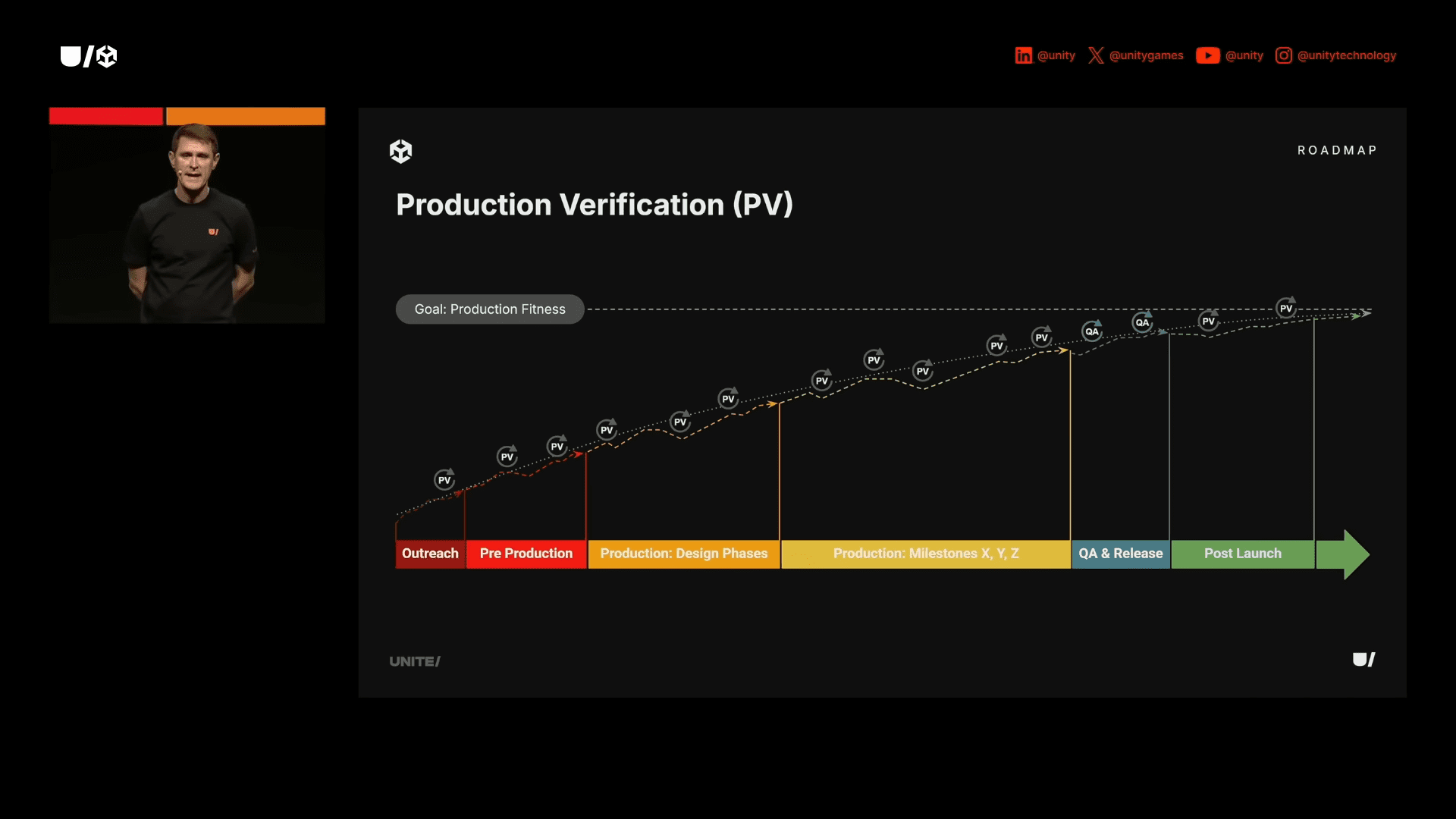
Unity’s Production Verification (PV) programme, now central to its release process, links internal and external studios to test new features in real projects. The company reports a 43 percent faster regression-fix time and a 54 percent smaller backlog since expanding PV to partners such as Kinetic Games and Ten Chambers.
Diagnostics and analytics are being merged under the Developer Data Framework, a unified telemetry system that provides early issue detection while keeping player data consent “cautious by default.” Engine diagnostics now ship active in new projects and can be managed or disabled at runtime.
Signed Packages and Core Standards
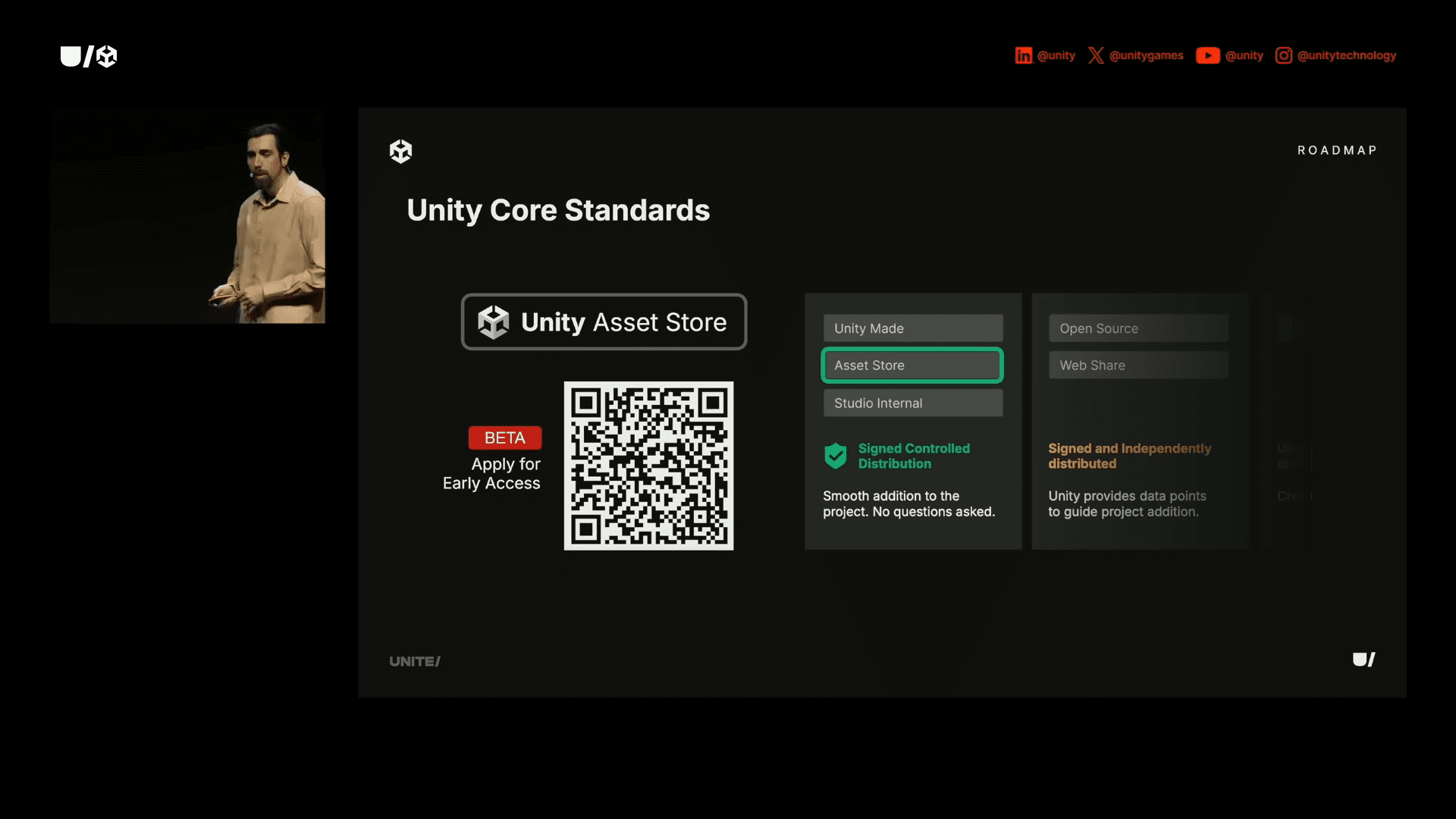
Security and traceability in the package ecosystem were a major focus. Starting with Unity 6.3, the editor gains built-in support for signed packages and visible trust indicators in the Package Manager. Unsigned packages trigger warnings, while verified authorship will be handled either by Unity, an organisation admin, or an approved publisher. From early 2026, Asset Store publishers can distribute extensions directly as Unity Package Manager (UPM) packages with strong versioning and dependency metadata. Unity calls this framework its new Core Standards, a more or less polite term for supply-chain hygiene.
Editor Quality of Life
The Unity Hub and editor receive long-requested usability upgrades. In 6.3, the main toolbar becomes customisable, the grid and snapping systems are rebuilt, and the internal search database moves to LMDB for large-project speed. A rewritten scene hierarchy using UI Toolkit handles “millions of objects” and finally introduces horizontal scrolling.
UI Toolkit itself gains world-space UI, custom shaders, filters, and vector graphics. Despite the focus on the new system, Unity reaffirmed long-term investment in uGUI, including performance fixes drawn from its own Survival Kids game. The Graph Toolkit moves from an experimental package into the core editor, becoming the default node-based framework. Shader Graph receives major upgrades, including nested properties and UI/terrain templates, with stencil support due in 6.5.

Graphics and Performance
Lighting tools gain XAtlas UV packing, a unified ray-tracing API, and early work on dynamic global illumination for the Universal Render Pipeline (URP). A shared Render Graph backend and cross-pipeline upscaling framework are being introduced to unify HDRP and URP features. Vulkan and DirectX 12 remain the focus for desktop, with DX12 now the Windows default after memory-usage optimisations and smoother pipeline compilation. Burst 1.8.25 adds cross-CPU determinism for consistent multiplayer simulations, and new build settings reduce shader compilation time by up to 45 percent in URP.
CoreCLR, ECS and the Long Merge
A major architectural shift is the gradual migration from Mono/.NET to Microsoft CoreCLR, promising higher runtime performance and full modern C# compatibility. An experimental desktop player using CoreCLR is planned for 6.7, followed by a CoreCLR-powered editor. The Entity Component System (ECS) becomes a core engine package in 6.4, with unified transforms for ECS and GameObjects to follow. Unity intends to allow ECS components to attach directly to GameObjects without re-architecting existing projects, an incremental unification rather than a rewrite.

AI Gets “Agentic”
Unity introduced Agentic AI tools,editor-integrated assistants that understand project context, index assets, and offer diff-verified code suggestions. Agents will analyse profiler data for optimisation hints, assist in UI Toolkit layouts, and generate assets such as skyboxes or textures through a built-in chat interface. All code changes must be manually approved, with Git-diff visualisation built in. These features begin rolling out with 6.4 and expand later with visual-context inputs and performance debugging. So, another tool with a barely working assitant nobody asked for.
Platform Toolkit and Device Expansion
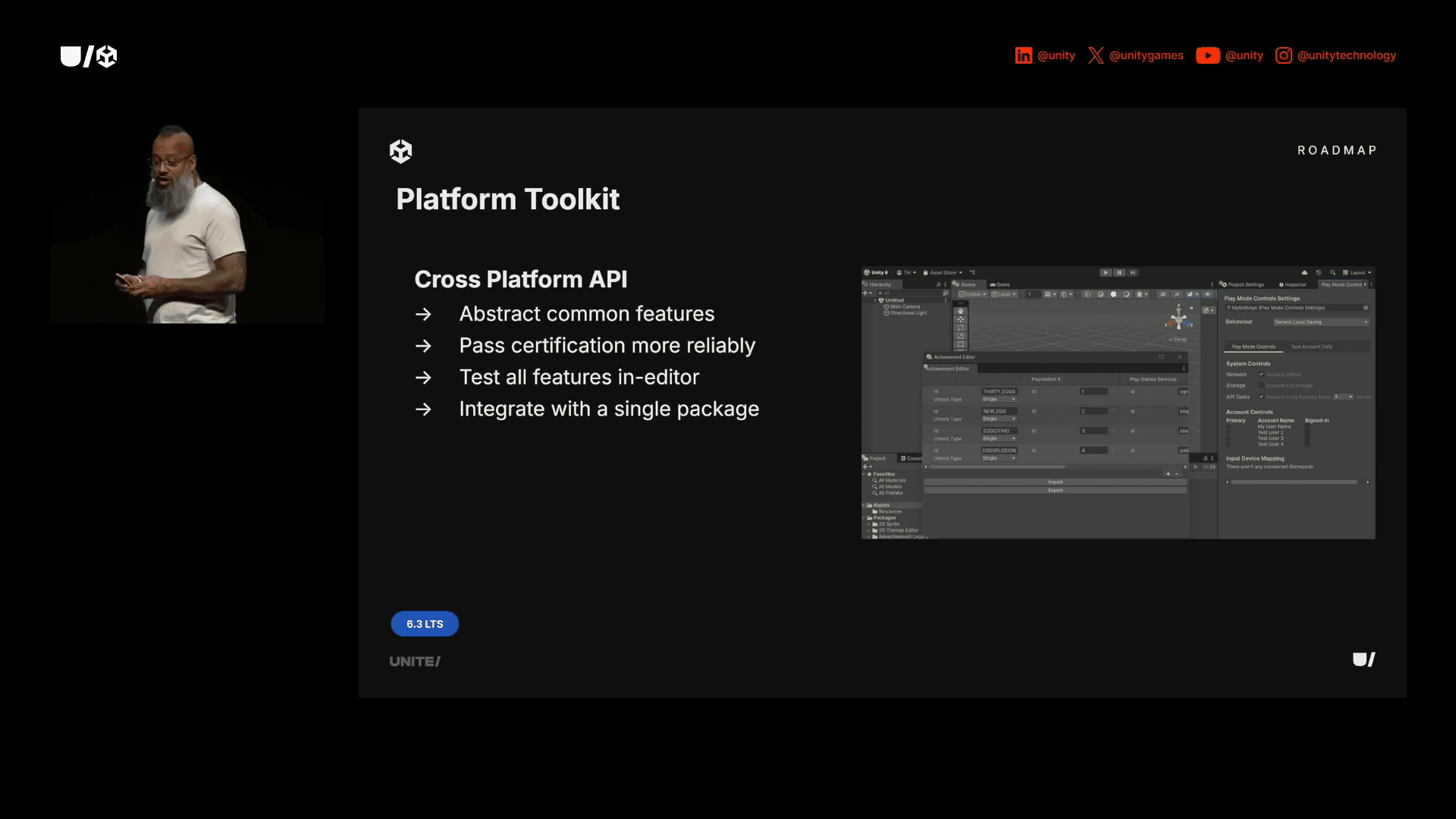
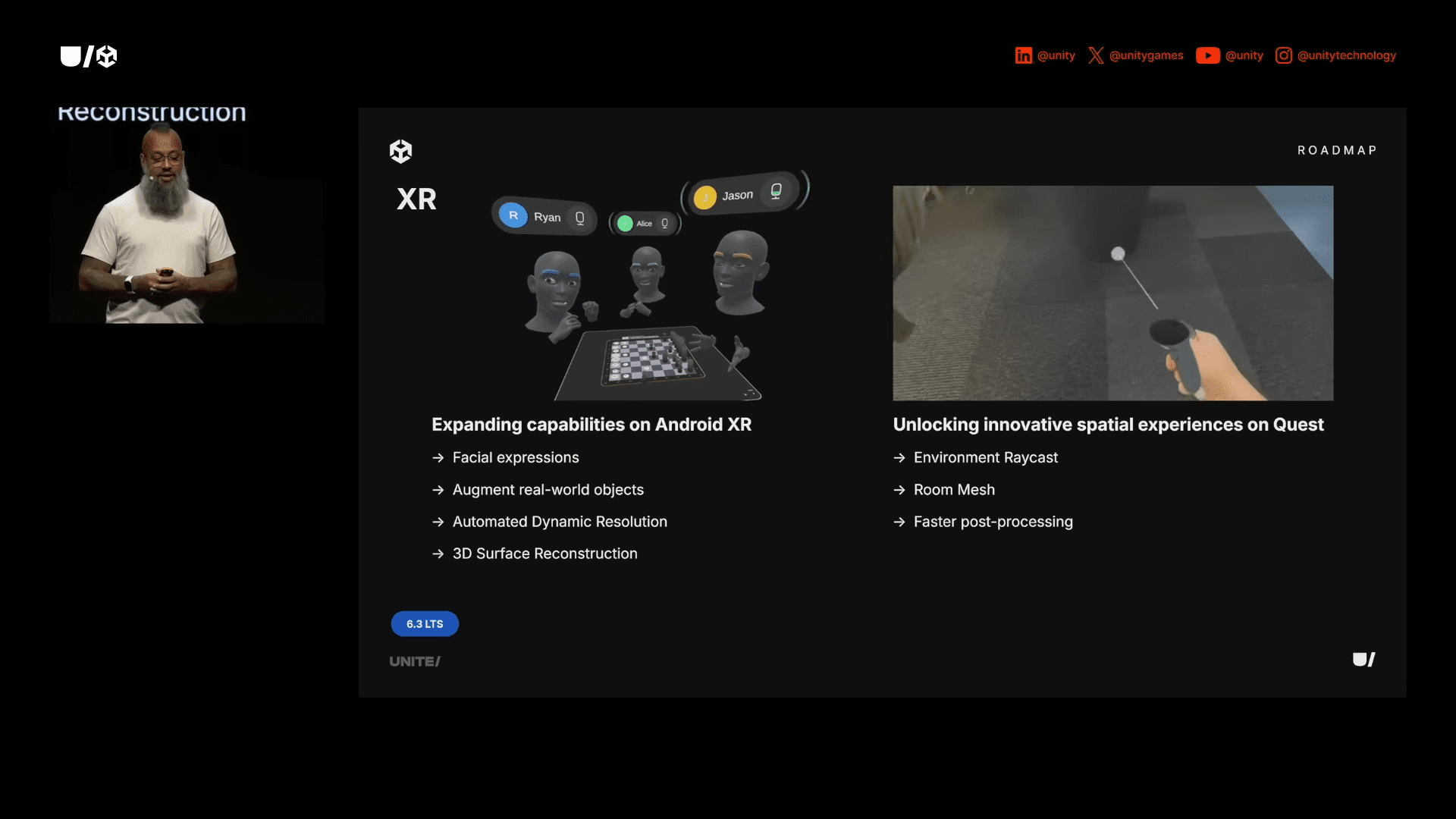
The new Platform Toolkit abstracts console and device SDKs, allowing cross-platform certification code to be written once. The API launches in 6.3 with successful Xbox and Nintendo Switch 2 certification already confirmed. Unity supports Nintendo Switch 2 out of the box (HDR, 120 Hz, 4K output), and continues work on Android XR and Meta Quest platforms via OpenXR. Mobile updates include a rewritten Apple integration layer in Swift, due in 6.6, and Android startup optimisations through thin LTO builds in 6.5. Unity WebRequest now defaults to HTTP/2, cutting server load by up to 40 percent in internal tests.
A Pause for Foundations
Unity confirmed it has paused work on new animation and world-building workflows to focus on architectural stability and the CoreCLR migration. The company says this pause will accelerate the delivery of foundational systems across the entire engine stack.
Reality Check
Unity’s roadmap finally reads less like a sales pitch and more like a maintenance schedule. Most features arrive through incremental 6.x updates, with verification baked in before rollout. Production teams should, as always, test every new version before adopting it in live pipelines.
