



Theory Accelerated is the independent R&D studio of former ILM and Naughty Dog technical director Matt Puchala. Known for Axiom, a GPU-based volumetric solver for Houdini, the studio builds specialised simulation tools aimed at faster, artist-friendly workflows for VFX and cinematics. Paradigm extends this approach from smoke and fire into liquid dynamics.
Theory Accelerated has released Paradigm, a new GPU-accelerated sparse liquid solver for Houdini. The software, currently in open beta, aims to provide a faster alternative to Houdini’s native CPU-bound FLIP solver. According to Theory Accelerated, Paradigm can simulate millions of particles “in a fraction of the time a CPU would take”.
Like its sibling tool Axiom, Paradigm is designed to handle simulations across scales—from small splash tanks to large-scale water scenes. The solver runs entirely on the GPU through OpenCL, making it hardware-agnostic and compatible with GPUs from AMD, Intel, and NVIDIA, as well as Apple Silicon.
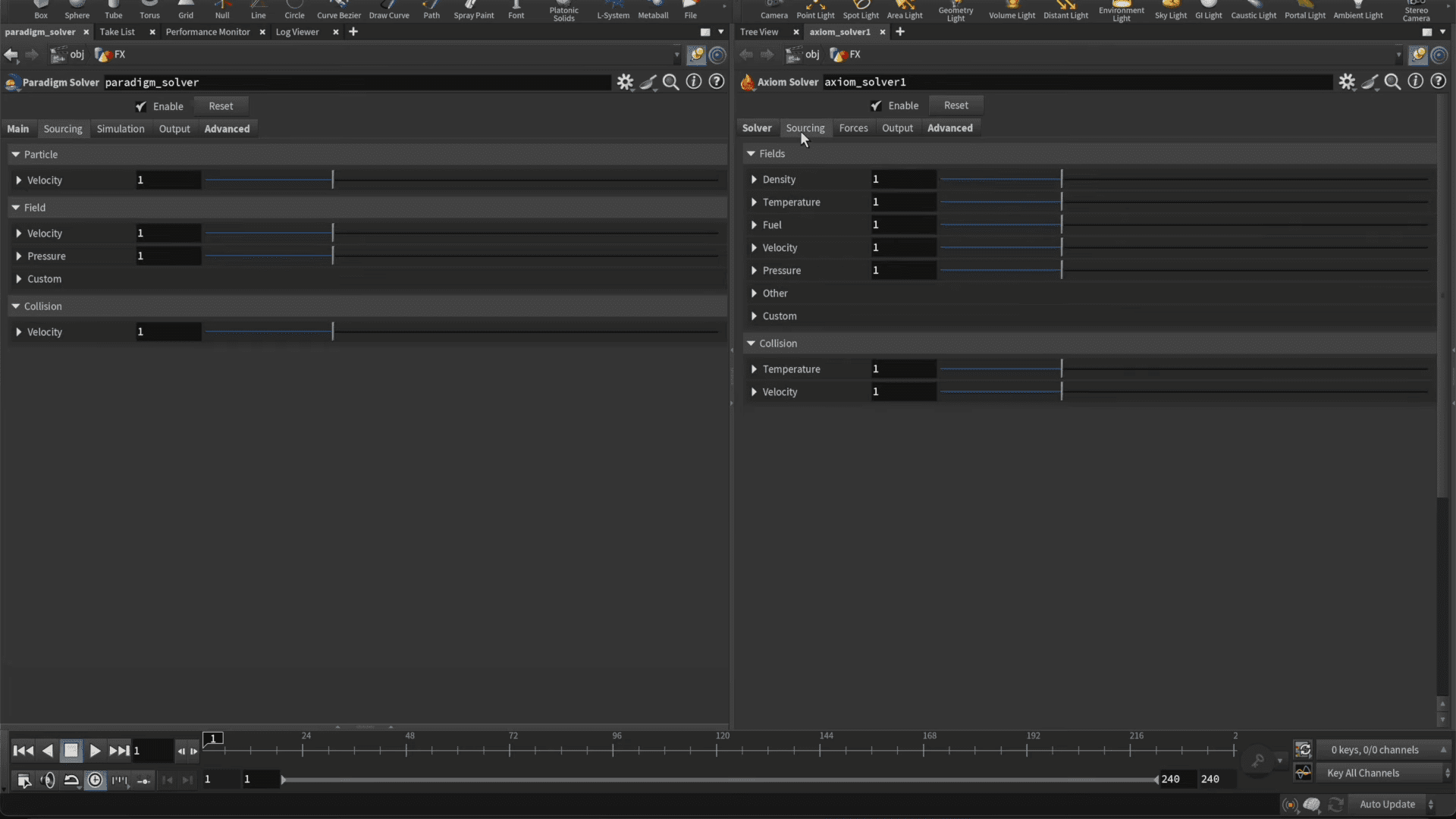
Built on the same tech as Axiom
Paradigm shares its underlying sparse-simulation architecture with Axiom, Theory Accelerated’s established GPU-based volumetric solver. Development of the two products is intertwined; improvements made during Paradigm’s creation reportedly led to better collision detection in Axiom 4.0. Despite the shared lineage, Paradigm and Axiom are separate tools, and there is currently no two-way coupling between liquid and volume simulations.
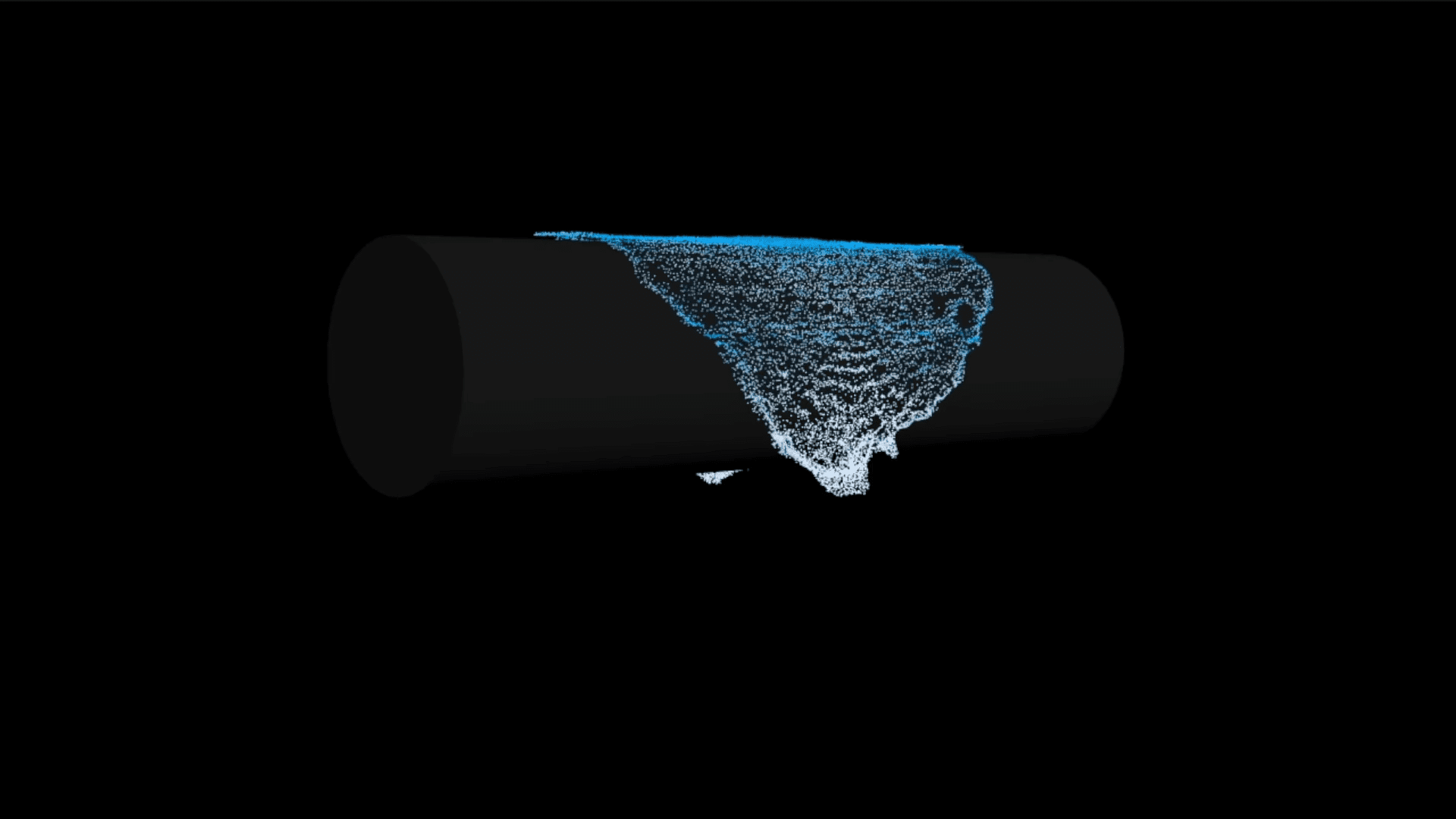
Simple setup, Houdini-native workflow
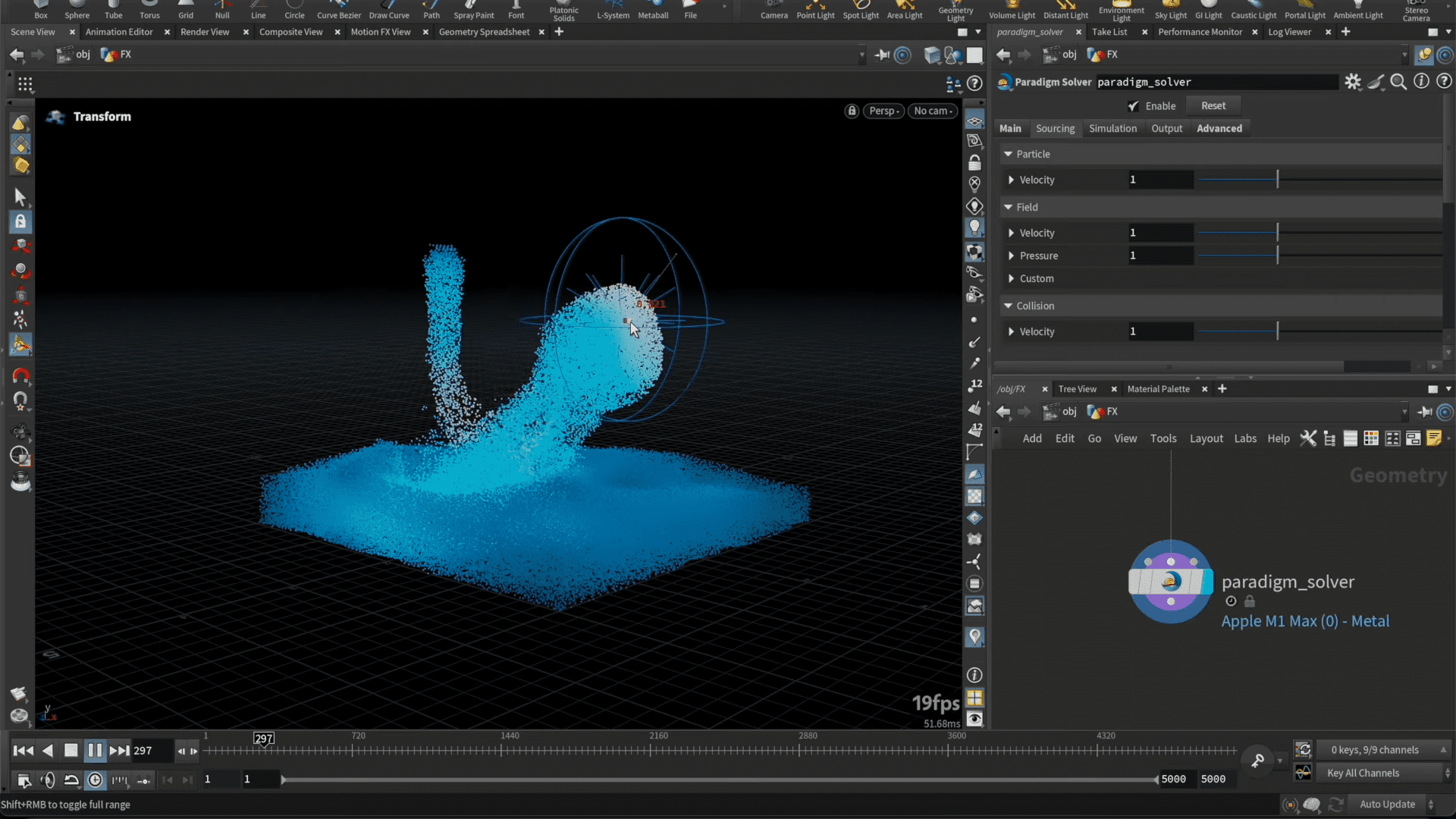
Paradigm integrates directly into Houdini and is structured around a compact node set—just four nodes are required to set up a basic splash tank. Its interface closely resembles Axiom’s, offering familiar workflows for existing users. Artists can use source shapes as emitters, colliders, or custom forces.
According to the developer, the goal is to make iteration as fast as possible. Paradigm’s GPU core enables quick previewing of surface tension, viscositiy, and adhesion effects, helping artists evaluate sims without long cache times.
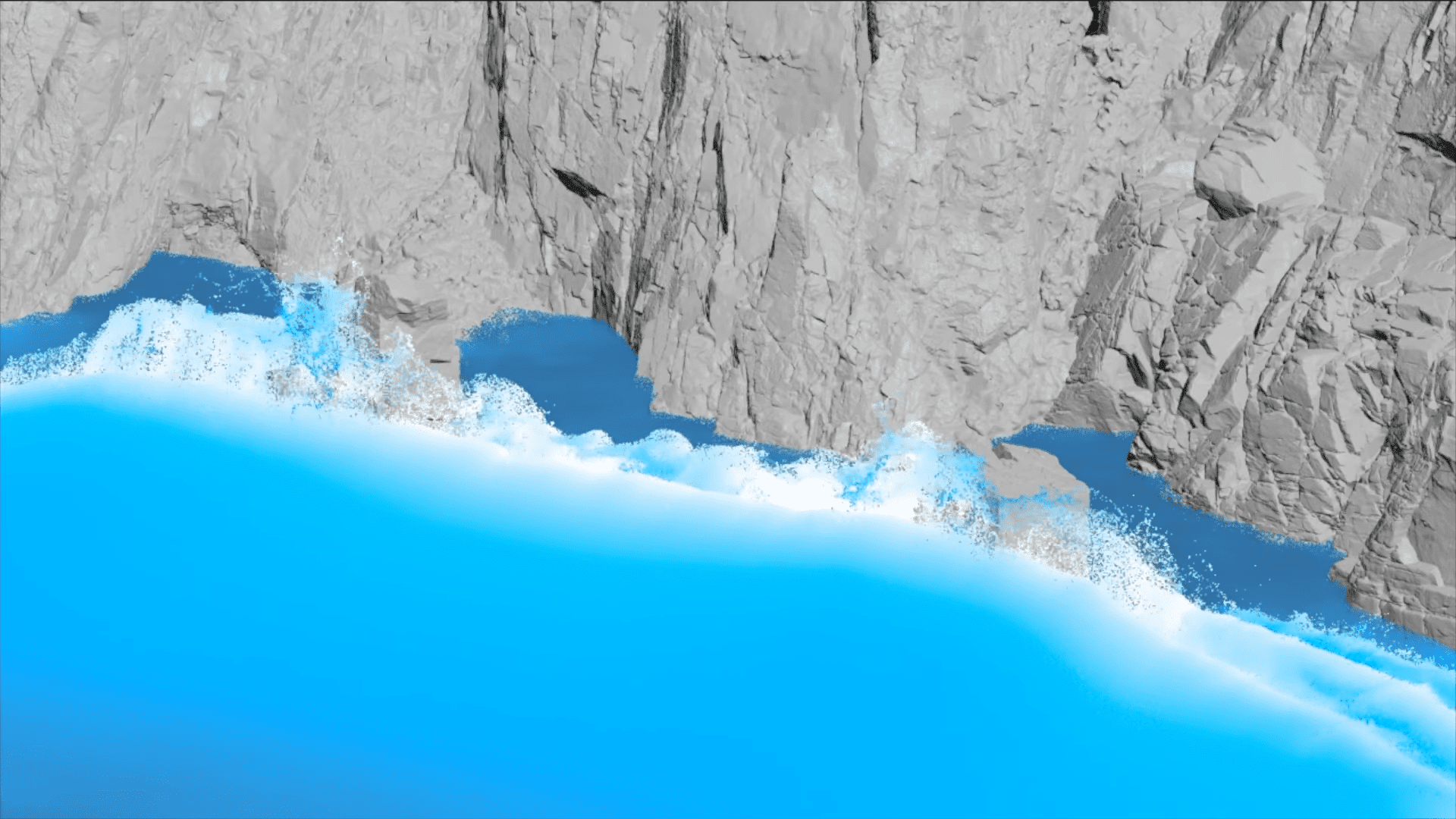
Still missing whitewater, but it’s coming
As of the current beta, Paradigm supports small- and medium-scale liquid simulations but lacks several production-level features. Whitewater simulation and full support for Houdini’s ocean spectra are not yet implemented. Upcoming updates are expected to add colour sourcing, temperature-driven behaviour, viscosity attributes, and support for narrow-band simulation. Matt Puchala describes the current build as “highly unoptimised”, but plans to bring Paradigm to “the same level of polish that Axiom has”.
Free to test until February 2026
The open beta is free to download for all users until the end of February 2026c (See the FAQ for details). After that, Paradigm will move to a commercial model “similar to Axiom”, offering both perpetual node-locked and floating licences. The software runs on Houdini 20.0+ across Windows, Linux, and macOS, and requires an OpenCL 3.0-compatible GPU. The documentation includes setup examples and sample projects. Installation requires creating a free Theory Accelerated account.
Early verdict: promising, but still maturing
While Paradigm’s GPU acceleration promises a major speed boost for Houdini-based liquid simulations, it is still in beta. Key production features, such as whitewater and advanced ocean interaction, are not yet ready, and the solver is described as unoptimised. For now, Paradigm is best used for testing and experimentation rather than critical production work. As always, new solvers should be tested on controlled scenes before deplorment in a production. And we’ll check out the next builds to keep you in the loop when it is worth your precious GPU-cycles!
