



For those who don’t know the tool: Houdini by SideFX is a procedural 3D and VFX platfrom used across film, broadcast, and games. The new Learning Library centralises official tutorials for artists working in simulation, FX, lighting and pipeline.

SideFX has launched a centralised hub for educational content within its official Learning section, consolidating Houdini tutorials into a structured Learning Library. The update brings together video tutorials, guided learning paths and project-based lessons under a single navigation framework on the SideFX website.
The move is practical rather than flashy. Houdini has long been supported by a large volume of tutorials, masterclasses and conference talks, but these were historically distributed across various sections of the site. The new Learning Library groups official material in one place, categorised by topic, skill level and workflow area.
According to SideFX, the library is designed to support students, educators and production artists seeking structured training. It covers core Houdini workflows including modelling, Solaris and USD, lighting, rendering, simulation, and procedural asset creation.
A central index for Houdini education
The Learning Library sits within the official Learn section of the SideFX website. It presents tutorials in a searchable interface with filters by category, difficulty level and topic. The categorisation includes beginner, intermediate and advanced levels. This distinction is useful for production artists who do not need introductions to nodes or SOP context but want to focus on specific techniques or production problems.
The interface organises material by domains such as modelling, FX, rendering, Solaris, and pipeline. Each tutorial entry includes a short description, duration, and the intended skill level. Where applicable, SideFX provides downloadable project files.
SideFX has not described this as a new training programme, but rather as a consolidation and structuring of existing and ongoing official content. There is no indication that third party tutorials are being included. The focus remains on vendor produced material.
Intermediate and advanced standouts
For experienced Houdini users, the most relevant material sits in the intermediate and advanced sections. Several tutorials in these categories focus on production centric topics rather than introductory node explanations.

One example is the Solaris and USD focused material. Solaris is Houdini’s USD based layout and lighting context. Tutorials covering Solaris workflows address stage building, lighting setups and rendering using USD workflows within Houdini. These are clearly positioned for artists working in modern USD based pipelines.
Structured learning paths
In addition to individual tutorials, the Learning Library presents curated learning paths. These paths sequence multiple lessons into a structured progression. The intent is to guide users through a topic in a logical order rather than leaving them to assemble disparate videos manually.
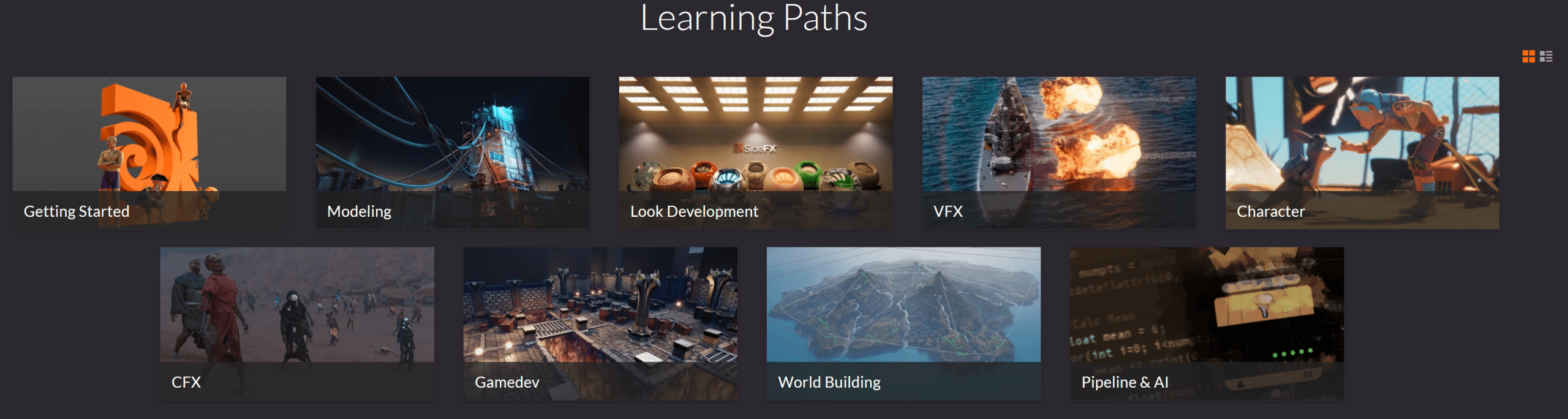
The learning paths are grouped by subject area, allowing artists to focus on specific disciplines such as FX, lighting or modelling. This organisation is likely to benefit educational institutions using Houdini in classroom settings.
Context in production
The consolidation of training content into a single hub addresses a practical issue. Houdini’s depth can be a barrier to entry, even for experienced 3D artists. Structured learning paths reduce friction when onboarding new team members. For studios using Houdini alongside other DCC tools, centralised official documentation also simplifies internal training. Rather than curating internal lists of links, supervisors can reference the Learning Library directly.
What is not stated
SideFX does not detail update frequency for the Learning Library. It is not clear how quickly tutorials will be revised when major Houdini updates introduce new nodes or deprecate older workflows. There is also no explicit roadmap outlining the future expansion of the library. The consolidation signals that SideFX recognises education as a core part of its ecosystem. Houdini’s learning curve is quite steep. Providing a single, organised entry point is a pragmatic response.
There is no dramatic announcement of new algorithms or rendering engines here. Instead, the update tidies an important part of the user experience. That may be the most production-friendly feature of all.
