Grading Kraken: scene-by-scene insights from the colour grade
24.02.2026
Senior Colourist Dylan Hopkin (Shortcut Oslo) outlines the grading process behind the new sci-fi film Kraken, and how contrast, colour and AI-assisted tools were used to support storytelling across live action, CG and LED-volume environments.
Krakenis a Norwegian sci-fi thriller that moves between majestic fjord landscapes, industrial fish farms, studio interiors, LED-volume stages and CG-heavy underwater sequences. From a grading perspective, the main challenge was maintaining visual continuity while allowing each environment to retain its own identity.
The main priority for senior colourist Dylan Hopkin was establishing a strong, consistent foundational look across the film. “A good grade always serves the story and characters first,” he says. “What I do should be almost invisible. My colouring shouldn’t draw attention to itself.” Before the main grade began, Hopkin worked on teasers and the main trailer, a process that helped the team prepare for the actual movie, he explains. “But teasers and trailers are commercials for the film. The looks don’t always translate directly once you see scenes in their full context.”
Hopkin walks through a selection of scenes from the film, explaining how he approached colour, contrast and continuity, and how DaVinci Resolve was used to solve specific creative and technical challenges.
A bit about Kraken
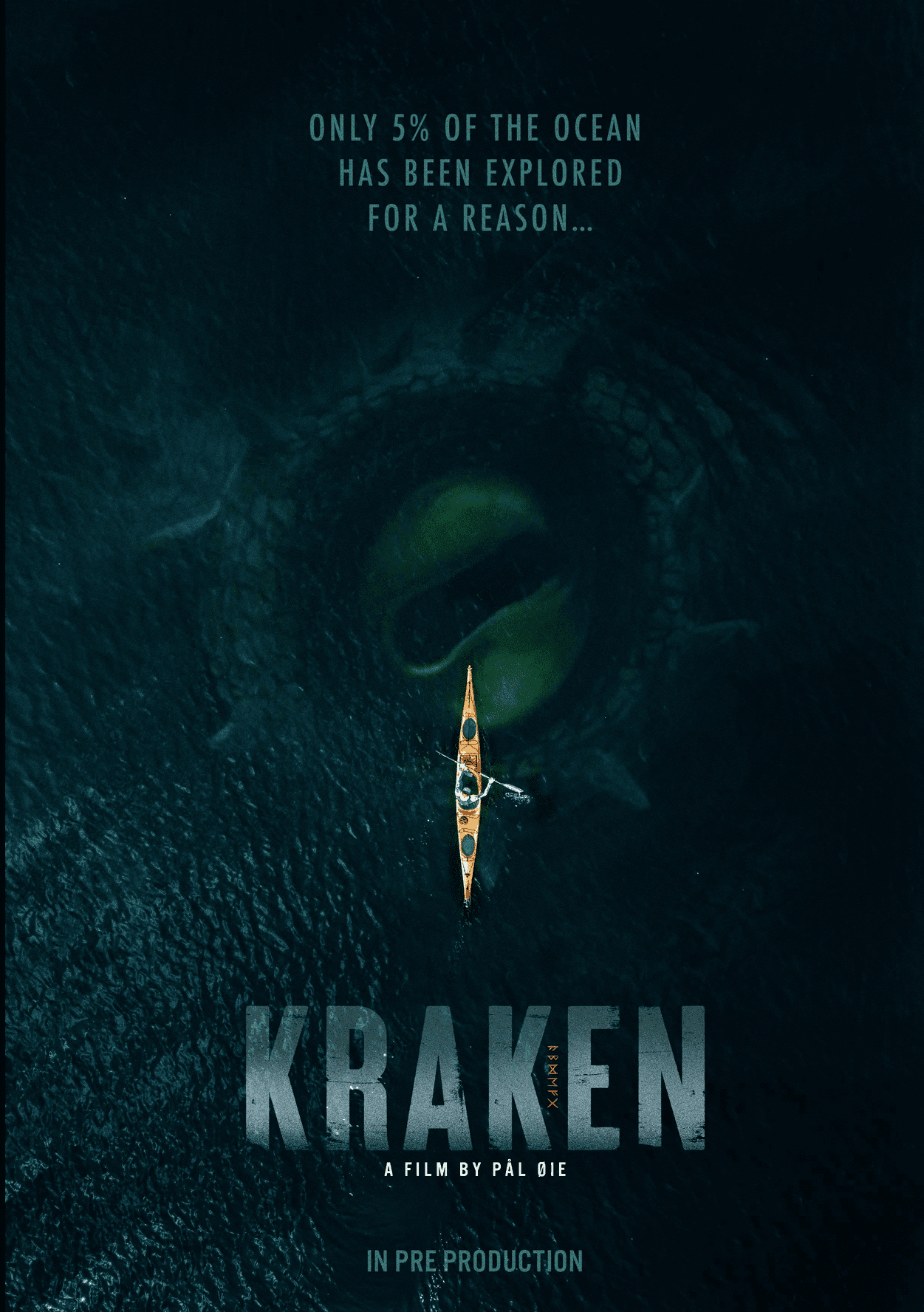
Kraken (2026) is a Norwegian monster action feature directed by Pål Øie and produced by Nordisk Film Production AS, with Handmade Films in Norwegian Woods also credited on IMDb. It was shot on location around the Sognefjord and included studio work in Finland.
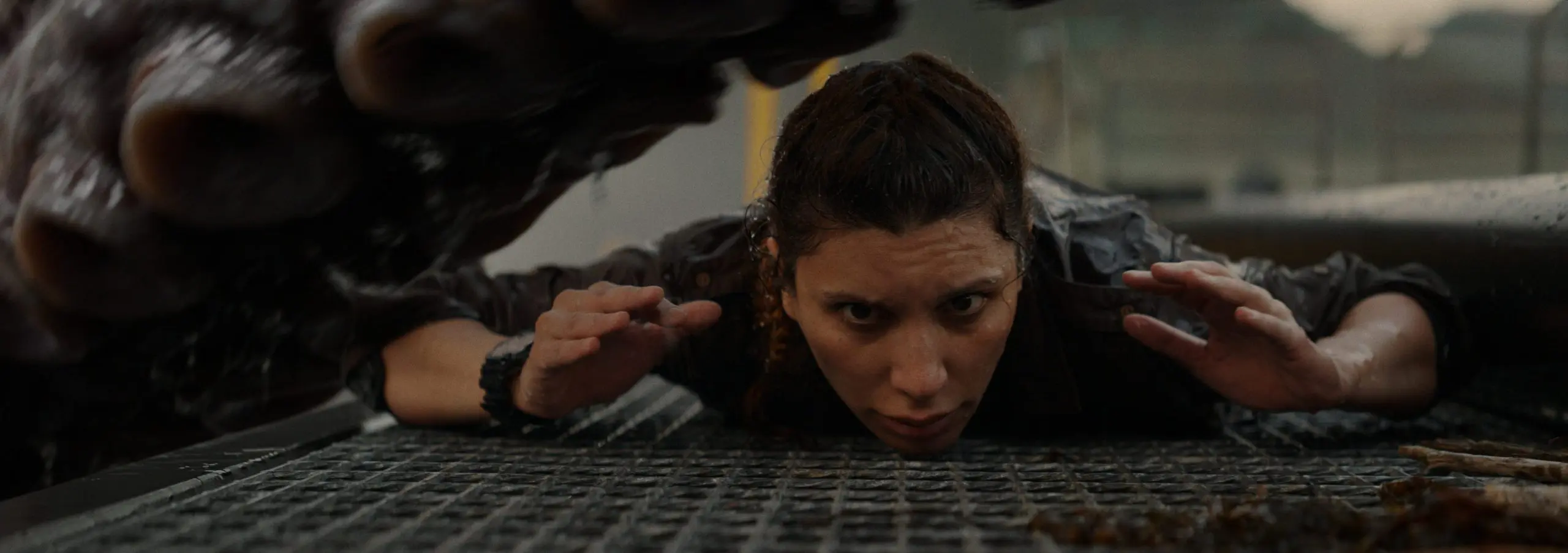
The story follows marine biologist Johanne, sent to investigate a salmon farm near Vangsnes after two teenagers die and strange phenomena suggest something huge is moving in the fjord depths.
Establishing a foundational look for Kraken
The main weight of the grade was creating a robust foundational look, which effectively became a bespoke show LUT implemented as a fixed node tree. From there, I focused on what each image already had to offer. I looked at dominant hues, how practical light flowed through the frame, what the most important part of the image was, and what the director and DP wanted the audience to feel. From that analysis, I usually get a gut feeling for how to adapt the image.
I try to be as respectful as possible towards the cinematography. What’s captured in front of the lens creates the DNA of the look. Creating appropriate tonal contrast so images sit right is a big part of grading. I do that using custom curves, DCTLs or different DRTs in Resolve, depending on the material. Shaping light is also critical. I rely heavily on windows, tracking and Magic Mask [more on which later] to guide the audience’s eye, in much the same way as dodge-and-burn techniques in still photography.
Sjur Aarthun FNF / Nordisk Film Production AS
Maintaining continuity across scenes
This is one of the most challenging aspects of grading. I prefer to choose as few reference images as possible per scene and match everything else against them.
It’s also important to commit to a consistent set of tools. I often use colour-space-aware tools for exposure and white balance, such as Resolve’s HDR Grade tool, because the maths is very clean and respects the source material. Another approach I use is working in linear gamma with gain for exposure and white balance. The key is consistency.
Once shot-by-shot balancing is done, I use the Group Post-Clip node tree for scene-wide corrections. On Kraken, colour management was handled manually in a DaVinci YRGB project using nodes and input DCTLs. For animated features, I usually prefer ACEScct, but for live action, I still like a more hands-on approach.
Sjur Aarthun FNF / Nordisk Film Production AS
Fjord landscapes
For the fjord exteriors, the goal was to keep foliage and skies natural but present. I relied heavily on the Tetra2 DCTL by Juanjo L. Salazar to tweak foliage hues, with very clean results. I also used the ColorSlice tool to add subtle density to greens without flattening highlights. Cloud texture in the skies was preserved through contrast control rather than saturation.
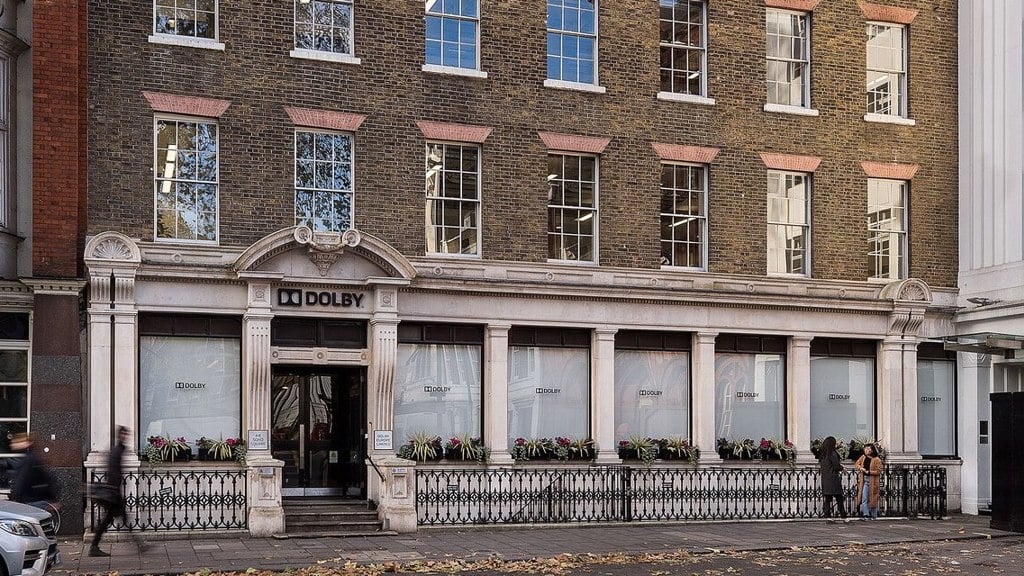
Kraken is the first Scandinavian feature film to be graded in Dolby Vision for theatrical release! For this additional version, Hopkin graded two days on Resolve with an advanced panel in Dolby’s reference theatre in London’s Soho. “It was an amazing experience: next level cinema,” says Hopkin.
Fish farm control room
Sjur Aarthun FNF / Nordisk Film Production AS
The fish farm control room needed to feel grimy and industrial, in contrast to the high-tech control screens. It was shot in a studio with exterior views created using an LED volume, allowing precise control of time-of-day lighting while maintaining accurate reflections.
Sjur Aarthun FNF / Nordisk Film Production AS
After establishing the base look, I added a subtle amount of green using primary offsets, similar to printer lights. That small adjustment added grit and helped sell the environment.
Fish farm exteriors: day and night
Sjur Aarthun FNF / Nordisk Film Production ASSjur Aarthun FNF / Nordisk Film Production AS
The fish farm exteriors had a weathered, oily quality with plenty of patina. Daylight scenes were graded with softer contrast and a colder Nordic feel.
Sjur Aarthun FNF / Nordisk Film Production AS
At night, sodium vapour lighting dominated. I pushed the blacks deeper to add more bite and reinforce the industrial mood.
Kraken Underwater sequences and transitions
Underwater shots varied significantly, combining live action, CG, day-for-night and fully stylised sequences. Most daylight underwater scenes leaned green-cyan, while nighttime scenes moved more towards blue.
Sjur Aarthun FNF / Nordisk Film Production AS
There were exceptions. During the nighttime kraken attack, surface lighting mixed strong sodium vapour with cooler sources. When submerged and looking up, I pushed highlights towards orange to connect the underwater shots to the surface action.
For shots moving between above and below the surface, I used keyframed grades in dynamic nodes to animate colour transitions. The HDR Grade tool, offset controls and hue-vs-hue curves were central here.
Submerged luxury restaurant
Sjur Aarthun FNF / Nordisk Film Production AS
The submerged luxury restaurant was shot in a studio using an LED volume. I compressed the colour palette slightly using hue-vs-hue, managed saturated skin tones with hue-vs-sat, and controlled saturation depth with ColorSlice. The aim was restraint, keeping the environment immersive without overpowering performance.
In the restaurant, some wide shots suffered from LED moiré. I analysed which colour channels were affected and used a splitter-combiner node structure with Color Compressor, Debanding OFX and subtle directional blur, applied via qualifiers and masks.
Fish farm attack and fog
During the early evening fish farm attack, the Scandinavian light was at its best. I added subtle warmth along horizon lines and introduced fog behind Johanne using Cinematic Haze OFX.
Sjur Aarthun FNF / Nordisk Film Production ASSjur Aarthun FNF / Nordisk Film Production AS
I used Resolve’s masking tools and planar tracker to lock haze masks in place, excluding mountain silhouettes with HSL qualifiers. In total, I added fog and haze to around 40 shots.
Sjur Aarthun FNF / Nordisk Film Production AS
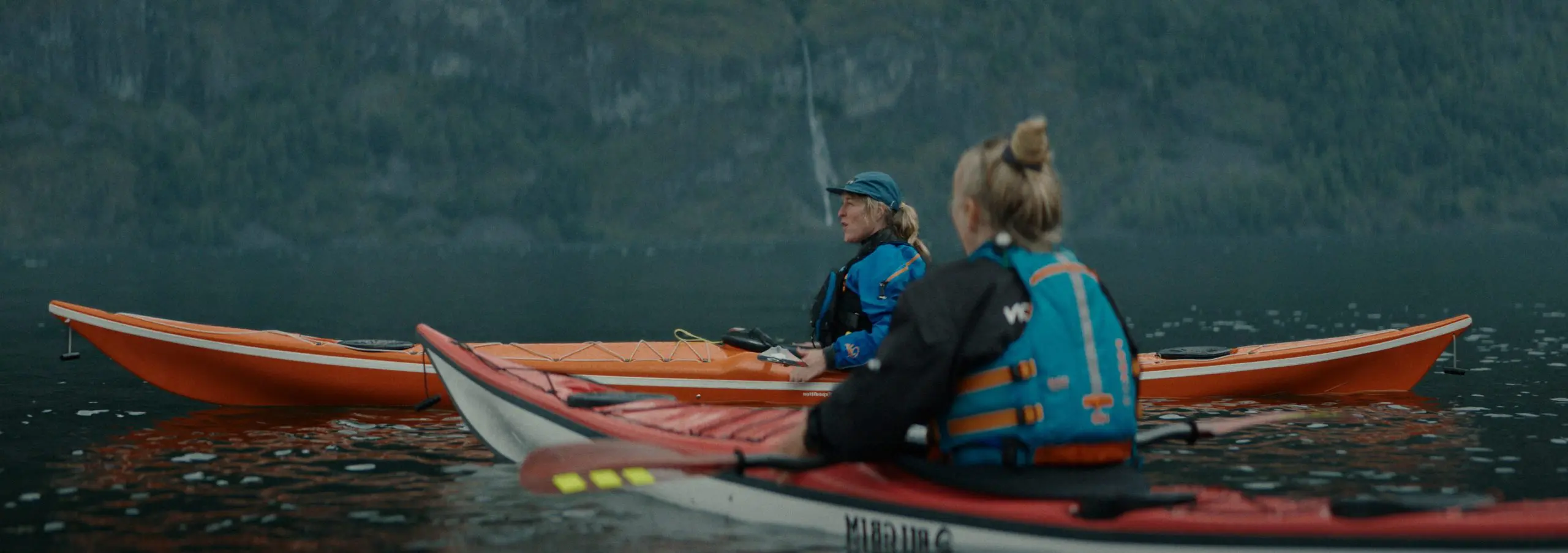
In one canoe sequence, several shots lacked fog entirely. I tested Cinematic Haze, showed the results to the director, DP and producers, and ended up completing the remaining shots.
Sjur Aarthun FNF / Nordisk Film Production AS
I like the control Cinematic Haze offers: finding the right depth-map sweet spot first, then adjusting airlight, density and resolution loss.
Laboratory bioluminescence
Sjur Aarthun FNF / Nordisk Film Production ASSjur Aarthun FNF / Nordisk Film Production AS
In the lab scenes, a green bioluminescent liquid needed to feel more prominent. I qualified the bioluminescence, added Add Flicker OFX for a smooth pulse, and used ColorSlice to push subtractive saturation into the green hue.
Sjur Aarthun FNF / Nordisk Film Production AS
Red alert and the nighttime finale of Kraken
Sjur Aarthun FNF / Nordisk Film Production AS
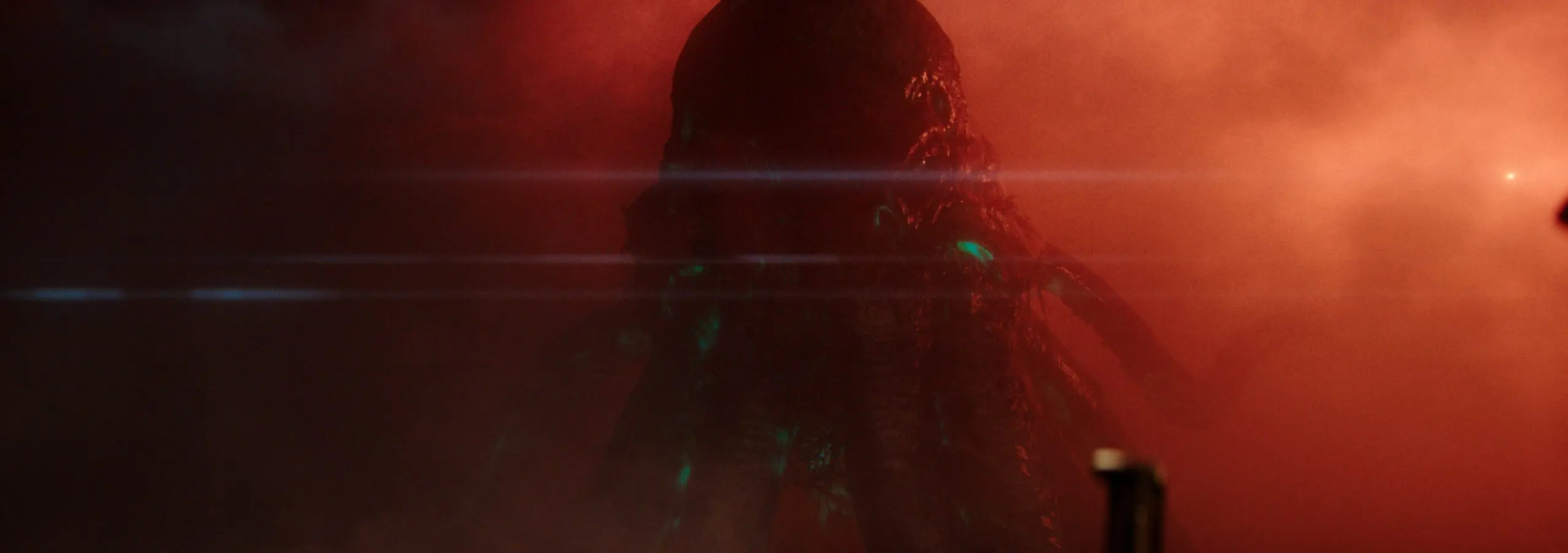
The red-alert sequence marked a deliberate escalation. This was the first nighttime attack on the fish farm, and the images needed to feel crisper and more aggressive than earlier scenes. Saturation increased due to intense red warning lights, but it was important to keep those colours under control. I relied on the Sat-vs-Sat curve to keep the reds vivid without tipping into a digital look, with gamut-mapping used where appropriate.
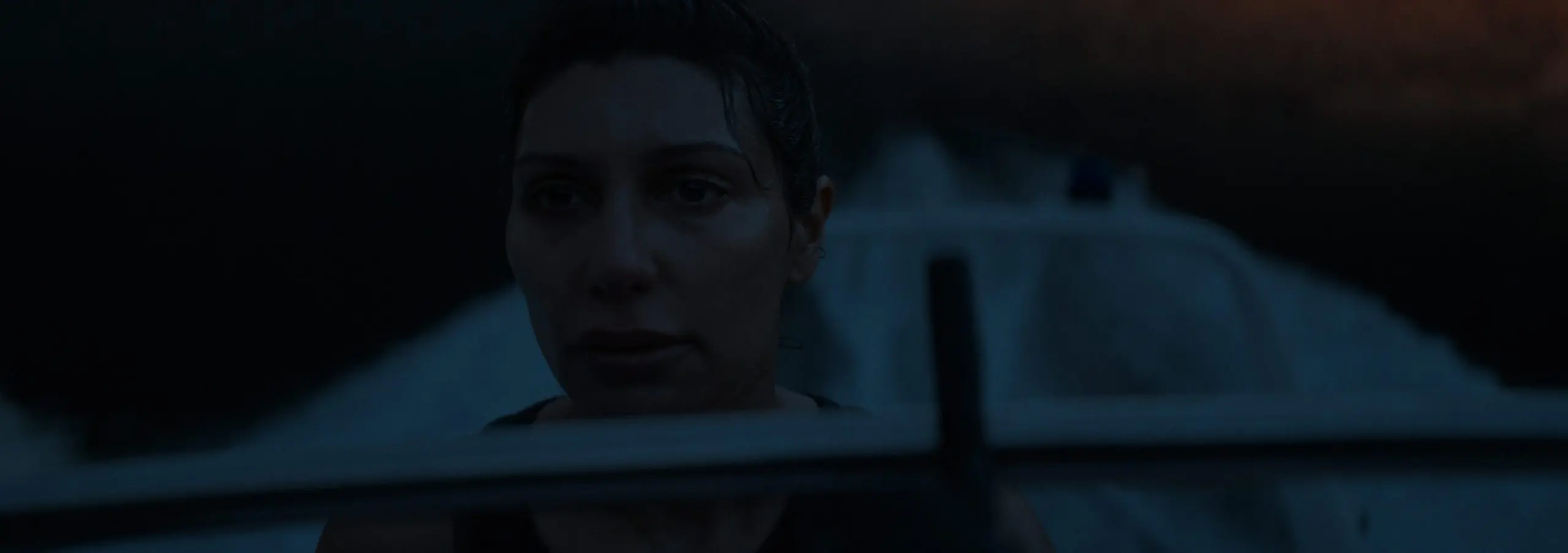
In the nighttime finale, Johanne leaves the fish farm by boat before the sequence cuts to day-for-night material. From that point on, the scene had to be transformed into a believable nighttime environment with a softer Scandinavian summer-night feel. I used Resolve’s HDR Grade tool for most of the heavy lifting and introduced a warm sodium-vapour tone to maintain a visual link to the fish farm. Tracked masks and Magic Mask helped preserve detail in Johanne’s performance while keeping the environment dark and moody.
Sjur Aarthun FNF / Nordisk Film Production ASSjur Aarthun FNF / Nordisk Film Production AS
Magic Mask and selective grading
Magic Mask has changed the way I work. Tasks like face relighting used to rely on tracked windows or rotoscoping, which could easily introduce halos. Magic Mask can select faces, clothing, vehicles and more with minimal setup. It’s not perfect every time, but with some tweaking, it solves complex selections efficiently. On Kraken, I used it extensively for relighting faces, isolating creatures and excluding actors from background colour manipulations, often in combination with keyers and windows.
Camera shake and lightweight VFX
In several action scenes, the DP Sjur Aarthun, wanted additional camera shake to increase impact. Solving this during the grade is far quicker than sending shots back to VFX. I used Camera Shake OFX for constant vibrations, and custom Fusion setups with damped-spring expressions for impact shakes, always with motion blur enabled. Working in Resolve allowed real-time review and better control over the scene’s flow.
Dylan Hopkin in the Dolby Vision Suite. Eagle-eyed readers might be able to guess which movie he is grading there.
Dylan Hopkin (IMDB | LinkedIn | Website) is a senior colourist based at one of Europe’s leading post-production facilities, Nordisk Film ShortCut Oslo, with more than a decade of experience specialising in high-end creative colour grading for feature films, TV dramas and commercials. He originally trained as a motion graphics designer before transitioning into finishing and online work.
Hopkin’s credits span award-winning cinema and television projects showcased internationally at festivals such as Sundance, Cannes Series, Tribeca and the Oscars circuit. He is also a certified DaVinci Resolve trainer, has created masterclasses on grading strategies and teaches at film schools across Europe.