



In the animation community around the animation school The Animation Workshop in Viborg, which includes the animation studio Tumblehead Animation Studio, there are always interesting projects in the air. Tumblehead produced the Martin Luther short film on behalf of the city of Viborg, for which the project is very important because Viborg was the first city in Denmark to be reformed. The animated scenes are part of a series of live-action films in which they act as a flashback. The storyline for the film was provided by historians, as the historical accuracy of the content was very important. In total, three people worked on the animated scenes for three months. “Once the project was finished, we asked for permission to turn the animations into a short film and got the green light,” recalls Peter Smith, producer at Tumblehead.
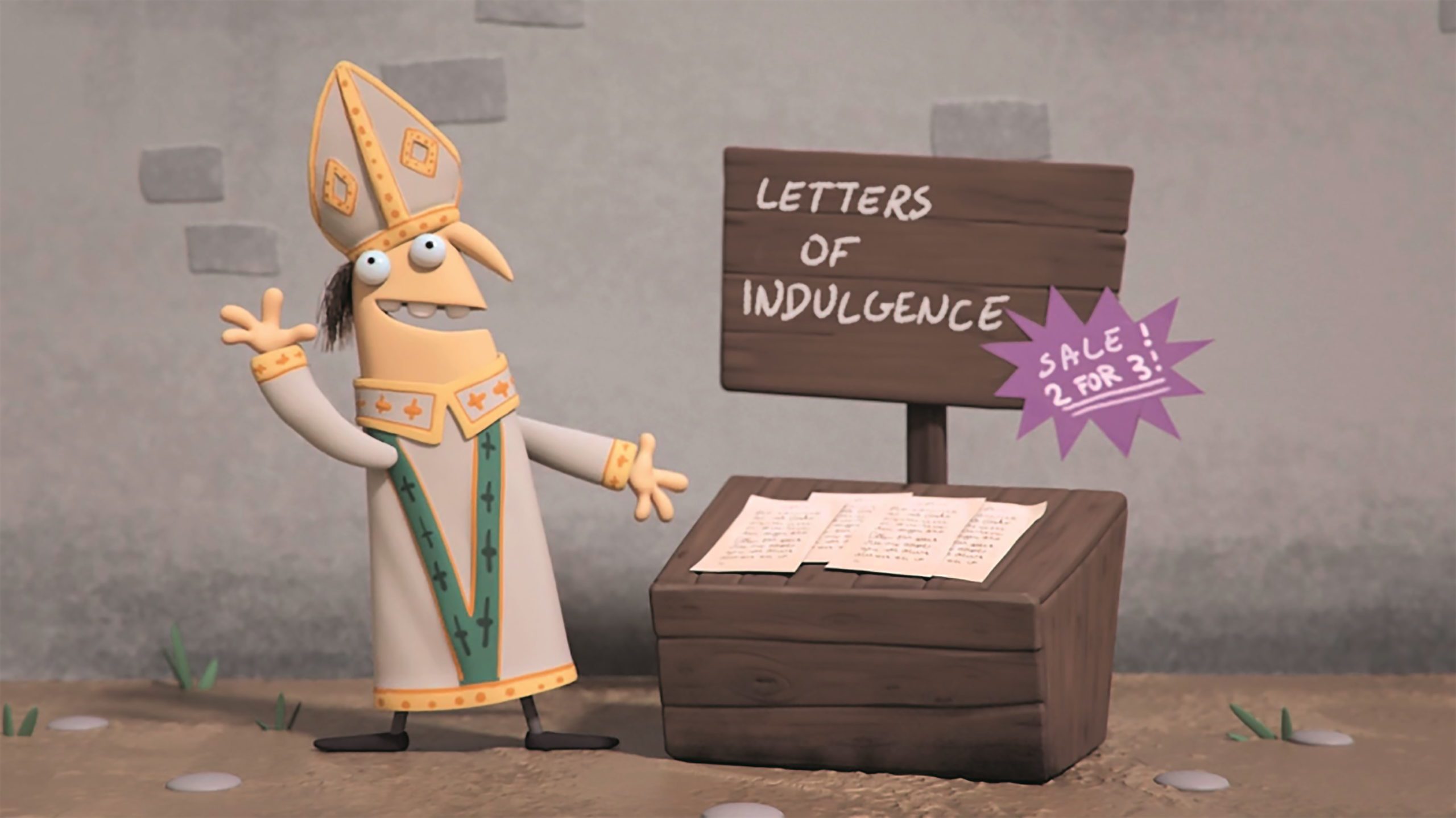
The idea of telling the Luther story in this amusing way and visualising it in a comic book look arose from the Tumblehead team’s desire to approach 3D animation like 2D, creating silhouettes. The old style of the well-known animation studio UPA (United Productions of America) seemed particularly suitable to the artists. The city of Viborg gave Tumblehead complete creative freedom during production, allowing the team to further develop this style during the course of production. However, the decision in favour of a 2D and 3D mix was also determined by the budget. 3D animator Mette Tange explains what the workflow looked like: “We cut parts out of the storyboard and animated them in Flash. This gave us a bit of freedom to focus on some appealing 3D shots.” What became 2D and what became 3D was determined by the physical or metaphysical properties of an object. For example, the artists modelled Luther in 3D to make him look more physical, while everything going on in the sky is 2D.
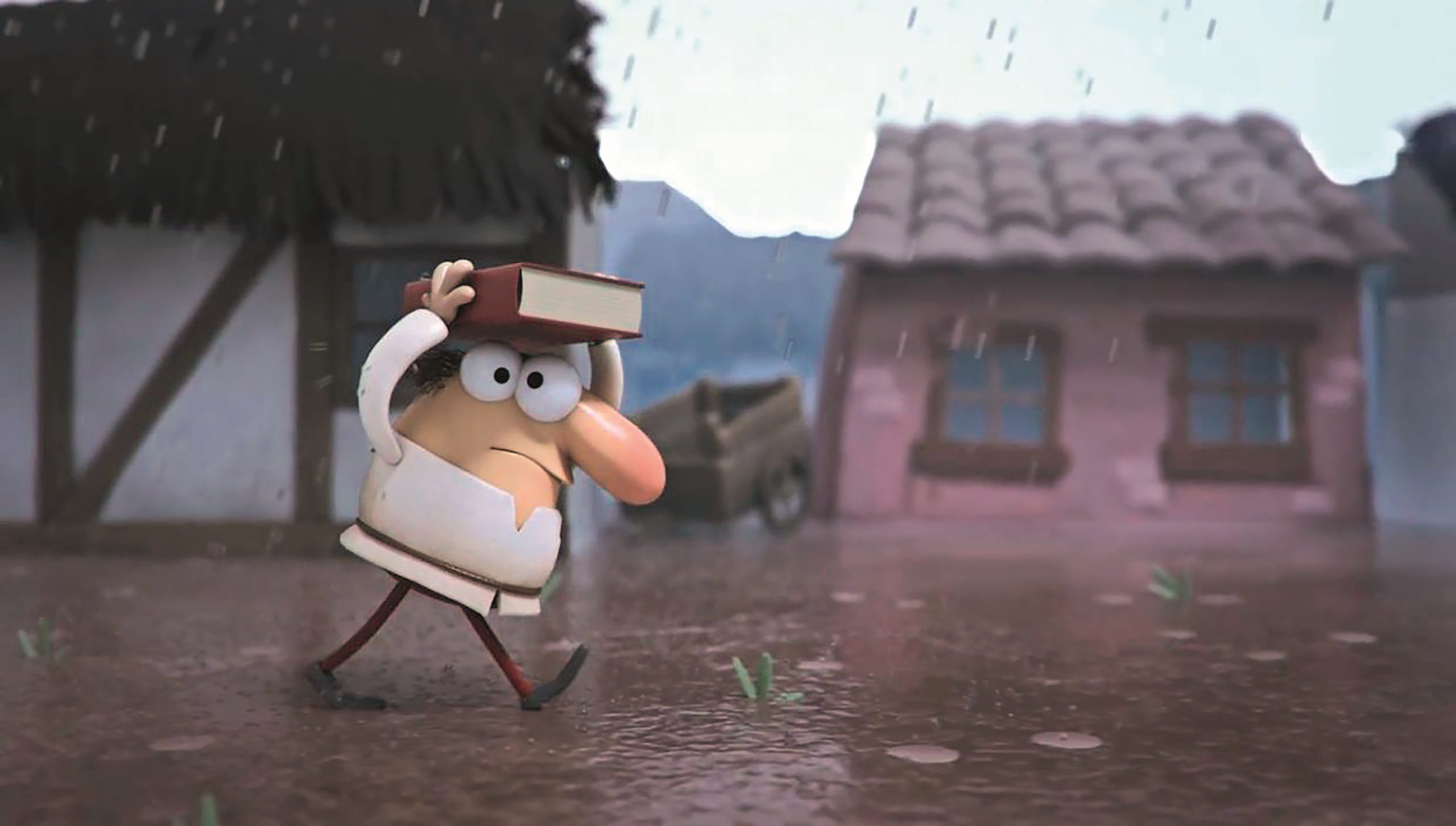
A rig for everyone with plenty of flexibility
There was no real pre-vis phase because the movements in the film are kept simple and in such a small team it was possible to decide on a daily basis what should happen in each shot. The artists started the modelling in ZBrush and finalised the topology in Maya if necessary. “For this project, the characters all have the same base mesh and rig. Props and sets were blocked in Maya and then moulded in ZBrush. Most of the textures were created in Photoshop, but we also used Polypaint in ZBrush and some Substance Painter,” explains Technical Director Magnus Møller. The characters were the biggest challenge in the project: It took many iterations before the base mesh worked with all the different character designs. The artists quickly discovered that facial expressions had to be tested during the modelling phase. The artists also created the animation with Maya. They used filmed footage of themselves as a movement reference so that different approaches were available.

“In rigging, we always aim for the greatest possible flexibility for the characters. With this kind of setup, as an animator you almost have to imagine the whole thing as being in 2D, because this process allows you to really model the keyframes,” says Tange.
Rain and light
The rain in the first scene was created using Maya’s particle generation system nParticles. “To be honest, it was extremely tedious to work with, which is why we have relied on Houdini for such tasks ever since,” says Møller. The rain scene was also the most interesting in the process for the artists because it combines many different elements such as characters, props, lighting, rain and more. “In terms of look development, it was the most fun for us to work on this shot.”
The artists lit the outdoor scenes with a directional light with soft shadows in front of the sun and an HDRI dome. In the interior scenes, the team mainly used area lights for a softer look. The artists created the candle flame using animated geometry combined with an emissive shader, to which a soft glow was added in compositing.

Redshift and a machine
In general, the biggest challenge for the team on this project was the short time frame in which numerous animated characters and sets had to be created.
Due to this restriction, the team rendered the project on a single computer. “This was only possible because we had GPU rendering and a machine with multiple graphics cards at our disposal,” says Smith. The average render time with Redshift was between 30 seconds and 2 minutes per frame.
Redshift is used for all projects at Tumblehead. “And I never tire of recommending it, that’s how enthusiastic I am about its features,” adds the TD.
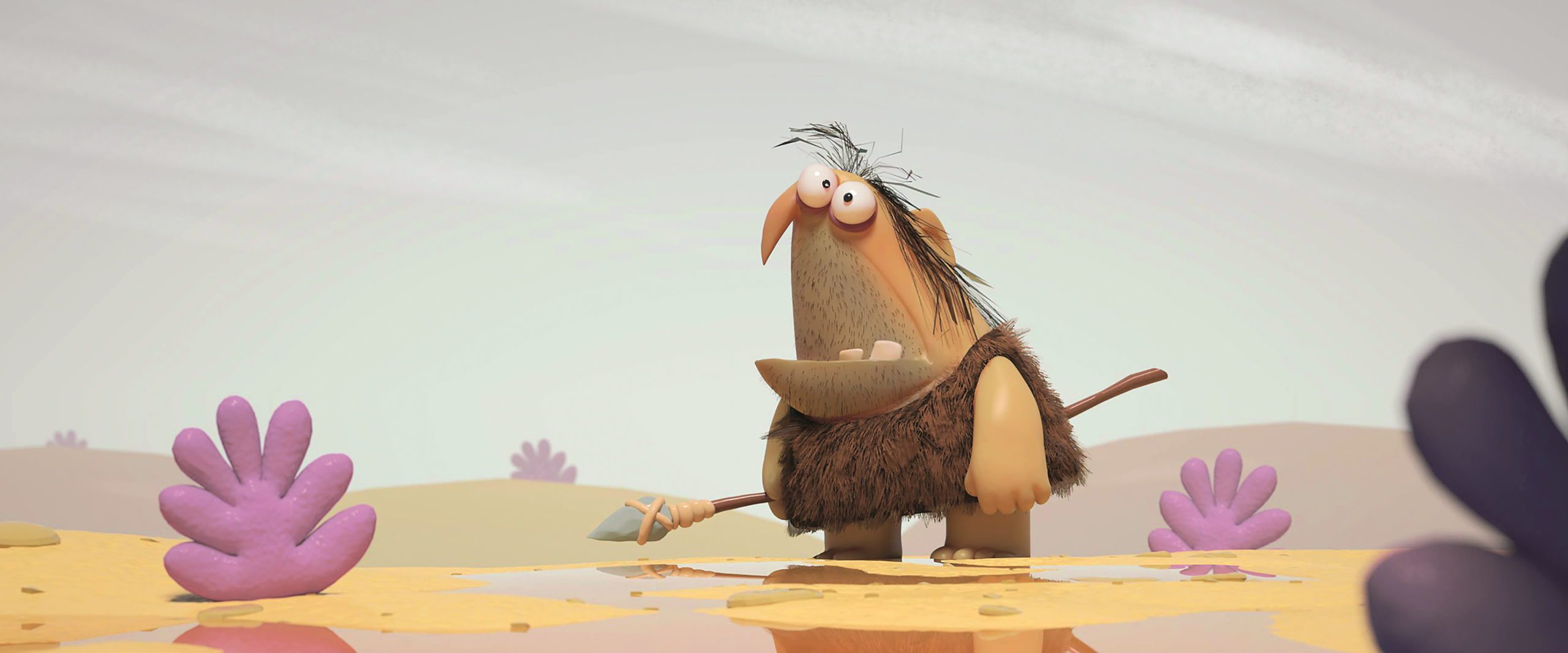
The team realised the compositing with After Effects and the Magic Bullet Looks add-on. “As the look comes directly from the rendering, there were no special features to achieve the final look. In the end, it was mainly colour grading, darkening the elements in the foreground and many other small details that had to be done.”

News from Tumblehead in a rapidly growing industry
Tumblehead is currently finalising its new short film “Tales from the Multiverse”. In this story, God is a single parent and hobby programmer. He works on the “Earth” project, but never seems to get a break from the kids. But one day he makes a breakthrough. The film will be touring festivals this year.
According to Peter Smith’s observations, the animation industry in Denmark has developed rapidly in recent years. From
“The Animation Workshop” has given rise to many new talents, resulting in many productions of increasingly high quality:
“I’m impressed by how much the scene has changed in the last few years and how quickly the animation business in Denmark is growing at the moment.”
