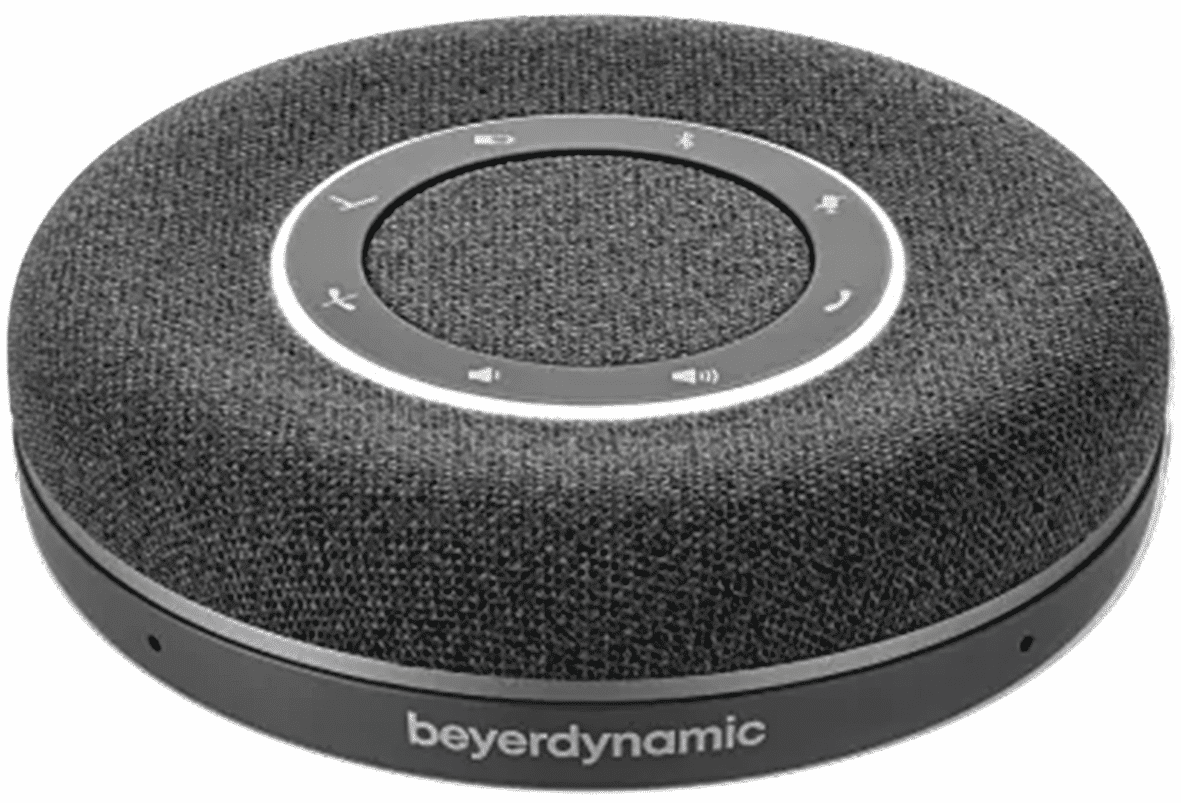
If we were a pure audio magazine, we would only have to say “Guys, there’s a Bluetooth Mobile Work speaker from Beyerdynamic” and everyone would know what we mean. Beyerdynamic has always been a fixture in the recording studio – legendary headphones and reference microphones for the stage, presentation and recording studio. But now also office products?
Space?
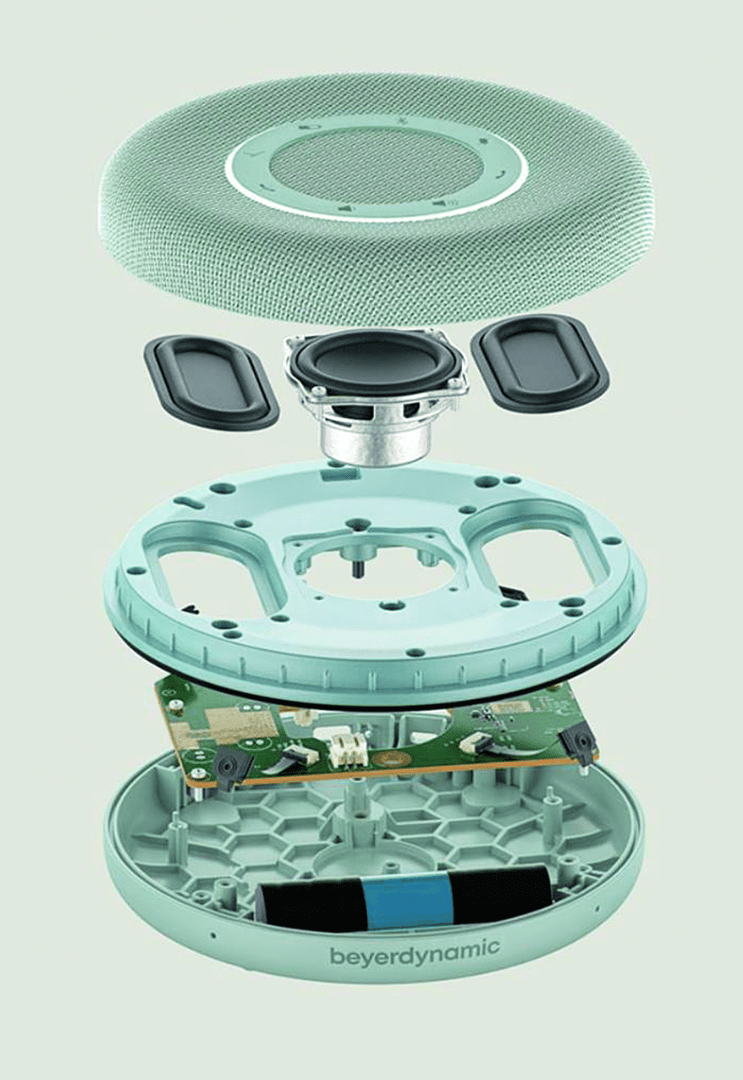
Beyerdynamic Space is a “personal speakerphone” for phone calls and meetings, i.e. a mobile hands-free solution for everyday use. It is connected via Bluetooth, USB or a USB-WL adapter. The 5-watt loudspeaker generates a maximum sound pressure level of 73.8 dBA (pink noise) or 81 dB at one kilohertz. The four built-in microphones work omnidirectionally in the range from 100 Hz to 10 kHz and communication is via Bluetooth 5.0.
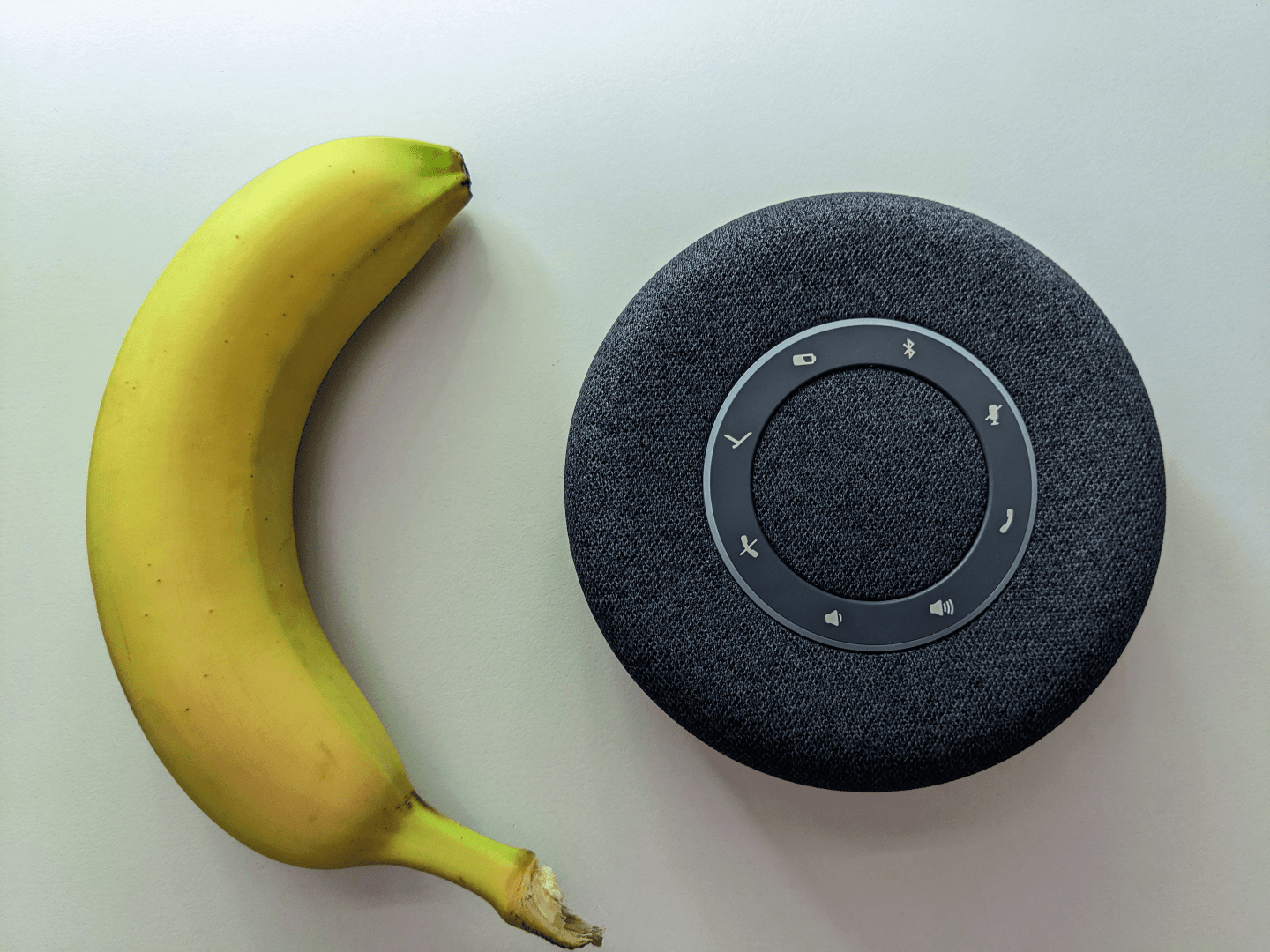
Charging is via USB C, Beyerdynamic claims 20 hours of “operating time” with a charging time of 2.5 hours. The round “puck” is just under 4 centimetres high and has a diameter of 13 centimetres; there are “touch areas” on the top for volume up/down, answering and hanging up calls, microphone off, as well as a battery indicator and Bluetooth function. Everything is very clear and easy to use. If you press one of the buttons, either a voice output or a colour change of the LED provides information (LED can be switched off!). There is a tripod thread on the underside as well as a holder for the wireless adapter and four vibration-absorbing feet.
Pro
Enough data, what does it look like in everyday use? First of all: Here too, the focus is on “speaking” and not “making music”. Nevertheless, voices sound richer and with more bass than with the Poly 20, but it’s just a loudspeaker – so don’t expect studio quality!
Nevertheless, Beyerdynamic can’t deny its origins and has integrated a voice and music mode that switches automatically, turning the conference device into a roaring puck that sounds surprisingly good – if you just want to listen to a bit of music and don’t want to master something. Operation is child’s play and the device is as solidly built as you would expect from Beyerdynamic.
I reckon you can percussively silence the meeting pain in the arse without damaging the device. (Every meeting has a pain in the arse – if you don’t notice it, you’re one yourself)
Speaking of meetings: The microphones are arranged omnidirectionally – so several people can speak into the device and all are recorded at the same volume – this worked surprisingly well in the test – in a three-way conversation (and a cat), everyone was easy to understand and nobody had to shout. Beyerdynamic calls this feature “360° Smart Mic Technology”, which allows the Space to recognise whether the incoming sound is a voice or an interference signal. Reverberation, echoes and feedback are thus cancelled out. To summarise: the implemented echo cancellation works perfectly. Anyone who wants to use the device at trade fairs and in open-plan offices will appreciate the Kensington Lock. Wireless devices in particular tend to disappear, but not with a K-Lock.
Speaking of lots of people: There is the so-called “Business Mode”: A key combination of “Remove” and “Bluetooth” switches to Business Mode, which prevents the device from connecting undesirably via Bluetooth with a neighbouring device that was last paired with Space.
And a feature that sets the Space apart from the competition: There is a microphone thread on the underside – ¼ inch, absolutely standard size. So if you want to attach an “overhead” or to a microphone arm: simply screw it on and you’re done.
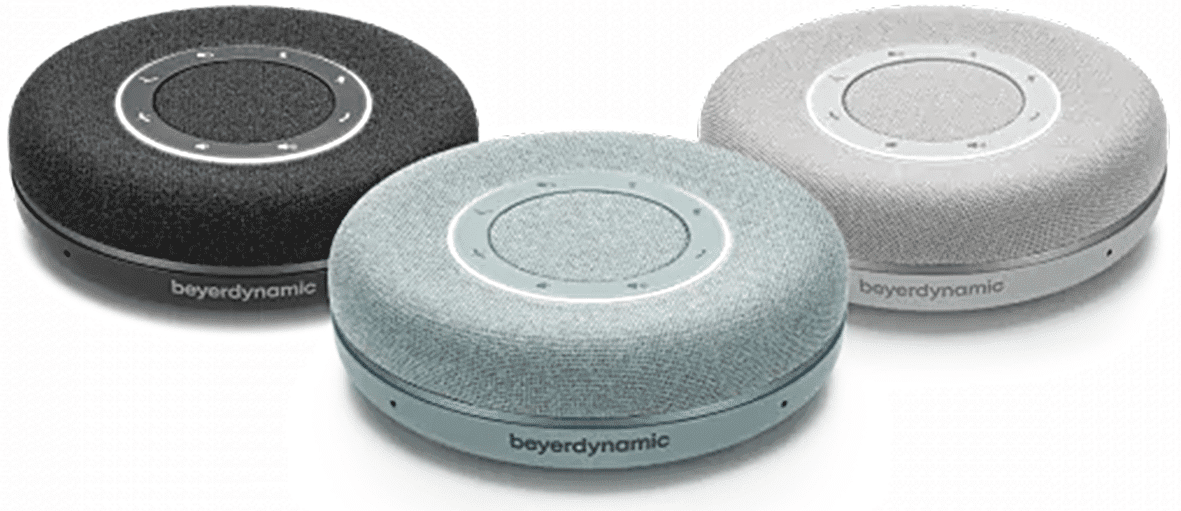
The orientation in the room doesn’t matter to the device and you can set it up/arrange it wonderfully at a fixed workstation to suit your personal aesthetics – and if you take it in the discreet grey version (there would also be a white and a blue version), you have a solid communication puck without disturbing the look.
A word about firmware and updates – one was released during the test period – you download the “Beyerdynamic Update Hub” and everything worked painlessly straight away. If you remove the software again for reasons of PC hygiene, nothing is left behind. A plus point! And another one: data sheets, software, guides and so on are available without registration. This shouldn’t be standard, but it’s becoming increasingly rare – and the Heilbronn-based company is doing it right. And something we haven’t tested: According to the manufacturer, two Spaces can also be paired and used as stereo speakers – if it’s ever the big conference room you want.
Cons
No sun without shade – Beyerdynamic can make studio microphones, but Space is intended for office use, so we have a different sound profile. If you want to know what it sounds like, you can listen to an uncompressed *flac file that I (hoarsely) read out: bit.ly/DP_space_test. And every now and then the Bluetooth connection was a bit “overzealous” – without the business mode it likes to jump back and forth. And that was the only thing we had to criticise – everything else always worked straight away.
Conclusion
Is the Space better or worse than the Poly 20 from the last issue? To be honest: I’m happy with both devices, but in a direct comparison I tended to use the Space when I wanted music and the Poly when I was in the office. Why?
Because I have the Space attached to a microphone arm – a USB cable for charging along the arm – and it is the ideal solution for the “fixed” mobile workplace. The bass is definitely “fatter” and the overall sound is better. However, those who are always on the move might miss the power bank function.
The price is also slightly higher than the Poly – we’ve seen it new for 160 to 180 euros – we haven’t seen it used yet. This could mean two things: Beyerdynamic is smaller as a company and hasn’t sold as many units, or: Those who have it don’t want to give it away. We suspect the latter.
Outlook
And because we were already in dialogue, the people at Beyerdynamic sent us two more devices that we will be testing in the next issue: The “Fox” USB studio microphone and the DT990 Pro – a microphone/headphone combo that makes the leap between “mobile office” and “content creator”. The speakers are already in the office and we’ll be unpacking them soon.