



But we found a provider, who does things differently – with „All in Pricing“
and a decade of experience. Gridmarkets, a cloud platform that simplifies and accelerates compute workflows like animation rendering and molecular simulations – and they are coming to Europe.

Since we met them at FMX, we asked about what makes Gridmarkets different – and Mark Ross answered our questions. Mark is the co-founder of GridMarkets.com. Prior to starting GridMarkets, Mark held senior technology roles in North America, Europe and Asia for Fortune 50 financial services companies. Mark is San Francisco-based and can be reached at mark.ross@gridmarkets.com.
DP: How is Gridmarkets different from other “cloud rendering services”?
Mark Ross: All-in-one pricing, unrivalled integration with and support for Houdini (including simulations, dependencies and -coming soon- sim previews & PDG support). And, if I may boast, an unparalleled ease of use and support! On that last point, over the years, we have helped many VFX projects get successfully over the project finish line.
In a number of cases, the rendering time window was abbreviated – requiring the GridMarkets support team to closely collaborate with our VFX counterparts. In some cases, e.g. rendering content for the USA superbowl for a major studio, the pressure was intense as the consequences of missing a deadline were significant.
DP: And where did all this technology actually come from?
Mark Ross: We’ve been around since 2011, focused on the animation & VFX markets and our solution has been used by thousands of clients in over 100 countries.
Our first client, now over 10 years ago, was a VFX studio in Los Angeles. We collaborated with their VFX team and with a couple of highly experienced artists from Dreamworks, Illoura Studios, Method Studios and others. The valuable input from these artists served to lay GridMarkets’ solid architectural and pipeline foundations. Over the years, we have made a point to continue this process, that is, to collaborate with industry players, to prioritize the roadmap of our features.
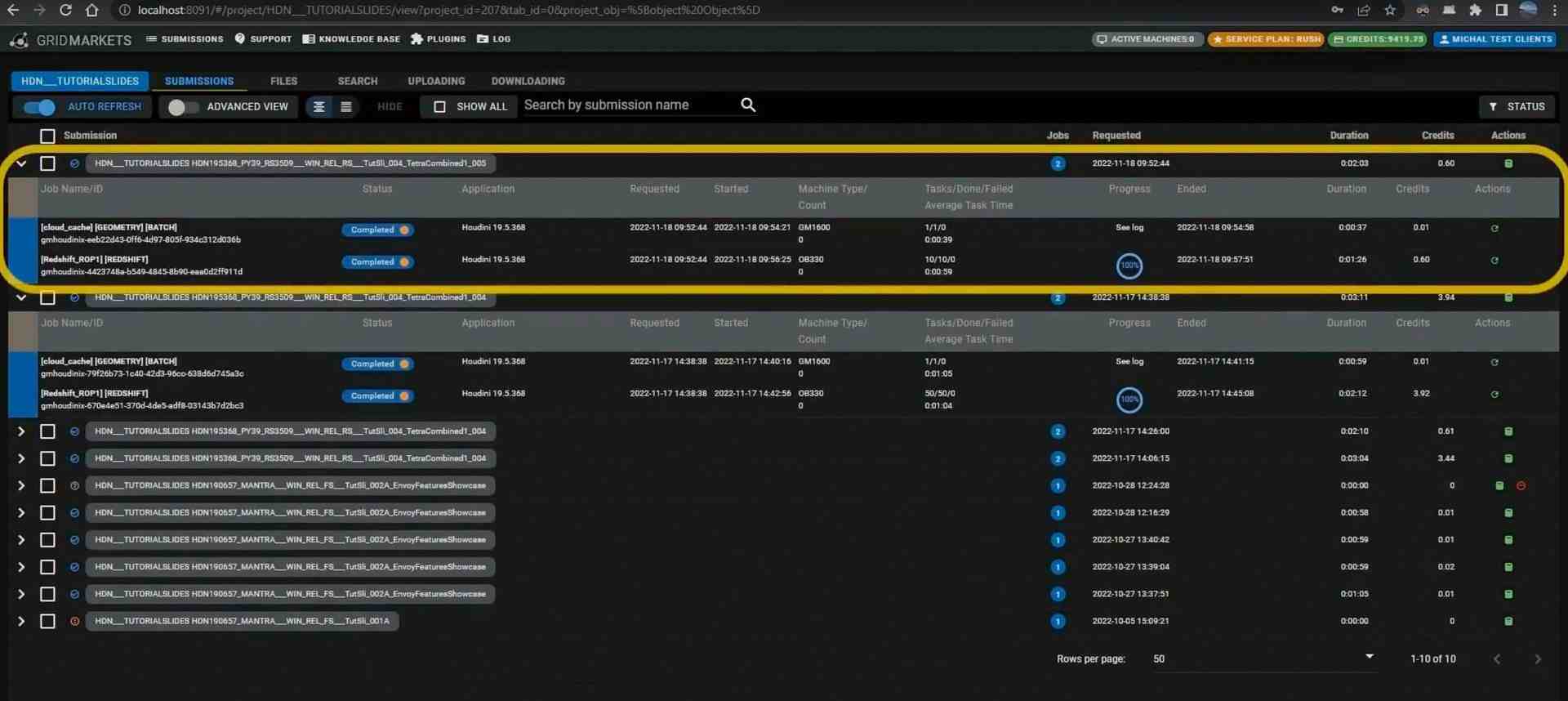
DP: The plugin sends the stuff to the currently selected render farm in the cloud?
Mark Ross: There are two parts to it – the Plugin, and “the Envoy”. Envoy is the primary interface to the Gridmarkets platform and does the actual work of up- and downloading files, submitting jobs, etc. The plugins talk to Envoy via its Python API that can also be used by client systems to interact with the GM platform. At a high level, there are two parts to our solution: our rendering manager that sits local to your network and our cloud orchestration solution. Our rendering manager (Envoy) is available via a download from our web site that integrates into your 3d software. It serves to define and to collect the inputs for your submission – and then to securely deliver those to our cloud. The cloud orchestration solution receives and then manages your submission across the requested number and configuration of requested machines – securely returning the rendered or simulated results to a directory that the user designates. For studios who want a more customized workflow, we also offer an API to our services.
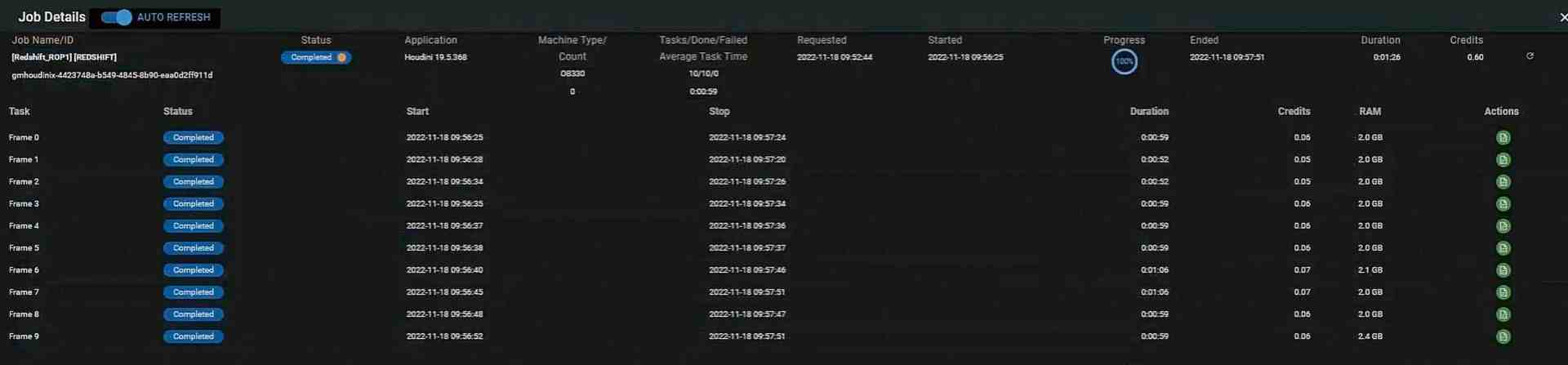
DP: How long (or how much) does the Envoy hold on to the files from the jobs?
Mark Ross: Files are kept as long as there are jobs for them, else they are purged after 15 days. There is no storage cap, but we do have a “fair use” policy – e.g. if you store Terabytes of data for more than a month, though we have yet to have that situation as most projects don’t last longer than that and users don’t want to keep their IP on any external platform for any longer than the project so usually choose to delete it. However, we have now introduced a loyalty program for our most valued clients (based on frequency of use, size of submissions, and other criteria) that allows them to store their data indefinitely so that they can work on (personal) projects for months if needed on our platform.


DP: And this works with Houdini, Blender, C4D, Maya and?
Mark Ross: We support all the major 3d applications (Houdini, Maya, C4d, Blender, 3DS Max, and Unreal Engine) and renderers (See the site for the full list www.gridmarkets.com/versions – the new versions are coming faster than the DP-issues; Editors note). As long as all the files are kept under the same project, then any application can run jobs against them as we replicate the client’s local environment on our cloud platform, so there’s no need to change any references. Unreal is currently supported via our CLI, as is V-Ray standalone, but we are working on a plugin for that like we have for all the other applications.
DP: Are there any other 3D tools on the roadmap?
Mark Ross: We’ll be adding support for other applications based on client’s demand. Our whole features roadmap is largely customer driven. We obviously try to get ahead of these requirements by keeping close tabs of our customer’s needs. Occasionally, we will get a last minute requirement; in such cases, the flexibility of our architecture permits us to rapidly respond (e.g. to make available the latest version of Redshift, to add a new plugin, etc.).
DP: That sounds great – but is anybody actually using Gridmarkets for VFX?
Mark Ross: We are the #1 solution for Houdini, which is the primary tool used by any serious VFX user – so, Heck yeah! We have delivered well over 200,000 projects to over 11,000 customers in over 100 countries. The projects range from major productions for final renders in film and advertising (e.g. the announcement of a new model for a German car manufacturer) to freelance and student projects – and everything in between. Many universities use GridMarkets – particularly after Covid when remote work became mandatory. I would encourage your readers to check out the featured artists (gridmarkets.com/featured-artists) and studio webinars (gridmarkets.com/webinars) that we have done.
DP: So, if I want to try the free “100 frames” – what do I need to set it up?
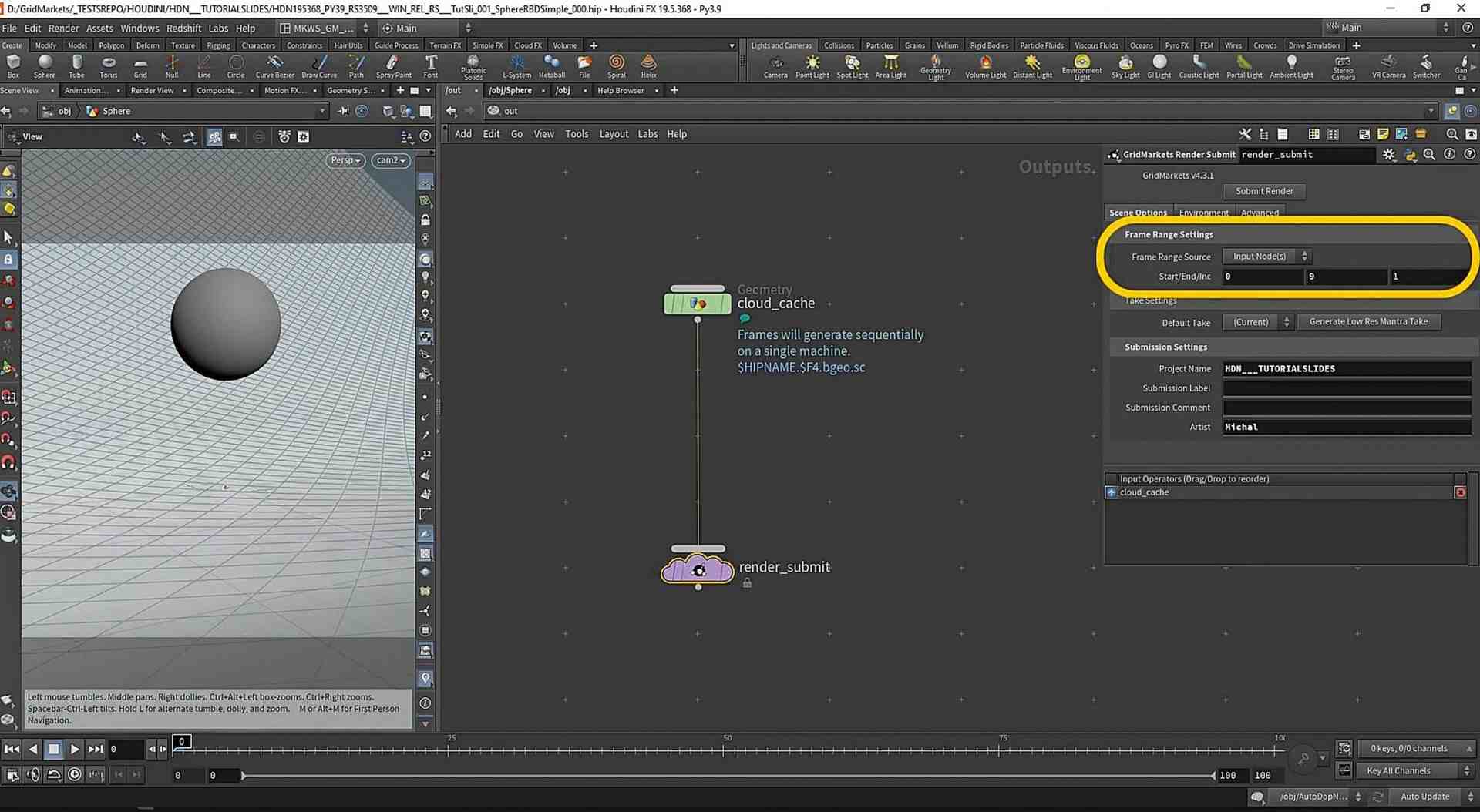
Mark Ross: No limitations, but obviously up & download speeds are based on your Internet connection, but we don’t limit the bandwidth, but do provide the ability in Envoy to throttle that based on your needs. It’s simple, by design, to get started. There are 3 steps – which can be found on our “Getting Started” page – gridmarkets.com/envoy. First, create a (free) GridMarkets account. When you do, we will deposit free rendering credits – to give you a test drive. Second, download Envoy (mentioned above). Third, submit your render. That’s it! It should be a breeze to set up – but if not, we can be reached at support@gridmarkets.com to address any questions. We would also be happy to virtually meet – to help address any setup or other questions; here is our virtual meeting link: is.gd/calendly_gridmarkets. Join us and we’ll try to answer all questions concerning your pipeline!
DP: Are there limitations on what I can send to Gridmarkets?
Mark Ross: See gridmarkets.com/versions for what’s officially supported as we’re constantly updating based on official production releases, but we can also accommodate custom builds for studios if needed. As an example, for Houdini, we currently support all production versions of Education, Indie, Core and FX in about 200 Versions of the relevant renderers – Karma, Transcode, V-Ray, RenderMan, Redshift, Mantra, Arnold and Axiom Solver in many different versions. And that list is always growing!
As for project sizes, we have done projects in the terabyte range. Because we receive your project input files via a file transfer mechanism, the speed of your internet connection will determine how quickly we can receive your uploads.

DP: With “data privacy” important for some industries and projects (with stipends and so on) – will there be a possibility to render on clouds in certain regions?
Mark Ross: Yes – we can control that if it’s needed as we use multiple cloud providers. Security is a very important issue for studios. For this reason, when we founded GridMarkets, we decided to build our solution to leverage the secure clouds of major cloud providers. That is, there is no such thing as a “GridMarkets” machine – rather, GridMarkets securely orchestrates our customer submissions across the machines of our cloud partners. We also secure the communications to/from your local machines to our service. In some cases, studios have requested that we process their projects in a particular location – or to avoid processing their projects in some locations. Our workflow permits doing so – so studios with such restrictions should bring them to the attention of our support team (or set up a virtual call to discuss).
DP: And what happens if I made a mistake and it cannot be rendered?
Mark Ross: We try to spot and warn for things like missing assets but, especially with Houdini, there’s always a way for the client to be too “clever” for our system, so we also provide ability to include additional files that we haven’t automatically identified via our plugin preflights or via Envoy. Most submissions go through to completion without incident. Occasionally, issues do arise.
Over the years, we have incorporated our submission learnings into our workflow to reduce submission errors and issues before they get started. But, as this is very complicated stuff, we always recommend submitting a small number of test frames (at low resolution) first. By doing so, any issues can be discovered and resolved at a small and less expensive scale. Then, when any submission errors have been resolved – the full Monty can be launched.

so you know what is currently happening in detail.
As mentioned, GridMarkets has significant submission experience gathered over the MANY years and MANY studios that we have served. We are happy to meet with our customers to advise them on ways to avoid submission errors and, importantly, on ways to optimize their submission so as to reduce their rendering and simulation costs.

DP: While talking about mistakes: Can I switch from “Economy pricing” to “Rush job” pricing (And the machines working on it…) while the pipeline is running?
Mark Ross: Yes – you can dynamically request more machines by increasing your service level.
DP: And a TD for a larger project or a studio can manage that, including “resource allocations” for individual users, machines or departments?
Mark Ross: As a client admin, you can allocate a budget for each user to limit their usage, but we can’t stop a “CEO’s nephew” from using them up as there’s no way to know if it was legitimate or not. We don’t have any egress charges – our pricing is all-inclusive, so there won’t be any surprise charges at the end of the month .
DP: Is there an “emergency” sign when the credits are used up? And what happens to the particular frame, when an hourly rate is used up?
Mark Ross: Users can set a budget for jobs with the option to: Be alerted via email if the job hits the threshold Stop the job, but lose whatever was in progress “Suspend” the job whereby running frames are allowed to complete, but frames that haven’t yet started won’t start. You’ll also get an alert via email if your credits are running low and there’s a chance that your running job(s) will be stopped or suspended. You can also choose to get the alert via WhatsApp so that you can know immediately. So, yeah, there are bells to ring if something is running out.
DP: Are there “extra cheap” options, for things that “Should be done” at one point, and can be triggered when there is a “cheap as chips” render machine available?
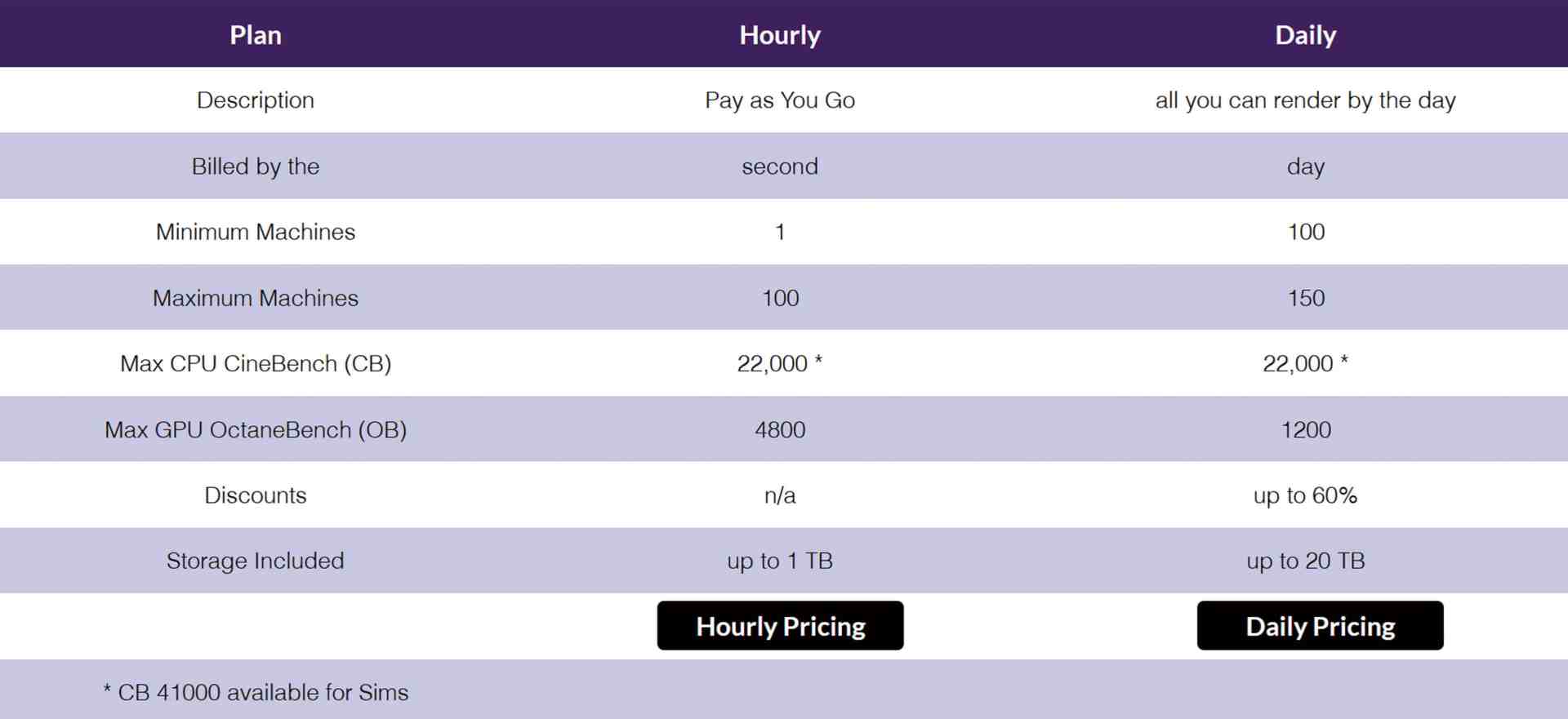
Mark Ross: They can choose from five “Octane Bench Score 220” (OB220) to a hundred OB4800 and five times Cinebench Score 5000 (CB5000) to a hundred CB 41000. In hardware terms, that is five RTX 2060s on the low end to multi-GPU-conglomerates running dozens or hundreds of cards in tandem. We also offer a daily “all you can render” option at a fixed price. As the name suggests, you can render for any number of days on any number and configuration of machines as much as you want. Daily pricing is significantly discounted vs hourly pricing (See here: gridmarkets.com/daily-plan)!
DP: How far does it scale up or down?
Mark Ross: We have run jobs with Octane bench scores over 48,000 – in GPU-terms, that‘s about three dozen RTX 4090s running together. Our OB4800 machine is the performance equivalent of 7 to 8 RTX A5000’s. With the Rush service, you can run up to 100 OB4800’s . . . meaning, you would have the power of 700 to 800 RTX A5000’s.
DP: How long are credits valid?
Mark Ross: Credits don’t expire – so you can prepare as long in advance as you like!
DP: How do I set up the Rendermanger/Gridmarkets-Account for multiple locations?
Mark Ross: Multiple users can use the same account from multiple locations to collaborate on a project as long as they are sharing the same project structure in terms of drive & folder names. And any GridMarkets account can be used from any location – as we are cloud based. It is possible to share an account among multiple artists if of interest. As of this writing, we are implementing a feature that allows multiple accounts to share a given project.
DP: How much automation is possible?
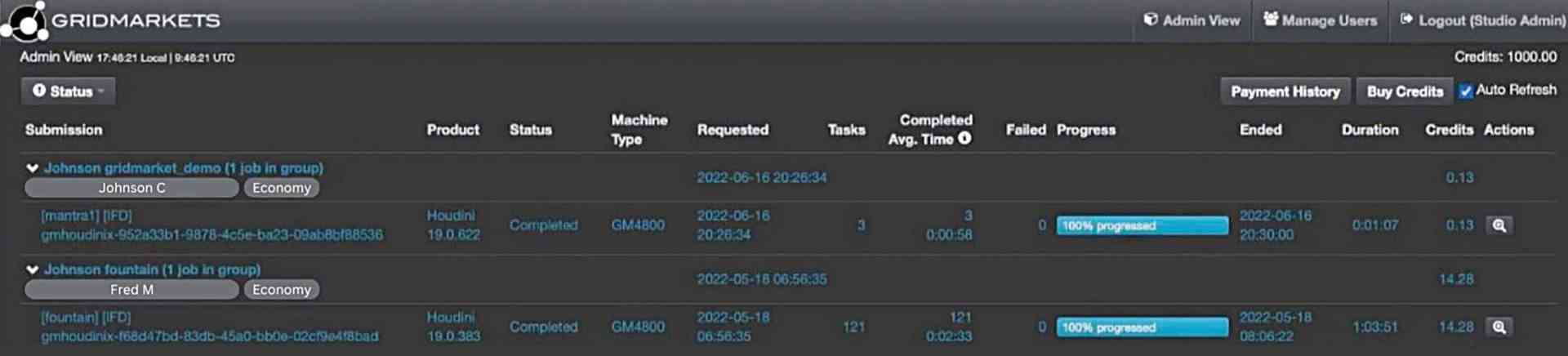
Mark Ross: A lot – we have a Python API via Envoy that we will be extending further, including with integration into Ftrack and ShotGrid. And once there is a Python integration, you can do pretty much anything you like. Our workflow is fully automated. No manual steps are required once submission begins. Orchestration and download happens automatically – unless the artist wishes to interrupt the process (e.g. suspend or stop a submission). If it is of interest: It is also possible to customize our workflow and/or to integrate our workflow into a studio’s workflow, using our API. We also support and integrate into Ftrack – which may be of interest to some of your readers.
DP: And all this is available for German studios?
Mark Ross: Yes – we already have many clients in Germany (40 percent of our clients are from Europe) and our partnership with DVEAS (www.dveas.de) will hopefully be expanding that. We see Germany as a great opportunity as there are many amazing studios and talented freelancers coming from there.
DP: You also do simulation work for science and pharma: How different are the approaches between medical sim and vfx sim?
Mark Ross: Our platform is generic to any compute-intensive application, so in addition to pharma we are also now expanding into the exciting area of AI & machine learning as they are also compute-intensive problems.
DP: If we look into the crystal ball: How will Gridmarkets work in 2030?
Mark Ross: We’re constantly looking to improve the service and are looking at collaboration as the next step as we recognise that the industry is becoming increasingly bifurcated between large(er) studios that prefer to do most things in-house, only “bursting” into the Cloud when needed, and freelancers that collaborate with them and each other on independent projects. The bigger question is whether real time rendering will ever take over from traditional/batch rendering, but we think they will both exist for sometime.
