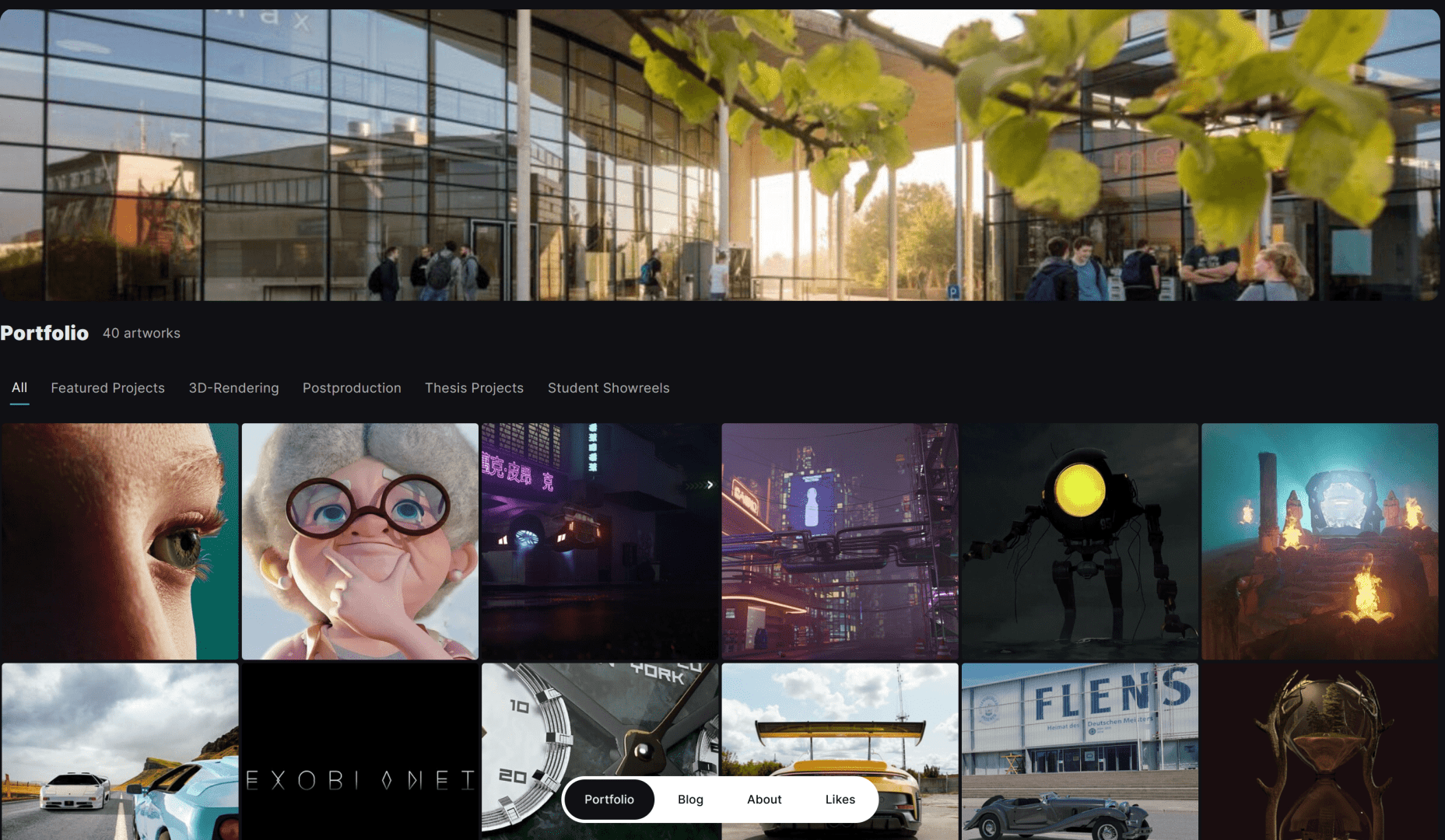
Table of Contents Show
by Florian Werzinski, Paula Gorczyca and Natalie Berg
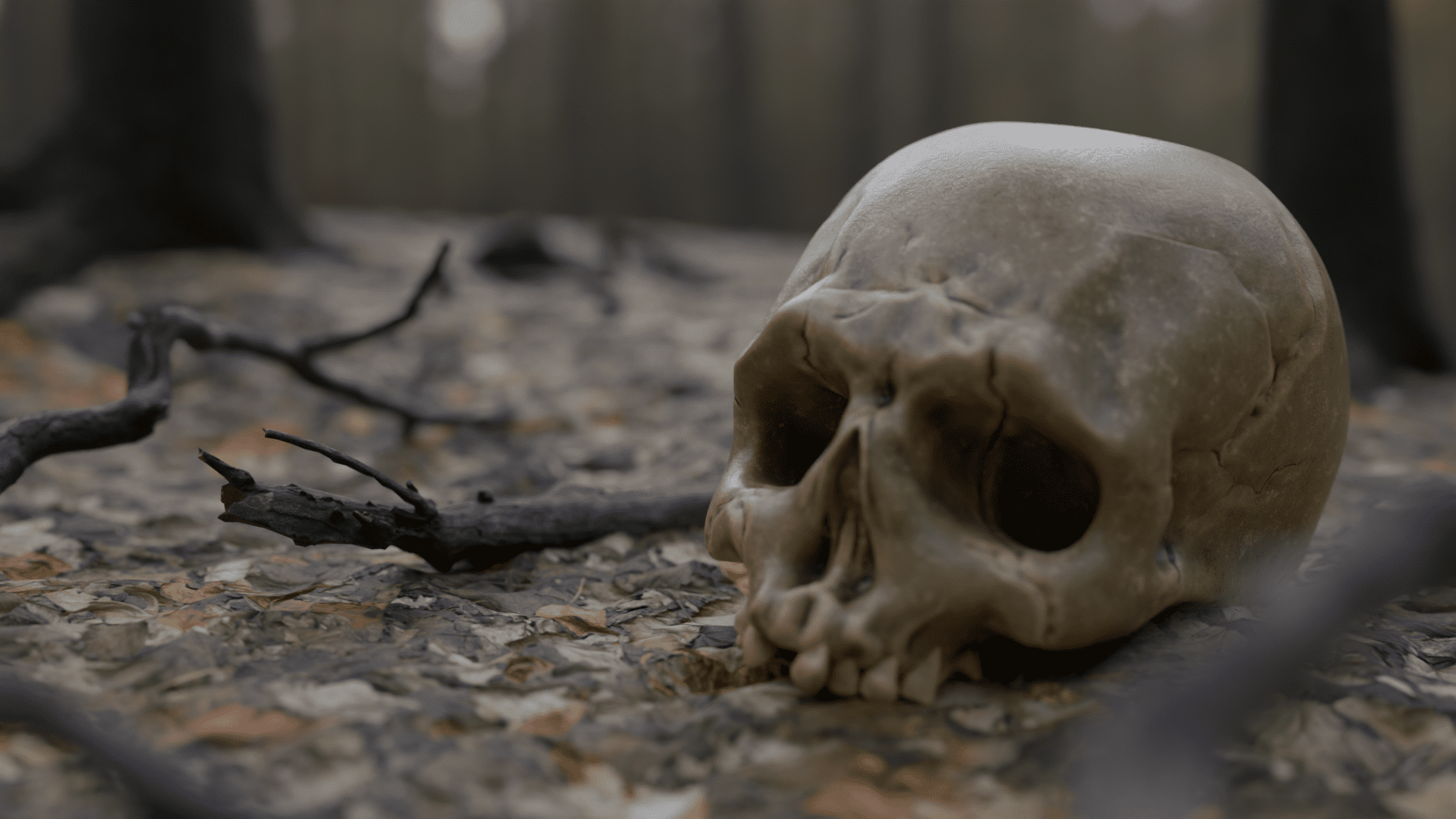
Paula and Natalie developed a fictional title design for a dark Netflix series at Flensburg University of Applied Sciences. Their VFX project “Falling Apart” demonstrates their skills in Blender and After Effects and offers an insight into the production of complex 3D scenes with a horror twist.
From title design to series: a semester project
Flensburg University of Applied Sciences may not be known to many as the first place for creative media projects. But it is precisely here, far away from the hustle and bustle of the big cities, that students like Paula and Natalie concentrate on their projects in the field of media informatics. They wanted to utilise the potential of their degree course to create a fictional title design for a Netflix series. The result is “Falling Apart”, a dark and atmospheric mystery series that shows not only technical sophistication but also creative ambition.
The idea behind “Falling Apart”
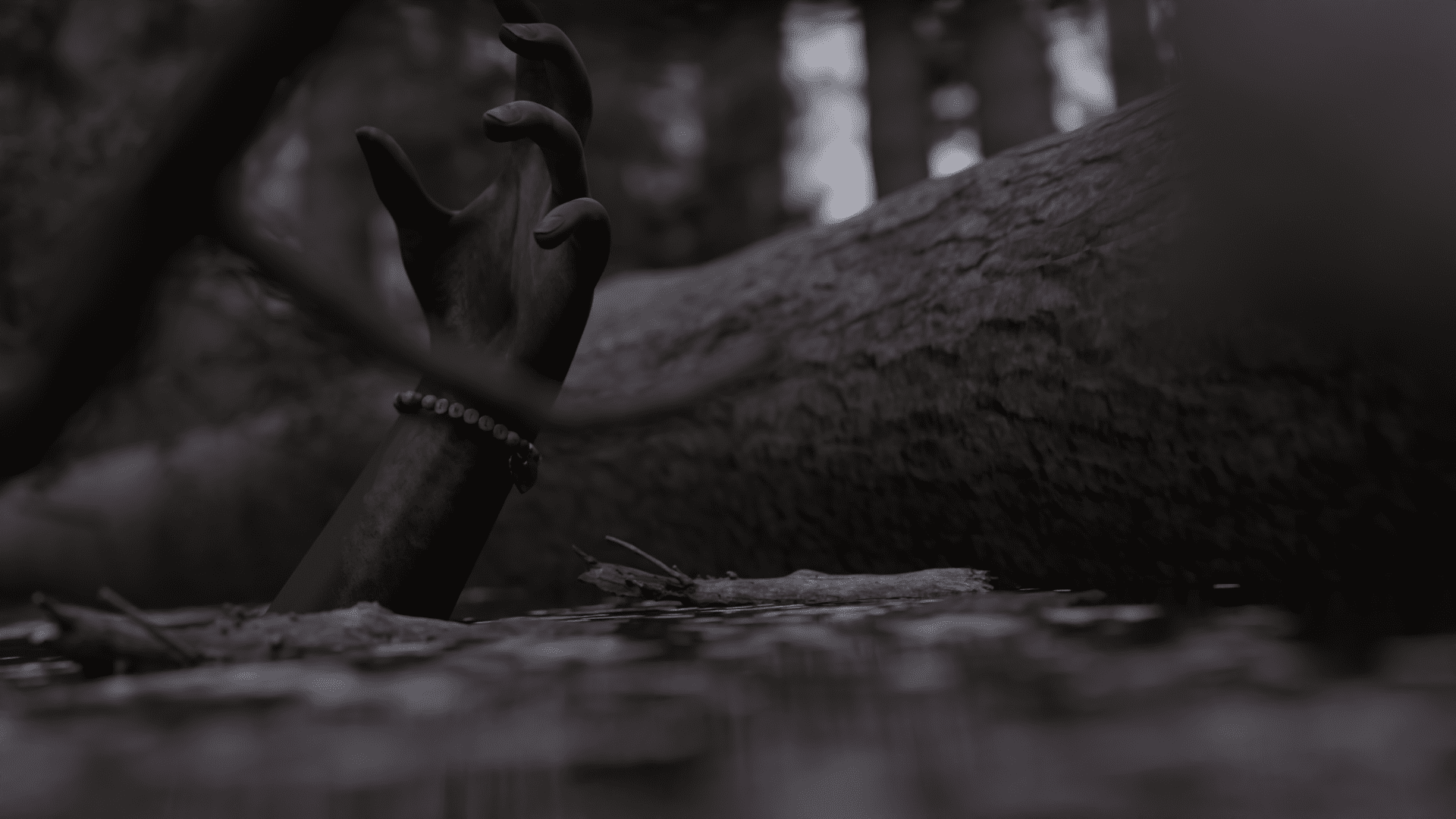
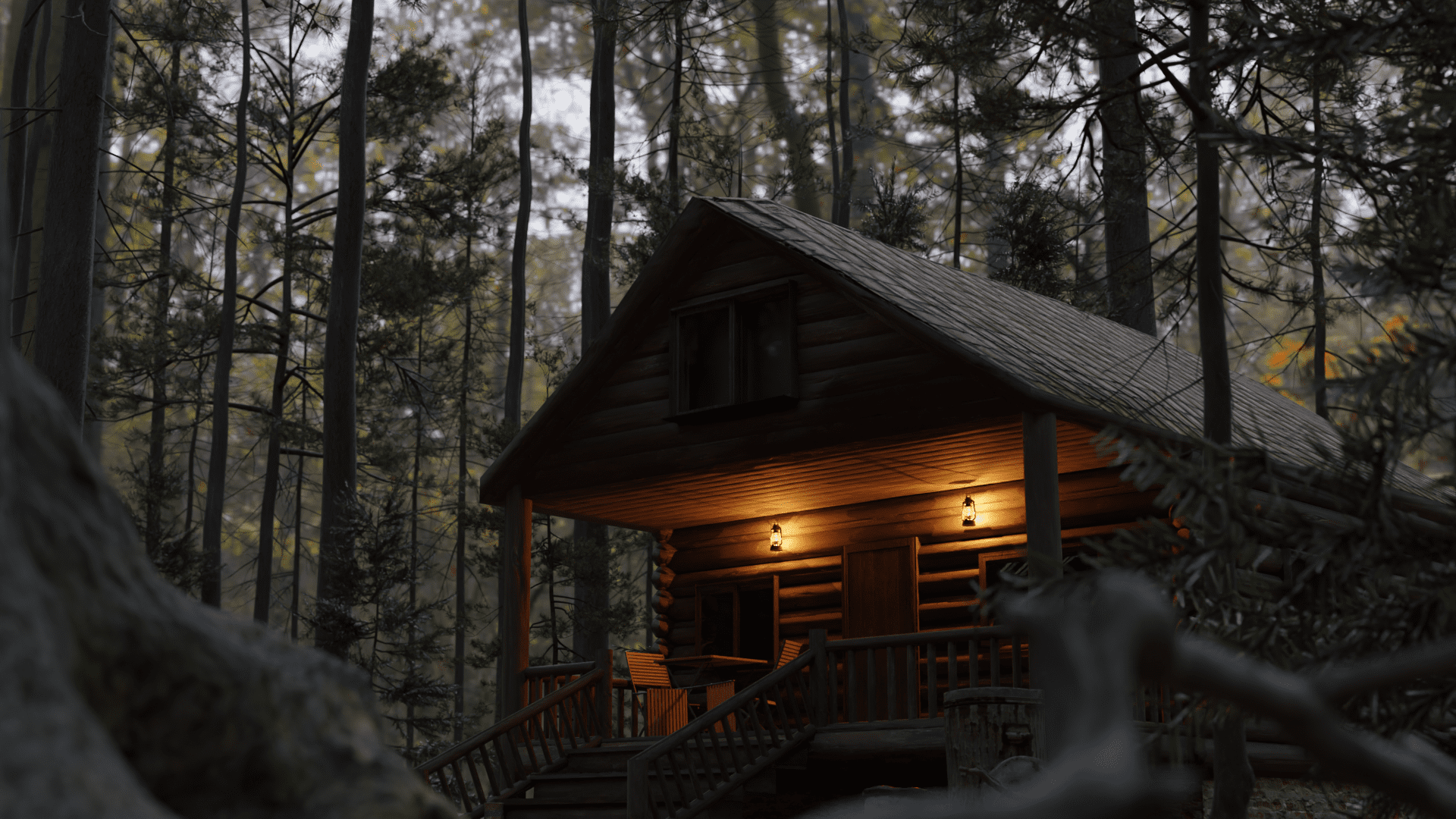
“Falling Apart” was created as part of the fifth semester post-production course. The task: to create a title design for a fictional mystery series. They were inspired by atmospheric series intros such as “The Haunting of Hill House” and the dark opening of “Resident Evil 7”. The aim was to integrate elements of thriller and mystery into a forest scene with a dilapidated hut and skull – classic motifs that create an oppressive and mysterious mood.
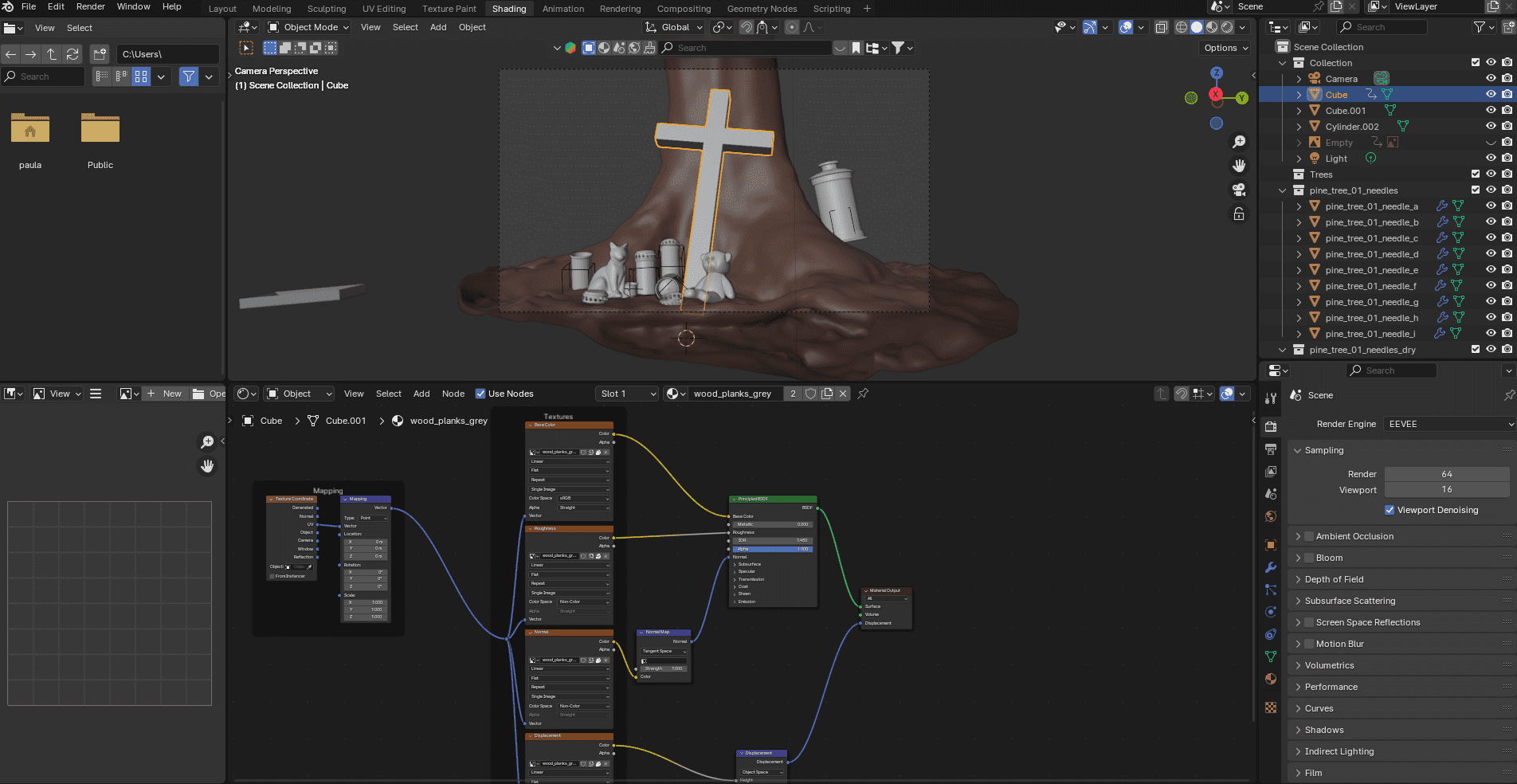
The project was realised in Blender and After Effects. Paula was responsible for modelling the 3D objects and Natalie for post-processing and colour correction. The combination of these programmes made it possible to create realistic scenes that impress with careful lighting and textures.


The technical realisation: Blender and After Effects
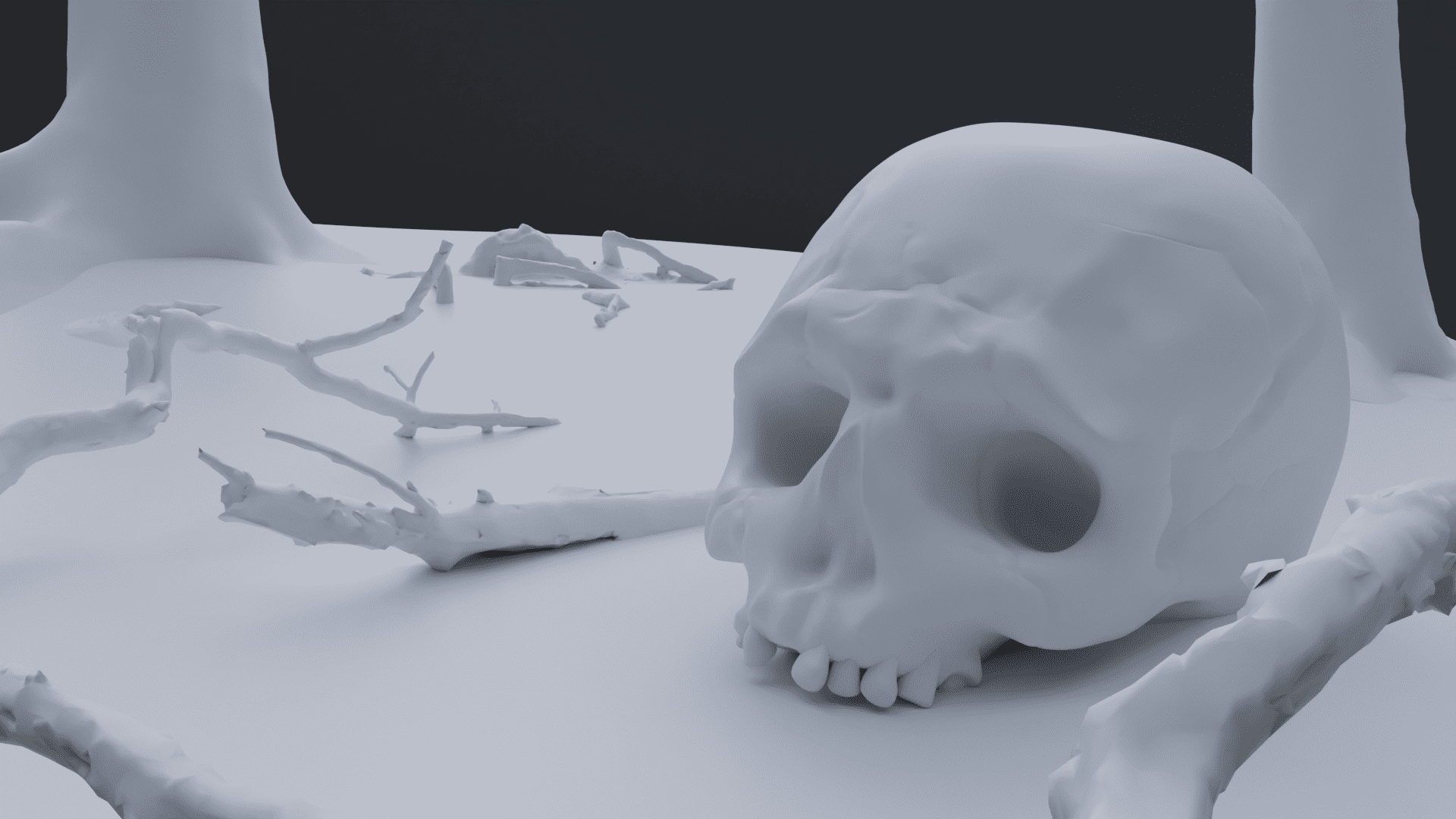
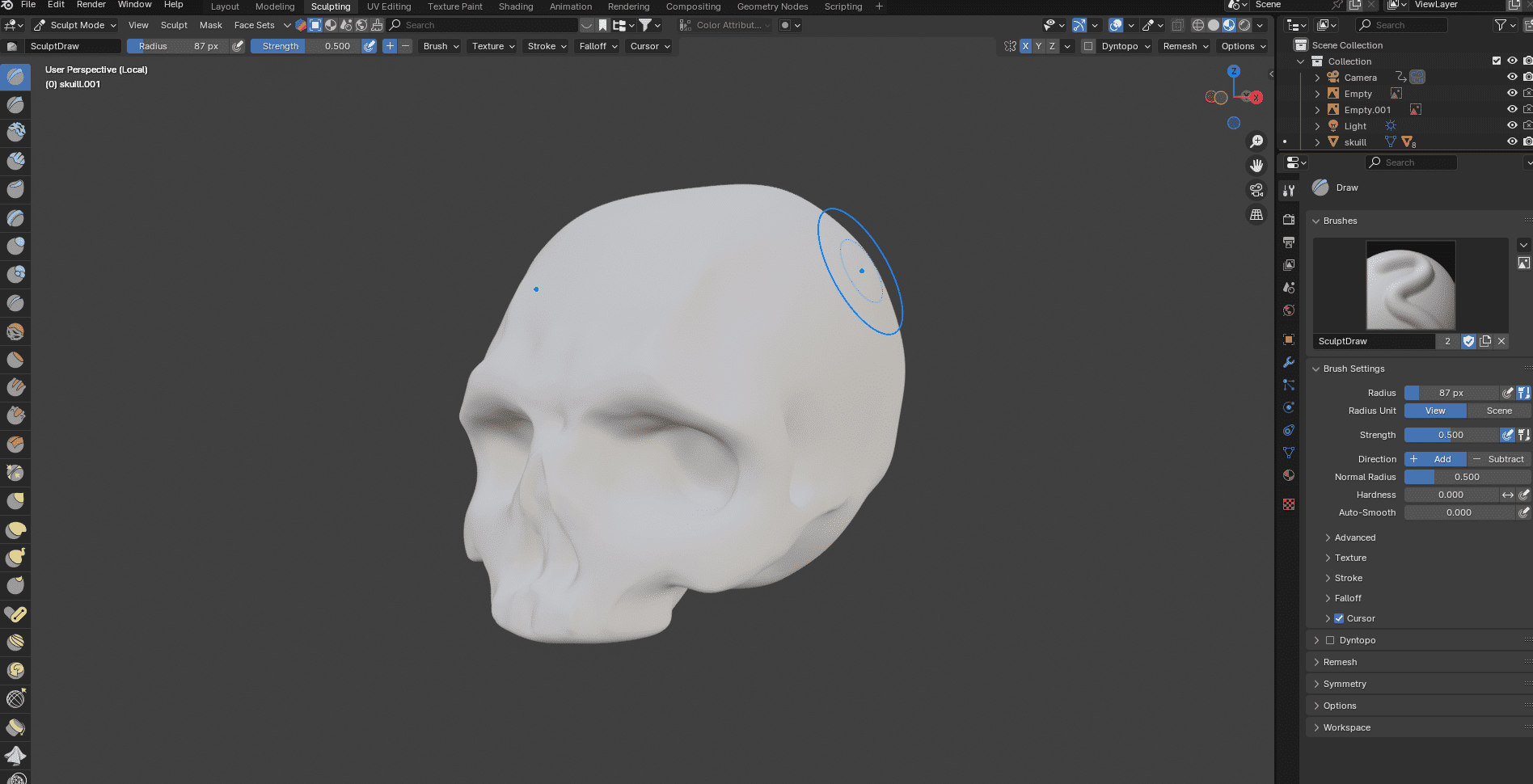
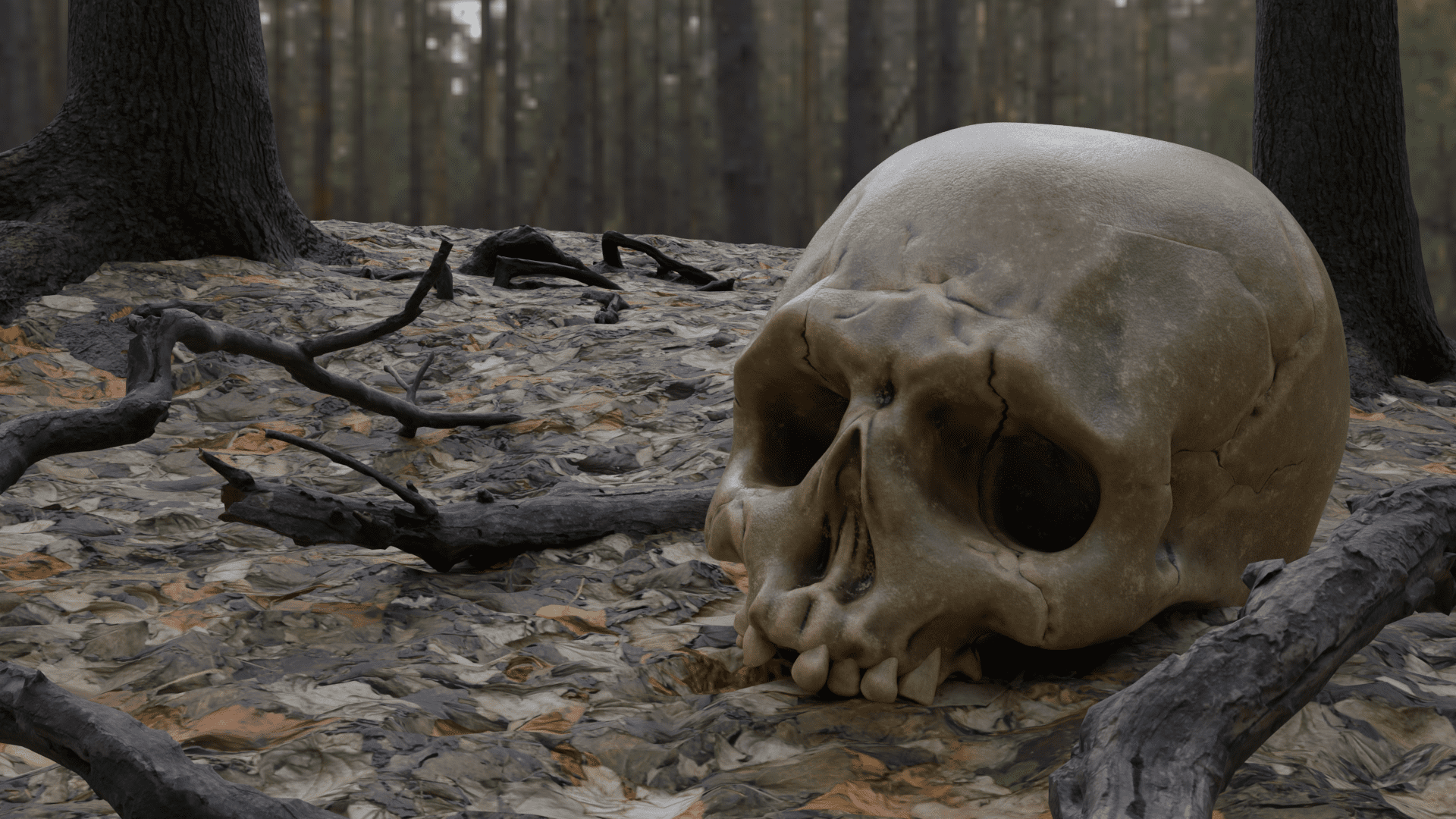
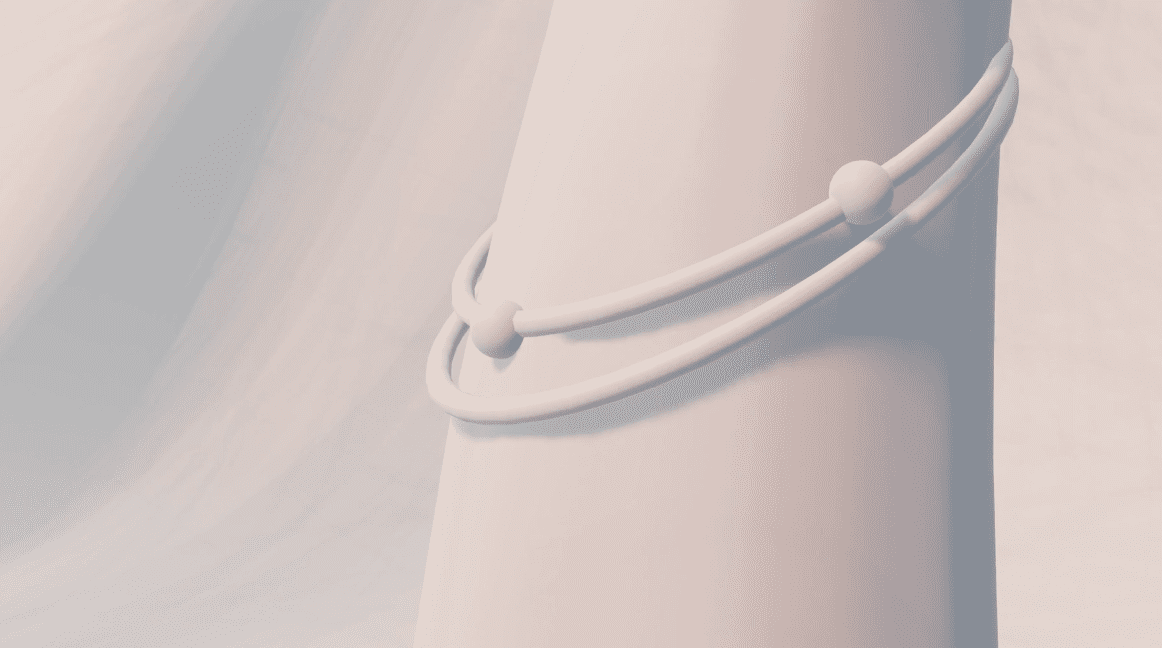
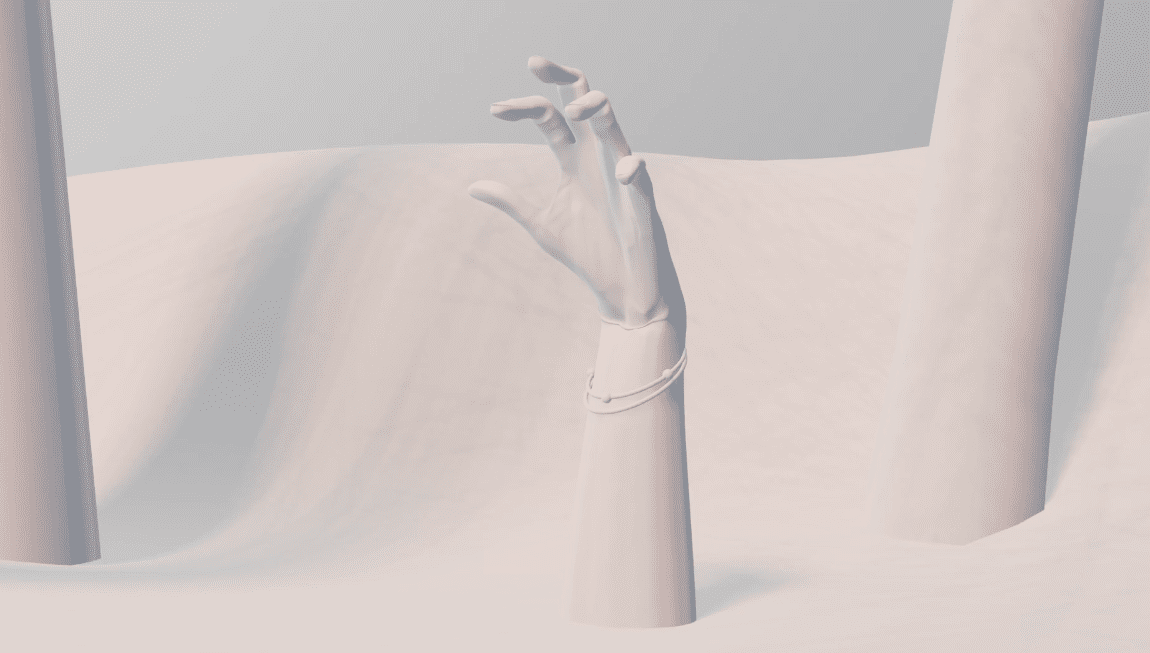
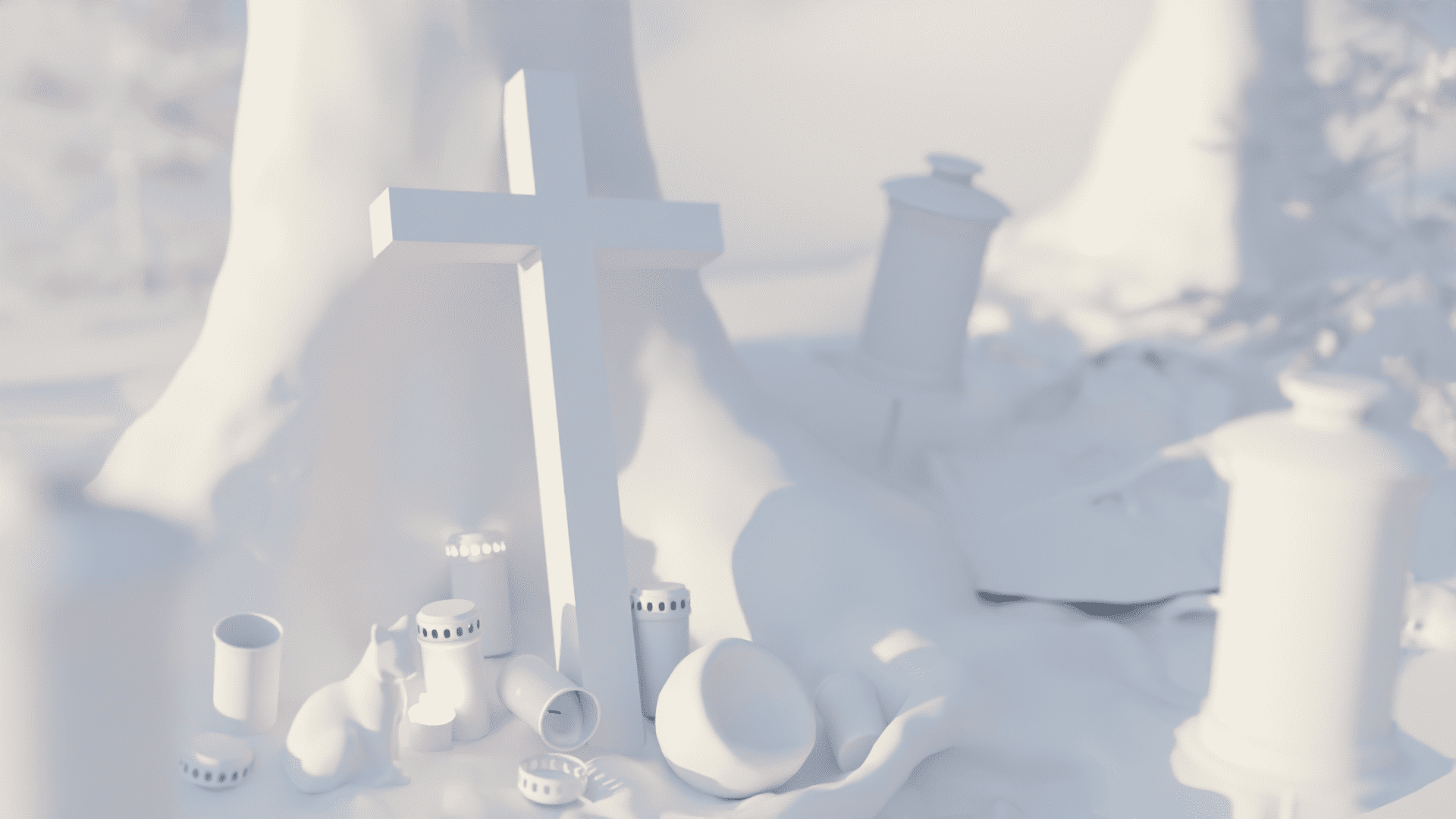
The decision in favour of the 3D implementation was made quickly. Both already had experience with Blender, the preferred 3D programme at Flensburg University of Applied Sciences. The aim was to make the scenes as realistic as possible and to test their limits in 3D modelling. A storyboard was created that clearly set the scene for the main motifs of the story – a forest hut, a skull and an arm. The next step was “blocking”, i.e. the placement of the most important 3D elements in the scene. Low-poly models were used here to test the proportions and compositions without putting too much strain on the computer capacities. The actual modelling of the hut and the skull only began afterwards. The skull was sculpted and texturised in Blender, while the hut was created using references. Using an HDRI environment and a sunlight source, the scenery was further refined to create depth and realism. For the typographic elements of the title design, the “Ivy Generator” was used, with tendrils growing out of the font. This symbolises the passing of time and reinforces the gloomy atmosphere of the series.

Music and post-production: the finishing touches
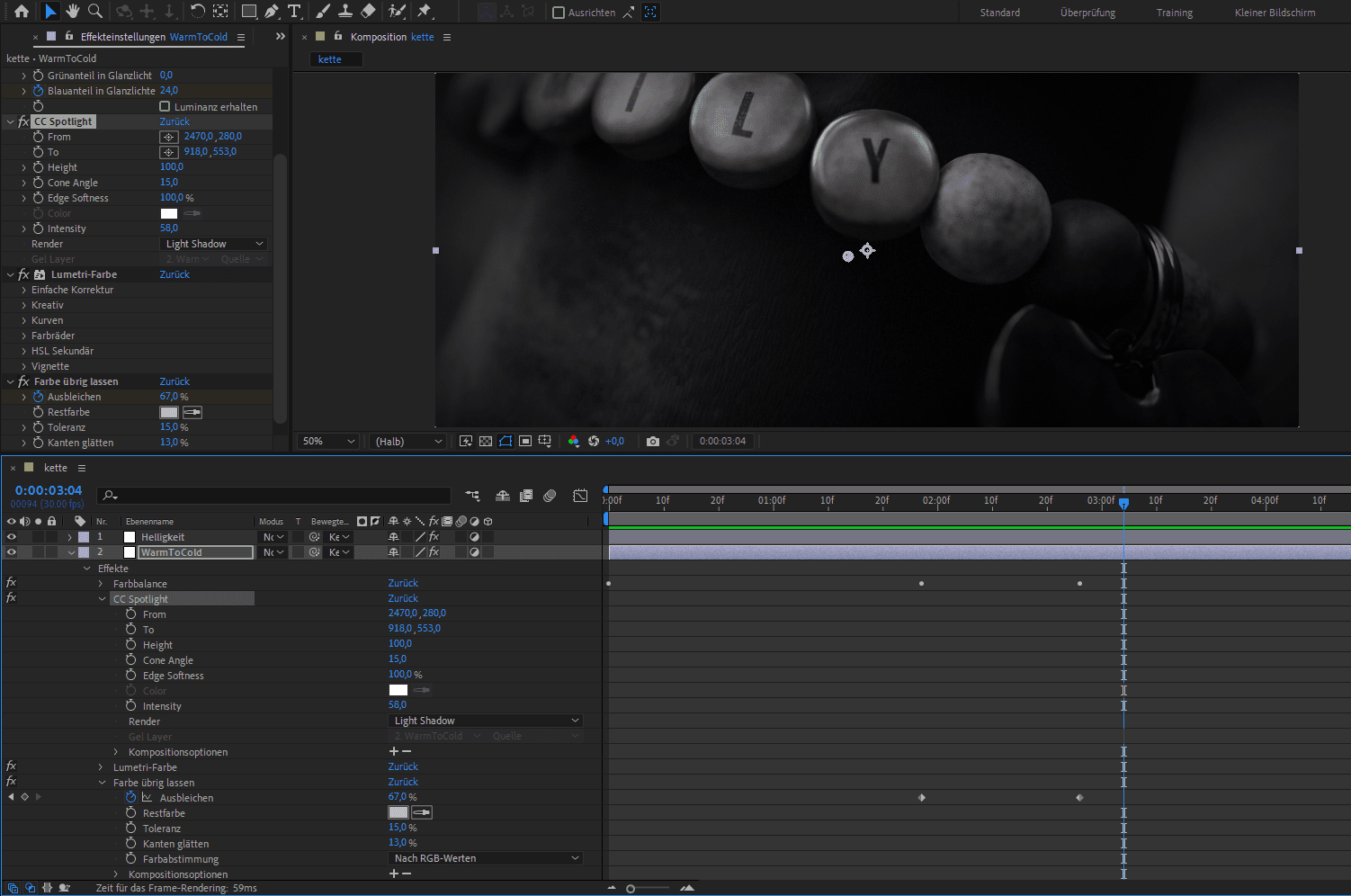
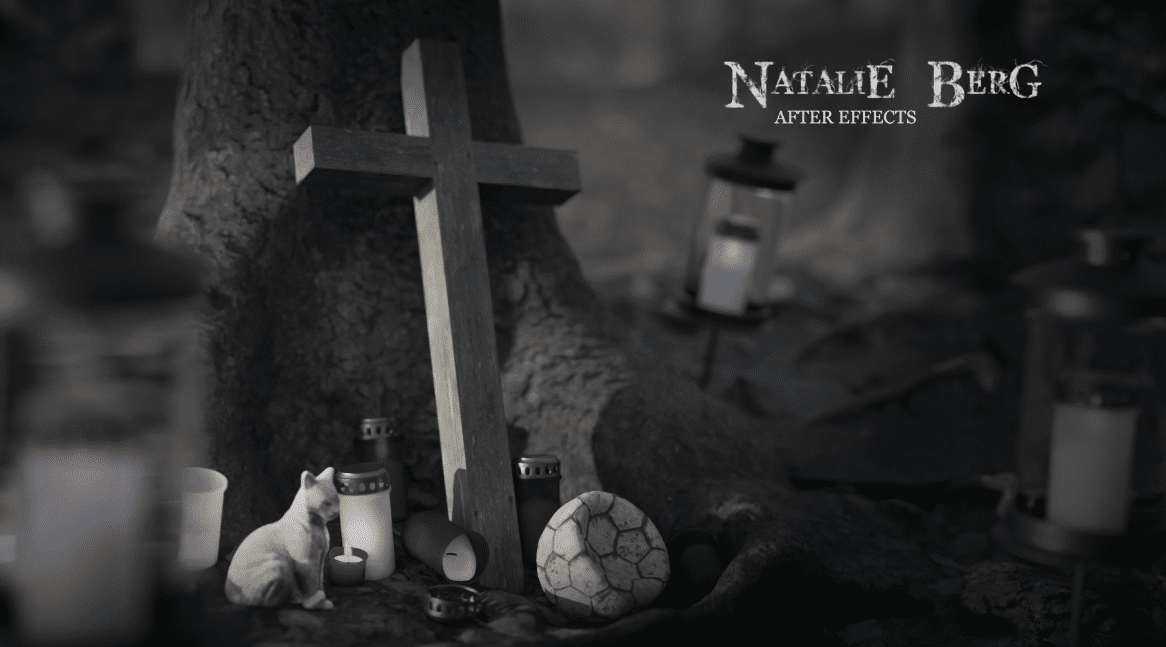
Once the 3D scenes had been created, Paula and Natalie focussed on post-production in After Effects. Colour correction played a central role here. To make the mood even darker, a transition from warm to cold colours was added to reinforce the thriller atmosphere. All scenes received the same colour correction, adapted to the lighting conditions of the raw files. The addition of volume light and spotlight effects to give the image more depth was particularly complex. The effects were animated by hand, which took a lot of time, but ultimately achieved the desired effect. Although the college had licences for plugins, they decided not to use them in order to test their skills without additional tools.


Challenges and learning experiences
As with many projects, there were technical challenges. In the beginning, Paula and Natalie were not careful to keep file sizes small, which unnecessarily increased render times and caused the computers to crash regularly. From the middle of the project onwards, they used the university’s more powerful computers, which helped them to deliver the project on time. Another stumbling block was the compatibility of the After Effects versions. As they were working on different computers, they repeatedly encountered problems with file interchangeability. This experience taught them to make sure they use standardised software versions right from the start.

The next project has already been finalised
Following the successful completion of “Falling Apart”, Paula and Natalie are now working on their final projects. Paula is planning a 3D animated film with mixed media elements, which may be submitted to a film festival. Natalie, on the other hand, is creating the design and website for the university’s comic magazine.
Conclusion
Flensburg University of Applied Sciences offers its students on the Media Informatics and Film & Media Arts degree programmes opportunities to express themselves creatively and technically through practical projects and good technical equipment.
“Falling Apart” is an example of how much potential there is in the combination of Blender and AE. Media Informatics with a focus on film not only teaches technical know-how, but also the ability to implement creative ideas – exactly what the VFX industry needs.







At Flensburg University of Applied Sciences, you can learn the basics of VFX, 3D animation and post-production in practical degree programmes such as Media Informatics and Film & Media Arts – without an entrance exam. When it comes to practical degree programmes in the field of digital production, Flensburg University of Applied Sciences has a lot to offer. The Media Informatics and Film & Media Arts (FMA) degree programmes in particular offer in-depth training with a focus on VFX, 3D animation and post-production. And the best thing about it? There are no entrance exams or strict entry requirements. Here you can get an insight into what to expect at this university and why it’s worth thinking about starting your studies here.
Media informatics with a focus on film: a versatile degree programme
The Media Informatics degree programme with a focus on film offers a balanced mix of theory and practice. You not only learn the basics of image design and programming, but can also delve deep into the world of 3D animation, modelling and rendering. Particularly interesting: in addition to traditional subjects such as drawing and film shooting, you can expect modules such as 3D rendering in the fourth semester and post-production in the fifth semester. This will optimally prepare you for working in the VFX industry.
The combination of creative work and programming could be a particular challenge for some, but this makes this degree programme all the more versatile. As around 100 students are accepted each semester, this is a comparatively large degree programme – so you have the opportunity to network in a lively and diverse student community. The university offers a special bonus with its regular excursions to FMX. Invited guests who work as artists in the VFX industry also provide practical insights into the industry.
Film & Media Arts: a focus on creative film design
The Film & Media Arts (FMA) degree programme is newer and offers a slightly more artistic focus than Media Informatics. It is less about programming and more about the creative design of film formats such as short films, genre films and social media content. You will learn how to use cameras and lighting equipment and get a solid introduction to VFX, 2D & 3D animation and post-production. Even though this degree programme accepts fewer students – only 15 to 30 per semester – demand is high. An entrance exam in the form of a portfolio is being planned, which could make the selection process a little more selective in future. In addition to excursions to the Berlinale and the Hamburg Short Film Festival, this degree programme offers practice-oriented training opportunities to help you establish yourself as a film artist.
Equipment and technology: high-end equipment for students
When it comes to technical equipment, Flensburg University of Applied Sciences leaves nothing to be desired. As a student, you have access to: 75 cameras from brands such as Arri Amira, Sony FX6 and Canon C300, including various light sources such as Arri Skypanels, Astera Tubes and Dedolights and, of course, a wide range of software, including Maya, Blender, Adobe Premiere, Nuke and Resolve. The university has four PC labs, each with 20 workstations. Two of these labs are equipped with the latest GTX4090 graphics cards – a boon for anyone wanting to work in 3D rendering or VFX. There are also three Mac labs where you can work on Wacom Cintiqs to realise your creative visions.
Cooperations and exchange programmes
Another advantage of studying at Flensburg University of Applied Sciences is the international cooperation opportunities. The university has partnerships with universities in countries such as Sweden, Mexico, Namibia, New Zealand and South Africa. It is also close to the Animation Workshop in Denmark. This means you can study abroad for a semester and expand your knowledge of VFX and post-production at the same time.
Application process and costs
The application process at Flensburg University of Applied Sciences is simple and straightforward. There are no special entry requirements other than a general higher education entrance qualification. You can easily apply online. Every winter semester, 100 students are accepted for Media Informatics and 15 to 30 for Film & Media Arts. It is currently not possible to apply for the summer semester. There are no tuition fees for the degree programme. The semester fee is 269 euros, which includes the costs for the student union, a Deutschlandticket and the AStA fee. This also gives you access to discounted lunch and public transport.
Conclusion: A future-oriented degree programme with many opportunities
Flensburg University of Applied Sciences offers a solid foundation for anyone who wants to gain a foothold in the VFX industry or in creative film production. The Film & Media Arts degree programme is particularly popular and in demand, while Media Informatics has a strong technical focus. With well-equipped laboratories, international collaborations and practical modules, nothing stands in the way of your career in digital production. Whether you want to become a filmmaker, animator or post-production artist – you will find the right training programme at Flensburg University of Applied Sciences.
Flensburg University of Applied Sciences – hs-flensburg.de
Film & Media Arts | Flensburg University of Applied Sciences – is.gd/flensburg_film_media_arts
Application information – hs-flensburg.de/study-interested/application
Co-operation partners of Flensburg University of Applied Sciences – hs-flensburg.de/hochschule/international-office/partnerhochschulen
Results of the degree programme – artstation.com/vfxflensburg