



To iterate for all the “NoVFX”-Twitterati: No animals were harmed. But when Reddit threads start asking if a horse actually died onscreen, chances are the VFX team did something right. In Season 2 of 1923, a spin-off of Taylor Sheridan’s Yellowstone universe, WeFX delivered a photoreal digital horse collapse that blurred the line between practical and CG—right down to muscle spasms, hair physics, and dust plumes.
For a showrunner whose passion for horses borders on the religious, authenticity wasn’t negotiable. So Ryan Ng and the 50-person team at WeFX went full anatomy-nerd:gruesome, but necessary research, simulating muscle-and-skin deformation, and matching CG horses to practical dummy rigs—frame by frame.
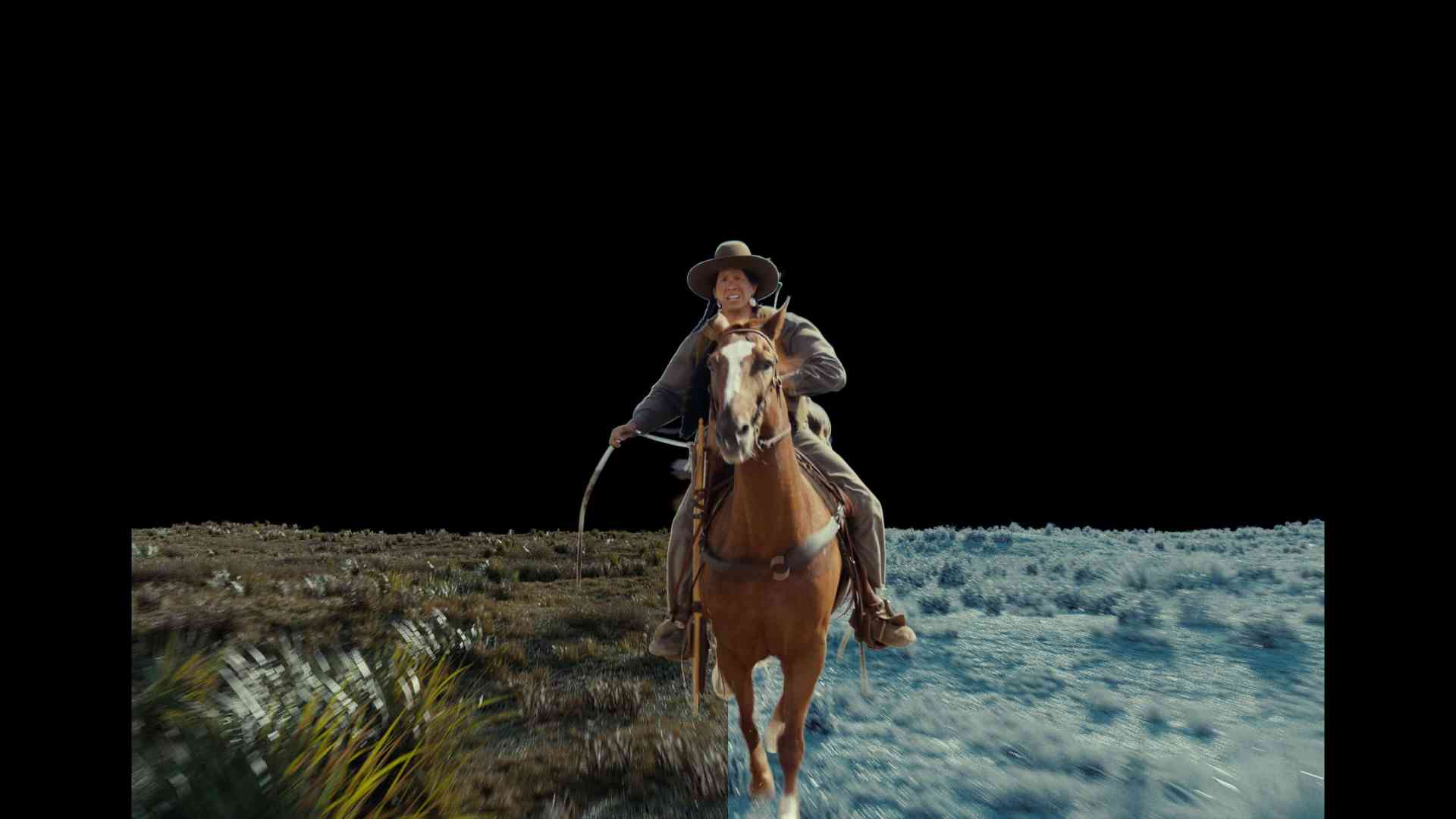
TL;DR: The pipeline? ZBrush for anatomical sculpting, Maya for animation, Houdini for FX (muscles, cloth, dust), Arnold for rendering, and Nuke for comp. A full-CG double of both rider Pete and his mount was built, rigged, and integrated with a digital environment built for precise ground interaction.
We sat down with the Mohammad Ghorbankarimi (IMDB)and Ryan Ng (IMDB), wo co-supervised that show at WeFX to break down the sequence, pipeline choices, and how a digital fall became one of the most talked-about scenes of the season.
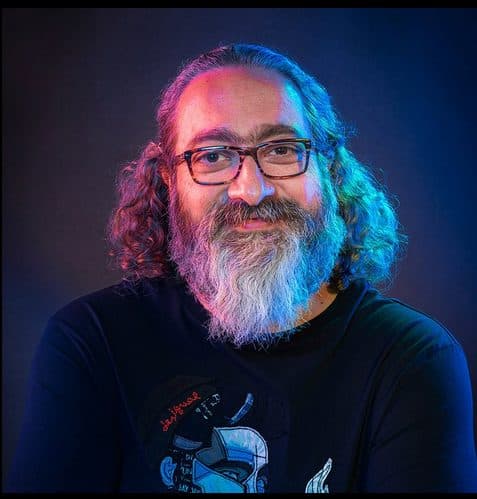
DP: How did WeFX get involved with 1923 in the first place?
Mo Ghorbankarimi: We had the pleasure of working on the first season of 1923 with Kevin Blank, so when this season came around, we were thrilled that he and his team wanted to work with us again. In the first season, we tackled water, fish, sharks, and more, so this season, we were happy to spend some time on land.
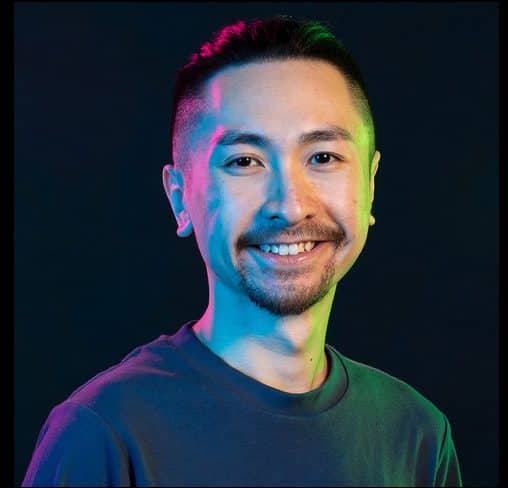
DP: What was the timeline like?
Ryan Ng: We worked on a total of 20 shots in this project. While the shot count was low, the effort was huge and was touched by every department, with over 50 artists contributing to what is in the final frames. All told, we worked on this project for approximately 6 months from asset prep to final delivery.
DP: So, westerns now instead of horror creatures? Was that a stylistic shift for the studio – or is quadruped destruction just a different flavour of nightmare?
Mo: As a studio, we are focused on creature, FX, and environment work. While These specialities have led us into some dark corners, we were happy to be able to present our work in the full light of day to really showcase how awesome our team is.
DP: Was there any hesitation when you heard the brief was “Make a horse die photorealistically, but also don’t upset the audience too much”?
Mo: This is a great question. The brief itself didn’t give us any pause, but the client did. We hold ourselves to an extremely high standard, but we knew that making a photoreal horse for Taylor Sheridan and team required a whole other level of scrutiny. These are people who have been around horses their whole lives and work with them every day. If our work isn’t perfect, it would be glaringly obvious and stand out like a sore thumb.
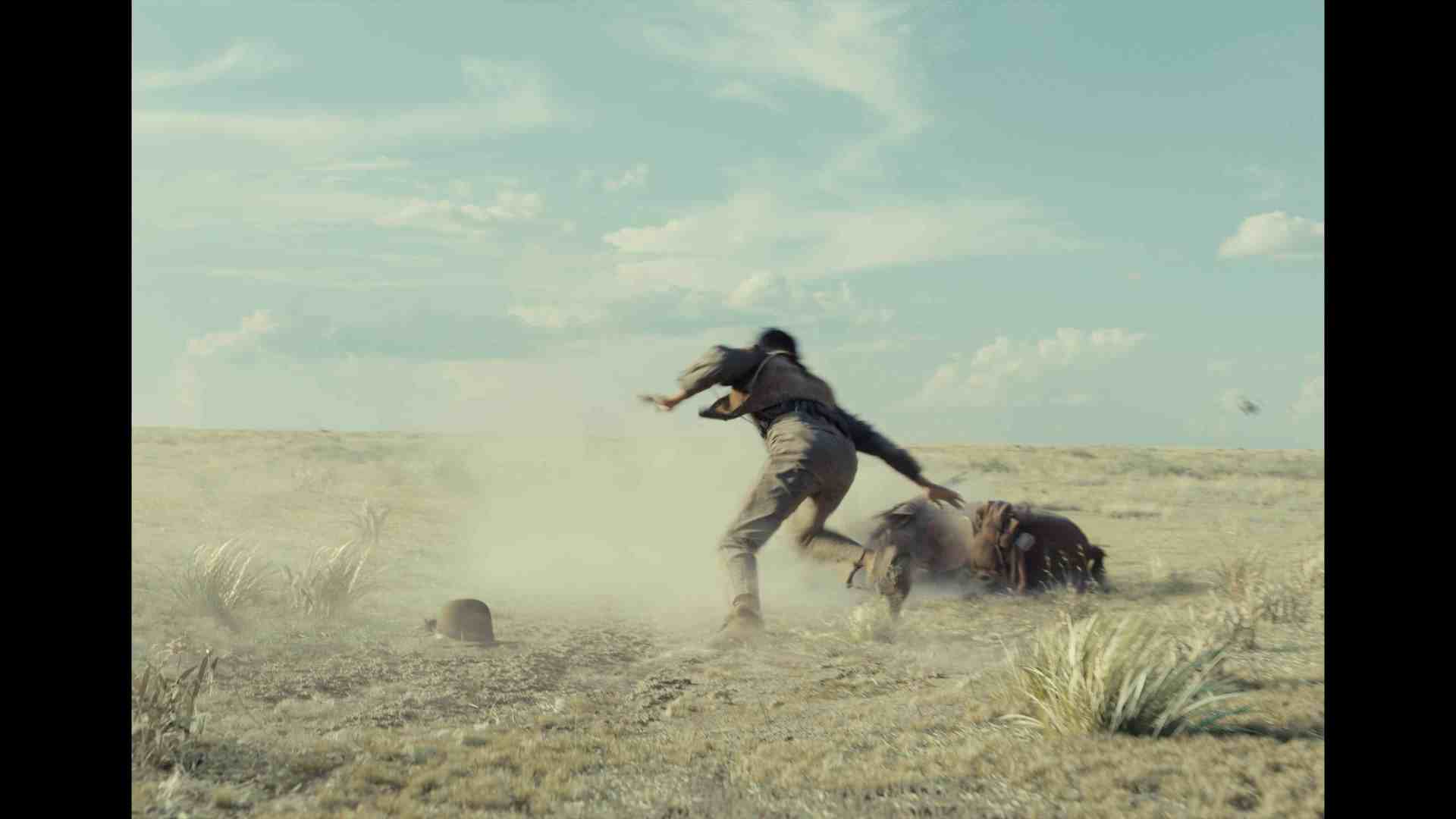
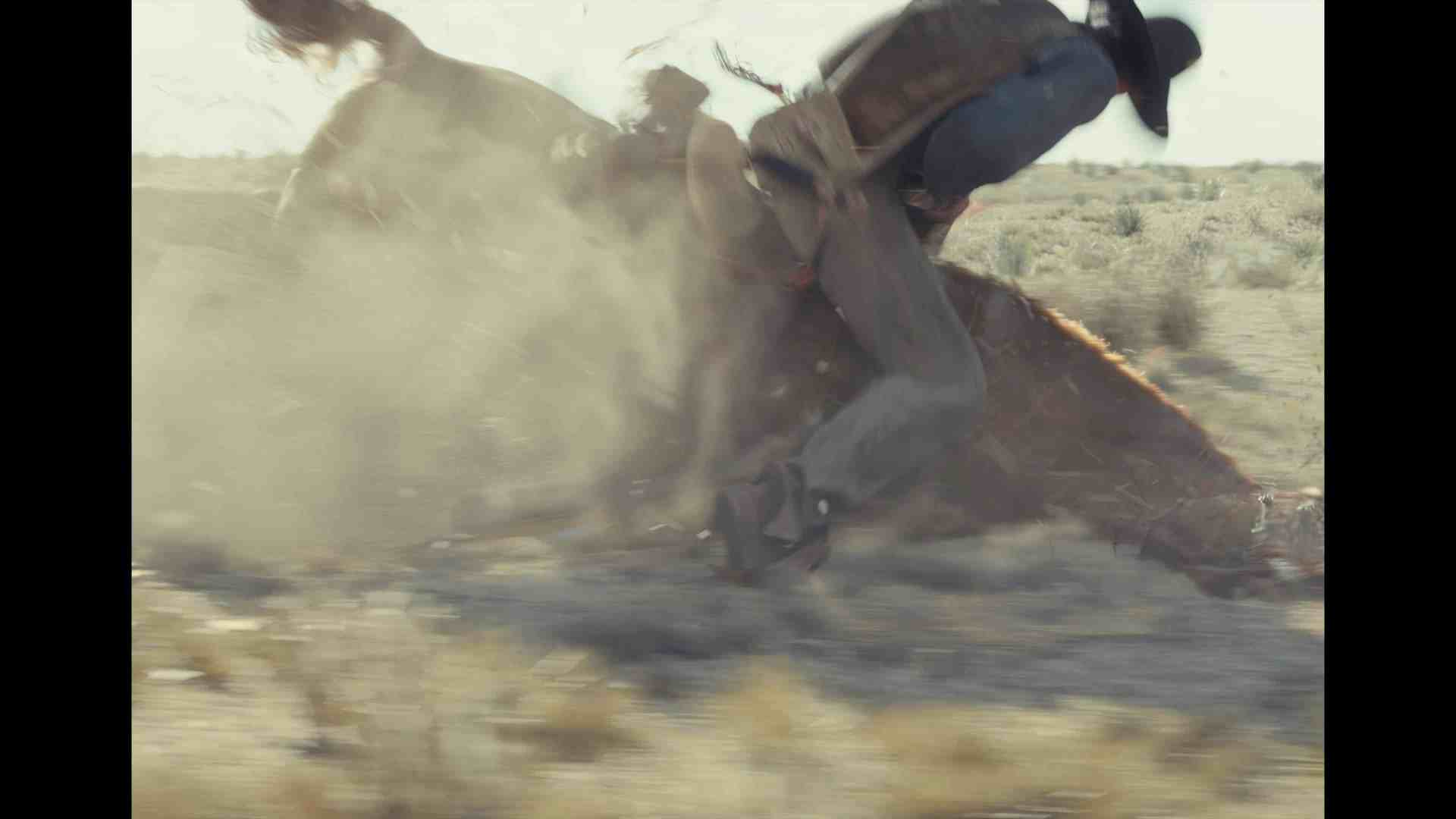
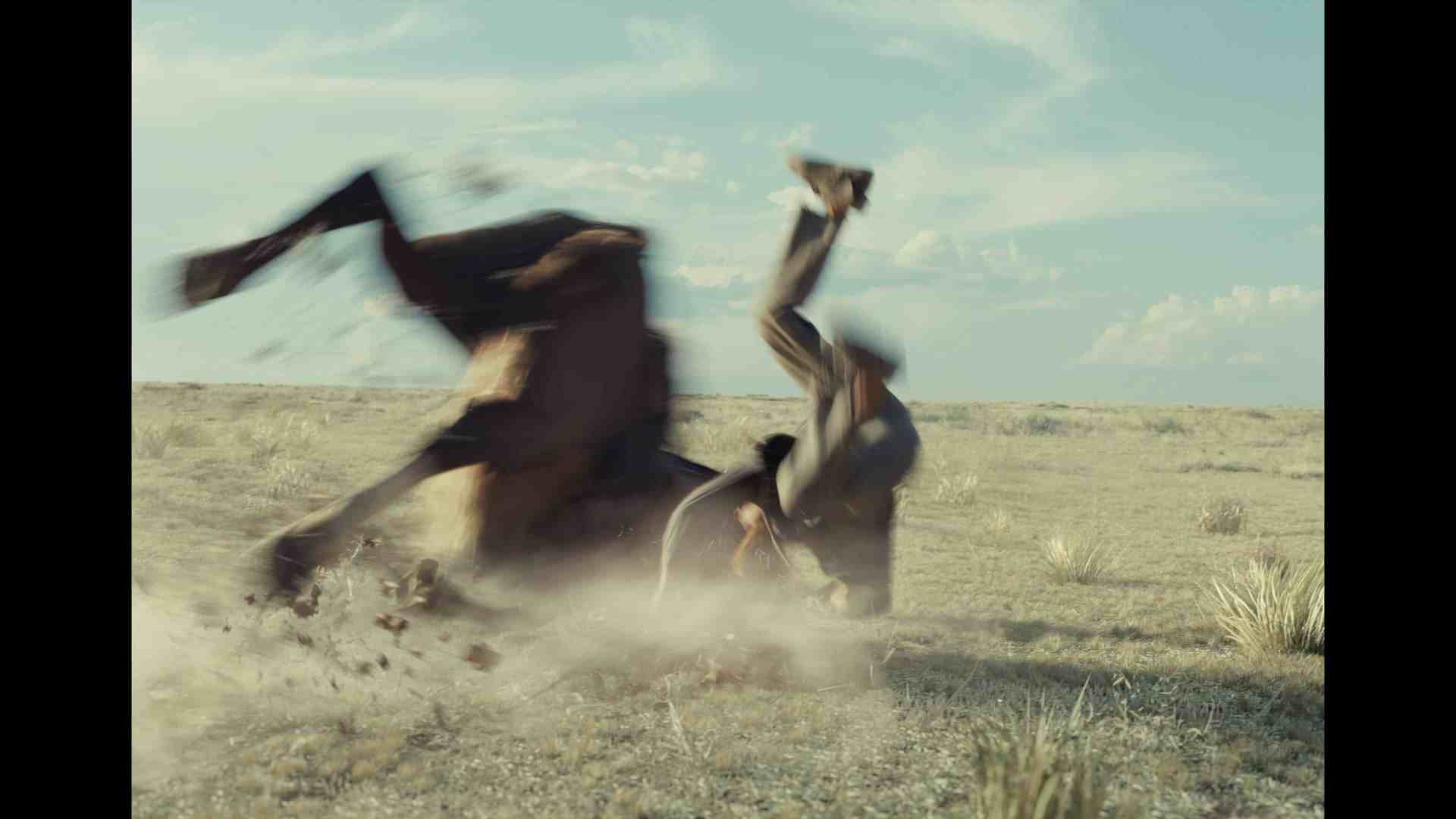
Ethically, we actually felt like this was a perfect use of VFX. We can depict something that you would never be able to capture practically, allowing the showrunner to see exactly what he imagined on screen without needing to use traditional filmmaking tricks or cut around the action. We never tried to be grotesque for its own sake, we focused on being as realistic as possible.
DP: Any good advice you’d recommend to someone trying to tackle complex creature work like this?
Mo: If there was one piece of advice here, I’d say do your research. Not from a technical standpoint, but from an artistic perspective. Study the creature, its anatomy, the physics, how it moves, and interacts with the environment. If you don’t do this work early, it can come back to haunt you later in the process.
DP: What kind of reference did you use for the fall sequence?
Ryan Ng: We found some (very hard to watch) references of horse accidents on racetracks, which our team used to drive the animation of the horse as it collapses. It was not the most pleasant task, but it was important to make sure that the way the horse falls is believable and is tied to the proper dynamics, weight distribution, etc.
DP: We have to ask: Any on-set blue screen outtakes that looked hilariously unheroic?
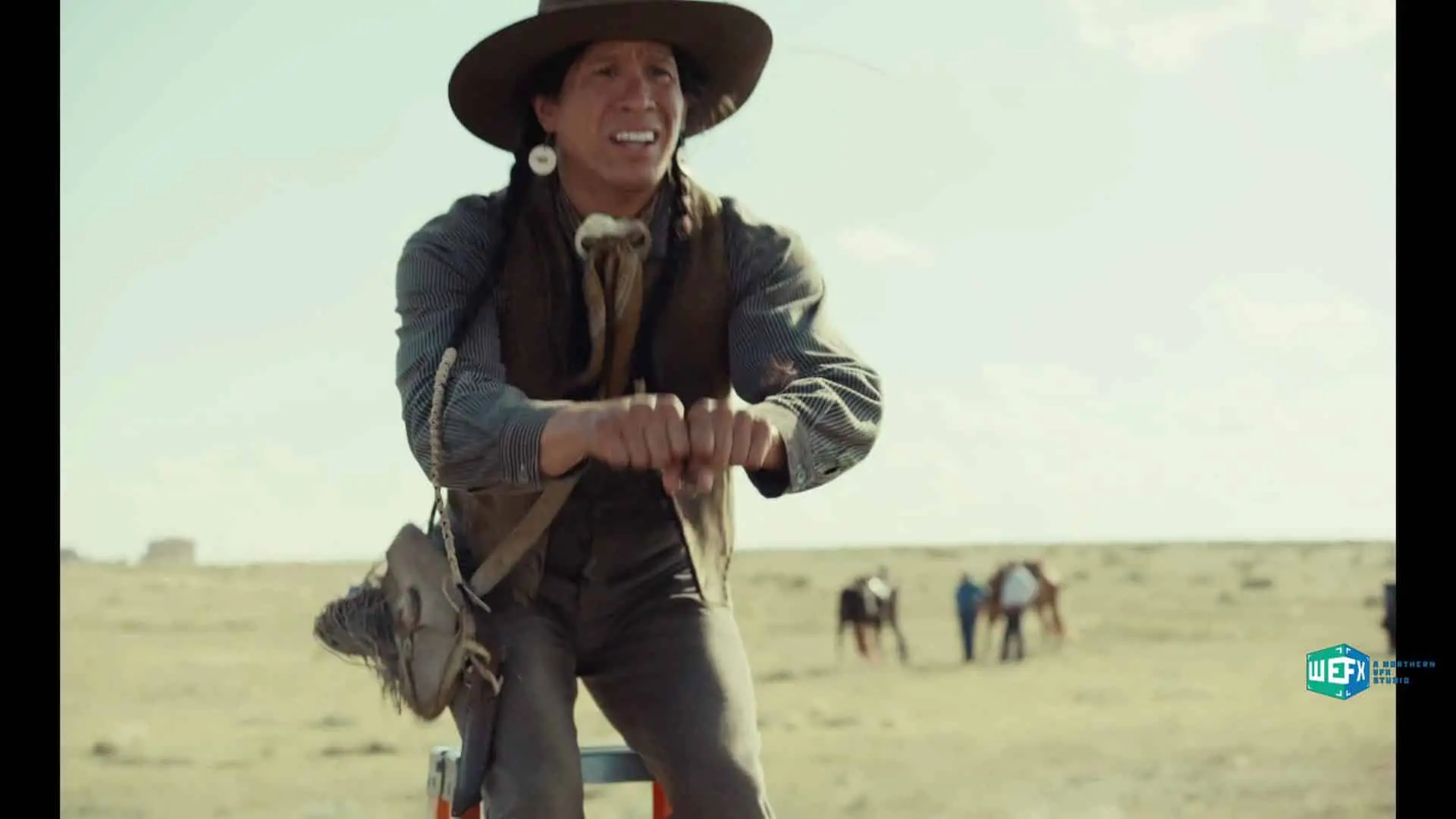
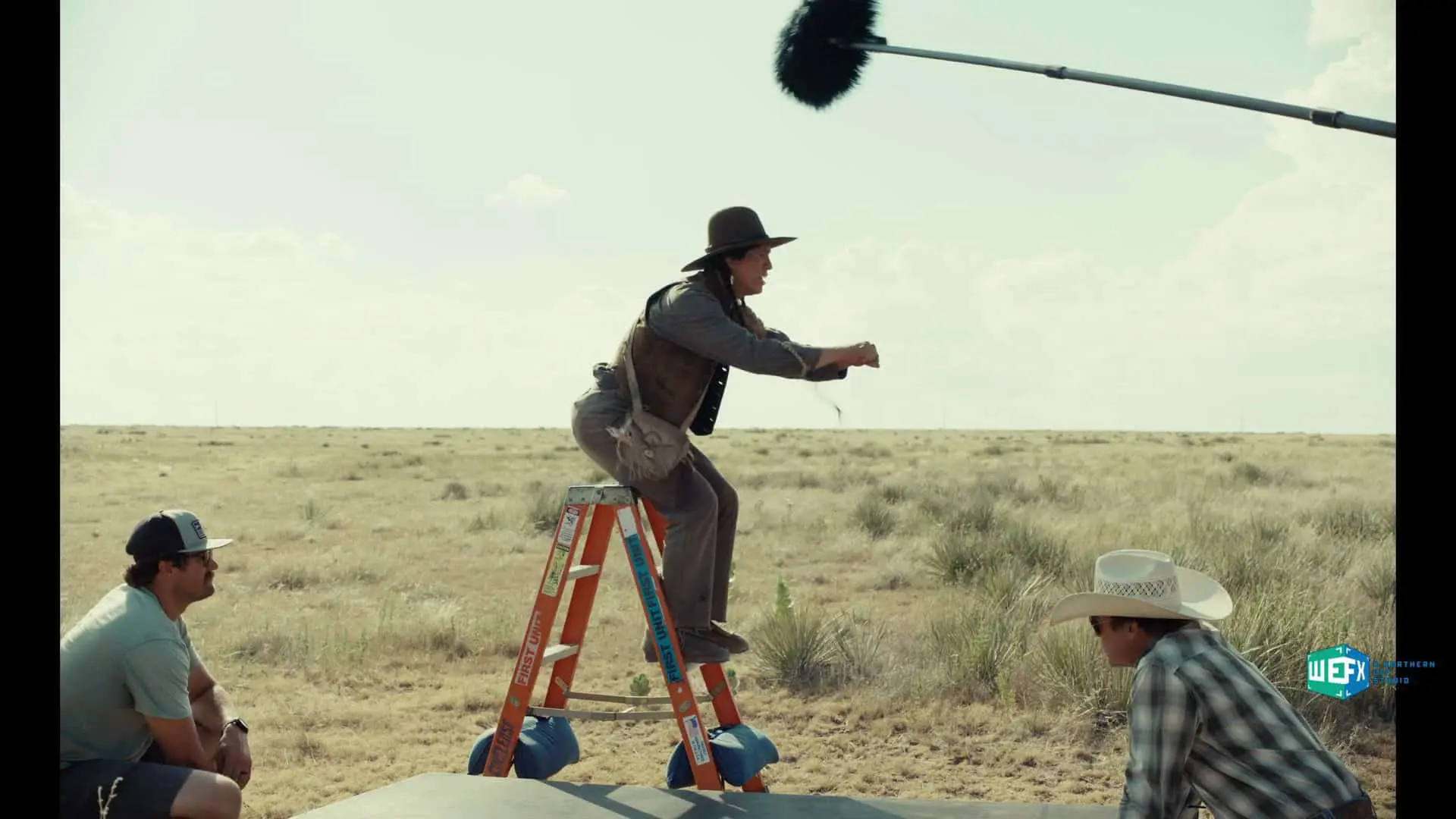
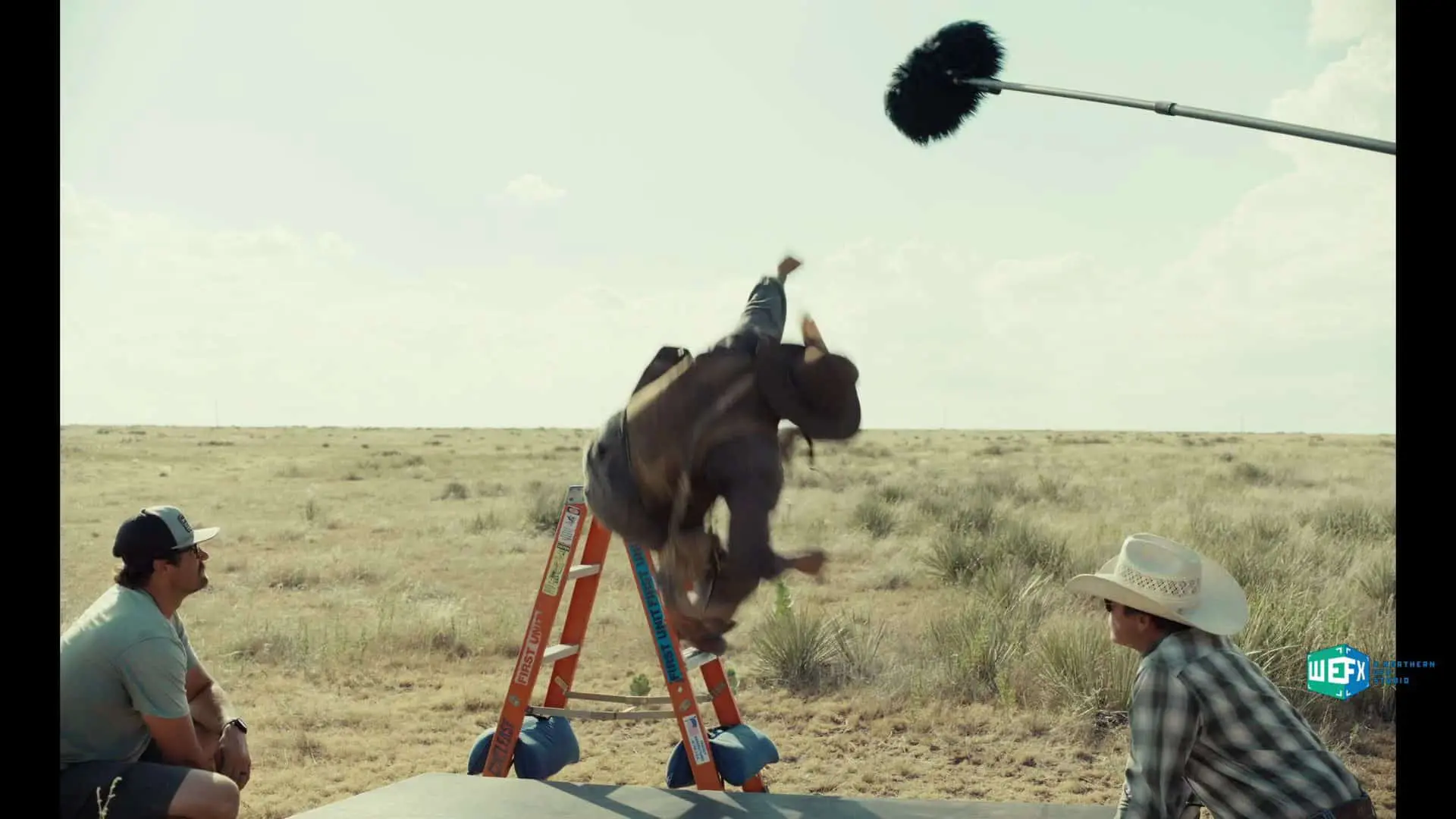
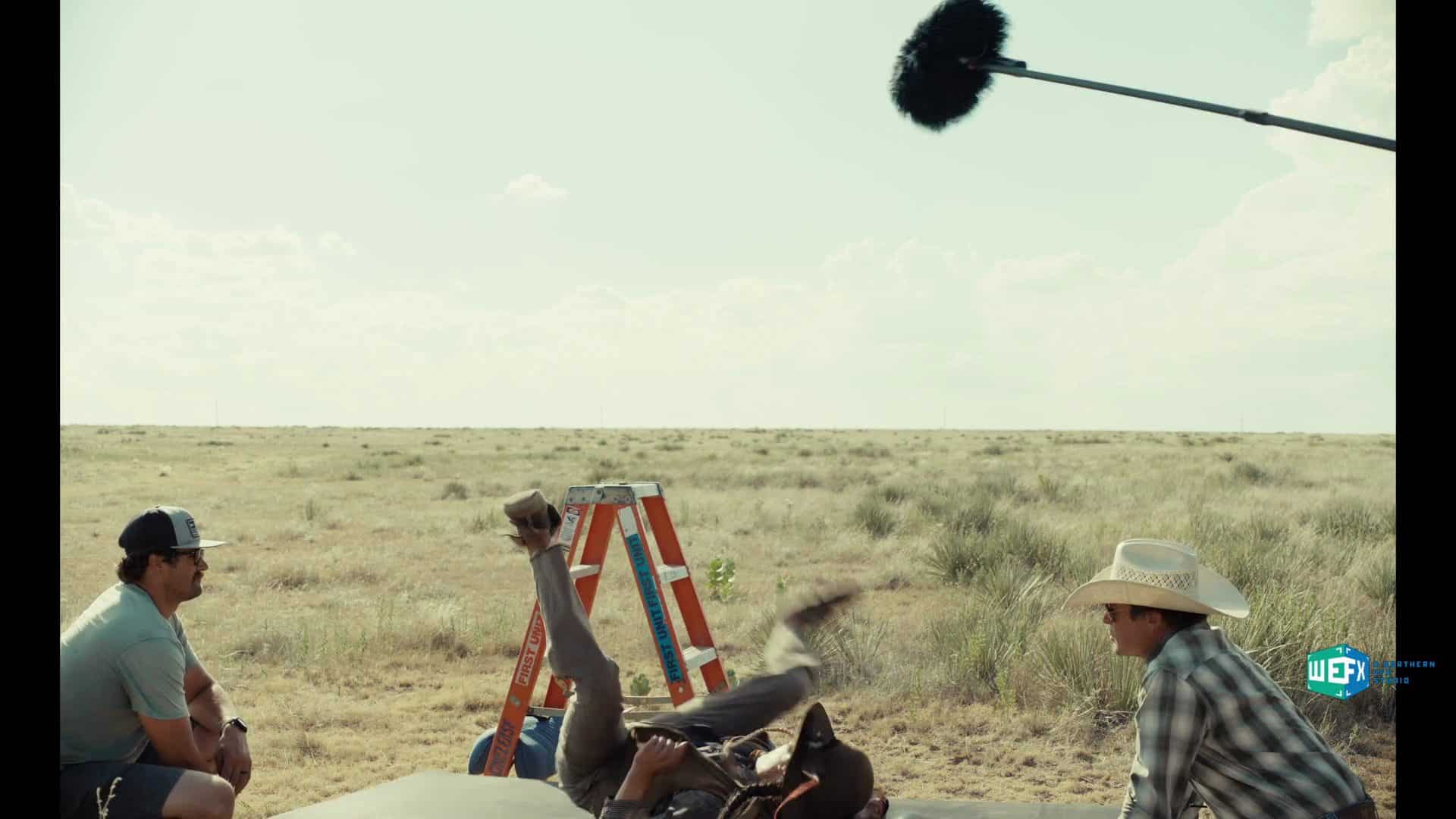
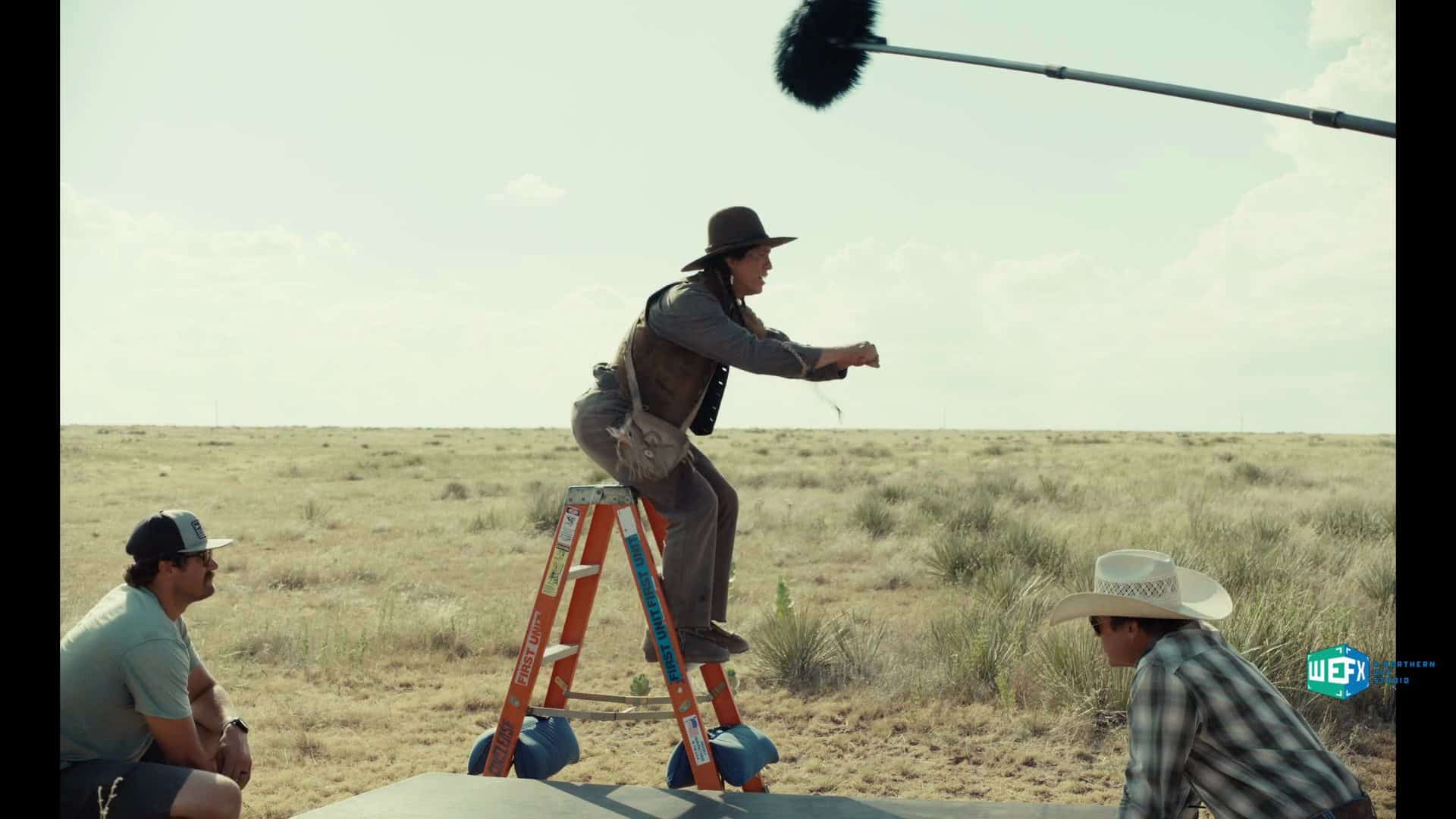
Ryan Ng: There were definitely some interesting plates and reference material for this sequence. In one of the hero shots, Pete is actually not on a horse at all, but rather standing on top of a ladder in the middle of the plains. When he is supposed to be thrown off the horse, he jumps sideways onto a stunt mat. Shooting the plate the way they did allowed them to dial in the performance of the actor and put a lot of trust in us to be able to make it all come together naturally on our end.
DP: You’ve worked on a fair share of creatures before. Did that previous experience translate directly to horse anatomy, or did it bring its new bag of muscular-skeletal surprises?
Ryan Ng: Our team has tackled quadrupeds before- most recently in season 3 of FROM, where we built a photoreal cow. That being said, our creature team, led by Cesar Dacol Jr. (Imdb / LinkedIn), are sticklers for anatomical correctness regardless of whether we are creating an insect or a chimpanzee, so there were no real surprises.

DP: Can you walk us through your creature pipeline for the horse and rider? Which departments were involved from sculpt to final pixel?
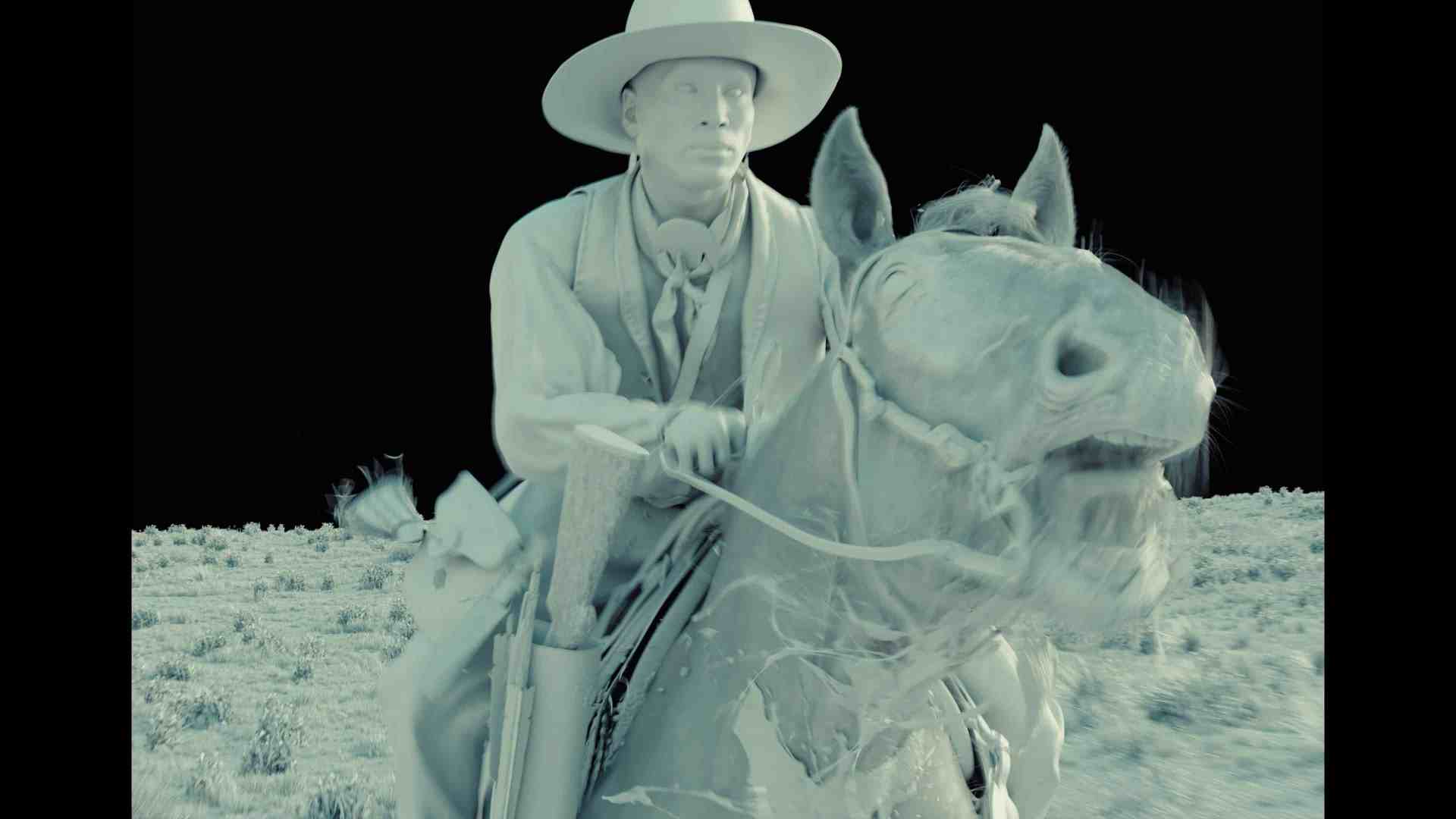
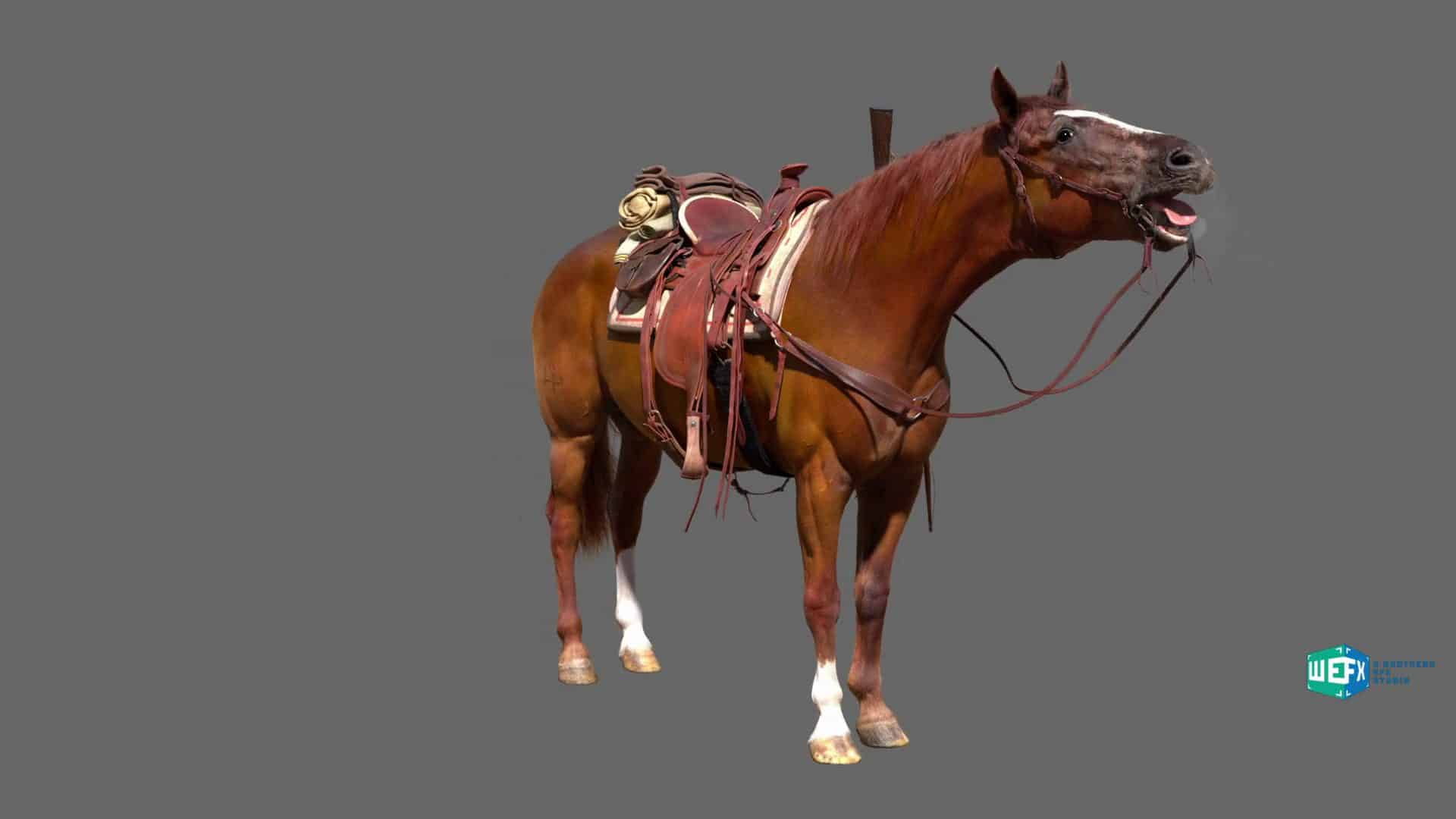
Ryan Ng: The work started with the phenomenal scans of the practical horse we received from Captured Dimensions. These were some of the best scans that we have ever received, and they gave us a great jumping off point.
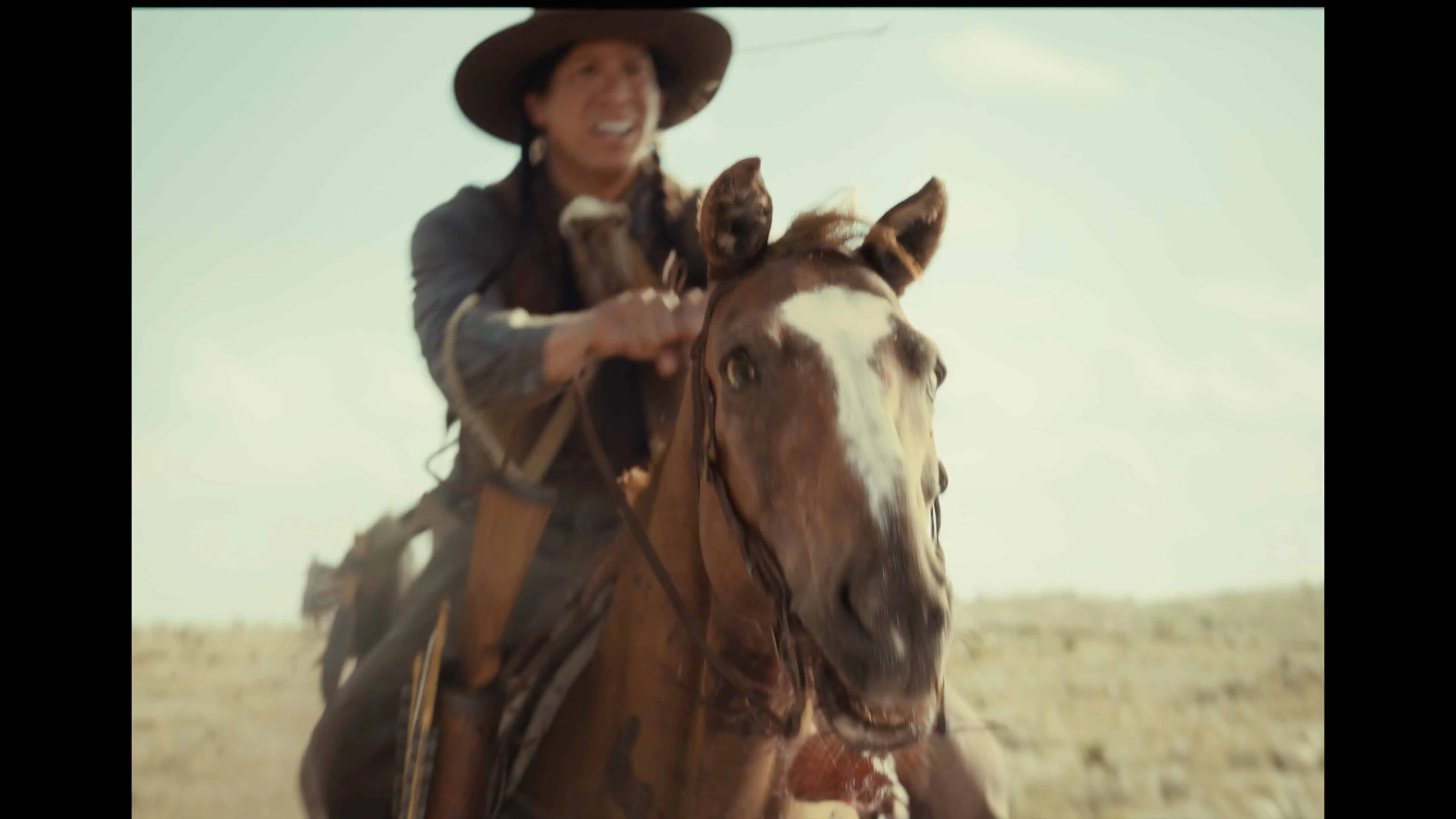
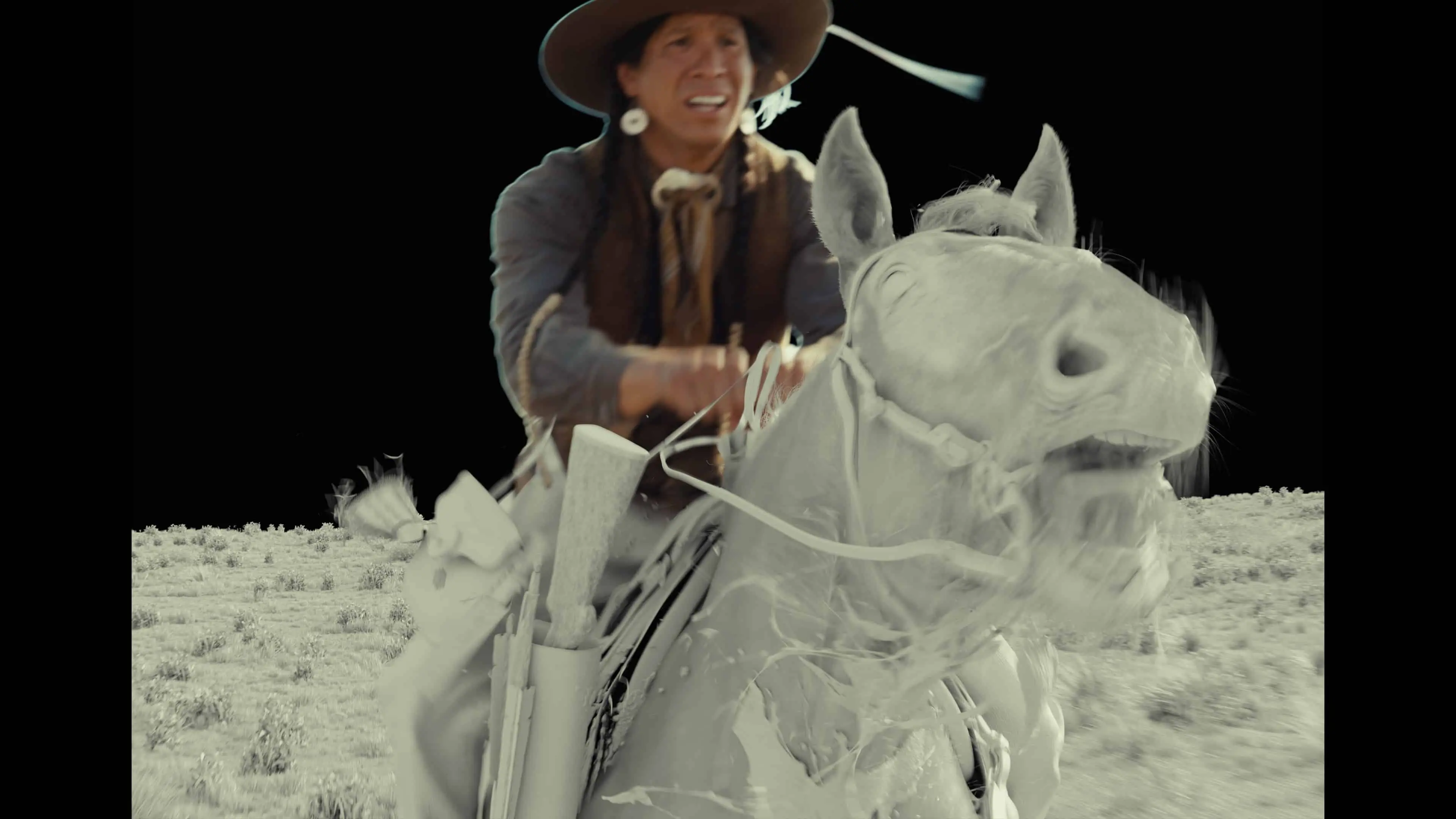
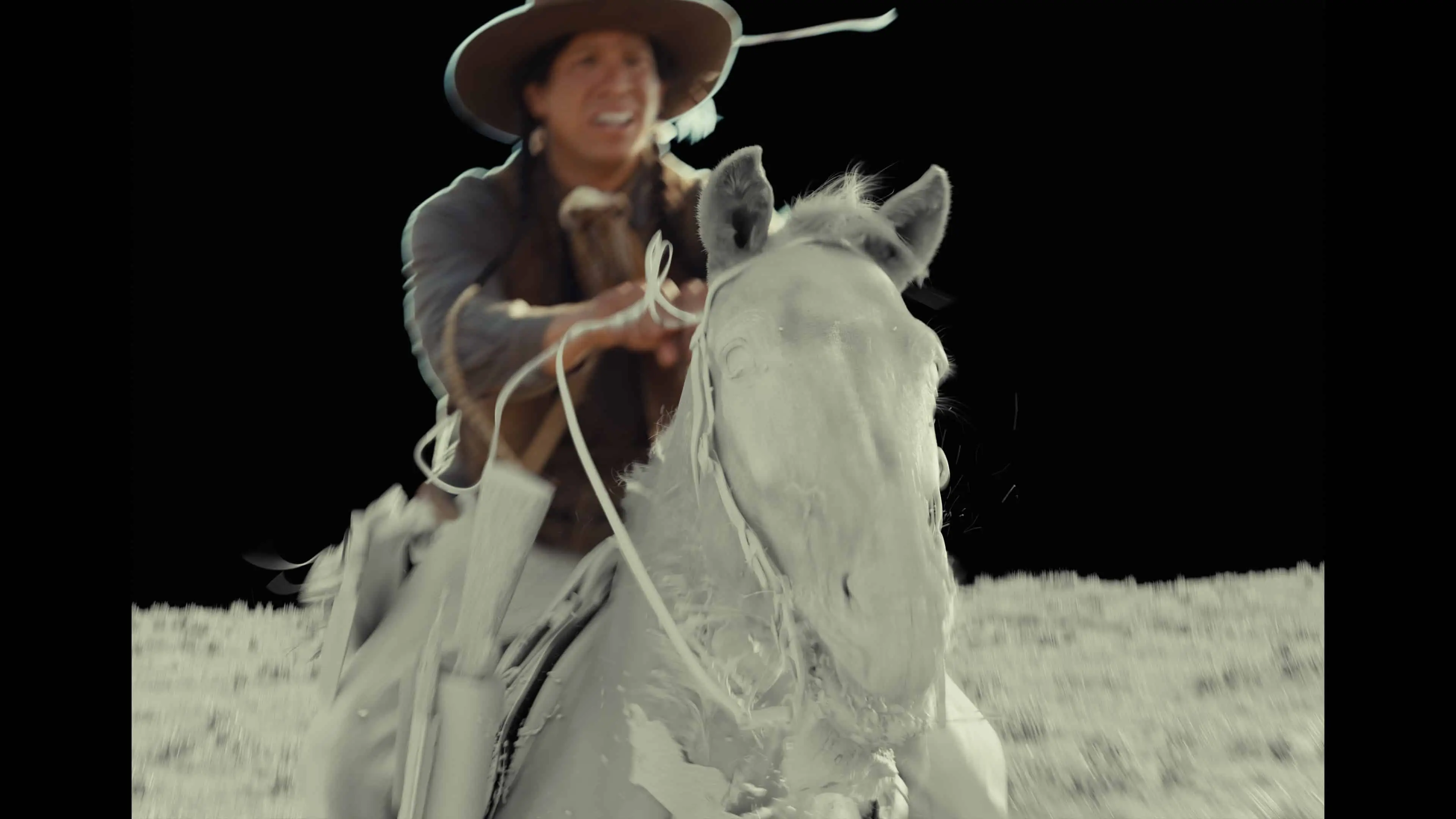
From there, our creature team built out the skeleton, muscle, skin, and lookdev. Our grooming team made sure the mane, tail and body hair were spot on. Final looks went through our Head of CG, Igor Avdyushin (Imdb / LinkedIn), who helped ensure that the natural sheen from the hair carried through.
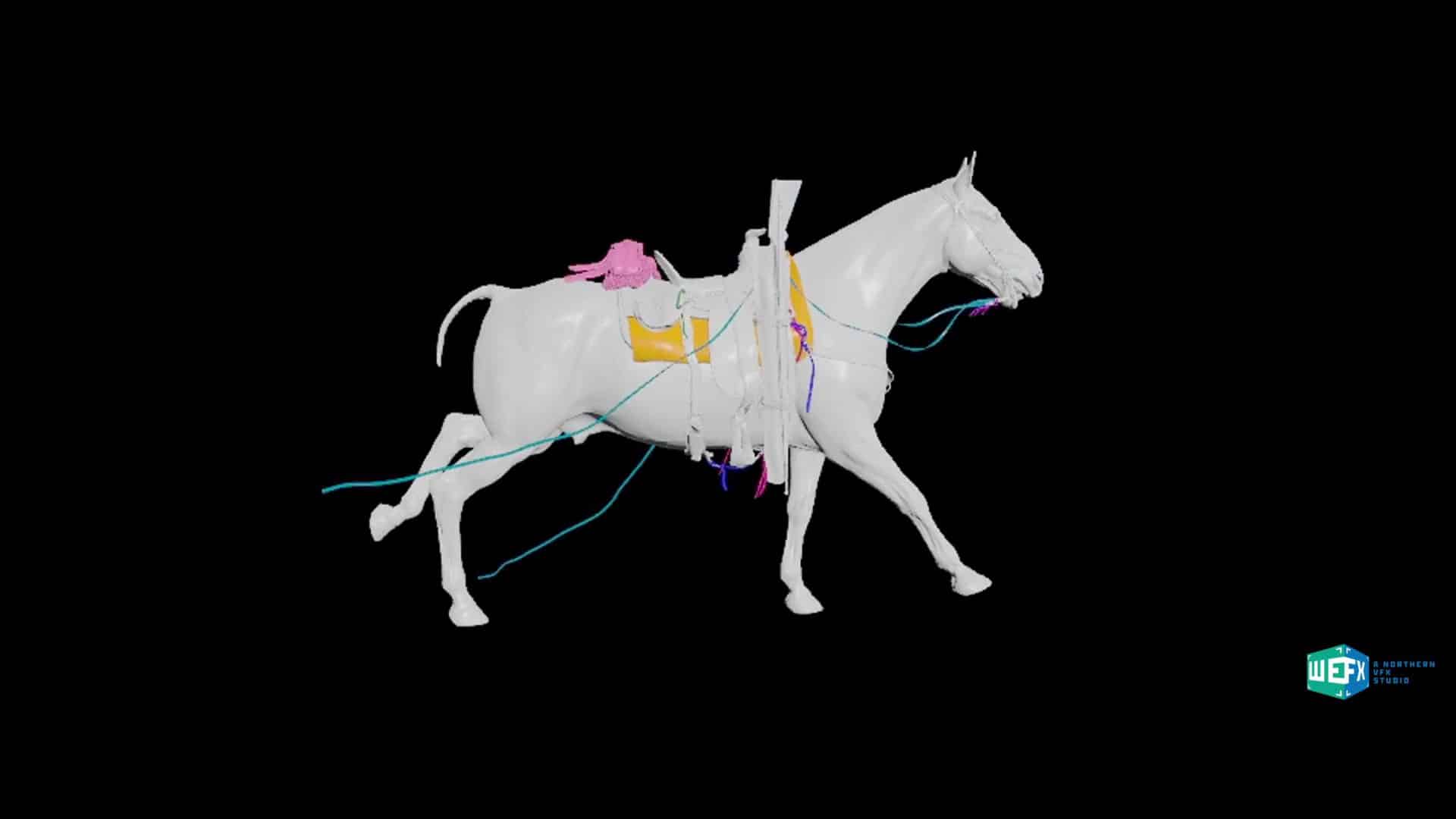
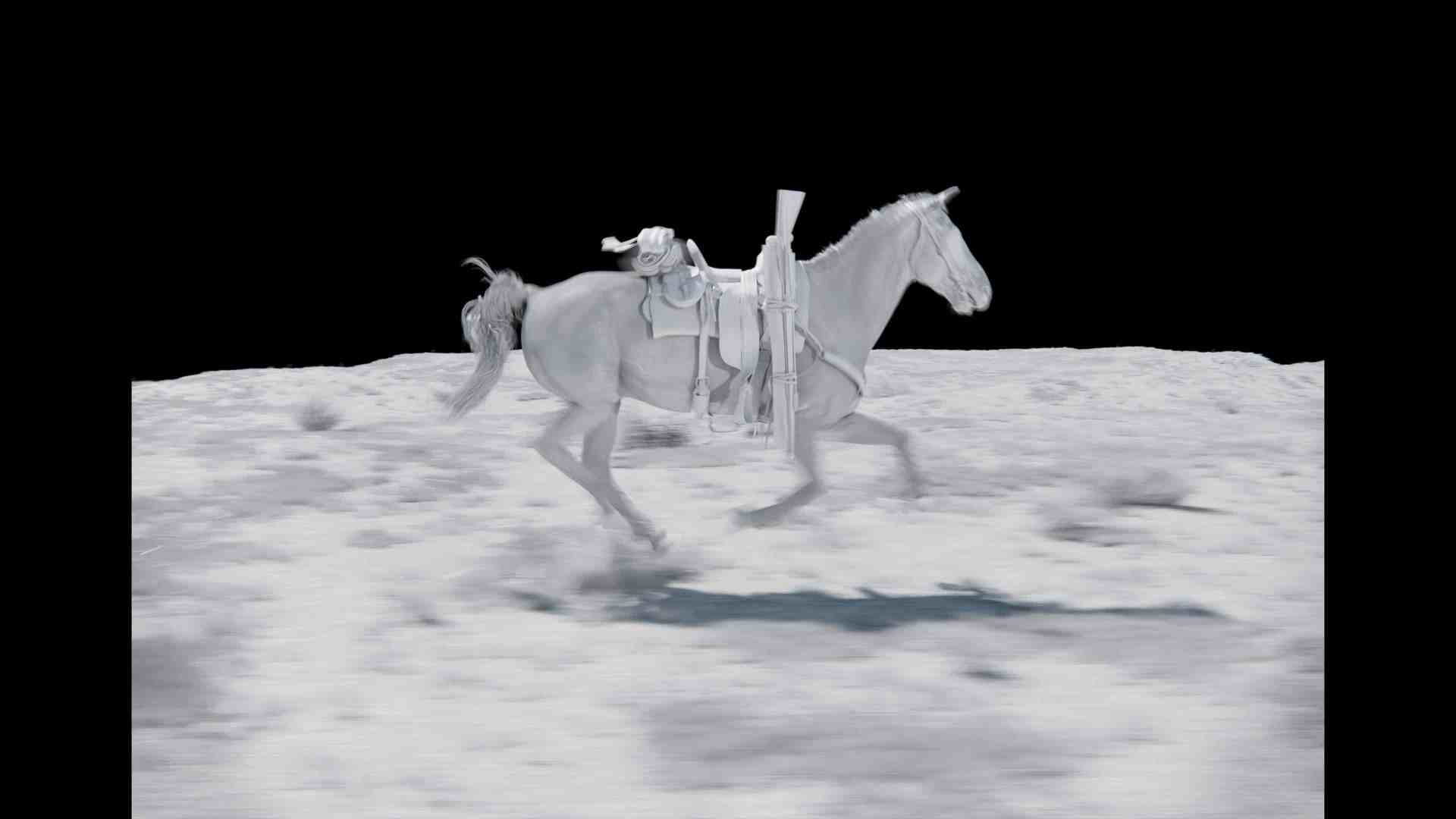
The saddle, reins, and the rest of Pete’s gear needed to be modeled individually so that they were able to be simulated accurately to react to the horse and rider’s movements. This was a massive task, but the team went above and beyond, even going so far as to groom the wool blanket wrapped up on the back of the saddle The horse was then rigged and animated. We animated the entire run sequence at once, from full gallop through to fall and collapse, and following that, made in-shot animation adjustments to ensure that the action was reading well in camera.

Once the animations were locked in, it was time for simulations! On the horse, our CFX team simulated the hair and skin, and our FX team simulated the saddle and reins. On Pete, we simulated his hair, clothing, bag – everything!
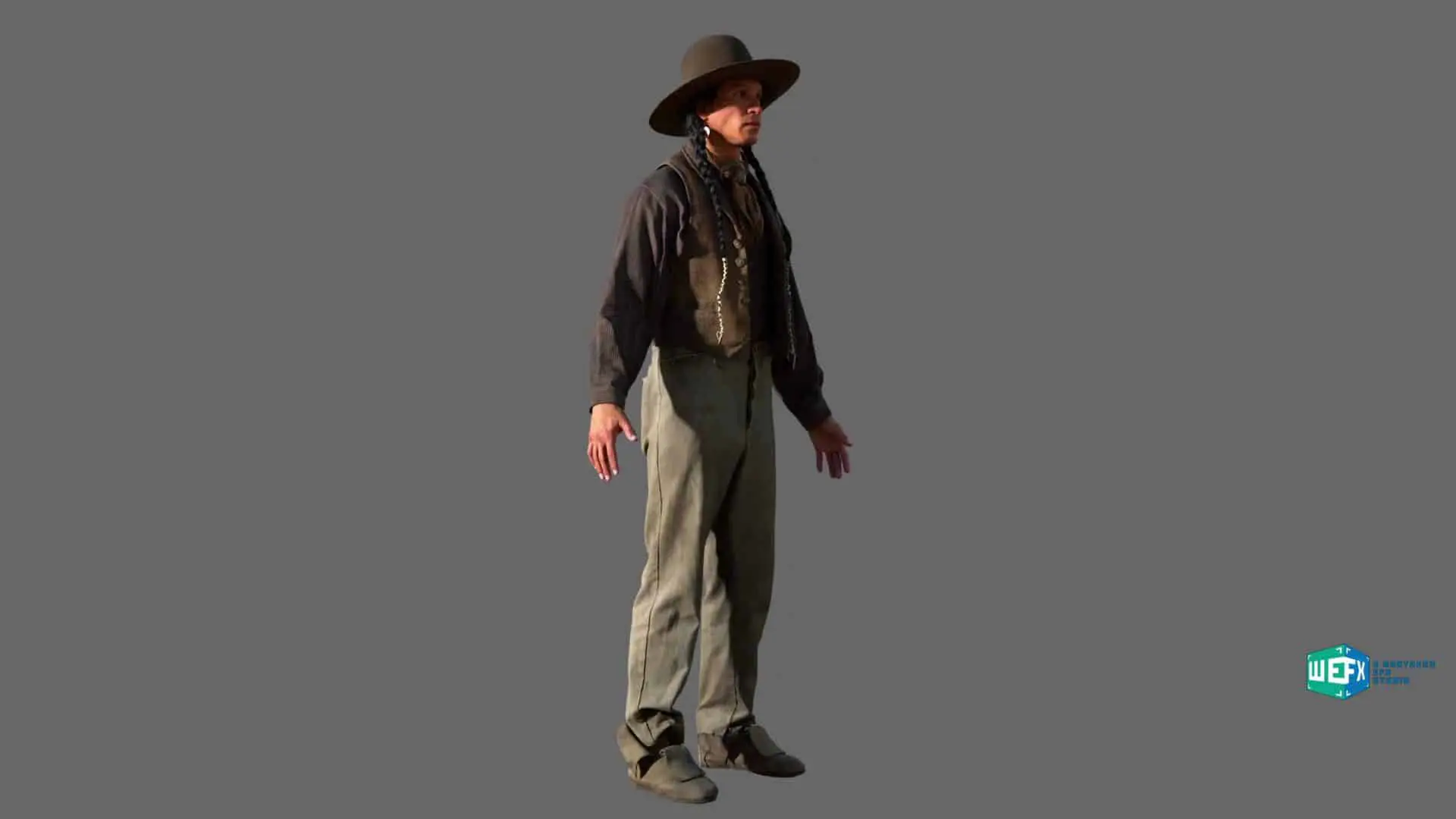
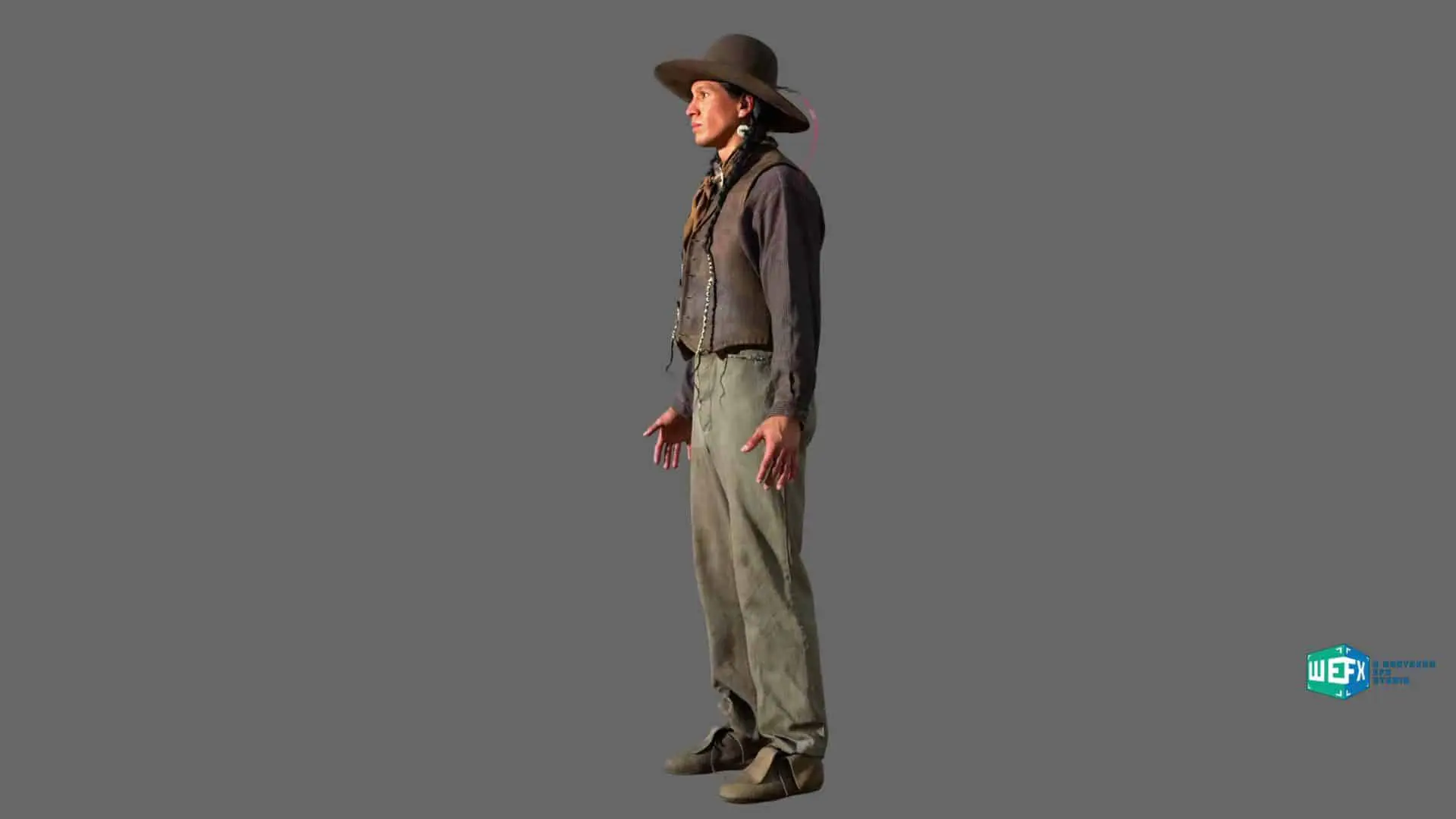
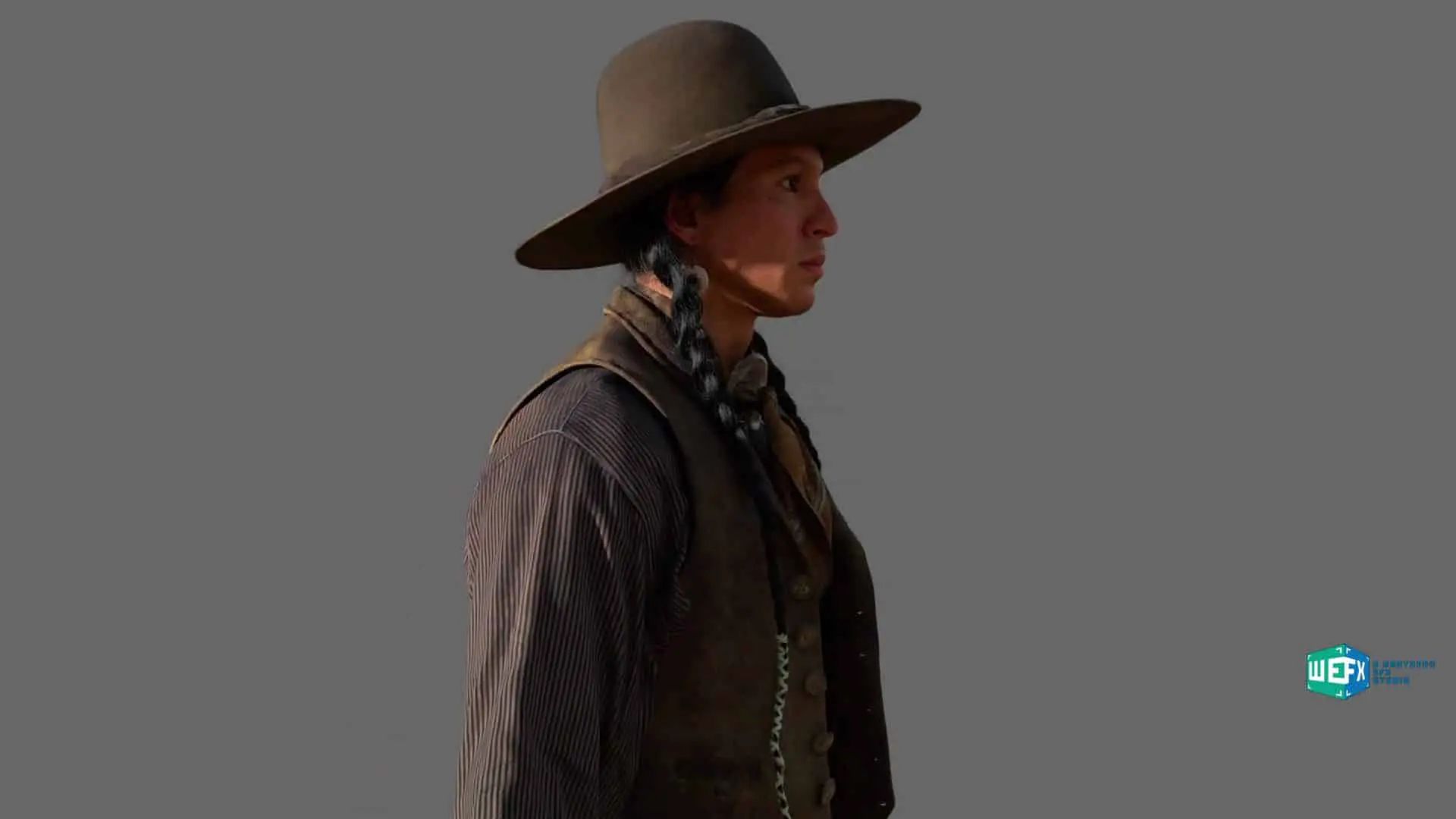


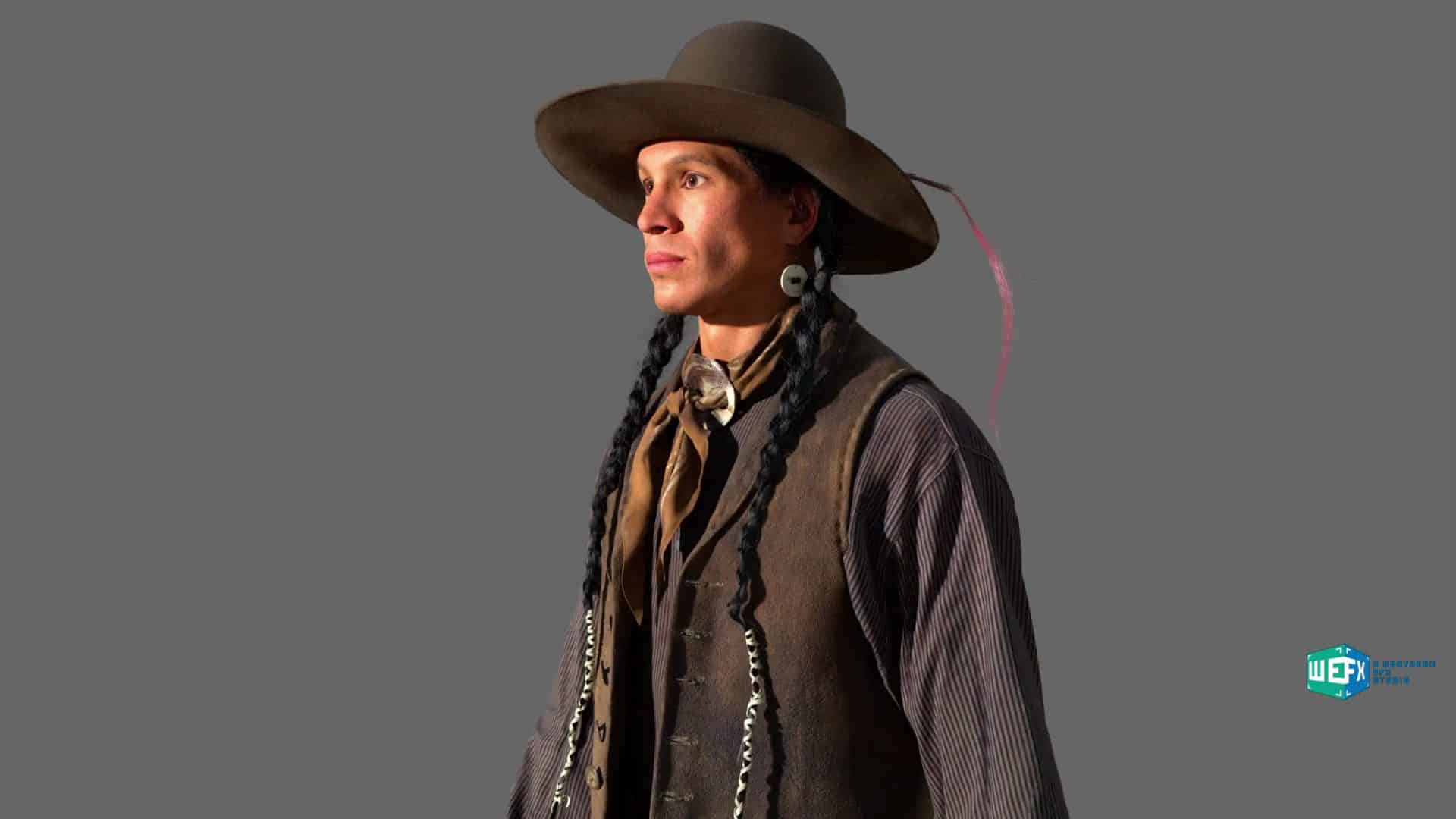
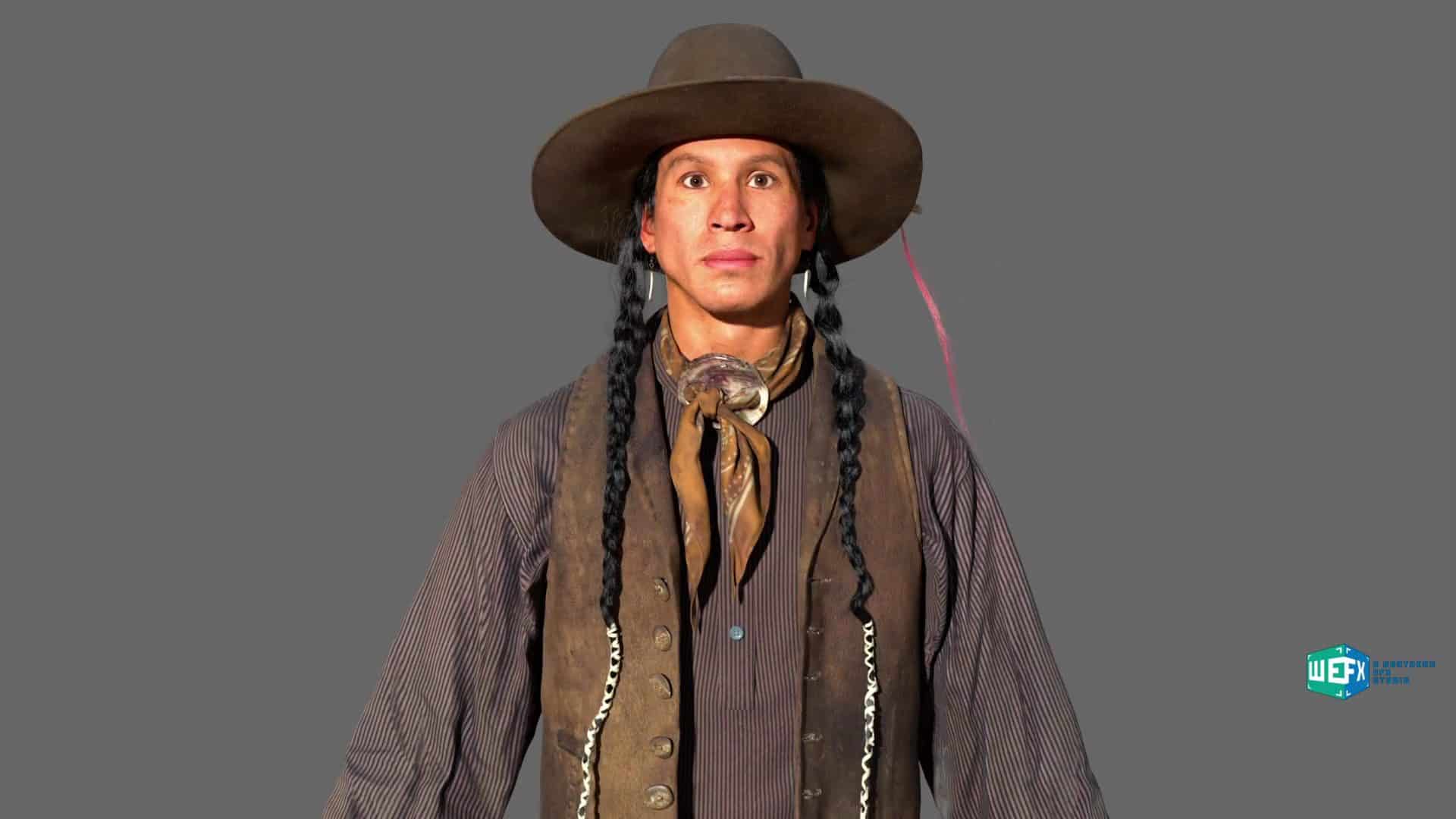
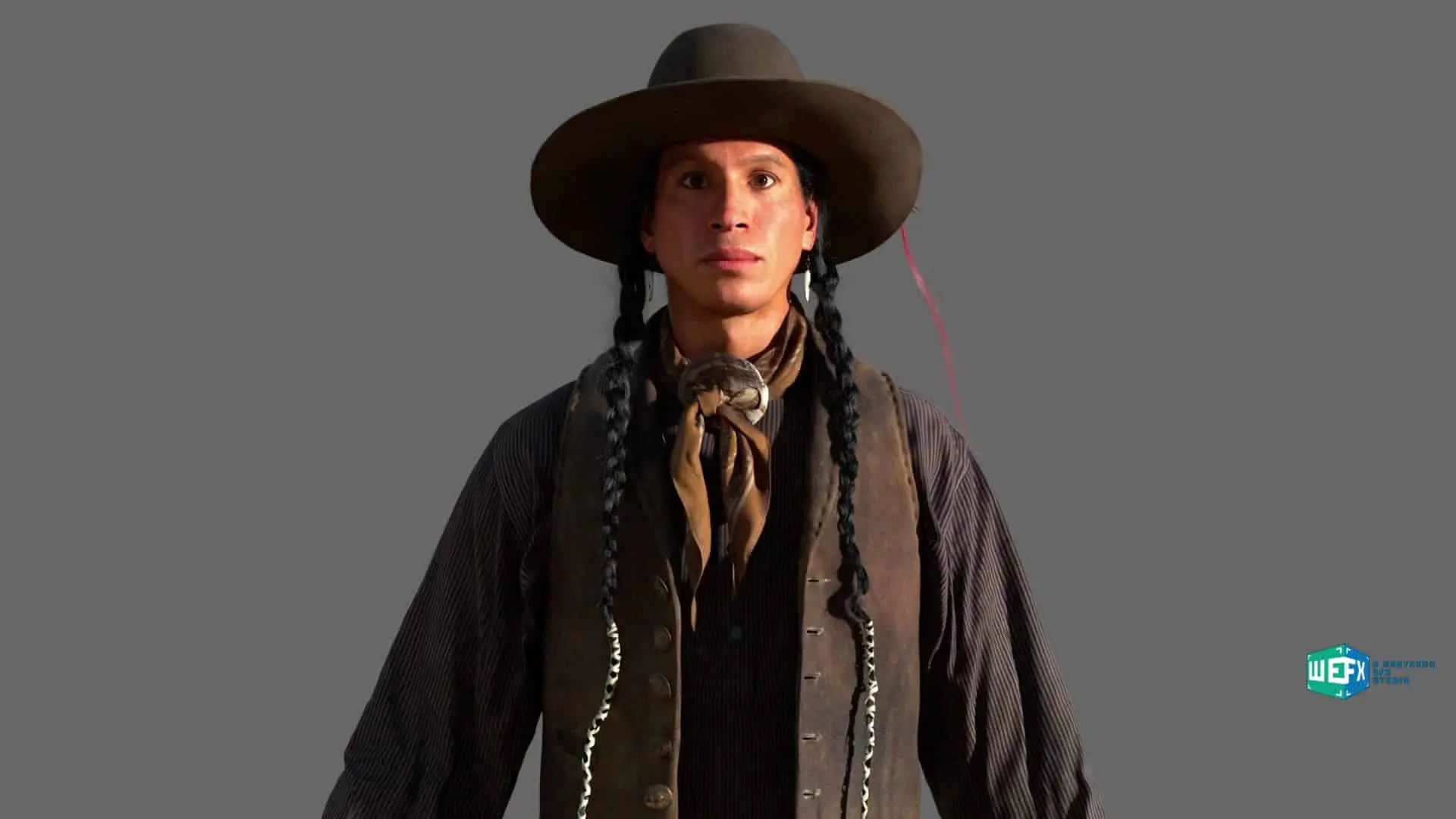
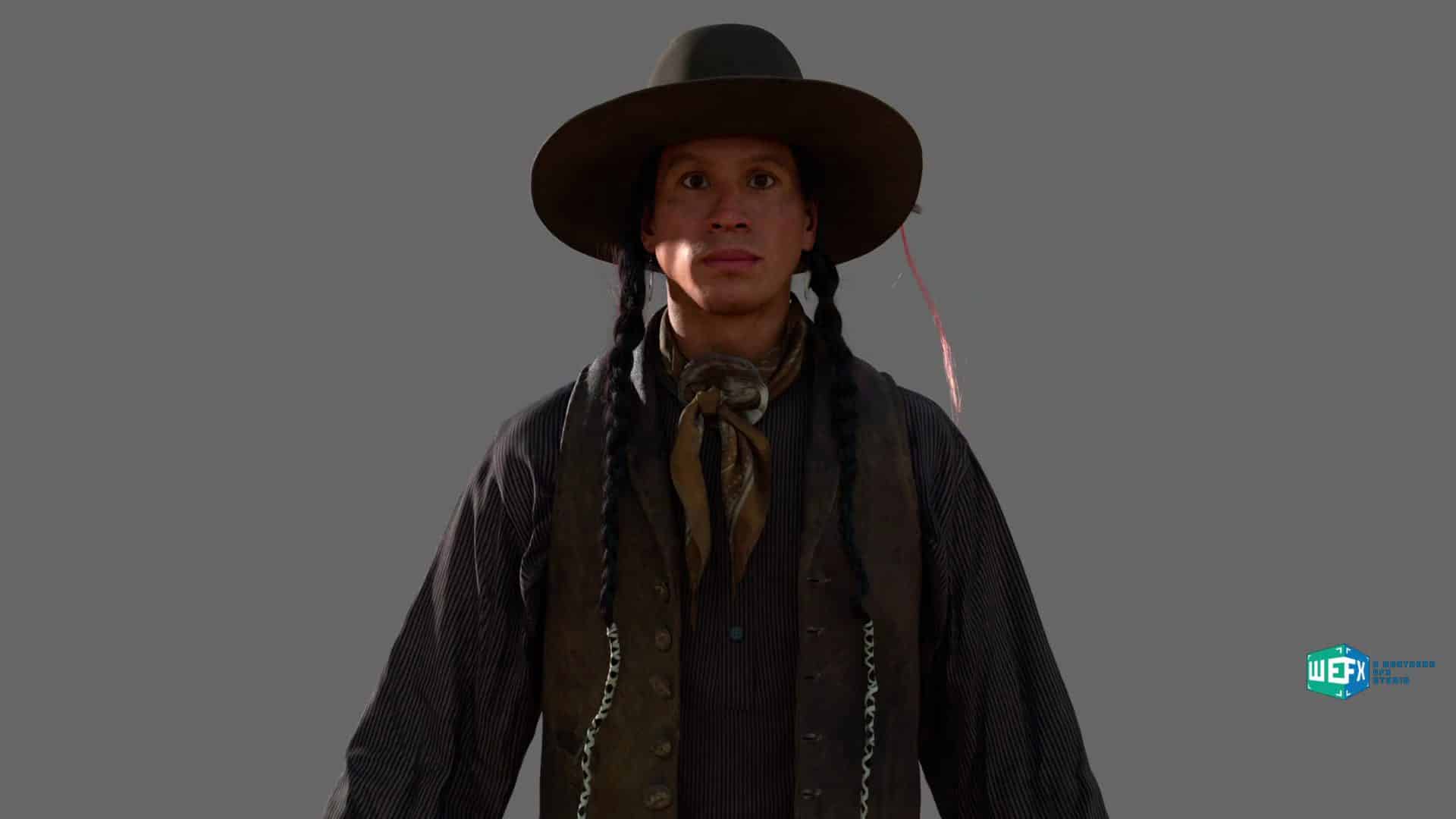
We worked in Deep for this entire sequence, which, while more cumbersome for comp, allowed us to render piecemeal as things were ready: we could render the horse, then the saddle, then Pete, then the dust, so we could more effectively iterate and push some of these substantial renders through. Finally, the comp team was tasked with making it all sit together. Working in Deep was a bit of achallen ge given the number of elements, but it was essential to make the interactivity believable.
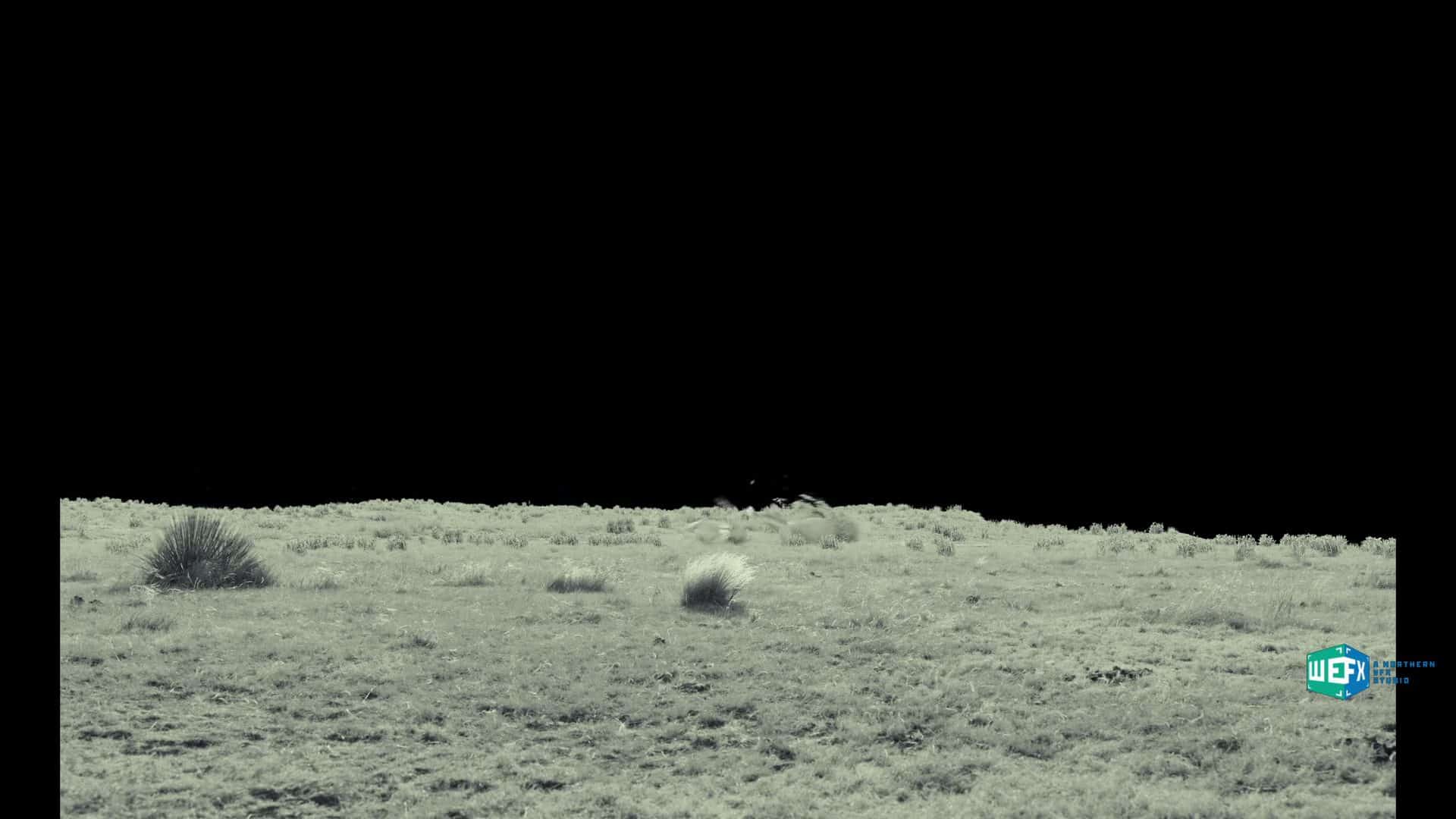
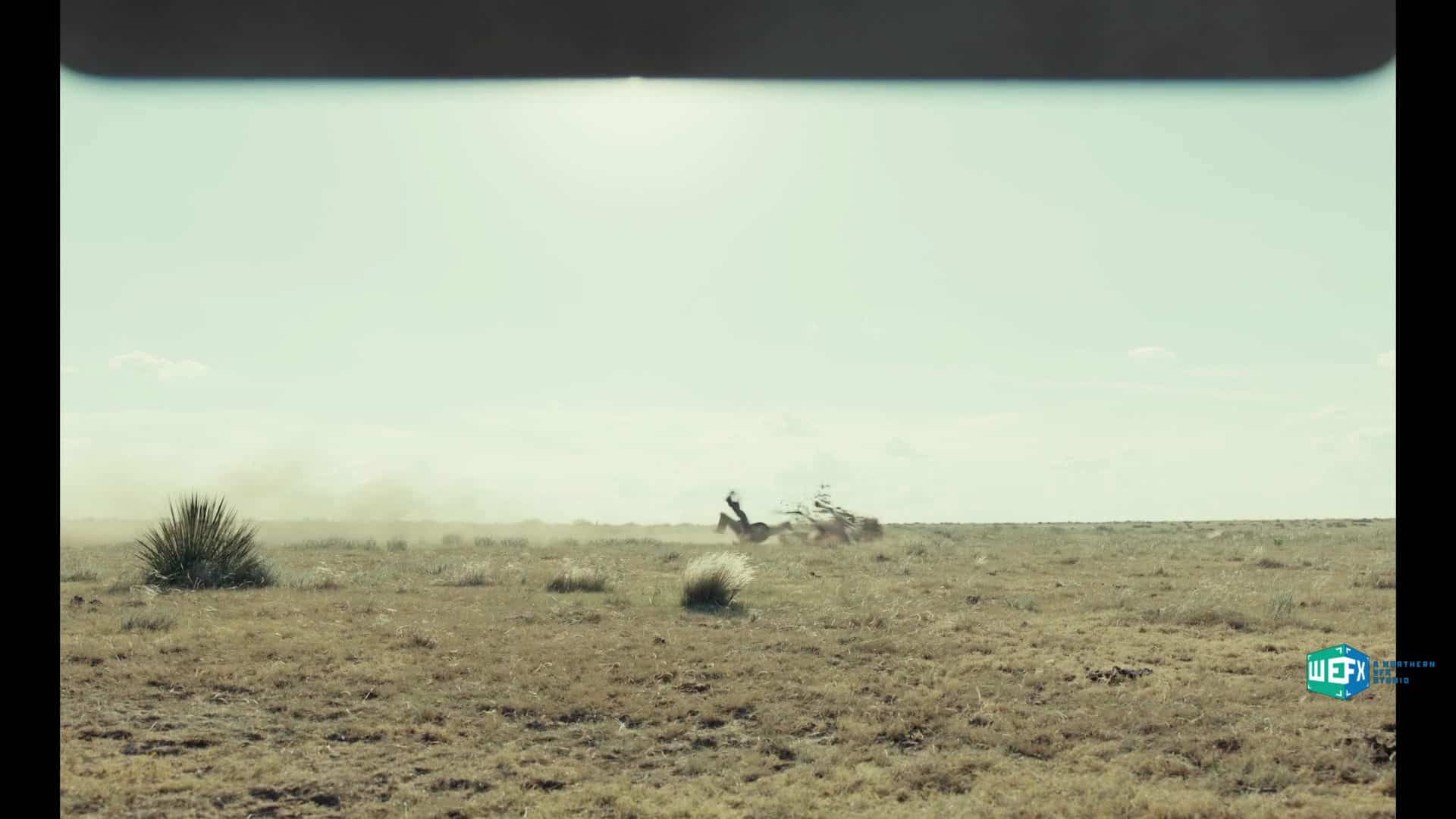
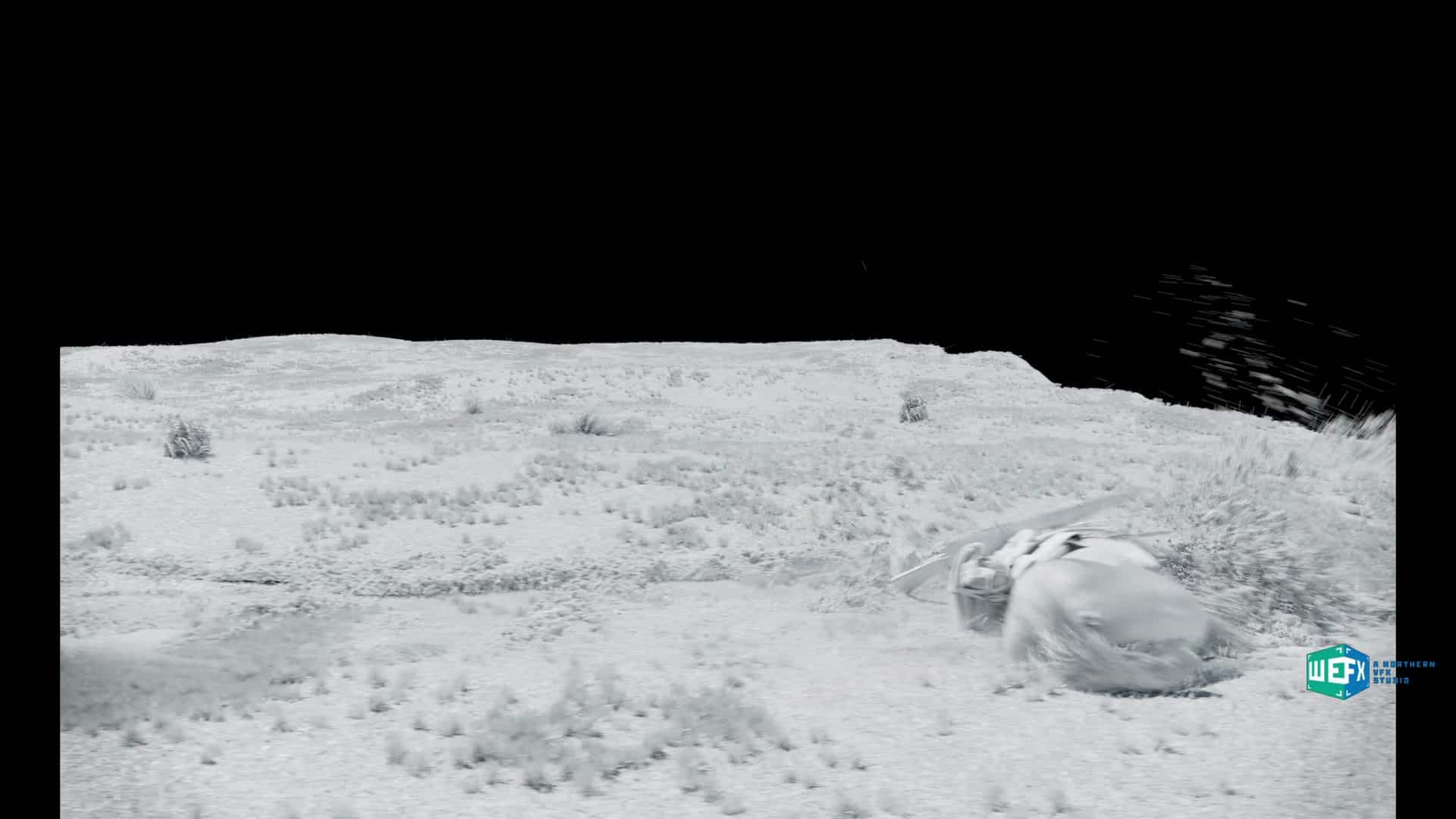
It’s also worth mentioning that our environment team created a hero ground asset to match perfectly with the practical ground on set. This allowed us to easily remove dust from the camera car while enhancing the ground interaction as they fall. We even simulated the foliage they roll over as they tumble to the ground.
DP: What was the initial creative and technical brief? How many iterations did the final Version go through before everybody agreed, “Yes, this is the way a horse dies”?
Mo: The brief was clear and concise from the beginning. There really wasn’t a lot of divergence between what was discussed in our first meeting and what ended up in the final frames. This team knew what they wanted, which made it easy for us to go out and execute.
DP: Did you use a standard quadruped rig, or did this horse get the deluxe custom rig spa treatment?
Ryan Ng: While we did have a quadruped rig in-house, our rigging supervisor, Ethan Lee (Imdb / LinkedIn), made substantial upgrades and adjustments once we actually had the horse model. Our Standard digidouble rig worked effectively without a whole suite of additional controls, but there were secondary simulations on every piece of visible hair and fabric.
DP: Where does muscle simulation end and FX begin? What was driven by the rig, what was simulated, and what was handled in Houdini as an FX pass?
Ryan Ng: Regarding the horse blood and foam specifically, the fact that we had such a detailed horse model and rig allowed us to do a very tight matchmove for the practical horse. That was the key as it let the blood originate from the mouth and interact with the neck and shoulder believably. Our FX team simulated the blood and foam with unique viscosities, but then ran the sims together, which gave realistic intermingling of the two liquids. Our lighters did a great Job with the blood and foam, too, giving us incredible transparency and spec as it passed through sections of light and shadow.
Regarding the horse specifically, we build everything from the inside out. First, the skeleton, then the muscles, fat, and finally the skin. All of our animations had muscle and skin simulations run on them once we had approval. One final step was shot sculpting: after the simulations were run, our shot sculpt team did a final pass to smooth things out and add the final touches.
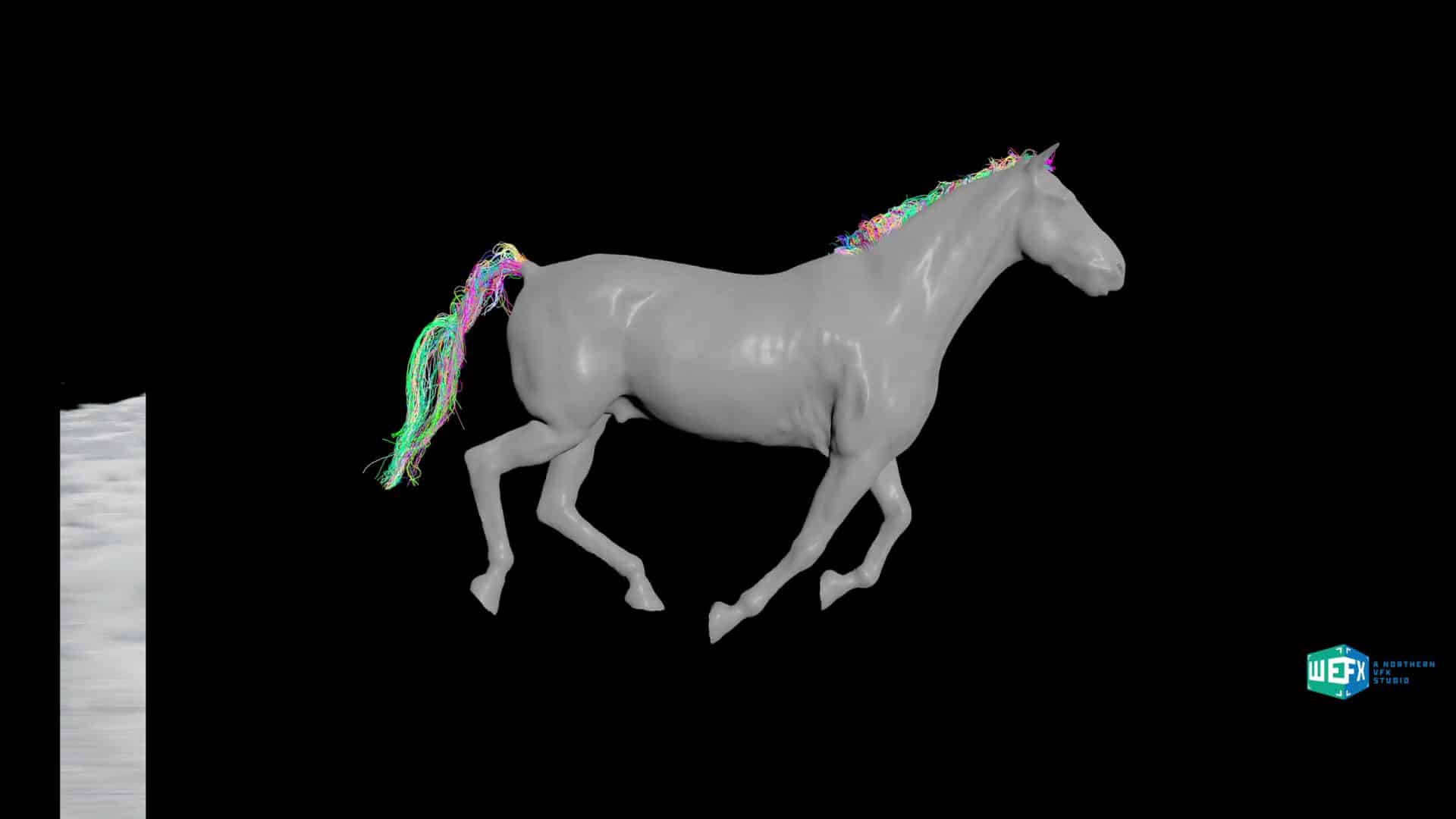
DP: Speaking of: How did you approach fur and tail/hair simulation? What’s your preferred toolbox these days for grooms and secondary dynamics?
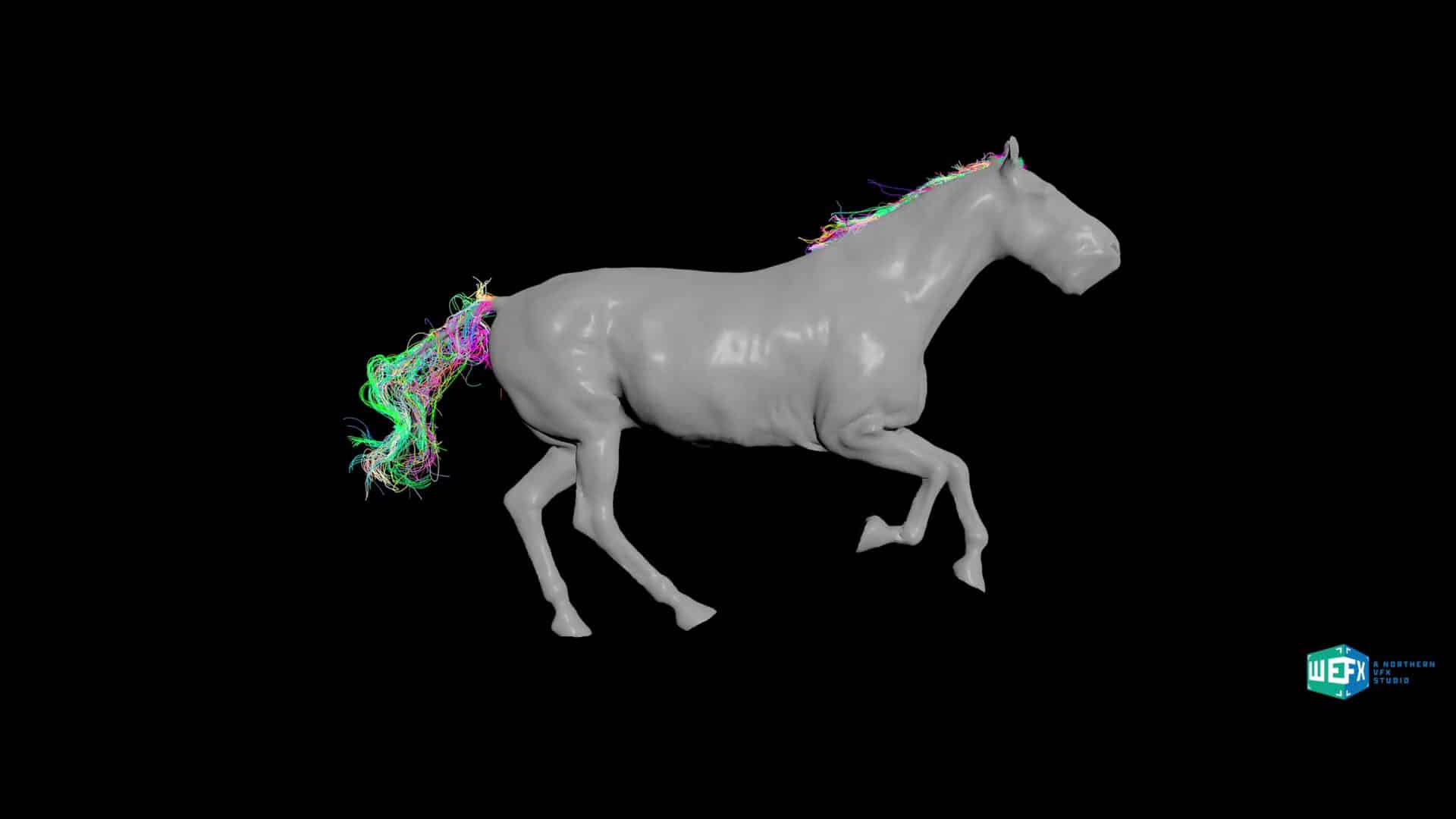
Ryan Ng: All of our grooming and sims are done in Houdini. The tail simulation took quite a bit of work to nail down. We had to test adjusting the position and animation of the horse’s tail bone and then run the sims quite a few times before it felt natural. Animating that bone was a challenge because it’s always hidden underneath the hair, and it drives so much of the way the tail hair falls.
DP: What about lighting and comp – any particular tricks to match the practical plate? Or was it “Just throw more dust on it and hide the seams”?
Mo: It all started with our lighting team matching the conditions of the day. We had lots of great reference of Pete and the horse on location, which we used to dial in the look precisely. We tested until we had a perfect match. Sometimes this meant updating the light rig; other times it meant going back to the asset.
We always try to have our 3D render be as close as possible to the finished look, therefore, we rendered in Deep so the comp could really focus on the final touches and integration. Deep, of course, can be a challenge to work with in comp, but it was an absolute necessity for seamless integration of the horse, dust, and environment. Rendering in Deep also meant that we were able to render individual passes and update them piecemeal without needing to re-render everything each time there was an update. Our team, led by comp supervisor Ehsan Ramezani (Imdb / LinkedIn), were unfazed and did a great job bringing our 3D elements together seamlessly.
DP: What was your team most proud of in this sequence?
Ryan Ng: There is really so much that we are proud of here. Both Pete and the horse are representative of the strength of our creature team and how much they’ve grown. We really believe we have some of the best creature artists in the market, and we were so happy they got to flex their muscles on this one.
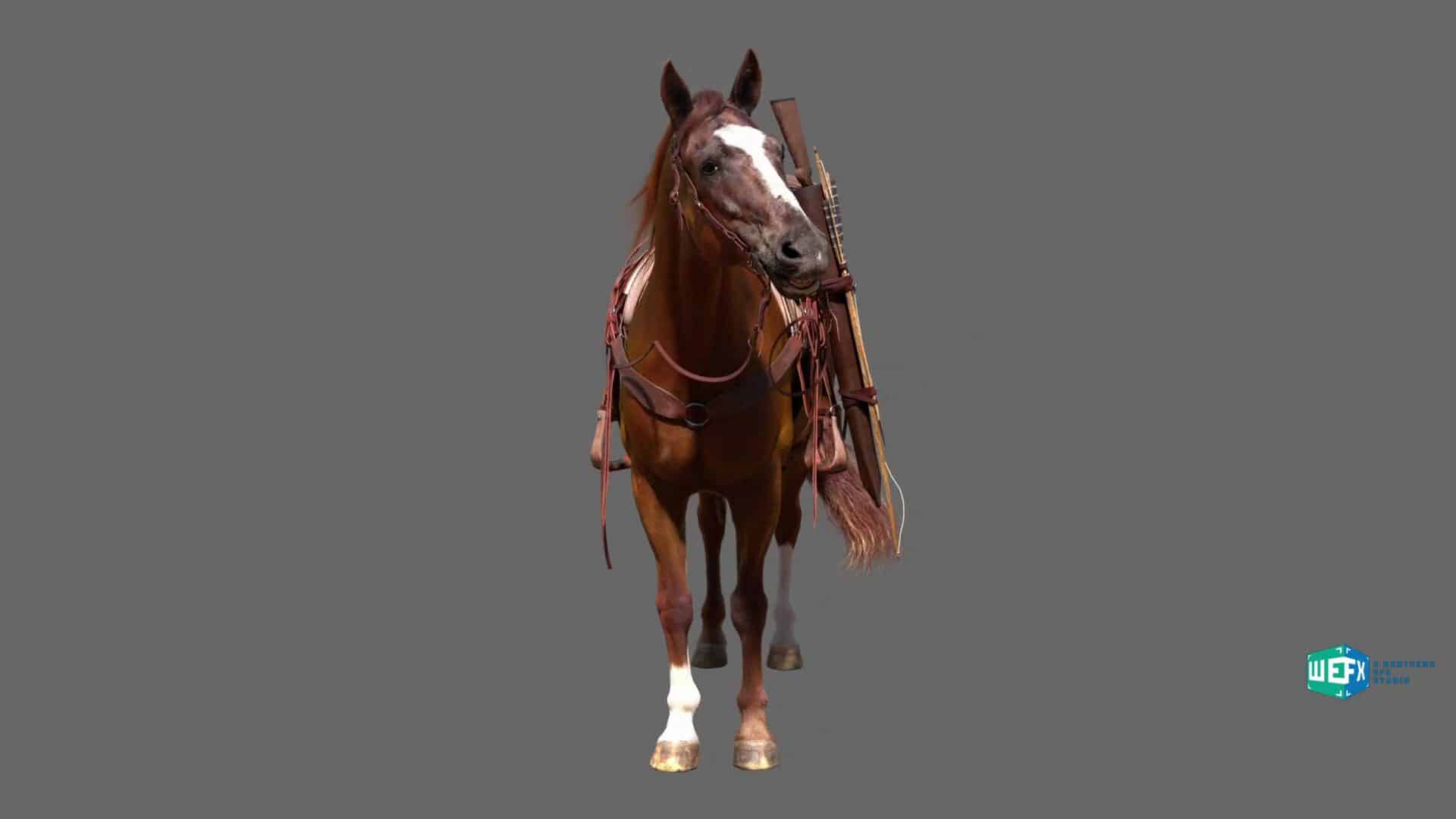
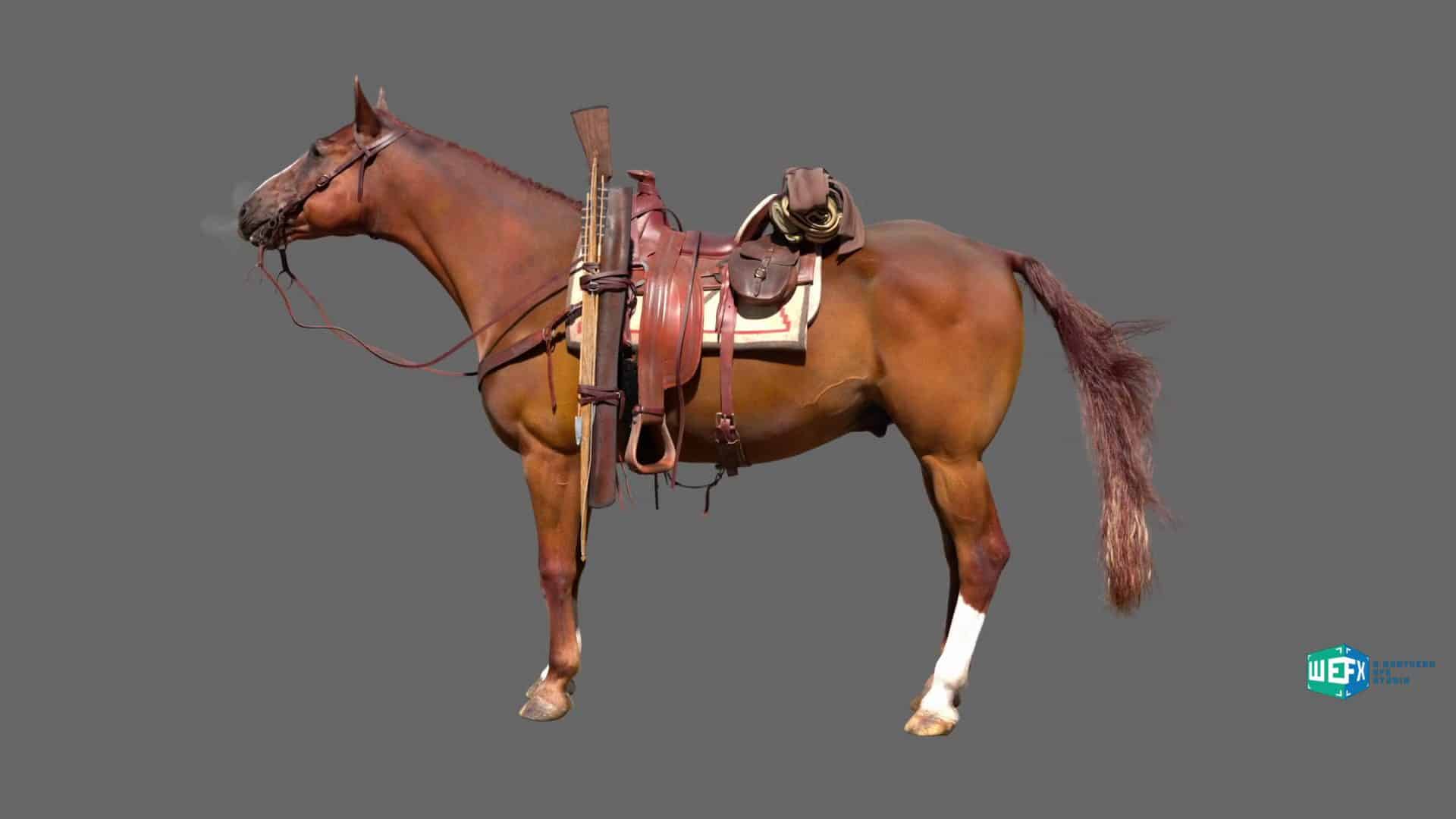
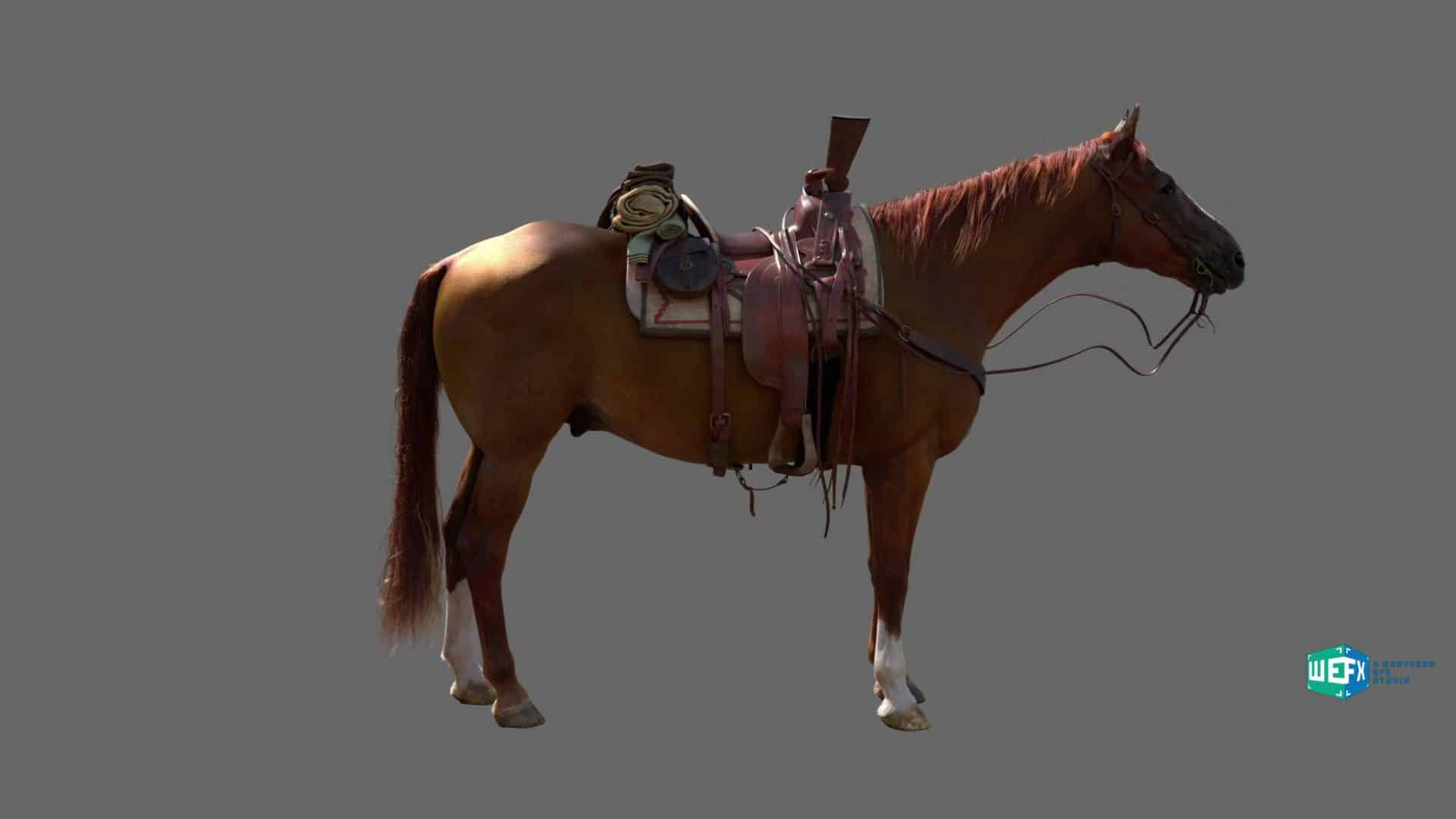
Our environment and asset teams were also phenomenal. The plains ground environment ended up being way more involved than we initially anticipated, and Andre Ko (LinkedIn) and Hyelee Park (LinkedIn) did a wonderful job. On the asset front, again the level of detail and intricacy involved in the saddle build was next-level. Our animation team, under the leadership of Fernando Gallo (LinkedIn), owned the horse animation cycle, and they did a stunning job from previz run cycle to final shot animation.
Our FX & CFX teams, led by Vimal Mallireddy (Imdb / LinkedIn) and Jesús Guijarro (LinkedIn), did an amazing job with realistic FX – dust, ground interaction, plant interaction, sims on the cloth, saddle, reins, and of course the blood and foam. Our lighting crew, led by Viduttam Katkar (LinkedIn), spared no expense on this as we talked about before: perfect lighting was a prerequisite for comping these shots successfully, and they exceeded the bar.
Finally, in comp, as is always the case, time can get tight, and when working in Deep, Ehsan and our crew did just an incredible job delivering the shots you see in the show. I know we talked about a lot of people here, but it can’t be overstated how much of a team effort this sequence was.
DP: If you could give yourself a piece of advice before starting this project, what would it be?
Mo: As a rule of thumb, we treat every show that enters WeFX the same way. We hold ourselves to an extremely high bar: in a saturated market, every piece of work that leaves our doors needs to be representative of the talent that we’ve put together. Being a fan of this franchise, we really wanted to make sure we enjoyed watching our work on the screen.
DP: What’s next in the pipeline at WeFX that you’re allowed to talk about?
Mo: There’s a lot of fun stuff happening these days at WeFX. Our creature, FX, and environment teams are gaining a reputation, so more of that work is coming through the studio these days. We recently released reels for our work on Reacher Season 3 and In The Lost Lands, both of which were heavy on environment and FX work. We have a few more projects in house currently, which are also keeping the team busy: let’s chat again when they’re out and we can share all the details!
