



Table of Contents Show
Why watch Walking with Dinosaurs? Because where else can you see scientifically vetted dinosaurs with better fact-checking than your newsfeed (Not a high bar these days), storytelling that won’t have palaeontologists rolling their eyes, and a BBC tradition of documentaries that’s older than the fossil record. No door handles, no roaring inaccuracies—just prehistoric drama with actual research behind the protagonists.
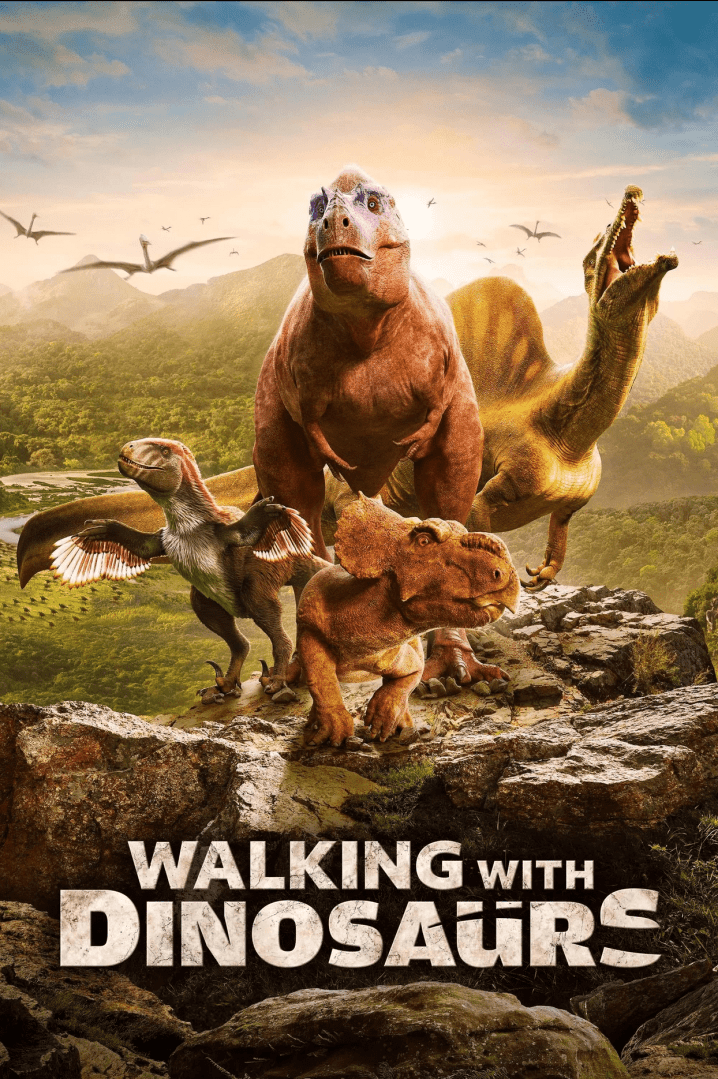
But how do you deliver 800 shots of CG dinosaurs, avoid the Jurassic Park effect, and keep the raptors from opening doors? For Lola Post, the answer involved two years, 200 artists, a lot of Unreal Engine, and not a single creative liberty without palaeontologist approval. In a Digital Production exclusive, Rob Harvey (Creative Director, Lola Post) explains how the London-based VFX studio handled BBC Studios’ 2025 reboot of Walking with Dinosaurs, what kept the production pipeline from extinction, and why their animators are still haunted by burning forests and underwater Spinosaurus.
Let’s talk about Lola
Lola Post is an independent visual effects studio based in London, specializing in CG animation, creature work, and natural history productions for broadcasters including BBC Studios, ZDF, and Apple TV+. With a 25-year track record, Lola Post is known for delivering complex sequences on time and on budget, and for applying rigorous scientific scrutiny to every feather, scale, and eye blink in their digital creatures. And if you are confusing that with Lola VFX: The Beauty Shop came later.
Rob Harvey is the founding Creative Director of London’s award-winning Lola Post Production, a visual effects boutique launched in 2000. With a pedigree grounded in blockbuster film VFX, Harvey earned an Academy Award for Best Visual Effects on Gladiator (2000), sharing the Oscar with his colleagues. Under his leadership, Lola Post has been acquired by Milk VFX but remains a distinct entity, continuing its focus on factual and creature-driven work.

Harvey’s credits reveal a career that spans major creature and historical productions, including VFX contributions to Troy (2004) and Clash of the Titans (2010). Prior to establishing Lola Post, he honed his craft at Mill Film, culminating in his Oscar-winning work.

DP: How did Lola Post become involved in the 2025-production of Walking with Dinosaurs?
Rob Harvey: We were invited to pitch, based on our VFX work on Dinosaurs: The Final Day with David Attenborough which was very successful for the BBC. We have worked on many series for BBC Studios over the past 25 years and I suppose that despite being relatively new to large-scale creature work, we have a reputation for natural history and factual programmes as well as delivering shows on time and on budget – that certainly helps!


DP: What kind of initial brief landed on your desks?
Rob Harvey: The brief was very ambitious and detailed. We had to outline our creative approach based on sections of a draft script and also formulate a detailed breakdown of budget, schedule and resources. This included concept art, mood boards, storyboards and coming up with a methodology that could save time and money. It was probably the most involved pitch process we had undertaken.



DP: What was the overall scope of the work for Lola in terms of team size, shot count, and duration?
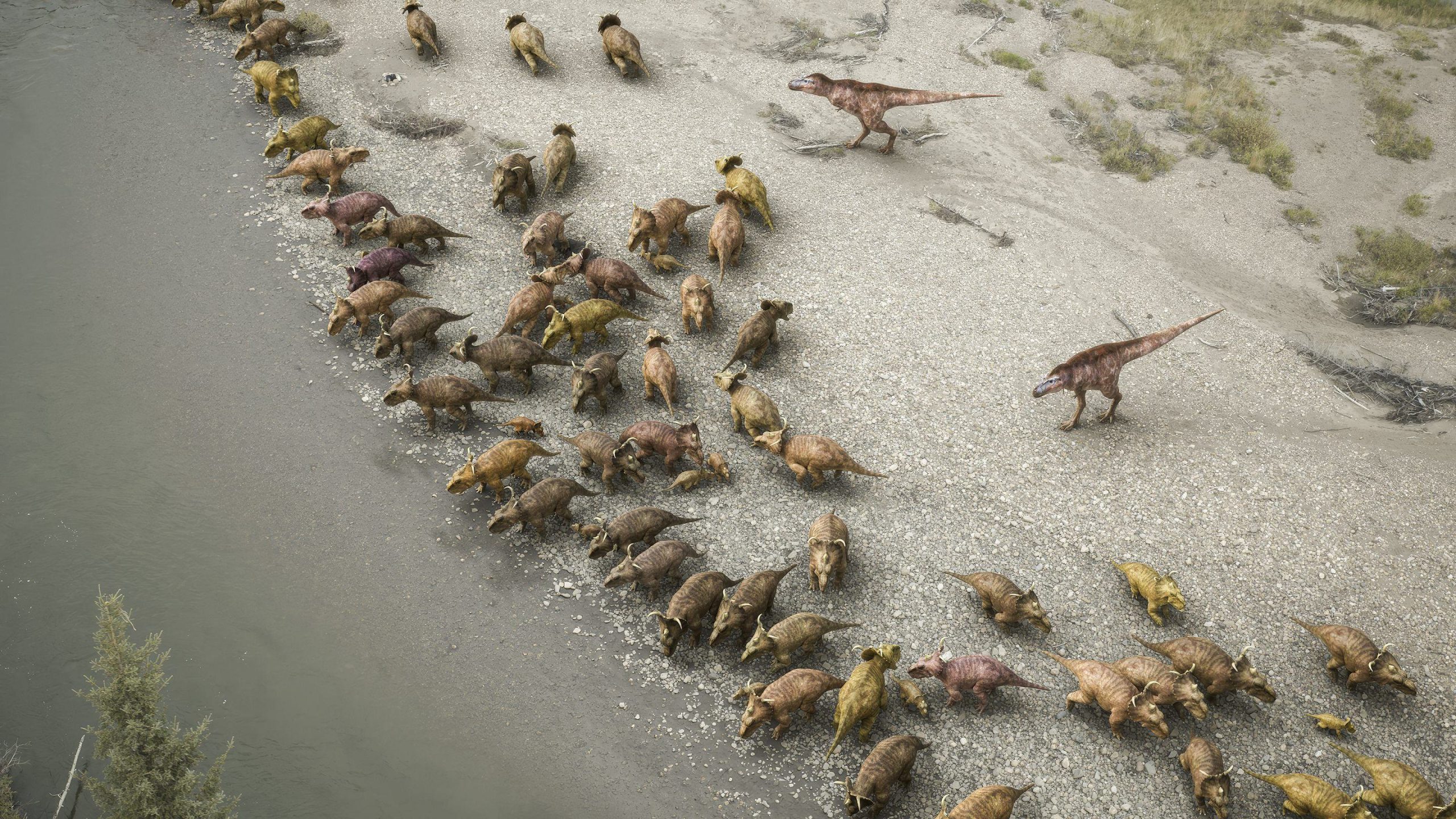
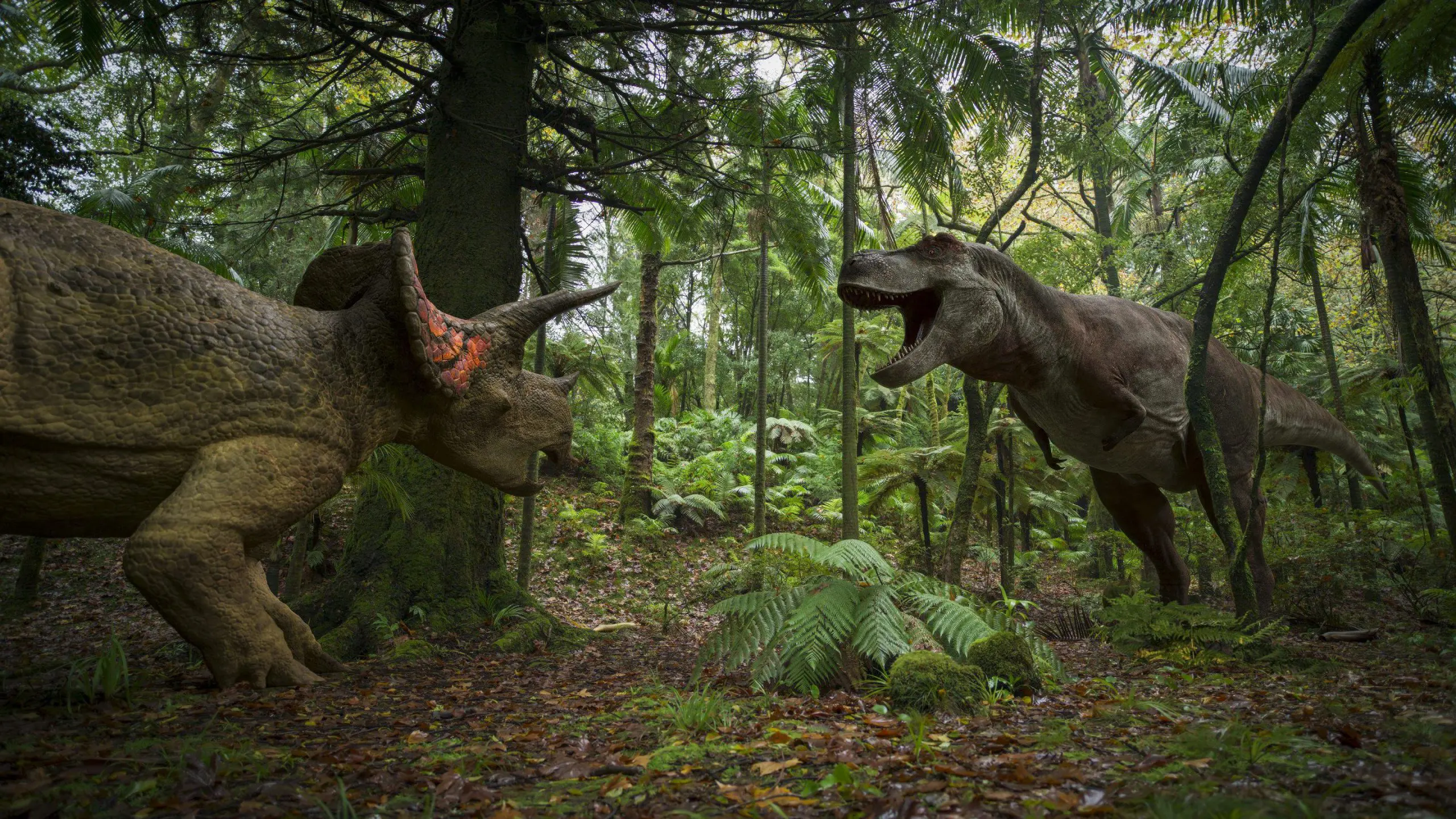
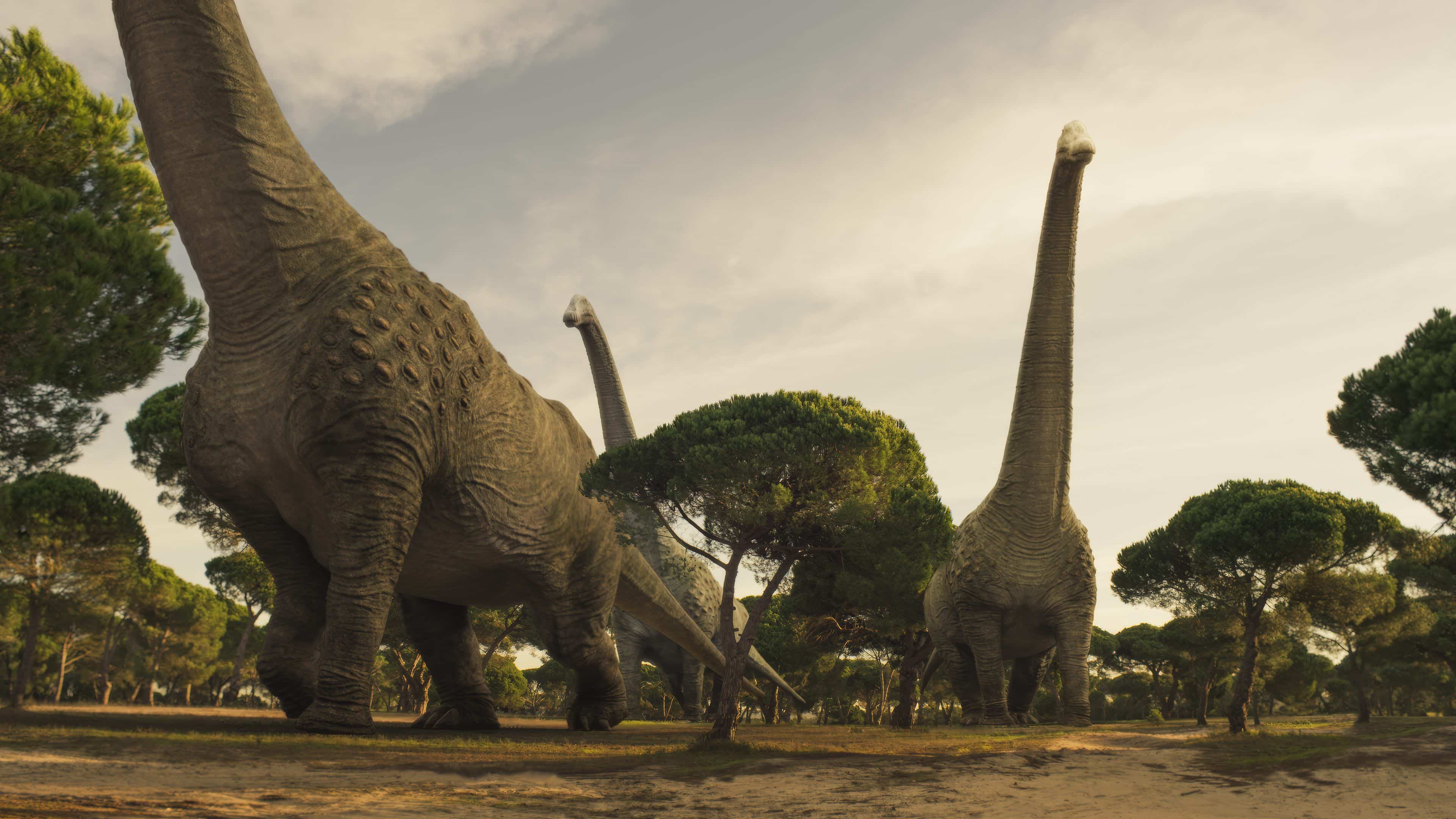
Rob Harvey: We were commissioned to supply around 25 minutes of CG animated creatures per episode, around two and half hours of VFX in total.
The team was constantly in flux, around 200 artists and production staff worked on it across from pre-production to delivery, but the core team at any one time was around 40 – 50 growing to about 70 for the final push. We ended up delivering around 800 shots… on time and on budget.
(See the full cast and crew here on IMDB – and no, the Dinos are not listed as characters.)
DP: What did the pipeline look like?
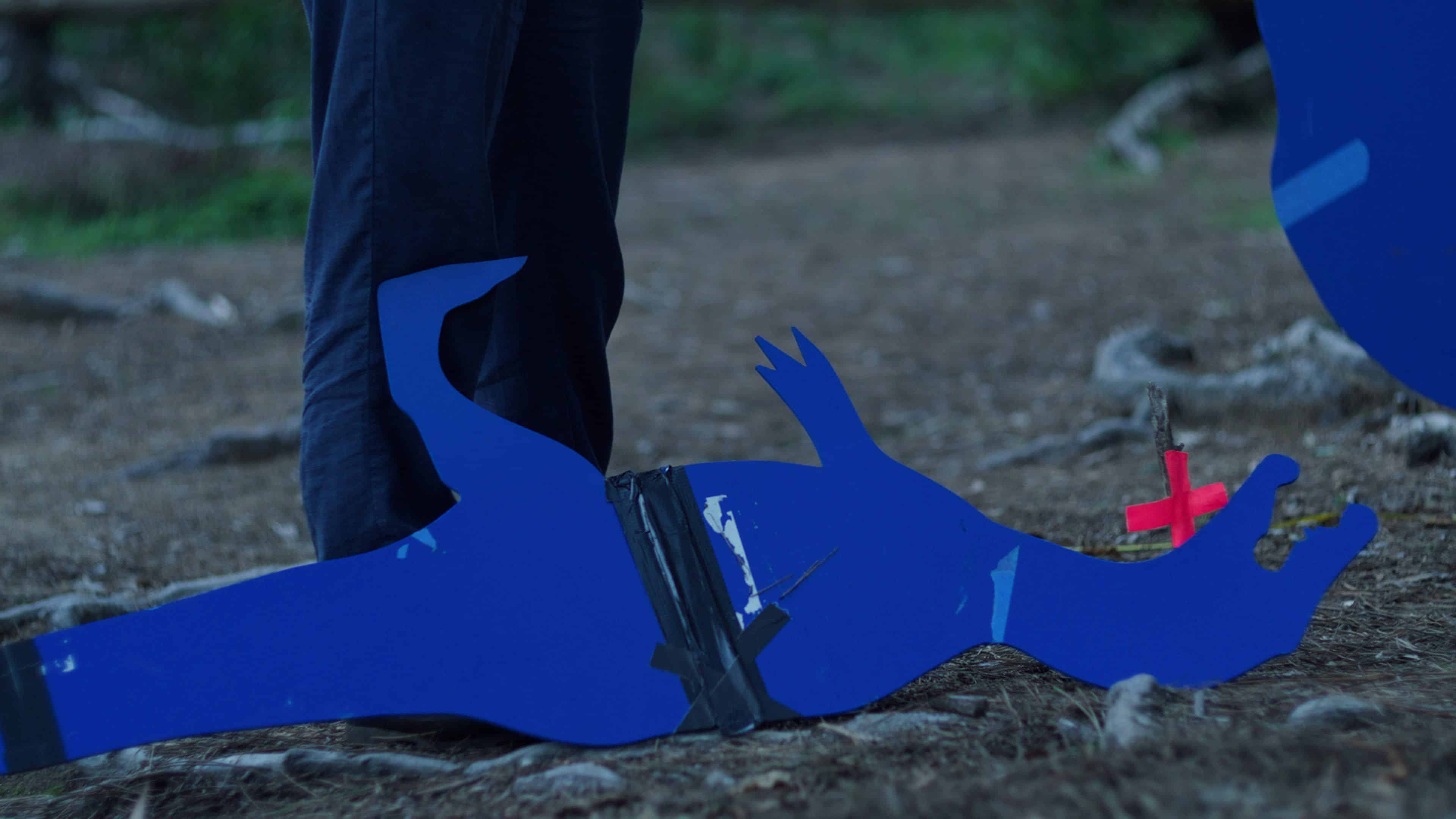
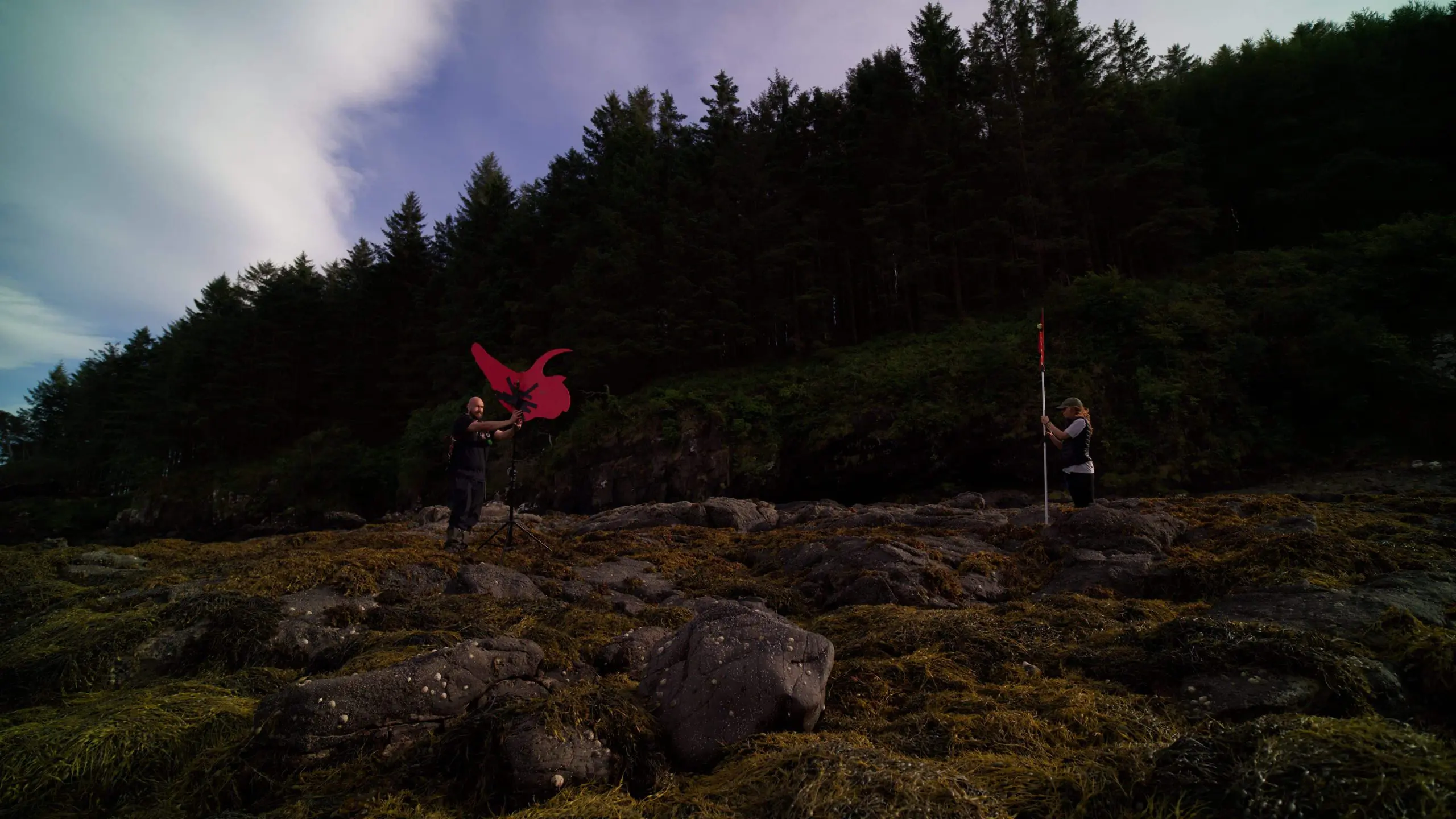
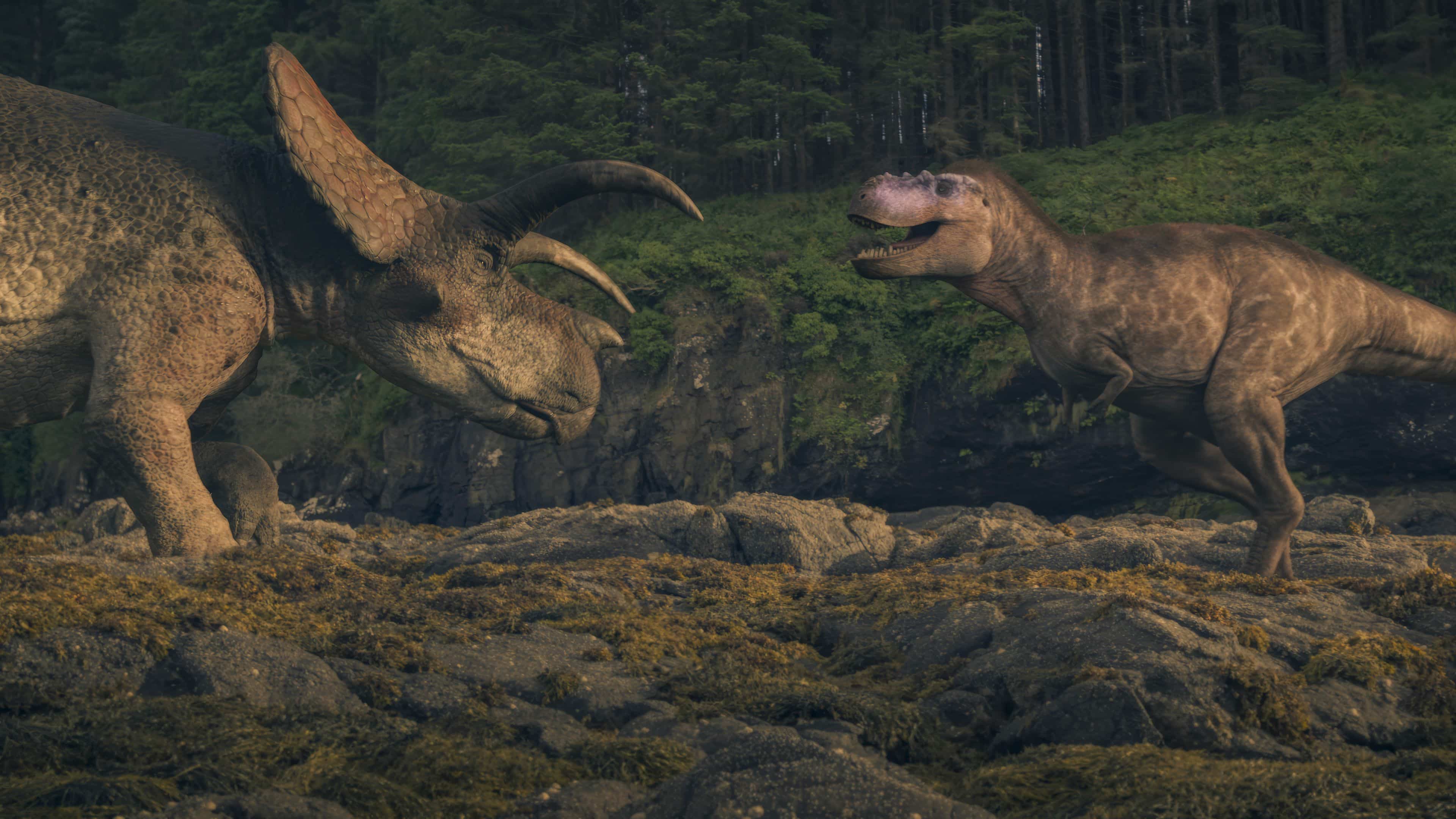
Rob Harvey: We use a fairly typical pipeline, storyboarding everything up front, then ZBrush, Maya, Houdini, Nuke – rendering on Arnold. The big difference between our other shows, including Dinosaurs: The Final Day was the use of Unreal Engine. We used it for pre-vis based on the storyboards (using proxy library dinos) prior to the location shoots, but were able to carry the Unreal scenes from pre-vis through to final pixel.

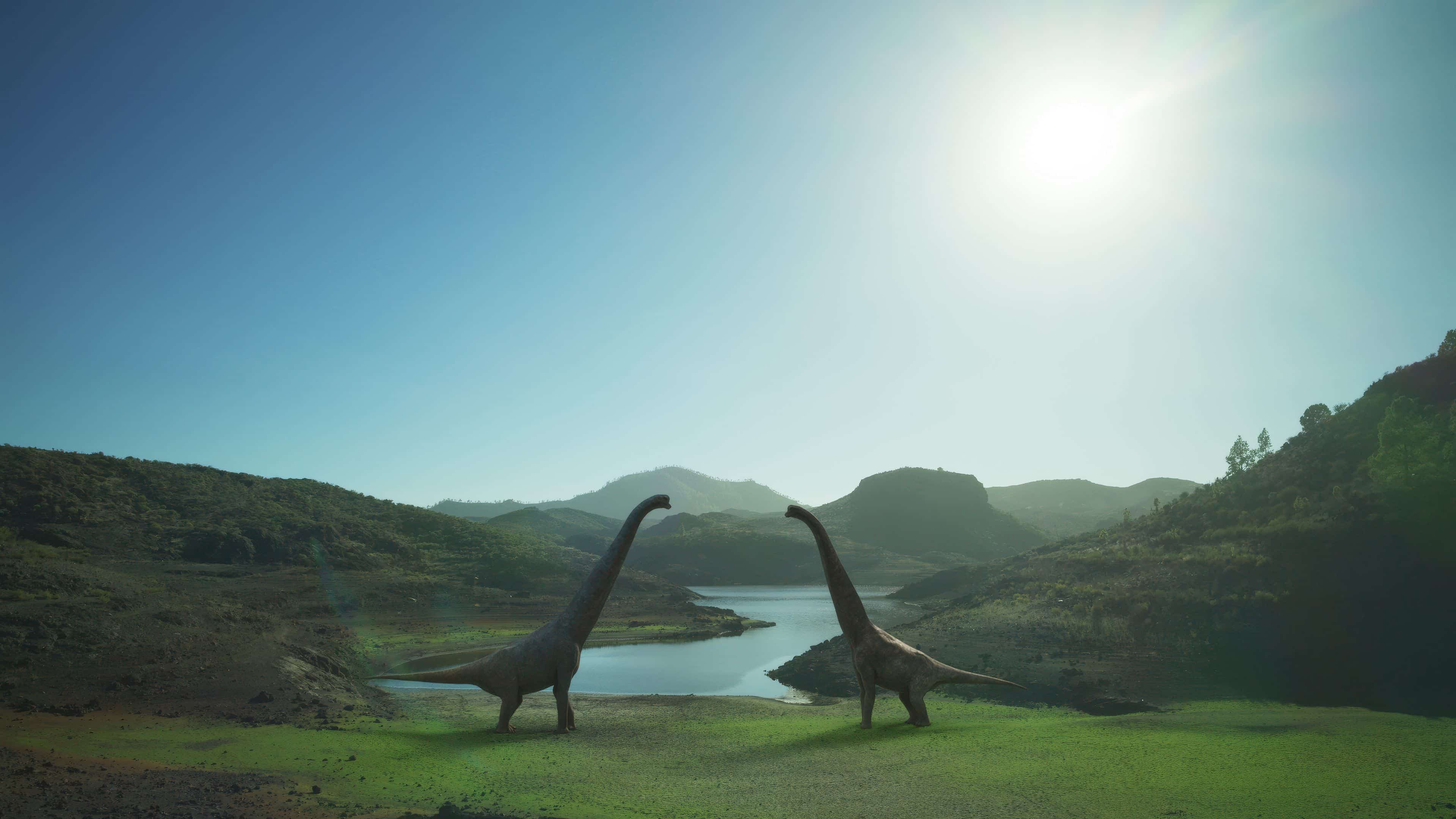
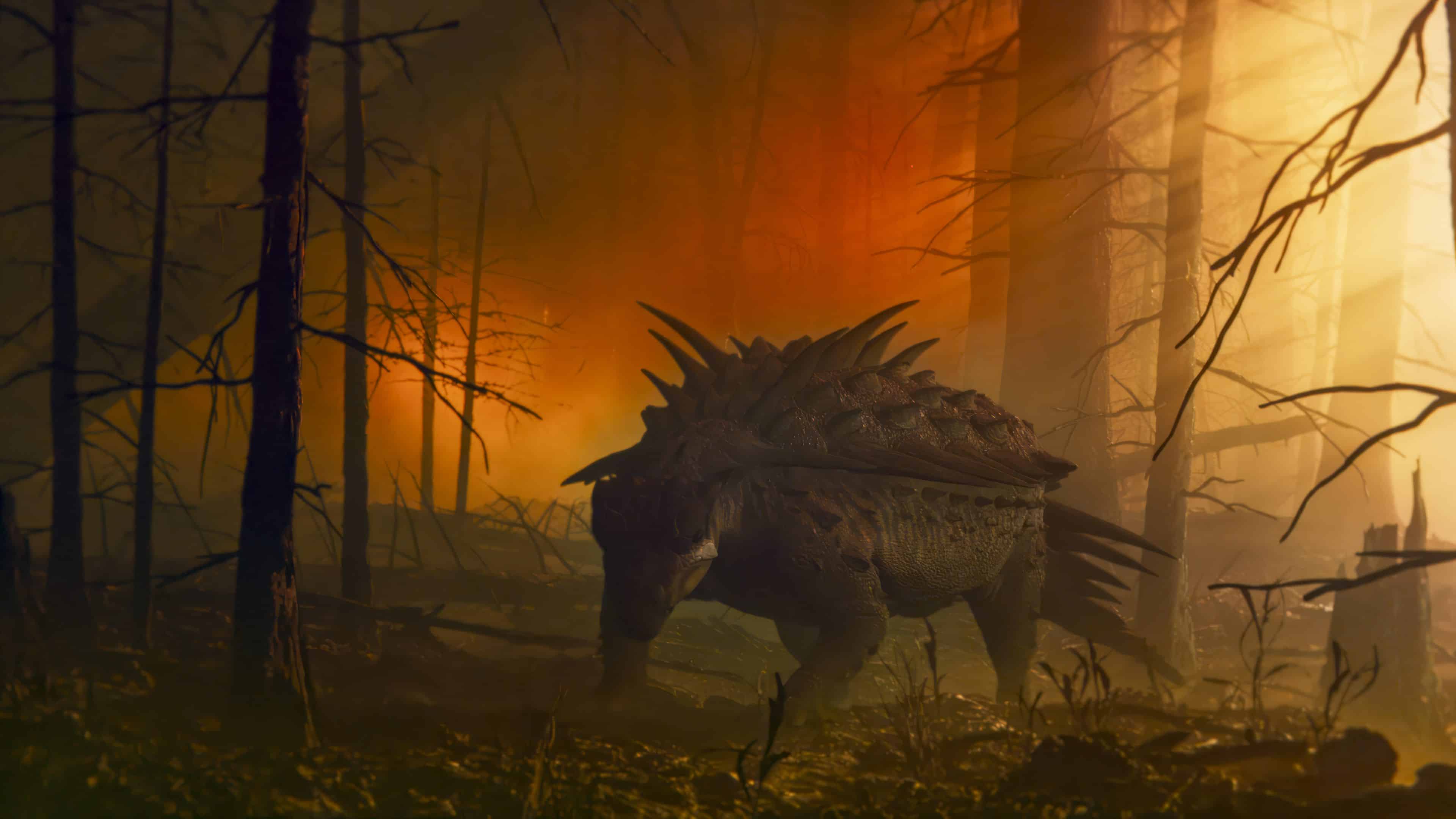
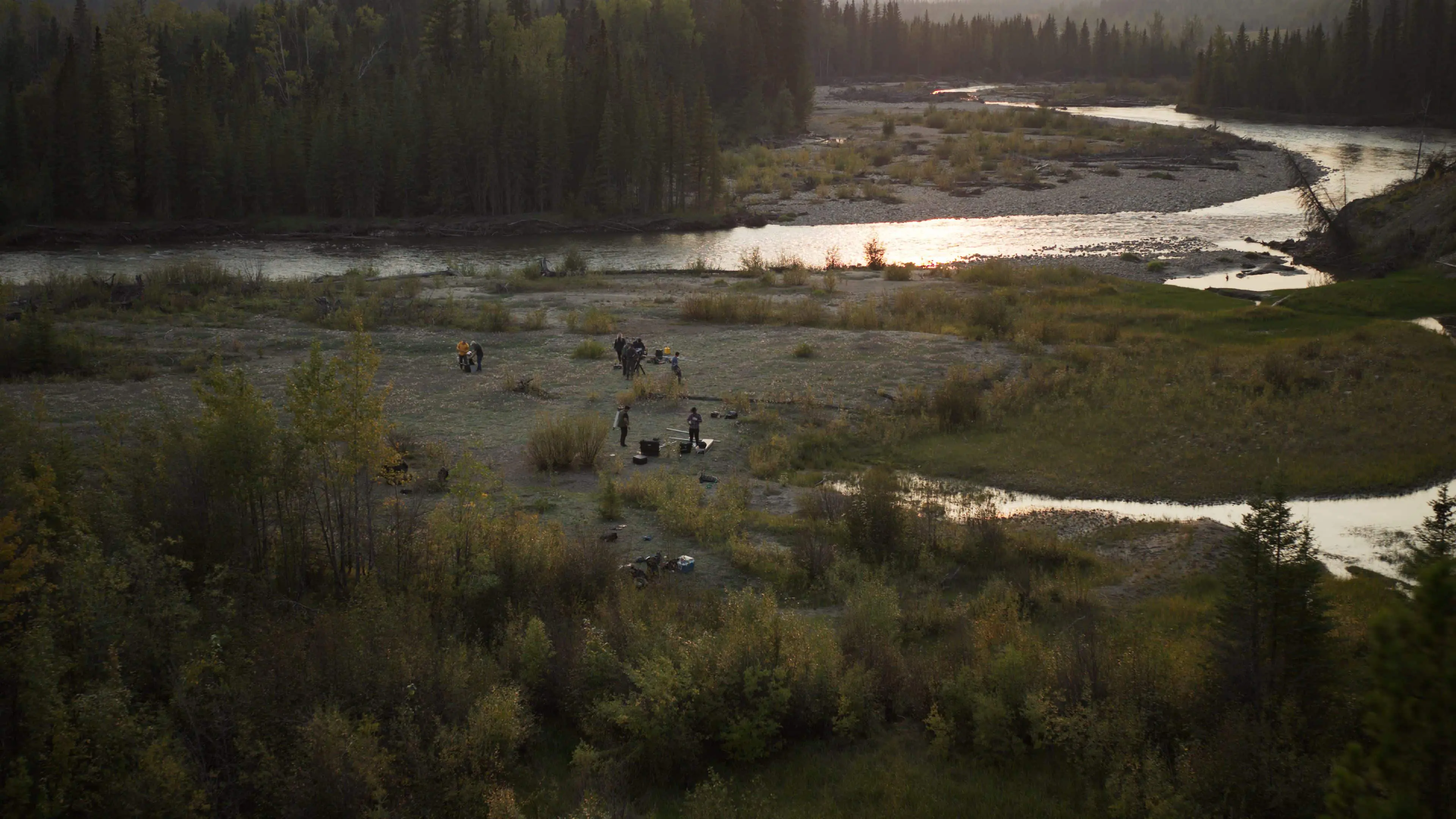
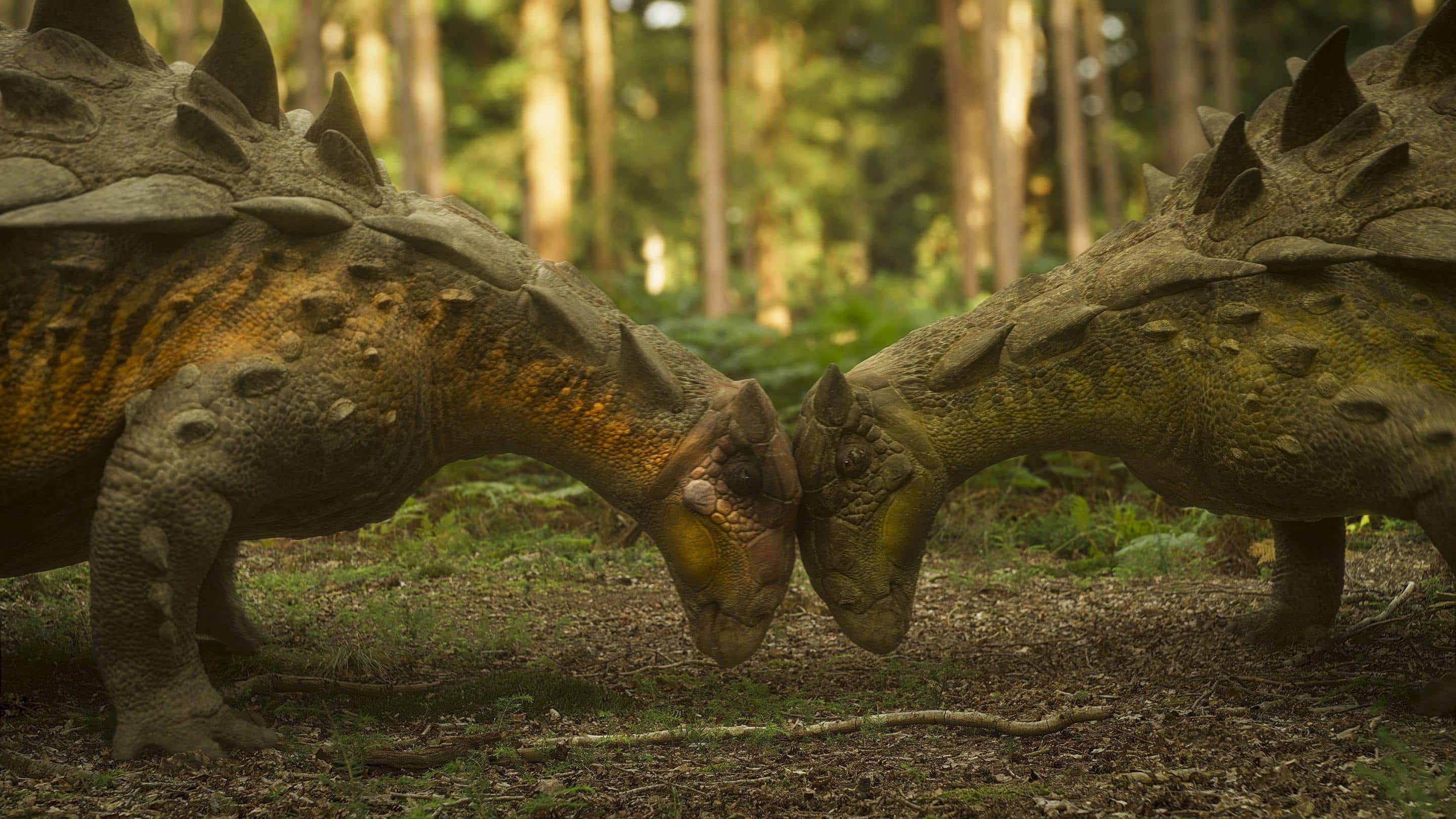
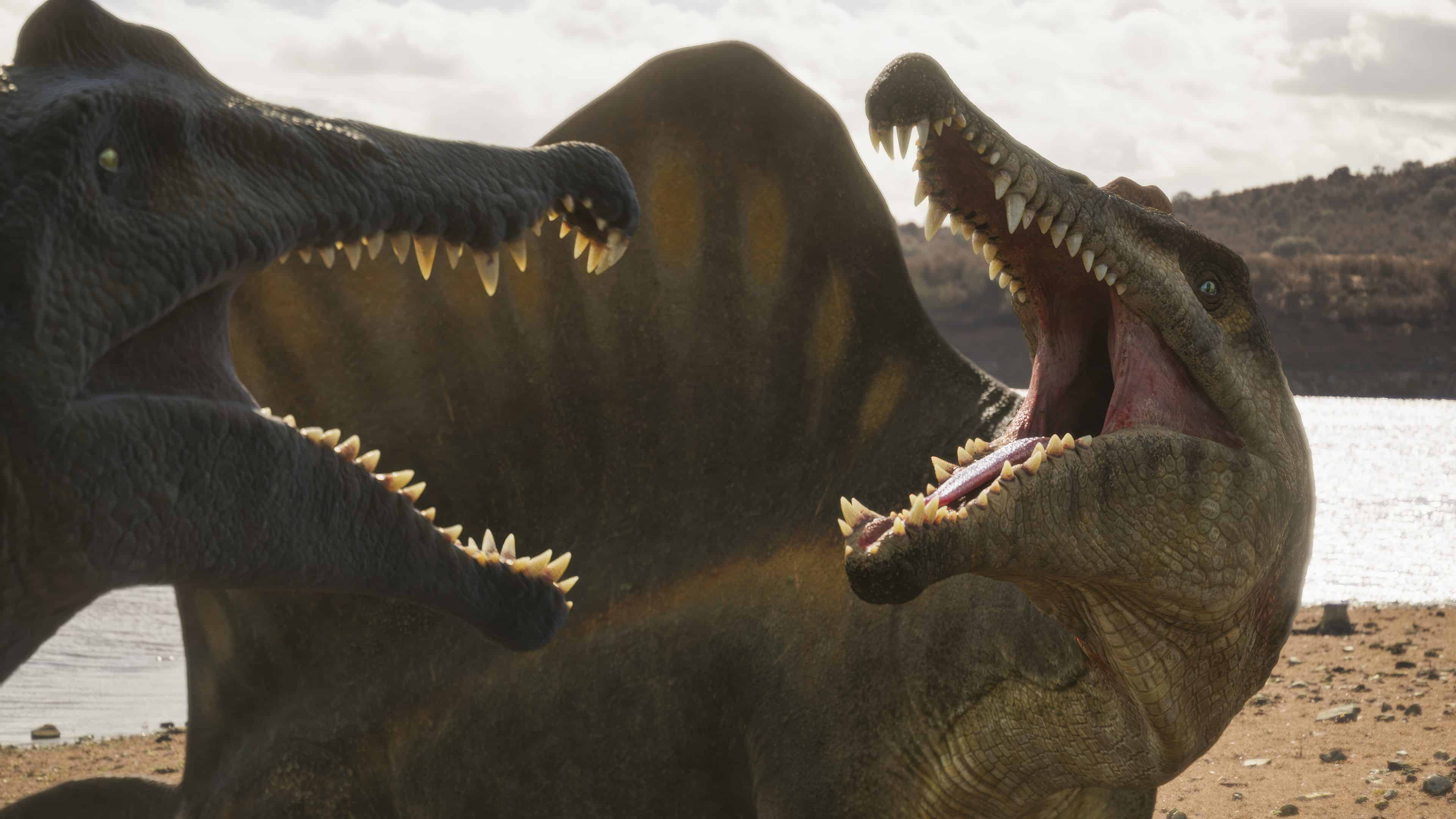
There were several scenes where it was impractical (or too expensive) to shoot background plates, the underwater scenes in Spinosaurus, the burning forest in the Gastonia episode and the cave where the Albertosaurs hung out. We also created a pipeline to take the Houdini creatures into Unreal (or unreal into Houdini) which saved an enormous amount of time in terms of lighting and rendering.
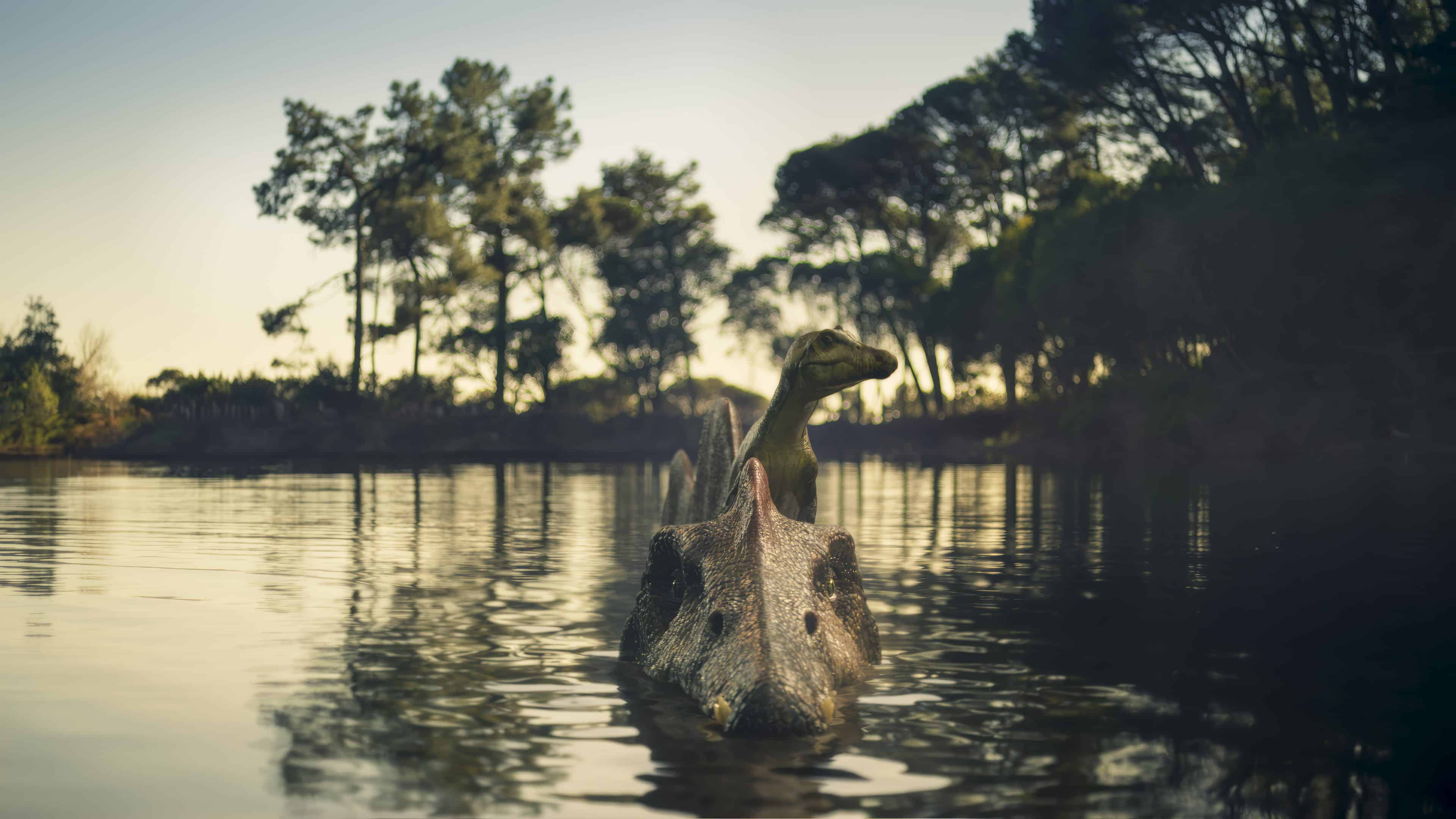


There are several scenes in the Spinosaurus, Gastonia and Albertosaurus episodes that are entirely generated in Houdini (with some added comp effects and polish).
DP: What was the schedule like? Gentle stroll through the Maastrichtian or full asteroid impact mode?
Rob Harvey: From green light to delivery was around two years, which sounds like a long time, but that period includes script approval, location shoots, dig shoots, storyboard approval and not shot work. We were able to start with the asset builds, rigging and animation cycles with a smaller team, but most of the shot work was done in 2024, and we ended up with all six episodes running concurrently, which meant resourcing and scheduling became a game of 3D chess.


DP: Balancing creative choices with the scientific accuracy – where did you draw the line?
Rob Harvey: Balancing creative choices and scientific accuracy was strictly forbidden! Every texture, movement and behaviour went through the Palaeontologists and researchers at BBC Studios from the eye blinks down to the claw twitches.

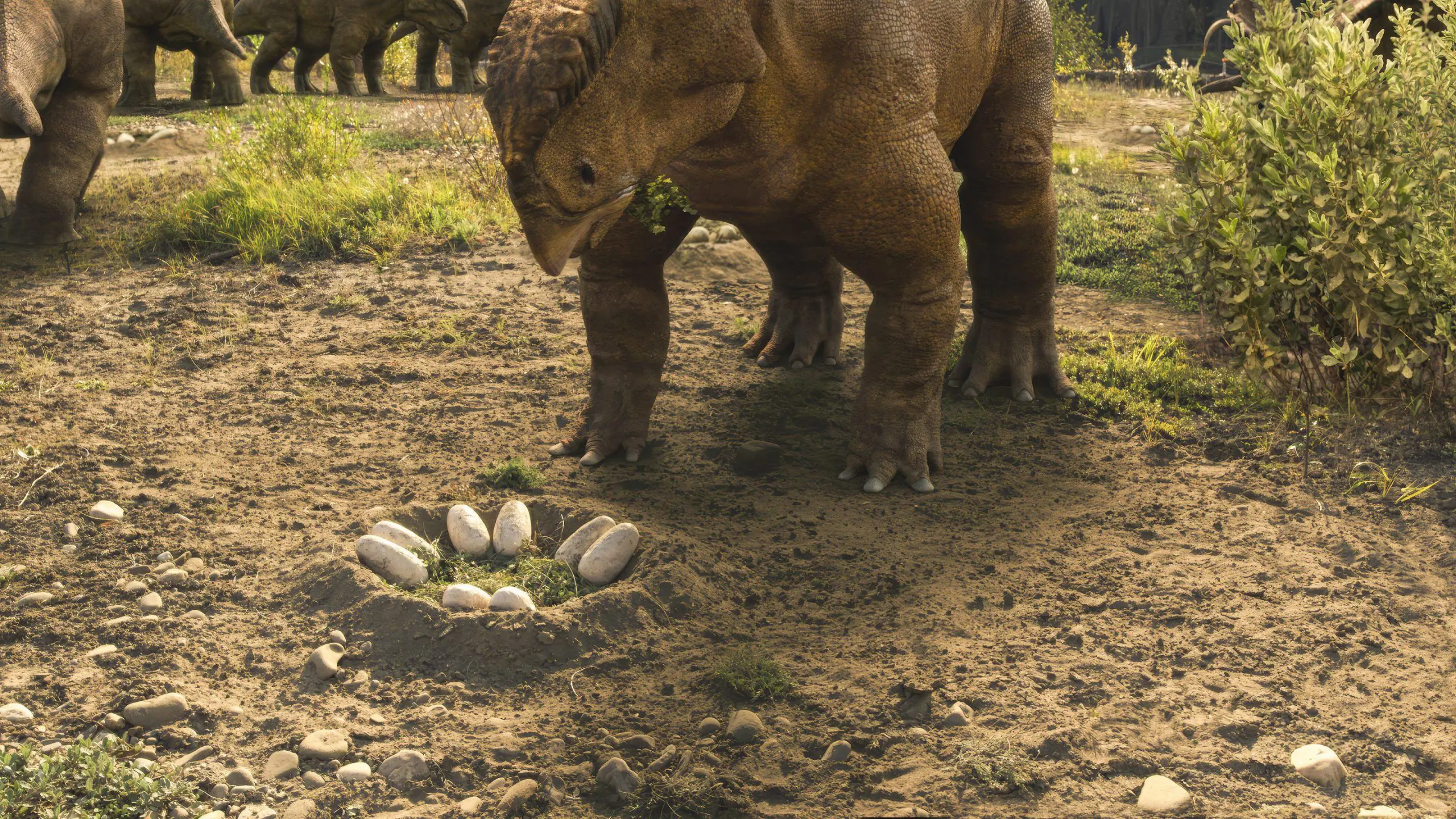
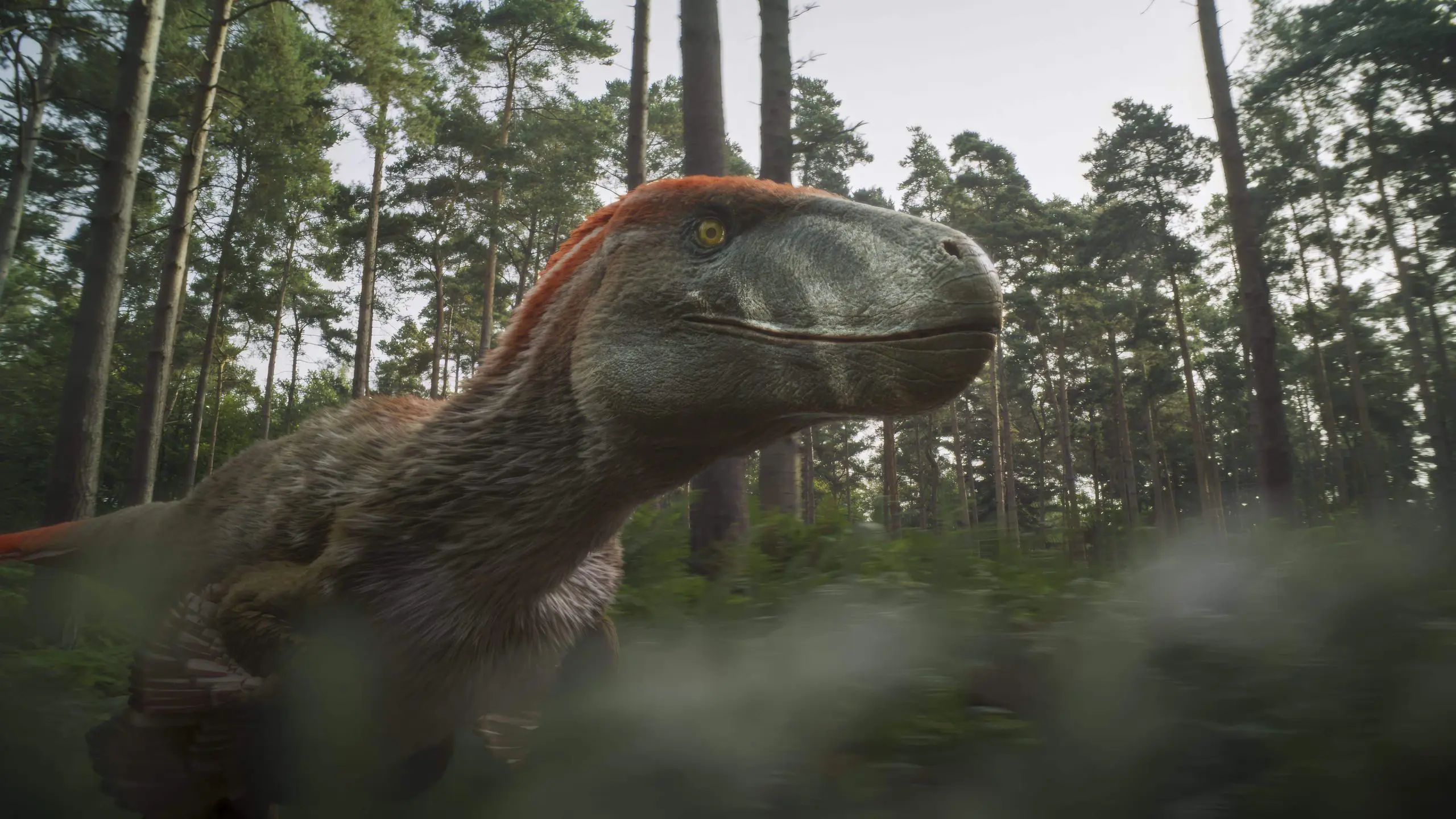
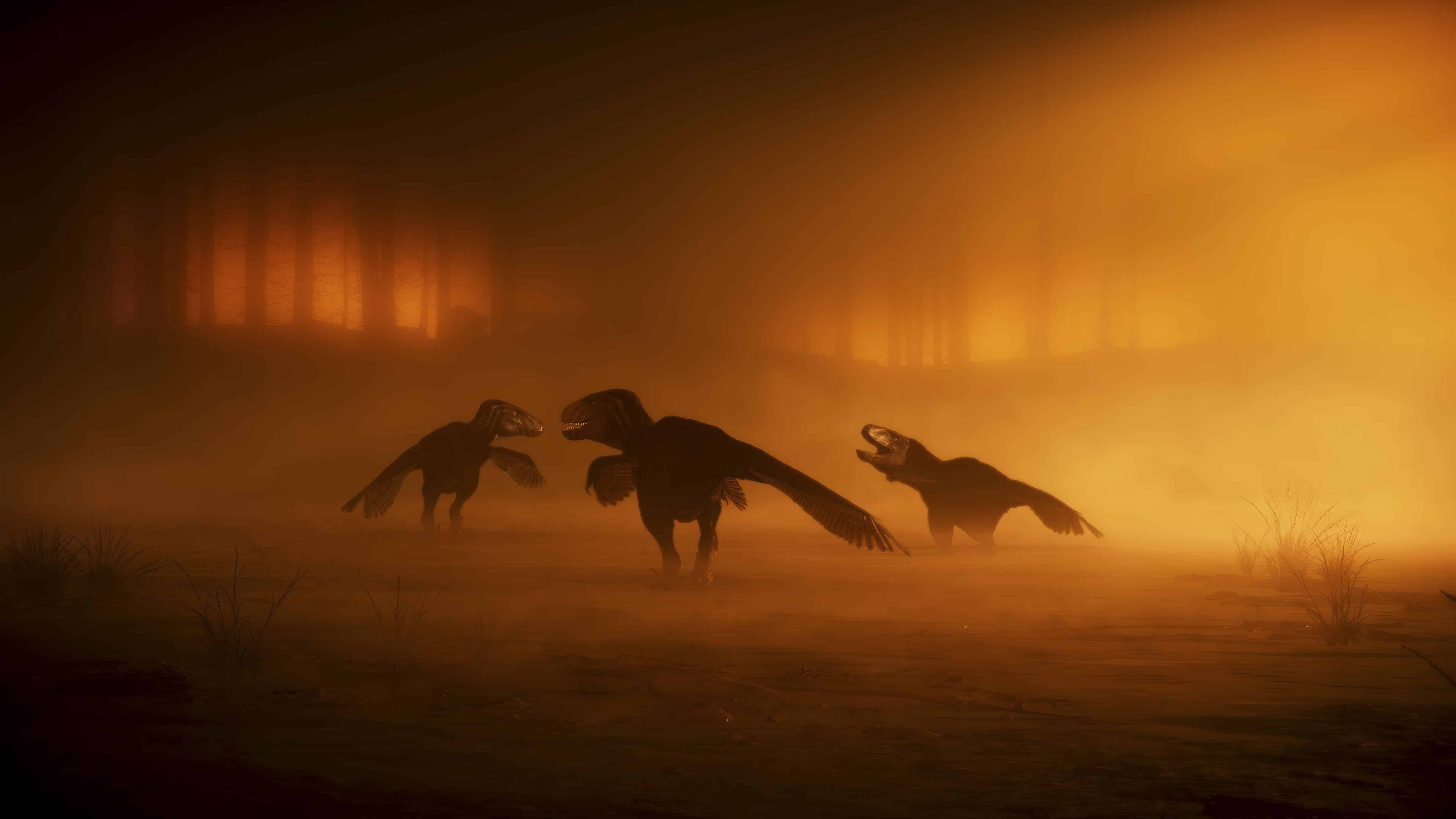
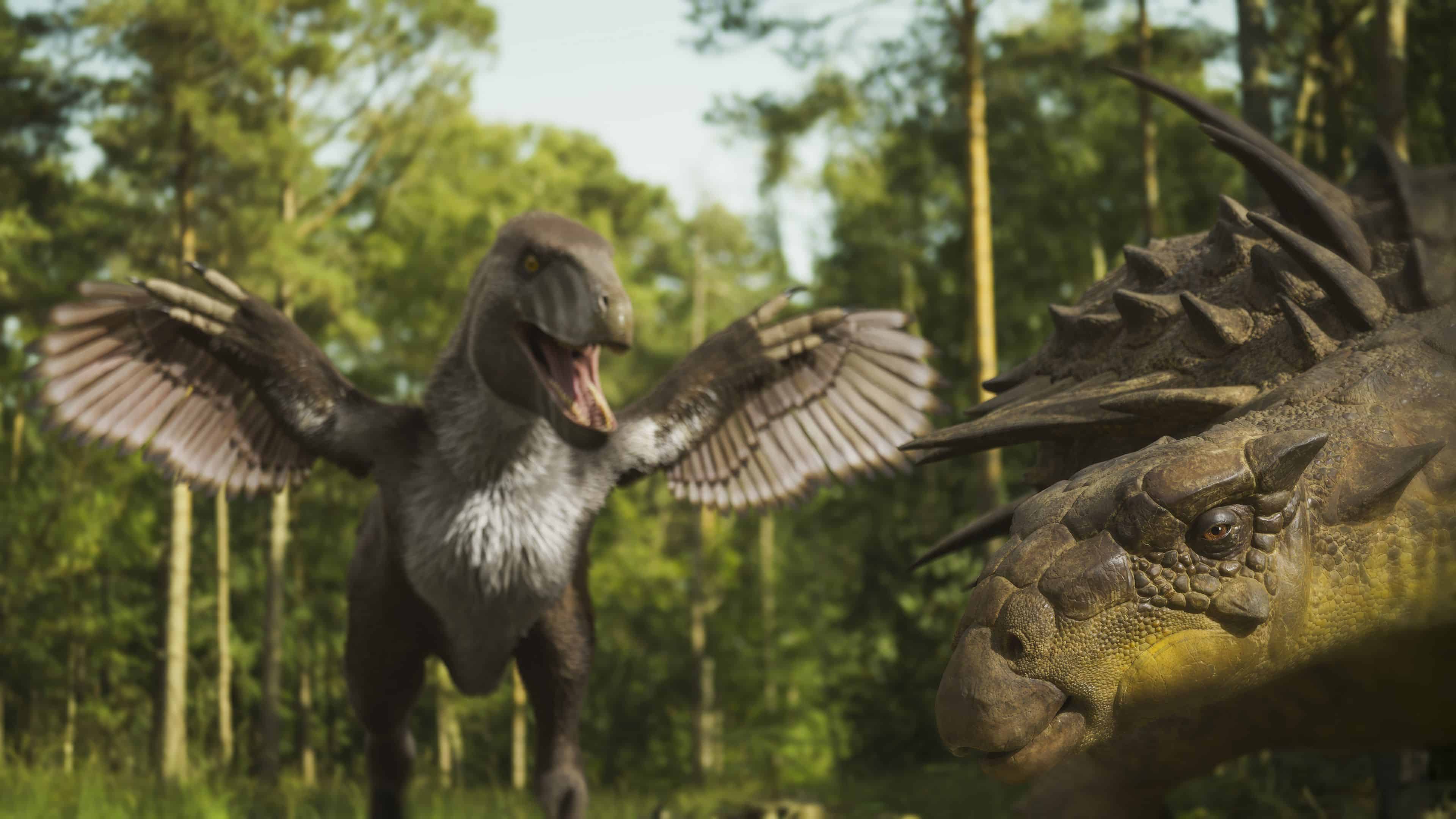
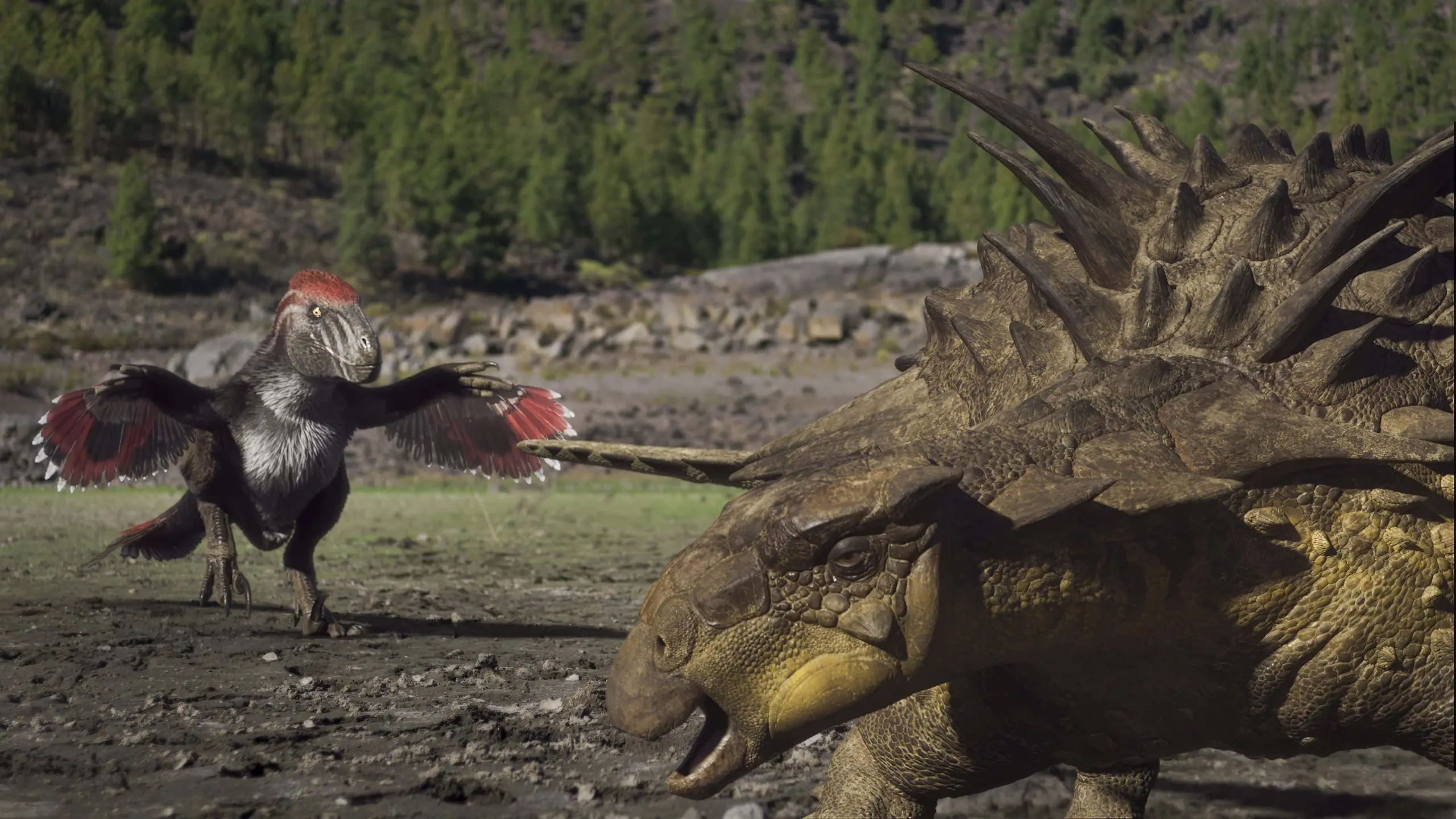
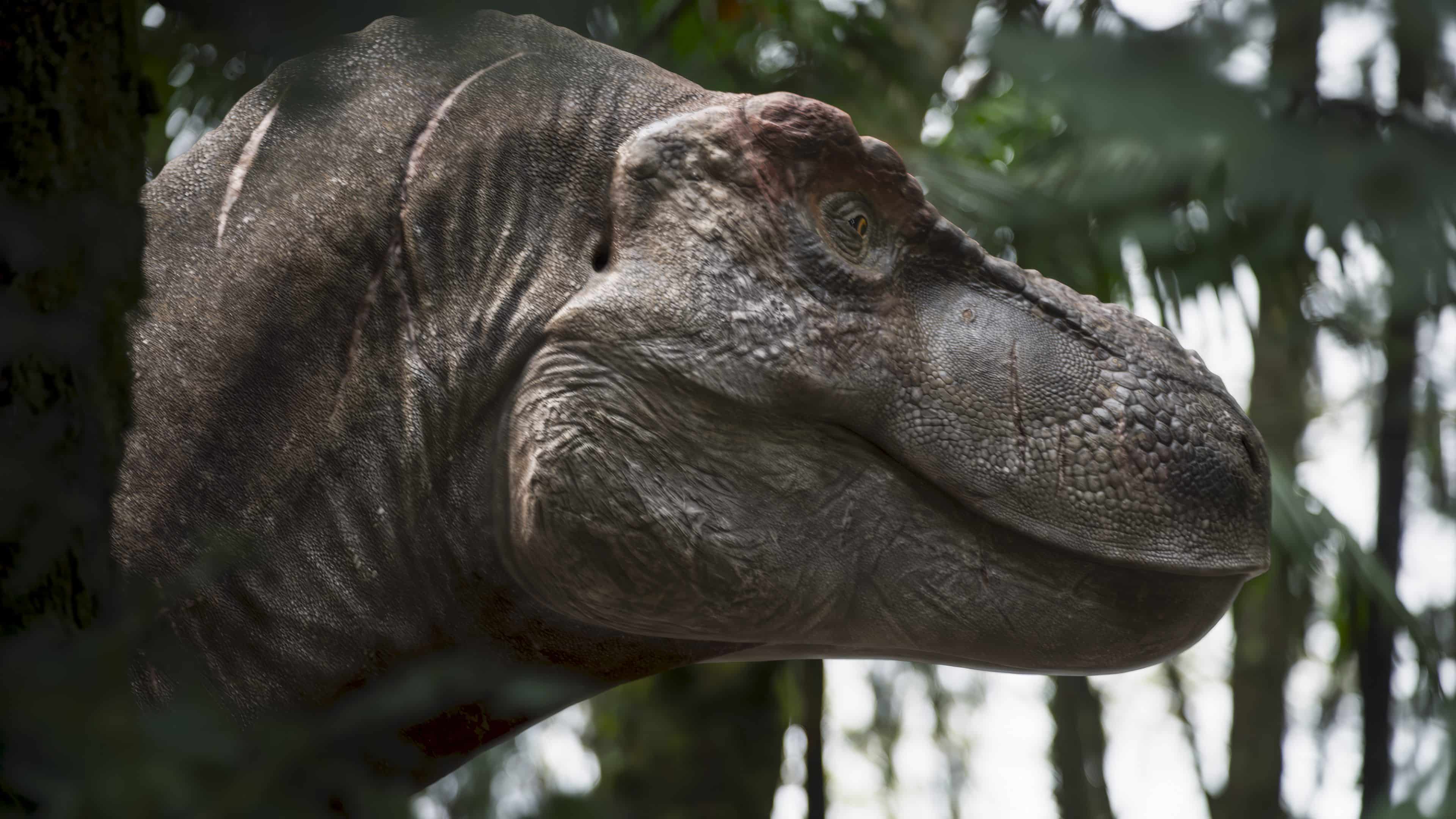
Jurassic Park is a massive problem, because audiences tend to use their dinosaurs as a benchmark for how these creatures behave. Not only do they have humans running about to give them a sense of scale, but they have the luxury of making stuff up. We had a fabulous T-Rex run cycle, but after our experts had sent notes, it seems that on a good day an asthmatic pensioner can out run them… and our Utahraptors had to look menacing with full plumage and no door handles to open. We just leant into it, hopefully creating something that’s both accurate and surprising.


DP: Let’s talk artistic liberties – what did you add or adapt for storytelling reasons, despite fossil record uncertainties?
Rob Harvey: Everything we did was checked (and triple checked) by the experts, so there were no liberties taken! There were a few occasions where we might animate the performance to suit the action and were told, for instance, that the creature wouldn’t be able to move that fast or couldn’t rear up and drop down as we’d animated it or it would break its legs.
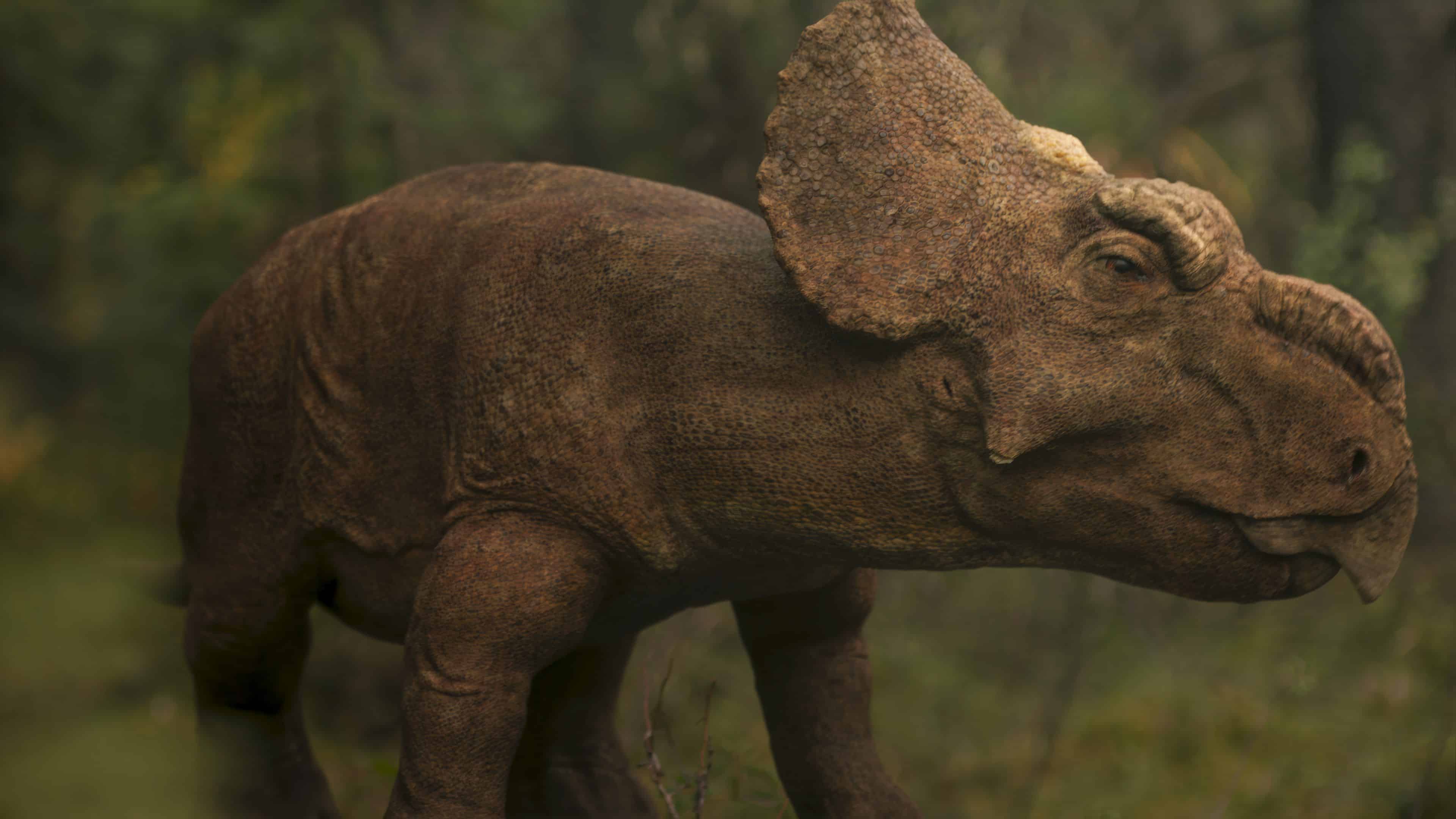
In terms of the colours and textures, our dinosaurs may look a little different, the experts are constantly discovering new evidence and adapting theories about appearance and behaviour, in some cases making informed guesses based on the science, so I expect in a few year’s time as more finds are unearthed, things may again look a little different.
DP: Rigging creatures with incomplete skeletons sounds like guesswork. How did you build reliable rigs from partial data?
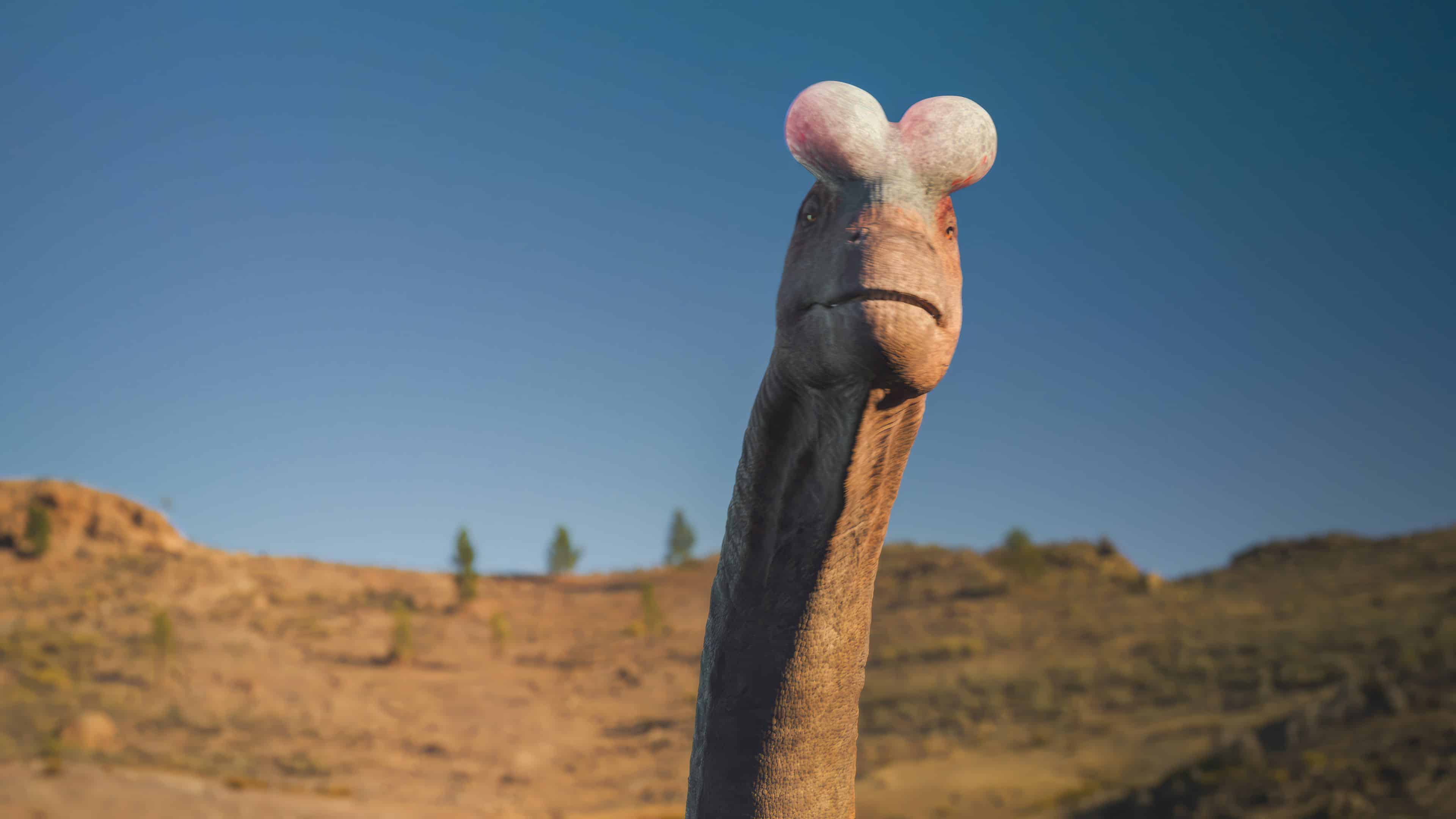
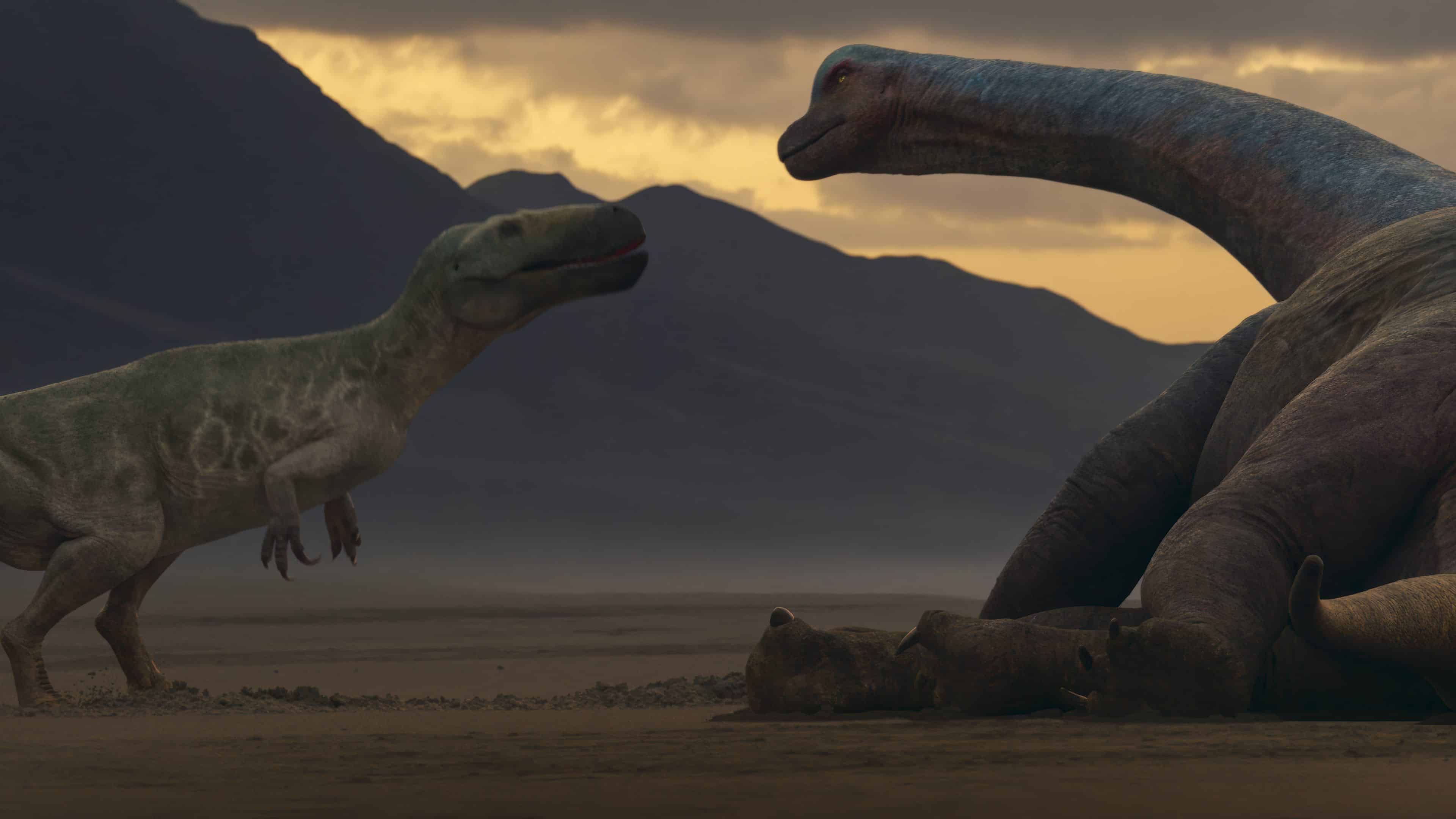
Rob Harvey: We had a secret weapon – Jay Balamurugan and her Dino Bibles! (Find her on Substack | IMDB | Linkedin) Each dinosaur (and any variations) came with a beautifully illustrated document containing an enormous amount of information covering the size, look, anatomy and texture in amazing detail. If we had any questions we would receive clear and concise notes, illustrations and comparisons with modern day animals and birds to give us context.
There are countless CG simulations created by palaeontologists and researchers that show how skeleton, muscle and skin might have behaved which we were able to integrate with our dinosaurs. This level of detail and believability meant our dinos could literally stand around doing very little and look realistic.
DP: How cool was it to animate actual dinosaurs?
Rob Harvey: It’s quite an exciting moment when the animation starts coming through, the assets we have spent weeks modelling, texturing and rigging become characters for the first time, and you find that you get quite attached to them … in a Tamagotchi kind of way.

When working on factual content there is inevitably a budget constraint, shows like The Planets or Our Living World give us much more scope to use different source material and techniques. On Walking With Dinosaurs, the basic principle of placing CG Dinosaurs into live action backgrounds applies to the vast majority of the shots, so there’s less wriggle room and the pipeline process is more like a production line.
DP: What is your favourite shot – the one you still re-watch for fun?
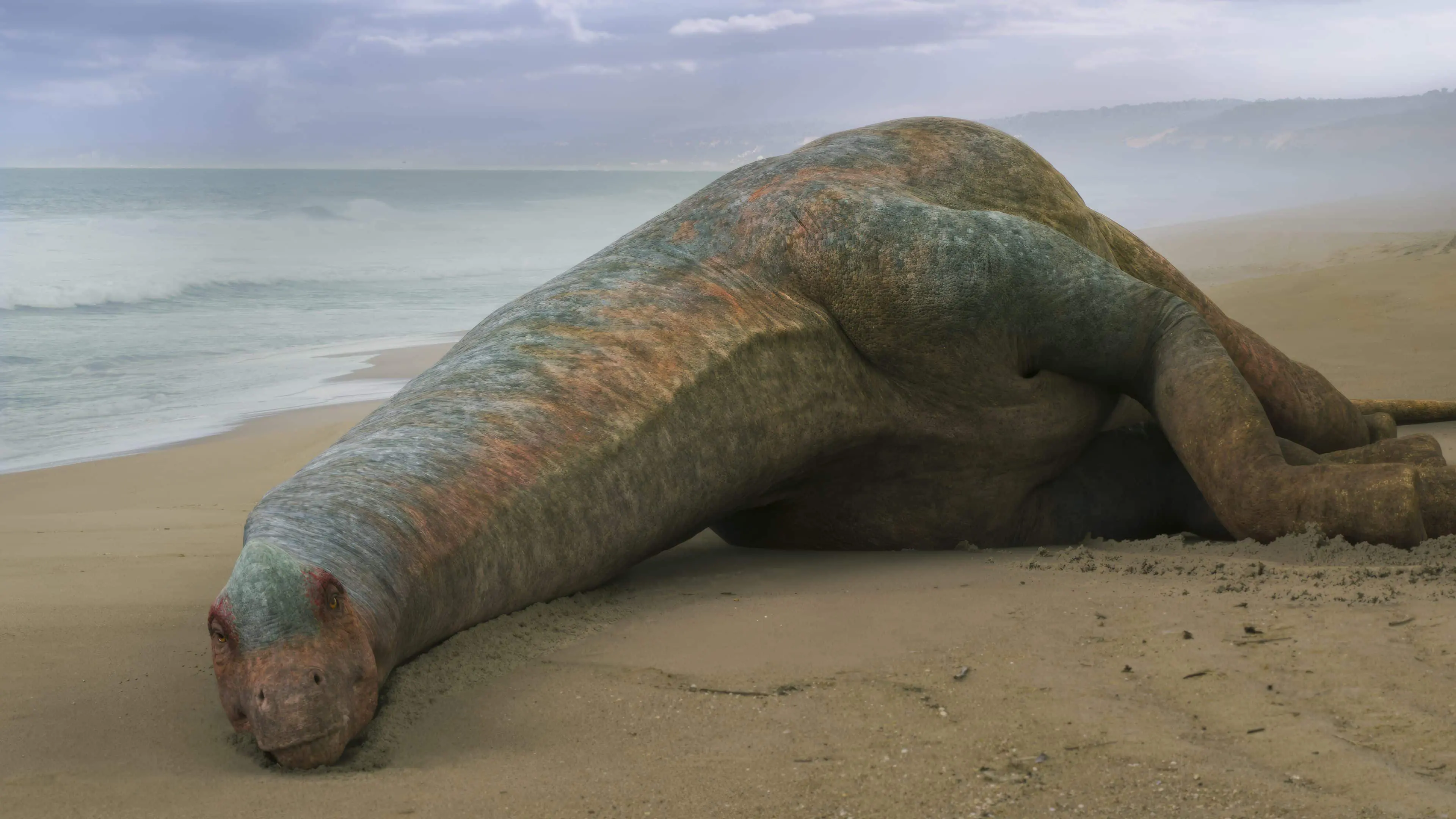
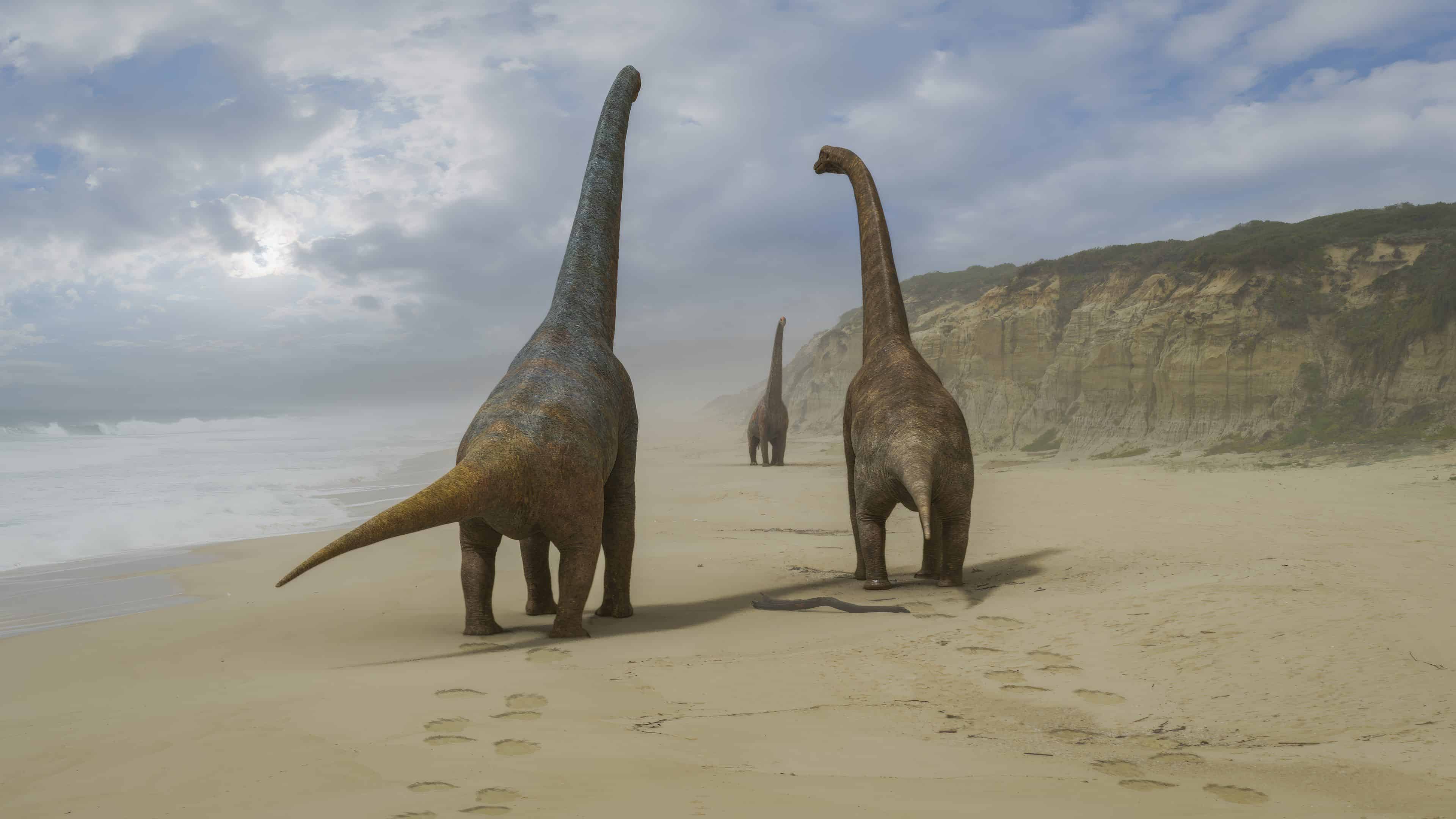
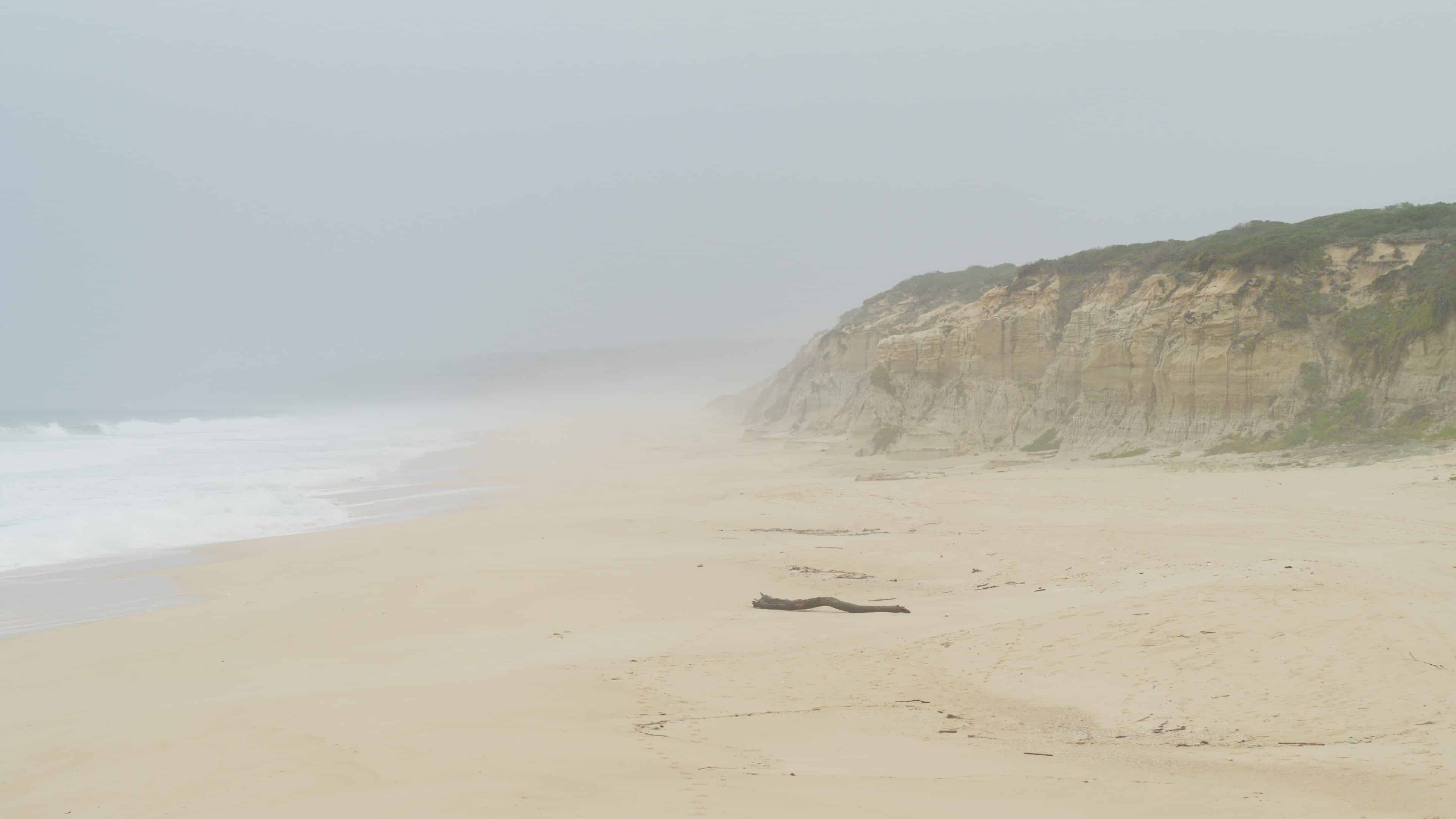
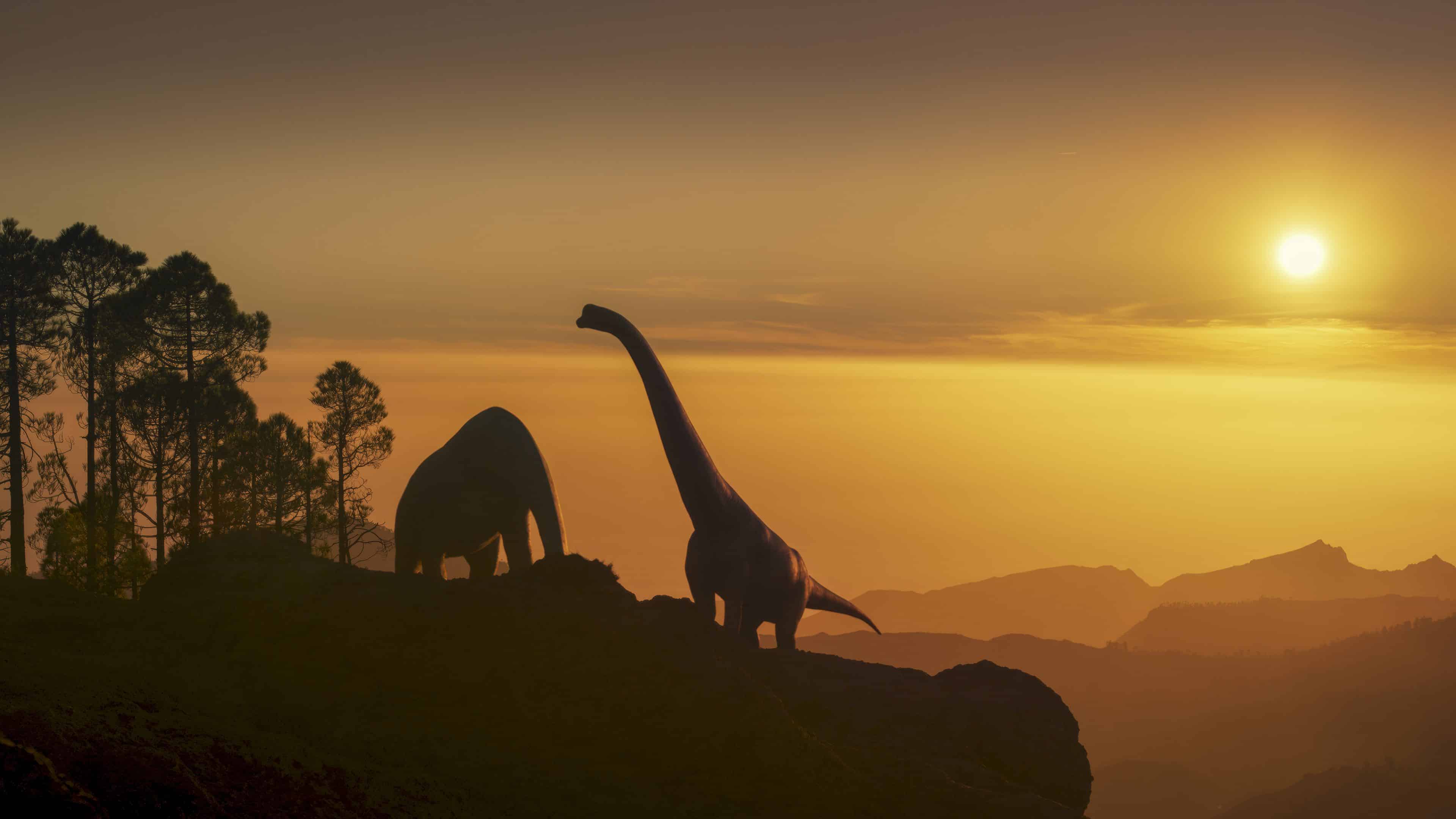
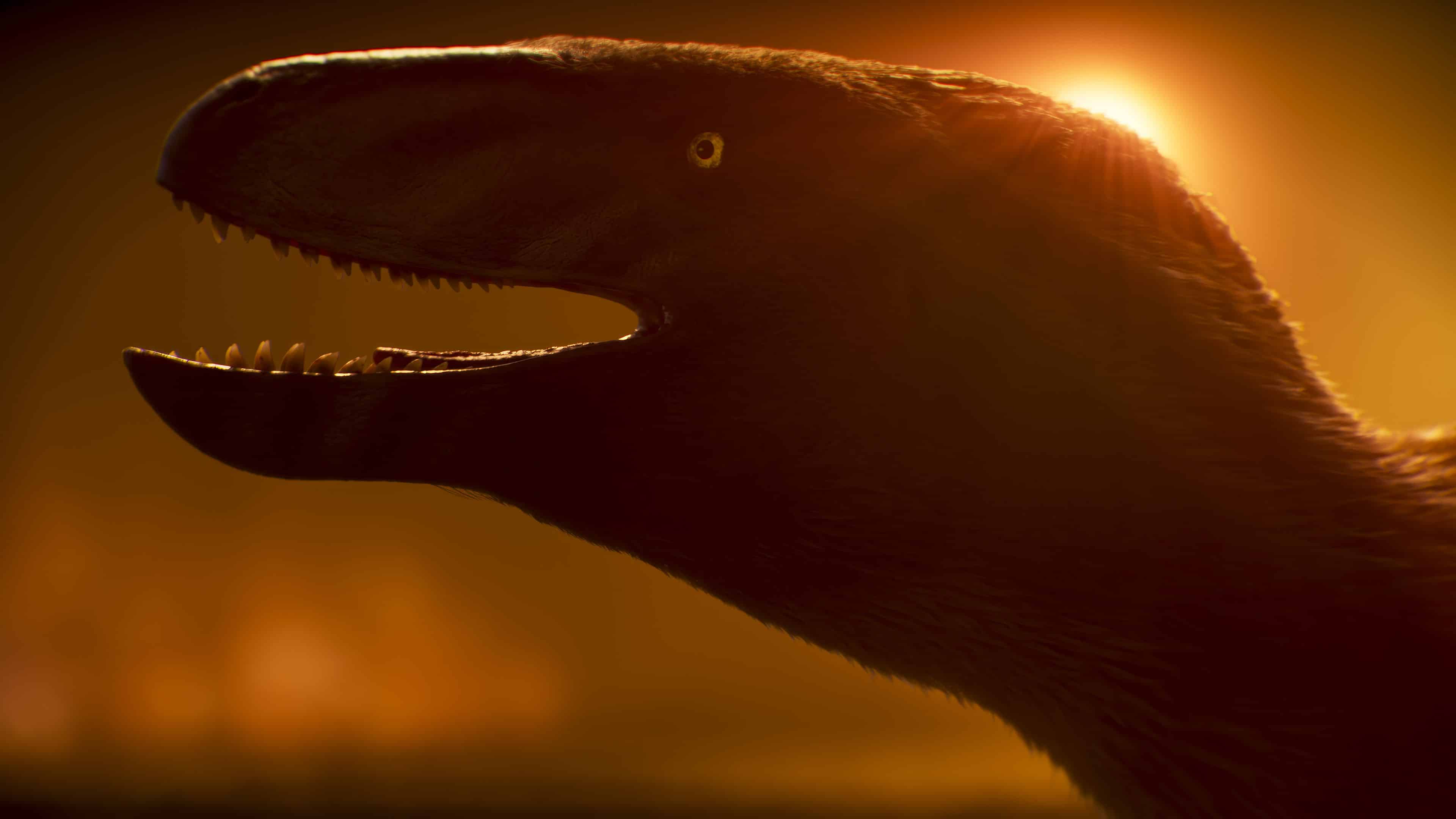
Rob Harvey: There are a few favourites. Personally, I was very pleased with the scenes we pushed through Unreal, particularly the underwater Spinosaurus and the burning forest in the Gastonia episode. It was a risk to commit to using Unreal for final pixel, but I think we pulled it off. I loved the raptors too – they’re nasty! We delivered months ago so I’m currently watching the show go out on BBC1 and getting some pleasant surprises – there are so many shots looking very cool on TV that I’d completely forgotten about.

DP: Least favourite shot – the one that still haunts the team?
Rob Harvey: The creatures were all really fun to create. They went through rigorous paleo scrutiny and testing – like a creature boot camp, so they were all camera-ready. We had a bit of back and forth in terms of shot layout and editing, but we had learnt from other creature shows that the stars of the show all need to be able to take a close up. There was no need to fix anything or cheat once we got to shot work because the assets were all good.
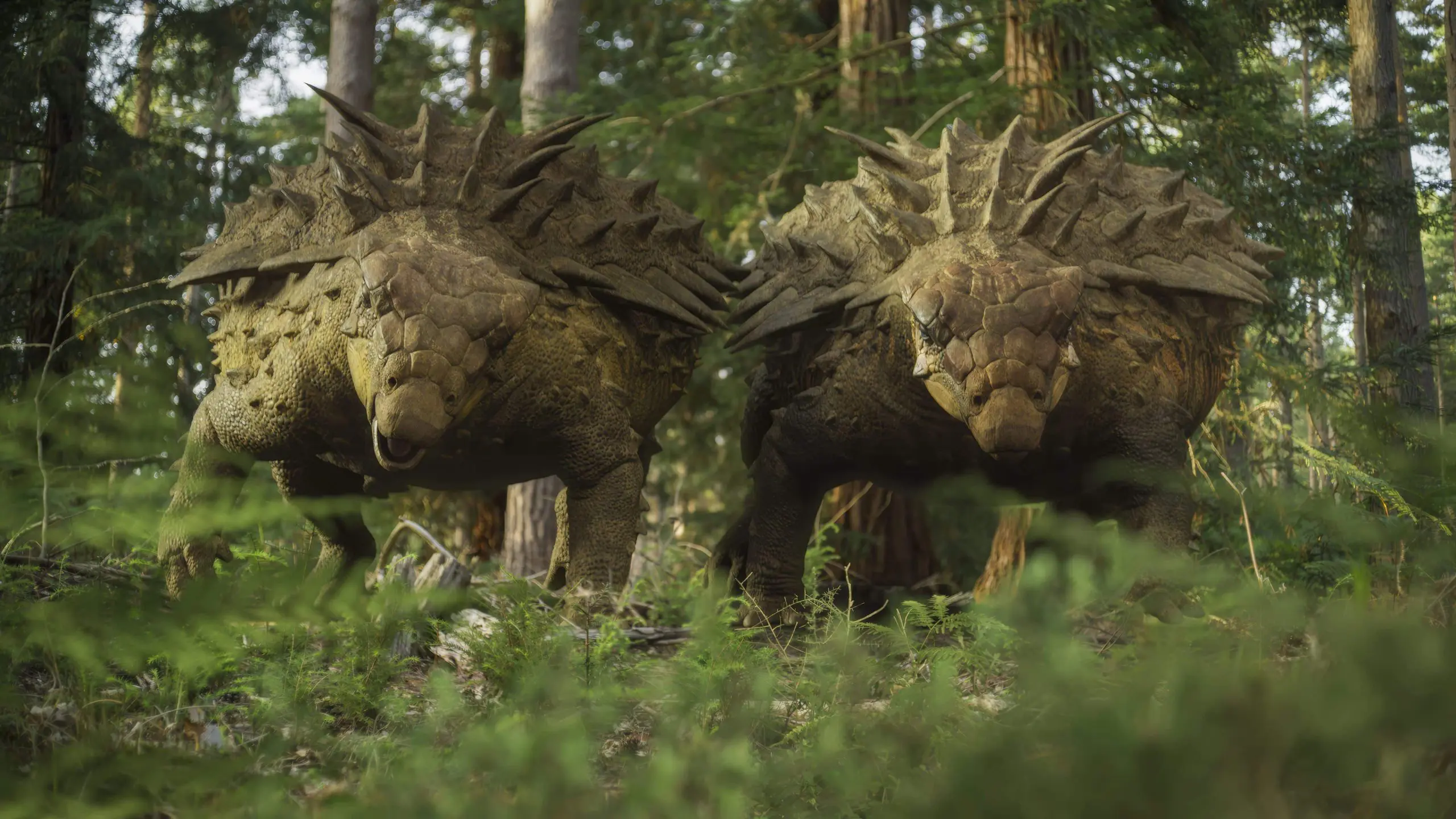
With a relatively tight budget so we were always looking for work arounds even at the storyboard stage. The trick is not to be too ambitious and end up doing expensive things badly, have a few hero shots with full FX, CFX and interaction with the environment, but keep things simple and frame the dinosaurs to avoid unnecessary problems.
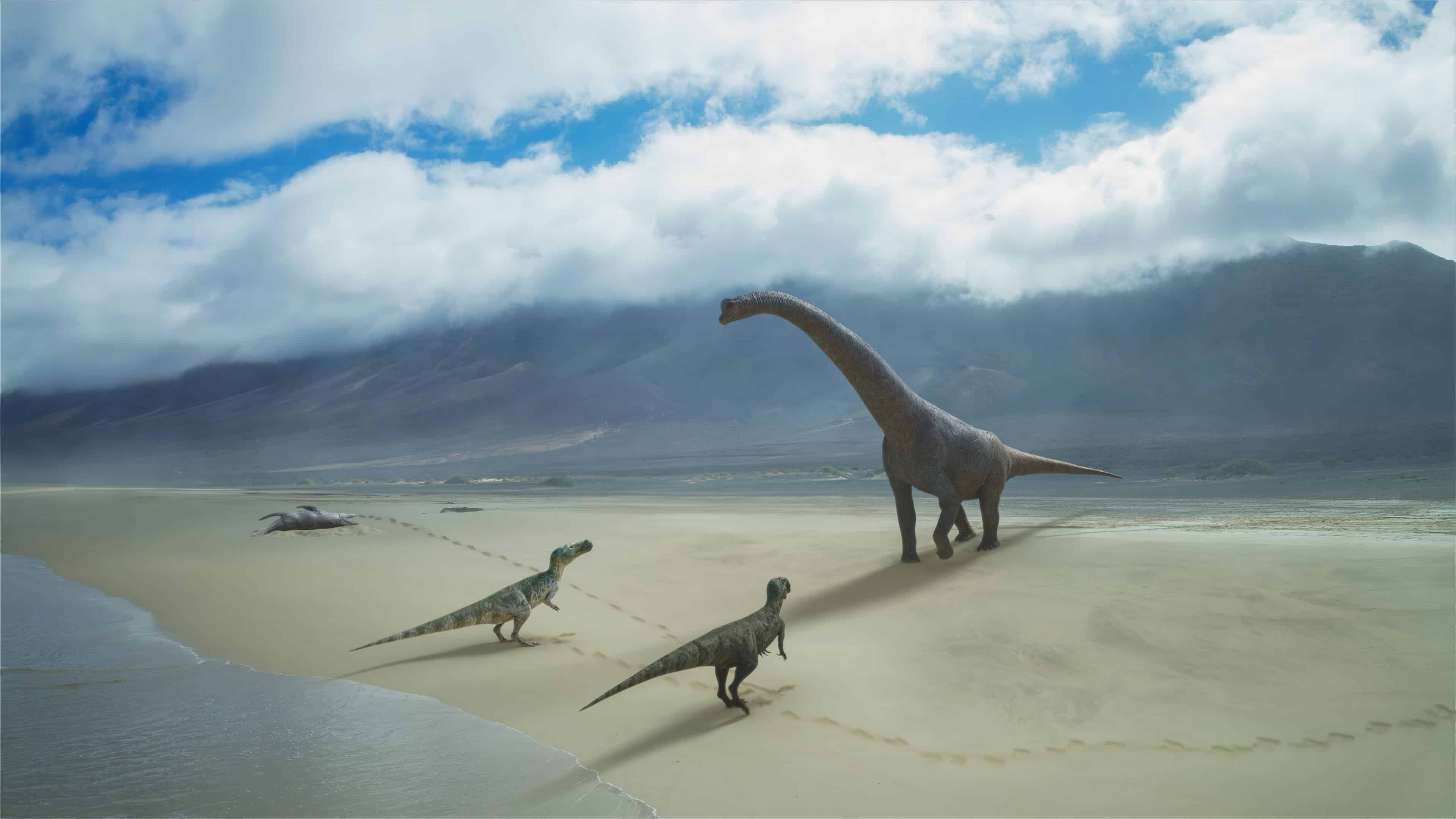
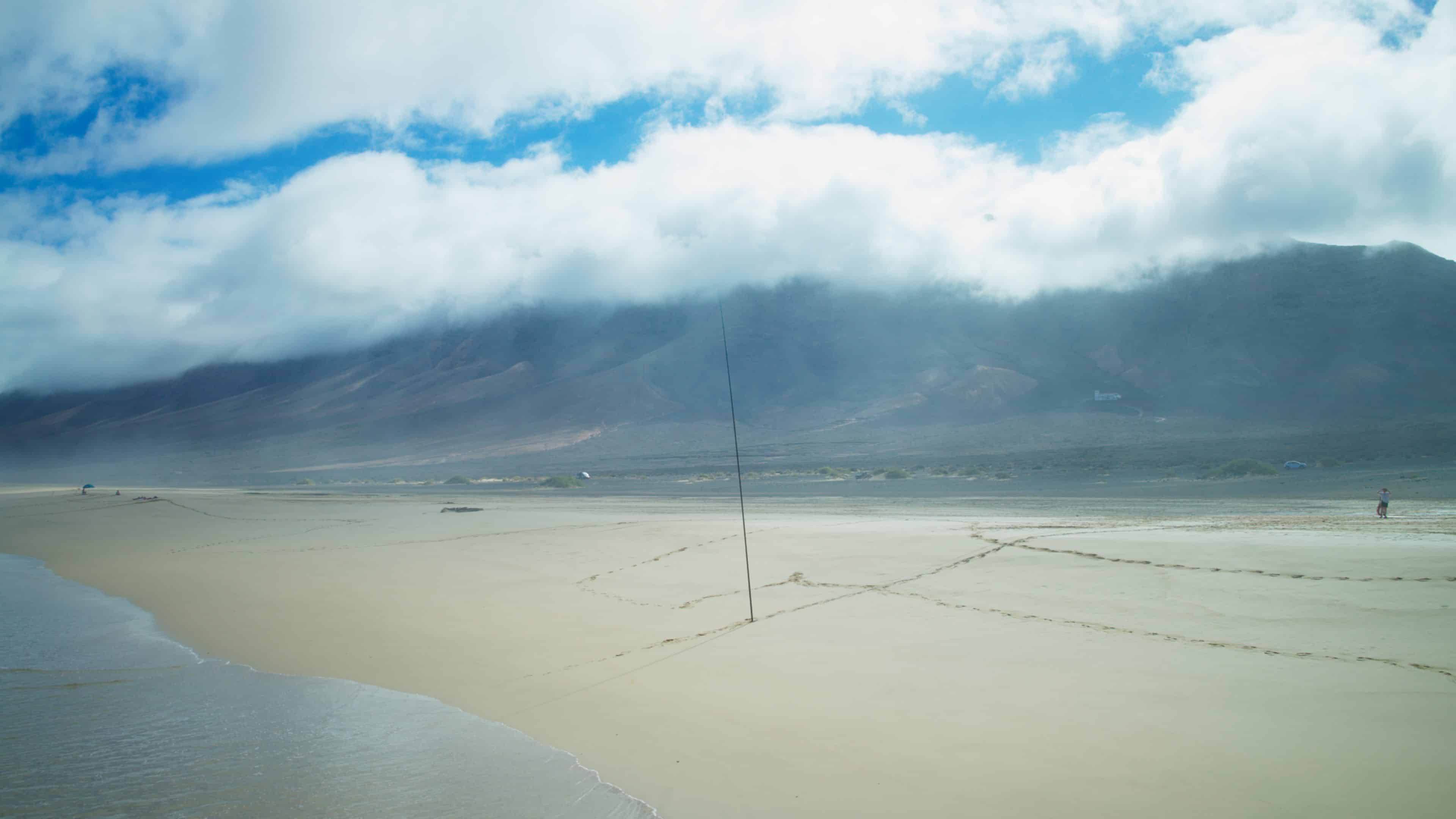
DP: Can you give us a teaser of what’s next in the pipeline?
Rob Harvey: We’re currently working on a feature and have a couple of really interesting dramas on the books – there’s a comedy drama that although light on VFX, the sequences are pretty bonkers… I wish I could elaborate but the NDAs are quite strict!


DP: How does it feel to have made 25 years In the industry? Do you have any favourite memories or projects?
Rob Harvey: I hate to break it to you, but I’m approaching 40 years in the industry, I’m a dinosaur myself (but not extinct yet). I feel very proud that Lola is celebrating its Silver Jubilee this year, it’s quite rare for an independent boutique facility to last that long, particularly navigating financial crashes, strikes and a global pandemic alongside the day to day obstacles that the VFX industry seems to attract. There’s been so many high points over the years, lots of awards, some great projects and we’ve had so many really lovely and talented artists and producers pass through the doors.
A personal highlight for me was working with Terry Gilliam on The Imaginarium of Dr Parnasssus. We’ve more recently had lots of fun working with Ben Palmer and the team at Big Talk on a couple of series of The Completely Made Up Adventures of Dick Turpin for Apple TV+, its definitely the sort of work we love to do.
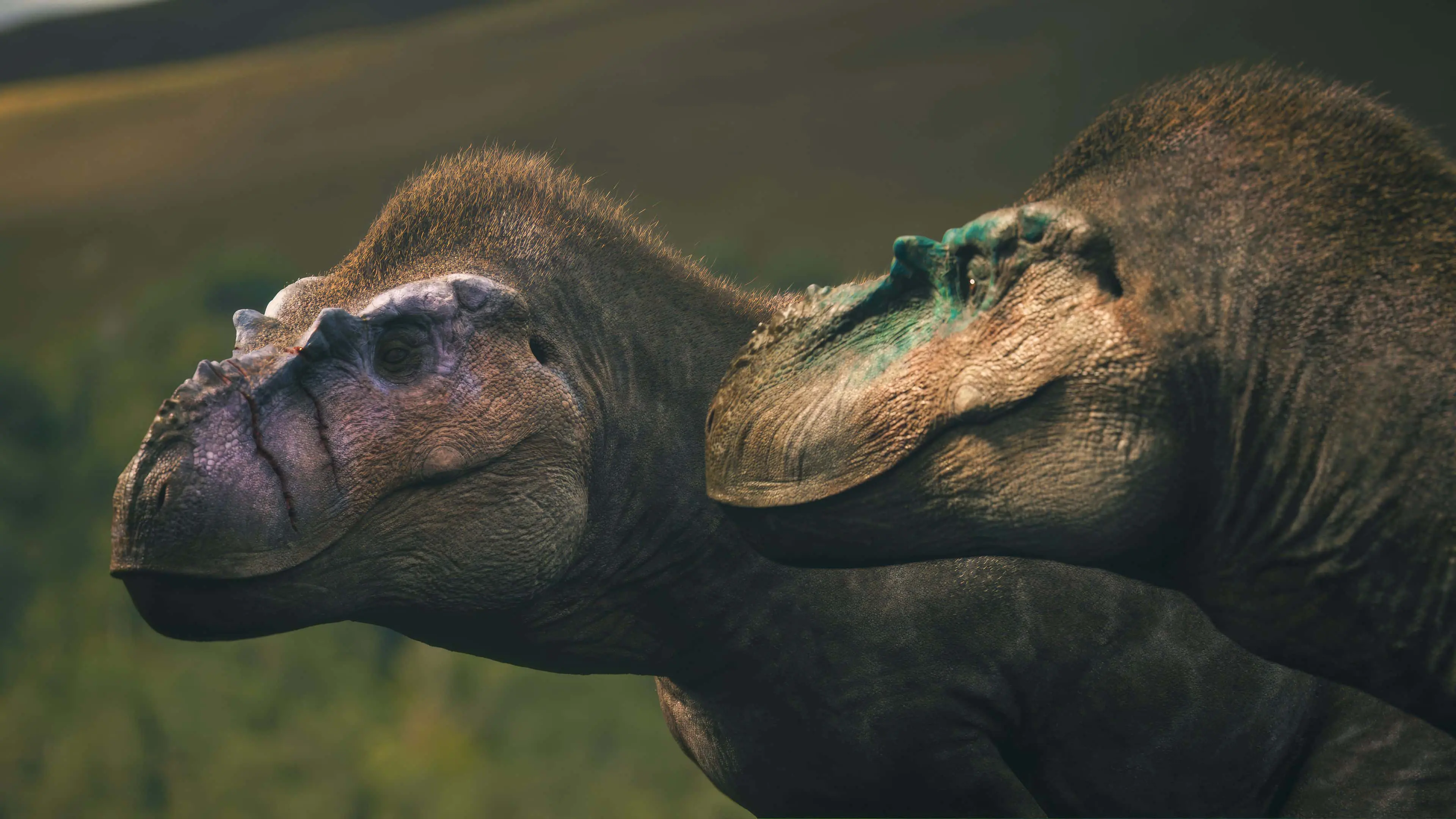
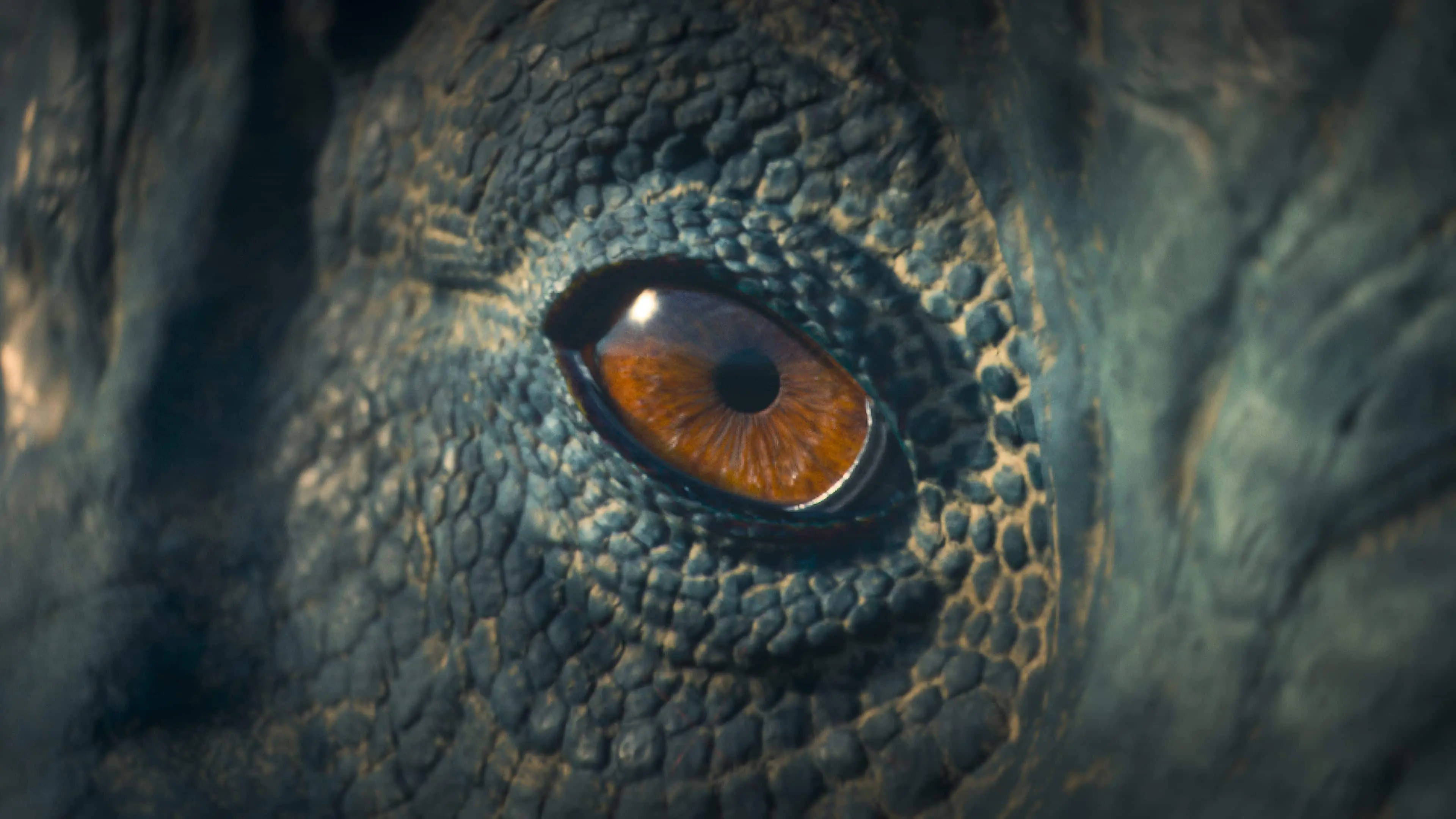
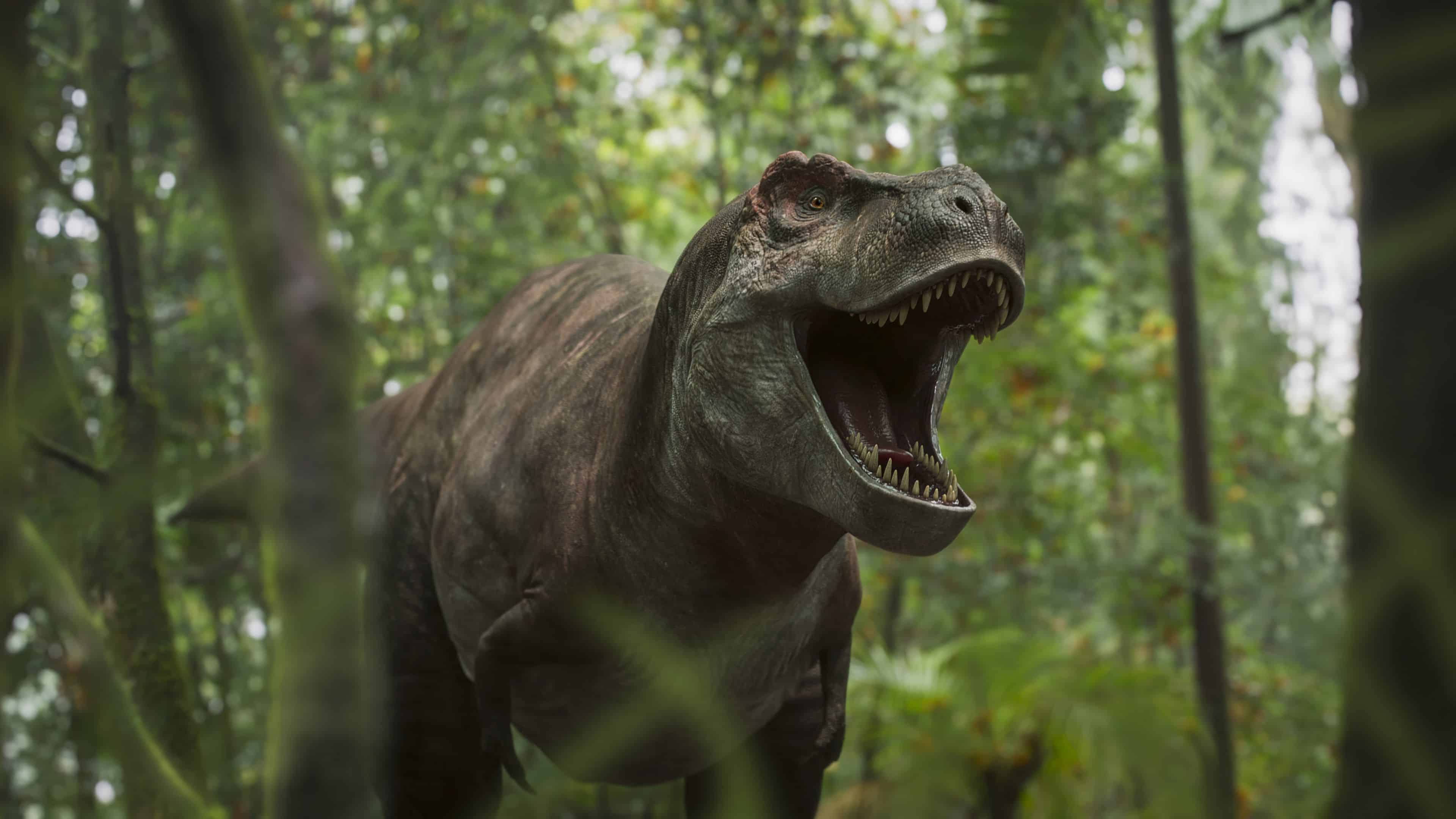
Editorial Note: The pictures are just too good to just dot them through the article: Enjoy them here in their full glory!
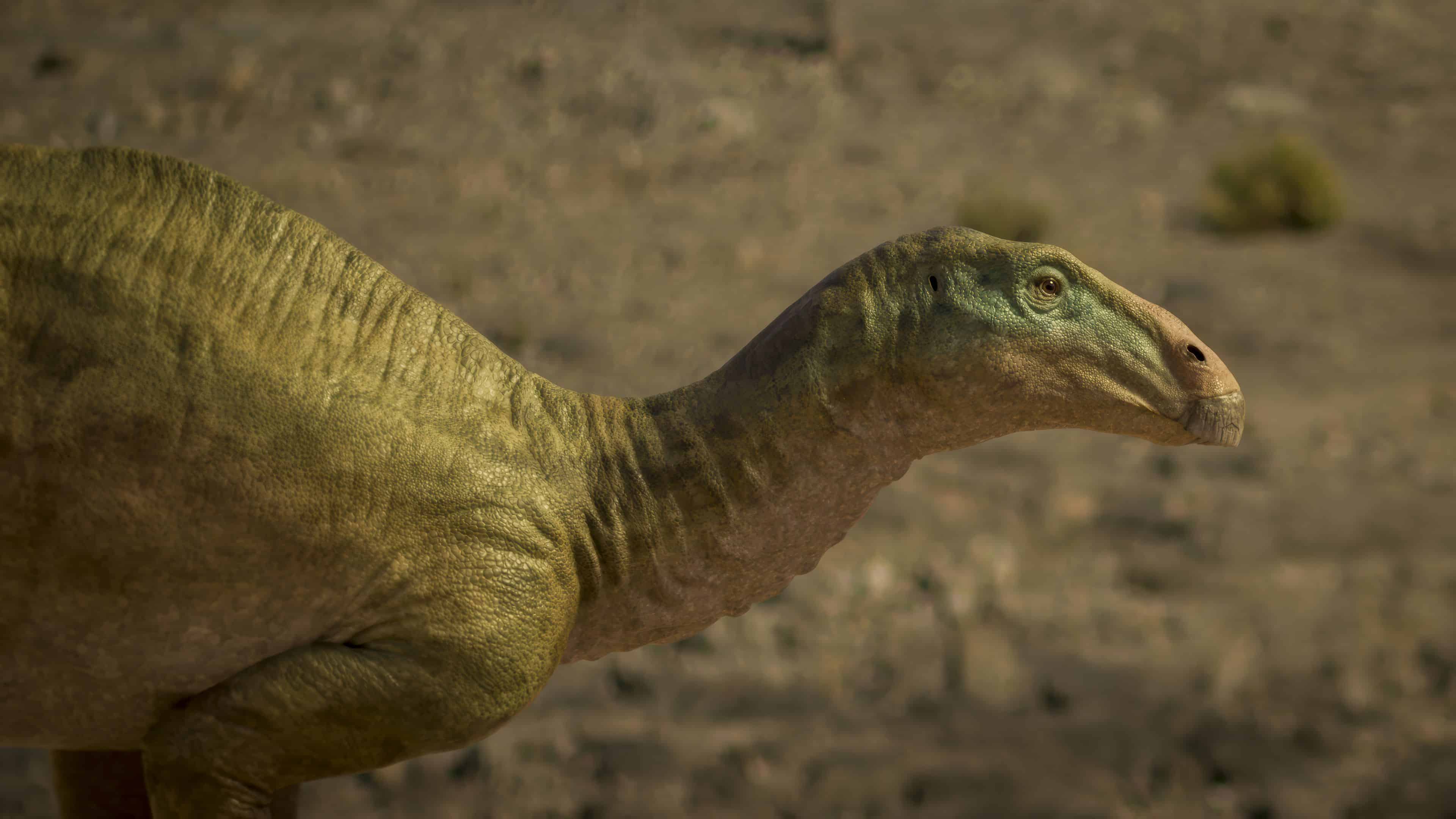









And, just be for we hit “Publish” on this story, we found this in our feeds.
Lola Post VFX Walking with Dinosaurs BBC Studios

1 comment
Comments are closed.