



Sitni Sati has officially released FumeFX 7.0 for Autodesk 3ds Max on 20 August 2025. The update’s centrepiece is NodeWorks Ocean, a GPU‑accelerated ocean simulation system integrated into the existing NodeWorks framework. This extends FumeFX beyond smoke, fire, liquid, soft‑body and cloth into large‑scale water simulation.
Ocean Simulation with Spectrum Models
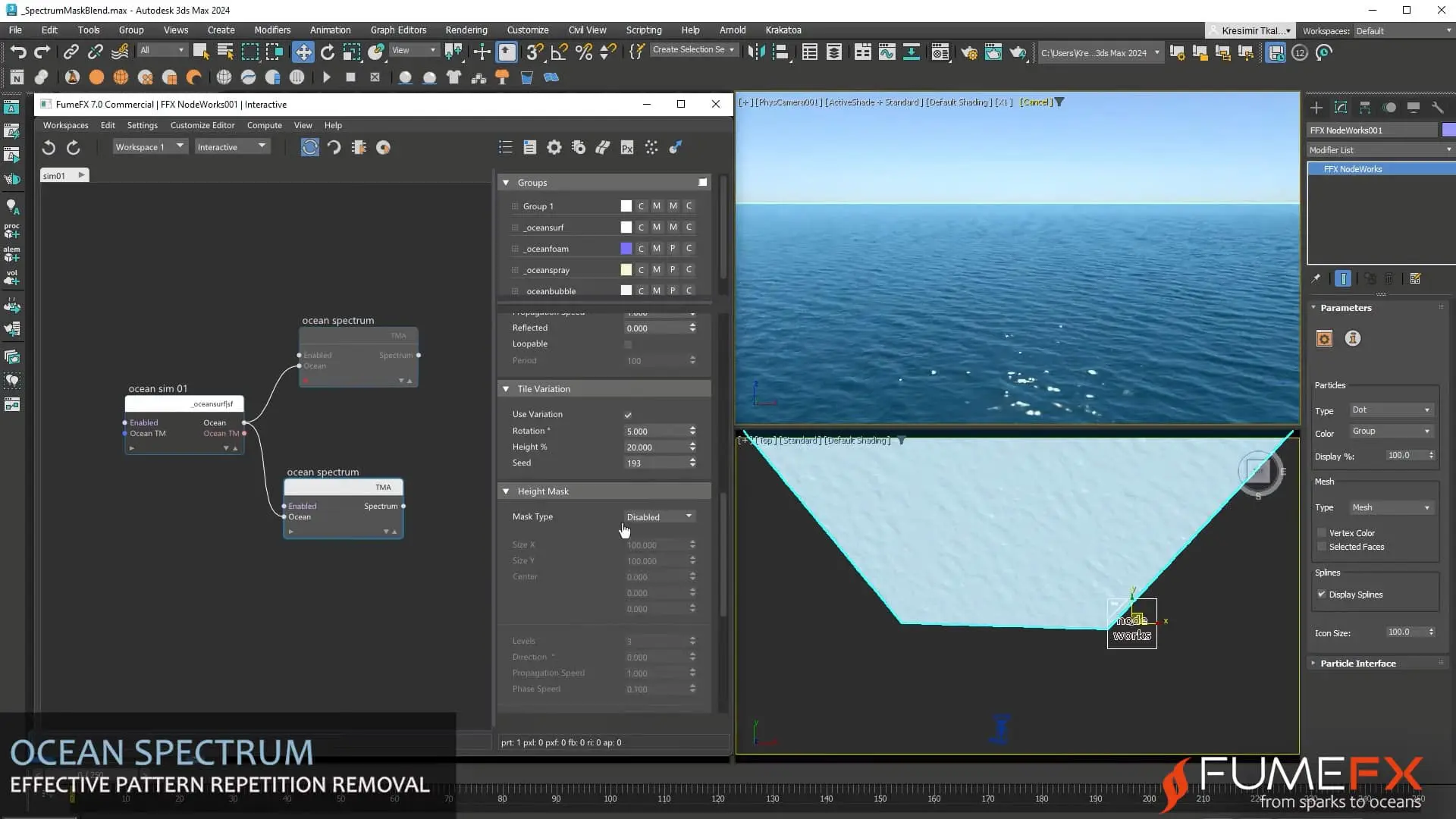
NodeWorks Ocean employs spectrum‑based wave models and inverse Fourier transforms to generate physically accurate surfaces. Artists can layer multiple Ocean Spectrum nodes to mix long swells with short, choppy waves. Variation is supported via Perlin noise blending, tile variation and height masking to avoid visible repetition.

Foam, Spray and Bubbles
The Foam & Spray node generates secondary effects from crest curvature and wave motion. Foam, spray and bubbles can be rendered as Arnold points or volumes, with full access to Arnold user data attributes such as age, velocity and density for dynamic shading.

Dynamic Coupling with Objects
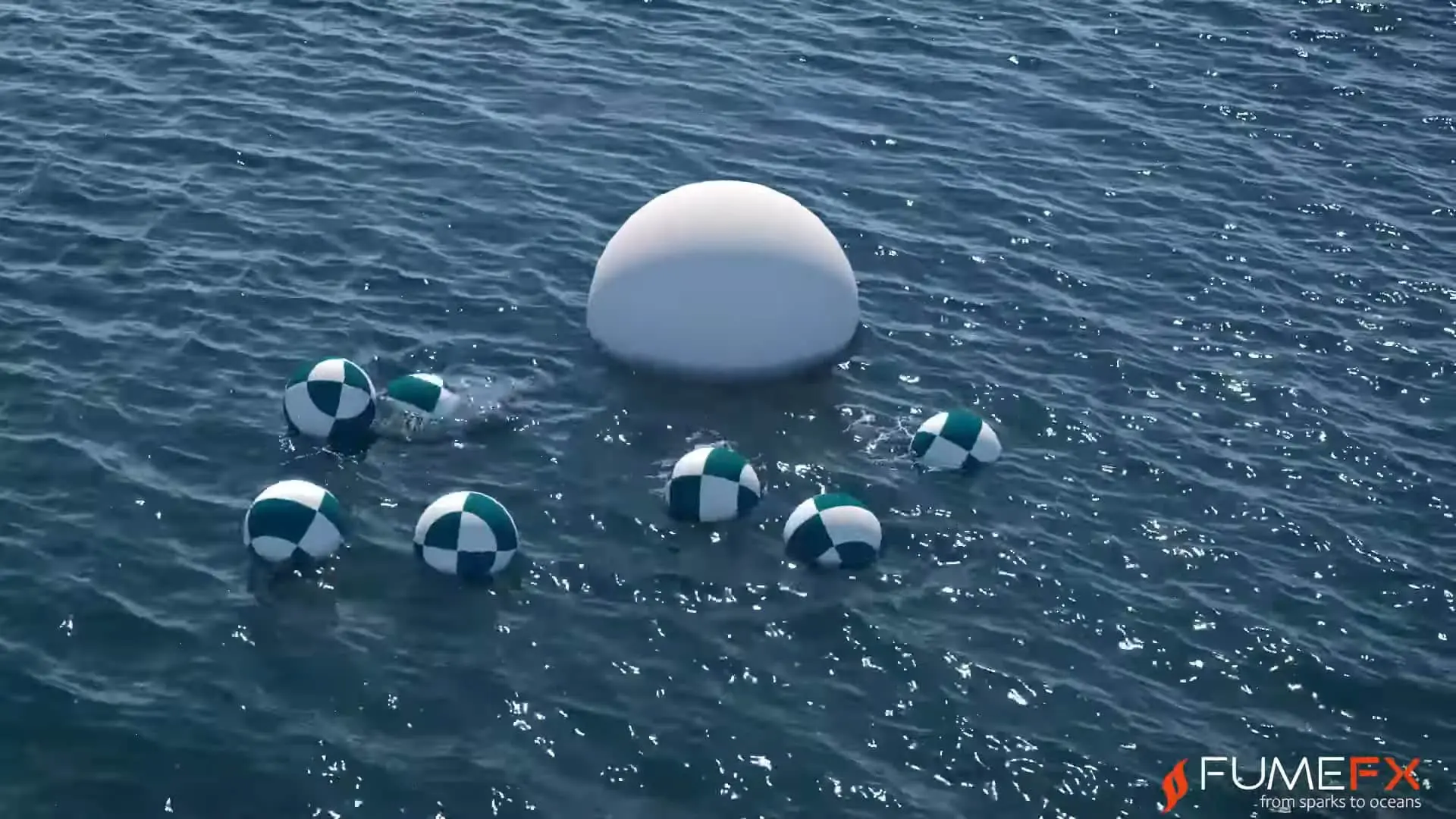
The Ocean Dynamics node introduces true two‑way interaction. Objects generate ripples and wakes, while the water applies buoyant and frictional forces back onto them. Artists can insert geometry or particles into the ocean via the Ocean Object node, with fine control over buoyancy, inertia, friction and wake strength.
NodeWorks Integration
NodeWorks Ocean connects seamlessly to other simulation types. Rigid body dynamics via PhysX and fibres for ropes or cables both interact naturally with water. NodeWorks particle groups can trigger fire or smoke on the ocean surface, or simulate rainfall ripples without full fluid overhead.
GPU Acceleration
As with other NodeWorks features, simulations are accelerated through NVIDIA’s CUDA API. A GPU with Pascal architecture or newer is required (GeForce GTX 1000 series or later). This hardware dependency should be considered during pipeline planning.
Additional Improvements
FumeFX 7.0 also updates NodeWorks generally: particle groups can now render as Arnold volumes, the Object Properties node accepts particle‑driven transforms, particle display density can be reduced for viewport clarity, and caching has been unified. Memory caching now mirrors disk caching, with user‑defined attributes stored consistently.
Pricing and Availability
FumeFX 7.0 is available for Autodesk 3ds Max 2020 and above, running on Windows 10 or newer. Licensing remains subscription‑only: workstation licences cost US $365 per year, and additional simulation licences are US $95 per year. At release, Maya and Cinema 4D editions have not yet been updated to version 7.0.
Editorial Note
With NodeWorks Ocean, Sitni Sati extends FumeFX into full multiphysics territory. Artists can now drive cohesive scenes where fire burns on water, objects float and interact dynamically, and oceans churn with foam and spray—all GPU‑accelerated. As always, production teams should test new features in controlled environments before adopting them into active pipelines.
