



Together with Paul Kanyuk (Crowd TD at Pixar Animation Studios), we’ll look into the backstory of USDSkel, including how he became involved in its development.

Put simply: UsdSkel is Pixar’s USD module for defining and animating skeletal rigs—complete with schemas (structure), queries (reading), and APIs (writing and manipulation). It’s a bridge between your DCC (Digital Content Creation) tools and USD pipelines, ensuring skinned meshes and joint animations can move smoothly across different tools and engines: OpenUSD.
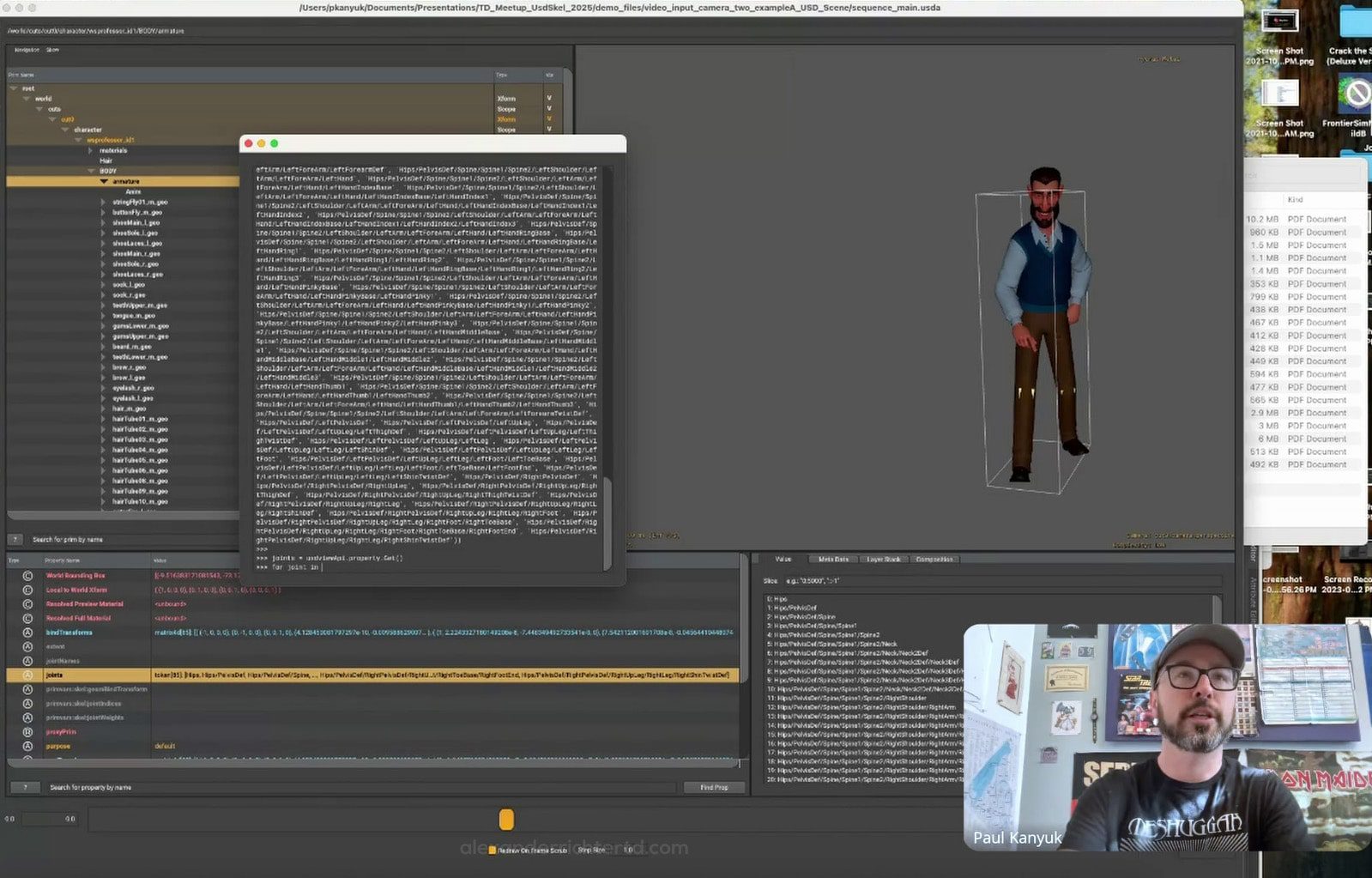
Why It Might Matter to Your Workflow
If you’re working with rigged characters, skeletal animations, or skinned meshes, understanding UsdSkel gives you the power to:
- Implement or tweak performance-sensitive parts like caching skeleton data or remapping joints.
- Export rigs from tools like Maya or Blender into USD while preserving joint structure and animations.
- Bind skeletons to geometry and control joint influences programmatically.
- Efficiently reuse skeleton definitions through instancing, thanks to USD’s layer system.
- Query skeleton and animation data within custom USD tools or pipelines.
